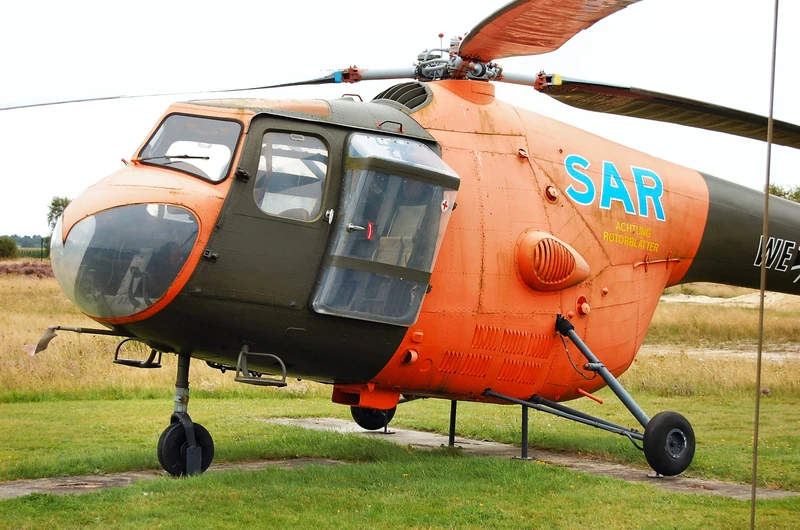
Bristol Sycamore | |
|---|---|
| Country | UK |
| Role | Rescue and Anti-Submarine Helicopter |
| First flight | 27 July 1947 |
| Built | 180 |
The Bristol Type 171 Sycamore was an early helicopter developed and built by the helicopter division of the Bristol Aeroplane Company. The name refers to the seeds of the sycamore tree, Acer pseudoplatanus, which fall with a rotating motion. It has the distinction of being the first British helicopter to receive a certificate of airworthiness, as well as being the first British-designed helicopter to be introduced by and to serve with the Royal Air Force (RAF).
Source: Bristol Sycamore on Wikipedia
| Bristol Type 171 Sycamore HC 14 Walk Around | |
|---|---|
| Photographer | Unknow |
| Localisation | Unknow |
| Photos | 16 |
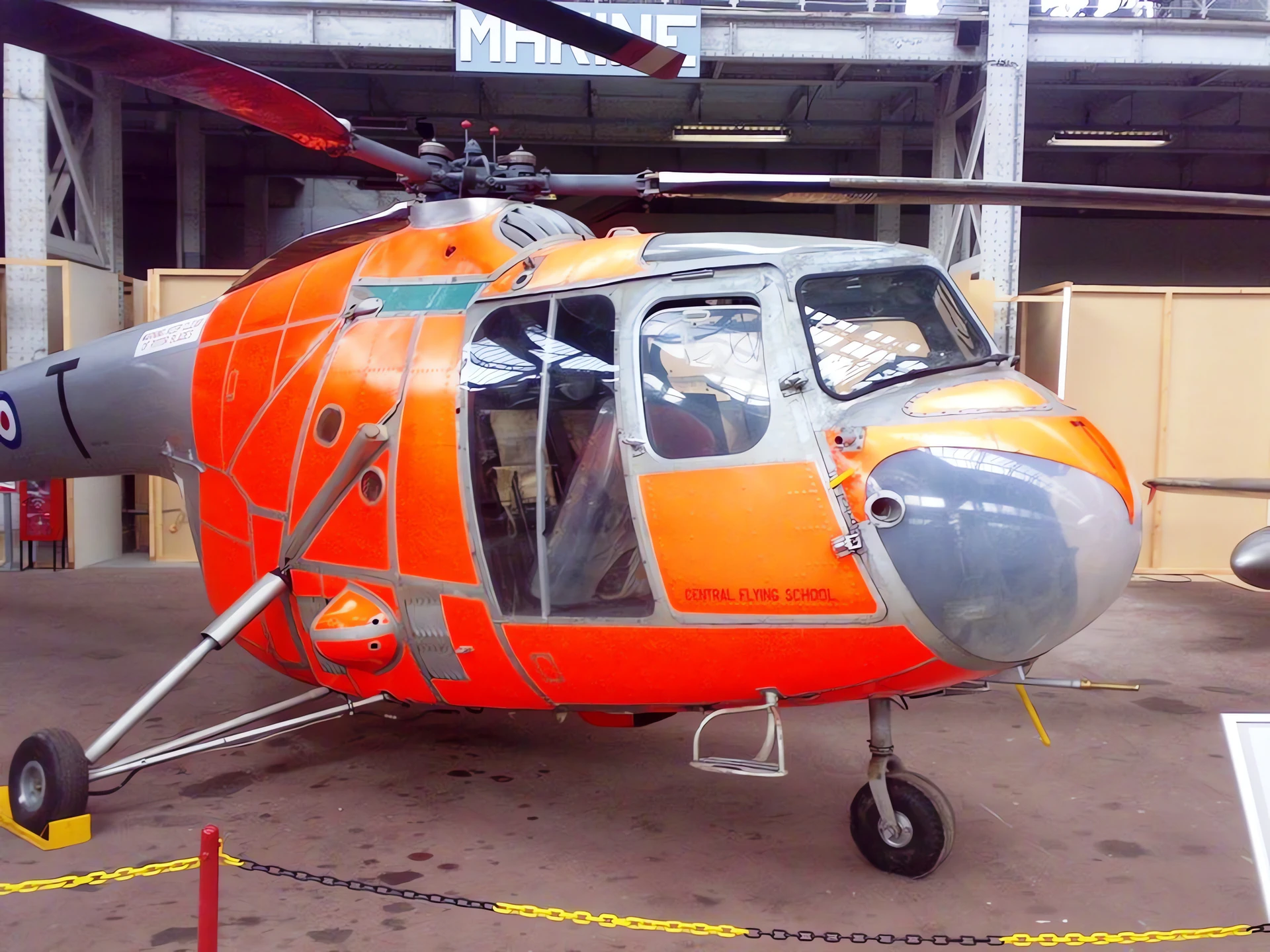
Bristol Type 171 Sycamore HC 14 1
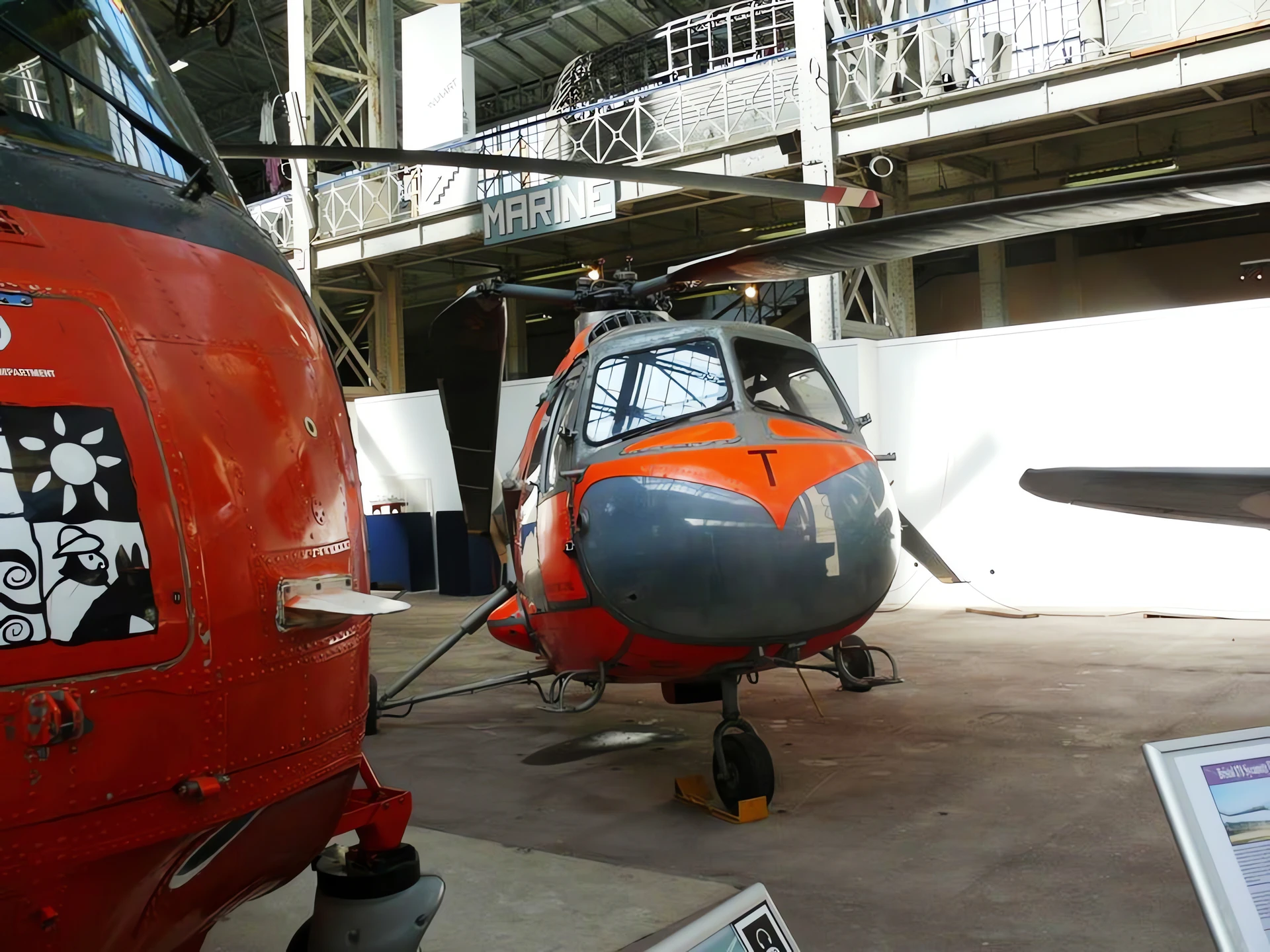
Bristol Type 171 Sycamore HC 14 2
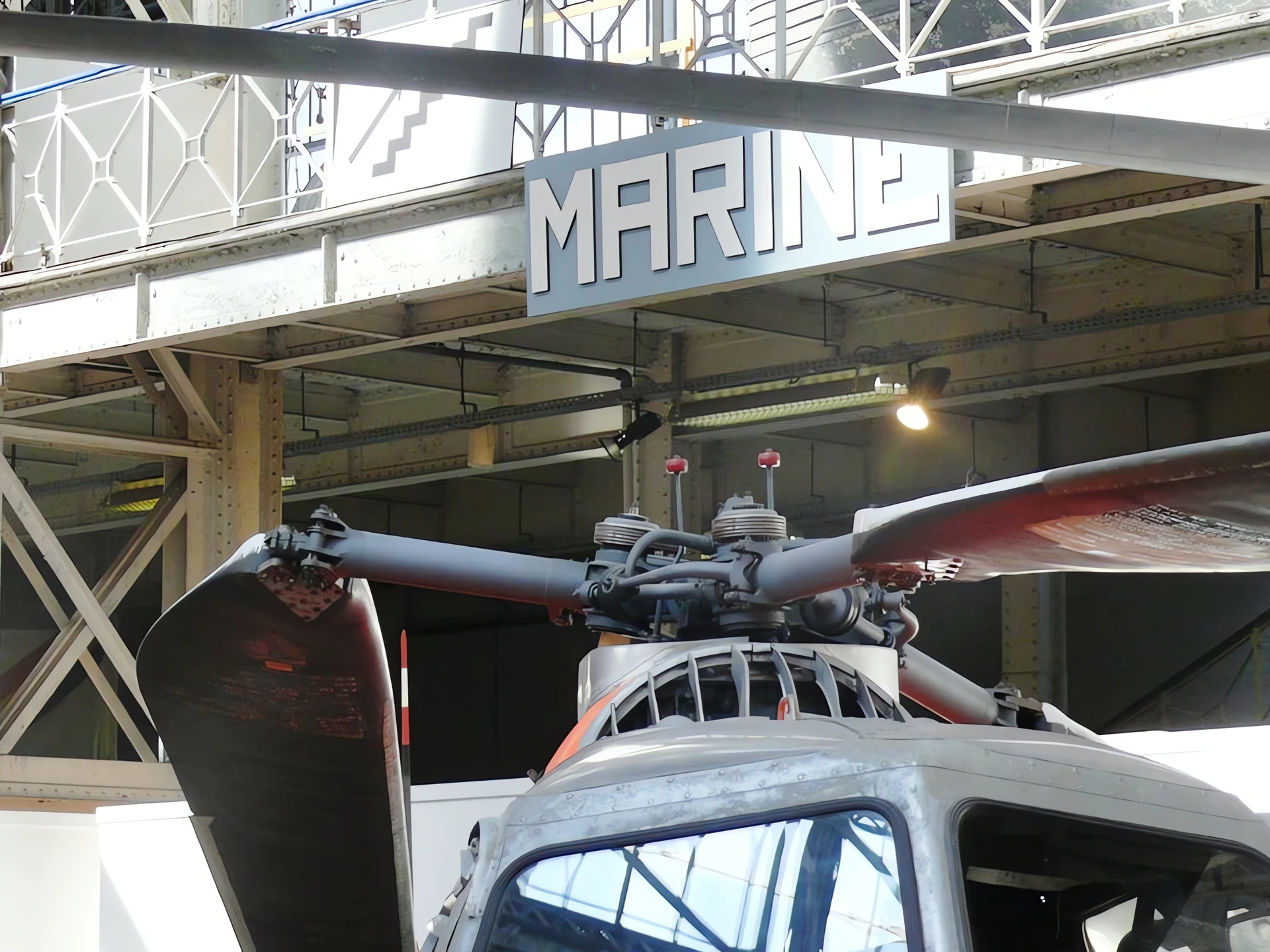
Bristol Type 171 Sycamore HC 14 3
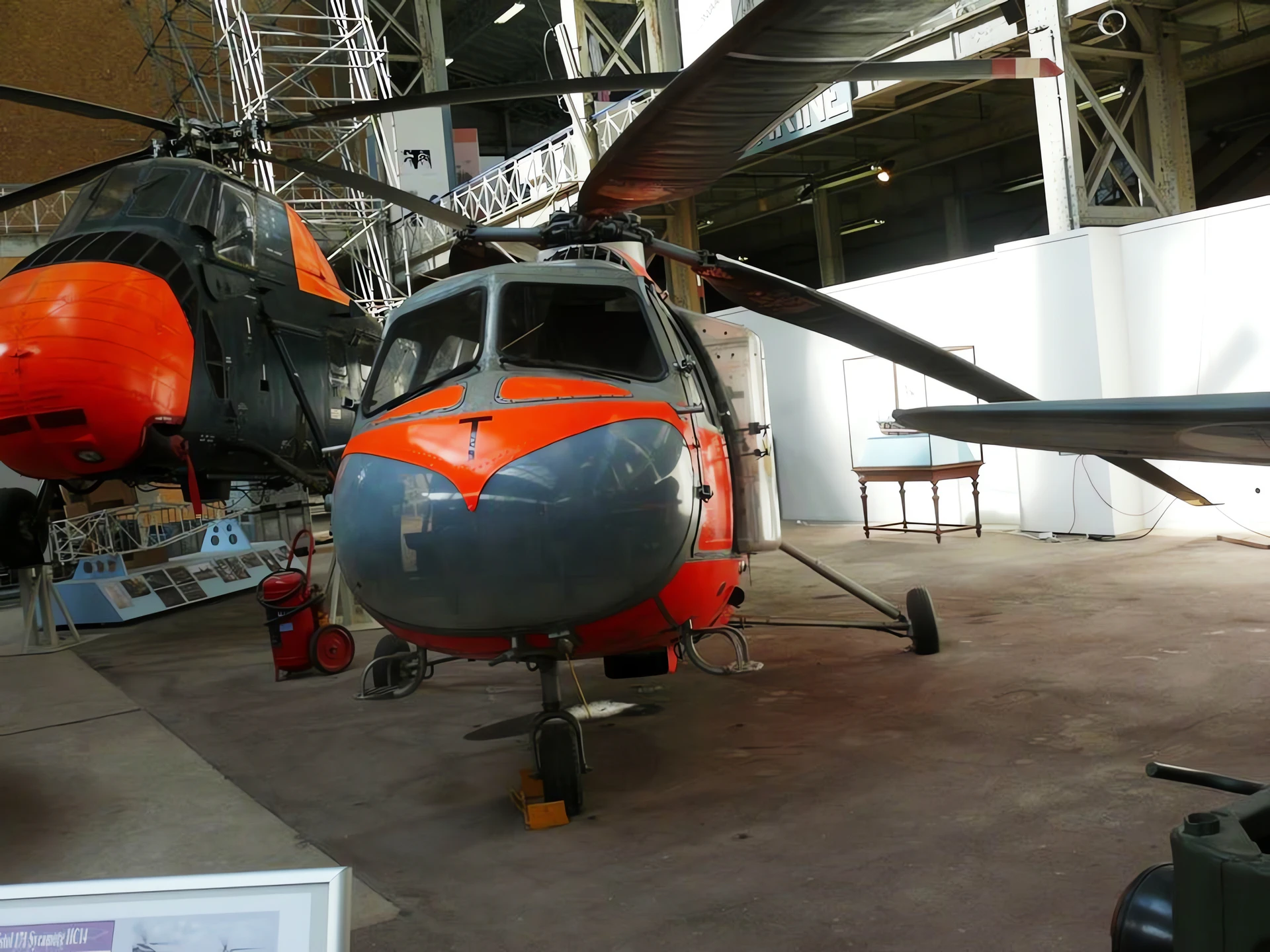
Bristol Type 171 Sycamore HC 14 4
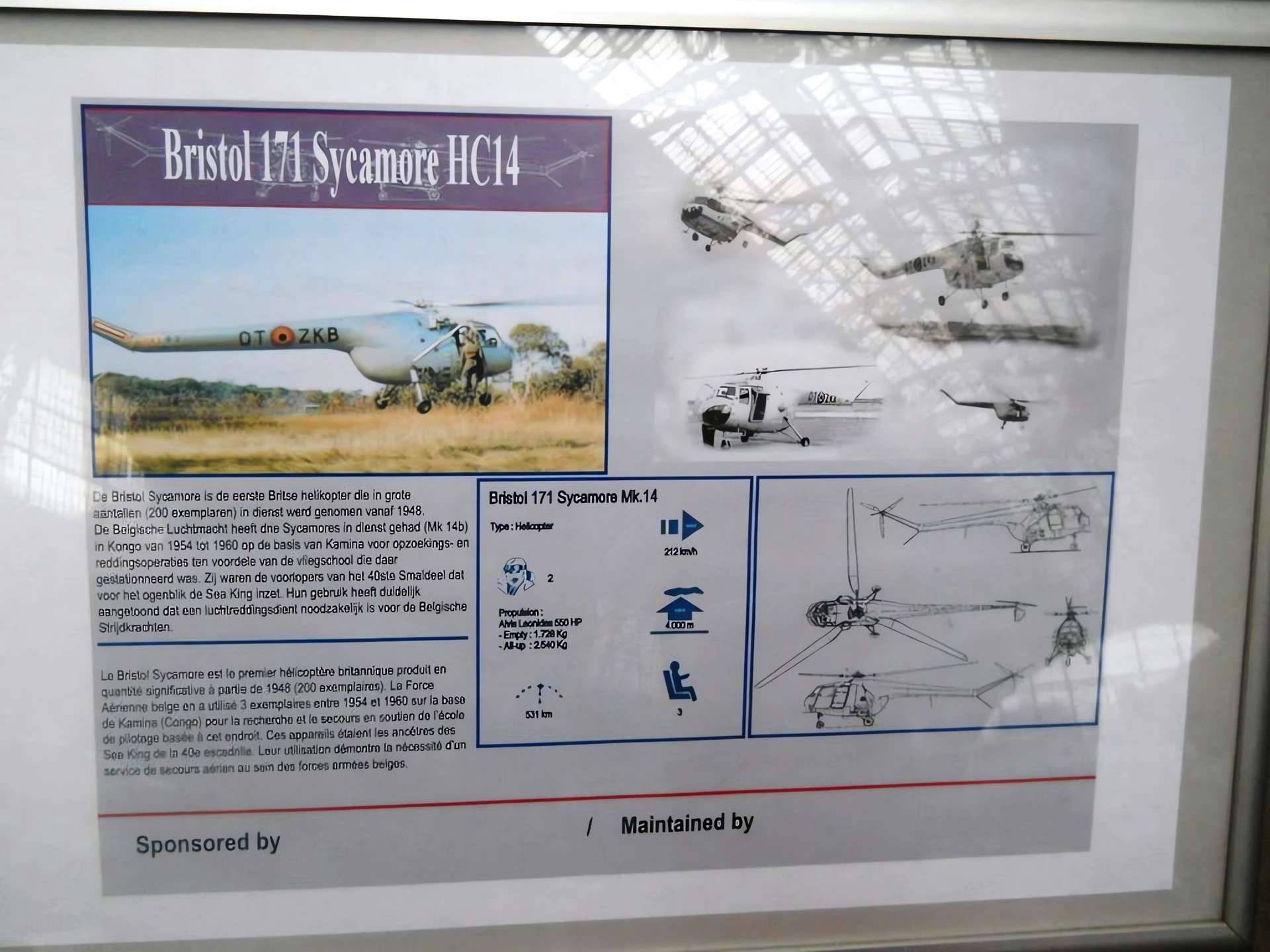
Bristol Type 171 Sycamore HC 14 5
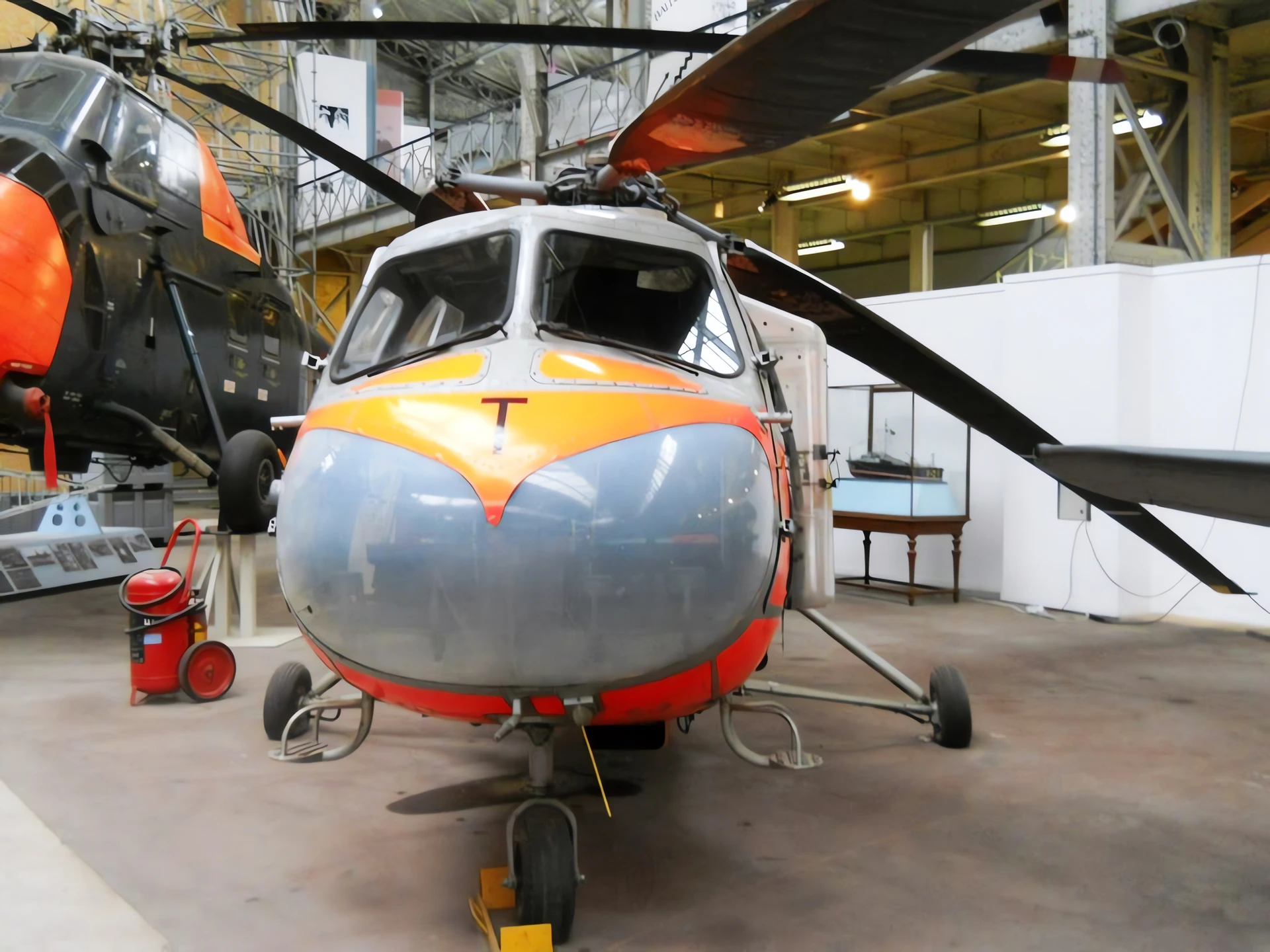
Bristol Type 171 Sycamore HC 14 6
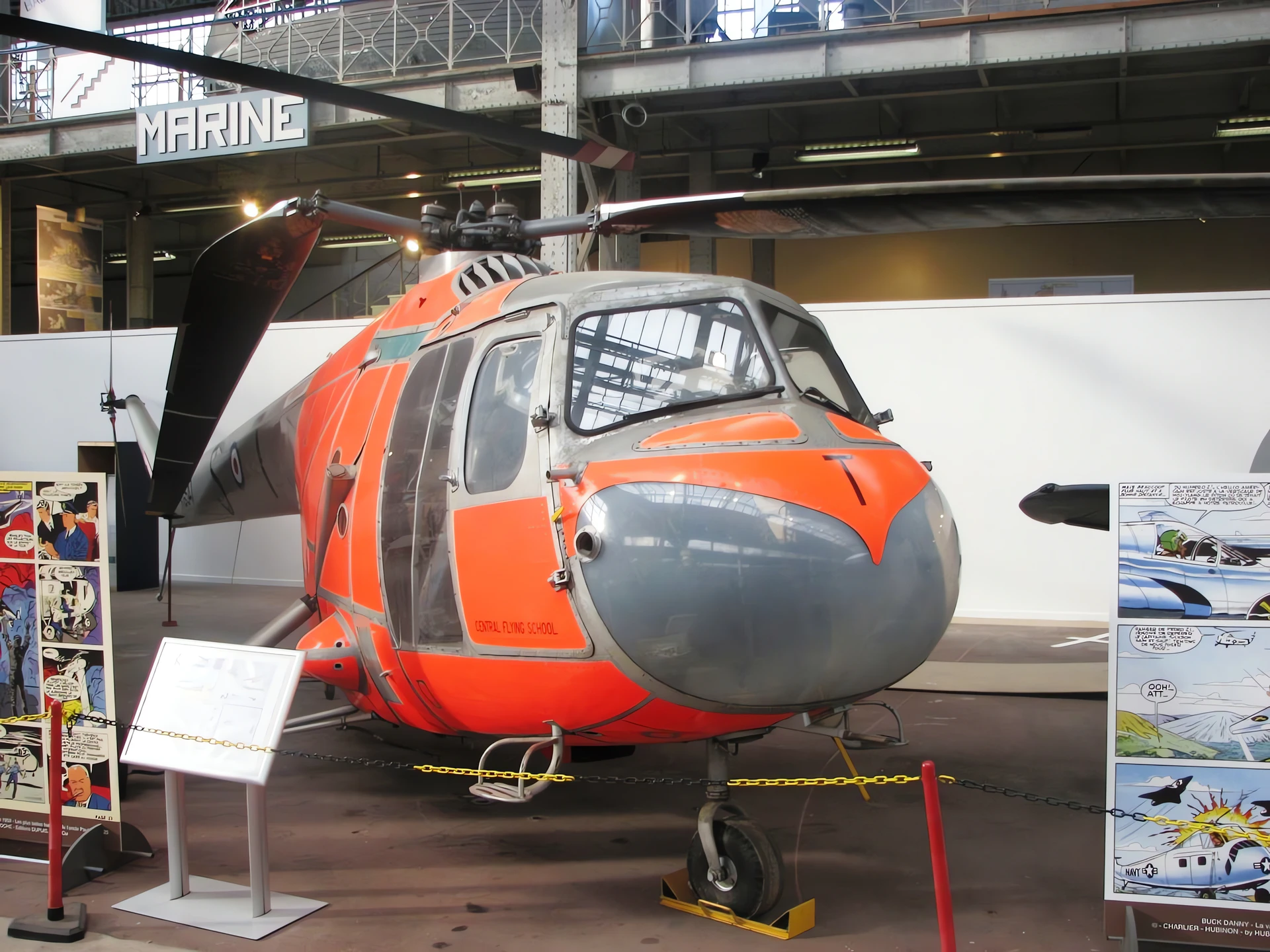
Bristol Type 171 Sycamore HC 14 7
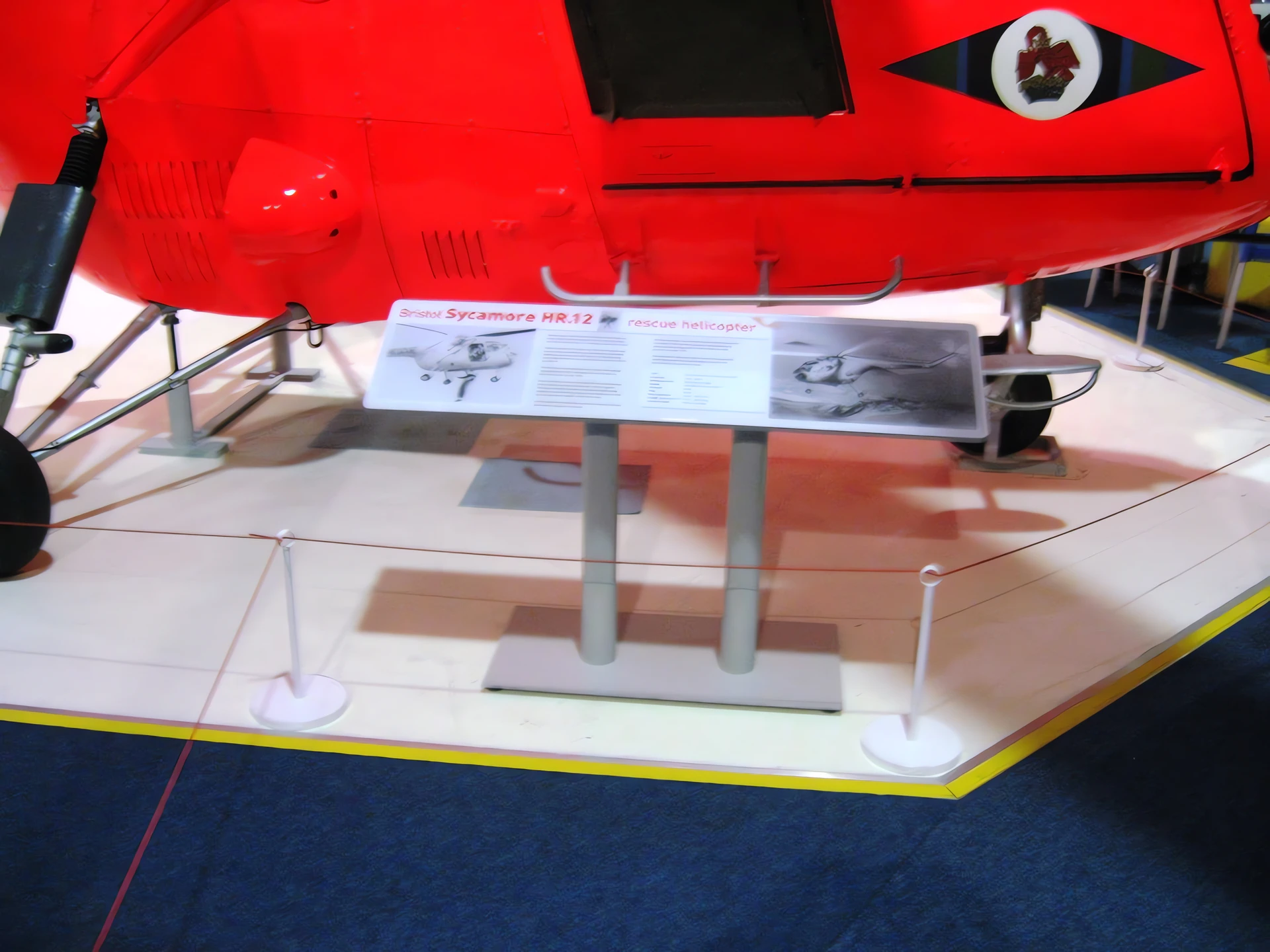
Bristol Type 171 Sycamore HC 14 8
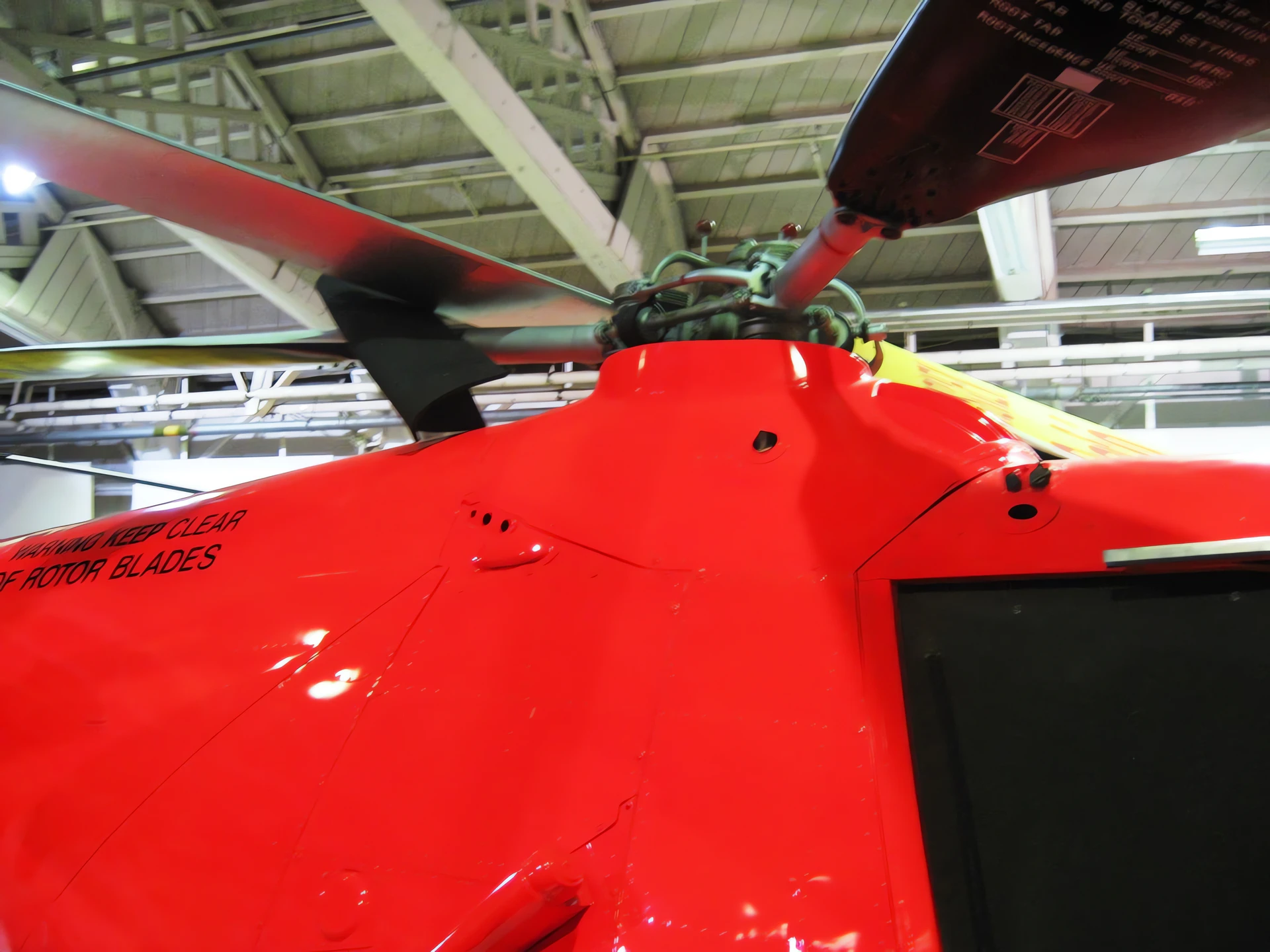
Bristol Type 171 Sycamore HC 14 9
Wait, Searching Bristol Sycamore for you…


| Bristol 171 Sycamore Mk.52 Walk Around | |
|---|---|
| Photographer | Unknow |
| Localisation | Unknow |
| Photos | 21 |
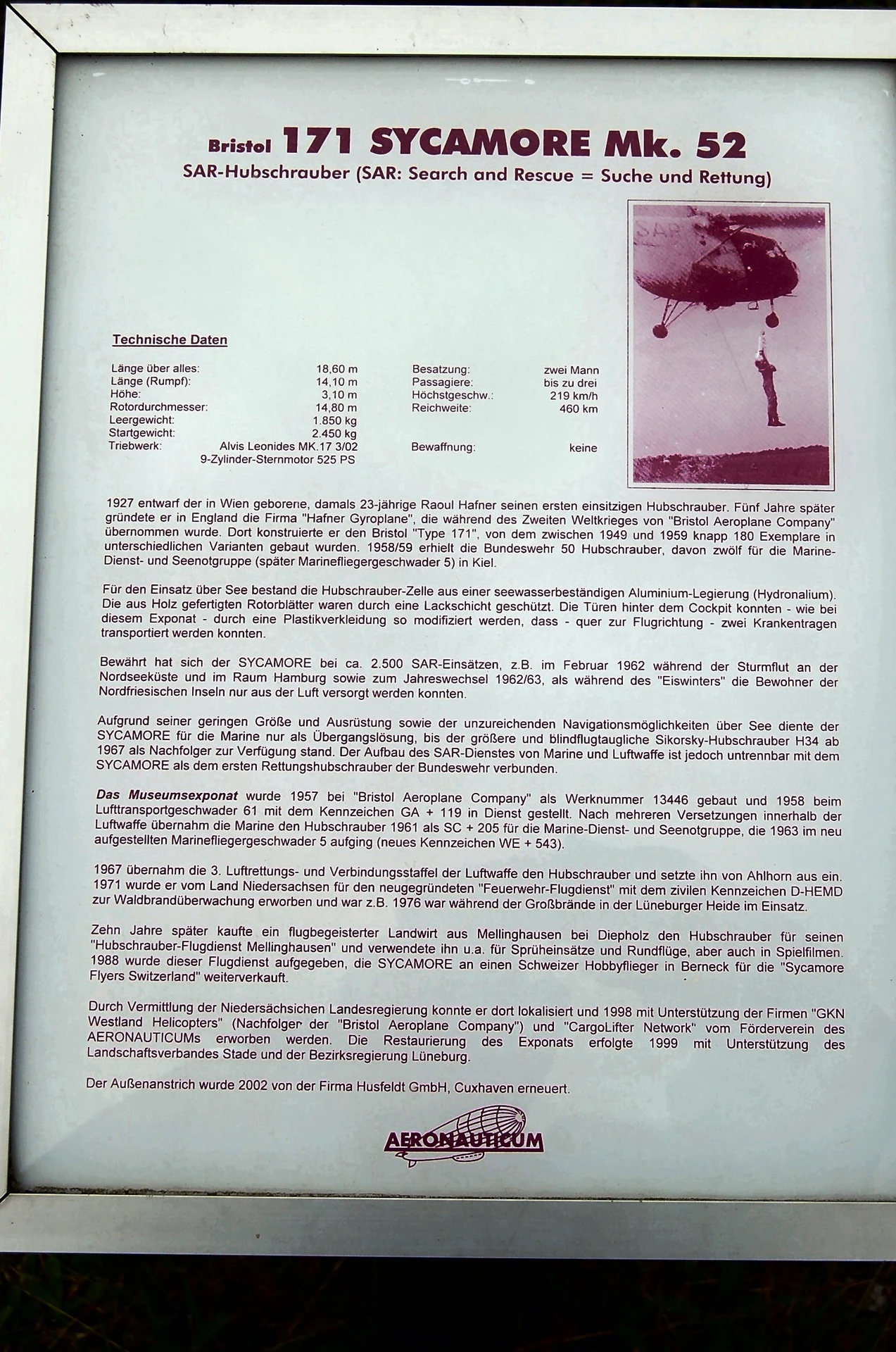
Bristol 171 Sycamore Mk.52 1
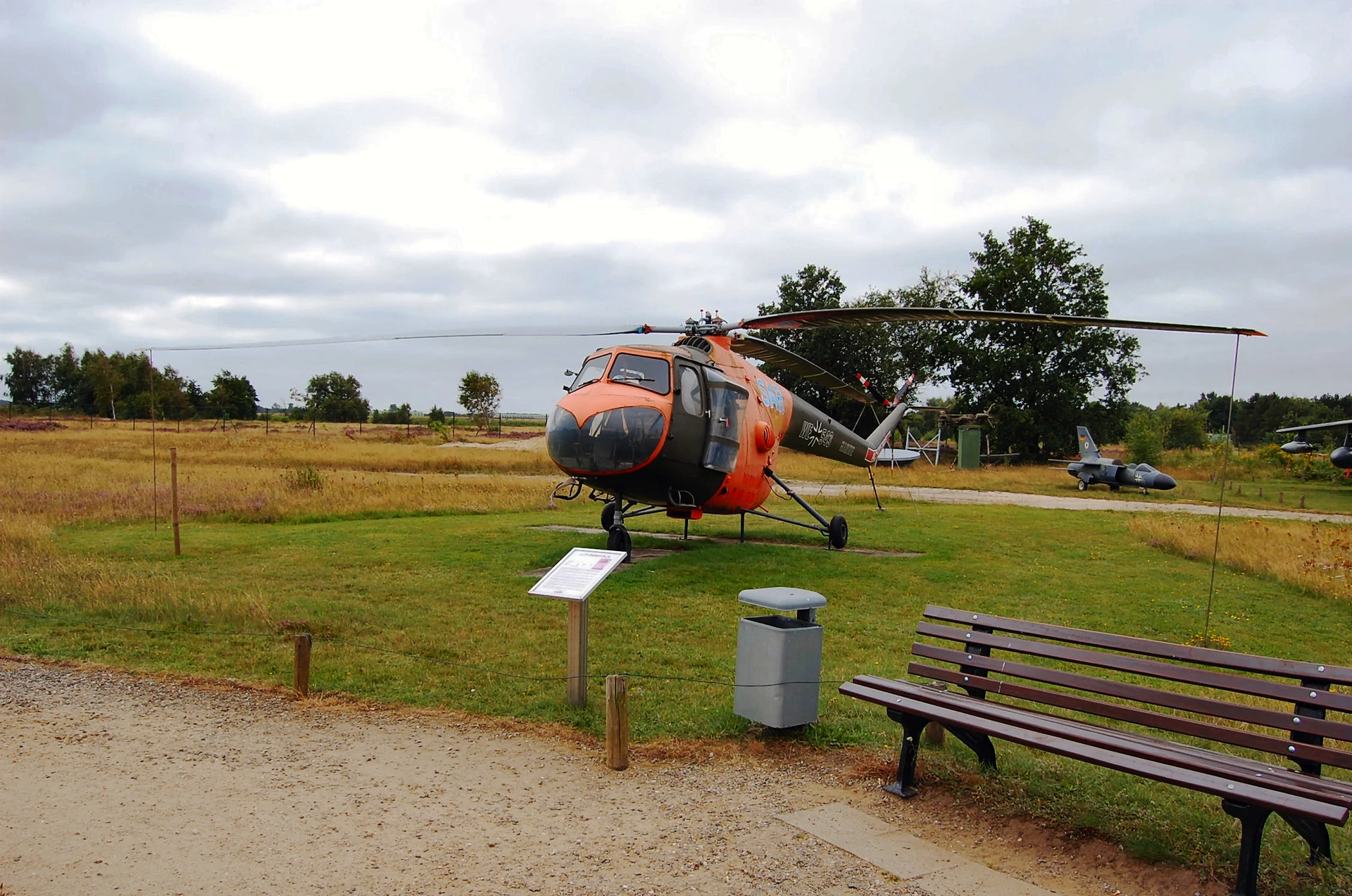
Bristol 171 Sycamore Mk.52 3
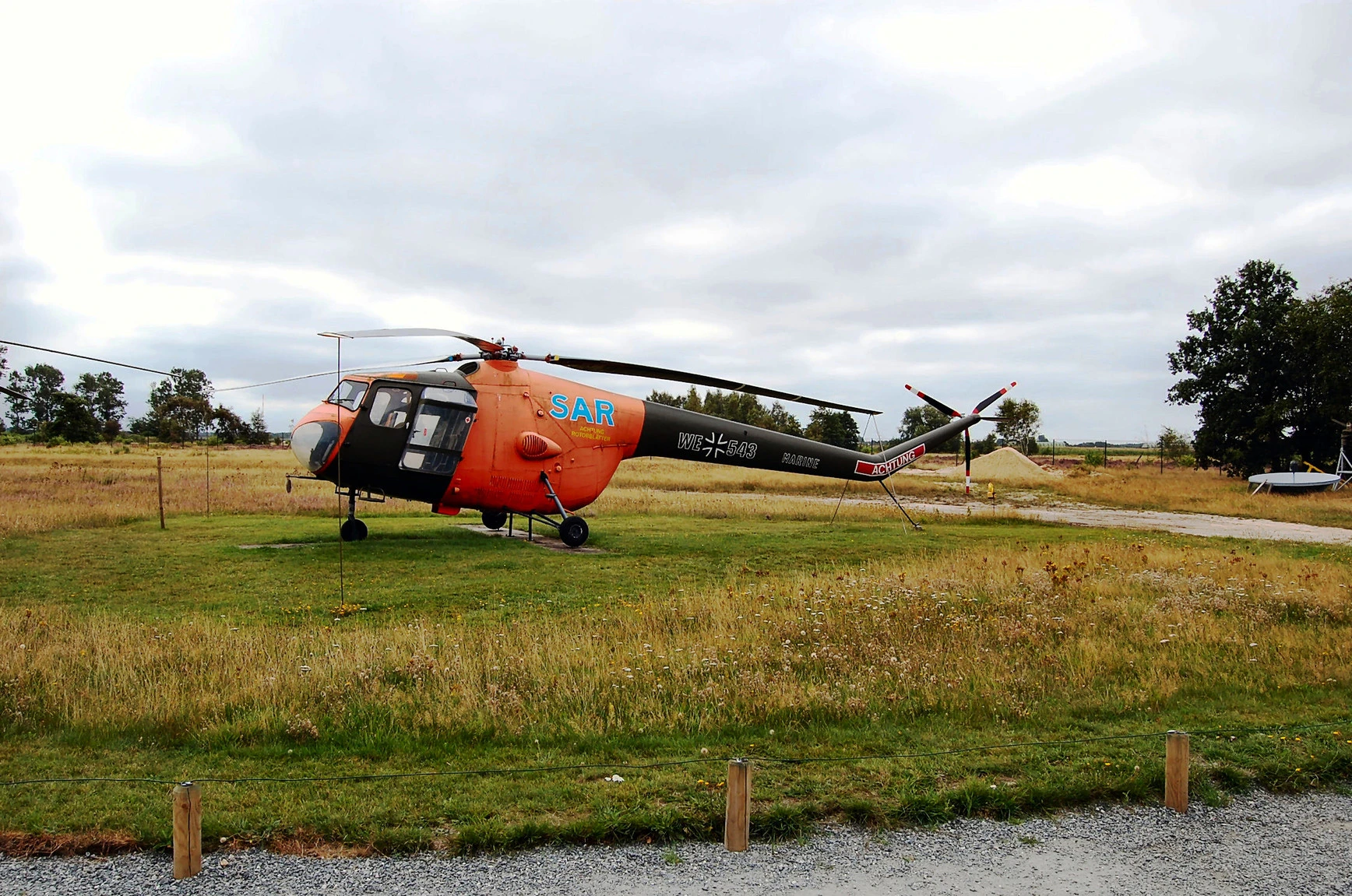
Bristol 171 Sycamore Mk.52 2
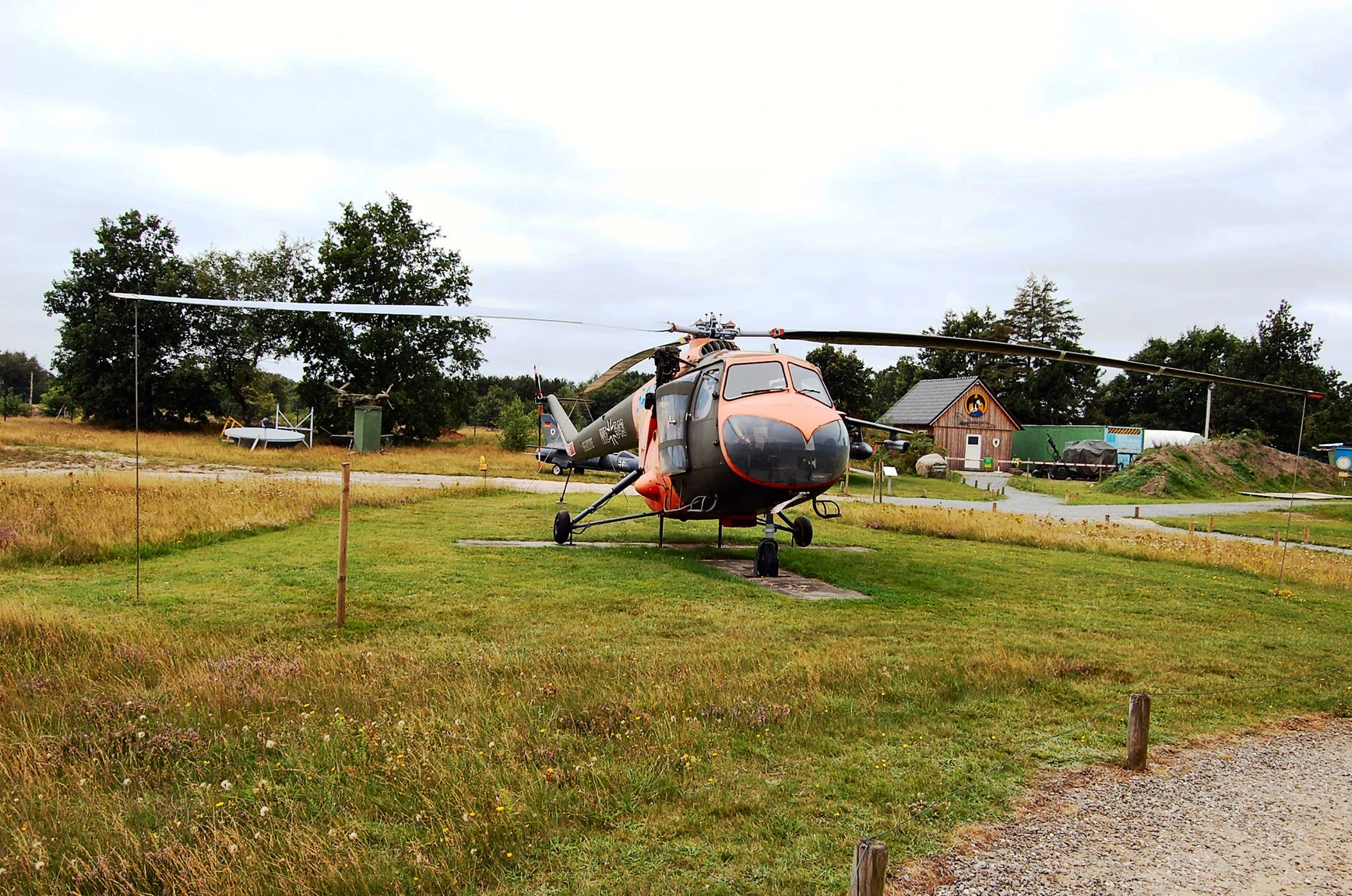
Bristol 171 Sycamore Mk.52 4
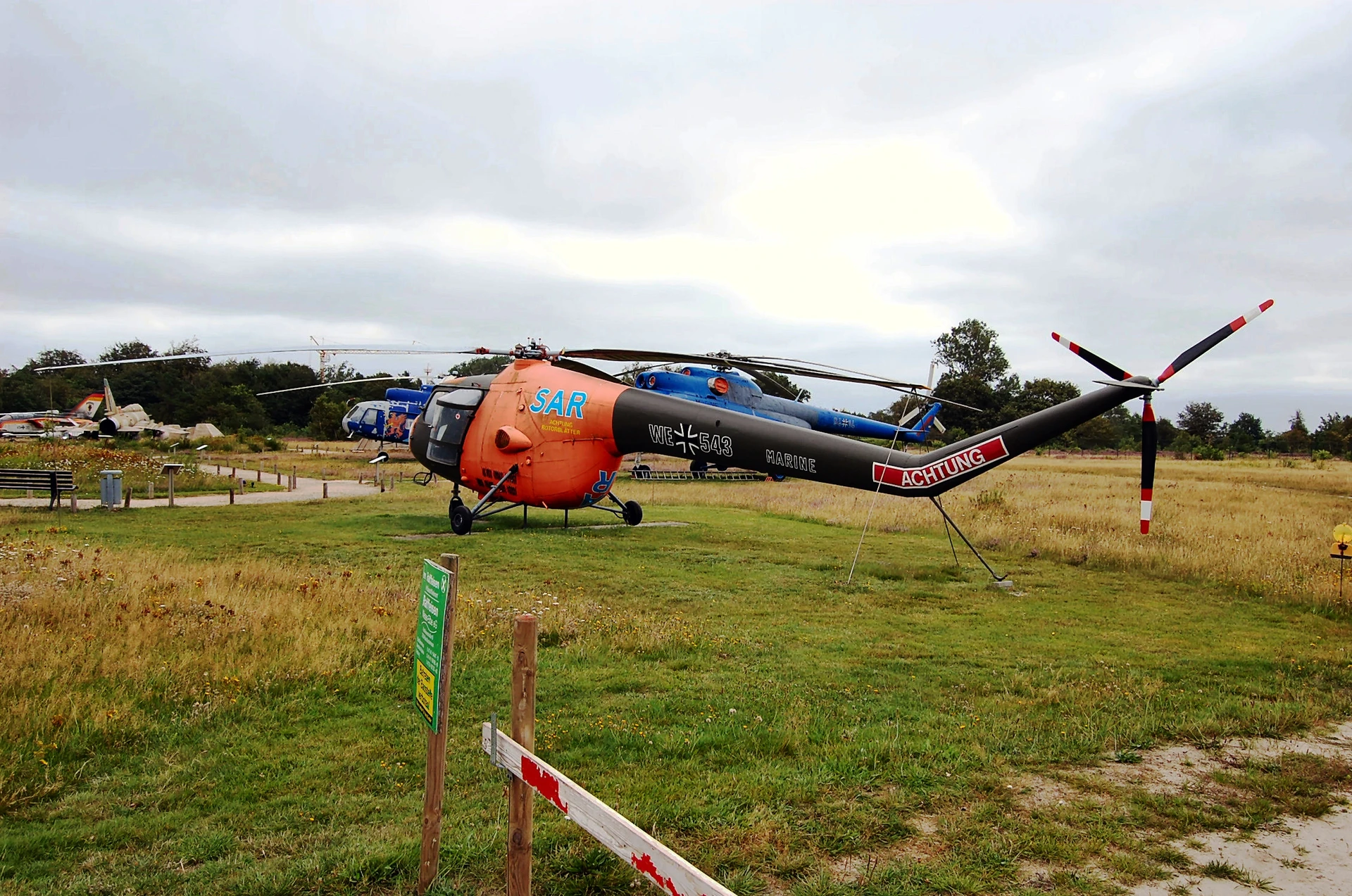
Bristol 171 Sycamore Mk.52 6
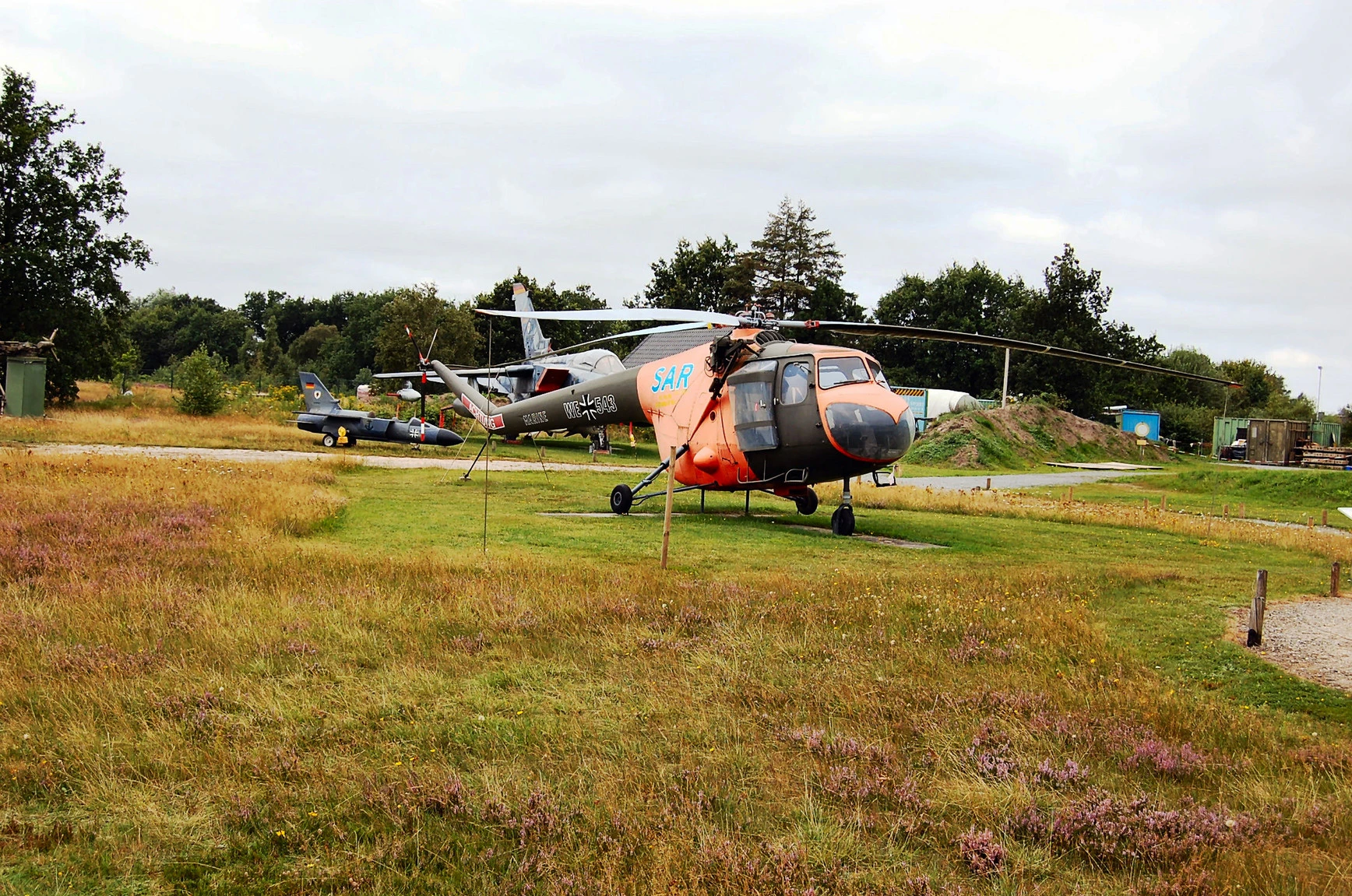
Bristol 171 Sycamore Mk.52 5
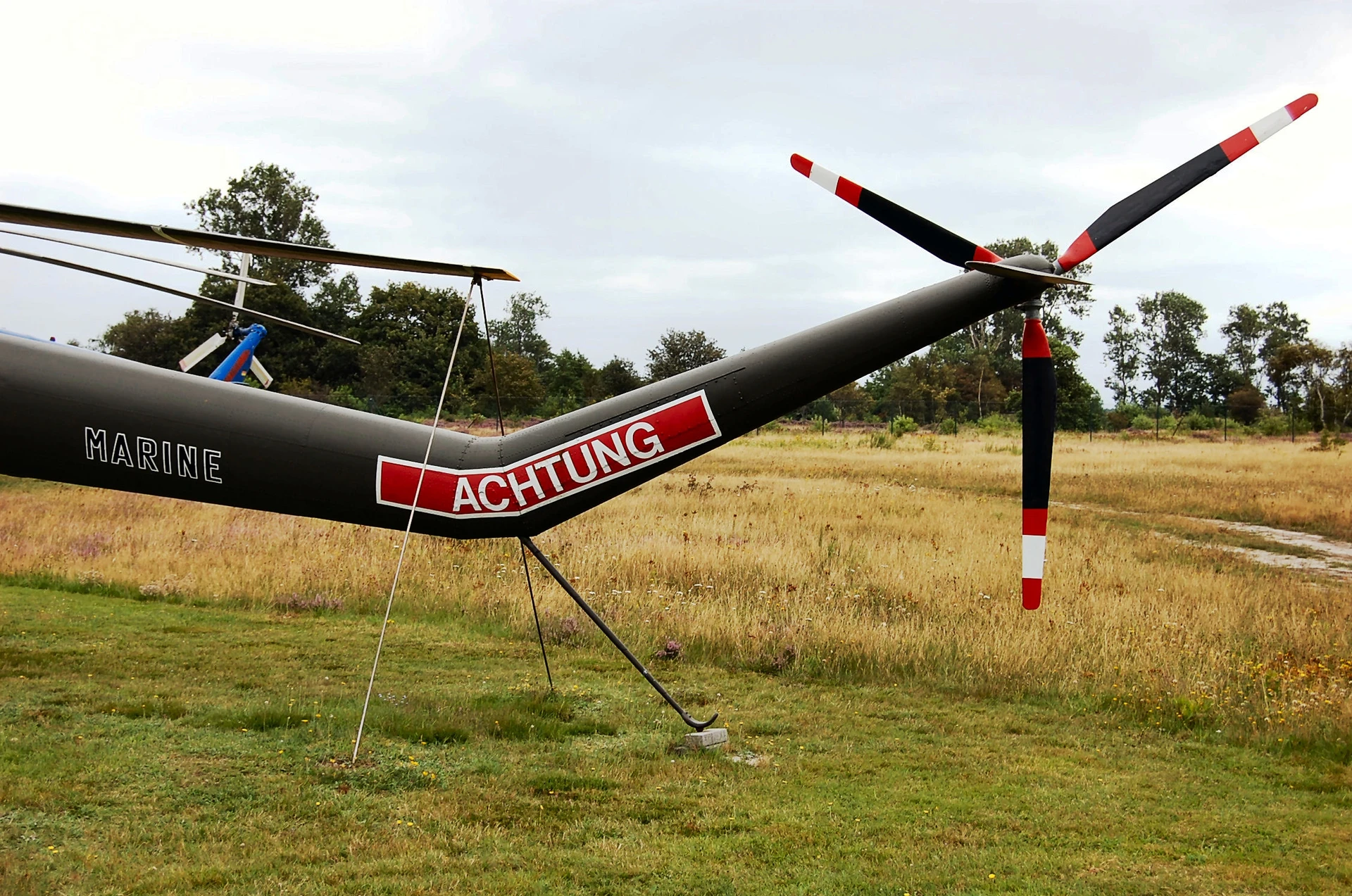
Bristol 171 Sycamore Mk.52 7
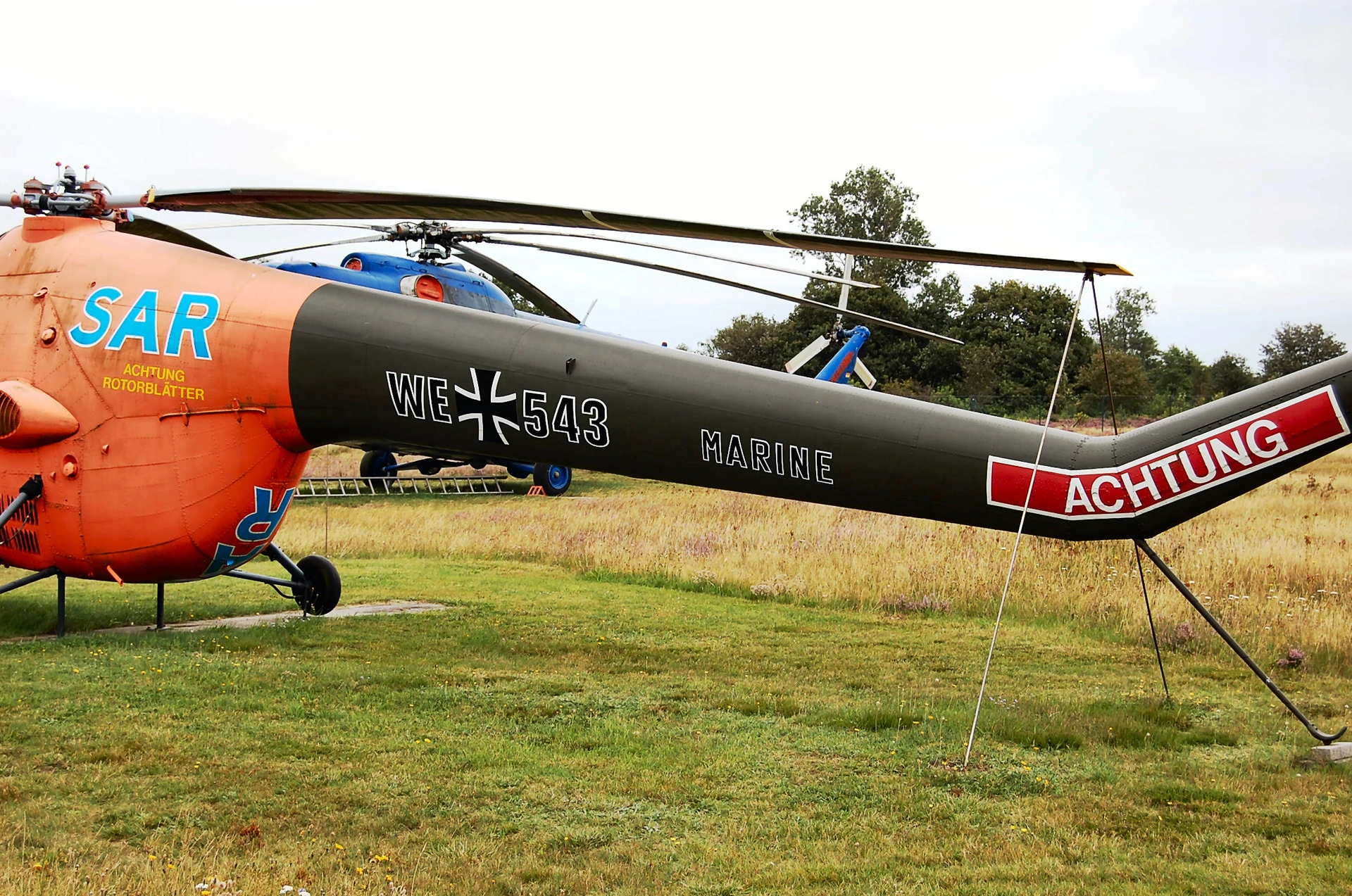
Bristol 171 Sycamore Mk.52 8
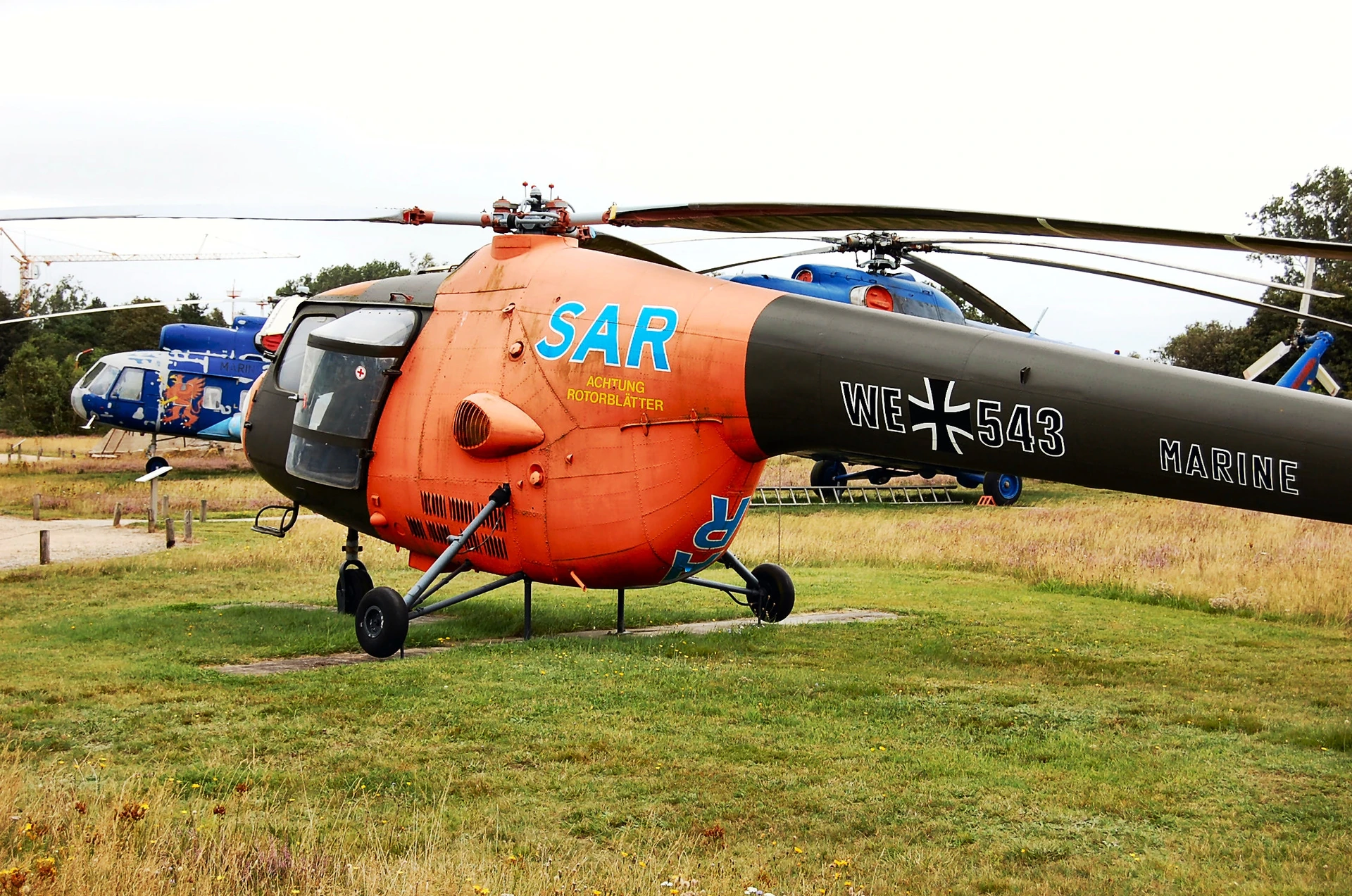
Bristol 171 Sycamore Mk.52 9
See also:


Wait, Searching helicopter for you…
General Characteristics
The Bristol Type 171 Sycamore was the first British-designed helicopter to receive a civil certificate of airworthiness and to enter service with the Royal Air Force (RAF).
| Property | Value (Mk.4 / HR14 Variant) |
|---|---|
| Role | Light Utility, Search and Rescue (SAR), Casualty Evacuation (CASEVAC) |
| Manufacturer | Bristol Aeroplane Company |
| First Flight | July 24, 1947 |
| Crew | 2 pilots |
| Passenger/Troop Capacity | Up to 3 passengers/troops (or 2 stretchers) |
| Maximum Take-Off Weight | 2,540 kg (5,600 lb) |
Engine and Rotor System
- Powerplant: One Alvis Leonides 9-cylinder radial piston engine.
- Engine Position: Mounted horizontally behind the main cabin, driving the rotor system.
- Power Output: Approximately 410 kW (550 hp).
- Main Rotor: 3-blade, fully articulated main rotor with blades made of wood (often Australian maple). The blades could be folded for space-saving storage on ships.
- Tail Rotor: 3-blade anti-torque rotor.
Performance and Service
- Maximum Speed: 204 km/h (127 mph)
- Range: Up to 532 km (330 miles)
- Service Ceiling: 4,877 m (16,000 ft)
- Key Service: Used by the RAF and militaries of Australia and Germany. It proved vital in conflicts like the Malayan Emergency for troop insertion and medical transport over challenging terrain.
Views : 1015
You can see also :
 Sikorsky S-76 – Photos & Videos
 Eurocopter AS350 Écureuil – Photos & Videos
 Sikorsky HH-60 Pave Hawk – Photos & Videos
 Saunders-Roe Skeeter – Photos & Videos
 Sikorsky S-64 Skycrane – Photos & Video
 Kaman HH-43 Huskie – Photos & Video
 Bell AH-1 Cobra – Photos & Video
 Boeing CH-47 Chinook – Photos & Video
 Kamov Ka-50 Hokum – Photos & Video
 SA.318C Alouette II – Photos & Video