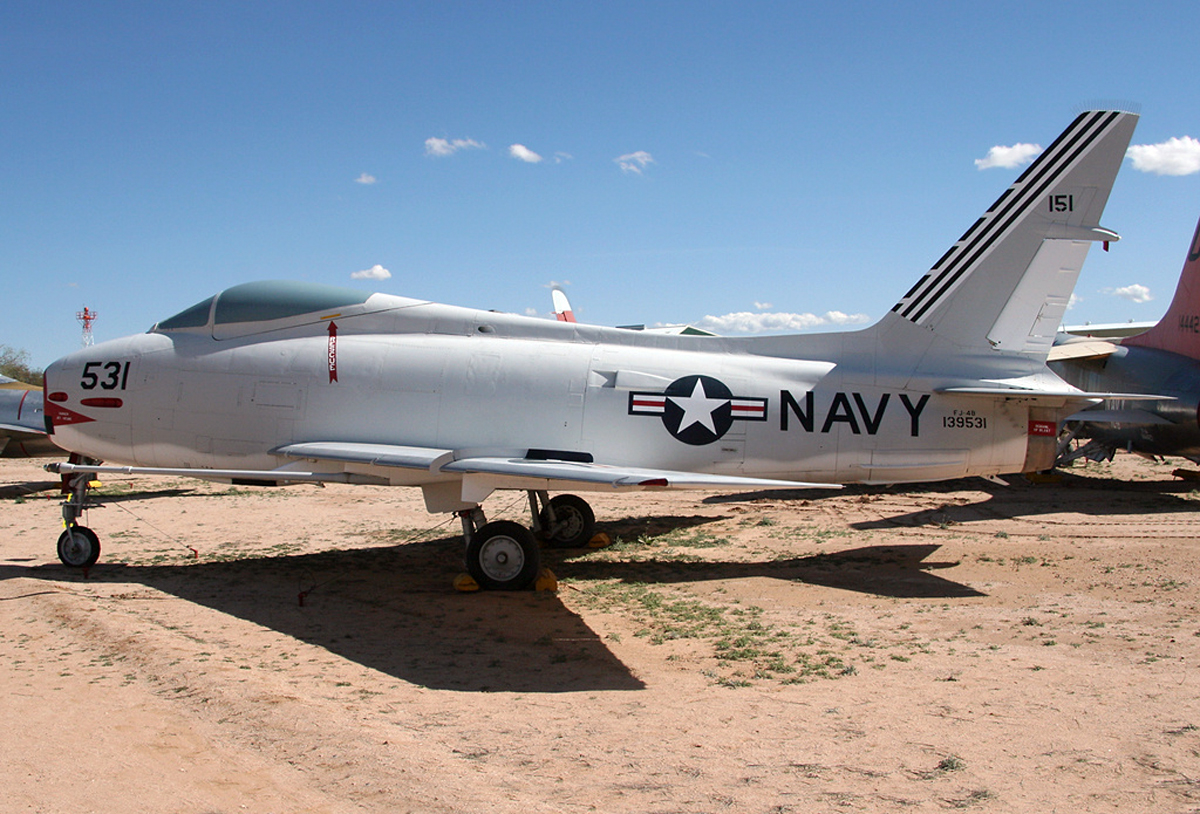
North American FJ-4 Fury Spécifications
| Fabricant | Aviation nord-américaine |
| Rôle | Chasseur-bombardier basé sur le porte-avions |
| Premier vol | 3 octobre 1954 |
| Introduction | 1955 |
| Retraite | 1965 (US Navy), 1972 (Venezuela) |
| Utilisateurs principaux | Marine des États-Unis, Force aérienne vénézuélienne |
| Nombre construit | 374 |
| Coût unitaire | 780 000 $ US (FJ-4B) |
| moteur | Un turboréacteur Pratt & Whitney J48-P-8A, 7 250 lbf (32,3 kN) de poussée |
| Maximum speed | 1 094 km/h (680 mi/h) |
| Range | 1 900 km (1 200 mi) |
| Service ceiling | 44 000 pi (13 400 m) |
| Armement |
|
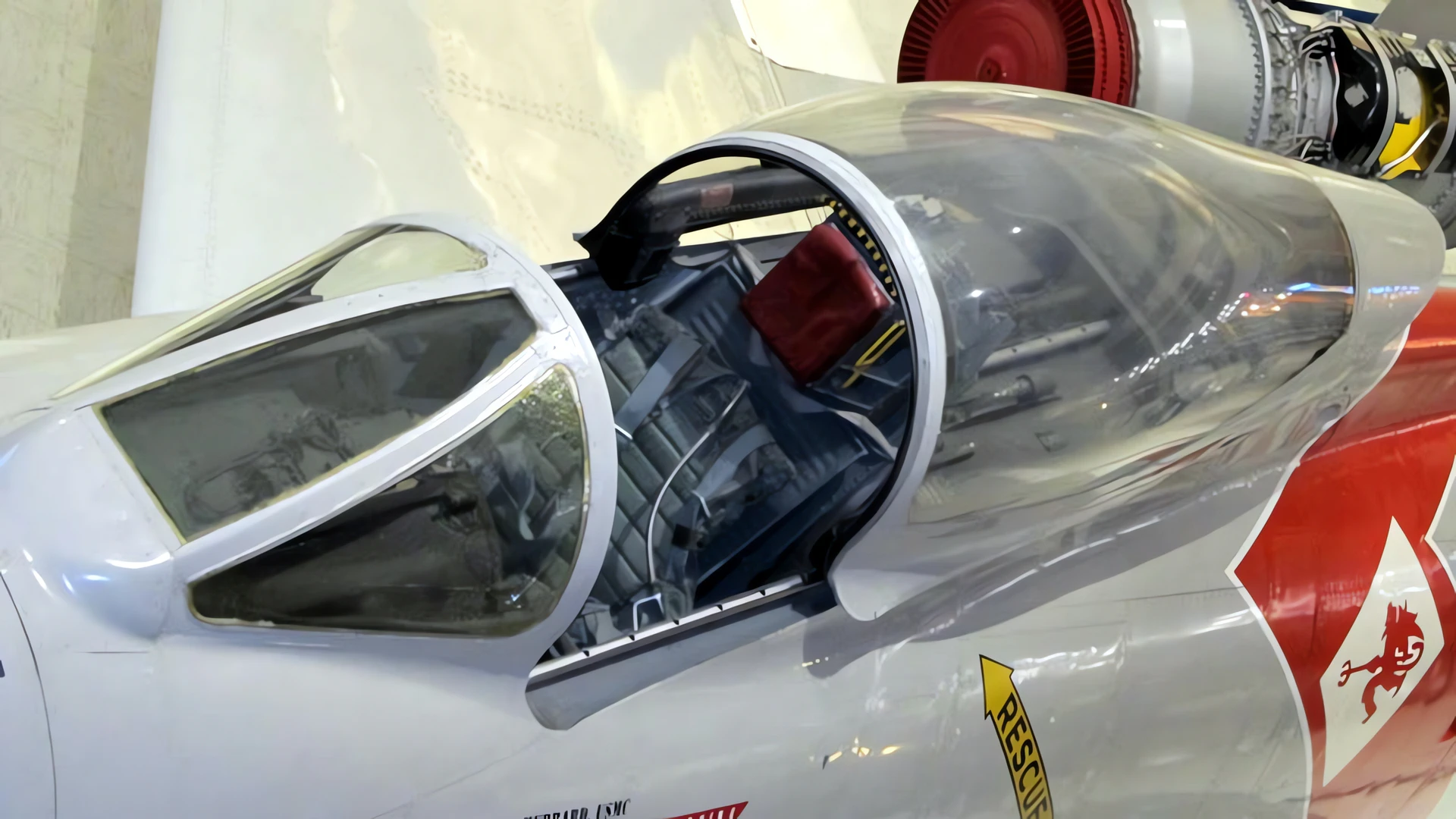
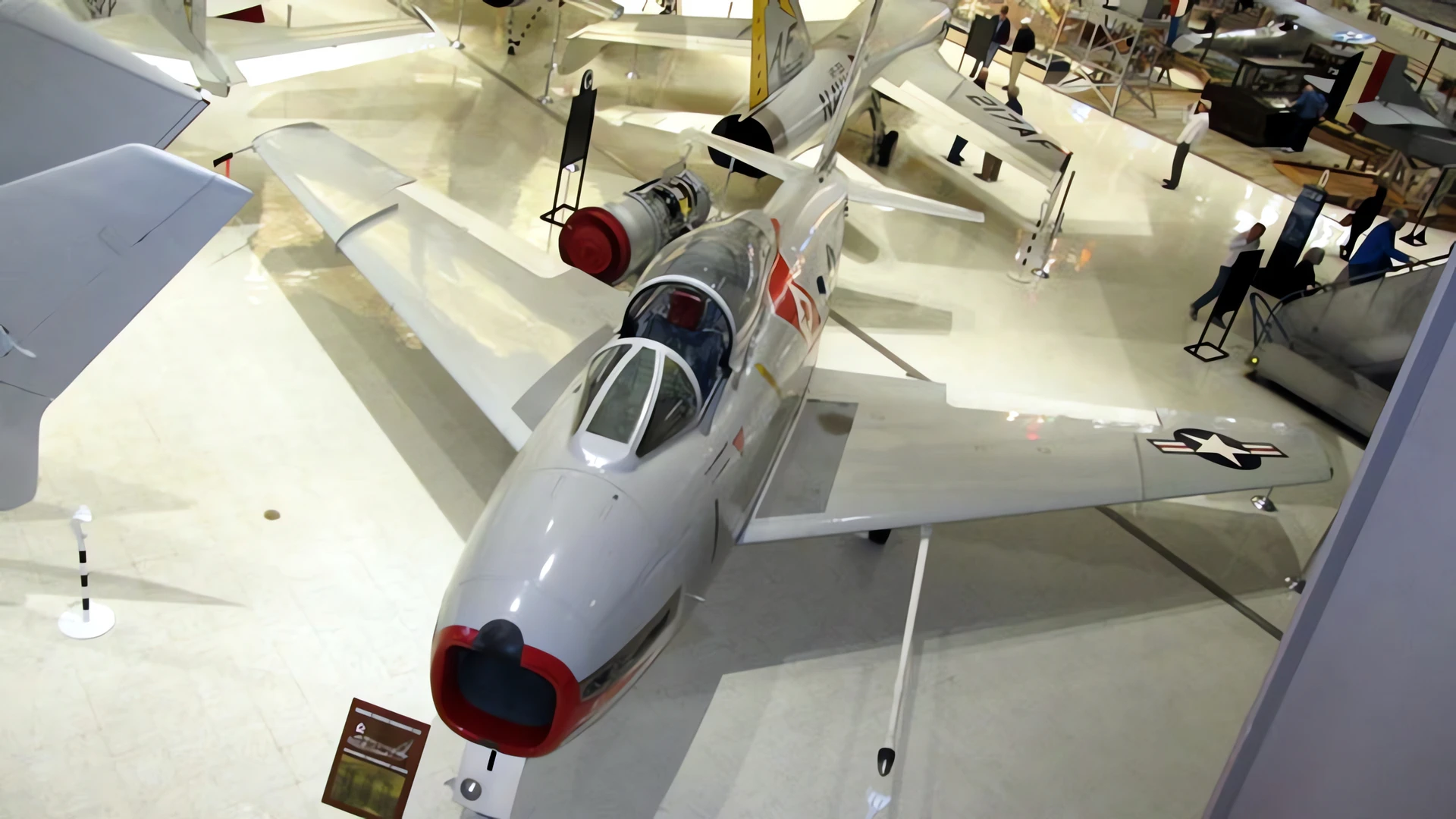
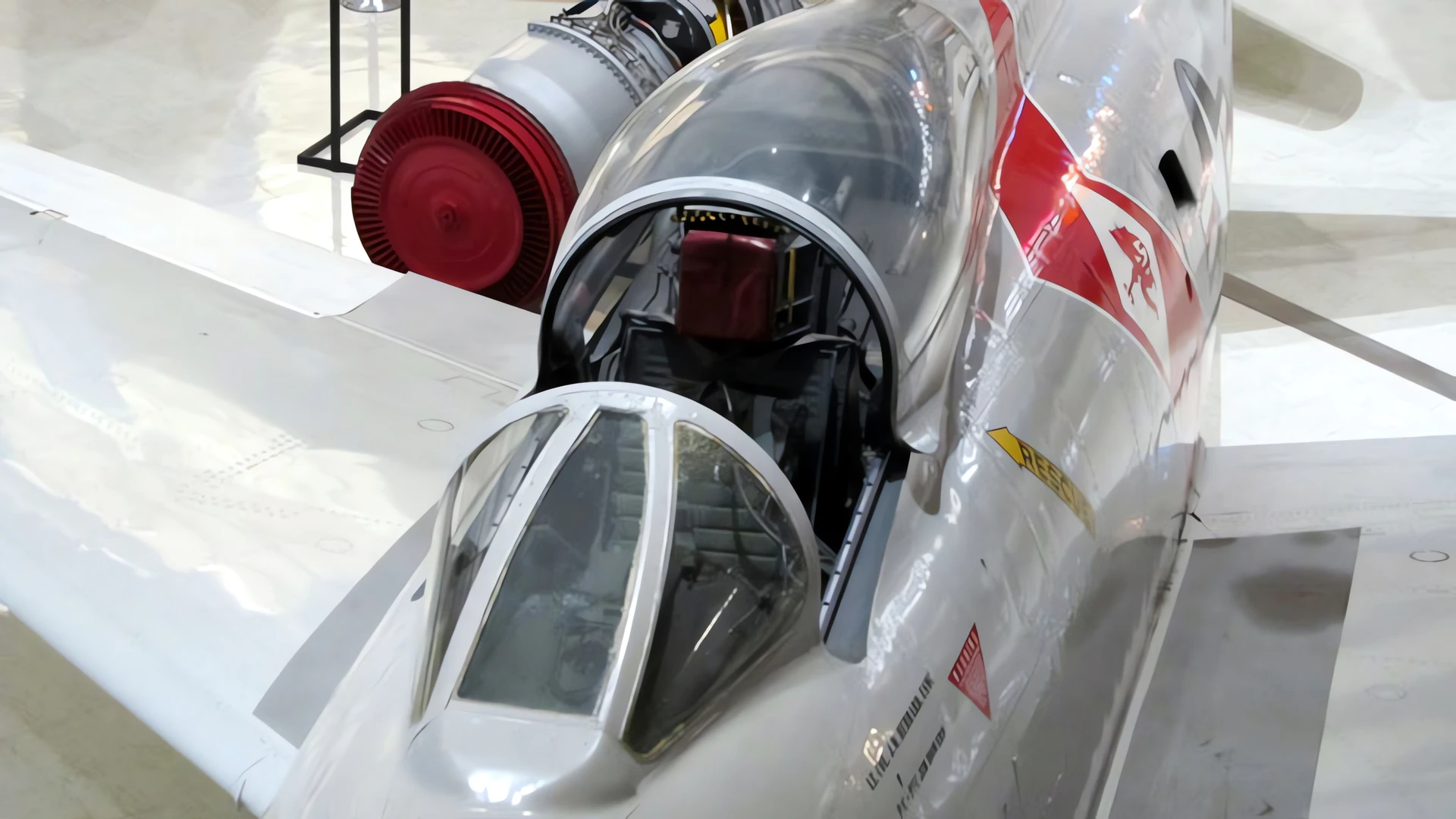
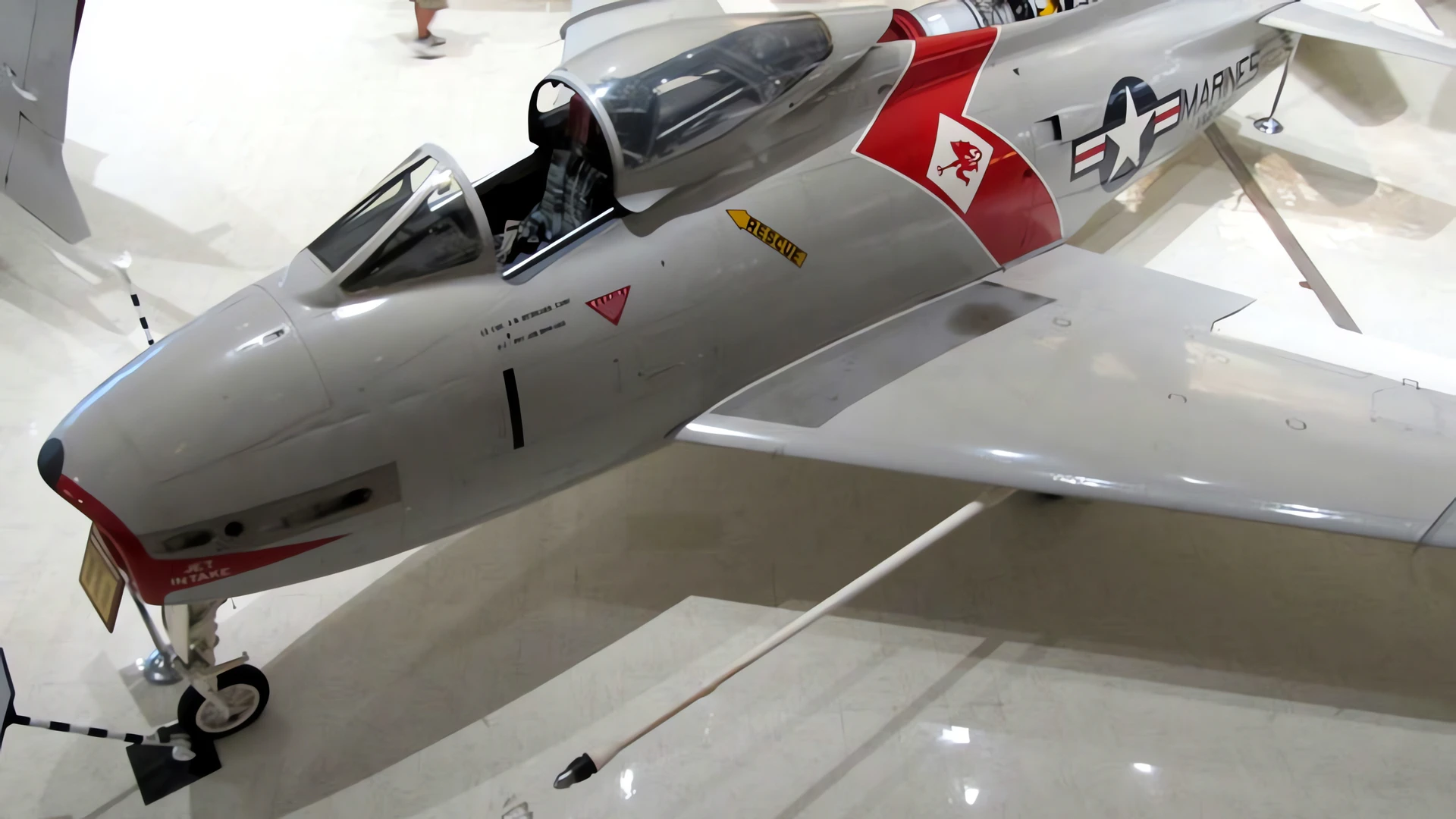
Lla Fureur nord-américaine de FJ-4 était un chasseur-bombardier à voilure balayée pour la Marine et le Corps des Marines des États-Unis. Le développement final d’une lignée qui comprenait la Force aérienne’s F-86 Sabre, le FJ-4 a partagé sa disposition générale et le moteur avec le FJ-3 plus tôt, mais en vedette un design d’aile entièrement nouveau et a été un design très différent dans son incarnation finale.
| North American FJ-4 Fury Walk Around | |
|---|---|
| Photographe | Vladimir Yakubov |
| Localisation | Musée national de l’air et de l’espace |
| Photos | 61 |
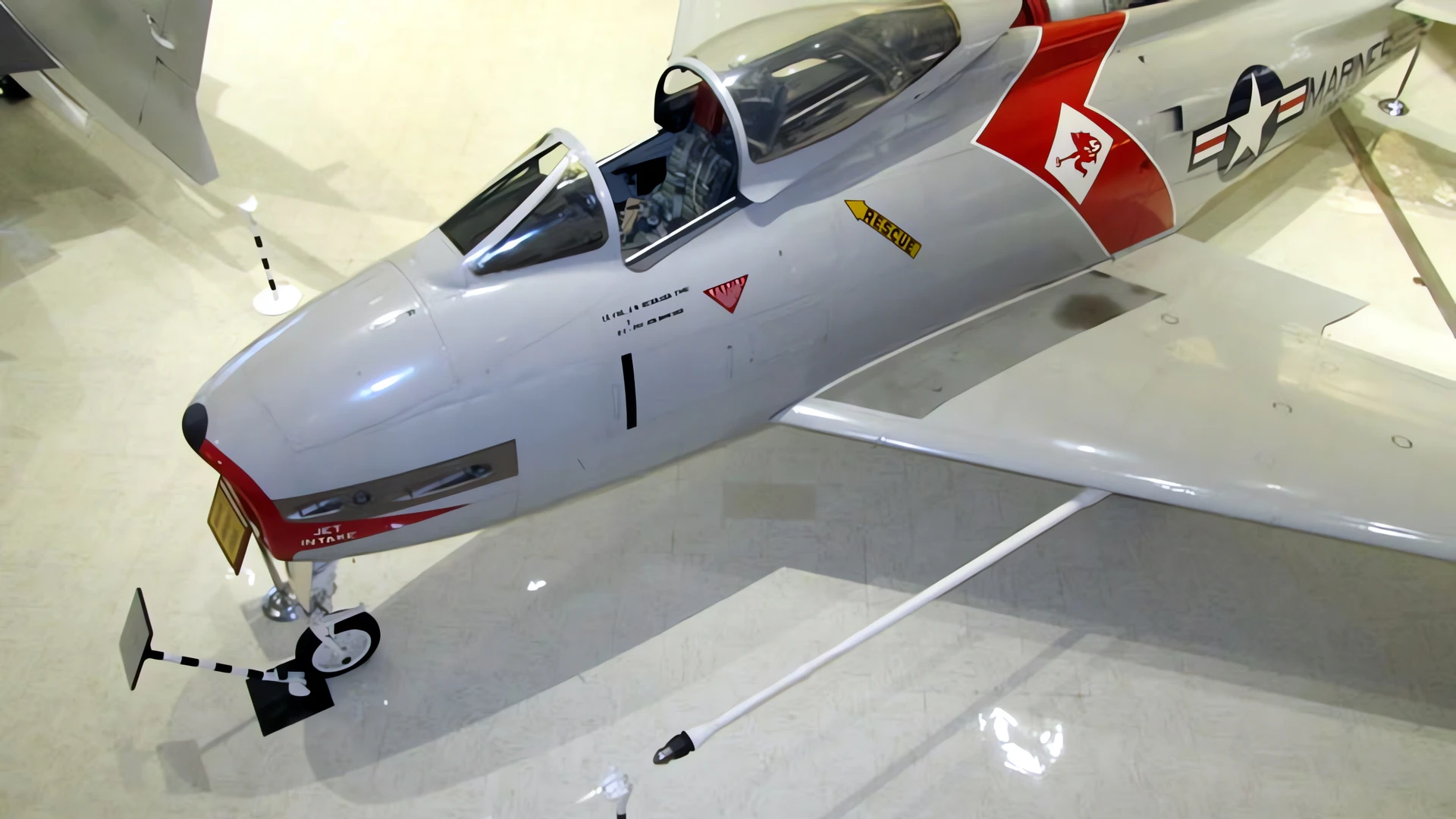
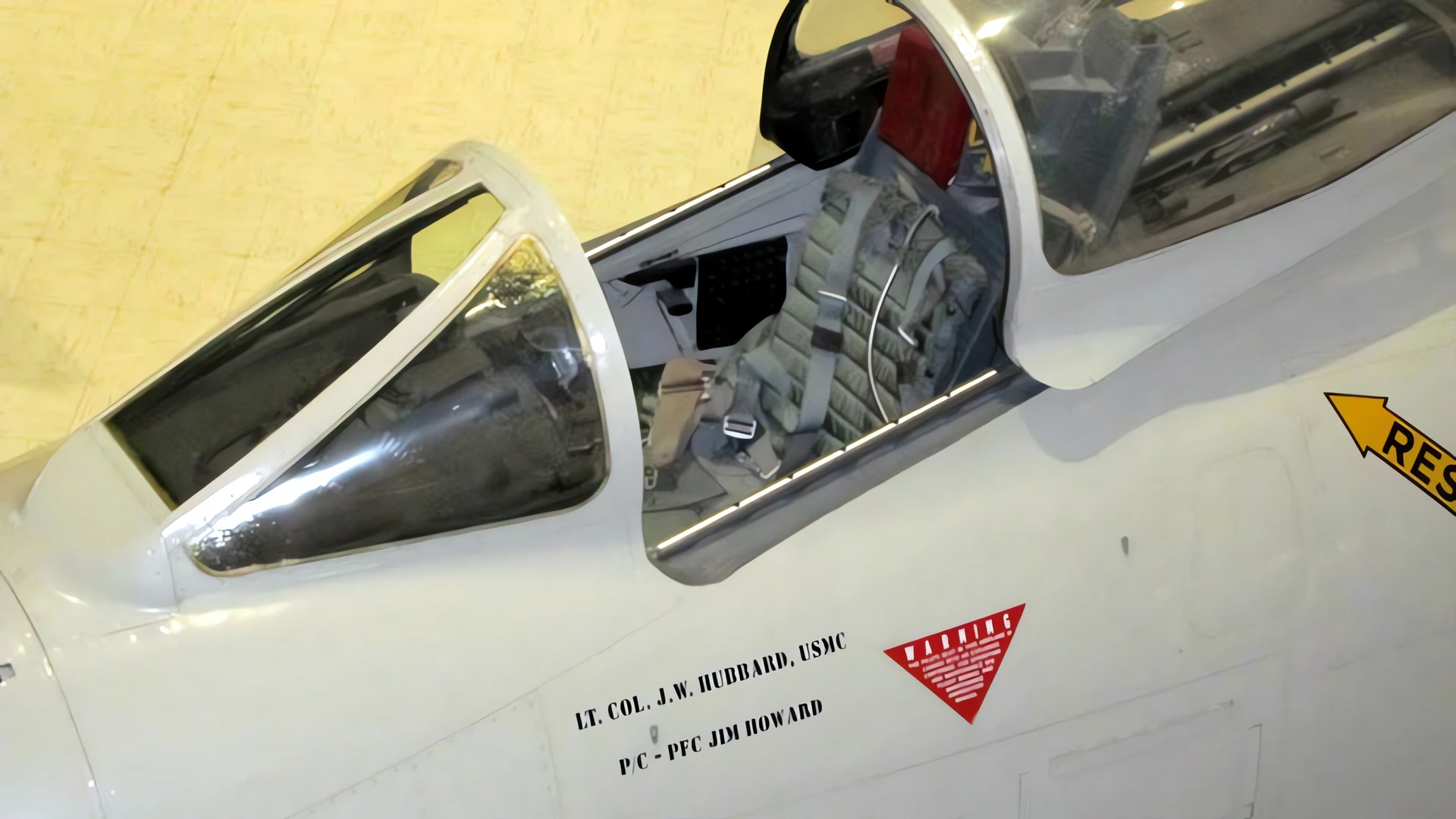
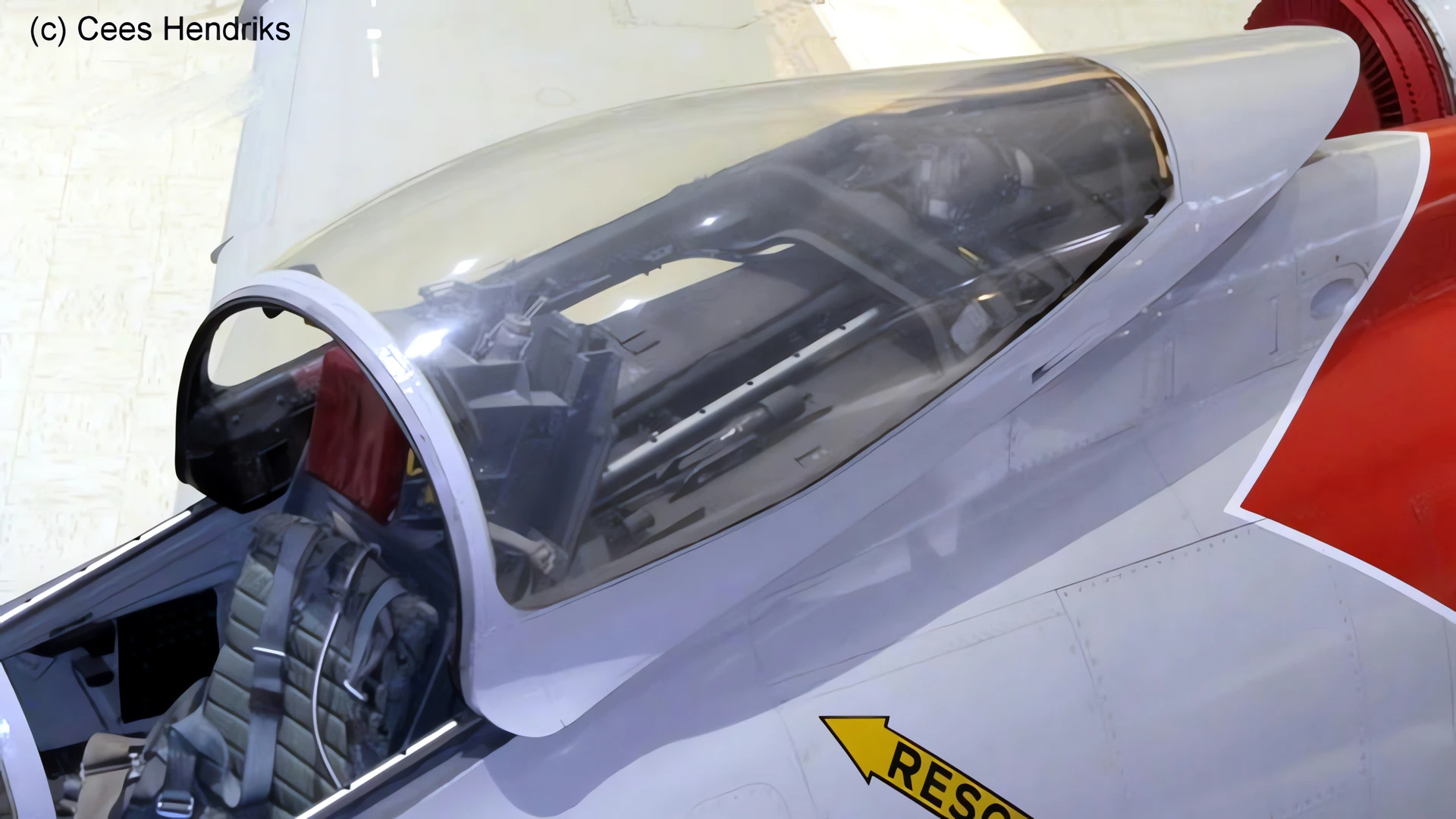
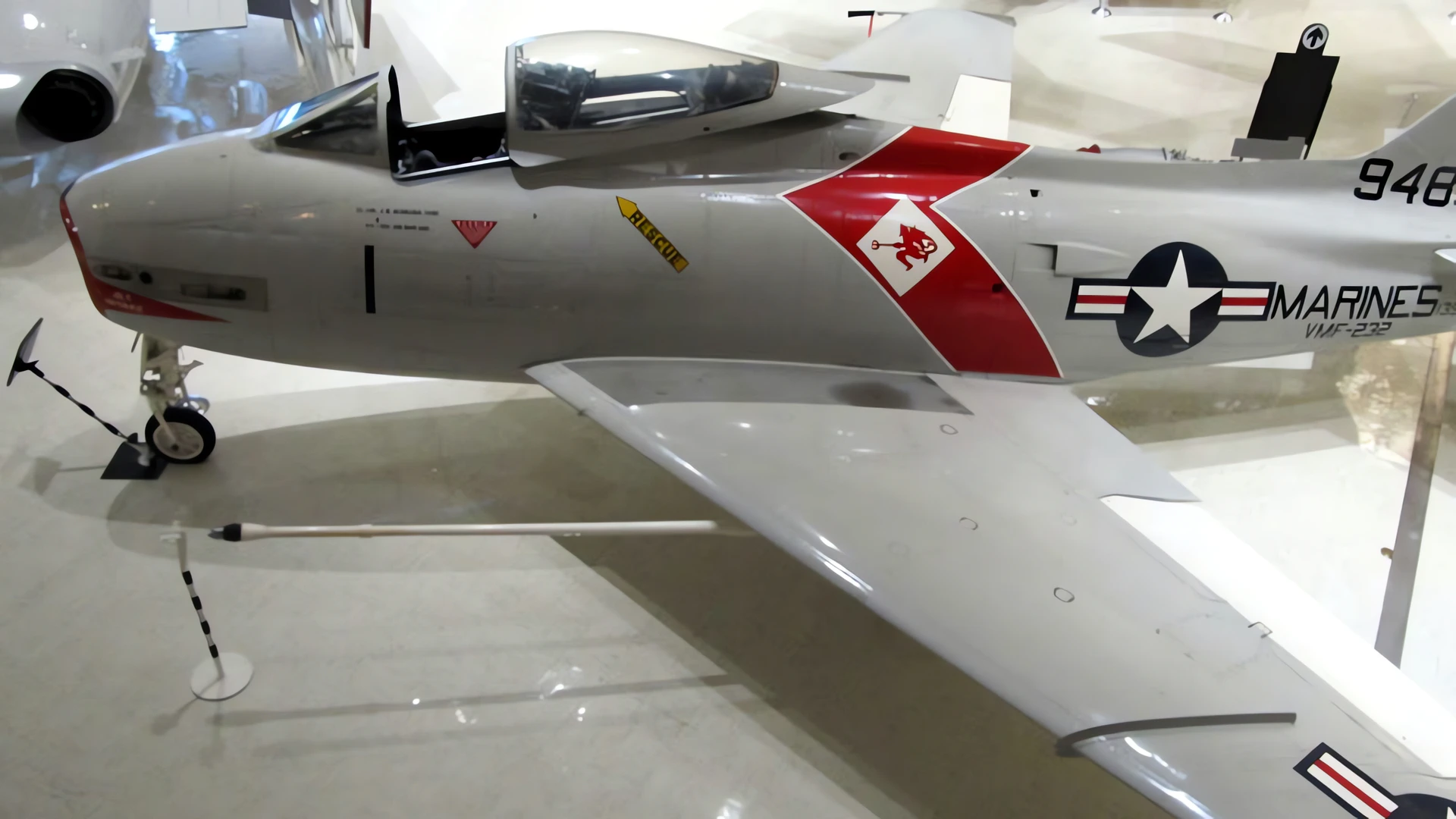
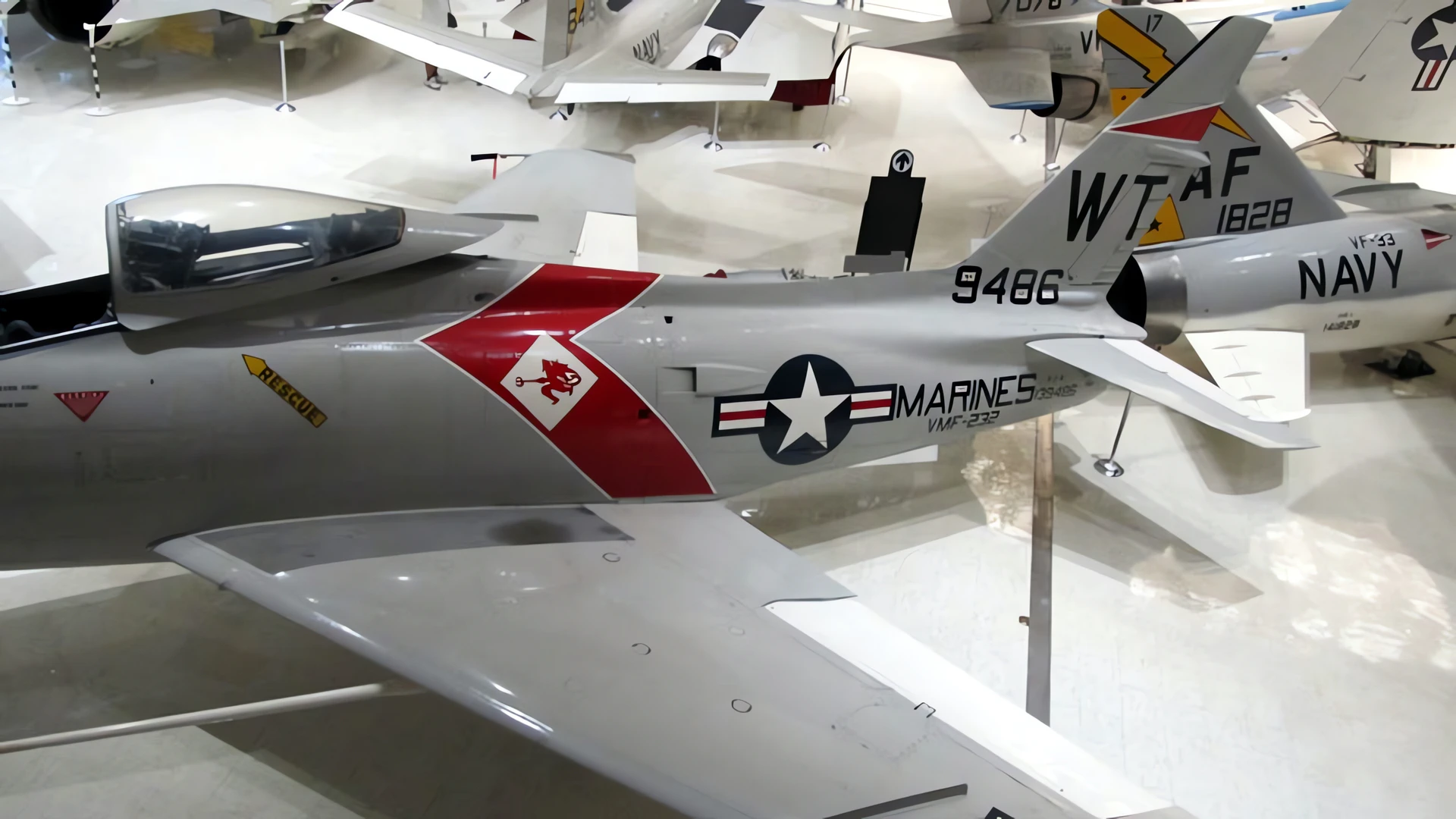

| North American FJ-4B ‘Fury’ Walk Around | |
|---|---|
| Photographe | Fotios Rouch |
| Localisation | Inconnu |
| Photos | 58 |
Voir aussi :


The Peak of the FJ Evolution
Lla Fureur nord-américaine de FJ-4 was the final and most capable iteration of the Fury series. While it shared a common ancestry with the F-86 Sabre, by the time the FJ-4 arrived, it was a completely different beast. Designed primarily for the U.S. Marine Corps as a long-range, high-speed attack aircraft, it featured a deeper fuselage for increased fuel, a completely redesigned wing, and significantly improved landing gear. It transitioned the Fury from a pure dogfighter into a versatile strike platform capable of carrying nuclear weapons.
| Attribute | Technical Specification (FJ-4B) |
|---|---|
| Rôle | Carrier-based Fighter-Bomber / Strike Fighter |
| Crew | 1 (Pilot) |
| First Flight | October 28, 1954 |
| Groupe motopropulseur | 1 × Wright J65-W-16A turbojet |
| Thrust | 7,700 lbf (34 kN) |
| Vitesse maximale | 680 mph (1,094 km/h) at sea level |
| Armement | 4 × 20mm Colt Mk 12 cannons; 5 hardpoints (up to 6,000 lbs) |
| Missiles | AIM-9 Sidewinder (Fighter); AGM-12 Bullpup (Attack) |
Redesigned for the Strike Mission
- Lla « Deep » Fuselage: To address the short range of earlier jets, the FJ-4’s fuselage was noticeably « taller » or deeper than the FJ-1 or the F-86. This allowed it to carry 50% more internal fuel, giving it the « legs » needed for long-range interdiction.
- Thinner, Cleaner Wings: The FJ-4 featured a new, thinner wing with a different airfoil shape and a « cuffed » leading edge. This improved low-speed handling for carrier approaches while reducing drag at high subsonic speeds.
- All-Moving Tail: Like the F-86F, the FJ-4 used an « Tout en vol » tail (stabilator) which provided much better control authority when maneuvering near the speed of sound.
- FJ-4B Ground Attack: Lla « B » variant introduced an automated flight control system and a low-altitude bombing system (LABS) specifically designed for the delivery of tactical nuclear weapons.
Operational History and the Marine Corps
- The Marine’s Choice: While the Navy moved toward the F8U Crusader for air superiority, the Marine Corps leaned heavily on the FJ-4 for close air support. Its rugged design and heavy payload made it ideal for supporting troops from the deck of a carrier.
- Bullpup Pioneer: The FJ-4B was the first aircraft to carry the AGM-12 Bullpup, the world’s first mass-produced guided air-to-ground missile.
- Mid-Air Refueling: To further extend its range, the FJ-4 was equipped with a fixed refueling probe on the left wing, a standard feature for Naval aircraft of that era.
- Preservation: Because the FJ-4 was built in significant numbers (over 370), several are preserved in the US, including examples at the National Museum of the Marine Corps et le Musée de l’air de champ de mars.
Vues : 3109
Vous pouvez voir aussi :
 North American F-82 Twin Mustang – Photos et vidéos
 North American X-15 – Photos et vidéos
 Canadair Sabre – Photos et vidéo
 North American T-28 Trojan – Photos et vidéo
 North American T-2 Buckeye – Photos et vidéo
 North American F-100 Super Sabre – Photos & Vidéo
 North American AT-6D Texan – Photos et vidéo
 North American A-36A Apache – Photos et vidéo
 North American F-86 Sabre – Photos et vidéo
 QF-100D Super Sabre – Photos & Vidéo