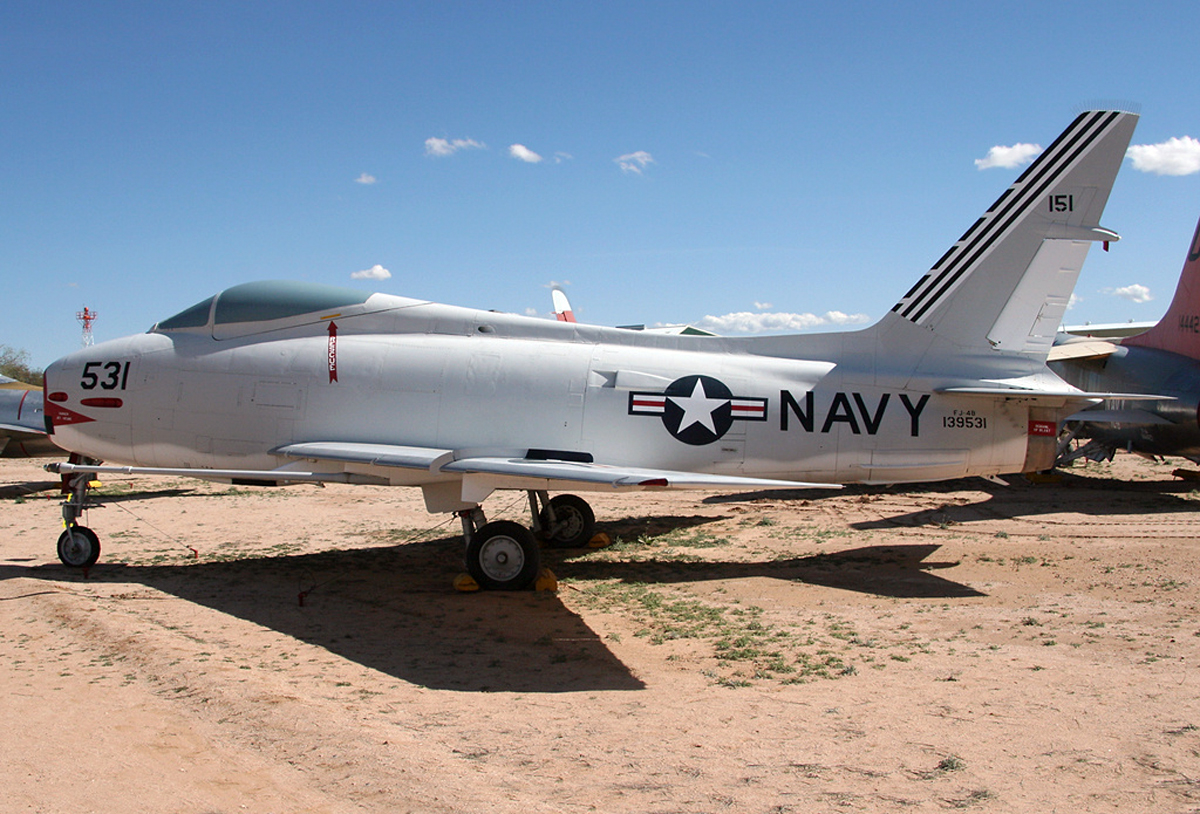
Especificações do FJ-4 Fury na América do Norte
| Fabricante | Aviação norte-americana |
| Papel | Bombardeiro-bombardeiro baseado em porta-aviões |
| Primeiro voo | 3 de outubro de 1954 |
| Introdução | 1955 |
| Aposentado | 1965 (Marinha dos EUA), 1972 (Venezuela) |
| Usuários primários | Marinha dos Estados Unidos, Força Aérea Venezuelana |
| Número construído | 374 |
| Custo unitário | US$ 780.000 (FJ-4B) |
| Motor | Um turbojato Pratt & Whitney J48-P-8A, empuxo de 7.250 lbf (32,3 kN) |
| Velocidade máxima | 680 mph (1.094 km/h) |
| Gama | 1.200 milhas (1.900 km) |
| Teto de serviço | 44.000 pés (13.400 m) |
| Armamento |
|
O FJ-4 Fury norte-americano foi um caça-bombardeiro com capacidade de porta-aviões de asa varrida para a Marinha e o Corpo de Fuzileiros Navais dos Estados Unidos. O desenvolvimento final em uma linhagem que incluía o F-86 Sabre da Força Aérea, o FJ-4 compartilhou seu layout geral e motor com o FJ-3 anterior, mas apresentava um design de asa inteiramente novo e era um design muito diferente em sua incorporação final.
| North American FJ-4 Fury Walk Around | |
|---|---|
| Fotógrafo | Vladimir Yakubov |
| Localização | Museu Nacional do Ar & Espaço |
| Fotos | 61 |
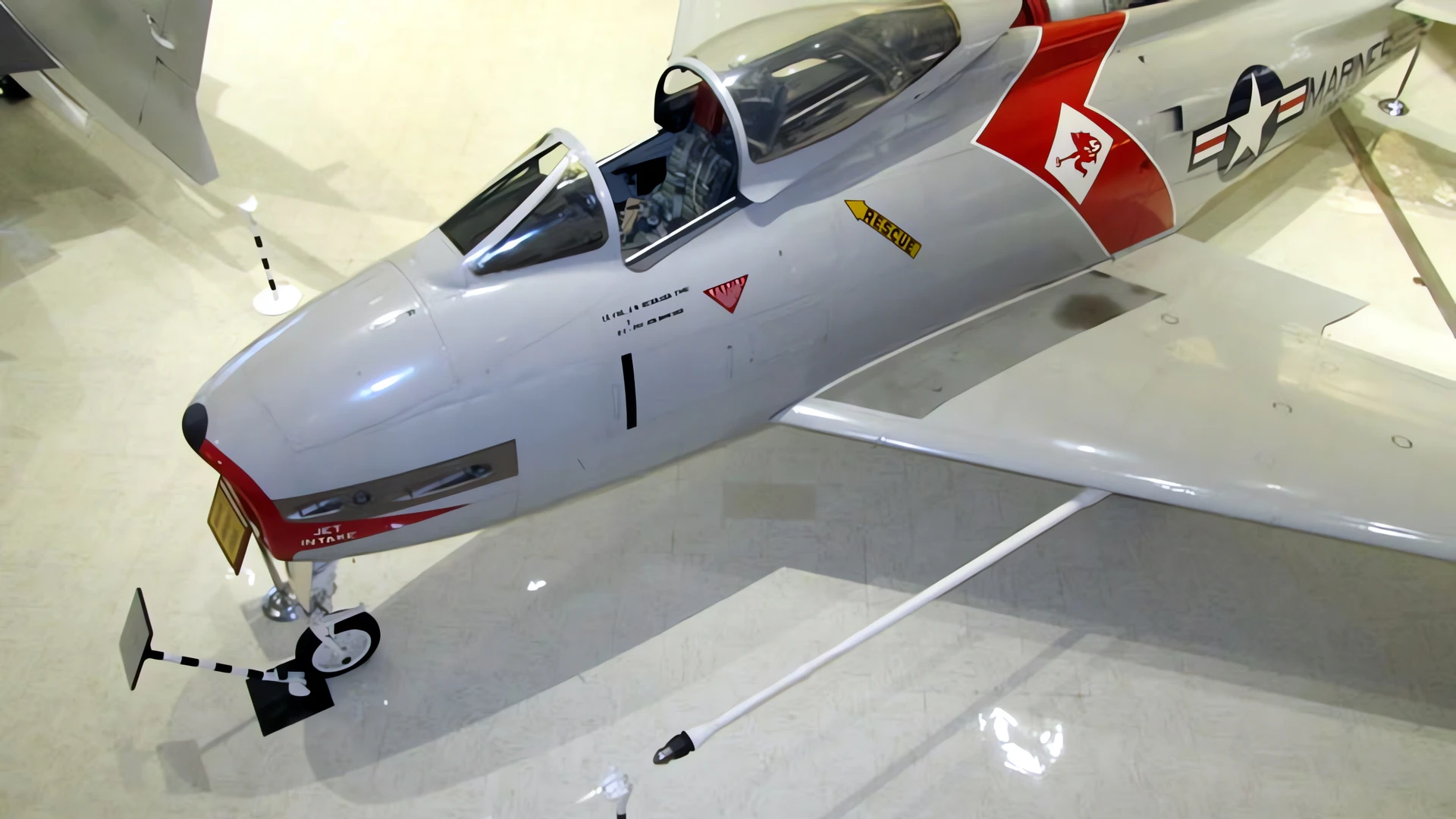
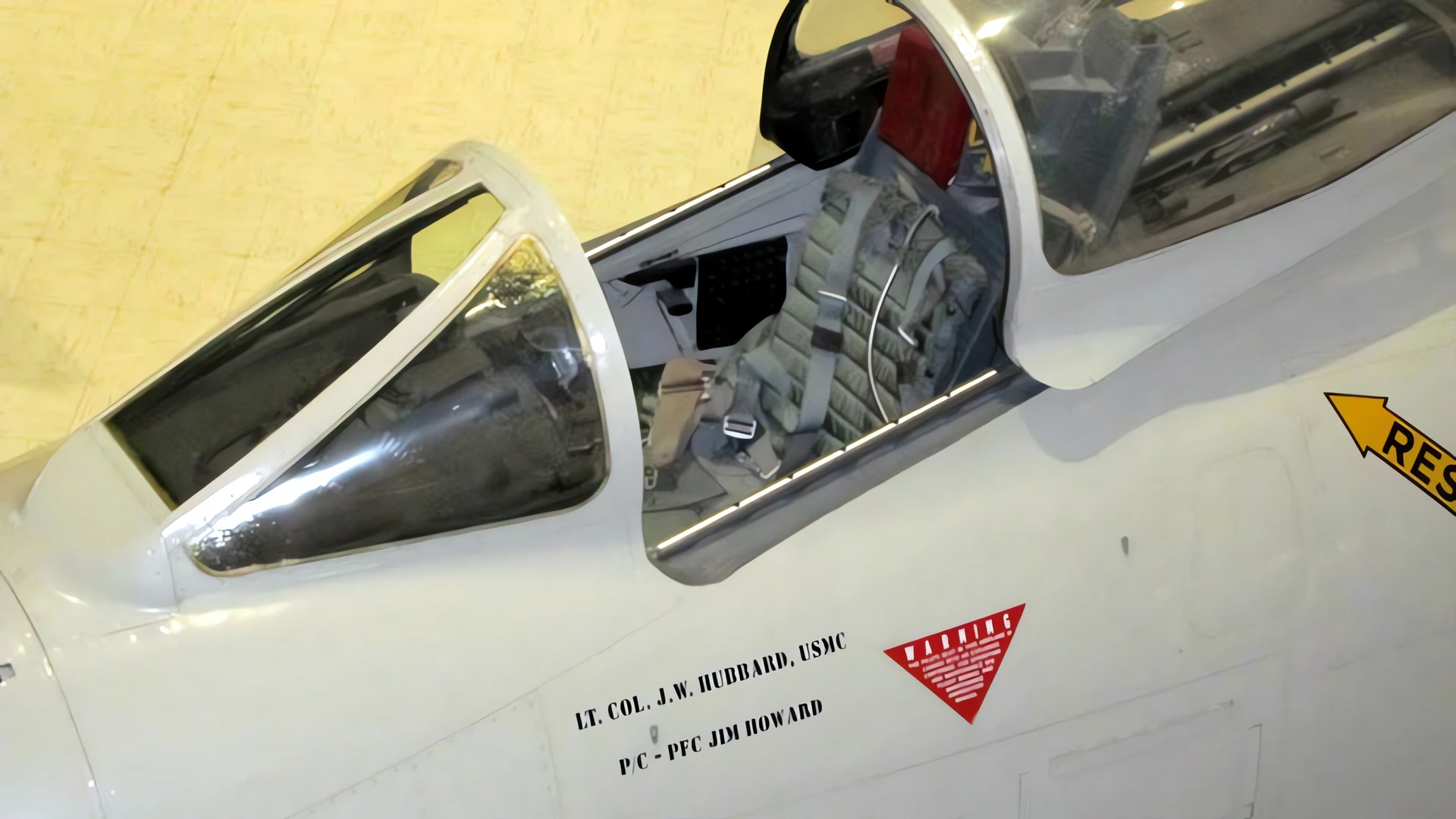
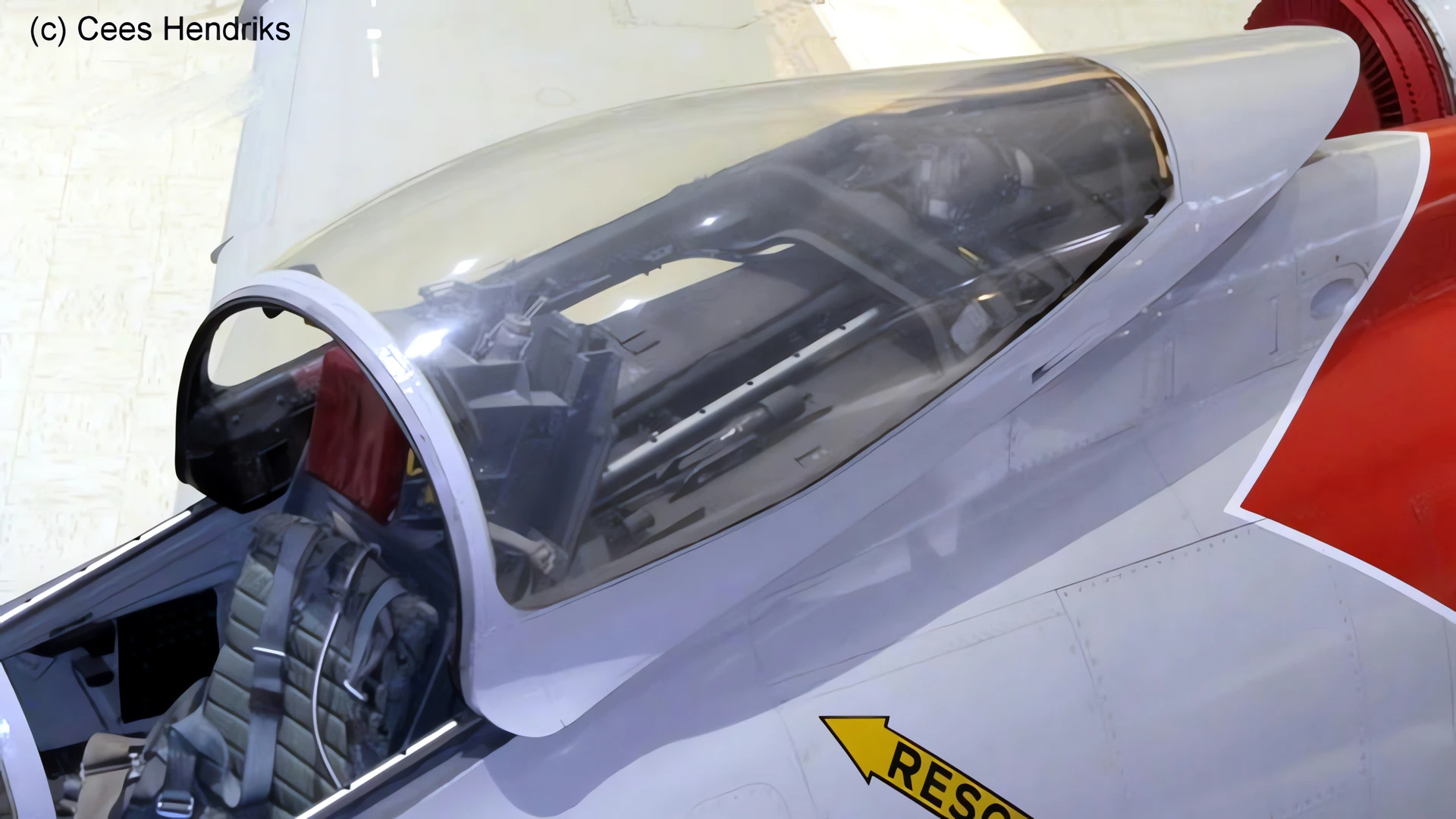
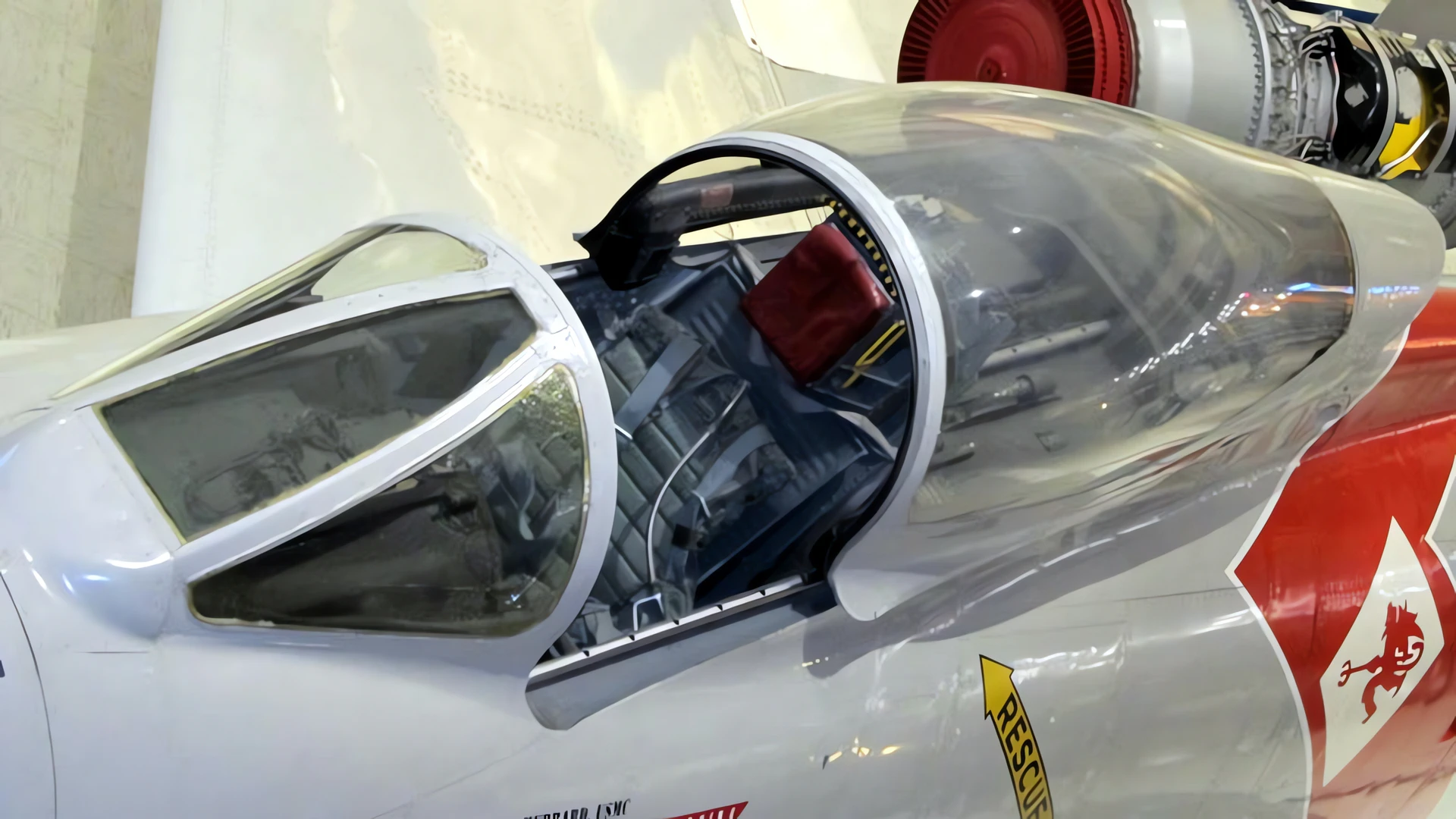
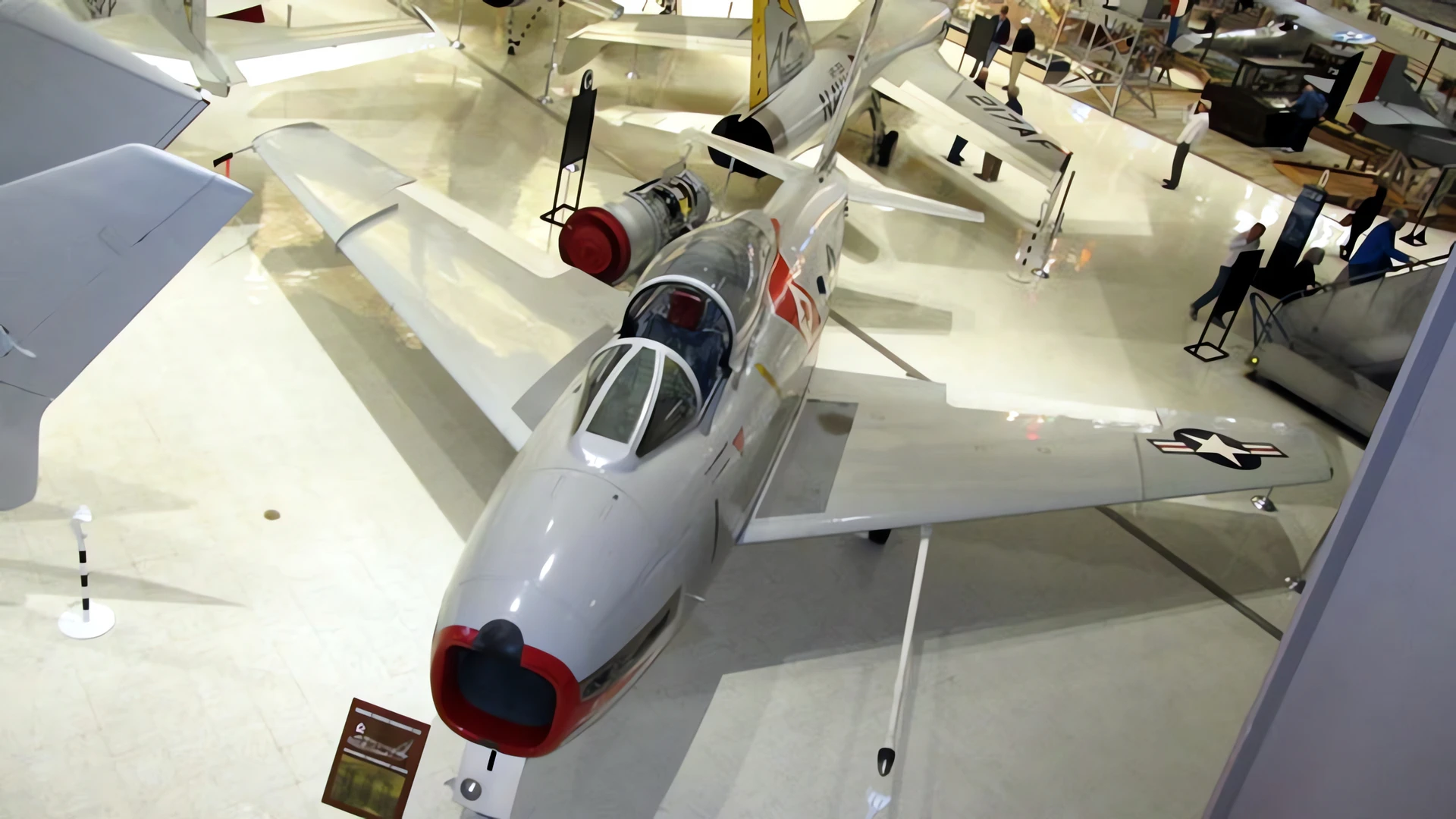
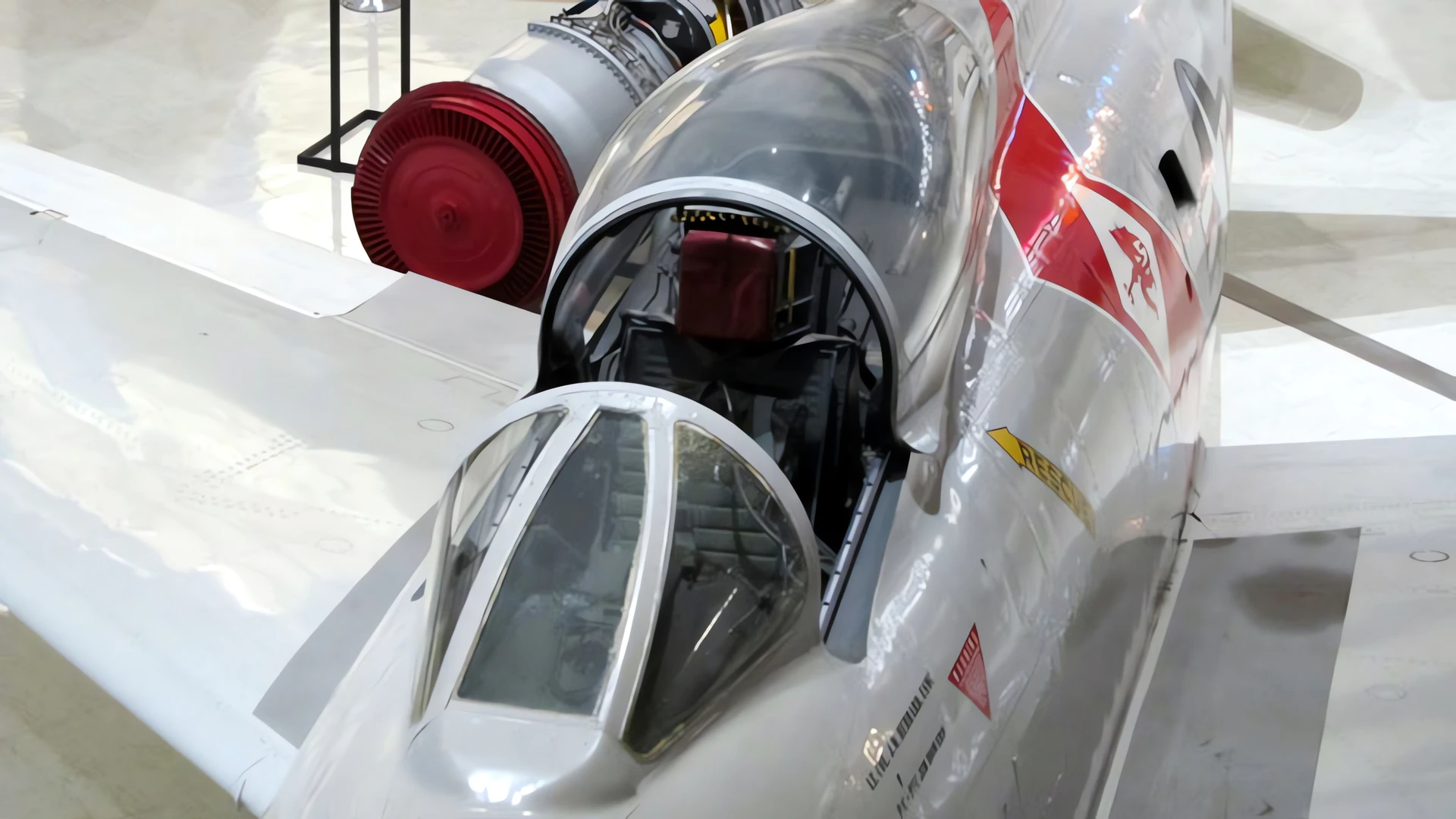
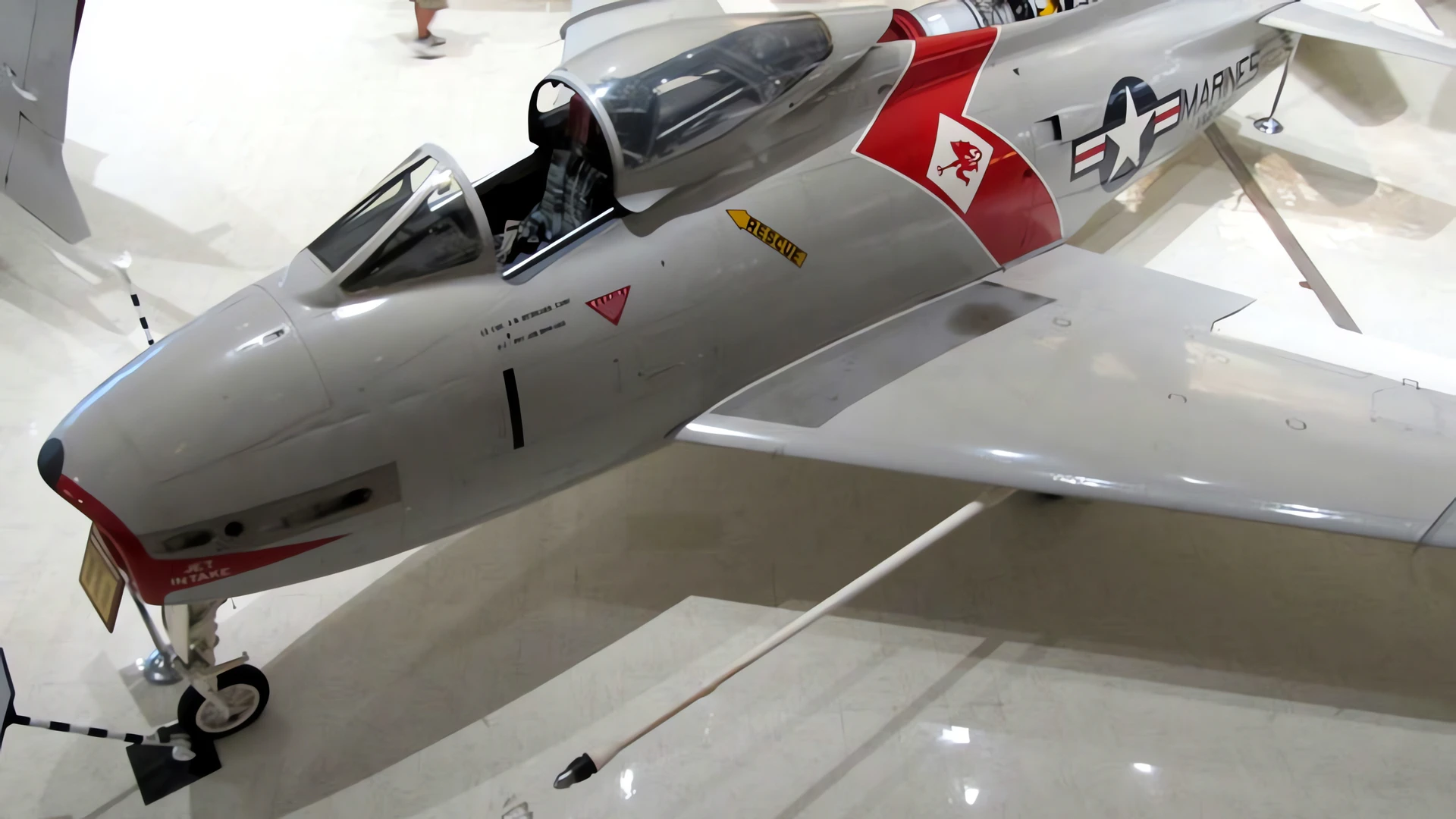
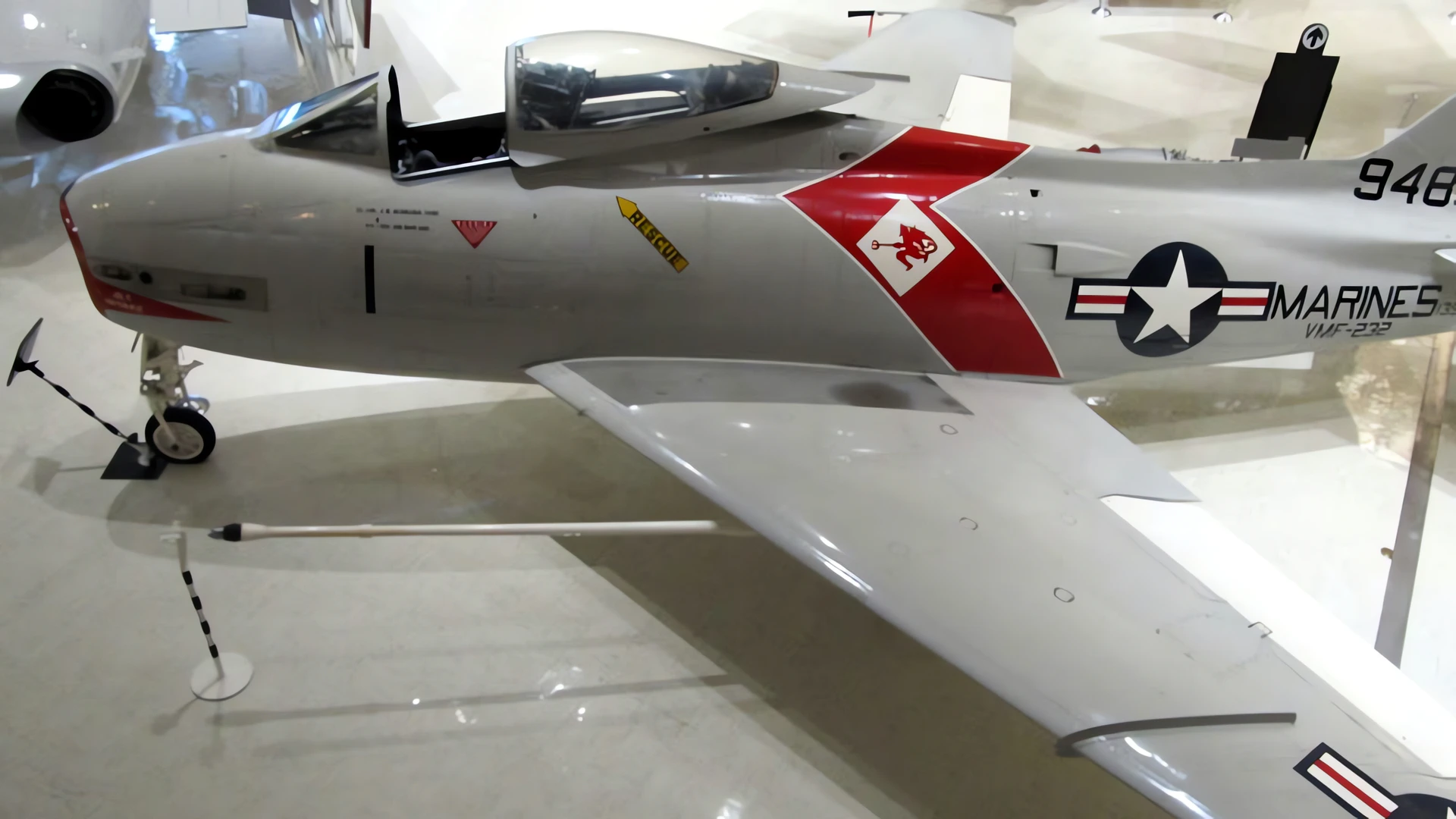
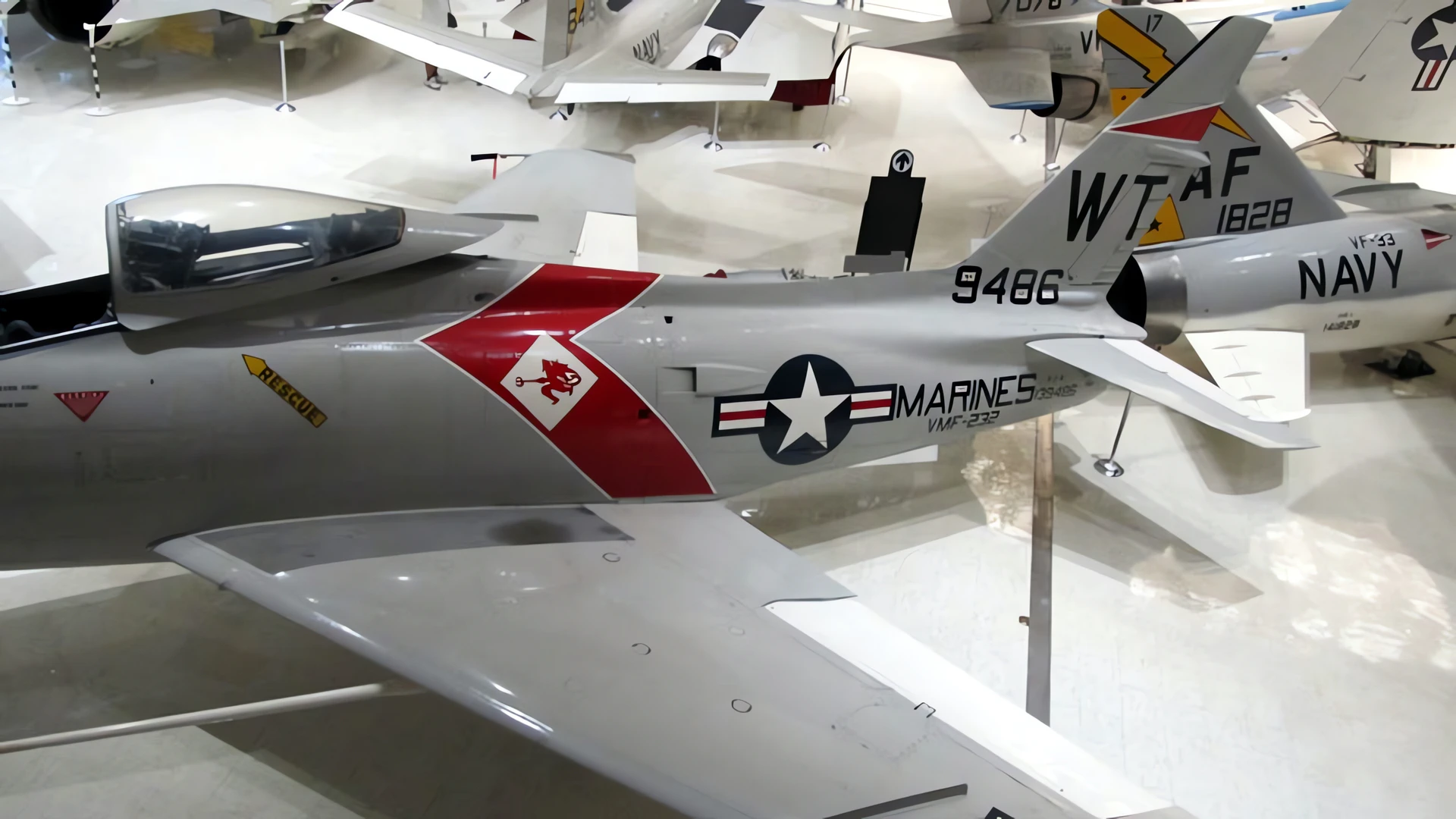

| North American FJ-4B ‘Fury’ Walk Around | |
|---|---|
| Fotógrafo | Fotios Rouch |
| Localização | Desconhecido |
| Fotos | 58 |
Veja também:


The Peak of the FJ Evolution
O FJ-4 Fury norte-americano was the final and most capable iteration of the Fury series. While it shared a common ancestry with the F-86 Sabre, by the time the FJ-4 arrived, it was a completely different beast. Designed primarily for the U.S. Marine Corps as a long-range, high-speed attack aircraft, it featured a deeper fuselage for increased fuel, a completely redesigned wing, and significantly improved landing gear. It transitioned the Fury from a pure dogfighter into a versatile strike platform capable of carrying nuclear weapons.
| Attribute | Technical Specification (FJ-4B) |
|---|---|
| Papel | Carrier-based Fighter-Bomber / Strike Fighter |
| tripulação | 1 (Pilot) |
| First Flight | October 28, 1954 |
| Usina | 1 × Wright J65-W-16A turbojet |
| Thrust | 7,700 lbf (34 kN) |
| Maximum Speed | 680 mph (1,094 km/h) at sea level |
| Armamento | 4 × 20mm Colt Mk 12 cannons; 5 hardpoints (up to 6,000 lbs) |
| Missiles | AIM-9 Sidewinder (Fighter); AGM-12 Bullpup (Attack) |
Redesigned for the Strike Mission
- The “Deep” Fuselage: To address the short range of earlier jets, the FJ-4’s fuselage was noticeably “taller” or deeper than the FJ-1 or the F-86. This allowed it to carry 50% more internal fuel, giving it the “legs” needed for long-range interdiction.
- Thinner, Cleaner Wings: The FJ-4 featured a new, thinner wing with a different airfoil shape and a “cuffed” leading edge. This improved low-speed handling for carrier approaches while reducing drag at high subsonic speeds.
- All-Moving Tail: Like the F-86F, the FJ-4 used an “all-flying” tail (stabilator) which provided much better control authority when maneuvering near the speed of sound.
- FJ-4B Ground Attack: The “B” variant introduced an automated flight control system and a low-altitude bombing system (LABS) specifically designed for the delivery of tactical nuclear weapons.
Operational History and the Marine Corps
- The Marine’s Choice: While the Navy moved toward the F8U Crusader for air superiority, the Marine Corps leaned heavily on the FJ-4 for close air support. Its rugged design and heavy payload made it ideal for supporting troops from the deck of a carrier.
- Bullpup Pioneer: The FJ-4B was the first aircraft to carry the AGM-12 Bullpup, the world’s first mass-produced guided air-to-ground missile.
- Mid-Air Refueling: To further extend its range, the FJ-4 was equipped with a fixed refueling probe on the left wing, a standard feature for Naval aircraft of that era.
- Preservation: Because the FJ-4 was built in significant numbers (over 370), several are preserved in the US, including examples at the National Museum of the Marine Corps e o Museu Aéreo de Campo de Março.
Visualizações : 3114
Você pode ver também:
 North American F-82 Twin Mustang – Fotos e Vídeos
 North American X-15 – Fotos e Vídeos
 Canadair Sabre – Fotos e Vídeo
 North American T-28 Trojan – Fotos e Vídeo
 North American T-2 Buckeye – Fotos e Vídeo
 North American F-100 Super Sabre – Fotos e Vídeo
 North American AT-6D Texan – Fotos e Vídeo
 North American A-36A Apache – Fotos e Vídeo
 North American F-86 Sabre – Fotos e Vídeo
 QF-100D Super Sabre – Fotos e Vídeo