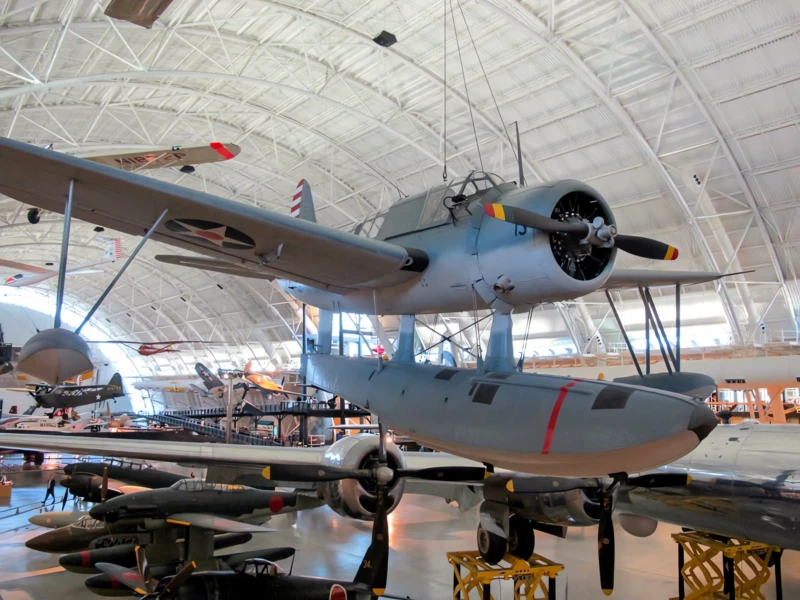
Vought OS2U Kingfisher | |
|---|---|
| Pays | Usa |
| Rôle | Hydravion d’observation |
| Premier vol | 1938 |
| Construit | 1519 |
Lla Vought OS2U Martin-pêcheur was an American catapult-launched observation floatplane. It was a compact mid-wing monoplane, with a large central float and small stabilizing floats. Performance was modest, because of its light engine. The OS2U could also operate on fixed, wheeled, taildragger landing gear. The OS2U was the main shipboard observation aircraft used by the United States Navy during World War II, and 1,519 of the aircraft were built. It served on battleships and cruisers of the US Navy, with the United States Marine Corps in Marine Scouting Squadron Three (VMS-3), with the United States Coast Guard at coastal air stations, at sea with the Fleet Air Arm of the Royal Navy, and with the Soviet Navy. The Royal Australian Air Force also operated a few Kingfishers from shore bases.
| Vought OS2U-3 Kingfisher Walk Around | |
|---|---|
| Photographe | Vladimir Yakubov |
| Localisation | Musée national de l’air et de l’espace |
| Photos | 100 |
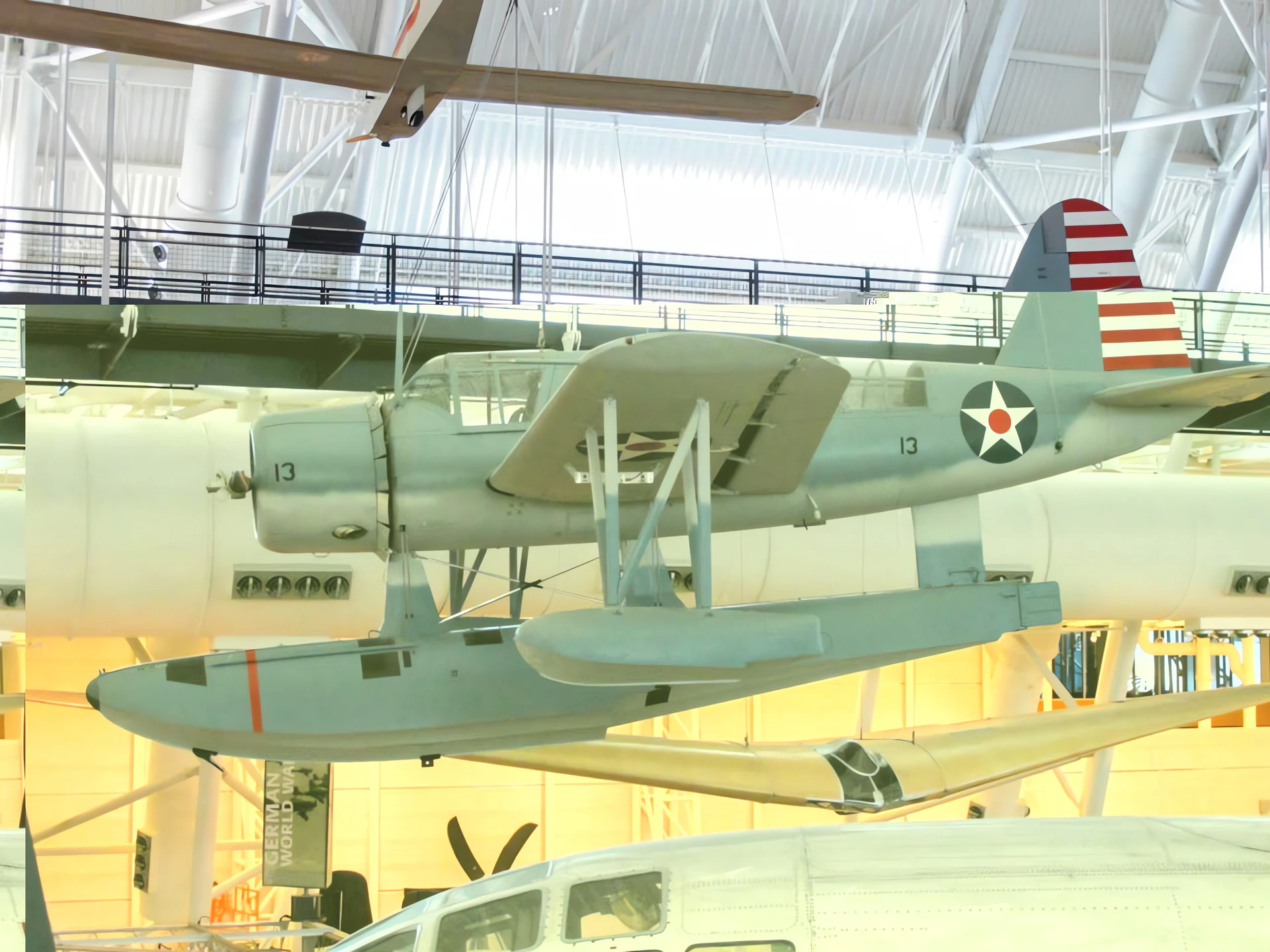
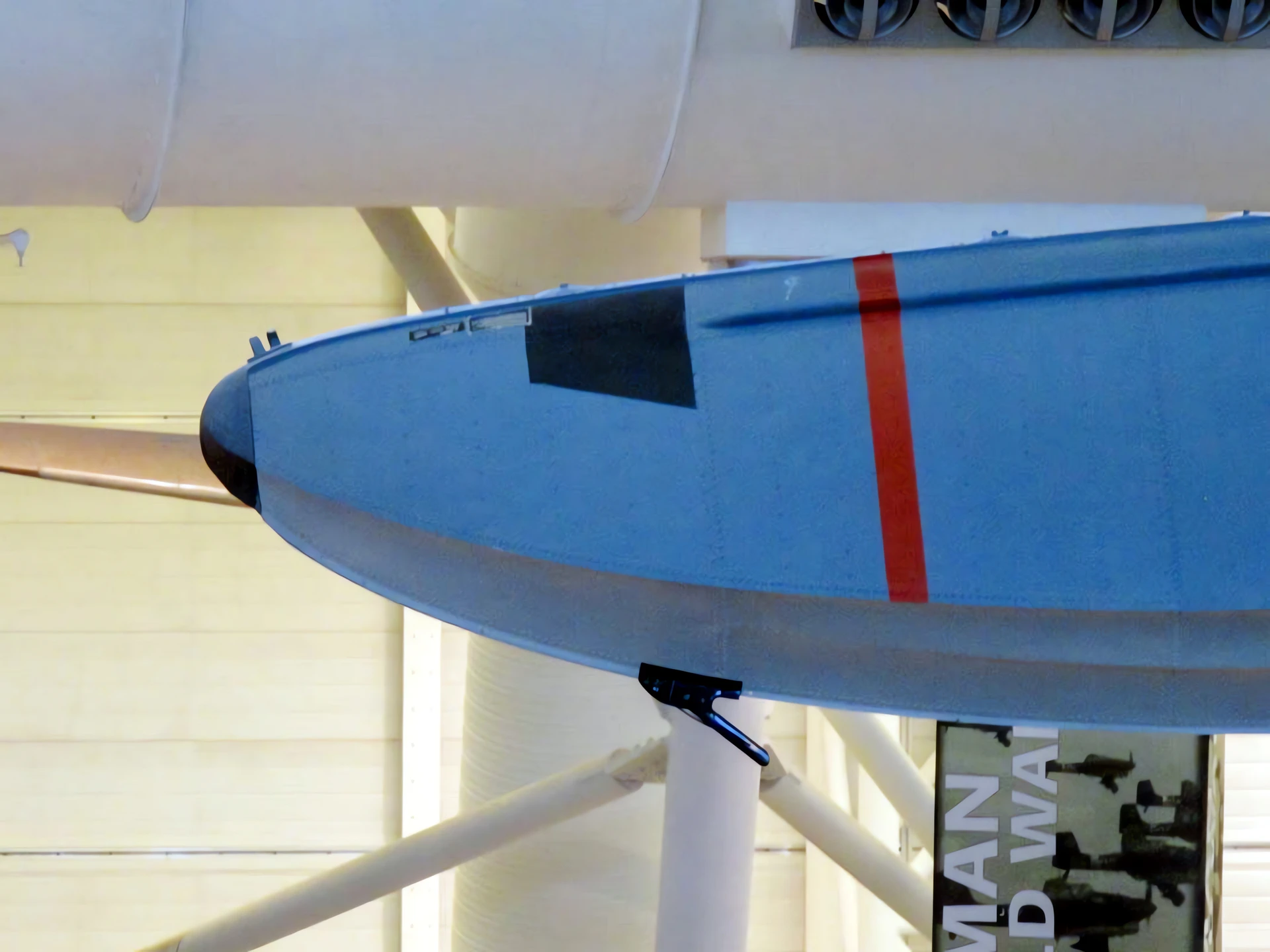
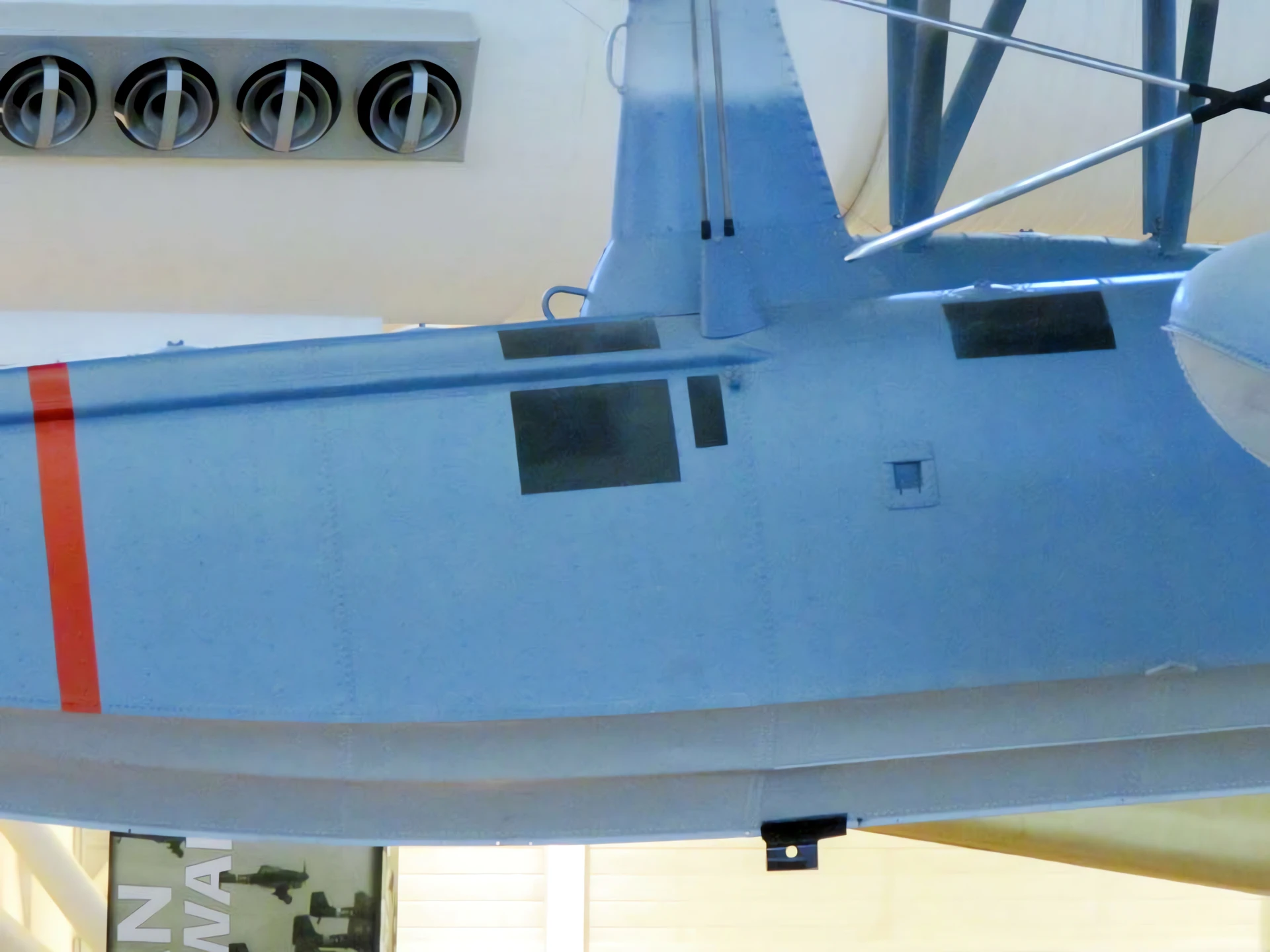
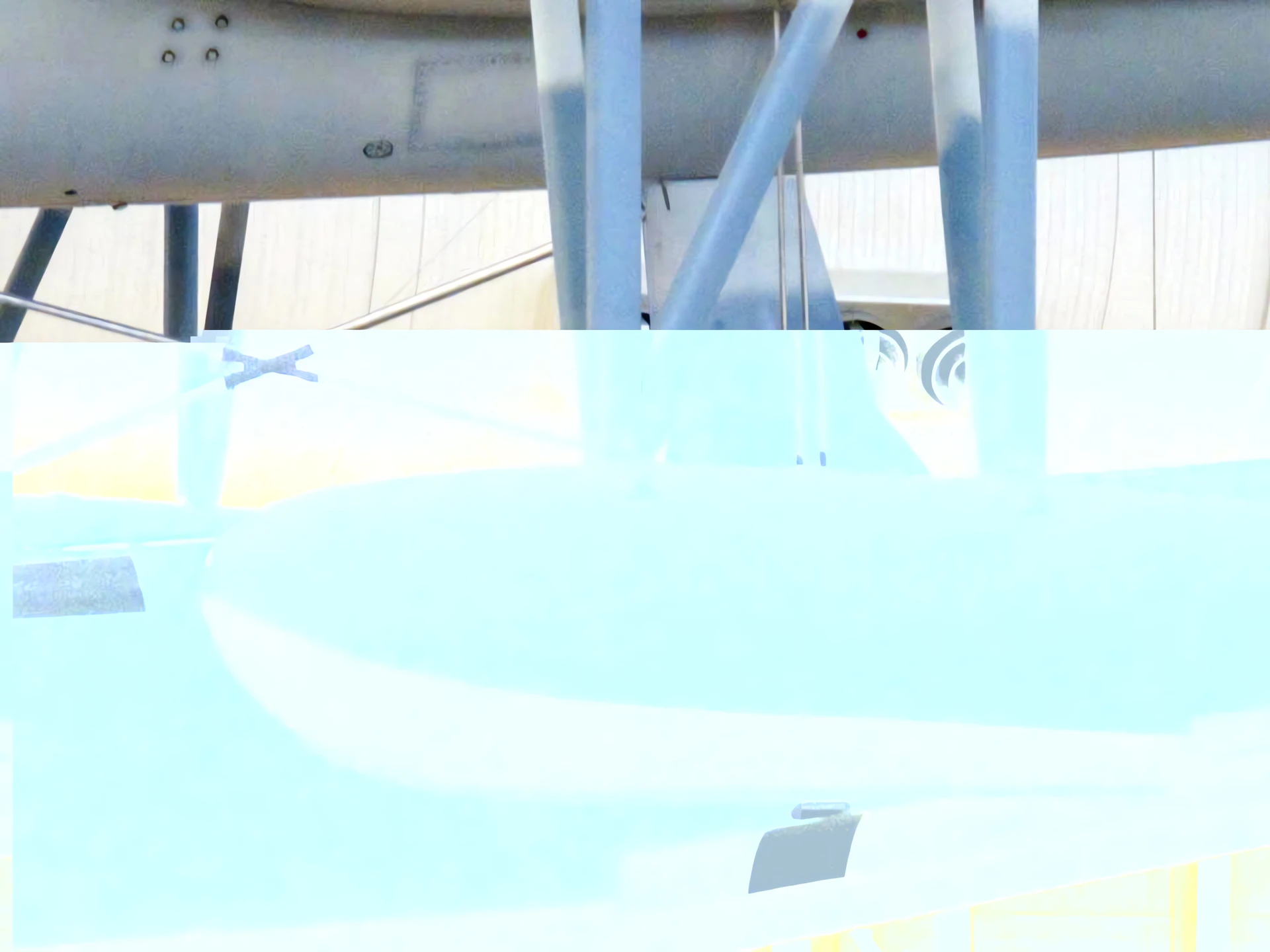
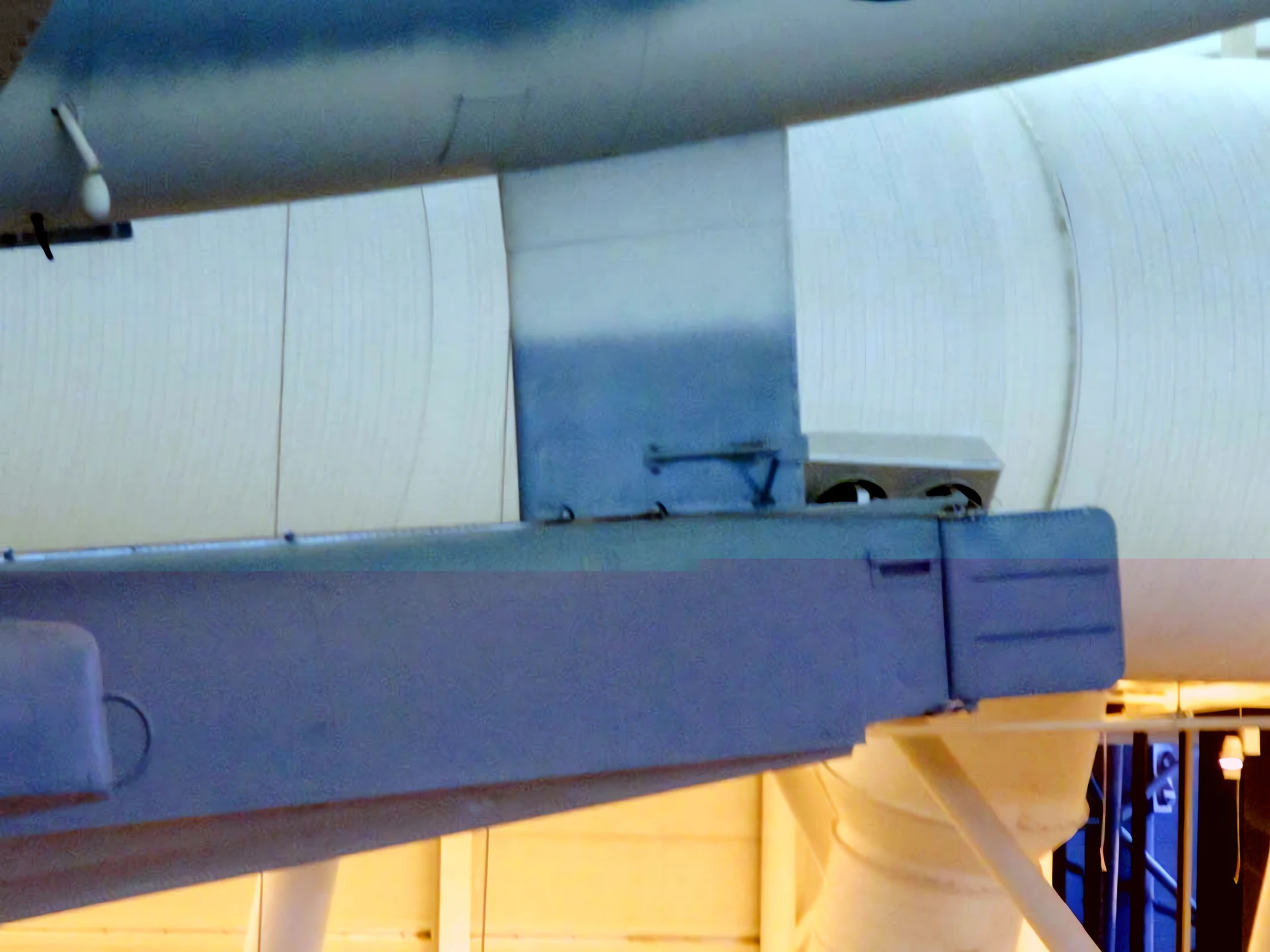
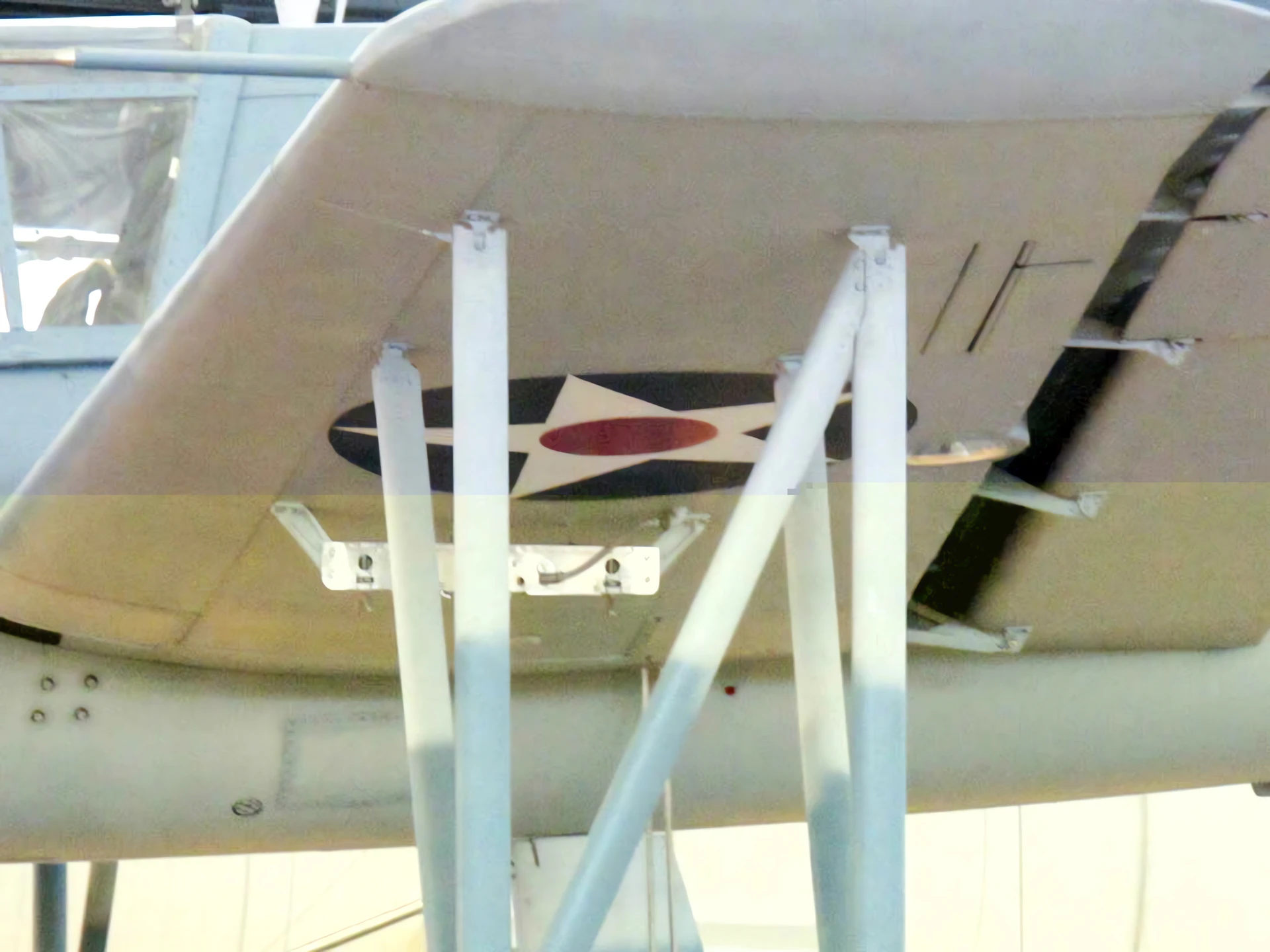
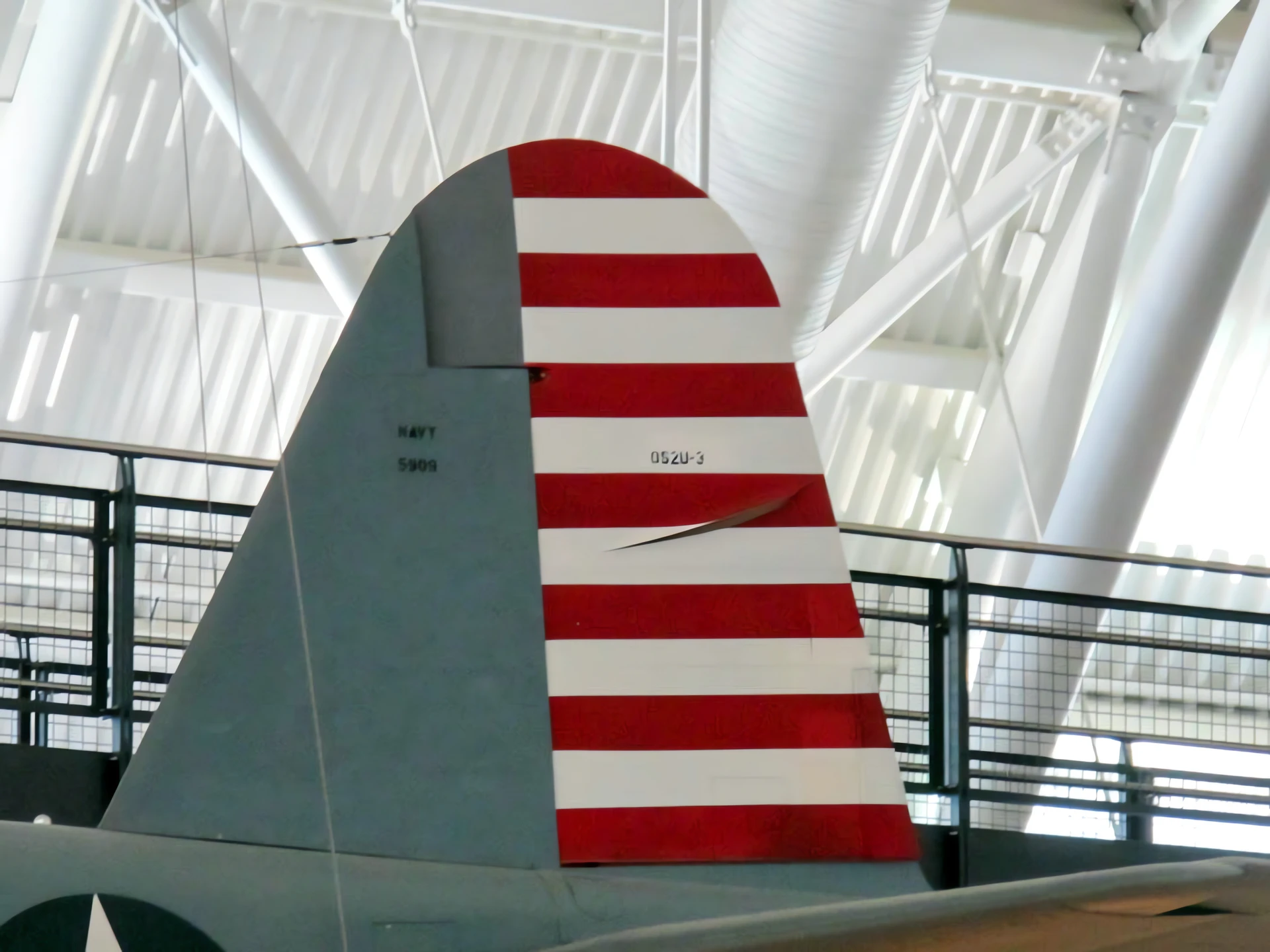
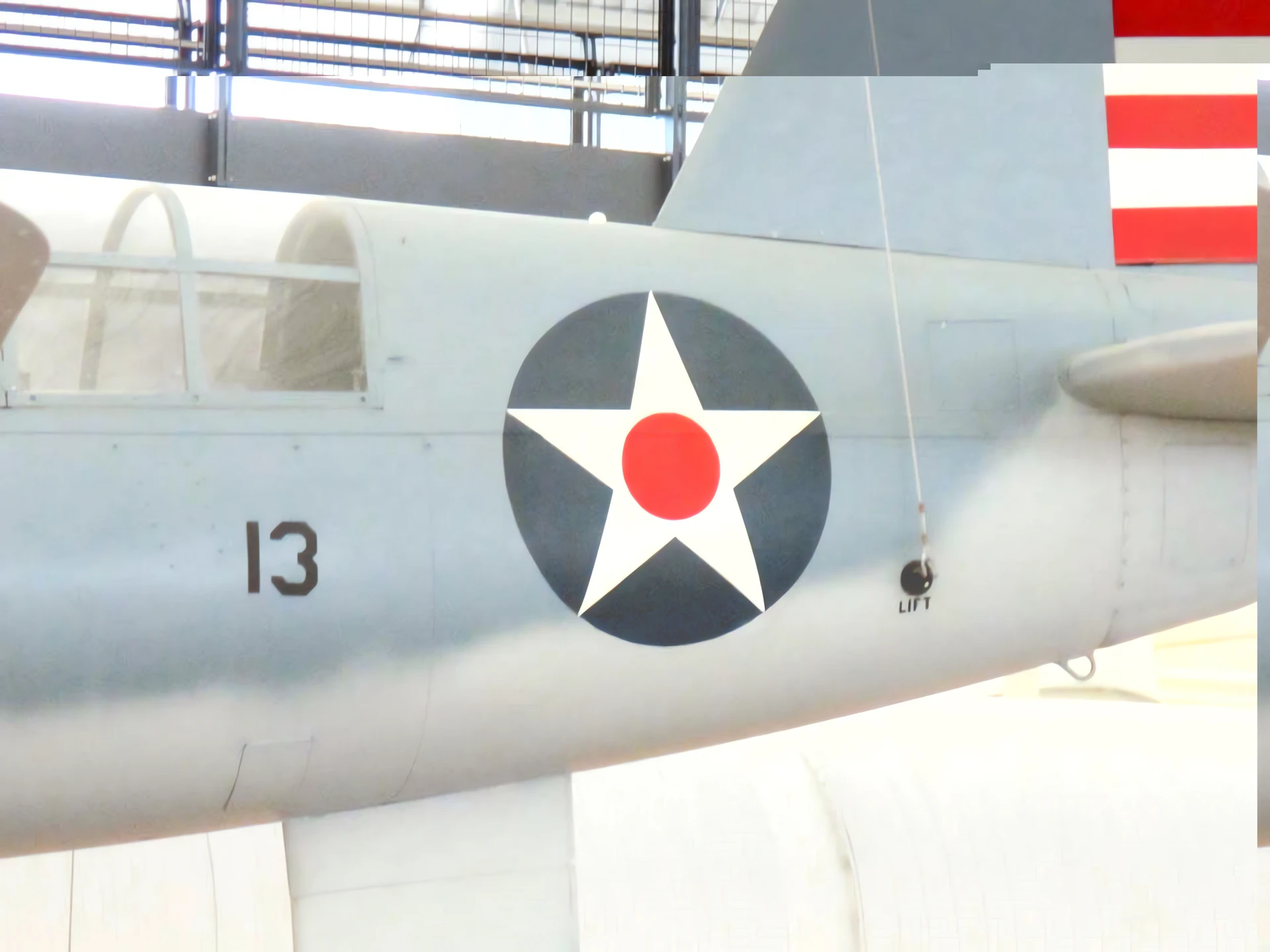
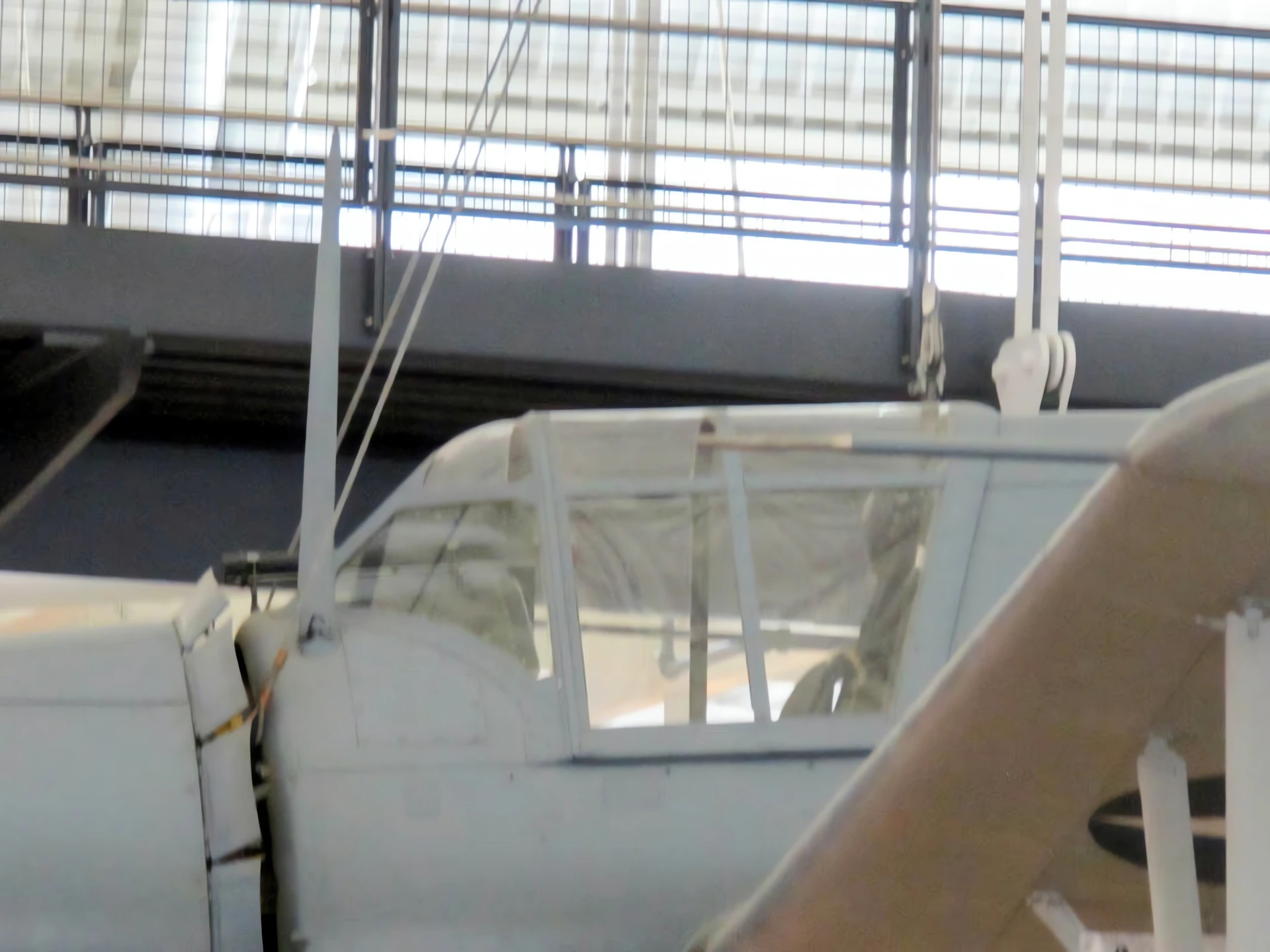

| Kingfisher Walk Around | |
|---|---|
| Photographe | Jose Brito |
| Localisation | Inconnu |
| Photos | 17 |
| Vought OS2U-3 Kingfisher Walk Around | |
|---|---|
| Photographe | Unknow |
| Localisation | Inconnu |
| Photos | 18 |
Voir aussi :


The Catapult Scout
Lla Vought OS2U-3 Martin-pêcheur was the most widely used observation floatplane of the U.S. Navy during World War II. Designed to be launched from the catapults of battleships and cruisers, its primary mission was to spot for naval gunfire and perform long-range scouting. While it was slow and lightly armed, it became a legend for its durability and its frequent « extra-curricular » role: rescuing downed airmen from the open sea, often under the noses of Japanese coastal batteries.
| Attribute | Technical Specification (OS2U-3) |
|---|---|
| Rôle | Observation / Scout Floatplane |
| Crew | 2 (Pilot and Radio Operator/Gunner) |
| First Flight | March 1, 1938 |
| Groupe motopropulseur | 1 × Pratt & Whitney R-985-AN-2 Wasp Junior radial |
| Horsepower | 450 hp (336 kW) |
| Vitesse maximale | 164 mph (264 km/h) |
| Range | 805 miles (1,296 km) |
| Armement | 1 × .30 cal forward; 1 × .30 cal rear flexible; 2 × 100 lb bombs |
Engineering for the High Seas
- The Single-Float Configuration: Unlike « twin-float » aircraft, the Kingfisher used one large central float and two small stabilizing wingtip floats. This made it more stable during the violent forces of a catapult launch and better at handling the choppy wake of a moving warship.
- Spot-Welded Construction: The OS2U was a pioneer in the use of spot-welding for its aluminum skin. This created a smoother surface than traditional rivets, reducing aerodynamic drag and protecting the fuselage from the corrosive salt-water environment.
- Convertible Gear: Though famous as a floatplane, the Kingfisher could be fitted with fixed conventional landing gear for operations from land bases or even small « escorter » carriers.
- Full-Span Flaps/Ailerons: To achieve a low stall speed for landing in rough water, the Kingfisher used drooping ailerons that acted as extra flaps (flaperons), providing maximum lift at low speeds.
A Legacy of Heroic Rescues
- The Rescue of Eddie Rickenbacker: In 1942, a Kingfisher found and rescued WWI ace Eddie Rickenbacker and his crew after they had been adrift in the Pacific for 24 days.
- Lla « Taxicab » of Truk Lagoon: During a strike on the Japanese stronghold of Truk, Lieutenant George Blair landed his Kingfisher in the lagoon to rescue a downed Hellcat pilot. When he couldn’t take off due to the weight and rough water, he taxied the pilot across the open ocean for miles until they met a U.S. destroyer.
- Gunfire Spotting: During the D-Day landings and the « island hopping » campaign in the Pacific, Kingfisher pilots hovered over enemy positions, radioing coordinates back to battleships to guide their massive 16-inch shells with pinpoint accuracy.
- Preservation: Several Kingfishers exist today, with one of the finest examples on display at the Steven F. Udvar-Hazy Center in Virginia, still wearing its iconic wartime blue camouflage.
Vues : 7525
Vous pouvez voir aussi :
 Dornier Do-27 – Photos & Vidéo
 Messerschmitt Me 410 – Photos & Vidéo
 McDonnell Douglas F/A-18 Hornet – Photos & Vidéo
 Mitsubishi A6M Zero – Promenez-vous
 Hawker Hurricane – Promenez-vous
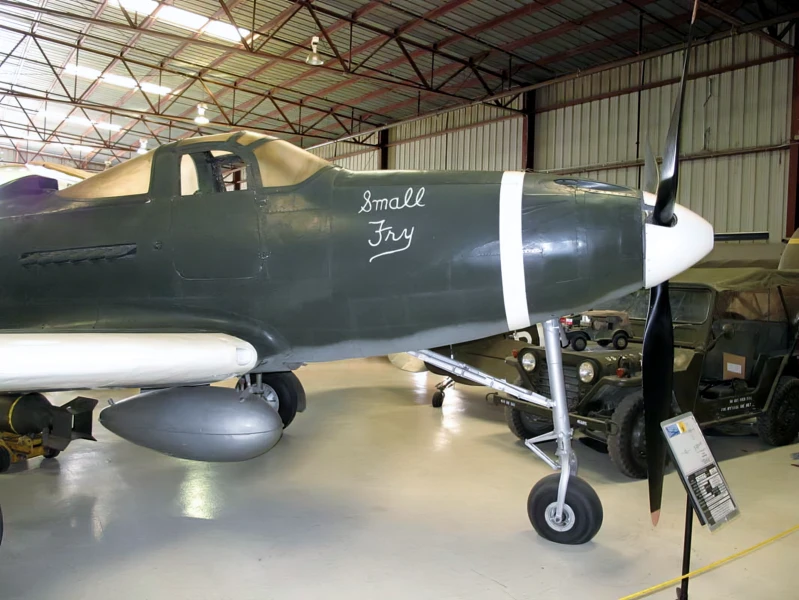 Bell P-39N Airacobra - WalkAround
 Consolidated B-24M Liberator – WalkAround
 P-47D Thunderbolt - WalkAround
 A-20 Havoc – WalkAround
 TBM-3E Avenger – Walk Around