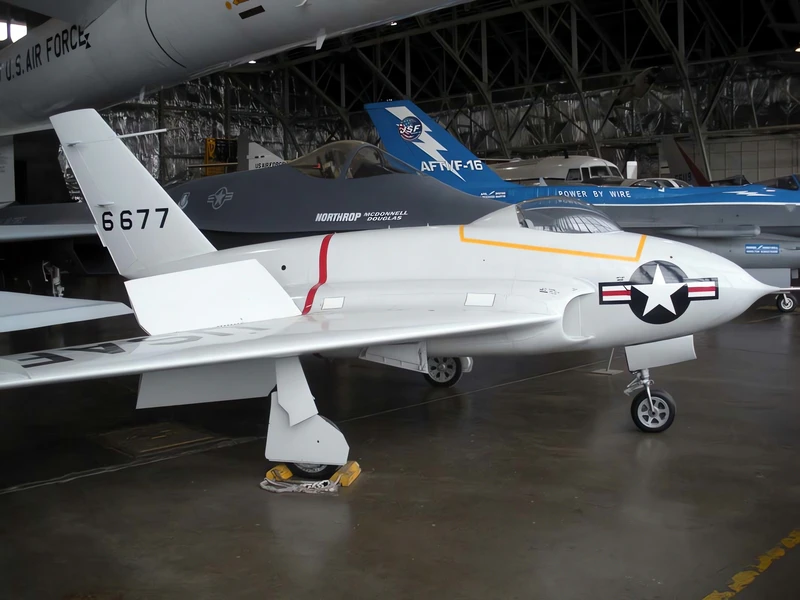
Northrop X-4 Bantam | |
|---|---|
| 国 | 米国 |
| 役割 | テールレス航空機プロトタイプ |
| 初飛行 | 1948年12月15日 |
| 構築 | 2 |
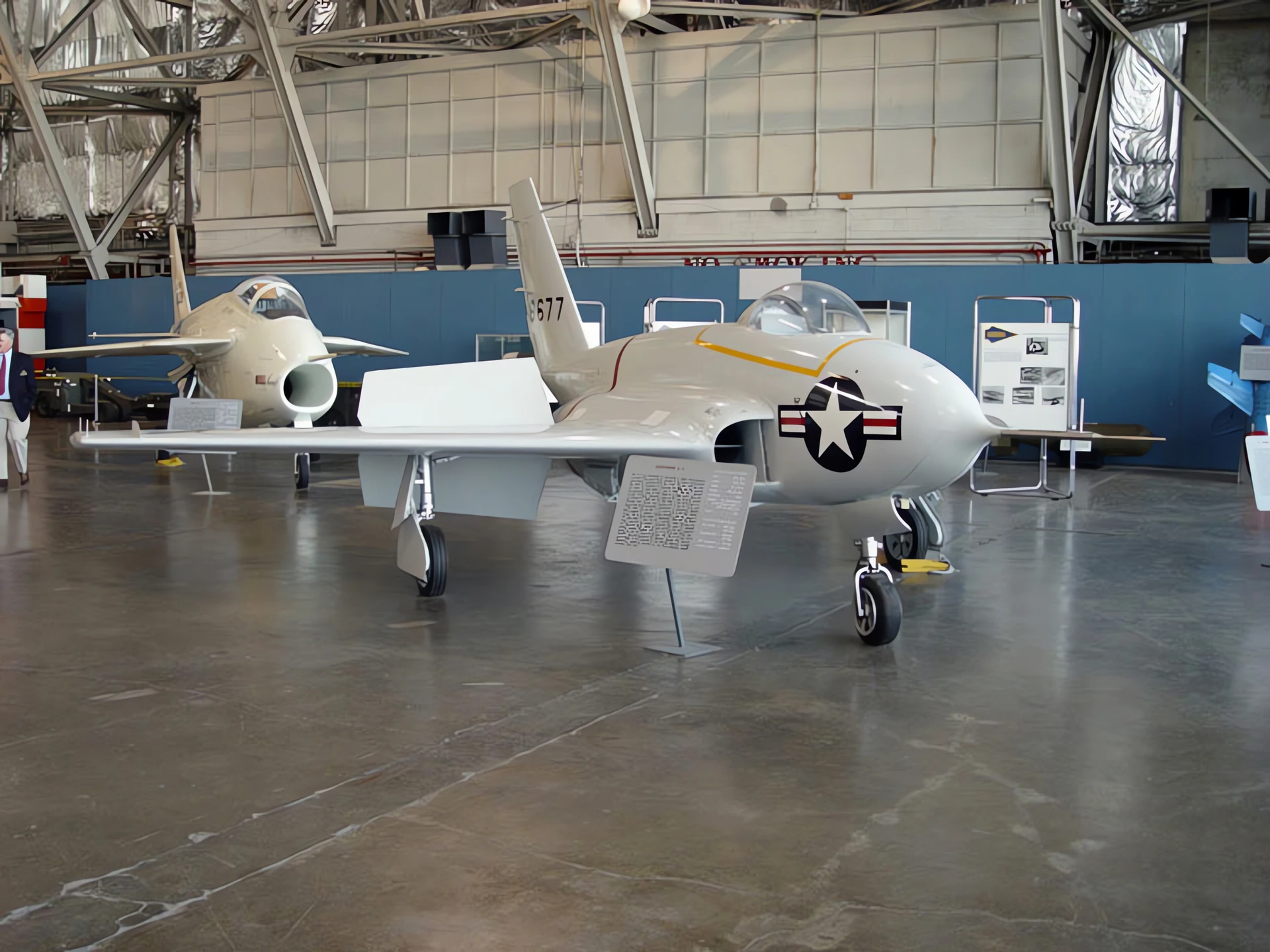
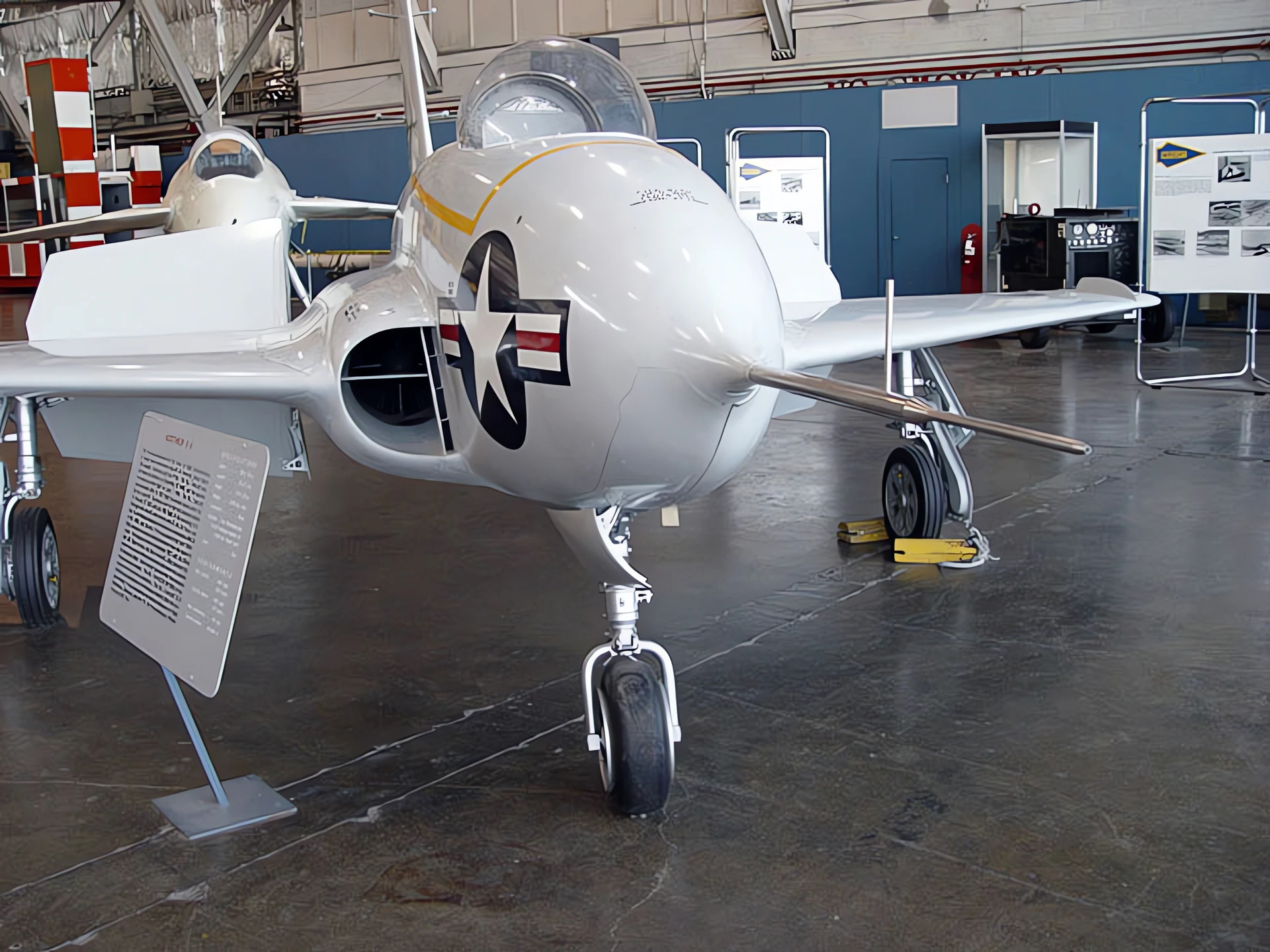
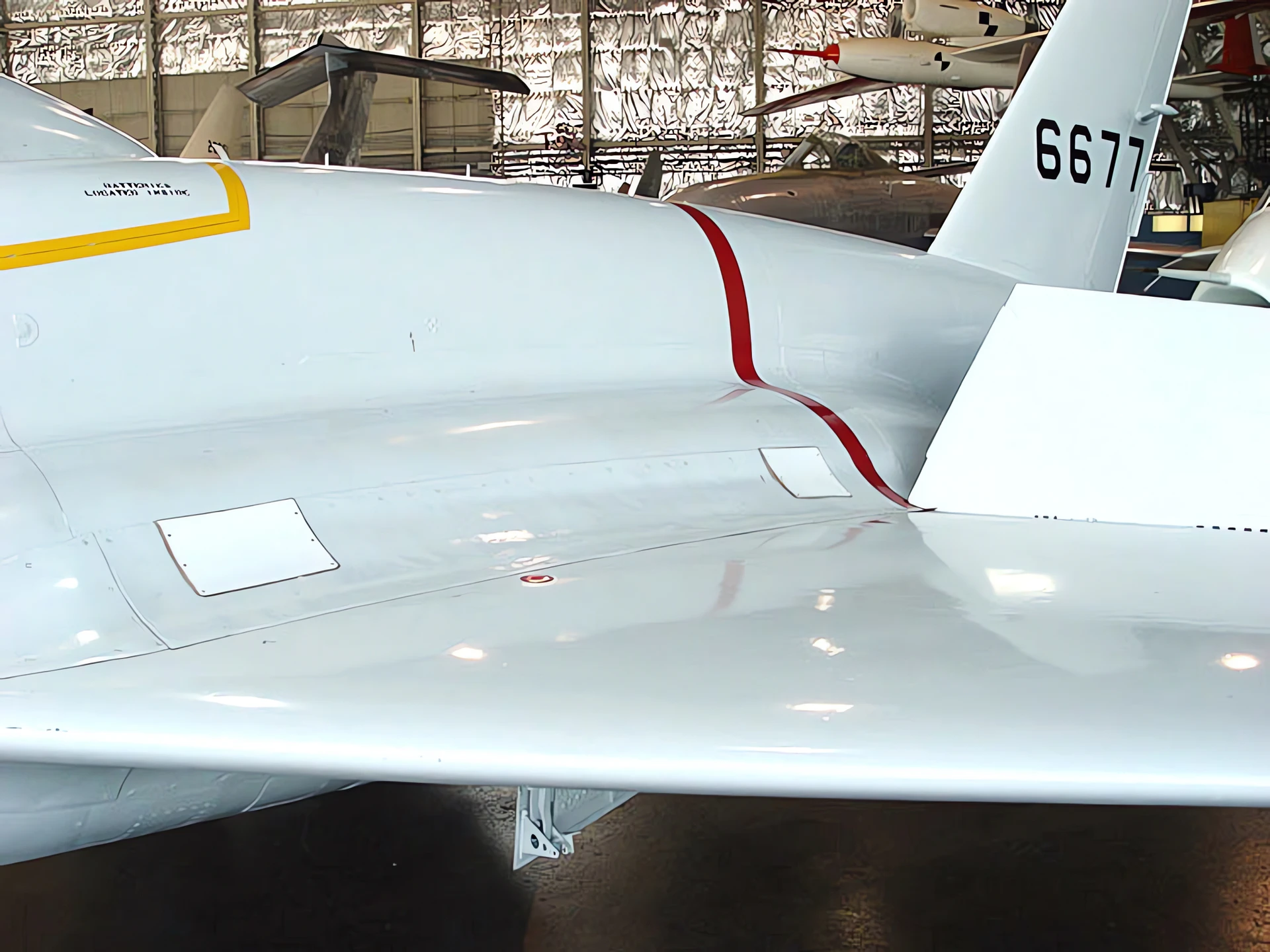
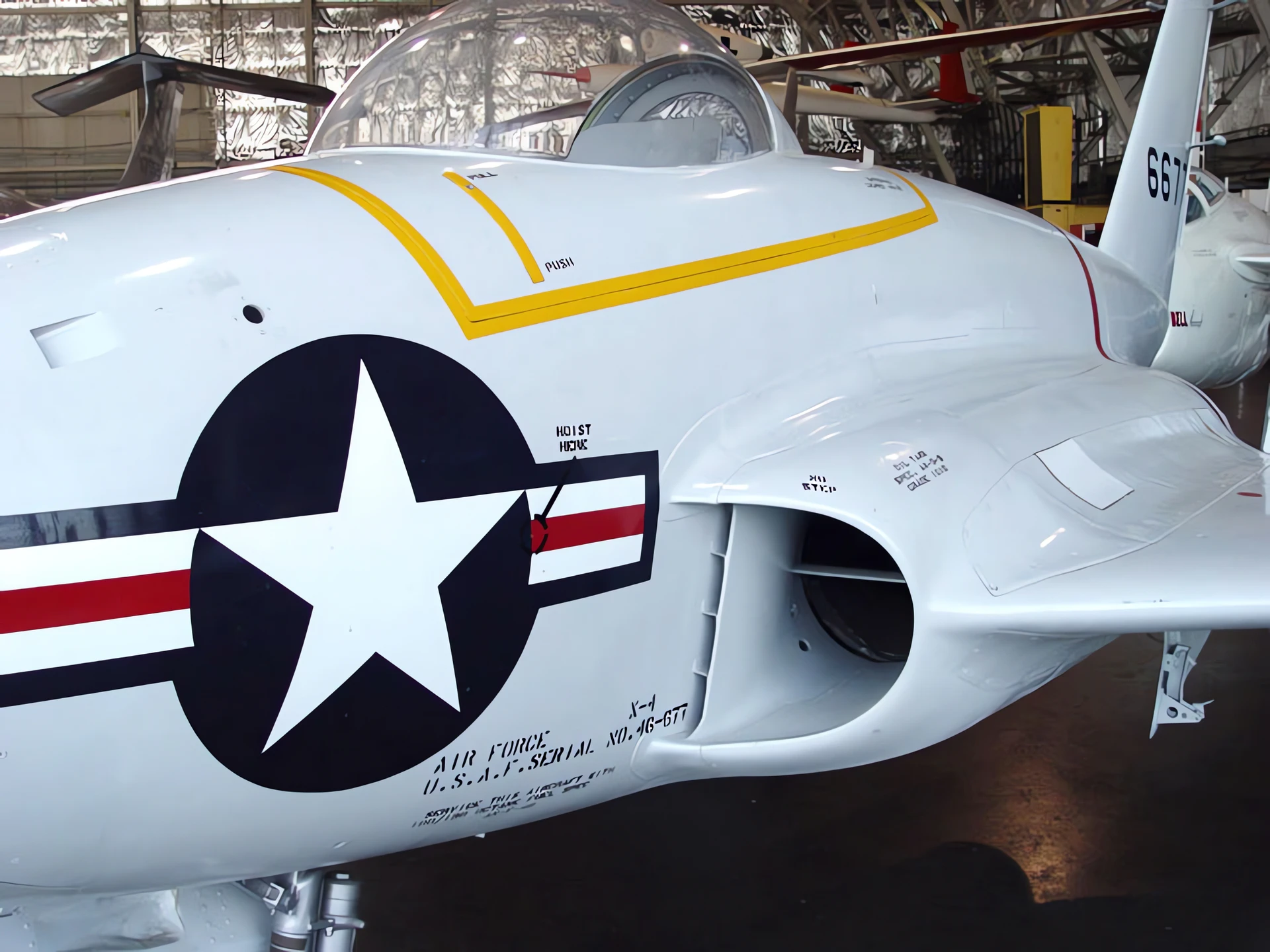
ザ ノースロップ X-4 バンタム ●1948年にノースロップ社製の小型ツインジェット機の試作機でした。ナチスドイツのドイツ空軍の同様の形式のロケット動力メッサーシュミットMe 163の方法で、ピッチとロールの態度を制御するためのエレベーターとエルロン制御面(エレボンと呼ばれる)を組み合わせたものに応じて、水平尾翼面はありませんでした。一部の空力主義者は、水平尾部を排除することは、翼と水平安定剤からの超音速衝撃波の相互作用に起因する高速速度(ショックストールと呼ばれる)での安定性の問題も解消すると提案していた。このアイデアにはメリットがありましたが、当時の飛行制御システムはX-4の成功を妨げました。
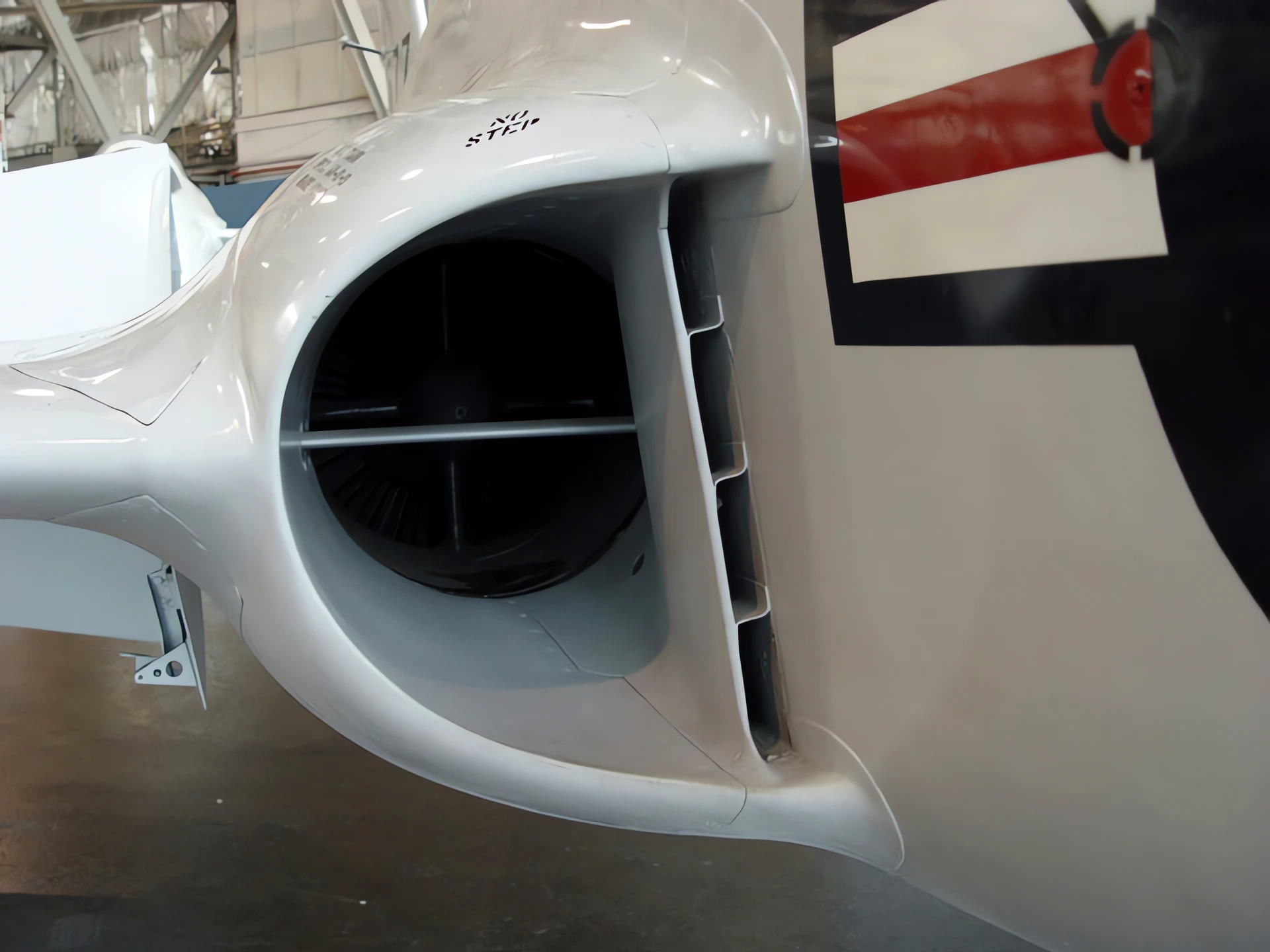
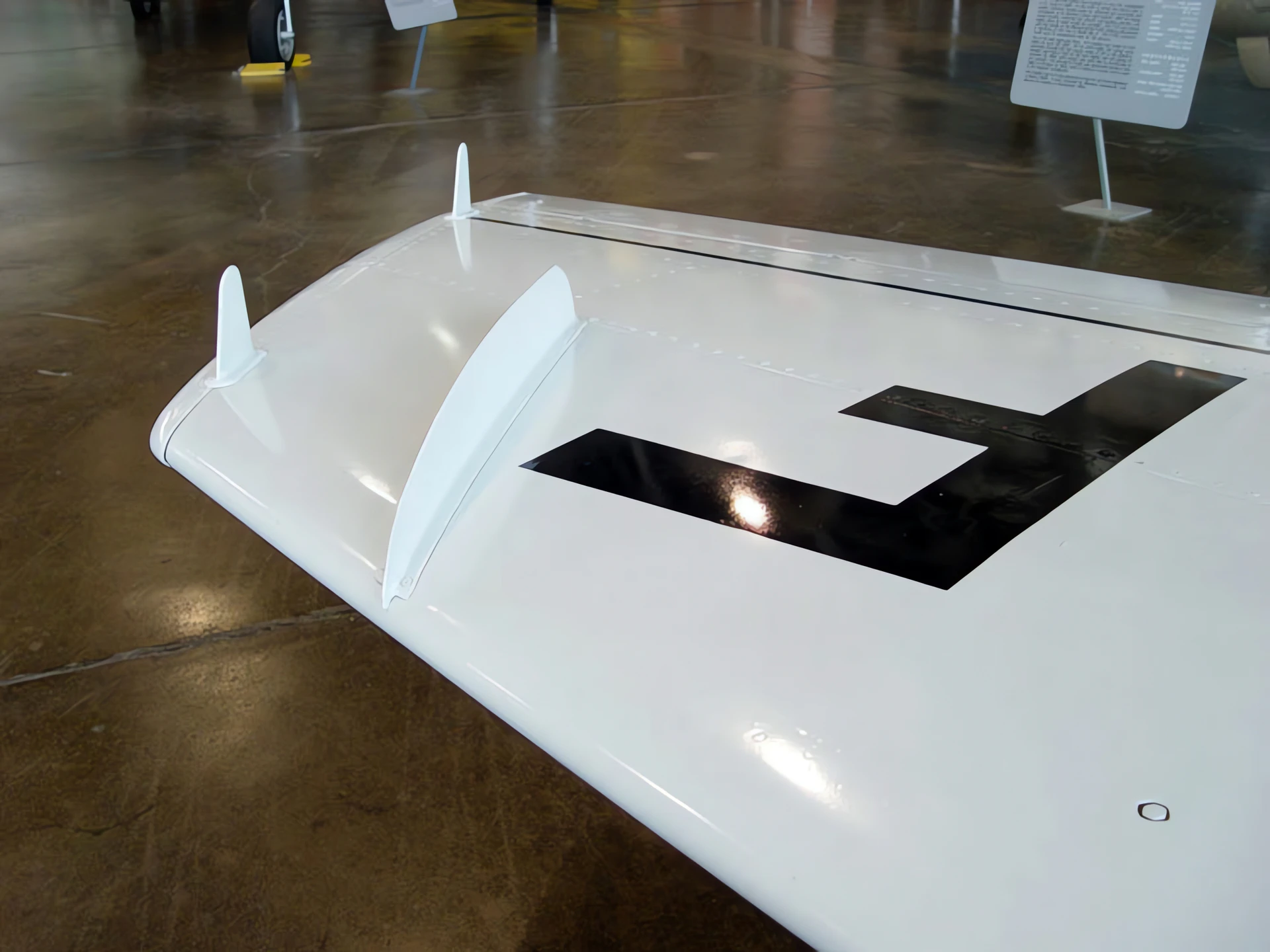
| Northrop X-4 Bantam Walk Aroundd | |
|---|---|
| Photographers | John Heck, Randy Ray |
| Localisation | National Museum of the USAF |
| Photos | 50 |


関連項目:


General Characteristics and Role
The Northrop X-4 Bantam was an experimental jet aircraft developed for the U.S. Air Force and the National Advisory Committee for Aeronautics (NACA, the precursor to NASA) in the late 1940s. Its primary role was to investigate the aerodynamic properties of a tailless aircraft design at transonic speeds (speeds approaching the speed of sound, or Mach 1). It utilized a semi-tailless configuration, meaning it lacked a horizontal tail stabilizer but retained small vertical fins. The tailless design was believed to reduce the shock waves and control issues experienced by conventional aircraft as they approached the sound barrier. The Bantam was built as a small, swept-wing jet to minimize costs and complexity during the high-risk transonic research phase.
| Property | Typical Value (X-4) | ||
|---|---|---|---|
| 役割 | Experimental Aircraft (Transonic Stability Research) | ||
| National Origin | 米国 | ||
| メーカー | Northrop Corporation | ||
| First Flight | 1948年12月15日 | ||
| 乗組員 | 1 Pilot | ||
| Wing Sweep | 35 degrees | ||
| 長さ | 7.01 m (23 ft 0 in) | ||
| 翼 | 8.23 m (27 ft 0 in) | ||
| 高さ | 4.52 m (14 ft 10 in) | Gross Weight | 3,524 kg (7,770 lb) |
Powerplant and Flight Controls
- Engine: 2 x Westinghouse J30 turbojet engines.
- Thrust (Total): Approximately 1,600 lbf (7.1 kN).
- Maximum Speed: 1,032 km/h (641 mph, or approx. Mach 0.85).
- Control Surfaces: All control was handled by elevons (control surfaces that combine the functions of elevators and ailerons) on the trailing edge of the wing, and twin vertical rudders.
- Stability Issue: Testing confirmed that while the X-4 was stable at low speeds, it experienced severe longitudinal stability issues when flying faster than Mach 0.88, leading to a tendency to pitch up and lose control.
Program Outcome and Legacy
- Test Program: The X-4 completed 81 research flights at the NACA Muroc Flight Test Unit (later Edwards AFB).
- Discovery: The program proved that a simple tailless design was unsuitable for sustained transonic flight due to the poor stability characteristics encountered.
- Influence: This finding was crucial, convincing designers to use a conventional horizontal stabilizer (tailplane) or the all-moving stabilator on high-speed jets, which became the standard design for supersonic aircraft.
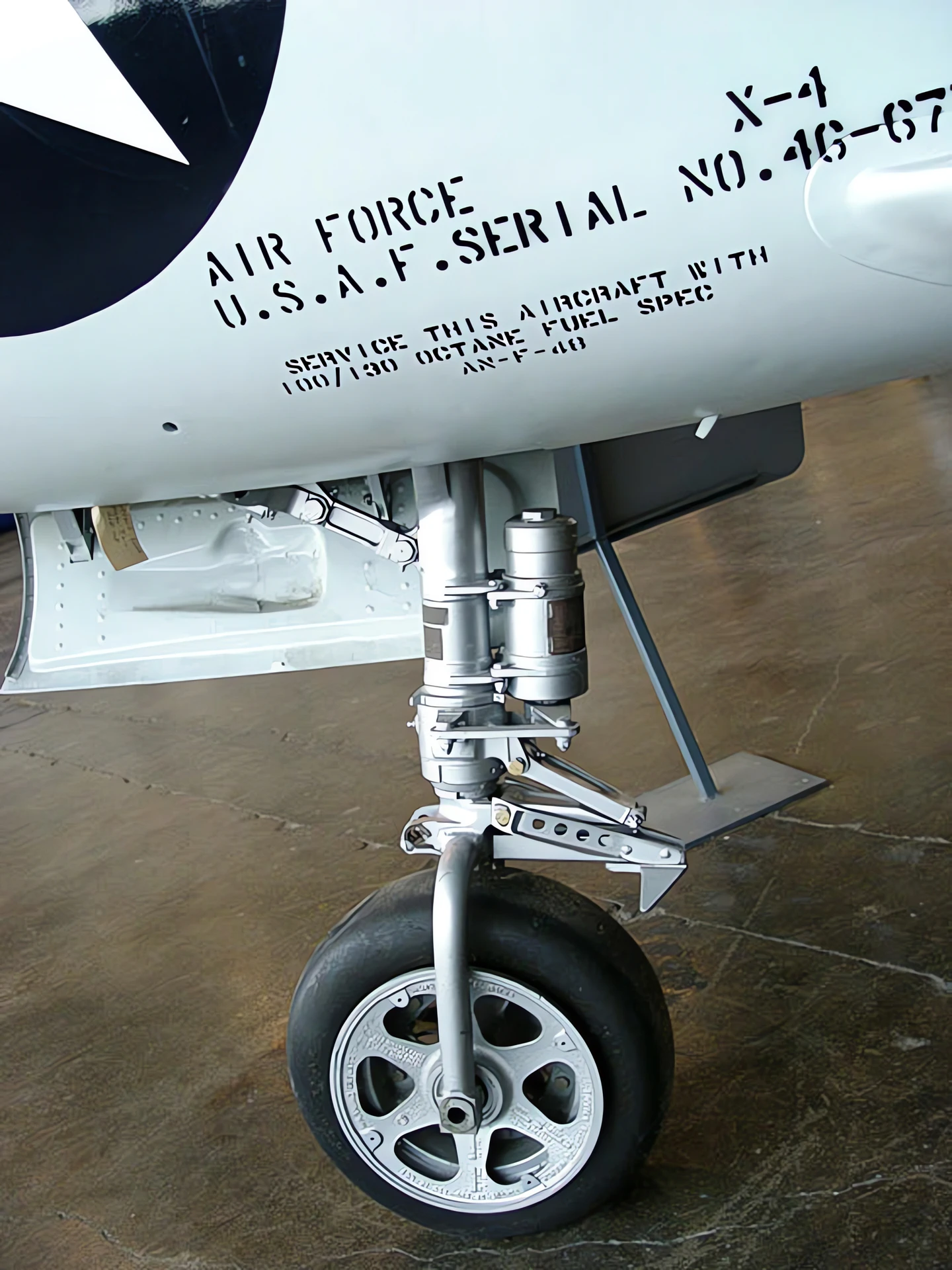
- Preservation: Both prototypes built are preserved: one (46-676) is at the U.S. Air Force Museum in Ohio, and the other (46-677) is at the National Museum of Nuclear Science & History in New Mexico.
ビュー : 2007