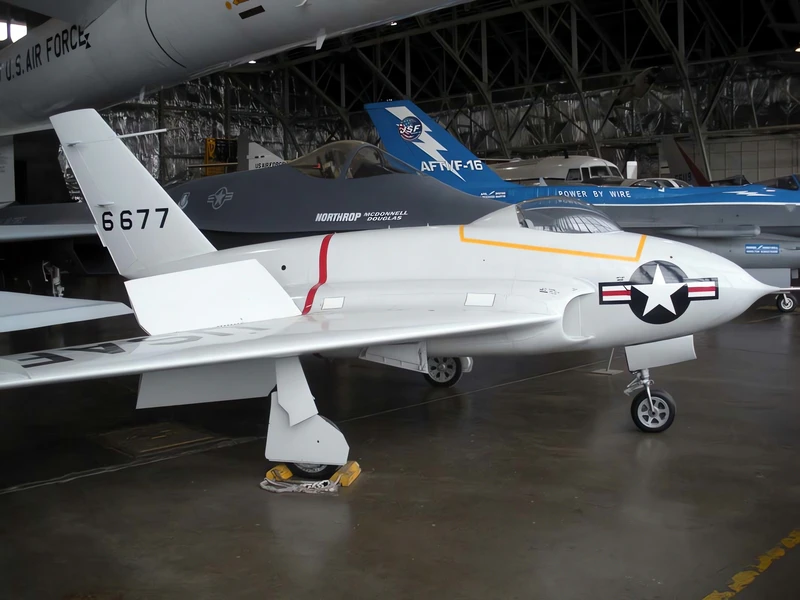
Northrop X-4 Bantam | |
|---|---|
| 国家 | 美国 |
| 作用 | 无尾飞机原型 |
| 首次飞行 | 1948年12月15日 |
| 建立 | 2 |
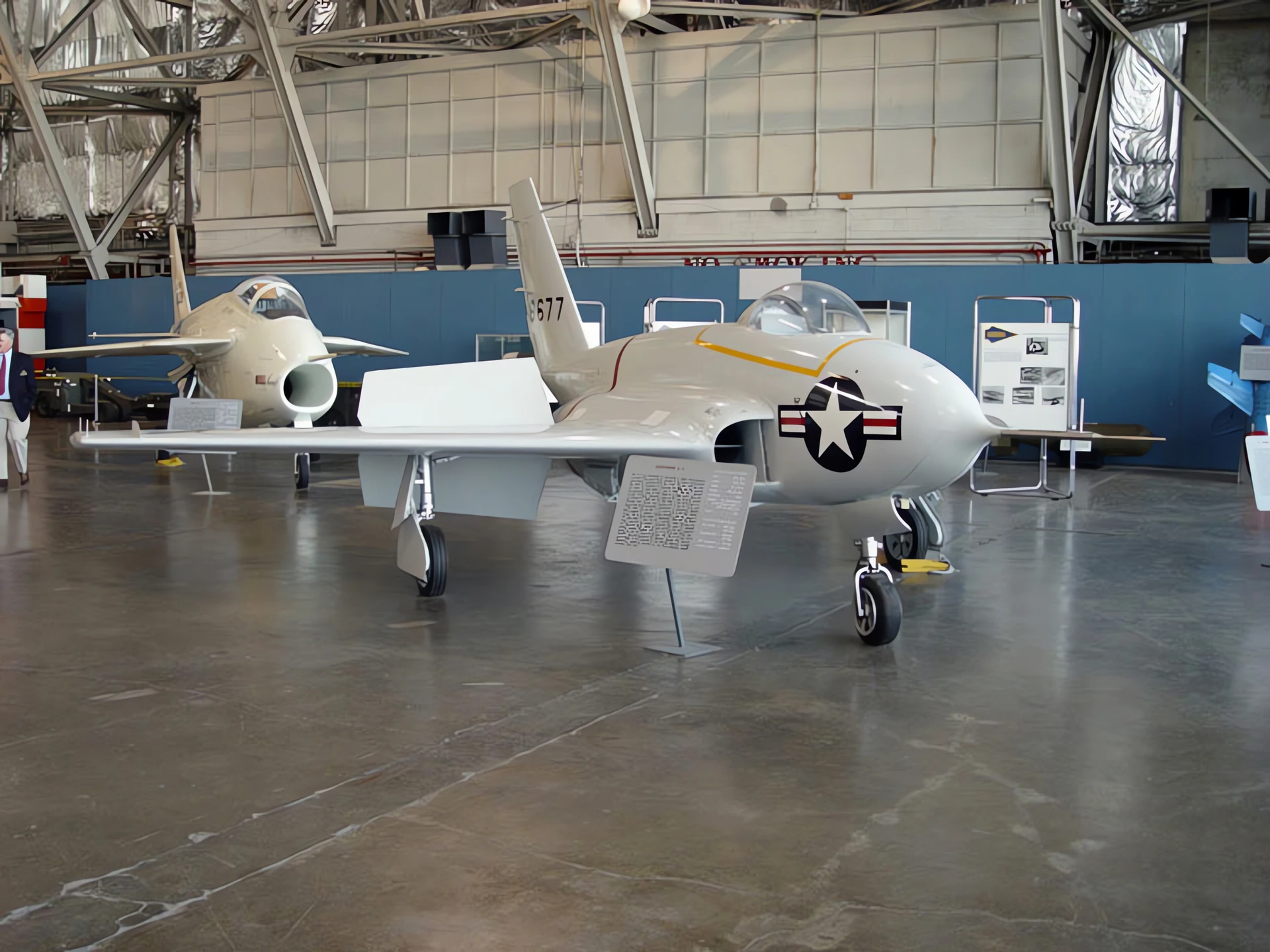
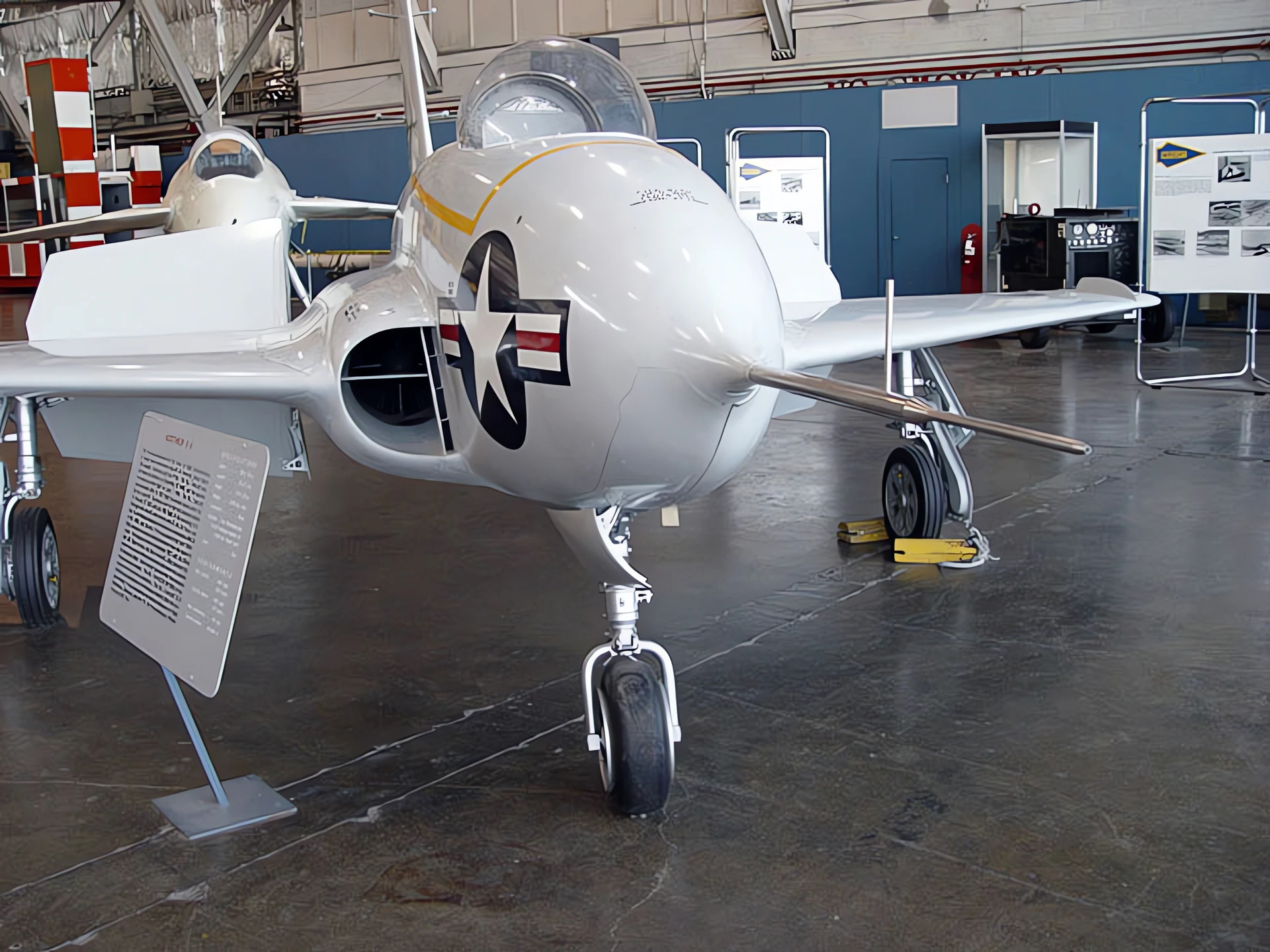
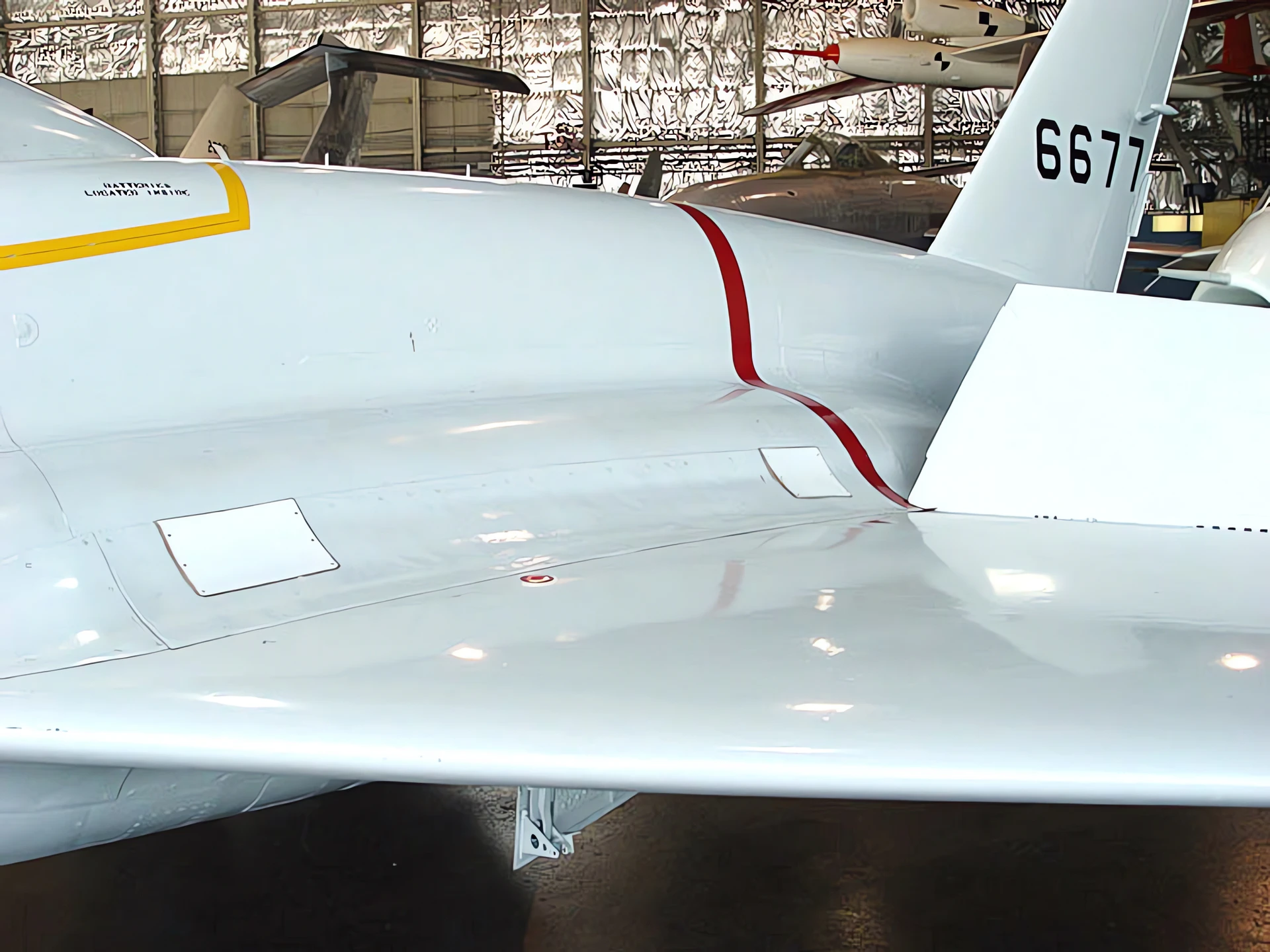
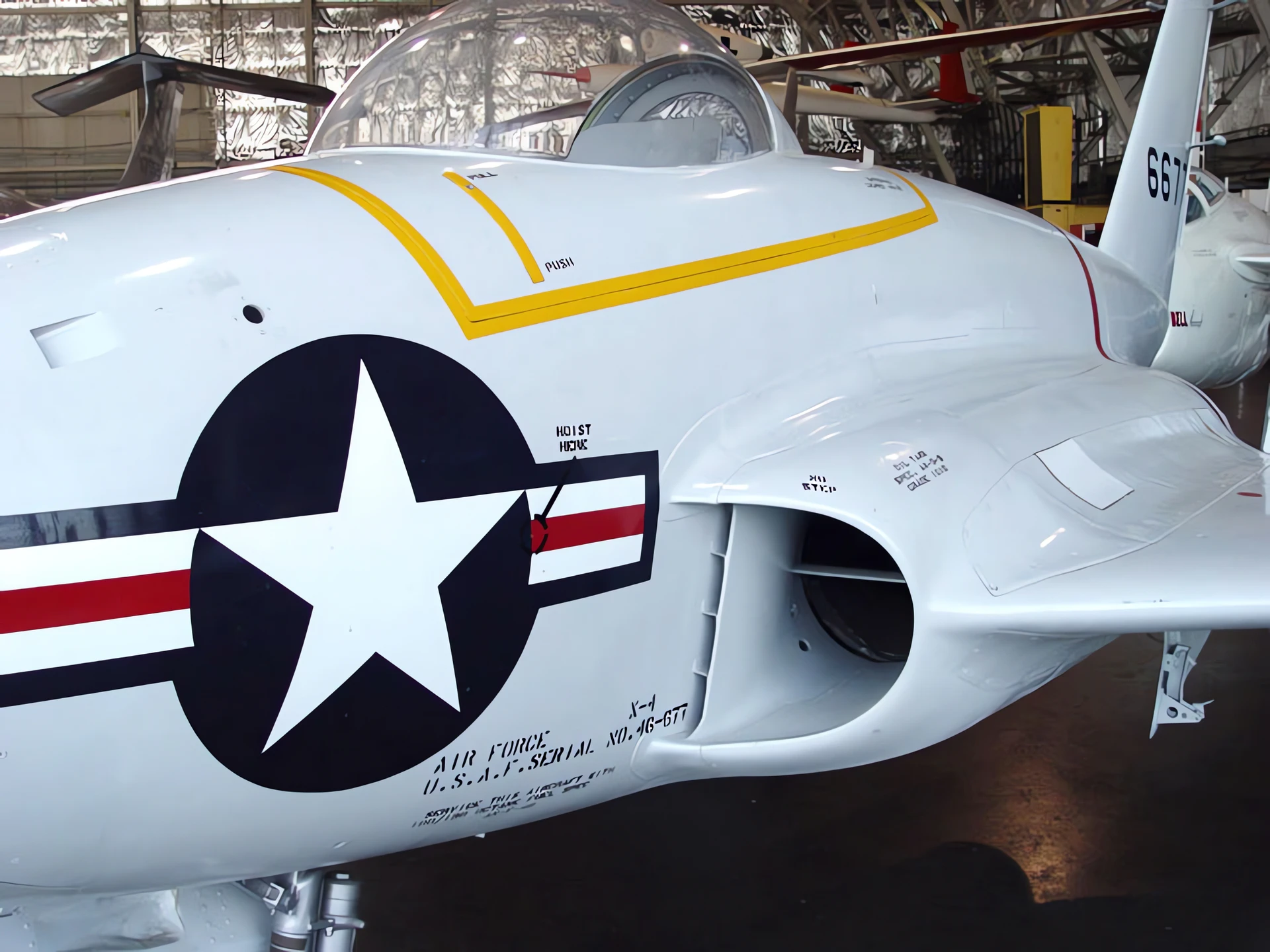
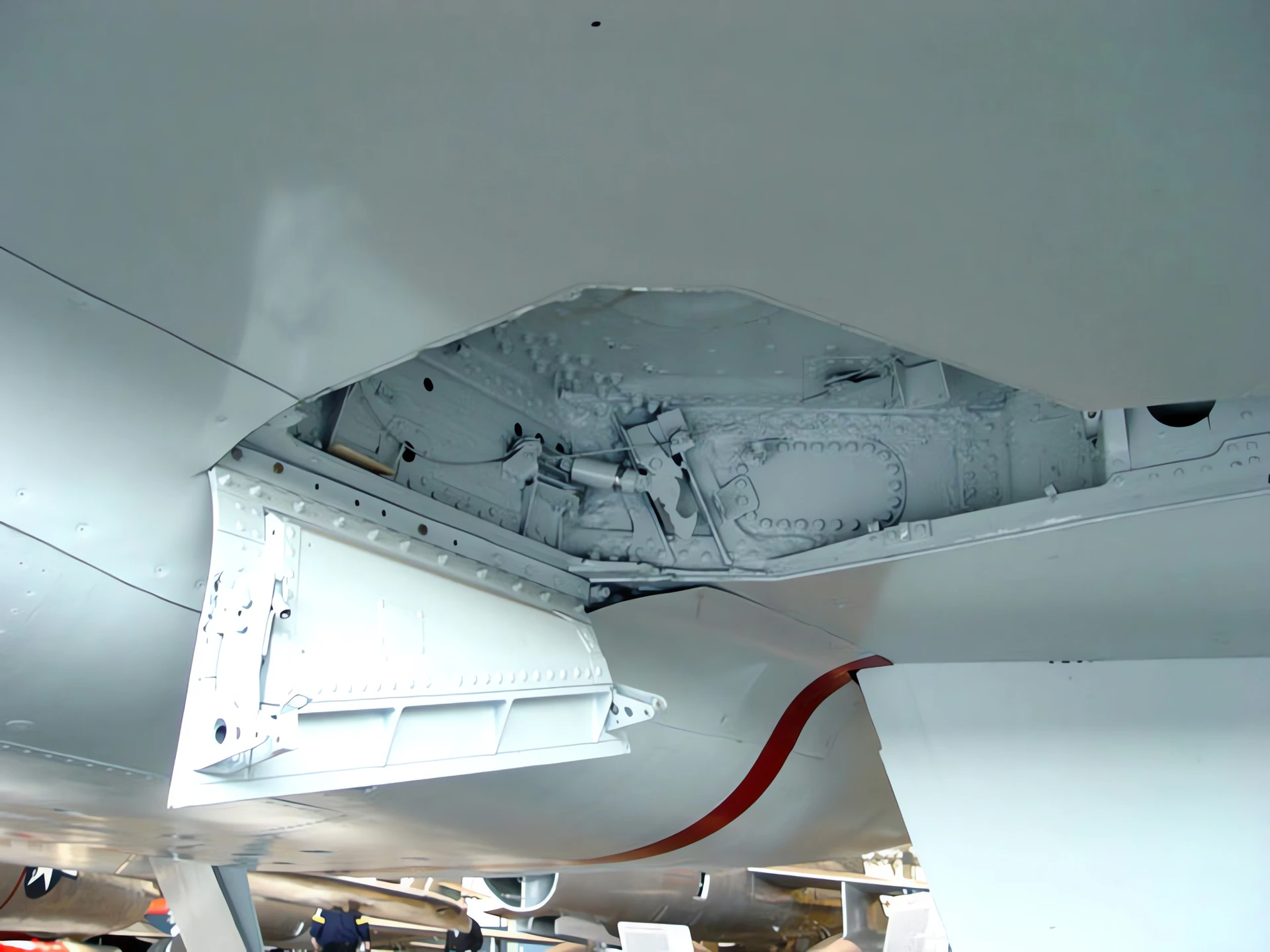
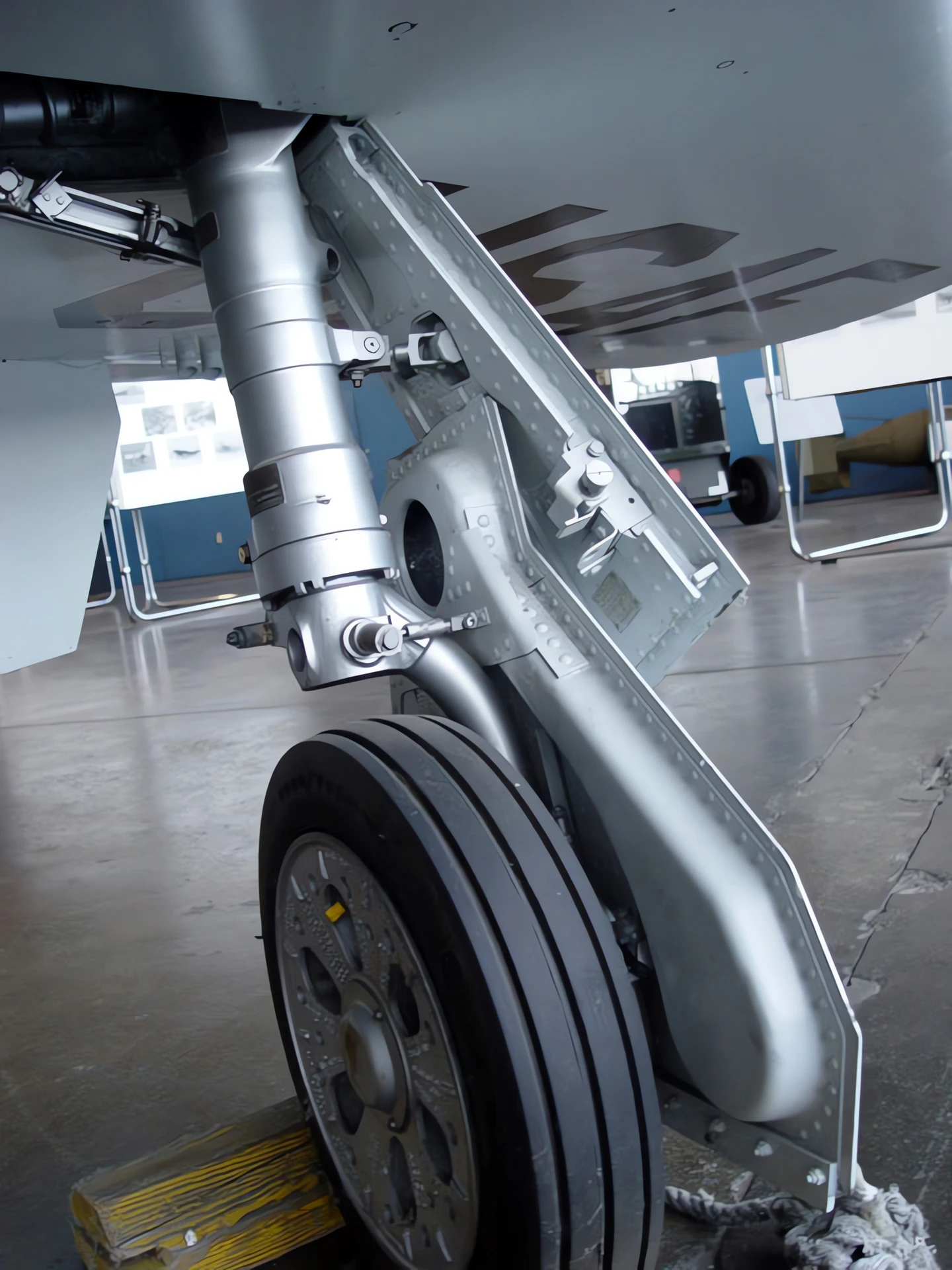
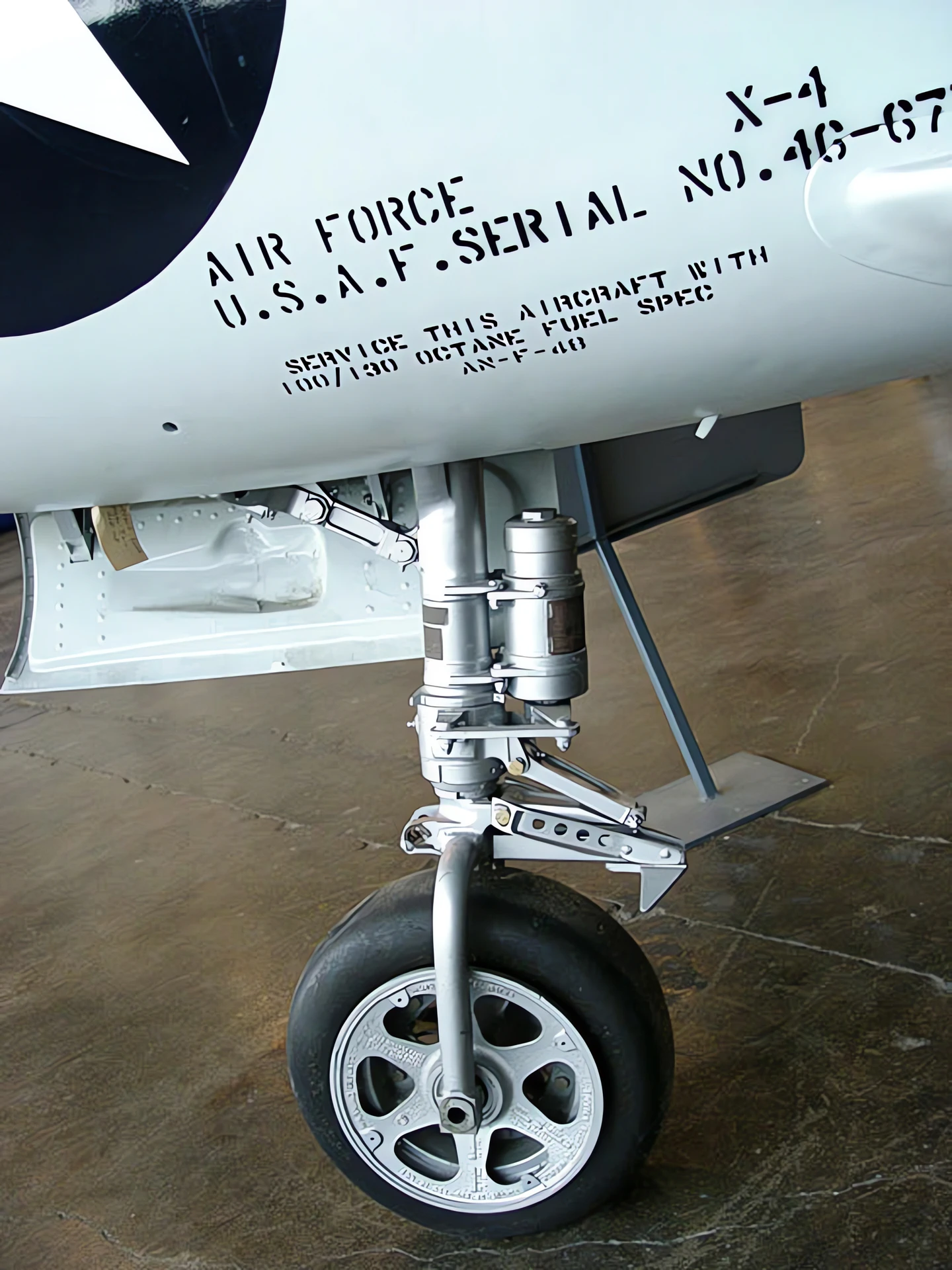
这 诺斯罗普X-4班坦 是诺斯罗普公司1948年制造的小型双喷气飞机的原型。它没有水平尾部表面,而是依靠联合电梯和艾龙控制表面(称为升降机)来控制音高和滚动的态度,几乎完全按照纳粹德国Luftwaffe的类似格式,火箭驱动的Messerschmitt Me 163的方式。一些空气动力学家曾提出,消除水平尾部也会消除由机翼和水平稳定器的超音速冲击波相互作用导致的高速稳定性问题(称为冲击停滞)。这个想法是有价值的,但当时的飞行控制系统阻止了X-4的任何成功。
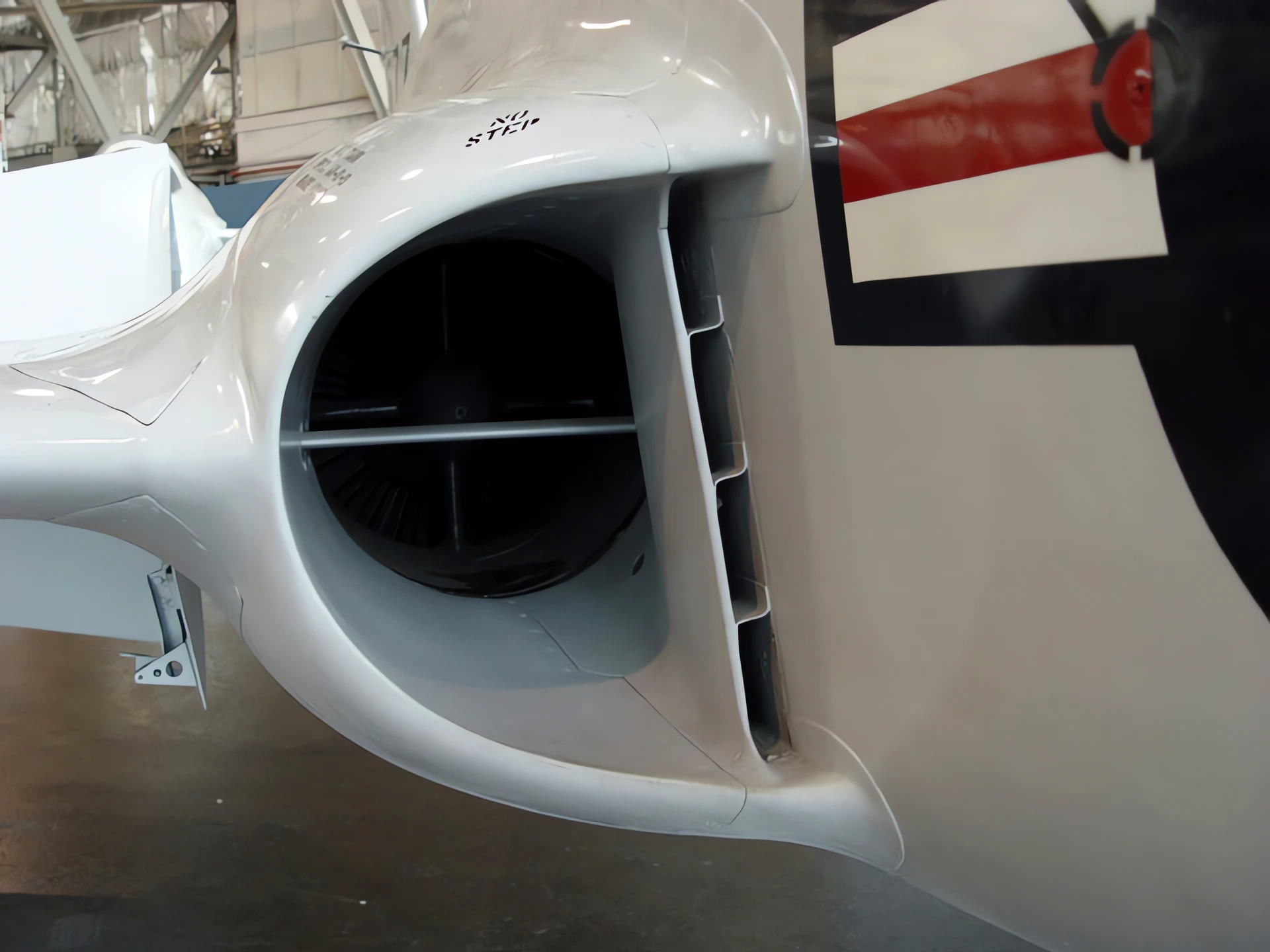
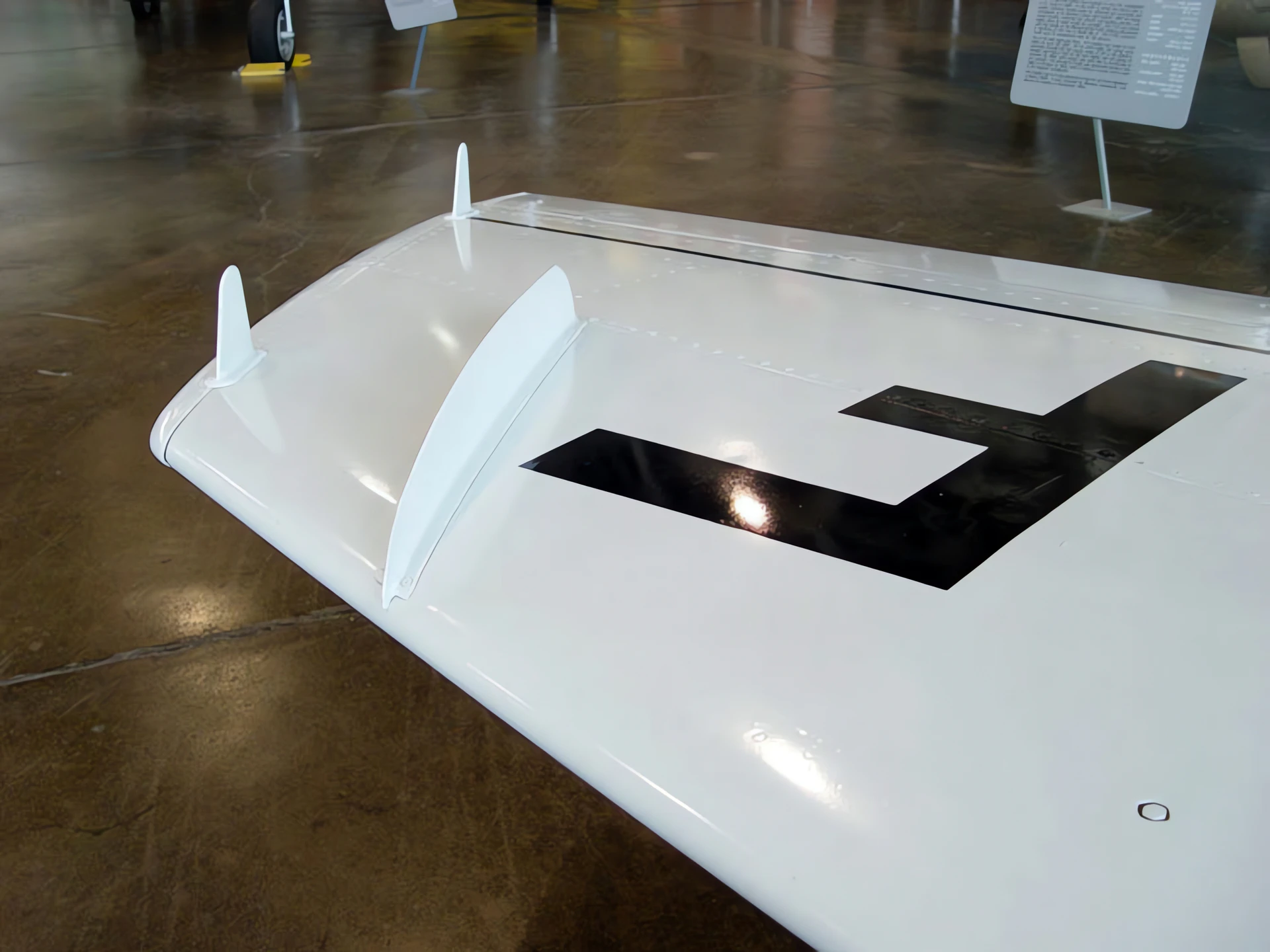
| Northrop X-4 Bantam Walk Aroundd | |
|---|---|
| Photographers | John Heck, Randy Ray |
| Localisation | National Museum of the USAF |
| Photos | 50 |


另请参阅:


General Characteristics and Role
The Northrop X-4 Bantam was an experimental jet aircraft developed for the U.S. Air Force and the National Advisory Committee for Aeronautics (NACA, the precursor to NASA) in the late 1940s. Its primary role was to investigate the aerodynamic properties of a tailless aircraft design at transonic speeds (speeds approaching the speed of sound, or Mach 1). It utilized a semi-tailless configuration, meaning it lacked a horizontal tail stabilizer but retained small vertical fins. The tailless design was believed to reduce the shock waves and control issues experienced by conventional aircraft as they approached the sound barrier. The Bantam was built as a small, swept-wing jet to minimize costs and complexity during the high-risk transonic research phase.
| Property | Typical Value (X-4) | ||
|---|---|---|---|
| 作用 | Experimental Aircraft (Transonic Stability Research) | ||
| National Origin | 美国 | ||
| 制造商 | Northrop Corporation | ||
| First Flight | 1948年12月15日 | ||
| 船员 | 1 Pilot | ||
| Wing Sweep | 35 degrees | ||
| 长度 | 7.01 m (23 ft 0 in) | ||
| 翼展 | 8.23 m (27 ft 0 in) | ||
| 高度 | 4.52 m (14 ft 10 in) | Gross Weight | 3,524 kg (7,770 lb) |
Powerplant and Flight Controls
- Engine: 2 x Westinghouse J30 turbojet engines.
- Thrust (Total): Approximately 1,600 lbf (7.1 kN).
- Maximum Speed: 1,032 km/h (641 mph, or approx. Mach 0.85).
- Control Surfaces: All control was handled by elevons (control surfaces that combine the functions of elevators and ailerons) on the trailing edge of the wing, and twin vertical rudders.
- Stability Issue: Testing confirmed that while the X-4 was stable at low speeds, it experienced severe longitudinal stability issues when flying faster than Mach 0.88, leading to a tendency to pitch up and lose control.
Program Outcome and Legacy
- Test Program: The X-4 completed 81 research flights at the NACA Muroc Flight Test Unit (later Edwards AFB).
- Discovery: The program proved that a simple tailless design was unsuitable for sustained transonic flight due to the poor stability characteristics encountered.
- Influence: This finding was crucial, convincing designers to use a conventional horizontal stabilizer (tailplane) or the all-moving stabilator on high-speed jets, which became the standard design for supersonic aircraft.
- Preservation: Both prototypes built are preserved: one (46-676) is at the U.S. Air Force Museum in Ohio, and the other (46-677) is at the National Museum of Nuclear Science & History in New Mexico.
视图 : 1968