Inglés Eléctrico Ligthning F.1

Rayo eléctrico inglés

PaísUk
PapelInterceptor
Primer vuelo4 de agosto de 1954
Construido337

el Rayo eléctrico inglés es un avión de combate supersónico de la época de la Guerra Fría. Fue diseñado, desarrollado y fabricado por English Electric, que posteriormente fue absorbido por la recién formada British Aircraft Corporation. Luego se comercializó como el BAC Lightning. El Rayo fue el único avión de combate Mach 2 británico. El Rayo fue utilizado por la Real Fuerza Aérea (RAF) y la Real Fuerza Aérea Saudita (RSAF). Aunque fue el principal interceptor de la RAF durante más de dos décadas, nunca tuvo que atacar otro avión.

Fuente: English Electric Lightning en Wikipedia

Continuar leyendo

Views : 5086

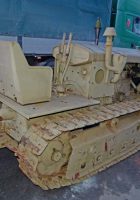
Famo Rubezahl

PaísNazi Germnay
PapelTractor Caterpillar
Producido1932-1944
ConstruidoUnknow

Famo, short for Fahrzeug- und Motoren-Werke (Automobile and Engine Works) was a German vehicle manufacturer in the early 20th century. The middle crawler tractor Rübezahl continuó bajo el nombre FAMO Rübezahl hasta 1944. Con un motor de 65 HP podría remolcar hasta 6 toneladas.

Fuente: Famo Rubezahl en Wikipedia

Continuar leyendo

Vistas : 2679

Percival Proctor III

Percival Proctor

PaísUk
PapelRadio trainer/avión de comunicaciones
Primer vuelo8 de octubre de 1939
Construido1143

el Percival Proctor fue entrenador de radio británico y avión de comunicaciones de la Segunda Guerra Mundial. El Proctor era un monoplano monomotor monomotor de ala baja con capacidad para tres o cuatro personas, dependiendo del modelo.

Fuente: Percival Proctor en Wikipedia

Continuar leyendo

Views : 3134

Gaviota Supermarina V

Gaviota Supermarina V

PaísUk
PapelAviones anfibios de reconocimiento
Primer vuelo21 de junio de 1933
Construido740

el Morsa supermarina (originally known as the Supermarine Seagull V) was a British single-engine amphibious biplane reconnaissance aircraft designed by R. J. Mitchell and first flown in 1933. It was operated by the Fleet Air Arm (FAA) and also served with the Royal Air Force (RAF), Royal Australian Air Force (RAAF), Royal New Zealand Navy (RNZN) and Royal New Zealand Air Force (RNZAF). It was the first British squadron-service aircraft to incorporate in one airframe a fully retractable main undercarriage, completely enclosed crew accommodation and all-metal fuselage. Designed for use as a fleet spotter to be catapult launched from cruisers or battleships, the Walrus was later employed in a variety of other roles, most notably as a rescue aircraft for downed aircrew. It continued in service throughout the Second World War.

Fuente: Gaviota Supermarina V en Wikipedia

Continuar leyendo

Vistas : 2605

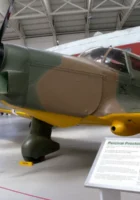
Percival P-56 Preboste

Preboste de Percival

PaísUk
PapelAviones de entrenamiento militar
Primer vuelo24 de febrero de 1950
Construido461

el Percival P.56 Preboste was a British basic trainer that was developed for the Royal Air Force in the 1950s as a replacement for the Percival Prentice. It was a low-wing monoplane with a fixed, tailwheel undercarriage and like the Prentice had a side-by-side seating arrangement. The Provost has the distinction of being the last piston-engine basic trainer aircraft to be operated by the RAF. The Provost was later adapted to make use of a turbojet engine, producing the BAC Jet Provost. The type was withdrawn in the 1960s, in favour of its jet-powered successor.

Fuente: Percival Provost en Wikipedia

Continuar leyendo

Vistas : 2566

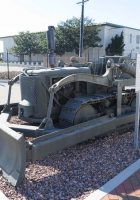
TD-9 International Harvester Tractor

PaísE.e.u.u
PapelTractor oruga
Modelo introducido1940
Modelo descontinuado1956

el Internacional TD-9 Fue un tractor de orugas con motor diésel construido por la compañía International Harvester desde 1940 hasta 1956.

Fuente: TD-9 International Harvester Tractor en Wiki

Continuar leyendo

Vistas : 1922

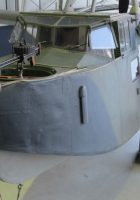
Boulton Paul Desafiante I

Boulton Paul Desafiante

PaísUk
PapelLuchador biplaza, luchador nocturno, entrenador
Primer vuelo11 de agosto de 1937
Construido1064

el Boulton Paul Desafiante was a British interceptor aircraft that served with the Royal Air Force (RAF) during World War II. The Defiant was designed and built by Boulton Paul Aircraft as a “turret fighter”, without any forward-firing guns, a concept successfully used in the First World War-era Bristol F.2 Fighter and also implemented by the Royal Navy’s Blackburn Roc. In combat, the Defiant was found to be reasonably effective at its intended task of destroying bombers but was vulnerable to the Luftwaffe’s more manoeuvrable, single-seat Messerschmitt Bf 109 fighters. The lack of forward-firing armament proved to be a great weakness in daylight combat and its potential was realised only when it was converted to night fighting. It was supplanted in the night fighter role by the Bristol Beaufighter and de Havilland Mosquito. The Defiant found use in gunnery training, target towing, electronic countermeasures and air-sea rescue. Among RAF pilots it had the nickname “Daffy”.

Fuente: Boulton Paul Defiant en Wikipedia

Continuar leyendo

Vistas : 3983

Hawker Nimrod MK.II

Hawker Nimrod

PaísUk
PapelCaza naval
Primer vuelo14 de octubre de 1931
Construido92

el Hawker Nimrod was a British carrier-based single-engine, single-seat biplane fighter aircraft built in the early 1930s by Hawker Aircraft. The Nimrod had an overall similarity to the Fury: it was a single-seater biplane with an open cockpit, fixed undercarriage and guns firing through the propeller. Its unswept, constant chord, round-tipped wings had an unequal span and strong stagger, the latter partly to enhance the pilot’s view. It was a single bay biplane braced with outward-leaning N-form interplane struts, with the upper plane held a little above the upper fuselage by cabane struts. The fabric-covered wings had metal spars and spruce ribs and carried balanced ailerons only on the upper wings.

Fuente: Hawker Nimrod en Wikipedia

Continuar leyendo

Vistas : 2269

Ford M151 Mutt

M151 1/4 tonelada 4×4 camión utilitario

PaísE.e.u.u
PapelTransporte de 1/4 toneladas de camión/personal, tracción a las cuatro ruedas
Producted1959–1982
ConstruidoMás de 100000

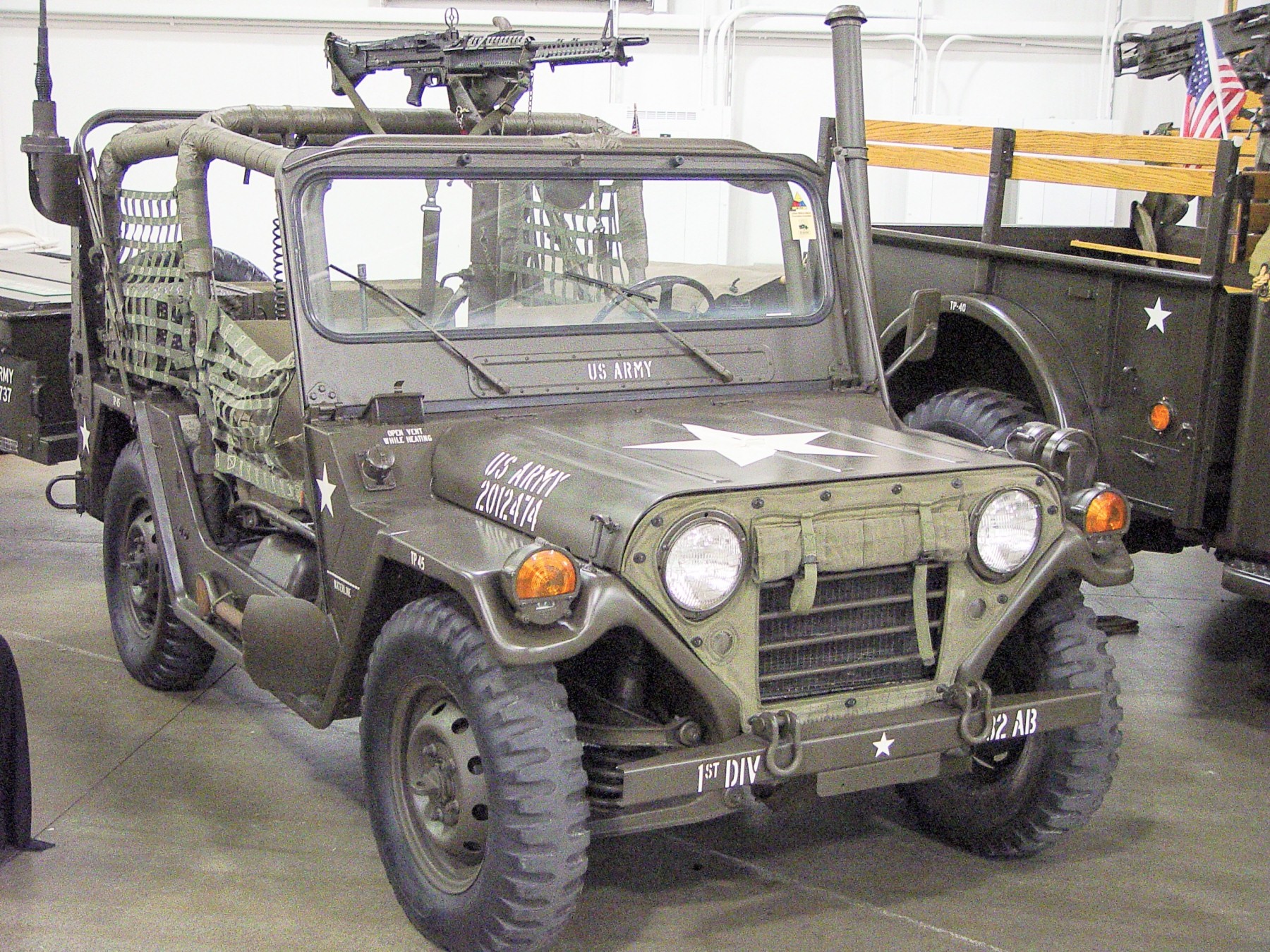
El camión, utilitario, 1/4-tonelada, 4×4, M151 (M151) fue el sucesor de los vehículos utilitarios ligeros M38 y M38A1 de la Guerra de Corea. Comúnmente conocido como un "jeep" o "quarter-ton", fue producido de 1959 a 1982 y servido en la Guerra de Vietnam. El M151 tenía un diseño monocasco que lo hacía más espacioso que los diseños anteriores de jeep, e incorporaba una suspensión independiente con muelles helicoidales. Desde entonces ha sido reemplazado por el HMMWV general de AM más grande en la mayoría de los roles de utilidad en el uso de primera línea. Con algunas unidades M151A2 todavía en servicio militar estadounidense en 1999, la serie M151 logró una mayor ejecución de servicio que la de las series WW2 MB/GPW, M38 y M38A1 combinadas.

Fuente: M151 en Wikipedia

Continuar leyendo

Vistas : 8714

Heinkel Tiene 219 años

Heinkel Tiene 219 años

PaísAlemania nazi
PapelLuchador nocturno
Primer vuelo6 de noviembre de 1942
Construido300

el Heinkel Tiene 219 Uhu ("Eagle-Owl") fue un luchador nocturno que sirvió con la Luftwaffe alemana en las últimas etapas de la Segunda Guerra Mundial. Un diseño relativamente sofisticado, el He 219 poseía una variedad de innovaciones, incluyendo lichtenstein SN-2 avanzado radar de interceptación de banda VHF, también utilizado en los cazas nocturnos Ju 88G y Bf 110G. También fue el primer avión militar operativo equipado con asientos de eyección y el primer avión operativo de la segunda guerra mundial alemana con tren de aterrizaje triciclo. Si la Uhu hubiera estado disponible en cantidad, podría haber tenido un efecto significativo en la ofensiva estratégica de bombardeo nocturno de la Real Fuerza Aérea; pero, sólo 294 de todos los modelos fueron construidos al final de la guerra y estos sólo vieron un servicio limitado. Ernst-Wilhelm Modrow fue el principal as de luchador nocturno en el He 219. Modrow fue acreditado con 33 de 34 victorias aéreas nocturnas en el tipo.

Fuente: Heinkel Tiene 219 años en Wikipedia

Continuar leyendo

Vistas : 5030