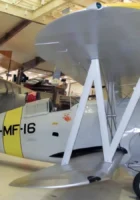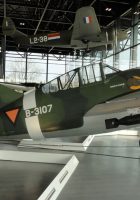
Grumman F3F-3

Grumman F3F

CountryUSA
RoleFighter aircraft
First flight20 March 1935
Built147

The Grumman F3F was the last American biplane fighter aircraft delivered to the United States Navy (indeed, the last biplane fighter delivered to any American military air arm), and served between the wars. Designed as an improvement on the single-seat F2F, it entered service in 1936. It was retired from front line squadrons at the end of 1941 before it could serve in World War II, and was first replaced by the Brewster F2A Buffalo. The F3F which inherited the Leroy Grumman-designed retractable main landing gear configuration first used on the Grumman FF served as the basis for a biplane design ultimately developed into the much more successful F4F Wildcat.

Source: Grumman F3F on Wikipedia

Continue reading

Views : 4893

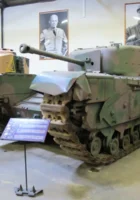
Churchill Mk VI

Churchill tank

CountryUK
RoleInfantry tank
In service1941–52
Built5640+

The Tank, Infantry, Mk IV (A22) Churchill was a British heavy infantry tank used in the Second World War, best known for its heavy armour, large longitudinal chassis with all-around tracks with multiple bogies, its ability to climb steep slopes, and its use as the basis of many specialist vehicles. It was one of the heaviest Allied tanks of the war. The origins of the design lay in the expectation that war in Europe might be fought under similar conditions to those of the First World War, and emphasized the ability to cross difficult ground. The Churchill was rushed into production to build up British defences against a possible German invasion. The first vehicles had flaws that had to be overcome before the Churchill was accepted for wide use. After several marks had been built, a better armoured version, the Mark VII, entered service.

Source: Churchill tank on Wikipedia

Continue reading

Views : 7263

Brewster B339C

Brewster F2A Buffalo

CountryUSA
RoleFighter aircraft
First flight2 December 1937
Built509

The Brewster F2A Buffalo was an American fighter aircraft which saw service early in World War II. Designed and built by the Brewster Aeronautical Corporation, it was one of the first U.S. monoplanes with an arrestor hook and other modifications for aircraft carriers. The Buffalo won a competition against the Grumman F4F Wildcat in 1939 to become the U.S. Navy’s first monoplane fighter aircraft. Although superior to the Grumman F3F biplane it replaced and the early F4Fs, the Buffalo was largely obsolete when the United States entered the war, being unstable and overweight, especially when compared to the Japanese Mitsubishi A6M Zero

Source: Brewster F2A Buffalo on Wikipedia

Continue reading

Views : 5995

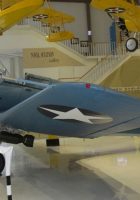
Vought SB2U-2 Vindicator

Vought SB2U Vindicator

CountryUSA
RoleDive bomber
First flight4 January 1936
Built260

The Vought SB2U Vindicator was an American carrier-based dive bomber developed for the United States Navy in the 1930s, the first monoplane in this role. Obsolete at the outbreak of World War II, Vindicators still remained in service at the time of the Battle of Midway, but by 1943, all had been withdrawn to training units. It was known as the Chesapeake in Royal Navy service.

Source: Vought SB2U Vindicator on Wikipedia

Continue reading

Views : 5312

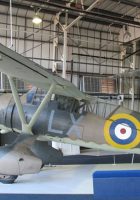
Westland Lysander mk.III

Westland Lysander

CountryUK
RoleArmy co-operation and liaison aircraft
First flight15 June 1936
Built1786

The Westland Lysander (nickname the ‘Lizzie’) was a British army co-operation and liaison aircraft produced by Westland Aircraft used immediately before and during the Second World War. After becoming obsolete in the army co-operation role, the aircraft’s exceptional short-field performance enabled clandestine missions using small, improvised airstrips behind enemy lines to place or recover agents, particularly in occupied France with the help of the French Resistance. British army air co-operation aircraft were named after mythical or historical military leaders; in this case the Spartan general Lysander was chosen.

Source: Westland Lysander on Wikipedia

Continue reading

Views : 5705

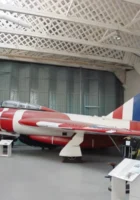
Gloster Javelin FAW9

Gloster Javelin

CountryUK
RoleAll-weather fighter/interceptor
First flight26 November 1951
Built436

The Gloster Javelin is a twin-engined T-tailed delta-wing subsonic night and all-weather interceptor aircraft that served with Britain’s Royal Air Force from the mid-1950s until the late 1960s. The last aircraft design to bear the Gloster name, it was introduced in 1956 after a lengthy development period and received several upgrades during its lifetime to its engines, radar and weapons, including support for the De Havilland Firestreak air-to-air missile. The Javelin was succeeded in the interceptor role by the English Electric Lightning, a supersonic aircraft capable of flying at more than double the Javelin’s top speed, which was introduced into the RAF only a few years later. The Javelin served for much of its life alongside the Lightning; the last Javelins were withdrawn from operational service in 1968 following the introduction of successively more capable versions of the Lightning.

Source: Gloster Javelin on Wikipedia

Continue reading

Views : 3650

Gloster Meteor Mk.4

Gloster Meteo

CountryUK
RoleFighter aircraft
First flight5 March 1943
Built3947

The Gloster Meteor was the first British jet fighter and the Allies’ only jet aircraft to achieve combat operations during the Second World War. The Meteor’s development was heavily reliant on its ground-breaking turbojet engines, pioneered by Sir Frank Whittle and his company, Power Jets Ltd. Development of the aircraft began in 1940, although work on the engines had been under way since 1936. The Meteor first flew in 1943 and commenced operations on 27 July 1944 with No. 616 Squadron RAF. The Meteor was not a sophisticated aircraft in its aerodynamics, but proved to be a successful combat fighter. Gloster’s 1946 civil Meteor F.4 demonstrator G-AIDC was the first civilian-registered jet aircraft in the world

Source: Gloster Meteor on Wikipedia

Continue reading

Views : 6920

Curtiss P-6E Hawk

Curtiss P-6 Hawk

CountryUSA
RoleFighter
First flight1927
ManufacturerCurtiss Aeroplane and Motor Company

The Curtiss P-6 Hawk was an American single-engine biplane fighter introduced into service in the late 1920s with the United States Army Air Corps and operated until the late 1930s prior to the outbreak of World War II.

Source: Curtiss P-6 Hawk on Wikipedia

Continue reading

Views : 3859

Canadair CT-133AN Silver Star 3

Canadair CT-133 Silver Star

CountryCanada
RoleMilitary trainer aircraft
First flightDecember 1952
Built656

The Canadair CT-133 Silver Star (company model number CL-30) is the Canadian license-built version of the Lockheed T-33 jet trainer aircraft, in service from the 1950s to 2005. The Canadian version was powered by the Rolls-Royce Nene 10 turbojet, whereas the Lockheed production used the Allison J33.

Source: Canadair CT-133 Silver Star on Wikipedia

Continue reading

Views : 3127

Teledyne Ryan AQM-34L

Ryan Firebee

CountryUSA
RoleUnmanned aerial vehicle
First flight1955
ManufacturerRyan Aeronautical

The Ryan Firebee was a series of target drones developed by the Ryan Aeronautical Company beginning in 1951. It was one of the first jet-propelled drones, and one of the most widely used target drones ever built.

Source: Ryan Firebee on Wikipedia

Continue reading

Views : 2668