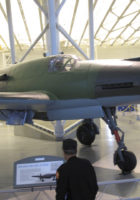
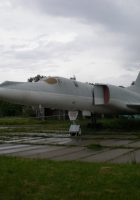
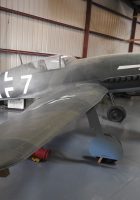
Percival P-56 Prépost

Percival prépost

OrszágEgyesült Királyság
SzerepetKatonai tréner repülőgép
Első repülés1950. február 24.
Beépített461

A Percival P.56 prépost was a British basic trainer that was developed for the Royal Air Force in the 1950s as a replacement for the Percival Prentice. It was a low-wing monoplane with a fixed, tailwheel undercarriage and like the Prentice had a side-by-side seating arrangement. The Provost has the distinction of being the last piston-engine basic trainer aircraft to be operated by the RAF. The Provost was later adapted to make use of a turbojet engine, producing the BAC Jet Provost. The type was withdrawn in the 1960s, in favour of its jet-powered successor.

Forrás: Percival Provost a Wikipédián

Olvasd tovább

Views : 2481

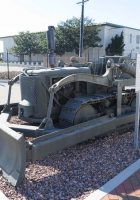
TD-9 nemzetközi kombájn traktor

OrszágUsa
SzerepetLánctalpas traktor
Bevezetett modell1940
A modell megszűnt1956

A Nemzetközi TD-9 egy dízelmotoros lánctalpas traktor volt, amelyet az International Harvester cég épített 1940 és 1956 között.

Forrás: TD-9 nemzetközi kombájn traktor a wikiben

Olvasd tovább

Nézetek : 1892

Boulton Paul Dacos I

Boulton Paul dacos

OrszágEgyesült Királyság
SzerepetKétüléses vadászgép, éjszakai vadászgép, kiképző
Első repülés1937. augusztus 11.
Beépített1064

A Boulton Paul dacos was a British interceptor aircraft that served with the Royal Air Force (RAF) during World War II. The Defiant was designed and built by Boulton Paul Aircraft as a “turret fighter”, without any forward-firing guns, a concept successfully used in the First World War-era Bristol F.2 Fighter and also implemented by the Royal Navy’s Blackburn Roc. In combat, the Defiant was found to be reasonably effective at its intended task of destroying bombers but was vulnerable to the Luftwaffe’s more manoeuvrable, single-seat Messerschmitt Bf 109 fighters. The lack of forward-firing armament proved to be a great weakness in daylight combat and its potential was realised only when it was converted to night fighting. It was supplanted in the night fighter role by the Bristol Beaufighter and de Havilland Mosquito. The Defiant found use in gunnery training, target towing, electronic countermeasures and air-sea rescue. Among RAF pilots it had the nickname “Daffy”.

Forrás: Boulton Paul Defiant a Wikipédián

Olvasd tovább

Views : 3911

Sólyom Nimród MK.II

Sólyom Nimród

OrszágEgyesült Királyság
SzerepetHaditengerészeti vadászgép
Első repülés1931. október 14.
Beépített92

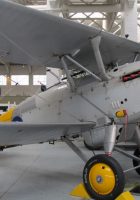
A Sólyom Nimród was a British carrier-based single-engine, single-seat biplane fighter aircraft built in the early 1930s by Hawker Aircraft. The Nimrod had an overall similarity to the Fury: it was a single-seater biplane with an open cockpit, fixed undercarriage and guns firing through the propeller. Its unswept, constant chord, round-tipped wings had an unequal span and strong stagger, the latter partly to enhance the pilot’s view. It was a single bay biplane braced with outward-leaning N-form interplane struts, with the upper plane held a little above the upper fuselage by cabane struts. The fabric-covered wings had metal spars and spruce ribs and carried balanced ailerons only on the upper wings.

Forrás: Hawker Nimród leírása a Wikipédiában

Olvasd tovább

Views : 2229

Ford M151 Mutt

M151 1/4-ton 4×4 utility truck

OrszágUsa
Szerepet1/4 ton truck/personnel transport, four wheel drive
Termék1959–1982
Beépített100000+

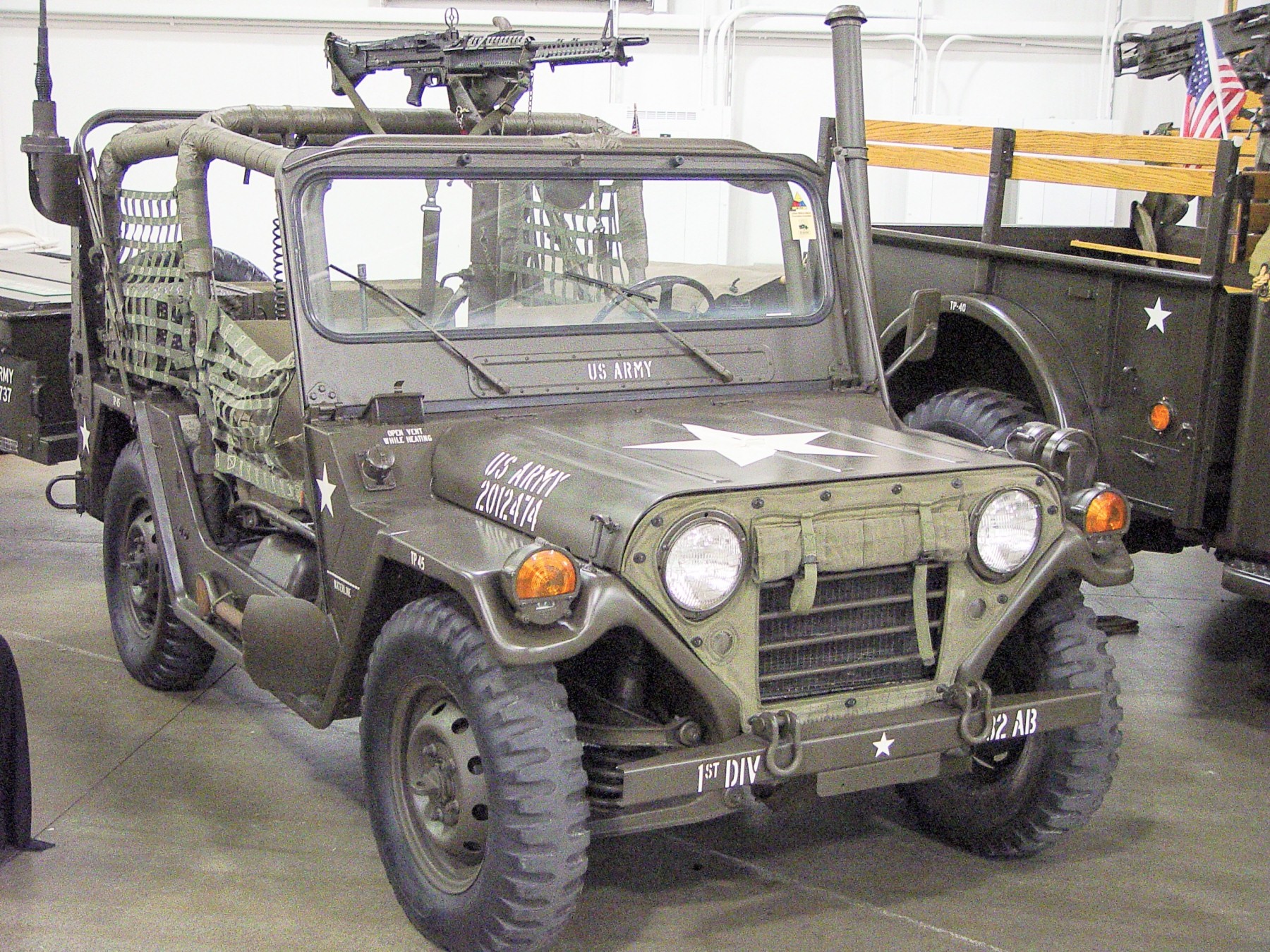
The Truck, Utility, 1/4-Ton, 4×4, M151 (M151) was the successor to the Korean War M38 and M38A1 jeep Light Utility Vehicles. Commonly referred to as a “jeep” or “quarter-ton”, it was produced from 1959 through 1982 and served in the Vietnam War. The M151 had a monocoque design making it roomier than previous jeep designs, and incorporated an independent suspension with coil springs. It has since been replaced by the larger AM General HMMWV in most utility roles in frontline use. With some M151A2 units still in U.S. military service in 1999, the M151 series achieved a longer run of service than that of the WW2 MB/GPW, M38, and M38A1 series combined.

Forrás: M151 a Wikipédiában

Olvasd tovább

Views : 8461

Heinkel He 219

Heinkel He 219

OrszágNáci Németország
SzerepetÉjszakai harcos
Első repülés6 November 1942
Beépített300

A Heinkel He 219 Uhu (“Eagle-Owl”) was a night fighter that served with the German Luftwaffe in the later stages of World War II. A relatively sophisticated design, the He 219 possessed a variety of innovations, including Lichtenstein SN-2 advanced VHF-band intercept radar, also used on the Ju 88G and Bf 110G night fighters. It was also the first operational military aircraft to be equipped with ejection seats and the first operational German World War II-era aircraft with tricycle landing gear. Had the Uhu been available in quantity, it might have had a significant effect on the strategic night bombing offensive of the Royal Air Force; but, only 294 of all models were built by the end of the war and these saw only limited service. Ernst-Wilhelm Modrow was the leading night fighter ace on the He 219. Modrow was credited with 33 from 34 night air victories on the type.

Forrás: Heinkel He 219 on Wikipedia

Olvasd tovább

Views : 4971

Dornier nem 335

Dornier Do.335

OrszágNáci Németország
SzerepetVadászbombázó
Első repülés1943. október 26.
Beépített37

A Dornier nem 335 Pfeil ("Arrow") egy második világháborús nehéz vadászgép volt, amit a Dornier cég épített. A kétüléses tréner változatot Ameisenbär-nek ("anteater") is nevezték. A Pfeil teljesítménye sokkal jobb volt, mint a többi kétmotoros kialakítás, köszönhetően az egyedülálló "push-pull" elrendezésnek és a két motor vonalonkénti beállításának sokkal alacsonyabb aerodinamikai húzása miatt. Ez volt Németország leggyorsabb dugattyús hajtóműves repülőgépe a második világháborúban. A Luftwaffe kétségbeesetten akarta a tervezést működőképessé venni, de a motorszállítások késedelme azt jelentette, hogy csak néhányat szállítottak le a háború vége előtt.

Forrás: Dornier Do.335 a Wikipédián

Olvasd tovább

Megtekintették : 5558

Tupolev Tu-22M

OrszágSzovjetunió
SzerepetStrategic bomber/Maritime strike
Első repülés30 August 1969
Beépített497

A Tupolev Tu-22M (Russian: Туполев Ту-22М; NATO reporting name: Backfire) is a supersonic, variable-sweep wing, long-range strategic and maritime strike bomber developed by the Tupolev Design Bureau. According to some sources, the bomber was believed to be designated Tu-26 at one time. During the Cold War, the Tu-22M was operated by the Soviet Air Force (VVS) in a strategic bombing role, and by the Soviet Naval Aviation (Aviacija Vojenno-Morskogo Flota, AVMF) in a long-range maritime anti-shipping role.[2] Significant numbers remain in service with the Russian Air Force, and as of 2014 more than 100 Tu-22Ms are in use.

Forrás: Tupolev Tu-22M on Wikipedia

Olvasd tovább

Megtekintések : 4039

A-4N Skyhawk

Douglas A-4 Skyhawk

OrszágUsa
SzerepetTámadó repülőgépek, vadászgépek, agresszor repülőgépek
Első repülés1954. június 22.
Beépített2960

A Douglas A-4 Skyhawk is a single seat subsonic carrier-capable attack aircraft developed for the United States Navy and United States Marine Corps in the early 1950s. The delta winged, single turbojet engined Skyhawk was designed and produced by Douglas Aircraft Company, and later by McDonnell Douglas. It was originally designated A4D under the U.S. Navy’s pre-1962 designation system. The Skyhawk is a relatively lightweight aircraft with a maximum takeoff weight of 24,500 pounds (11,100 kg) and has a top speed of more than 670 miles per hour (1,080 km/h). The aircraft’s five hardpoints support a variety of missiles, bombs and other munitions. It was capable of carrying a bomb load equivalent to that of a World War II-era Boeing B-17 bomber, and could deliver nuclear weapons using a low-altitude bombing system and a “loft” delivery technique. The A-4 was originally powered by the Wright J65 turbojet engine; from the A-4E onwards, the Pratt & Whitney J52 was used. Skyhawks played key roles in the Vietnam War, the Yom Kippur War, and the Falklands War. Sixty years after the aircraft’s first flight in 1954, some of the 2,960 produced (through February 1979) remain in service with several air arms around the world.

Forrás: Douglas A-4 Skyhawk a Wikipédiában

Olvasd tovább

Views : 12585

Heinkel He 100

OrszágNáci Németország
SzerepetHarcos
Első repülés22 January 1938
Beépített25

A Heinkel He 100 was a German pre-World War II fighter aircraft design from Heinkel. Although it proved to be one of the fastest fighter aircraft in the world at the time of its development, the design was not ordered into series production. Approximately 19 prototypes and pre-production examples were built. None are known to have survived the war. The reason for the He 100 failing to reach production status is mostly unknown. Officially, the Luftwaffe rejected the He 100 to concentrate single-seat fighter development on the Messerschmitt Bf 109. Following the adoption of the Bf 109 and Messerschmitt Bf 110 as the Luftwaffe’s standard fighter types, the Ministry of Aviation (the Reichsluftfahrtministerium or RLM) announced a “rationalization” policy that placed fighter development at Messerschmitt and bomber development at Heinkel.

Forrás: Heinkel He 100 on Wikipedia

Olvasd tovább

Views : 4640