English Electric Ligthning F.1

English Electric Lightning

CountryUK
RoleInterceptor
First flight4 August 1954
Built337

The English Electric Lightning is a supersonic fighter aircraft of the Cold War era. It was designed, developed, and manufactured by English Electric, which was subsequently absorbed by the newly formed British Aircraft Corporation. It was then marketed as the BAC Lightning. The Lightning was the only all-British Mach 2 fighter aircraft. The Lightning was used by the Royal Air Force (RAF) and the Royal Saudi Air Force (RSAF). Although it was the RAF’s primary interceptor for more than two decades it was never required to attack another aircraft.

Source: English Electric Lightning on Wikipedia

Continue reading

Views : 5708

Famo Rubezahl

CountryNazi Germnay
RoleCaterpillar tractor
Produced1932-1944
BuiltUnknow

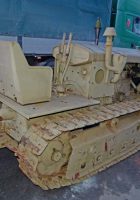
FAMO, short for Fahrzeug- und Motoren-Werke (Automobile and Engine Works) was a German vehicle manufacturer in the early 20th century. The middle crawler tractor Rübezahl was continued under the name FAMO Rübezahl until 1944. With a 65 HP engine it could tow up to 6 tons.

Source: Famo Rubezahl on Wikipedia

Continue reading

Views : 3170

Percival Proctor III

Percival Proctor

CountryUK
RoleRadio trainer/communications aircraft
First flight8 October 1939
Built1143

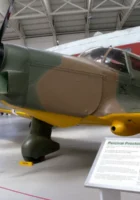
The Percival Proctor was a British radio trainer and communications aircraft of the Second World War. The Proctor was a single-engined, low-wing monoplane with seating for three or four, depending on the model.

Source: Percival Proctor on Wikipedia

Continue reading

Views : 3764

Supermarine Seagull V

Supermarine Seagull V

CountryUK
RoleAmphibious reconnaissance aircraft
First flight21 June 1933
Built740

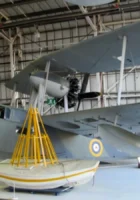
The Supermarine Walrus (originally known as the Supermarine Seagull V) was a British single-engine amphibious biplane reconnaissance aircraft designed by R. J. Mitchell and first flown in 1933. It was operated by the Fleet Air Arm (FAA) and also served with the Royal Air Force (RAF), Royal Australian Air Force (RAAF), Royal New Zealand Navy (RNZN) and Royal New Zealand Air Force (RNZAF). It was the first British squadron-service aircraft to incorporate in one airframe a fully retractable main undercarriage, completely enclosed crew accommodation and all-metal fuselage. Designed for use as a fleet spotter to be catapult launched from cruisers or battleships, the Walrus was later employed in a variety of other roles, most notably as a rescue aircraft for downed aircrew. It continued in service throughout the Second World War.

Source: Supermarine Seagull V on Wikipedia

Continue reading

Views : 3654

Percival P-56 Provost

Percival Provost

CountryUK
RoleMilitary trainer aircraft
First flight24 February 1950
Built461

The Percival P.56 Provost was a British basic trainer that was developed for the Royal Air Force in the 1950s as a replacement for the Percival Prentice. It was a low-wing monoplane with a fixed, tailwheel undercarriage and like the Prentice had a side-by-side seating arrangement. The Provost has the distinction of being the last piston-engine basic trainer aircraft to be operated by the RAF. The Provost was later adapted to make use of a turbojet engine, producing the BAC Jet Provost. The type was withdrawn in the 1960s, in favour of its jet-powered successor.

Source: Percival Provost on Wikipedia

Continue reading

Views : 3081

Boulton Paul Defiant I

Boulton Paul Defiant

CountryUK
RoleTwo-seat fighter, night fighter, trainer
First flight11 August 1937
Built1064

The Boulton Paul Defiant was a British interceptor aircraft that served with the Royal Air Force (RAF) during World War II. The Defiant was designed and built by Boulton Paul Aircraft as a “turret fighter”, without any forward-firing guns, a concept successfully used in the First World War-era Bristol F.2 Fighter and also implemented by the Royal Navy’s Blackburn Roc. In combat, the Defiant was found to be reasonably effective at its intended task of destroying bombers but was vulnerable to the Luftwaffe’s more manoeuvrable, single-seat Messerschmitt Bf 109 fighters. The lack of forward-firing armament proved to be a great weakness in daylight combat and its potential was realised only when it was converted to night fighting. It was supplanted in the night fighter role by the Bristol Beaufighter and de Havilland Mosquito. The Defiant found use in gunnery training, target towing, electronic countermeasures and air-sea rescue. Among RAF pilots it had the nickname “Daffy”.

Source: Boulton Paul Defiant on Wikipedia

Continue reading

Views : 4581

Hawker Nimrod MK.II

Hawker Nimrod

CountryUK
RoleNaval fighter
First flight14 October 1931
Built92

The Hawker Nimrod was a British carrier-based single-engine, single-seat biplane fighter aircraft built in the early 1930s by Hawker Aircraft. The Nimrod had an overall similarity to the Fury: it was a single-seater biplane with an open cockpit, fixed undercarriage and guns firing through the propeller. Its unswept, constant chord, round-tipped wings had an unequal span and strong stagger, the latter partly to enhance the pilot’s view. It was a single bay biplane braced with outward-leaning N-form interplane struts, with the upper plane held a little above the upper fuselage by cabane struts. The fabric-covered wings had metal spars and spruce ribs and carried balanced ailerons only on the upper wings.

Source: Hawker Nimrod on Wikipedia

Continue reading

Views : 2675

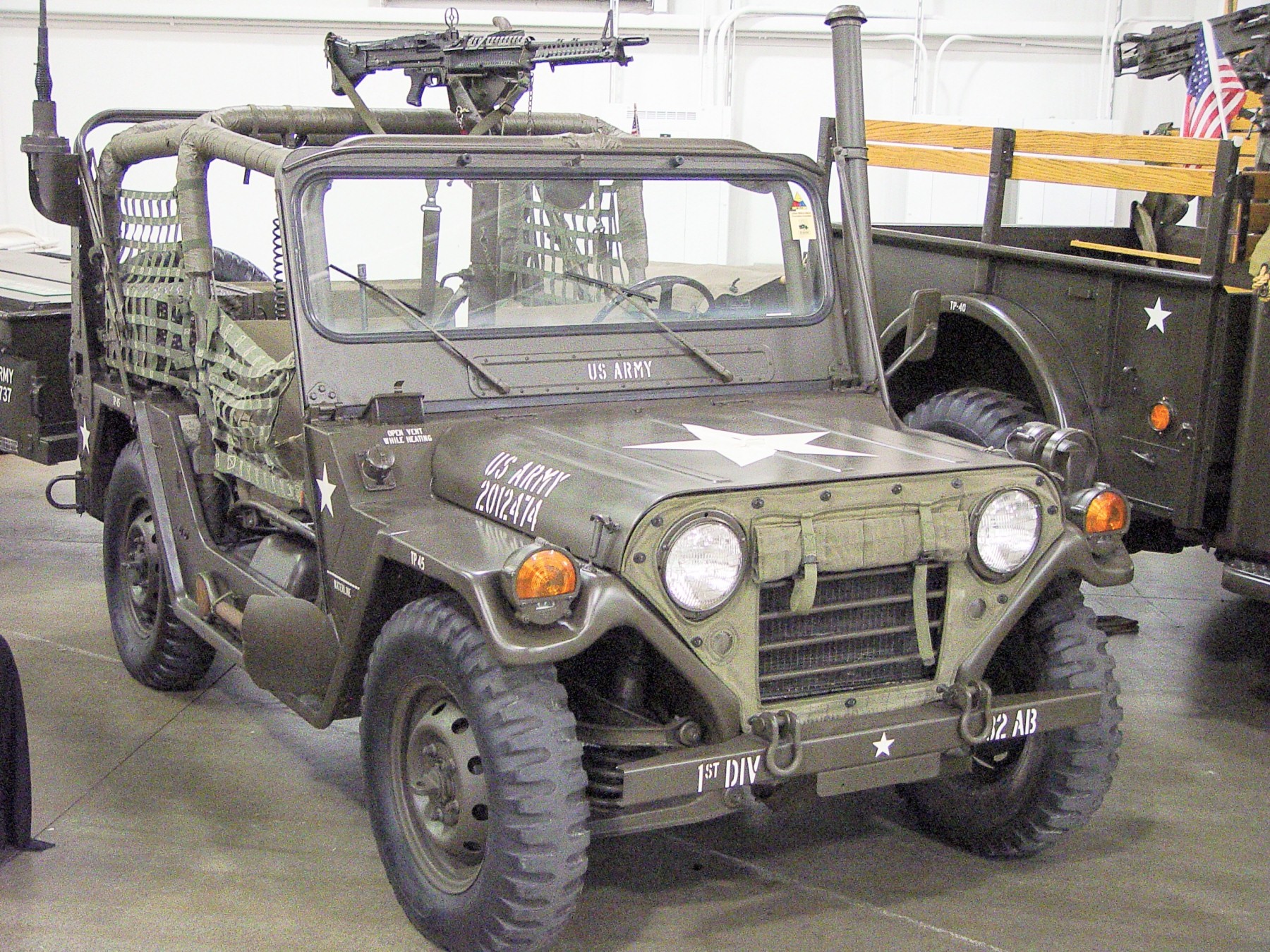
Ford M151 Mutt

M151 1/4-ton 4×4 utility truck

CountryUSA
Role1/4 ton truck/personnel transport, four wheel drive
Producted1959–1982
Built100000+

The Truck, Utility, 1/4-Ton, 4×4, M151 (M151) was the successor to the Korean War M38 and M38A1 jeep Light Utility Vehicles. Commonly referred to as a “jeep” or “quarter-ton”, it was produced from 1959 through 1982 and served in the Vietnam War. The M151 had a monocoque design making it roomier than previous jeep designs, and incorporated an independent suspension with coil springs. It has since been replaced by the larger AM General HMMWV in most utility roles in frontline use. With some M151A2 units still in U.S. military service in 1999, the M151 series achieved a longer run of service than that of the WW2 MB/GPW, M38, and M38A1 series combined.

Source: M151 on Wikipedia

Continue reading

Views : 11458

Heinkel He 219

Heinkel He 219

CountryNazi Germany
RoleNight fighter
First flight6 November 1942
Built300

The Heinkel He 219 Uhu (“Eagle-Owl”) was a night fighter that served with the German Luftwaffe in the later stages of World War II. A relatively sophisticated design, the He 219 possessed a variety of innovations, including Lichtenstein SN-2 advanced VHF-band intercept radar, also used on the Ju 88G and Bf 110G night fighters. It was also the first operational military aircraft to be equipped with ejection seats and the first operational German World War II-era aircraft with tricycle landing gear. Had the Uhu been available in quantity, it might have had a significant effect on the strategic night bombing offensive of the Royal Air Force; but, only 294 of all models were built by the end of the war and these saw only limited service. Ernst-Wilhelm Modrow was the leading night fighter ace on the He 219. Modrow was credited with 33 from 34 night air victories on the type.

Source: Heinkel He 219 on Wikipedia

Continue reading

Views : 5805