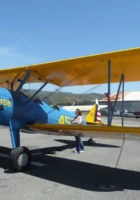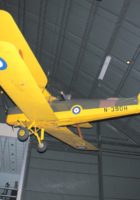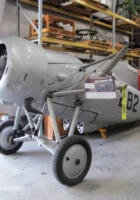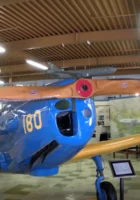
Fairchild PT-19A Kornelis

Fairchild PT-19A Kornelis

ŠaliesJav
TipasKarinio instruktoriaus orlaivis
NuotraukaRandy Ray
SuraskiteTraviso oro pajėgų bazės muziejus
Aprašymas / kontrolėAlbumas 59 nuotraukos pasivaikščiojimas po «Fairchild PT-19A Cornell»

Nuotraukų galerija Fairchild PT-19A Kornelis, The Fairchild PT-19 (company designation Fairchild M62) is an American Fairchild Aircraft monoplane primary trainer aircraft that served with the United States Army Air Forces, RAF and RCAF during World War II. It was a contemporary of the Kaydet biplane trainer and was used by the USAAF during Primary Flying Training as the introductory pre-solo phase trainer for introducing new pilots to flying before passing them on to the more agile Kaydet. As with other USAAF trainers of the period, the PT-19 had multiple designations based on the powerplant installed.

Šaltinis: Fairchild PT-19A Kornelis wiki

Tęsti svarstymą

Views : 2516

Stearman PT-13D Kaydet

Stearman PT-13D Kaydet

ŠaliesJav
TipasKarinio instruktoriaus orlaivis

Nuotraukų galerija Stearman PT-13D Kaydet, The Stearman (Boeing) Model 75 is a biplane used as a military trainer aircraft, of which at least 10,626 were built in the United States during the 1930s and 1940s. Stearman Aircraft became a subsidiary of Boeing in 1934. Widely known as the Stearman, Boeing Stearman or Kaydet, it served as a primary trainer for the United States Army Air Forces, the United States Navy (as the NS & N2S), and with the Royal Canadian Air Force as the Kaydet throughout World War II. After the conflict was over, thousands of surplus aircraft were sold on the civilian market. In the immediate postwar years they became popular as crop dusters, sports planes, and for aerobatic and wing walking use in air shows.

Šaltinis: Stearman PT-13D Kaydet on Wiki

Tęsti svarstymą

Views : 4942

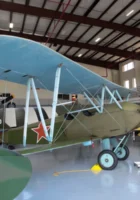
Polikarpovas Po-2

Polikarpovas Po-2

ŠaliesSovietų Sąjunga
TipasBendrosios paskirties biplanas
NuotraukaVladimiras Yakubovas
SuraskiteSkrydžio fantazija, Polk City
Aprašymas / kontrolėAlbumas 83 "Polikarpovo Po-2" nuotraukos

Nuotraukų galerija Polikarpovas Po-2, The Polikarpov Po-2 (also U-2) served as a general-purpose Soviet biplane, nicknamed Kukuruznik (Russian: Кукурузник, from Russian “kukuruza” (кукуруза) for maize; thus, “maize duster” or “crop duster”), NATO reporting name “Mule”. The reliable, uncomplicated concept of the Po-2’s design made it an ideal training aircraft, as well as doubling as a low-cost ground attack, aerial reconnaissance, psychological warfare and liaison aircraft during war, proved to be one of the most versatile light combat types to be built in the Soviet Union. As of 1978 it remained in production for a longer period of time than any other Soviet-era aircraft. It is one of the most produced aircraft, and may be the most produced biplane with production possibly as high as 30,000 Po-2s built between 1928 and 1959.However, production figures for Polikarpov U-2 and Po-2 bombers and trainers combined are between 20,000 and 30,000. with production ending as early as 1952.

Šaltinis: Polikarpov Po-2 on Wiki

Tęsti svarstymą

Views : 8669

Fouga Magister

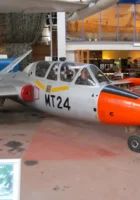
Fouga Magister C.M.170

ŠaliesPrancūzija
TipasDvivietis reaktyvinis treniruoklis
Pirmasis skrydis1952 m. liepos 23 d.
Pastatytas929

2007 Fouga CM.170 Magister is a 1950s French two-seat jet trainer. The related CM.175 Zéphyr was a carrier-capable version for the French Navy. In 1948, development commenced at Fouga on a new primary trainer aircraft design that harnessed newly developed jet propulsion technology. The initial design was evaluated by the French Air Force (Armée de l’Air, AdA) and, in response to its determination that the aircraft lacked sufficient power for its requirements, was enlarged and adopted a pair of Turbomeca Marboré turbojet engines. First flying on 23 July 1952, the first production order for the type was received on 13 January 1954. In addition, the related CM.175 Zéphyr was a carrier-capable version developed and produced for the French Navy.

Šaltinis: Fouga Magister C.M.170 apie Wiki

Tęsti svarstymą

Views : 5612

Supermarinas Spitfire MK. Xiv

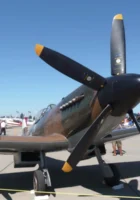
Supermarinas Spitfire MK. Xiv

ŠaliesJk
VaidmenįNaikintuvai
Pirmasis skrydis1941 m. lapkričio 27 d.
Pagamintas1942–48

2007 Supermarino Spitfire yra britų vienvietis naikintuvas, kurį karališkosios oro pajėgos ir daugelis kitų sąjungininkų šalių naudojo prieš Antrąjį pasaulinį karą, jo metu ir po jo. "Spitfire" buvo pastatytas daugeliu variantų, naudojant keletą sparnų konfigūracijų, ir buvo pagamintas daugiau nei bet kuris kitas britų orlaivis. Jis taip pat buvo vienintelis britų kovotojas, kuris visą karą buvo nuolat gaminamas. "Spitfire" ir toliau išlieka populiarus tarp entuziastų, maždaug 54 "Spitfires" yra tinkami skraidyti, o daugelis kitų yra statiniai eksponatai aviacijos muziejuose visame pasaulyje.

Šaltinis: Supermarine Spitfire MK. XIV apie Wiki

Tęsti svarstymą

Views : 11767

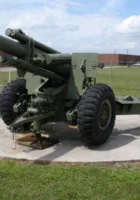
JAV 155mm M1A1 Howitzer

JAV 155mm M1A1 Howitzer

ŠaliesJav
TipasHowitzer
NuotraukaRandy J Ray
SuraskiteMotts karo muziejus
Aprašymas / kontrolėAlbumas 49 nuotraukos "JAV 155 mm M1A1 haubicos"

Nuotraukų galerija JAV 155mm M1A1 Howitzer, The M114 155 mm howitzer was a towed howitzer developed and used by the United States Army. It was first produced in 1942 as a medium artillery piece under the designation of 155 mm Howitzer M1. It saw service with the US Army during World War II, the Korean War, and the Vietnam War, before being replaced by the M198 howitzer.

Šaltinis: JAV 155 mm M1A1 haubica "Wiki"

Tęsti svarstymą

Peržiūrėta : 4401

QF Mk.III

QF 25pdr Pažymėti II Lauko Gun

ŠaliesJk
TipasHowitzer
Tarnyboje1940–dabar

Nuotraukų galerija QF 25pdr Pažymėti II Lauko Gun, The Ordnance QF 25-pounder, or more simply 25-pounder or 25-pdr, was the major British field gun and howitzer during World War II. It was introduced into service just before the war started, combining high-angle and direct-fire, relatively high rates of fire, and a reasonably lethal shell in a highly mobile piece. It remained the British Army’s primary artillery field piece well into the 1960s, with smaller numbers serving in training units until the 1980s. Many Commonwealth of Nations countries used theirs in active or reserve service until about the 1970s and ammunition for the weapon is currently being produced by Pakistan Ordnance Fac. Morkus II: antrojo pasaulinio karo metu prie "Mark I" vežimėlio buvo standartinis ginklas. Jie buvo pastatyti Australijoje ir Kanadoje, bet daugiausia JK. Pristatymai (iš JK gamybos) prasidėjo 1940 m. Pradžioje ir pirmą kartą pradėjo tarnybą su Kanados pulku, dislokuotu JK 1940 m. Gegužės mėn. Prancūzijoje nebuvo prarastas "Ordnance 25-pr Mk 2 on Carriage 25-pr Mark 1". Šis ginklas iššovė visus užtaisus, 1 – 3 ir Super. 1942 m. prie pistoleto buvo pritvirtintas snukio stabdys, kad būtų pašalintas nestabilumas, atsiradęs šaudant 20 svarų AP apvalkalu su "Charge Super" tiesioginės ugnies žemo aukščio kampais. Siekiant išsaugoti ginklo pusiausvyrą ant atramų, taip pat buvo pritvirtintas atsvaros svoris, tiesiai priešais atramos žiedą. Modifikuoto pistoleto pavadinimas nebuvo pakeistas. Galų gale visi Europoje tarnaujantys ginklai buvo taip konvertuoti.

Šaltinis: QF 25pdr Mark II lauko pistoletas Wiki

Tęsti svarstymą

Views : 4319

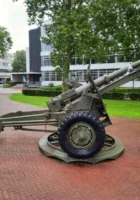
JAV 105 mm m2A2 lauko pistoletas

JAV 105 mm m2A2 lauko pistoletas

ŠaliesJav
TipasHowitzer
NuotraukaVladimiras Yakubovas
SuraskiteMusee de l'Armee, Paryžius
Aprašymas / kontrolėAlbumas 66 nuotraukos pasivaikščiojimas po «JAV 105 mm M2A2 lauko pistoletą»

Nuotraukų galerija JAV 105 mm m2A2 lauko pistoletas, The 105 mm M2A1 (M101A1) howitzer was a howitzer developed and used by the United States. It was the standard U.S. light field howitzer in World War II and saw action in both the European and Pacific theaters. Entering production in 1941, it quickly gained a reputation for accuracy and a powerful punch. The M101A1 fired 105-millimetre (4.1 in) high explosive (HE) semi-fixed ammunition and had a range of 11,270 metres (12,330 yd), making it suitable for supporting infantry. M2A2 : modifikuotas skydas

Šaltinis: JAV 105 mm M2A2 lauko pistoletas "Wiki"

Tęsti svarstymą

Views : 3540

de Havilland DH.82 Tigro kandis

de Havilland DH.82 Tiger Moth

ŠaliesJk
VaidmenįTreneris
Pirmasis skristi1931 m. spalio 26 d.
Pastatytas8868

2007 de Havilland DH.82 Tigro kandis is a 1930s biplane designed by Geoffrey de Havilland and was operated by the Royal Air Force (RAF) and others as a primary trainer. The Tiger Moth remained in service with the RAF until replaced by the de Havilland Chipmunk in 1952, when many of the surplus aircraft entered civil operation. Many other nations used the Tiger Moth in both military and civil applications, and it remains in widespread use as a recreational aircraft in many countries. It is still occasionally used as a primary training aircraft, particularly for those pilots wanting to gain experience before moving on to other tailwheel aircraft. Many are now employed by various companies offering trial lesson experiences. The de Havilland Moth club founded 1975 is now an owners’ association offering a mutual club and technical support.

Šaltinis: de Havilland DH.82 Tigro kandis Wiki

Tęsti svarstymą

Views : 6422

Dewoitine D.26

Dewoitine D.26

ŠaliesPrancūzija – Šveicarija
TipasInstruktorių orlaiviai
NuotraukaVladimiras Yakubovas
SuraskiteSkrydžio fantazija, Polk City
Aprašymas / kontrolėAlbumas 80 "Dewoitine D.26" nuotraukos

Nuotraukų galerija Dewoitine D.26, The Dewoitine D.26 was a military trainer developed in France for the Swiss Air Force in parallel with the D.27 fighter. The D.26 airframe was similar to that of the D.27. Differences included: The engine cowling was omitted on the D.26; The D.26 radial engine was smaller and produced less power; The D.26 was not equipped with provision for armament.

Šaltinis: Dewoitine D.26 apie Wiki

Tęsti svarstymą

Peržiūrų kiekis : 2808