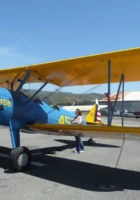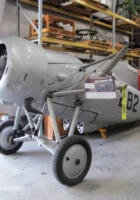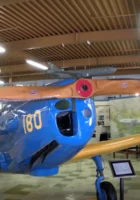
Fairchild PT-19A Cornell

Fairchild PT-19A Cornell

OrszágUsa
TípusKatonai tréner repülőgép
FényképKanos Ray
Keresse megTravis Légierő Bázis Múzeum
LeírásAlbuma 59 photos walk-around of a «Fairchild PT-19A Cornell»

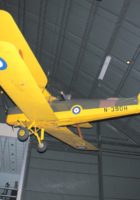
Képgaléria egy Fairchild PT-19A Cornell, The Fairchild PT-19 (company designation Fairchild M62) is an American Fairchild Aircraft monoplane primary trainer aircraft that served with the United States Army Air Forces, RAF and RCAF during World War II. It was a contemporary of the Kaydet biplane trainer and was used by the USAAF during Primary Flying Training as the introductory pre-solo phase trainer for introducing new pilots to flying before passing them on to the more agile Kaydet. As with other USAAF trainers of the period, the PT-19 had multiple designations based on the powerplant installed.

Forrás: Fairchild PT-19A Cornell on Wiki

Olvasd tovább

Megtekintették : 2541

Stearman PT-13D Kaydet

Stearman PT-13D Kaydet

OrszágUsa
TípusKatonai tréner repülőgép

Képgaléria egy Stearman PT-13D Kaydet, The Stearman (Boeing) Model 75 is a biplane used as a military trainer aircraft, of which at least 10,626 were built in the United States during the 1930s and 1940s. Stearman Aircraft became a subsidiary of Boeing in 1934. Widely known as the Stearman, Boeing Stearman or Kaydet, it served as a primary trainer for the United States Army Air Forces, the United States Navy (as the NS & N2S), and with the Royal Canadian Air Force as the Kaydet throughout World War II. After the conflict was over, thousands of surplus aircraft were sold on the civilian market. In the immediate postwar years they became popular as crop dusters, sports planes, and for aerobatic and wing walking use in air shows.

Forrás: Stearman PT-13D Kaydet a Wikiben

Olvasd tovább

Views : 4966

Polikarpov Po-2

Polikarpov Po-2

OrszágSzovjetunió
TípusGeneral-purpose biplane
FényképVlagyimir Jakubov
Keresse megRepülés fantáziavilága, Polk City
LeírásAlbuma 83 photos walk-around of a «Polikarpov Po-2»

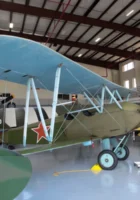
Képgaléria egy Polikarpov Po-2, The Polikarpov Po-2 (also U-2) served as a general-purpose Soviet biplane, nicknamed Kukuruznik (Russian: Кукурузник, from Russian “kukuruza” (кукуруза) for maize; thus, “maize duster” or “crop duster”), NATO reporting name “Mule”. The reliable, uncomplicated concept of the Po-2’s design made it an ideal training aircraft, as well as doubling as a low-cost ground attack, aerial reconnaissance, psychological warfare and liaison aircraft during war, proved to be one of the most versatile light combat types to be built in the Soviet Union. As of 1978 it remained in production for a longer period of time than any other Soviet-era aircraft. It is one of the most produced aircraft, and may be the most produced biplane with production possibly as high as 30,000 Po-2s built between 1928 and 1959.However, production figures for Polikarpov U-2 and Po-2 bombers and trainers combined are between 20,000 and 30,000. with production ending as early as 1952.

Forrás: Polikarpov Po-2 on Wiki

Olvasd tovább

Views : 8697

Fouga Magister

Fouga Magister C.M.170

OrszágFranciaország
TípusKétüléses sugárhajtású kiképző
Első repülés23 July 1952
Beépített929

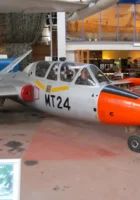
A Fouga CM.170 Magister is a 1950s French two-seat jet trainer. The related CM.175 Zéphyr was a carrier-capable version for the French Navy. In 1948, development commenced at Fouga on a new primary trainer aircraft design that harnessed newly developed jet propulsion technology. The initial design was evaluated by the French Air Force (Armée de l’Air, AdA) and, in response to its determination that the aircraft lacked sufficient power for its requirements, was enlarged and adopted a pair of Turbomeca Marboré turbojet engines. First flying on 23 July 1952, the first production order for the type was received on 13 January 1954. In addition, the related CM.175 Zéphyr was a carrier-capable version developed and produced for the French Navy.

Forrás: Fouga Magister C.M.170 a Wikin

Olvasd tovább

Views : 5613

Szupermarin Spitfire MK. Xiv

Szupermarin Spitfire MK. Xiv

OrszágEgyesült Királyság
SzerepetVadászrepülőgép
Első repülés1941. november 27.
Termelt1942–48

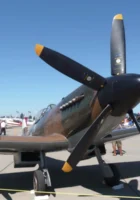
A Szupermarin Spitfire egy brit együléses vadászrepülőgép, amelyet a Királyi Légierő és sok más szövetséges ország használt a második világháború előtt, alatt és után. A Spitfire-t számos változatban építették, több szárnykonfigurációt használva, és nagyobb számban gyártották, mint bármely más brit repülőgép. Ez volt az egyetlen brit harcos, aki folyamatos termelésben volt a háború alatt. A Spitfire továbbra is népszerű a rajongók körében, körülbelül 54 Spitfire légiképes, míg sokkal több statikus kiállítás a repülési múzeumokban szerte a világon.

Forrás: Szupermarin Spitfire MK. XIV. a Wikiben

Olvasd tovább

Views : 11794

US 155mm M1A1 tarack

US 155mm M1A1 tarack

OrszágUsa
Típustarack
FényképRandy J. Ray
Keresse megMotts Katonai Múzeum
LeírásAlbuma 49 fényképek séta körül egy «US 155mm M1A1 Tarack»

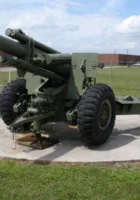
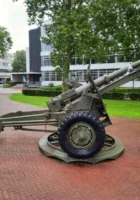
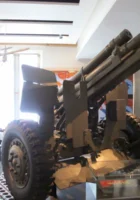
Képgaléria egy US 155mm M1A1 tarack, The M114 155 mm howitzer was a towed howitzer developed and used by the United States Army. It was first produced in 1942 as a medium artillery piece under the designation of 155 mm Howitzer M1. It saw service with the US Army during World War II, the Korean War, and the Vietnam War, before being replaced by the M198 howitzer.

Forrás: US 155mm M1A1 Tarack a Wiki

Olvasd tovább

Megtekintették : 4428

QF Mk.III

QF 25pdr Mark II Field Gun

OrszágEgyesült Királyság
Típustarack
Szolgálatban1940–napjainkig

Képgaléria egy QF 25pdr Mark II Field Gun, The Ordnance QF 25-pounder, or more simply 25-pounder or 25-pdr, was the major British field gun and howitzer during World War II. It was introduced into service just before the war started, combining high-angle and direct-fire, relatively high rates of fire, and a reasonably lethal shell in a highly mobile piece. It remained the British Army’s primary artillery field piece well into the 1960s, with smaller numbers serving in training units until the 1980s. Many Commonwealth of Nations countries used theirs in active or reserve service until about the 1970s and ammunition for the weapon is currently being produced by Pakistan Ordnance Fac. A Márk II.: a Mark I kocsira szerelve volt a szabványos löveg a második világháború alatt. Ausztráliában és Kanadában épültek, de leginkább az Egyesült Királyságban. A szállítások (az Egyesült Királyság gyártásából) 1940 elején kezdődtek, és először 1940 májusában álltak szolgálatba az Egyesült Királyságban állomásozó kanadai ezrednél. Egyetlen Ordnance 25-pr Mk 2 sem veszett oda a 25-pr Mark 1 kocsin Franciaországban. Ez a fegyver minden töltetet elsütött, 1-3 és Super. 1942-ben csőszájféket szereltek a fegyverre, hogy kiküszöböljék az instabilitást, amelyet a 20 fontos AP lövedék Charge Super töltéssel történő tüzelése okozott közvetlen tüzelési alacsony magassági szögben. Annak érdekében, hogy megőrizzék a löveg egyensúlyát a csonkokon, egy ellensúlyt is felszereltek, közvetlenül a zárgyűrű elé. A módosított fegyver megnevezése nem változott. Végül az Európában szolgáló összes fegyvert átalakították.

Forrás: QF 25pdr Mark II Field Gun on Wiki

Olvasd tovább

Views : 4325

US 105mm M2A2 tábori löveg

US 105mm M2A2 tábori löveg

OrszágUsa
Típustarack
FényképVlagyimir Jakubov
Keresse megMusee de l’Armee, Paris
LeírásAlbuma 66 photos walk-around of a «US 105mm M2A2 Field Gun»

Képgaléria egy US 105mm M2A2 tábori löveg, The 105 mm M2A1 (M101A1) howitzer was a howitzer developed and used by the United States. It was the standard U.S. light field howitzer in World War II and saw action in both the European and Pacific theaters. Entering production in 1941, it quickly gained a reputation for accuracy and a powerful punch. The M101A1 fired 105-millimetre (4.1 in) high explosive (HE) semi-fixed ammunition and had a range of 11,270 metres (12,330 yd), making it suitable for supporting infantry. M2A2 : modified shield

Forrás: US 105mm M2A2 Field Gun on Wiki

Olvasd tovább

Megtekintették : 3543

de Havilland DH.82 Tigrismoly

de Havilland DH.82 Tiger Moth

OrszágEgyesült Királyság
SzerepetEdző
Első repülés26 October 1931
Beépített8868

A de Havilland DH.82 Tigrismoly is a 1930s biplane designed by Geoffrey de Havilland and was operated by the Royal Air Force (RAF) and others as a primary trainer. The Tiger Moth remained in service with the RAF until replaced by the de Havilland Chipmunk in 1952, when many of the surplus aircraft entered civil operation. Many other nations used the Tiger Moth in both military and civil applications, and it remains in widespread use as a recreational aircraft in many countries. It is still occasionally used as a primary training aircraft, particularly for those pilots wanting to gain experience before moving on to other tailwheel aircraft. Many are now employed by various companies offering trial lesson experiences. The de Havilland Moth club founded 1975 is now an owners’ association offering a mutual club and technical support.

Forrás: de Havilland DH.82 Tigrismoly a Wikin

Olvasd tovább

Views : 6451

Dewoitine D.26

Dewoitine D.26

OrszágFrance – Swiss
TípusOktató repülőgép
FényképVlagyimir Jakubov
Keresse megRepülés fantáziavilága, Polk City
LeírásAlbuma 80 fényképek séta körül a «Dewoitine D.26»

Képgaléria egy Dewoitine D.26, The Dewoitine D.26 was a military trainer developed in France for the Swiss Air Force in parallel with the D.27 fighter. The D.26 airframe was similar to that of the D.27. Differences included: The engine cowling was omitted on the D.26; The D.26 radial engine was smaller and produced less power; The D.26 was not equipped with provision for armament.

Forrás: Dewoitine D.26 a Wiki-n

Olvasd tovább

Megtekintették : 2808