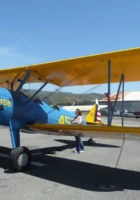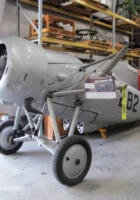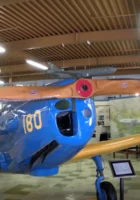
Fairchild PT-19A Cornell

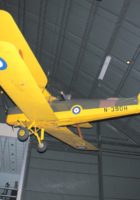
Fairchild PT-19A Cornell

ZemljaSad
TipVojni trenerski avioni
FotografijaRendi Rej
PronađiteTravis Air Force Base Museum
OpisAlbum albuma 59 photos walk-around of a «Fairchild PT-19A Cornell»

Foto-galerija a Fairchild PT-19A Cornell, The Fairchild PT-19 (company designation Fairchild M62) is an American Fairchild Aircraft monoplane primary trainer aircraft that served with the United States Army Air Forces, RAF and RCAF during World War II. It was a contemporary of the Kaydet biplane trainer and was used by the USAAF during Primary Flying Training as the introductory pre-solo phase trainer for introducing new pilots to flying before passing them on to the more agile Kaydet. As with other USAAF trainers of the period, the PT-19 had multiple designations based on the powerplant installed.

Izvor: Fairchild PT-19A Kornel na Viki

Nastavi sa čitanjem

Views : 2516

Stearman PT-13D Kaydet

Stearman PT-13D Kaydet

ZemljaSad
TipVojni trenerski avioni

Foto-galerija a Stearman PT-13D Kaydet, The Stearman (Boeing) Model 75 is a biplane used as a military trainer aircraft, of which at least 10,626 were built in the United States during the 1930s and 1940s. Stearman Aircraft became a subsidiary of Boeing in 1934. Widely known as the Stearman, Boeing Stearman or Kaydet, it served as a primary trainer for the United States Army Air Forces, the United States Navy (as the NS & N2S), and with the Royal Canadian Air Force as the Kaydet throughout World War II. After the conflict was over, thousands of surplus aircraft were sold on the civilian market. In the immediate postwar years they became popular as crop dusters, sports planes, and for aerobatic and wing walking use in air shows.

Izvor: Stearman PT-13D Kaydet on Wiki

Nastavi sa čitanjem

Views : 4942

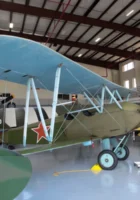
Polikarpov Po-2

Polikarpov Po-2

ZemljaSovjetski Savez
TipDvotočkaš opšte namene
FotografijaVladimir Jakubov
PronađiteFantazija leta, Polk Siti
OpisAlbum albuma 83 photos walk-around of a «Polikarpov Po-2»

Foto-galerija a Polikarpov Po-2, The Polikarpov Po-2 (also U-2) served as a general-purpose Soviet biplane, nicknamed Kukuruznik (Russian: Кукурузник, from Russian “kukuruza” (кукуруза) for maize; thus, “maize duster” or “crop duster”), NATO reporting name “Mule”. The reliable, uncomplicated concept of the Po-2’s design made it an ideal training aircraft, as well as doubling as a low-cost ground attack, aerial reconnaissance, psychological warfare and liaison aircraft during war, proved to be one of the most versatile light combat types to be built in the Soviet Union. As of 1978 it remained in production for a longer period of time than any other Soviet-era aircraft. It is one of the most produced aircraft, and may be the most produced biplane with production possibly as high as 30,000 Po-2s built between 1928 and 1959.However, production figures for Polikarpov U-2 and Po-2 bombers and trainers combined are between 20,000 and 30,000. with production ending as early as 1952.

Izvor: Polikarpov Po-2 na Wikiju

Nastavi sa čitanjem

Views : 8669

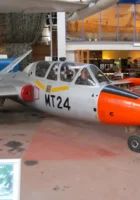
Fouga Magister

Fouga Magister C.M.170

ZemljaFrancuska
TipDvosedni mlazni trener
Prvi let23 Jul 1952
Izgradio929

Čaj Fouga CM.170 Magister is a 1950s French two-seat jet trainer. The related CM.175 Zéphyr was a carrier-capable version for the French Navy. In 1948, development commenced at Fouga on a new primary trainer aircraft design that harnessed newly developed jet propulsion technology. The initial design was evaluated by the French Air Force (Armée de l’Air, AdA) and, in response to its determination that the aircraft lacked sufficient power for its requirements, was enlarged and adopted a pair of Turbomeca Marboré turbojet engines. First flying on 23 July 1952, the first production order for the type was received on 13 January 1954. In addition, the related CM.175 Zéphyr was a carrier-capable version developed and produced for the French Navy.

Izvor: Fouga Magister C.M.170 on Wiki

Nastavi sa čitanjem

Views : 5612

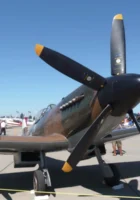
Supermarin Spitfire MK. XIV

Supermarin Spitfire MK. XIV

ZemljaVelike britanije
UloguBorbeni avioni
Prvi let27 Novembar 1941
Proizvodi1942–48

Čaj Supermarine Spitfire je britanski borbeni avion sa jednim sedištem koji su koristile Kraljevsko vazduhoplovstvo i mnoge druge savezničke zemlje pre, za vreme i posle Drugog svetskog rata. Spitfajer je izgrađen u mnogim varijantama, koristeći nekoliko konfiguracija krila, a proizveden je u većem broju od bilo kog drugog britanskog aviona. To je takođe bio jedini britanski borac koji je bio u kontinuiranoj proizvodnji tokom celog rata. Spitfajer je i dalje popularan među entuzijastima, a otprilike 54 Spitfajera je vazdušno sposobno, dok su mnogi drugi statički eksponati u vazduhoplovnim muzejima širom sveta.

Izvor: Supermarin Spitfire MK. XIV na Wikiju

Nastavi sa čitanjem

Views : 11768

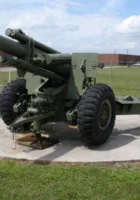
US 155mm M1A1 Howitzer

US 155mm M1A1 Howitzer

ZemljaSad
TipHaubica
FotografijaRendi Džej Rej
PronađiteVojni muzej Mots
OpisAlbum albuma 49 photos walk-around of a «US 155mm M1A1 Howitzer»

Foto-galerija a US 155mm M1A1 Howitzer, The M114 155 mm howitzer was a towed howitzer developed and used by the United States Army. It was first produced in 1942 as a medium artillery piece under the designation of 155 mm Howitzer M1. It saw service with the US Army during World War II, the Korean War, and the Vietnam War, before being replaced by the M198 howitzer.

Izvor: US 155mm M1A1 Howitzer on Wiki

Nastavi sa čitanjem

Broj posetilaca : 4401

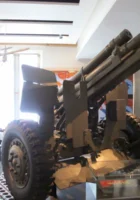
QF Mk.III

Pištolj za polje QF 25pdr Mark II

ZemljaVelike britanije
TipHaubica
U službi1940–present

Foto-galerija a Pištolj za polje QF 25pdr Mark II, The Ordnance QF 25-pounder, or more simply 25-pounder or 25-pdr, was the major British field gun and howitzer during World War II. It was introduced into service just before the war started, combining high-angle and direct-fire, relatively high rates of fire, and a reasonably lethal shell in a highly mobile piece. It remained the British Army’s primary artillery field piece well into the 1960s, with smaller numbers serving in training units until the 1980s. Many Commonwealth of Nations countries used theirs in active or reserve service until about the 1970s and ammunition for the weapon is currently being produced by Pakistan Ordnance Fac. The Mark II: uklopljen u kočiju Marka I bio je standardni pištolj tokom Drugog svetskog rata. Izgrađene su u Australiji i Kanadi, ali uglavnom u Velikoj Britaniji. Isporuke (iz proizvodnje u Velikoj Britaniji) počele su početkom 1940. No Ordnance 25-pr Mk 2 on Carriage 25-pr Mark 1 were lost in France. Ovaj pištolj je pucao iz svih optužbi, 1 – 3 i Super. 1942. godine kočnica za brnjicu je bila uklopljena u pištolj da bi se eliminisala nestabilnost izazvana prilikom ispaljivanja 20 lb AP granate sa Charge Super pod direktnim uglovima niske vatre. Da bi se očuvala ravnoteža pištolja na trunionima takođe je bila uklopljena protivteža težini, tik ispred breech ringa. Oznaka modifikovanog pištolja nije promenjena. Na kraju su svi pištolji koji su služili u Evropi bili tako preobraćeni.

Izvor: QF 25pdr Mark II Field Gun on Wiki

Nastavi sa čitanjem

Views : 4319

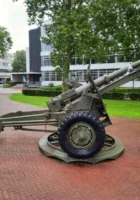
US 105mm M2A2 Field Gun

US 105mm M2A2 Field Gun

ZemljaSad
TipHaubica
FotografijaVladimir Jakubov
PronađiteMusee de l'Armee, Pariz
OpisAlbum albuma 66 fotografije šetnje «US 105mm M2A2 Field Gun»

Foto-galerija a US 105mm M2A2 Field Gun, The 105 mm M2A1 (M101A1) howitzer was a howitzer developed and used by the United States. It was the standard U.S. light field howitzer in World War II and saw action in both the European and Pacific theaters. Entering production in 1941, it quickly gained a reputation for accuracy and a powerful punch. The M101A1 fired 105-millimetre (4.1 in) high explosive (HE) semi-fixed ammunition and had a range of 11,270 metres (12,330 yd), making it suitable for supporting infantry. SU2A2 : modifikovani štit

Izvor: SAD 105mm M2A2 Field Gun na Viki

Nastavi sa čitanjem

Views : 3540

de Havilland DH.82 Tigar Moljac

de Havilland DH.82 Tiger Moth

ZemljaVelike britanije
UloguTrener
Prva muva26 Oktobar 1931
Izgradio8868

Čaj de Havilland DH.82 Tigar Moljac je dvotočkaš iz tridesetih godina prošlog veka koji je dizajnirao Džefri de Havilland, a njime su upravljali Kraljevsko vazduhoplovstvo (RAF) i drugi kao primarni trener. Tigar moljac je ostao u službi RAF-a sve dok ga nije zamenio de Havilland Chipmunk 1952. godine, kada su mnogi od viškova aviona ušli u civilnu operaciju. Mnoge druge nacije koristile su Tigrov moljac i u vojnoj i u civilnoj primeni, a i dalje je u rasprostranjenoj upotrebi kao rekreativni avion u mnogim zemljama. Još uvek se povremeno koristi kao avion za primarnu obuku, posebno za one pilote koji žele da steknu iskustvo pre nego što e-00 000 ljudi. Mnogi su sada zaposleni u raznim kompanijama koje nude probna iskustva iz lekcija. Klub de Havilland Moth osnovan 1975.

Izvor: de Havilland DH.82 Tiger Moth on Wiki

Nastavi sa čitanjem

Views : 6422

Dewoitine D.26

Dewoitine D.26

ZemljaFrancuska – Švajcarci
TipTrenerski avioni
FotografijaVladimir Jakubov
PronađiteFantazija leta, Polk Siti
OpisAlbum albuma 80 photos walk-around of a «Dewoitine D.26»

Foto-galerija a Dewoitine D.26, The Dewoitine D.26 was a military trainer developed in France for the Swiss Air Force in parallel with the D.27 fighter. The D.26 airframe was similar to that of the D.27. Differences included: The engine cowling was omitted on the D.26; The D.26 radial engine was smaller and produced less power; The D.26 was not equipped with provision for armament.

Izvor: Dewoitine D.26 on Wiki

Nastavi sa čitanjem

Broj posetilaca : 2808