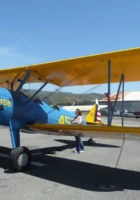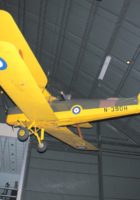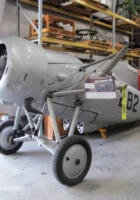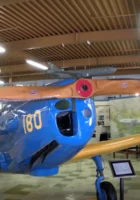
Fairchild PT-19A Cornell

Fairchild PT-19A Cornell

RiikUSA
TüüpSõjaväe treener õhusõidukid
FotoRandy Ray
LeidaTravise õhujõudude baasi muuseum
KirjeldusAlbum 59 fotod «Fairchild PT-19A Cornell»

Fotogalerii Fairchild PT-19A Cornell, The Fairchild PT-19 (company designation Fairchild M62) is an American Fairchild Aircraft monoplane primary trainer aircraft that served with the United States Army Air Forces, RAF and RCAF during World War II. It was a contemporary of the Kaydet biplane trainer and was used by the USAAF during Primary Flying Training as the introductory pre-solo phase trainer for introducing new pilots to flying before passing them on to the more agile Kaydet. As with other USAAF trainers of the period, the PT-19 had multiple designations based on the powerplant installed.

Allikas: Fairchild PT-19A Cornell Wikis

Jätka lugemist

Vaadatud : 2516

Stearman PT-13D Kaydet

Stearman PT-13D Kaydet

RiikUSA
TüüpSõjaväe treener õhusõidukid

Fotogalerii Stearman PT-13D Kaydet, The Stearman (Boeing) Model 75 is a biplane used as a military trainer aircraft, of which at least 10,626 were built in the United States during the 1930s and 1940s. Stearman Aircraft became a subsidiary of Boeing in 1934. Widely known as the Stearman, Boeing Stearman or Kaydet, it served as a primary trainer for the United States Army Air Forces, the United States Navy (as the NS & N2S), and with the Royal Canadian Air Force as the Kaydet throughout World War II. After the conflict was over, thousands of surplus aircraft were sold on the civilian market. In the immediate postwar years they became popular as crop dusters, sports planes, and for aerobatic and wing walking use in air shows.

Allikas: Stearman PT-13D Kaydet Wikis

Jätka lugemist

Vaadatud : 4942

Polikarpov Po-2

Polikarpov Po-2

RiikNõukogude Liit
TüüpÜldotstarbeline biplaan
FotoVladimir Jakubov
LeidaLennu fantaasia, Polk City
KirjeldusAlbum 83 fotod käivad ringi «Polikarpov Po-2»

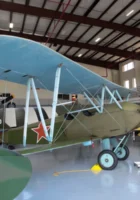
Fotogalerii Polikarpov Po-2, The Polikarpov Po-2 (also U-2) served as a general-purpose Soviet biplane, nicknamed Kukuruznik (Russian: Кукурузник, from Russian “kukuruza” (кукуруза) for maize; thus, “maize duster” or “crop duster”), NATO reporting name “Mule”. The reliable, uncomplicated concept of the Po-2’s design made it an ideal training aircraft, as well as doubling as a low-cost ground attack, aerial reconnaissance, psychological warfare and liaison aircraft during war, proved to be one of the most versatile light combat types to be built in the Soviet Union. As of 1978 it remained in production for a longer period of time than any other Soviet-era aircraft. It is one of the most produced aircraft, and may be the most produced biplane with production possibly as high as 30,000 Po-2s built between 1928 and 1959.However, production figures for Polikarpov U-2 and Po-2 bombers and trainers combined are between 20,000 and 30,000. with production ending as early as 1952.

Allikas: Polikarpov Po-2 vikis

Jätka lugemist

Views : 8669

Fouga Magister

Fouga Magister C.M.170

RiikPrantsusmaa
TüüpKahekohaline reaktiivtreener
Esimene lend23. juuli 1952
Ehitatud929

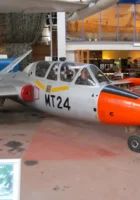
2007 Fouga CM.170 Magister is a 1950s French two-seat jet trainer. The related CM.175 Zéphyr was a carrier-capable version for the French Navy. In 1948, development commenced at Fouga on a new primary trainer aircraft design that harnessed newly developed jet propulsion technology. The initial design was evaluated by the French Air Force (Armée de l’Air, AdA) and, in response to its determination that the aircraft lacked sufficient power for its requirements, was enlarged and adopted a pair of Turbomeca Marboré turbojet engines. First flying on 23 July 1952, the first production order for the type was received on 13 January 1954. In addition, the related CM.175 Zéphyr was a carrier-capable version developed and produced for the French Navy.

Allikas: Fouga magister C.M.170 Vikis

Jätka lugemist

Views : 5612

Supermarine Spitfire MK. Xiv

Supermarine Spitfire MK. Xiv

RiikUk
RolliHävituslennukid
Esimene lend27. november 1941
Toodetud1942–48

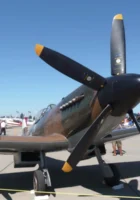
2007 Supermarine Spitfire on Briti üheistmeline hävituslennuk, mida kasutasid kuninglikud õhujõud ja paljud teised liitlasriigid enne Teist maailmasõda, selle ajal ja pärast seda. Spitfire ehitati paljudes variantides, kasutades mitmeid tiiva konfiguratsioone, ja seda toodeti suuremal hulgal kui ükski teine Briti lennuk. See oli ka ainus Briti võitleja, kes oli kogu sõja vältel pidevas tootmises. Spitfire on jätkuvalt populaarne entusiastide seas, umbes 54 Spitfire'i on õhukõlblikud, samas kui paljud teised on staatilised eksponaadid lennundusmuuseumides kogu maailmas.

Allikas: Supermarine Spitfire MK. XIV vikis

Jätka lugemist

Views : 11767

US 155mm M1A1 Howitzer

US 155mm M1A1 Howitzer

RiikUSA
TüüpHowitzer
FotoRandy J Ray
LeidaMottsi sõjaväemuuseum
KirjeldusAlbum 49 fotod «USA 155mm M1A1 haubitsast»

Fotogalerii US 155mm M1A1 Howitzer, The M114 155 mm howitzer was a towed howitzer developed and used by the United States Army. It was first produced in 1942 as a medium artillery piece under the designation of 155 mm Howitzer M1. It saw service with the US Army during World War II, the Korean War, and the Vietnam War, before being replaced by the M198 howitzer.

Allikas: USA 155mm M1A1 haubits Wikis

Jätka lugemist

Views : 4401

QF Mk.III

QF 25pdr Mark II välipüstol

RiikUk
TüüpHowitzer
Kasutuses1940 – tänapäev

Fotogalerii QF 25pdr Mark II välipüstol, The Ordnance QF 25-pounder, or more simply 25-pounder or 25-pdr, was the major British field gun and howitzer during World War II. It was introduced into service just before the war started, combining high-angle and direct-fire, relatively high rates of fire, and a reasonably lethal shell in a highly mobile piece. It remained the British Army’s primary artillery field piece well into the 1960s, with smaller numbers serving in training units until the 1980s. Many Commonwealth of Nations countries used theirs in active or reserve service until about the 1970s and ammunition for the weapon is currently being produced by Pakistan Ordnance Fac. Markus II: marki I vankrile paigaldatud oli II maailmasõja ajal standardpüstol. Need ehitati Austraalias ja Kanadas, kuid enamasti Ühendkuningriigis. Tarned (Ühendkuningriigi tootmisest) algasid 1940. aasta alguses ja alustasid esmakordselt teenistust Ühendkuningriigis asuva Kanada rügemendiga 1940. aasta mais. Prantsusmaal ei kaotatud Ühtegi Ordnance 25-pr Mk 2 vankril 25-pr Mark 1. See relv tulistas kõik laengud, 1 – 3 ja Super. 1942. aastal paigaldati relvale koonpidur, et kõrvaldada ebastabiilsus, mis tekkis 20 naela AP kesta tulistamisel Charge Superiga otsese tule madalatel kõrgusnurkadel. Relva tasakaalu säilitamiseks trunnidel paigaldati ka vastukaalkaal, otse põlvpükste rõnga ette. Muudetud relva nimetust ei muudetud. Lõpuks olid kõik Euroopas teenivad relvad nii ümber ehitatud.

Allikas: QF 25pdr Mark II välipüstol vikis

Jätka lugemist

Vaatamisi : 4319

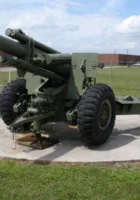
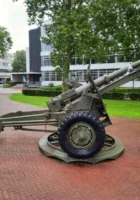
USA 105mm M2A2 välipüstol

USA 105mm M2A2 välipüstol

RiikUSA
TüüpHowitzer
FotoVladimir Jakubov
LeidaMusée de l'Armee, Pariis
KirjeldusAlbum 66 fotod «USA 105mm M2A2 välirelvast»

Fotogalerii USA 105mm M2A2 välipüstol, The 105 mm M2A1 (M101A1) howitzer was a howitzer developed and used by the United States. It was the standard U.S. light field howitzer in World War II and saw action in both the European and Pacific theaters. Entering production in 1941, it quickly gained a reputation for accuracy and a powerful punch. The M101A1 fired 105-millimetre (4.1 in) high explosive (HE) semi-fixed ammunition and had a range of 11,270 metres (12,330 yd), making it suitable for supporting infantry. M2A2 : modifitseeritud kilp

Allikas: USA 105 mm M2A2 välirelv vikis

Jätka lugemist

Views : 3540

de Havilland DH.82 Tiger Moth

de Havilland DH.82 Tiger Moth

RiikUk
RolliTreener
Esimene lend26. oktoober 1931
Ehitatud8868

2007 de Havilland DH.82 Tiger Moth on 1930. aastate biplaan, mille kujundas Geoffrey de Havilland ja mida opereerisid kuninglikud õhujõud (RAF) ja teised põhitreenerina. Tiger Moth jäi RAF-i teenistusse, kuni see asendati de Havilland Chipmunkiga 1952. aastal, kui paljud üleliigsed lennukid sisenesid tsiviiloperatsiooni. Paljud teised riigid kasutasid Tiger Mothi nii sõjalistes kui ka tsiviilrakendustes ning see on paljudes riikides laialdaselt kasutusel harrastuslennukina. Seda kasutatakse endiselt aeg-ajalt esmase koolituslennukina, eriti nende pilootide jaoks, kes soovivad omandada kogemusi enne teiste tagarattaga õhusõidukite juurde liikumist. Paljud töötavad nüüd erinevates ettevõtetes, mis pakuvad proovitunni kogemusi. 1975. aastal asutatud de Havilland Moth klubi on nüüd omanike ühendus, mis pakub vastastikust klubi ja tehnilist tuge.

Allikas: de Havilland DH.82 Tiigrikoi vikis

Jätka lugemist

Views : 6422

Dewoitine D.26

Dewoitine D.26

RiikPrantsusmaa – Šveits
TüüpKoolitaja õhusõidukid
FotoVladimir Jakubov
LeidaLennu fantaasia, Polk City
KirjeldusAlbum 80 fotod käivad ringi «Dewoitine D.26»

Fotogalerii Dewoitine D.26, The Dewoitine D.26 was a military trainer developed in France for the Swiss Air Force in parallel with the D.27 fighter. The D.26 airframe was similar to that of the D.27. Differences included: The engine cowling was omitted on the D.26; The D.26 radial engine was smaller and produced less power; The D.26 was not equipped with provision for armament.

Allikas: Dewoitine D.26 vikis

Jätka lugemist

Views : 2808