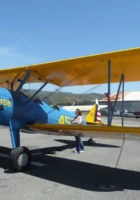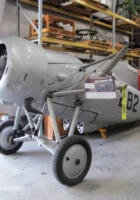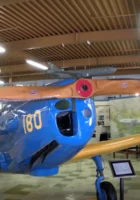
Fairchild PT-19A Cornell

Fairchild PT-19A Cornell

PaeseUsa
digitareAerei da addestramento militare
FotografiaRandy Ray
IndividuareMuseo della base aerea di Travis
DescrizioneAlbum di 59 foto walk-around di un «Fairchild PT-19A Cornell»

Galleria fotografica di un Fairchild PT-19A Cornell, The Fairchild PT-19 (company designation Fairchild M62) is an American Fairchild Aircraft monoplane primary trainer aircraft that served with the United States Army Air Forces, RAF and RCAF during World War II. It was a contemporary of the Kaydet biplane trainer and was used by the USAAF during Primary Flying Training as the introductory pre-solo phase trainer for introducing new pilots to flying before passing them on to the more agile Kaydet. As with other USAAF trainers of the period, the PT-19 had multiple designations based on the powerplant installed.

fonte: Fairchild PT-19A Cornell su Wiki

Continua a leggere

Visualizzazioni : 2516

Stearman PT-13D Kaydet

Stearman PT-13D Kaydet

PaeseUsa
digitareAerei da addestramento militare

Galleria fotografica di un Stearman PT-13D Kaydet, The Stearman (Boeing) Model 75 is a biplane used as a military trainer aircraft, of which at least 10,626 were built in the United States during the 1930s and 1940s. Stearman Aircraft became a subsidiary of Boeing in 1934. Widely known as the Stearman, Boeing Stearman or Kaydet, it served as a primary trainer for the United States Army Air Forces, the United States Navy (as the NS & N2S), and with the Royal Canadian Air Force as the Kaydet throughout World War II. After the conflict was over, thousands of surplus aircraft were sold on the civilian market. In the immediate postwar years they became popular as crop dusters, sports planes, and for aerobatic and wing walking use in air shows.

fonte: Stearman PT-13D Kaydet su Wiki

Continua a leggere

Views : 4942

Polikarpov Po-2

Polikarpov Po-2

PaeseUnione Sovietica
digitareBiplano generico
FotografiaVladimir Jakubov
IndividuareFantasy of Flight, Polk City
DescrizioneAlbum di 83 foto a piedi di un "Polikarpov Po-2"

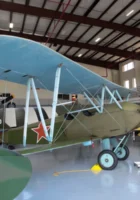
Galleria fotografica di un Polikarpov Po-2, The Polikarpov Po-2 (also U-2) served as a general-purpose Soviet biplane, nicknamed Kukuruznik (Russian: Кукурузник, from Russian “kukuruza” (кукуруза) for maize; thus, “maize duster” or “crop duster”), NATO reporting name “Mule”. The reliable, uncomplicated concept of the Po-2’s design made it an ideal training aircraft, as well as doubling as a low-cost ground attack, aerial reconnaissance, psychological warfare and liaison aircraft during war, proved to be one of the most versatile light combat types to be built in the Soviet Union. As of 1978 it remained in production for a longer period of time than any other Soviet-era aircraft. It is one of the most produced aircraft, and may be the most produced biplane with production possibly as high as 30,000 Po-2s built between 1928 and 1959.However, production figures for Polikarpov U-2 and Po-2 bombers and trainers combined are between 20,000 and 30,000. with production ending as early as 1952.

fonte: Polikarpov Po-2 su Wiki

Continua a leggere

Visualizzazioni : 8669

Fouga Magister

Fouga Magister C.M.170

PaeseFrancia
digitareAddestratore a getto biposto
Primo volo23 luglio 1952
Costruito929

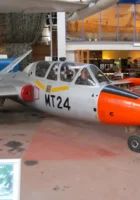
Le Fouga CM.170 Magister is a 1950s French two-seat jet trainer. The related CM.175 Zéphyr was a carrier-capable version for the French Navy. In 1948, development commenced at Fouga on a new primary trainer aircraft design that harnessed newly developed jet propulsion technology. The initial design was evaluated by the French Air Force (Armée de l’Air, AdA) and, in response to its determination that the aircraft lacked sufficient power for its requirements, was enlarged and adopted a pair of Turbomeca Marboré turbojet engines. First flying on 23 July 1952, the first production order for the type was received on 13 January 1954. In addition, the related CM.175 Zéphyr was a carrier-capable version developed and produced for the French Navy.

fonte: Fouga Magister C.M.170 su Wiki

Continua a leggere

Visualizzazioni : 5612

Supermarine Spitfire MK. Xiv

Supermarine Spitfire MK. Xiv

PaeseRegno unito
RuoloCaccia
Primo voloIl 27 novembre 1941
Prodotto1942–48

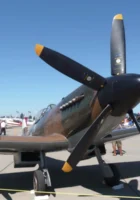
Le Supermarine Spitfire Il è un caccia monoposto britannico utilizzato dalla Royal Air Force e da molti altri paesi alleati prima, durante e dopo la seconda guerra mondiale. Lo Spitfire fu costruito in molte varianti, utilizzando diverse configurazioni di ali, e fu prodotto in numero maggiore di qualsiasi altro aereo britannico. Fu anche l'unico combattente britannico ad essere in continua produzione durante la guerra. Lo Spitfire continua ad essere popolare tra gli appassionati, con circa 54 Spitfire degni d'aria, mentre molti altri sono mostre statiche nei musei dell'aviazione di tutto il mondo.

fonte: Supermarine Spitfire MK. XIV su Wiki

Continua a leggere

Views : 11768

Obice M1A1 da 155 mm

Obice M1A1 da 155 mm

PaeseUsa
digitareObice
FotografiaRandy J Ray
IndividuareMuseo Militare Motts
DescrizioneAlbum di 49 foto walk-around di un "US 155mm M1A1 Howitzer"

Galleria fotografica di un Obice M1A1 da 155 mm, The M114 155 mm howitzer was a towed howitzer developed and used by the United States Army. It was first produced in 1942 as a medium artillery piece under the designation of 155 mm Howitzer M1. It saw service with the US Army during World War II, the Korean War, and the Vietnam War, before being replaced by the M198 howitzer.

fonte: Us 155mm M1A1 Obice su Wiki

Continua a leggere

Views : 4401

QF Mk.III

QF 25pdr Mark II Field Gun

PaeseRegno unito
digitareObice
In servizioDal 1940 ad oggi

Galleria fotografica di un QF 25pdr Mark II Field Gun, The Ordnance QF 25-pounder, or more simply 25-pounder or 25-pdr, was the major British field gun and howitzer during World War II. It was introduced into service just before the war started, combining high-angle and direct-fire, relatively high rates of fire, and a reasonably lethal shell in a highly mobile piece. It remained the British Army’s primary artillery field piece well into the 1960s, with smaller numbers serving in training units until the 1980s. Many Commonwealth of Nations countries used theirs in active or reserve service until about the 1970s and ammunition for the weapon is currently being produced by Pakistan Ordnance Fac. Il Mark II: montato sulla carrozza Mark I era il cannone standard durante la seconda guerra mondiale. Sono stati costruiti in Australia e Canada, ma soprattutto nel Regno Unito. Le consegne (dalla produzione britannica) iniziarono all'inizio del 1940 ed entrarono in servizio per la prima volta con un reggimento canadese di stanza nel Regno Unito nel maggio 1940. Nessun Ordnance 25-pr Mk 2 su Carriage 25-pr Mark 1 è stato perso in Francia. Questa pistola ha sparato tutte le cariche, 1 – 3 e Super. Nel 1942 un freno di museruola fu montato sulla pistola per eliminare l'instabilità causata quando si sparava il proiettile AP da 20 libbre con Charge Super a fuoco diretto angoli di bassa elevazione. Per preservare l'equilibrio della pistola sui manganelli è stato montato anche un peso di contrappeso, proprio di fronte all'anello podalico. La designazione della pistola modificata non è stata cambiata. Alla fine tutte le armi in servizio in Europa furono così convertite.

fonte: QF 25pdr Mark II Field Gun su Wiki

Continua a leggere

Visualizzazioni: 4319

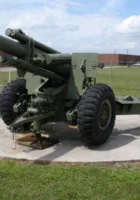
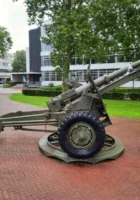
Pistola da campo M2A2 da 105 mm

Pistola da campo M2A2 da 105 mm

PaeseUsa
digitareObice
FotografiaVladimir Jakubov
IndividuareMusee de l'Armee, Parigi
DescrizioneAlbum di 66 foto walk-around di un «US 105mm M2A2 Field Gun»

Galleria fotografica di un Pistola da campo M2A2 da 105 mm, The 105 mm M2A1 (M101A1) howitzer was a howitzer developed and used by the United States. It was the standard U.S. light field howitzer in World War II and saw action in both the European and Pacific theaters. Entering production in 1941, it quickly gained a reputation for accuracy and a powerful punch. The M101A1 fired 105-millimetre (4.1 in) high explosive (HE) semi-fixed ammunition and had a range of 11,270 metres (12,330 yd), making it suitable for supporting infantry. M2A2 : scudo modificato

fonte: US 105mm M2A2 Field Gun su Wiki

Continua a leggere

Views : 3540

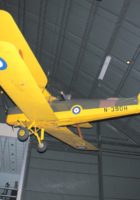
de Havilland DH.82 Falena tigre

de Havilland DH.82 Tiger Moth

PaeseRegno unito
Ruoloallenatore
Prima mosca26 ottobre 1931
Costruito8868

Le de Havilland DH.82 Falena tigre è un biplano del 1930 progettato da Geoffrey de Havilland ed è stato gestito dalla Royal Air Force (RAF) e altri come addestratore primario. Il Tiger Moth rimase in servizio con la RAF fino a quando non lo sostituì con il de Havilland Chipmunk nel 1952, quando molti degli aerei in eccesso entrarono in servizio civile. Molte altre nazioni hanno utilizzato il Tiger Moth sia in applicazioni militari che civili, e rimane in uso diffuso come aereo da diporto in molti paesi. È ancora occasionalmente utilizzato come aereo da addestramento primario, in particolare per quei piloti che vogliono acquisire esperienza prima di passare ad altri velivoli a ruota di coda. Molti sono ora impiegati da varie aziende che offrono esperienze di lezione di prova. Il club de Havilland Moth fondato nel 1975 è ora un'associazione di proprietari che offre un club reciproco e supporto tecnico.

fonte: de Havilland DH.82 Tiger Moth su Wiki

Continua a leggere

Views : 6422

Dewoitina D.26

Dewoitina D.26

PaeseFrancia – Svizzera
digitareAerei da addestramento
FotografiaVladimir Jakubov
IndividuareFantasy of Flight, Polk City
DescrizioneAlbum di 80 foto walk-around di un «Dewoitine D.26»

Galleria fotografica di un Dewoitina D.26, The Dewoitine D.26 was a military trainer developed in France for the Swiss Air Force in parallel with the D.27 fighter. The D.26 airframe was similar to that of the D.27. Differences included: The engine cowling was omitted on the D.26; The D.26 radial engine was smaller and produced less power; The D.26 was not equipped with provision for armament.

fonte: Dewoitine D.26 su Wiki

Continua a leggere

Visualizzazioni : 2808