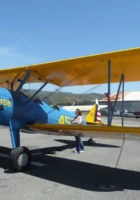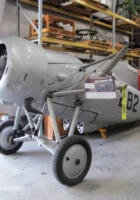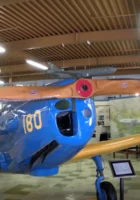
Fairchild PT-19A Cornelli

Fairchild PT-19A Cornelli

MaaYhdysvallat
TyyppiSotilaskouluttajan ilma-alukset
ValokuvaRandy Ray, mitä minä olet?
EtsiTravisin ilmavoimien tukikohdan museo
KuvausAlbumi: 59 valokuvia kävelemässä «Fairchild PT-19A Cornell»

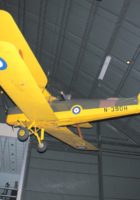
Valokuvagalleria Fairchild PT-19A Cornelli, The Fairchild PT-19 (company designation Fairchild M62) is an American Fairchild Aircraft monoplane primary trainer aircraft that served with the United States Army Air Forces, RAF and RCAF during World War II. It was a contemporary of the Kaydet biplane trainer and was used by the USAAF during Primary Flying Training as the introductory pre-solo phase trainer for introducing new pilots to flying before passing them on to the more agile Kaydet. As with other USAAF trainers of the period, the PT-19 had multiple designations based on the powerplant installed.

Lähde: Fairchild PT-19A Cornell Wikissä

Jatka lukemista

Views : 2516

Stearman PT-13D Kaydet

Stearman PT-13D Kaydet

MaaYhdysvallat
TyyppiSotilaskouluttajan ilma-alukset

Valokuvagalleria Stearman PT-13D Kaydet, The Stearman (Boeing) Model 75 is a biplane used as a military trainer aircraft, of which at least 10,626 were built in the United States during the 1930s and 1940s. Stearman Aircraft became a subsidiary of Boeing in 1934. Widely known as the Stearman, Boeing Stearman or Kaydet, it served as a primary trainer for the United States Army Air Forces, the United States Navy (as the NS & N2S), and with the Royal Canadian Air Force as the Kaydet throughout World War II. After the conflict was over, thousands of surplus aircraft were sold on the civilian market. In the immediate postwar years they became popular as crop dusters, sports planes, and for aerobatic and wing walking use in air shows.

Lähde: Stearman PT-13D Kaydet Wikissä

Jatka lukemista

Views : 4942

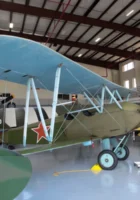
Polikarpov Po-2

Polikarpov Po-2

MaaNeuvostoliiton
TyyppiYleiskäyttöinen kaksitasoinen
ValokuvaVladimir Jakubov
EtsiFantasia lennosta, Polk City
KuvausAlbumi: 83 valokuvat kävely «Polikarpov Po-2»

Valokuvagalleria Polikarpov Po-2, The Polikarpov Po-2 (also U-2) served as a general-purpose Soviet biplane, nicknamed Kukuruznik (Russian: Кукурузник, from Russian “kukuruza” (кукуруза) for maize; thus, “maize duster” or “crop duster”), NATO reporting name “Mule”. The reliable, uncomplicated concept of the Po-2’s design made it an ideal training aircraft, as well as doubling as a low-cost ground attack, aerial reconnaissance, psychological warfare and liaison aircraft during war, proved to be one of the most versatile light combat types to be built in the Soviet Union. As of 1978 it remained in production for a longer period of time than any other Soviet-era aircraft. It is one of the most produced aircraft, and may be the most produced biplane with production possibly as high as 30,000 Po-2s built between 1928 and 1959.However, production figures for Polikarpov U-2 and Po-2 bombers and trainers combined are between 20,000 and 30,000. with production ending as early as 1952.

Lähde: Polikarpov Po-2 Wikissä

Jatka lukemista

Views : 8669

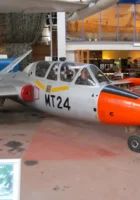
Fouga Magister

Fouga Magister C.M.170

MaaRanska
TyyppiKaksipaikkainen suihkukouluttaja
Ensimmäinen lento23. heinäkuuta 1952
Rakennettu929

Nniiden Fouga CM.170 Magister is a 1950s French two-seat jet trainer. The related CM.175 Zéphyr was a carrier-capable version for the French Navy. In 1948, development commenced at Fouga on a new primary trainer aircraft design that harnessed newly developed jet propulsion technology. The initial design was evaluated by the French Air Force (Armée de l’Air, AdA) and, in response to its determination that the aircraft lacked sufficient power for its requirements, was enlarged and adopted a pair of Turbomeca Marboré turbojet engines. First flying on 23 July 1952, the first production order for the type was received on 13 January 1954. In addition, the related CM.175 Zéphyr was a carrier-capable version developed and produced for the French Navy.

Lähde: Fouga Magister C.M.170 Wikissä

Jatka lukemista

Katsottu: 5612

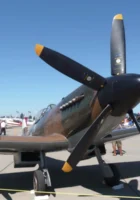
Supermarine Spitfire MK. XIV

Supermarine Spitfire MK. XIV

MaaIso
RooliHävittäjälentokoneet
Ensimmäinen lento27. marraskuuta 1941
Tuotettu1942–48

Nniiden Supermarine Spitfire on brittiläinen yksipaikkainen hävittäjälentokone, jota kuninkaalliset ilmavoimat ja monet muut liittoutuneet maat käyttivät ennen toista maailmansotaa, sen aikana ja sen jälkeen. Spitfire rakennettiin monissa muunnelmissa käyttäen useita siipikokoonpanoja, ja sitä valmistettiin enemmän kuin mitään muuta brittiläistä lentokonetta. Se oli myös ainoa brittiläinen taistelija, joka oli jatkuvassa tuotannossa koko sodan ajan. Spitfire on edelleen suosittu harrastajien keskuudessa, ja noin 54 Spitfireä on lentokelpoisia, kun taas monet muut ovat staattisia näyttelyitä ilmailumuseoissa ympäri maailmaa.

Lähde: Supermarine Spitfire MK. XIV Wikissä

Jatka lukemista

Views : 11767

US 155mm M1A1 Haupitsi

US 155mm M1A1 Haupitsi

MaaYhdysvallat
TyyppiHaupitsi
ValokuvaRandy J Ray
EtsiMottsin sotamuseo
KuvausAlbumi: 49 valokuvia «US 155mm M1A1 -haupitsista»

Valokuvagalleria US 155mm M1A1 Haupitsi, The M114 155 mm howitzer was a towed howitzer developed and used by the United States Army. It was first produced in 1942 as a medium artillery piece under the designation of 155 mm Howitzer M1. It saw service with the US Army during World War II, the Korean War, and the Vietnam War, before being replaced by the M198 howitzer.

Lähde: US 155mm M1A1 haupitsi Wikissä

Jatka lukemista

Views : 4401

QF Mk.III

QF 25pdr Mark II Kenttätykki

MaaIso
TyyppiHaupitsi
Käytössä1940–nykyinen

Valokuvagalleria QF 25pdr Mark II Kenttätykki, The Ordnance QF 25-pounder, or more simply 25-pounder or 25-pdr, was the major British field gun and howitzer during World War II. It was introduced into service just before the war started, combining high-angle and direct-fire, relatively high rates of fire, and a reasonably lethal shell in a highly mobile piece. It remained the British Army’s primary artillery field piece well into the 1960s, with smaller numbers serving in training units until the 1980s. Many Commonwealth of Nations countries used theirs in active or reserve service until about the 1970s and ammunition for the weapon is currently being produced by Pakistan Ordnance Fac. Markus II: asennettu Mark I -vaunuun oli vakioase toisen maailmansodan aikana. Ne rakennettiin Australiassa ja Kanadassa, mutta enimmäkseen Isossa-Britanniassa. Toimitukset (Ison-Britannian tuotannosta) alkoivat vuoden 1940 alussa ja tulivat ensimmäisen kerran palvelukseen kanadalaisen rykmentin kanssa, joka oli sijoitettu Isoon-Britanniaan toukokuussa 1940. Ranskassa ei menetetty Ordnance 25-pr Mk 2 vaunulla 25-pr Mark 1. Tämä ase ampui kaikki lataukset, 1-3 ja Super. Vuonna 1942 aseeseen asennettiin kuonojarru poistamaan epävakaus, joka aiheutui ammuttaessa 20 lb AP -kuorta Charge Superilla suoralla tulella matalissa korkeuskulmissa. Aseen tasapainon säilyttämiseksi tukissa asennettiin myös vastapaino aivan takarenkaan eteen. Muokatun aseen nimitystä ei muutettu. Lopulta kaikki Euroopassa palvelleet aseet kääntyivät niin.

Lähde: QF 25pdr Mark II -kenttäpistooli Wikissä

Jatka lukemista

Views : 4319

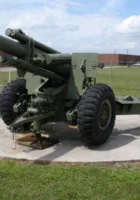
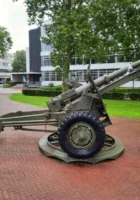
Us 105mm M2A2 Kenttäpistooli

Us 105mm M2A2 Kenttäpistooli

MaaYhdysvallat
TyyppiHaupitsi
ValokuvaVladimir Jakubov
EtsiMusee de l'Armee, Pariisi
KuvausAlbumi: 66 valokuvia «US 105mm M2A2 -kenttäpistoolista»

Valokuvagalleria Us 105mm M2A2 Kenttäpistooli, The 105 mm M2A1 (M101A1) howitzer was a howitzer developed and used by the United States. It was the standard U.S. light field howitzer in World War II and saw action in both the European and Pacific theaters. Entering production in 1941, it quickly gained a reputation for accuracy and a powerful punch. The M101A1 fired 105-millimetre (4.1 in) high explosive (HE) semi-fixed ammunition and had a range of 11,270 metres (12,330 yd), making it suitable for supporting infantry. M2A2 : muutettu kilpi

Lähde: Yhdysvaltain 105 mm: n M2A2-kenttäase wikissä

Jatka lukemista

Views : 3540

de Havilland DH.82 Tiikeri koi

de Havilland DH.82 Tiger Moth

MaaIso
RooliKouluttaja
Ensimmäinen lento26. lokakuuta 1931
Rakennettu8868

Nniiden de Havilland DH.82 Tiikeri koi on Geoffrey de Havillandin suunnittelema 1930-luvun kaksitaso, jota käyttivät kuninkaalliset ilmavoimat (RAF) ja muut ensisijaisena kouluttajana. Tiger Moth pysyi käytössä RAF: n kanssa, kunnes se korvattiin de Havilland Chipmunkilla vuonna 1952, jolloin monet ylimääräiset lentokoneet tulivat siviilikäyttöön. Monet muut maat käyttivät Tiger Mothia sekä sotilas- että siviilisovelluksissa, ja se on edelleen laajalti käytössä virkistyslentokoneena monissa maissa. Sitä käytetään edelleen satunnaisesti ensisijaisena koulutuslentokoneena, erityisesti niille lentäjille, jotka haluavat saada kokemusta ennen siirtymistä muihin takapyöräkoneisiin. Monet työskentelevät nyt erilaisissa yrityksissä, jotka tarjoavat kokeilutuntikokemuksia. Vuonna 1975 perustettu de Havilland Moth -klubi on nyt omistajien yhdistys, joka tarjoaa keskinäistä klubia ja teknistä tukea.

Lähde: de Havilland DH.82 Tiger Moth Wikissä

Jatka lukemista

Views : 6422

Dewoitine D.26

Dewoitine D.26

MaaRanska – Sveitsi
TyyppiKouluttaja ilma-alukset
ValokuvaVladimir Jakubov
EtsiFantasia lennosta, Polk City
KuvausAlbumi: 80 kuvat kävelyllä «Dewoitine D.26»

Valokuvagalleria Dewoitine D.26, The Dewoitine D.26 was a military trainer developed in France for the Swiss Air Force in parallel with the D.27 fighter. The D.26 airframe was similar to that of the D.27. Differences included: The engine cowling was omitted on the D.26; The D.26 radial engine was smaller and produced less power; The D.26 was not equipped with provision for armament.

Lähde: Dewoitine D.26 Wikissä

Jatka lukemista

Katsottu : 2808