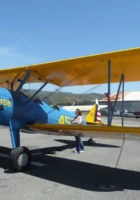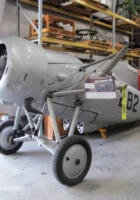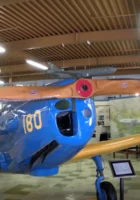
Fairchild PT-19A Cornell

Fairchild PT-19A Cornell

PaísE.e.u.u
TipoAviones de entrenamiento militar
FotografíaRandy Ray
LocalizarMuseo de la Base de la Fuerza Aérea Travis
DescripciónÁlbum de 59 fotos walk-around de un «Fairchild PT-19A Cornell»

Galería de fotos de un Fairchild PT-19A Cornell, The Fairchild PT-19 (company designation Fairchild M62) is an American Fairchild Aircraft monoplane primary trainer aircraft that served with the United States Army Air Forces, RAF and RCAF during World War II. It was a contemporary of the Kaydet biplane trainer and was used by the USAAF during Primary Flying Training as the introductory pre-solo phase trainer for introducing new pilots to flying before passing them on to the more agile Kaydet. As with other USAAF trainers of the period, the PT-19 had multiple designations based on the powerplant installed.

Fuente: Fairchild PT-19A Cornell en Wiki

Continuar leyendo

Vistas : 2518

Stearman PT-13D Kaydet

Stearman PT-13D Kaydet

PaísE.e.u.u
TipoAviones de entrenamiento militar

Galería de fotos de un Stearman PT-13D Kaydet, The Stearman (Boeing) Model 75 is a biplane used as a military trainer aircraft, of which at least 10,626 were built in the United States during the 1930s and 1940s. Stearman Aircraft became a subsidiary of Boeing in 1934. Widely known as the Stearman, Boeing Stearman or Kaydet, it served as a primary trainer for the United States Army Air Forces, the United States Navy (as the NS & N2S), and with the Royal Canadian Air Force as the Kaydet throughout World War II. After the conflict was over, thousands of surplus aircraft were sold on the civilian market. In the immediate postwar years they became popular as crop dusters, sports planes, and for aerobatic and wing walking use in air shows.

Fuente: Stearman PT-13D Kaydet en Wiki

Continuar leyendo

Vistas : 4942

Polikarpov Po-2

Polikarpov Po-2

PaísUnión Soviética
TipoBiplano de propósito general
FotografíaVladimir Yakubov
LocalizarFantasía de vuelo, Polk City
DescripciónÁlbum de 83 fotos walk-around de un «Polikarpov Po-2»

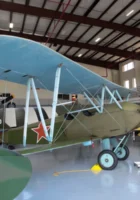
Galería de fotos de un Polikarpov Po-2, The Polikarpov Po-2 (also U-2) served as a general-purpose Soviet biplane, nicknamed Kukuruznik (Russian: Кукурузник, from Russian “kukuruza” (кукуруза) for maize; thus, “maize duster” or “crop duster”), NATO reporting name “Mule”. The reliable, uncomplicated concept of the Po-2’s design made it an ideal training aircraft, as well as doubling as a low-cost ground attack, aerial reconnaissance, psychological warfare and liaison aircraft during war, proved to be one of the most versatile light combat types to be built in the Soviet Union. As of 1978 it remained in production for a longer period of time than any other Soviet-era aircraft. It is one of the most produced aircraft, and may be the most produced biplane with production possibly as high as 30,000 Po-2s built between 1928 and 1959.However, production figures for Polikarpov U-2 and Po-2 bombers and trainers combined are between 20,000 and 30,000. with production ending as early as 1952.

Fuente: Polikarpov Po-2 en Wiki

Continuar leyendo

Views : 8695

Fouga Magister

Fouga Magister C.M.170

PaísFrancia
TipoEntrenador a reacción biplaza
Primer vuelo23 de julio de 1952
Construido929

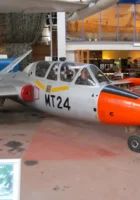
el Fouga CM.170 Magister is a 1950s French two-seat jet trainer. The related CM.175 Zéphyr was a carrier-capable version for the French Navy. In 1948, development commenced at Fouga on a new primary trainer aircraft design that harnessed newly developed jet propulsion technology. The initial design was evaluated by the French Air Force (Armée de l’Air, AdA) and, in response to its determination that the aircraft lacked sufficient power for its requirements, was enlarged and adopted a pair of Turbomeca Marboré turbojet engines. First flying on 23 July 1952, the first production order for the type was received on 13 January 1954. In addition, the related CM.175 Zéphyr was a carrier-capable version developed and produced for the French Navy.

Fuente: Fouga Magister C.M.170 en Wiki

Continuar leyendo

Vistas : 5612

Supermarine Spitfire MK. Xiv

Supermarine Spitfire MK. Xiv

PaísUk
PapelAviones de combate
Primer vuelo27 de noviembre de 1941
Producido1942–48

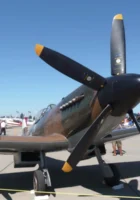
el Spitfire supermarino es un avión de combate monoplaza británico que fue utilizado por la Royal Air Force y muchos otros países aliados antes, durante y después de la Segunda Guerra Mundial. El Spitfire fue construido en muchas variantes, utilizando varias configuraciones de ala, y fue producido en mayor número que cualquier otro avión británico. También fue el único caza británico en estar en producción continua durante toda la guerra. El Spitfire sigue siendo popular entre los entusiastas, con aproximadamente 54 Spitfires siendo aeronavegables, mientras que muchos más son exhibiciones estáticas en museos de aviación de todo el mundo.

Fuente: Supermarine Spitfire MK. XIV en Wiki

Continuar leyendo

Views : 11792

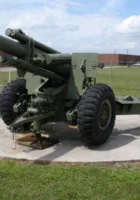
Obús M1A1 de 155 mm de EE.UU.

Obús M1A1 de 155 mm de EE.UU.

PaísE.e.u.u
TipoObús
FotografíaRandy J Ray
LocalizarMuseo Militar motts
DescripciónÁlbum de 49 fotos walk-around de un «Obús M1A1 de 155 mm de EE.UU.»

Galería de fotos de un Obús M1A1 de 155 mm de EE.UU., The M114 155 mm howitzer was a towed howitzer developed and used by the United States Army. It was first produced in 1942 as a medium artillery piece under the designation of 155 mm Howitzer M1. It saw service with the US Army during World War II, the Korean War, and the Vietnam War, before being replaced by the M198 howitzer.

Fuente: Obús M1A1 de 155 mm de EE.UU. en Wiki

Continuar leyendo

Vistas : 4403

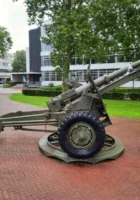
QF Mk.III

QF 25pdr Mark II Field Gun

PaísUk
TipoObús
En servicio1940-presente

Galería de fotos de un QF 25pdr Mark II Field Gun, The Ordnance QF 25-pounder, or more simply 25-pounder or 25-pdr, was the major British field gun and howitzer during World War II. It was introduced into service just before the war started, combining high-angle and direct-fire, relatively high rates of fire, and a reasonably lethal shell in a highly mobile piece. It remained the British Army’s primary artillery field piece well into the 1960s, with smaller numbers serving in training units until the 1980s. Many Commonwealth of Nations countries used theirs in active or reserve service until about the 1970s and ammunition for the weapon is currently being produced by Pakistan Ordnance Fac. La Marca II: instalado en el carro Mark I fue el cañón estándar durante la Segunda Guerra Mundial. Fueron construidos en Australia y Canadá, pero sobre todo en el Reino Unido. Las entregas (de la producción del Reino Unido) comenzaron a principios de 1940 y entraron en servicio por primera vez con un regimiento canadiense estacionado en el Reino Unido durante mayo de 1940. Ningún Artillería 25-pr Mk 2 en el Carro 25-pr Mark 1 se perdieron en Francia. Esta pistola disparó todos los cargos, 1 – 3 y Super. En 1942 se instaló un freno de boca en el cañón para eliminar la inestabilidad causada al disparar el proyectil AP de 20 libras con Charge Super en ángulos de elevación bajos de fuego directo. Para preservar el equilibrio del cañón en los trunnions también se instaló un peso de contrapeso, justo delante del anillo de nalgas. La designación del arma modificada no fue cambiada. Con el tiempo, todas las armas que servían en Europa se convirtieron así.

Fuente: QF 25pdr Mark II Field Gun en Wiki

Continuar leyendo

Vistas : 4322

Pistola de campo M2A2 de 105 mm de EE.UU.

Pistola de campo M2A2 de 105 mm de EE.UU.

PaísE.e.u.u
TipoObús
FotografíaVladimir Yakubov
LocalizarMusee de l'Armee, París
DescripciónÁlbum de 66 fotos walk-around de un «US 105mm M2A2 Field Gun»

Galería de fotos de un Pistola de campo M2A2 de 105 mm de EE.UU., The 105 mm M2A1 (M101A1) howitzer was a howitzer developed and used by the United States. It was the standard U.S. light field howitzer in World War II and saw action in both the European and Pacific theaters. Entering production in 1941, it quickly gained a reputation for accuracy and a powerful punch. The M101A1 fired 105-millimetre (4.1 in) high explosive (HE) semi-fixed ammunition and had a range of 11,270 metres (12,330 yd), making it suitable for supporting infantry. M2A2 : escudo modificado

Fuente: Pistola de campo M2A2 de 105 mm de EE.UU. en Wiki

Continuar leyendo

Vistas : 3541

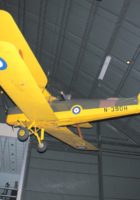
de Havilland DH.82 Polilla tigre

de Havilland DH.82 Tiger Moth

PaísUk
PapelEntrenador
Primera mosca26 de octubre de 1931
Construido8868

el de Havilland DH.82 Polilla tigre es un biplano de la década de 1930 diseñado por Geoffrey de Havilland y fue operado por la Royal Air Force (RAF) y otros como entrenador principal. El Tiger Moth permaneció en servicio con la RAF hasta que fue reemplazado por el De Havilland Chipmunk en 1952, cuando muchos de los aviones excedentes entraron en operación civil. Muchas otras naciones utilizaron la Polilla Tigre tanto en aplicaciones militares como civiles, y sigue siendo ampliamente utilizada como un avión recreativo en muchos países. Todavía se utiliza ocasionalmente como un avión de entrenamiento primario, particularmente para aquellos pilotos que quieren ganar experiencia antes de pasar a otros aviones de rueda trasera. Muchas ahora son empleadas por varias empresas que ofrecen experiencias de lección de prueba. El club De Havilland Moth fundado en 1975 es ahora una asociación de propietarios que ofrece un club mutuo y apoyo técnico.

Fuente: de Havilland DH.82 Tiger Moth en Wiki

Continuar leyendo

Vistas : 6426

Dewoitine D.26

Dewoitine D.26

PaísFrancia – Suiza
TipoAviones entrenador
FotografíaVladimir Yakubov
LocalizarFantasía de vuelo, Polk City
DescripciónÁlbum de 80 fotos de un «Dewoitine D.26»

Galería de fotos de un Dewoitine D.26, The Dewoitine D.26 was a military trainer developed in France for the Swiss Air Force in parallel with the D.27 fighter. The D.26 airframe was similar to that of the D.27. Differences included: The engine cowling was omitted on the D.26; The D.26 radial engine was smaller and produced less power; The D.26 was not equipped with provision for armament.

Fuente: Dewoitine D.26 en Wiki

Continuar leyendo

Vistas: 2808