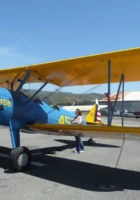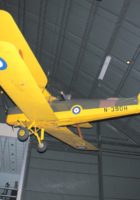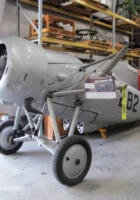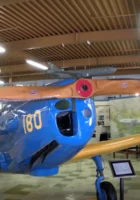
Fairchild PT-19A Cornell

Fairchild PT-19A Cornell

ZeměSPOJENÉ STÁTY
TypVojenské trenažérové letouny
FotografiiRandy Ray
VyhledejteMuzeum letecké základny Travis
PopisAlbum 59 fotografie procházka kolem «Fairchild PT-19A Cornell»

Fotogalerie Fairchild PT-19A Cornell, The Fairchild PT-19 (company designation Fairchild M62) is an American Fairchild Aircraft monoplane primary trainer aircraft that served with the United States Army Air Forces, RAF and RCAF during World War II. It was a contemporary of the Kaydet biplane trainer and was used by the USAAF during Primary Flying Training as the introductory pre-solo phase trainer for introducing new pilots to flying before passing them on to the more agile Kaydet. As with other USAAF trainers of the period, the PT-19 had multiple designations based on the powerplant installed.

Zdroj: Fairchild PT-19A Cornell na Wiki

Pokračovat ve čtení

Zobrazení: 2516

Stearman PT-13D Kaydet

Stearman PT-13D Kaydet

ZeměSPOJENÉ STÁTY
TypVojenské trenažérové letouny

Fotogalerie Stearman PT-13D Kaydet, The Stearman (Boeing) Model 75 is a biplane used as a military trainer aircraft, of which at least 10,626 were built in the United States during the 1930s and 1940s. Stearman Aircraft became a subsidiary of Boeing in 1934. Widely known as the Stearman, Boeing Stearman or Kaydet, it served as a primary trainer for the United States Army Air Forces, the United States Navy (as the NS & N2S), and with the Royal Canadian Air Force as the Kaydet throughout World War II. After the conflict was over, thousands of surplus aircraft were sold on the civilian market. In the immediate postwar years they became popular as crop dusters, sports planes, and for aerobatic and wing walking use in air shows.

Zdroj: Stearman PT-13D Kaydet na Wiki

Pokračovat ve čtení

Views : 4942

Polikarpov Po-2

Polikarpov Po-2

ZeměSovětský svaz
TypDvouplošník pro všeobecné účely
FotografiiVladimir Jakubov
VyhledejteFantazie o letu, Polk City
PopisAlbum 83 fotografie procházka kolem «Polikarpov Po-2»

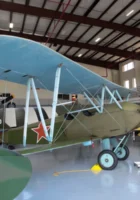
Fotogalerie Polikarpov Po-2, The Polikarpov Po-2 (also U-2) served as a general-purpose Soviet biplane, nicknamed Kukuruznik (Russian: Кукурузник, from Russian “kukuruza” (кукуруза) for maize; thus, “maize duster” or “crop duster”), NATO reporting name “Mule”. The reliable, uncomplicated concept of the Po-2’s design made it an ideal training aircraft, as well as doubling as a low-cost ground attack, aerial reconnaissance, psychological warfare and liaison aircraft during war, proved to be one of the most versatile light combat types to be built in the Soviet Union. As of 1978 it remained in production for a longer period of time than any other Soviet-era aircraft. It is one of the most produced aircraft, and may be the most produced biplane with production possibly as high as 30,000 Po-2s built between 1928 and 1959.However, production figures for Polikarpov U-2 and Po-2 bombers and trainers combined are between 20,000 and 30,000. with production ending as early as 1952.

Zdroj: Polikarpov Po-2 na Wiki

Pokračovat ve čtení

Views : 8669

Fouga Magister

Fouga Magister C.M.170

ZeměFrancie
TypDvoumístný jet trainer
První let23. července 1952
Postaven929

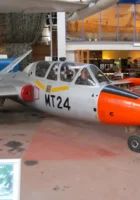
Fouga CM.170 Magister is a 1950s French two-seat jet trainer. The related CM.175 Zéphyr was a carrier-capable version for the French Navy. In 1948, development commenced at Fouga on a new primary trainer aircraft design that harnessed newly developed jet propulsion technology. The initial design was evaluated by the French Air Force (Armée de l’Air, AdA) and, in response to its determination that the aircraft lacked sufficient power for its requirements, was enlarged and adopted a pair of Turbomeca Marboré turbojet engines. First flying on 23 July 1952, the first production order for the type was received on 13 January 1954. In addition, the related CM.175 Zéphyr was a carrier-capable version developed and produced for the French Navy.

Zdroj: Fouga Magister C.M.170 na Wiki

Pokračovat ve čtení

Počet zobrazení: 5612

Supermarine Spitfire MK. Xiv

Supermarine Spitfire MK. Xiv

ZeměUk
RoliStíhací letouny
První let27. listopadu 1941
Vyrobené1942–48

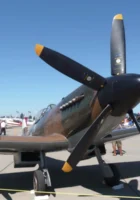
Supermarine Spitfire je britský jednomístný stíhací letoun používaný Královským letectvem a mnoha dalšími spojeneckými zeměmi před druhou světovou válkou, během druhé světové války a po této válce. Spitfire byl postaven v mnoha variantách, s použitím několika konfigurací křídel, a byl vyráběn ve větším počtu než jakékoli jiné britské letadlo. Byl také jediným britským bojovníkem, který byl po celou válku v nepřetržité výrobě. Spitfire je i nadále populární mezi nadšenci, s přibližně 54 Spitfires je způsobilé k letové způsobilosti, zatímco mnoho dalších jsou statické exponáty v leteckých muzeích po celém světě.

Zdroj: Supermarine Spitfire MK. XIV na Wiki

Pokračovat ve čtení

Views : 11767

Nás 155mm houfnice M1A1

Nás 155mm houfnice M1A1

ZeměSPOJENÉ STÁTY
TypHoufnice
FotografiiRandy J Ray
VyhledejteVojenské muzeum Motts
PopisAlbum 49 fotografie procházka«US 155mm M1A1 houfnice»

Fotogalerie Nás 155mm houfnice M1A1, The M114 155 mm howitzer was a towed howitzer developed and used by the United States Army. It was first produced in 1942 as a medium artillery piece under the designation of 155 mm Howitzer M1. It saw service with the US Army during World War II, the Korean War, and the Vietnam War, before being replaced by the M198 howitzer.

Zdroj: US 155mm houfnice M1A1 na Wiki

Pokračovat ve čtení

Zobrazení: 4401

QF Mk.III

Polní dělo QF 25pdr Mark II

ZeměUk
TypHoufnice
V provozu1940–současnost

Fotogalerie Polní dělo QF 25pdr Mark II, The Ordnance QF 25-pounder, or more simply 25-pounder or 25-pdr, was the major British field gun and howitzer during World War II. It was introduced into service just before the war started, combining high-angle and direct-fire, relatively high rates of fire, and a reasonably lethal shell in a highly mobile piece. It remained the British Army’s primary artillery field piece well into the 1960s, with smaller numbers serving in training units until the 1980s. Many Commonwealth of Nations countries used theirs in active or reserve service until about the 1970s and ammunition for the weapon is currently being produced by Pakistan Ordnance Fac. Značka II: na lafetě Mark I byla standardní zbraň během druhé světové války. Byly postaveny v Austrálii a Kanadě, ale většinou ve Velké Británii. Dodávky (z britské výroby) začaly na začátku roku 1940 a poprvé vstoupily do služby u kanadského pluku umístěného ve Velké Británii během května 1940. Ve Francii nebyla ztracena žádná výzbroj 25-pr Mk 2 na carriage 25-pr Mark 1. Tato zbraň střílela všechny náboje, 1 – 3 a Super. V roce 1942 byla na dělo namontována úsťová brzda, aby se eliminovala nestabilita způsobená při střelbě 20 lb AP granátu s Charge Super při přímých úhlech nízké náměrky. Pro zachování rovnováhy zbraně na čepech bylo také namontováno protizávaží, těsně před kroužkem závěru. Označení modifikovaného děla se nezměnilo. Nakonec byly všechny zbraně sloužící v Evropě takto přestavěny.

Zdroj: QF 25pdr Mark II Field Gun na Wiki

Pokračovat ve čtení

Views : 4319

Americké terénní dělo M2A2 105 mm

Americké terénní dělo M2A2 105 mm

ZeměSPOJENÉ STÁTY
TypHoufnice
FotografiiVladimir Jakubov
VyhledejteMusée de l'Armée, Paříž
PopisAlbum 66 fotografie procházka kolem "US 105mm M2A2 Field Gun"

Fotogalerie Americké terénní dělo M2A2 105 mm, The 105 mm M2A1 (M101A1) howitzer was a howitzer developed and used by the United States. It was the standard U.S. light field howitzer in World War II and saw action in both the European and Pacific theaters. Entering production in 1941, it quickly gained a reputation for accuracy and a powerful punch. The M101A1 fired 105-millimetre (4.1 in) high explosive (HE) semi-fixed ammunition and had a range of 11,270 metres (12,330 yd), making it suitable for supporting infantry. M2A2 : modifikovaný štít

Zdroj: US 105mm M2A2 polní dělo na Wiki

Pokračovat ve čtení

Pohledy : 3540

de Havilland DH.82 Tygří můra

de Havilland DH.82 Tiger Moth

ZeměUk
RoliTrenér
První mouchapondělí 26. října 1931
Postaven8868

de Havilland DH.82 Tygří můra je dvouplošník z 30. let 20. let 20.0. let 20. 20.020 navržený Geoffreym de Havillandem a byl provozován Royal Air Force (RAF) a dalšími jako primární trenér. Tiger Moth zůstal ve službě u RAF, dokud ho v roce 1952 nenahradil de Havilland Chipmunk, když mnoho přebytečných letadel vstoupilo do civilního provozu. Mnoho dalších národů používalo Tiger Moth ve vojenských i civilních aplikacích a v mnoha zemích se stále široce používá jako rekreační letadlo. Stále se příležitostně používá jako primární výcvikové letadlo, zejména pro ty piloty, kteří chtějí získat zkušenosti před přechodem na jiná letadla na zadních kolečkách. Mnoho z nich je nyní zaměstnáno různými společnostmi, které nabízejí zkušenosti se zkušební výukou. Klub de Havilland Moth založený v roce 1975 je nyní sdružením vlastníků, které nabízí vzájemný klub a technickou podporu.

Zdroj: de Havilland DH.82 Tiger Můra na Wiki

Pokračovat ve čtení

Views : 6422

Dewoitin D.26

Dewoitin D.26

ZeměFrancie – Švýcarská
TypTrenažérová letadla
FotografiiVladimir Jakubov
VyhledejteFantazie o letu, Polk City
PopisAlbum 80 fotografie procházka kolem «Dewoitine D.26»

Fotogalerie Dewoitin D.26, The Dewoitine D.26 was a military trainer developed in France for the Swiss Air Force in parallel with the D.27 fighter. The D.26 airframe was similar to that of the D.27. Differences included: The engine cowling was omitted on the D.26; The D.26 radial engine was smaller and produced less power; The D.26 was not equipped with provision for armament.

Zdroj: Dewoitine D.26 na Wiki

Pokračovat ve čtení

Počet zobrazení: 2808