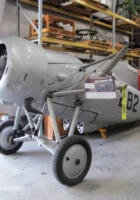
Fairchild PT-19A Cornell

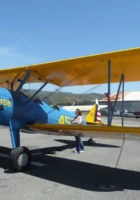
Fairchild PT-19A Cornell

DržaviZda
VrstaLetala vojaškega trenerja
FotografijoRandy Ray
PoiščiteMuzej zračne baze Travis
OpisAlbum 59 fotografije, ki se sprehajajo po "Fairchild PT-19A Cornell"

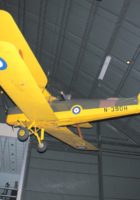
Fotogalerija Fairchild PT-19A Cornell, The Fairchild PT-19 (company designation Fairchild M62) is an American Fairchild Aircraft monoplane primary trainer aircraft that served with the United States Army Air Forces, RAF and RCAF during World War II. It was a contemporary of the Kaydet biplane trainer and was used by the USAAF during Primary Flying Training as the introductory pre-solo phase trainer for introducing new pilots to flying before passing them on to the more agile Kaydet. As with other USAAF trainers of the period, the PT-19 had multiple designations based on the powerplant installed.

Vir: Fairchild PT-19A Cornell na Wikipediji

Nadaljuj z branjem

Views : 2516

Stearman PT-13D Kaydet

Stearman PT-13D Kaydet

DržaviZda
VrstaLetala vojaškega trenerja

Fotogalerija Stearman PT-13D Kaydet, The Stearman (Boeing) Model 75 is a biplane used as a military trainer aircraft, of which at least 10,626 were built in the United States during the 1930s and 1940s. Stearman Aircraft became a subsidiary of Boeing in 1934. Widely known as the Stearman, Boeing Stearman or Kaydet, it served as a primary trainer for the United States Army Air Forces, the United States Navy (as the NS & N2S), and with the Royal Canadian Air Force as the Kaydet throughout World War II. After the conflict was over, thousands of surplus aircraft were sold on the civilian market. In the immediate postwar years they became popular as crop dusters, sports planes, and for aerobatic and wing walking use in air shows.

Vir: Stearman PT-13D Kaydet na Wiki

Nadaljuj z branjem

Views : 4942

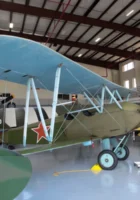
Polikarpov Po-2

Polikarpov Po-2

DržaviSovjetski
VrstaSplošno namensko letalo
FotografijoVladimir Jakubov
PoiščiteFantasy of Flight, Polk City
OpisAlbum 83 fotografije sprehod okoli «Polikarpov Po-2»

Fotogalerija Polikarpov Po-2, The Polikarpov Po-2 (also U-2) served as a general-purpose Soviet biplane, nicknamed Kukuruznik (Russian: Кукурузник, from Russian “kukuruza” (кукуруза) for maize; thus, “maize duster” or “crop duster”), NATO reporting name “Mule”. The reliable, uncomplicated concept of the Po-2’s design made it an ideal training aircraft, as well as doubling as a low-cost ground attack, aerial reconnaissance, psychological warfare and liaison aircraft during war, proved to be one of the most versatile light combat types to be built in the Soviet Union. As of 1978 it remained in production for a longer period of time than any other Soviet-era aircraft. It is one of the most produced aircraft, and may be the most produced biplane with production possibly as high as 30,000 Po-2s built between 1928 and 1959.However, production figures for Polikarpov U-2 and Po-2 bombers and trainers combined are between 20,000 and 30,000. with production ending as early as 1952.

Vir: Polikarpov Po-2 na Wikiju

Nadaljuj z branjem

Views : 8669

Fouga Magister

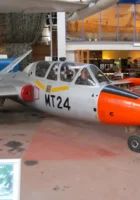
Fouga Magister C.M.170

DržaviFrancija
VrstaDvosežje jet trener
Prvi let23. julij 1952
Zgrajena929

V Fouga CM.170 Magister is a 1950s French two-seat jet trainer. The related CM.175 Zéphyr was a carrier-capable version for the French Navy. In 1948, development commenced at Fouga on a new primary trainer aircraft design that harnessed newly developed jet propulsion technology. The initial design was evaluated by the French Air Force (Armée de l’Air, AdA) and, in response to its determination that the aircraft lacked sufficient power for its requirements, was enlarged and adopted a pair of Turbomeca Marboré turbojet engines. First flying on 23 July 1952, the first production order for the type was received on 13 January 1954. In addition, the related CM.175 Zéphyr was a carrier-capable version developed and produced for the French Navy.

Vir: Fouga Magister C.M.170 na Wikiju

Nadaljuj z branjem

Views : 5612

Supermarine Spitfire MK. XIV

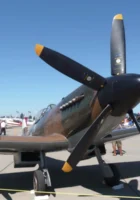
Supermarine Spitfire MK. XIV

DržaviUk
VlogoLovska letala
Prvi let27. november 1941
Proizvaja1942–48

V Supermarine Spitfire je britansko enosedežno lovsko letalo, ki ga je pred, med drugo svetovno vojno in po drugi svetovni vojni uporabljalo kraljevo letalstvo in številne druge zaleganje. Spitfire je bil zgrajen v številnih različicah, z uporabo več krilnih konfiguracij, in je bil proizveden v večjem številu od vseh drugih britanskih letal. Bil je tudi edini britanski borec, ki je bil ves čas vojne v neprekinjeni proizvodnji. Spitfire je še naprej priljubljen med navdušenci, saj je približno 54 Spitfirjev plovnih, veliko več pa statičnih eksponatov v letalskih muzejih po vsem svetu.

Vir: Supermarine Spitfire MK. XIV na Wiki

Nadaljuj z branjem

Views : 11767

US 155mm M1A1 Howitzer

US 155mm M1A1 Howitzer

DržaviZda
VrstaHavbica
FotografijoRandy J Ray
PoiščiteVojaški muzej Motts
OpisAlbum 49 fotografije sprehoda po «ameriški 155mm haubici M1A1»

Fotogalerija US 155mm M1A1 Howitzer, The M114 155 mm howitzer was a towed howitzer developed and used by the United States Army. It was first produced in 1942 as a medium artillery piece under the designation of 155 mm Howitzer M1. It saw service with the US Army during World War II, the Korean War, and the Vietnam War, before being replaced by the M198 howitzer.

Vir: Ameriška 155-milimetrska haubica M1A1 na Wikiju

Nadaljuj z branjem

Ogledi: 4401

QF Mk.III

QF 25pdr Oznaka II Polje Pištola

DržaviUk
VrstaHavbica
V službi1940-prisotni

Fotogalerija QF 25pdr Oznaka II Polje Pištola, The Ordnance QF 25-pounder, or more simply 25-pounder or 25-pdr, was the major British field gun and howitzer during World War II. It was introduced into service just before the war started, combining high-angle and direct-fire, relatively high rates of fire, and a reasonably lethal shell in a highly mobile piece. It remained the British Army’s primary artillery field piece well into the 1960s, with smaller numbers serving in training units until the 1980s. Many Commonwealth of Nations countries used theirs in active or reserve service until about the 1970s and ammunition for the weapon is currently being produced by Pakistan Ordnance Fac. Oznaka II: nameščen na nosilec Mark I je bil standardni top med drugo svetovno vojno. Zgrajeni so bili v Avstraliji in Kanadi, večinoma pa v Združenem kraljestvu. Dobave (iz proizvodnje v Združenem kraljestvu) so se začele v začetku leta 1940 in so prvič vstopile v službo s kanadskim polkom, ki je bil nameščen v Združenem kraljestvu maja 1940. V Franciji ni bilo izgubljeno nobeno Ordnance 25-pr Mk 2 na Carriage 25-pr Mark 1. Ta pištola je izstrelila vse naboje, 1 - 3 in Super. Leta 1942 je bila na pištolo nameščena gobčna zavora, da bi odpravila nestabilnost, ki je nastala pri streljanju 20 lb AP lupine z Charge Super pri neposrednem ognju z nizkimi višinskimi koti. Da bi ohranili ravnotežje pištole na nosačih, je bila nameščena tudi protiutež, tik pred zaklepnim obročkom. Oznaka modificirane pištole ni bila spremenjena. Sčasoma so bile vse puške, ki so služile v Evropi, tako spremenjene.

Vir: QF 25pdr Mark II Field Gun na Wikiju
Nadaljuj z branjem

Views : 4319

US 105mm M2A2 Field Gun

US 105mm M2A2 Field Gun

DržaviZda
VrstaHavbica
FotografijoVladimir Jakubov
PoiščiteMusee de l'Armee, Pariz
OpisAlbum 66 fotografije sprehoda po «ameriški 105-milimetrski poljski pištoli M2A2»

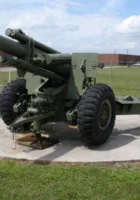
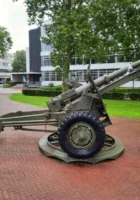
Fotogalerija US 105mm M2A2 Field Gun, The 105 mm M2A1 (M101A1) howitzer was a howitzer developed and used by the United States. It was the standard U.S. light field howitzer in World War II and saw action in both the European and Pacific theaters. Entering production in 1941, it quickly gained a reputation for accuracy and a powerful punch. The M101A1 fired 105-millimetre (4.1 in) high explosive (HE) semi-fixed ammunition and had a range of 11,270 metres (12,330 yd), making it suitable for supporting infantry. M2A2 : modificiran ščit

Vir: Ameriška 105-milimetrska poljska puška M2A2 na Wikiju

Nadaljuj z branjem

Ogledi : 3540

de Havilland DH.82 Tiger Moth

de Havilland DH.82 Tiger Moth

DržaviUk
VlogoTrener
Prva muha26. oktober 1931
Zgrajena8868

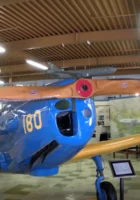
V de Havilland DH.82 Tiger Moth je letalo iz 30. let, ki ga je zasnoval Geoffrey de Havilland, kot primarni trener pa so upravljali Kraljevo letalstvo (RAF) in drugi. Tiger Moth je ostal v službi rafa, dokler ga ni nadomestil de Havilland Chipmunk leta 1952, ko je veliko presežka letal vstopilo v civilno delovanje. Mnogi drugi narodi so uporabljali Tiger Moth v vojaških in civilnih aplikacijah, v številnih državah pa je še vedno v razširjeni uporabi kot rekreativno letalo. Še vedno se občasno uporablja kot letalo za primarno usposabljanje, zlasti za tiste pilote, ki želijo pridobiti izkušnje, preden se preklopijo na druga letala iz repa. Mnogi so zdaj zaposleni v različnih podjetjih, ki ponujajo izkušnje s poskusno lekcijo. Klub de Havilland Moth, ustanovljen leta 1975, je zdaj združenje lastnikov, ki ponuja vzajemno klubsko in tehnično podporo.

Vir: de Havilland DH.82 Tiger Moth na Wikiju

Nadaljuj z branjem

Views : 6422

Dewoitine D.26

Dewoitine D.26

DržaviFrancija – Šviska
VrstaLetala za trenerje
FotografijoVladimir Jakubov
PoiščiteFantasy of Flight, Polk City
OpisAlbum 80 fotografije sprehod okoli «Dewoitine D.26»

Fotogalerija Dewoitine D.26, The Dewoitine D.26 was a military trainer developed in France for the Swiss Air Force in parallel with the D.27 fighter. The D.26 airframe was similar to that of the D.27. Differences included: The engine cowling was omitted on the D.26; The D.26 radial engine was smaller and produced less power; The D.26 was not equipped with provision for armament.

Vir: Dewoitine D.26 na Wikiju

Nadaljuj z branjem

Ogledi : 2808