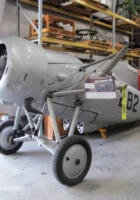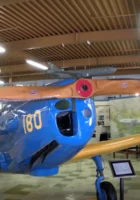
Fairchild PT-19A Cornell

Fairchild PT-19A Cornell

PaísEua
TipoAvião de treinamento militar
FotografiaRandy Ray
LocalizarMuseu da Base Aérea de Travis
DescriçãoÁlbum de 59 fotos de um «Fairchild PT-19A Cornell»

Galeria de fotos de um Fairchild PT-19A Cornell, The Fairchild PT-19 (company designation Fairchild M62) is an American Fairchild Aircraft monoplane primary trainer aircraft that served with the United States Army Air Forces, RAF and RCAF during World War II. It was a contemporary of the Kaydet biplane trainer and was used by the USAAF during Primary Flying Training as the introductory pre-solo phase trainer for introducing new pilots to flying before passing them on to the more agile Kaydet. As with other USAAF trainers of the period, the PT-19 had multiple designations based on the powerplant installed.

Fonte: Fairchild PT-19A Cornell na Wiki

Continue lendo

Visualizações : 2516

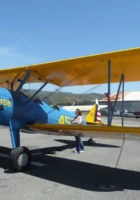
Stearman PT-13D Kaydet

Stearman PT-13D Kaydet

PaísEua
TipoAvião de treinamento militar

Galeria de fotos de um Stearman PT-13D Kaydet, The Stearman (Boeing) Model 75 is a biplane used as a military trainer aircraft, of which at least 10,626 were built in the United States during the 1930s and 1940s. Stearman Aircraft became a subsidiary of Boeing in 1934. Widely known as the Stearman, Boeing Stearman or Kaydet, it served as a primary trainer for the United States Army Air Forces, the United States Navy (as the NS & N2S), and with the Royal Canadian Air Force as the Kaydet throughout World War II. After the conflict was over, thousands of surplus aircraft were sold on the civilian market. In the immediate postwar years they became popular as crop dusters, sports planes, and for aerobatic and wing walking use in air shows.

Fonte: Stearman PT-13D Kaydet na Wiki

Continue lendo

Views : 4942

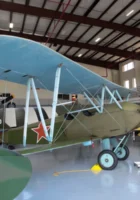
Polikarpov Po-2

Polikarpov Po-2

PaísUnião Soviética
TipoBiplano de uso geral
FotografiaVladimir Yakubov
LocalizarFantasia de Voo, Polk City
DescriçãoÁlbum de 83 fotos walk-around de um "Polikarpov Po-2"

Galeria de fotos de um Polikarpov Po-2, The Polikarpov Po-2 (also U-2) served as a general-purpose Soviet biplane, nicknamed Kukuruznik (Russian: Кукурузник, from Russian “kukuruza” (кукуруза) for maize; thus, “maize duster” or “crop duster”), NATO reporting name “Mule”. The reliable, uncomplicated concept of the Po-2’s design made it an ideal training aircraft, as well as doubling as a low-cost ground attack, aerial reconnaissance, psychological warfare and liaison aircraft during war, proved to be one of the most versatile light combat types to be built in the Soviet Union. As of 1978 it remained in production for a longer period of time than any other Soviet-era aircraft. It is one of the most produced aircraft, and may be the most produced biplane with production possibly as high as 30,000 Po-2s built between 1928 and 1959.However, production figures for Polikarpov U-2 and Po-2 bombers and trainers combined are between 20,000 and 30,000. with production ending as early as 1952.

Fonte: Polikarpov Po-2 na Wiki

Continue lendo

Views : 8669

Fouga Magister

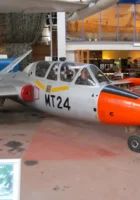
Fouga Magister C.M.170

PaísFrança
TipoTreinador de jato de dois lugares
Primeiro voo23 de julho de 1952
Construído929

O Fouga CM.170 Magister is a 1950s French two-seat jet trainer. The related CM.175 Zéphyr was a carrier-capable version for the French Navy. In 1948, development commenced at Fouga on a new primary trainer aircraft design that harnessed newly developed jet propulsion technology. The initial design was evaluated by the French Air Force (Armée de l’Air, AdA) and, in response to its determination that the aircraft lacked sufficient power for its requirements, was enlarged and adopted a pair of Turbomeca Marboré turbojet engines. First flying on 23 July 1952, the first production order for the type was received on 13 January 1954. In addition, the related CM.175 Zéphyr was a carrier-capable version developed and produced for the French Navy.

Fonte: Fouga Magister C.M.170 na Wiki

Continue lendo

Views : 5612

Supermarine Spitfire MK. Xiv

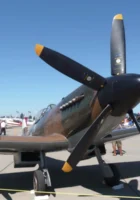
Supermarine Spitfire MK. Xiv

PaísReino unido
PapelAviões
Primeiro voo27 de novembro de 1941
Produzido1942–48

O Supermarine Spitfire é um caça monoposto britânico que foi usado pela Força Aérea Real e muitos outros países aliados antes, durante e depois da Segunda Guerra Mundial. O Spitfire foi construído em muitas variantes, usando várias configurações de asa, e foi produzido em maior número do que qualquer outra aeronave britânica. Foi também o único caça britânico a estar em produção contínua durante a guerra. O Spitfire continua a ser popular entre os entusiastas, com aproximadamente 54 Spitfires sendo aeronavegáveis, enquanto muitos mais são exposições estáticas em museus de aviação em todo o mundo.

Fonte: Supermarine Spitfire MK. XIV na Wiki

Continue lendo

Visualizações : 11767

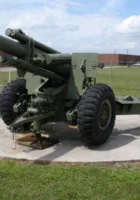
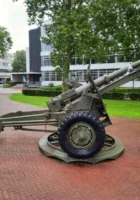
U.EUA 155mm M1A1 Howitzer

U.EUA 155mm M1A1 Howitzer

PaísEua
TipoObus
FotografiaRandy J. Ray
LocalizarMuseu Militar de Motts
DescriçãoÁlbum de 49 fotos walk-around de um «US 155mm M1A1 Howitzer»

Galeria de fotos de um U.EUA 155mm M1A1 Howitzer, The M114 155 mm howitzer was a towed howitzer developed and used by the United States Army. It was first produced in 1942 as a medium artillery piece under the designation of 155 mm Howitzer M1. It saw service with the US Army during World War II, the Korean War, and the Vietnam War, before being replaced by the M198 howitzer.

Fonte: Obuseiro US 155mm M1A1 na Wiki

Continue lendo

Visualizações : 4401

QF Mk.III

QF 25pdr Mark II Arma de Campo

PaísReino unido
TipoObus
Em serviço1940-presente

Galeria de fotos de um QF 25pdr Mark II Arma de Campo, The Ordnance QF 25-pounder, or more simply 25-pounder or 25-pdr, was the major British field gun and howitzer during World War II. It was introduced into service just before the war started, combining high-angle and direct-fire, relatively high rates of fire, and a reasonably lethal shell in a highly mobile piece. It remained the British Army’s primary artillery field piece well into the 1960s, with smaller numbers serving in training units until the 1980s. Many Commonwealth of Nations countries used theirs in active or reserve service until about the 1970s and ammunition for the weapon is currently being produced by Pakistan Ordnance Fac. O Marcos II: montado na carruagem Mark I era a arma padrão durante a Segunda Guerra Mundial. Eles foram construídos na Austrália e Canadá, mas principalmente no Reino Unido. As entregas (da produção britânica) começaram no início de 1940 e entraram em serviço pela primeira vez com um regimento canadense estacionado no Reino Unido durante maio de 1940. No Ordnance 25-pr Mk 2 no Carriage 25-pr Mark 1 foram perdidos na França. Esta arma disparou todas as cargas, 1- 3 e Super. Em 1942, um freio focinho foi montado na arma para eliminar a instabilidade causada ao disparar o projétil AP de 20 lb com Charge Super em ângulos de baixa elevação de fogo direto. Para preservar o equilíbrio da arma nos trunnions também foi montado um peso de contrapeso, bem na frente do anel da culatra. A designação da arma modificada não foi alterada. Eventualmente, todas as armas servindo na Europa foram tão convertidas.

Fonte: QF 25pdr Mark II Field Gun na Wiki

Continue lendo

Views : 4319

US 105mm M2A2 Field Gun

US 105mm M2A2 Field Gun

PaísEua
TipoObus
FotografiaVladimir Yakubov
LocalizarMuseu de l'Armee, Paris
DescriçãoÁlbum de 66 fotos walk-around de um «US 105mm M2A2 Field Gun»

Galeria de fotos de um US 105mm M2A2 Field Gun, The 105 mm M2A1 (M101A1) howitzer was a howitzer developed and used by the United States. It was the standard U.S. light field howitzer in World War II and saw action in both the European and Pacific theaters. Entering production in 1941, it quickly gained a reputation for accuracy and a powerful punch. The M101A1 fired 105-millimetre (4.1 in) high explosive (HE) semi-fixed ammunition and had a range of 11,270 metres (12,330 yd), making it suitable for supporting infantry. M2A2 : escudo modificado

Fonte: US 105mm M2A2 Arma de Campo na Wiki

Continue lendo

Visualizações : 3540

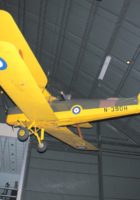
de Havilland DH.82 Tiger Moth

de Havilland DH.82 Tiger Moth

PaísReino unido
PapelTreinador
Primeira mosca26 de outubro de 1931
Construído8868

O de Havilland DH.82 Tiger Moth é um biplano da década de 1930 projetado por Geoffrey de Havilland e foi operado pela Royal Air Force (RAF) e outros como um treinador primário. O Tiger Moth permaneceu em serviço com a RAF até ser substituído pelo de Havilland Chipmunk em 1952, quando muitas das aeronaves excedentes entraram em operação civil. Muitas outras nações usaram o Tiger Moth em aplicações militares e civis, e permanece em uso generalizado como aeronave recreativa em muitos países. Ainda é ocasionalmente usado como uma aeronave de treinamento primário, particularmente para aqueles pilotos que desejam ganhar experiência antes de passar para outras aeronaves de roda traseira. Muitos são agora empregados por várias empresas que oferecem experiências de aula experimental. O clube de Havilland Moth, fundado em 1975, é agora uma associação de proprietários que oferece um clube mútuo e suporte técnico.

Fonte: de Havilland DH.82 Tiger Moth na Wiki

Continue lendo

Views : 6422

Dewoitine D.26

Dewoitine D.26

PaísFrança – Suíça
TipoAeronave de treinador
FotografiaVladimir Yakubov
LocalizarFantasia de Voo, Polk City
DescriçãoÁlbum de 80 fotos walk-around de um "Dewoitine D.26"

Galeria de fotos de um Dewoitine D.26, The Dewoitine D.26 was a military trainer developed in France for the Swiss Air Force in parallel with the D.27 fighter. The D.26 airframe was similar to that of the D.27. Differences included: The engine cowling was omitted on the D.26; The D.26 radial engine was smaller and produced less power; The D.26 was not equipped with provision for armament.

Fonte: Dewoitine D.26 na Wiki

Continue lendo

Views : 2808