
Curtiss-Wright XP-55 Ascender | |
|---|---|
| Land | Usa |
| Rolle | Kämpfer |
| Produziert | 19. Juli 1943 |
| Gebaut | 3 |
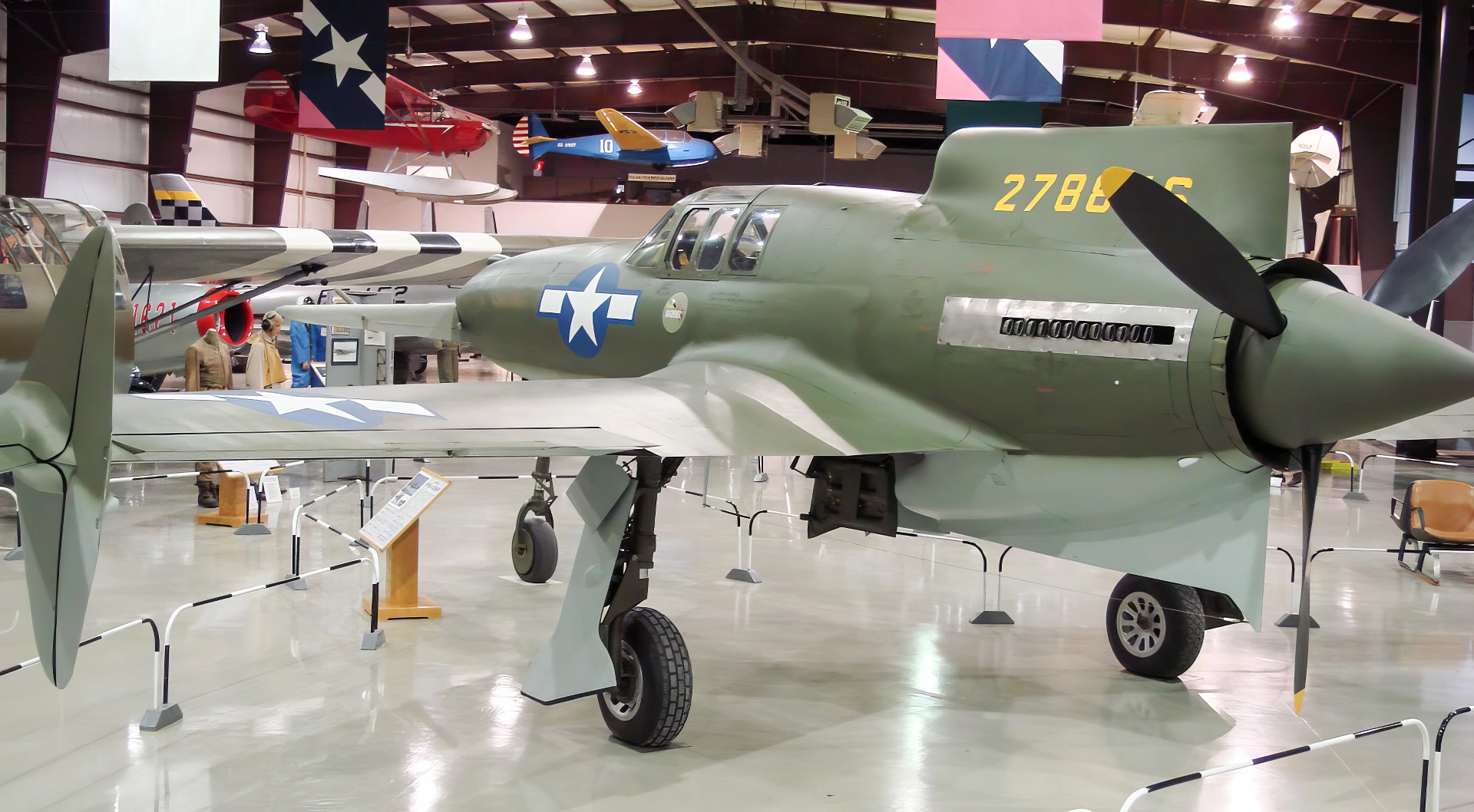
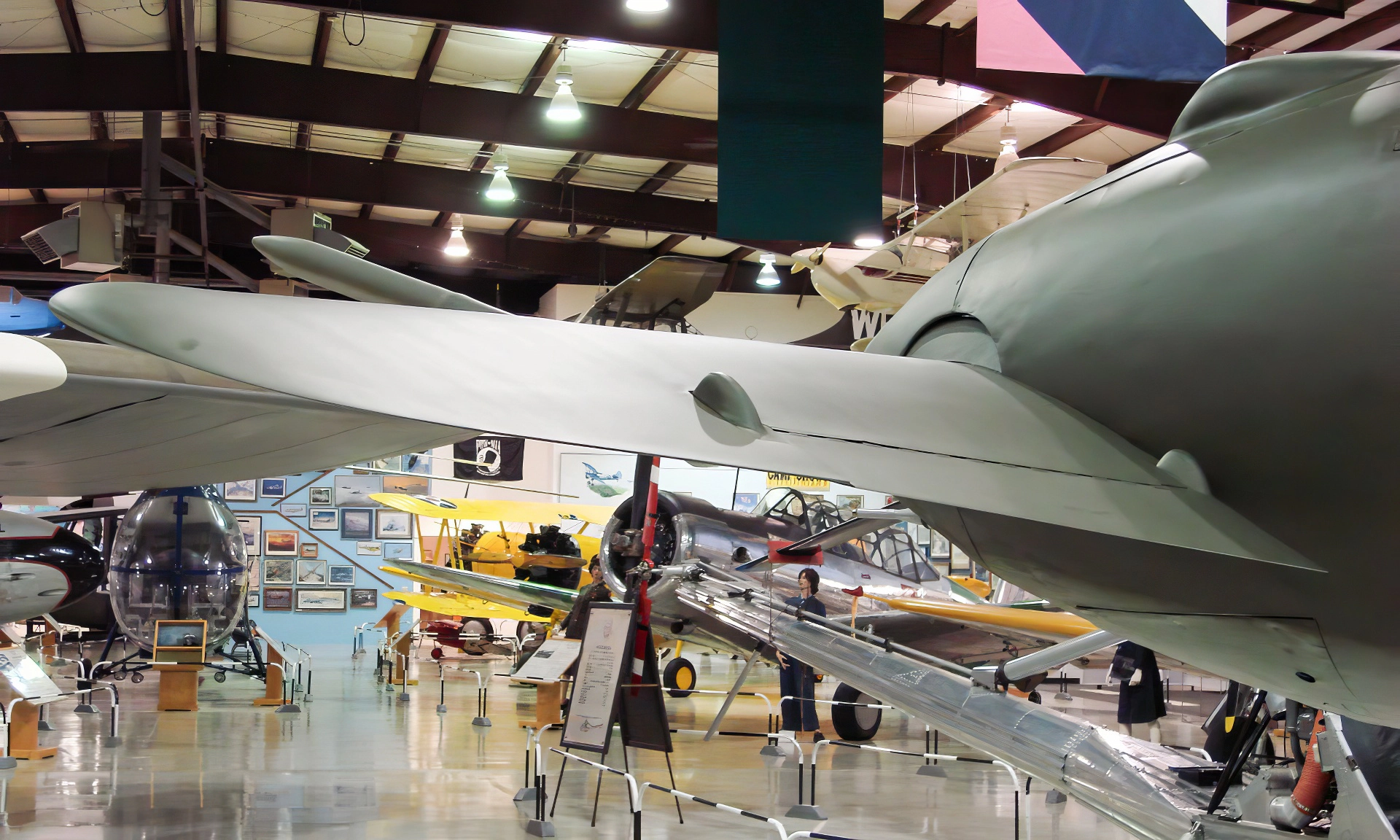
das Curtiss-Wright XP-55 Ascender CW-24 ist ein US-amerikanisches Jagdflugzeug der 1940er Jahre. Zusammen mit der Vultee XP-54 und Northrop XP-56 entstand es aus dem Vorschlag R-40C des United States Army Air Corps, der am 27. November 1939 für Flugzeuge mit verbesserter Leistung, Bewaffnung und Pilotensichtbarkeit gegenüber bestehenden Jägern veröffentlicht wurde. es erlaubte speziell unkonventionelle Flugzeugkonstruktionen. Ein für seine Zeit sehr ungewöhnliches Design, hatte es eine Canard-Konfiguration, einen hinten montierten Motor, geschwungene Flügel und zwei vertikale Hecks. Wegen seines Schubdesigns wurde er sarkastisch als "Ass-ender" bezeichnet. Wie der XP-54 wurde der Ascender ursprünglich für den Pratt & Whitney X-1800-Motor entwickelt und musste neu entworfen werden, als dieses Triebwerksprojekt abgebrochen wurde. Es war auch das erste Curtiss-Kampfflugzeug, das ein dreirädiges Fahrwerk einsetzte.
Quelle: Curtiss-Wright XP-55 Ascender auf Wikipedia
| XP-55 Ascender Walk Around | |
|---|---|
| Fotograf | Michael Benolkin |
| Lokalisierung | Unbekannter |
| Fotos | 39 |




Siehe auch:


General Characteristics and Role
The Curtiss XP-55 Ascender (Curtiss-Sperry Model 24) was an experimental fighter prototype developed for the U.S. Army Air Forces (USAAF) during World War II. It was the product of the 1940 “R-40C” proposal for unconventional aircraft designs, alongside the Northrop XP-56 Black Bullet and Vultee XP-54 Swoose Goose. The Ascender featured a highly radical and futuristic design for its time: a tailless canard configuration with the engine mounted at the rear, driving a pusher propeller. This layout was intended to improve aerodynamics and provide an unobstructed forward field of fire. Despite the design’s potential, the XP-55 suffered from stability issues, poor low-speed performance, and did not live up to performance expectations, leading to its cancellation after three prototypes were built.
| Property | Typical Value (XP-55) |
|---|---|
| Rolle | Experimental Fighter Prototype |
| National Origin | USA |
| Hersteller | Curtiss-Wright Corporation |
| First Flight | 13 July 1943 |
| Anzahl Gebaut | 3 |
| Crew | 1 (Pilot) |
| Länge | 9.0 m (29 ft 6 in) |
| Flügelspannweite | 12.4 m (40 ft 8 in) |
| Höhe | 3.45 m (11 ft 4 in) |
| Empty Weight | 2,884 kg (6,358 lb) |
| Max Takeoff Weight | 3,792 kg (8,360 lb) |
Powerplant and Design
- Engine: One Allison V-1710-95 (F23R) liquid-cooled V12 engine.
- Power Output: 954 kW (1,275 hp).
- Propulsion: 3-bladed propeller in a pusher configuration (at the rear).
- Maximum Speed: 628 km/h (390 mph; 339 kn) at 5,800 m (19,000 ft).
- Range: 1,040 km (650 mi; 560 nmi).
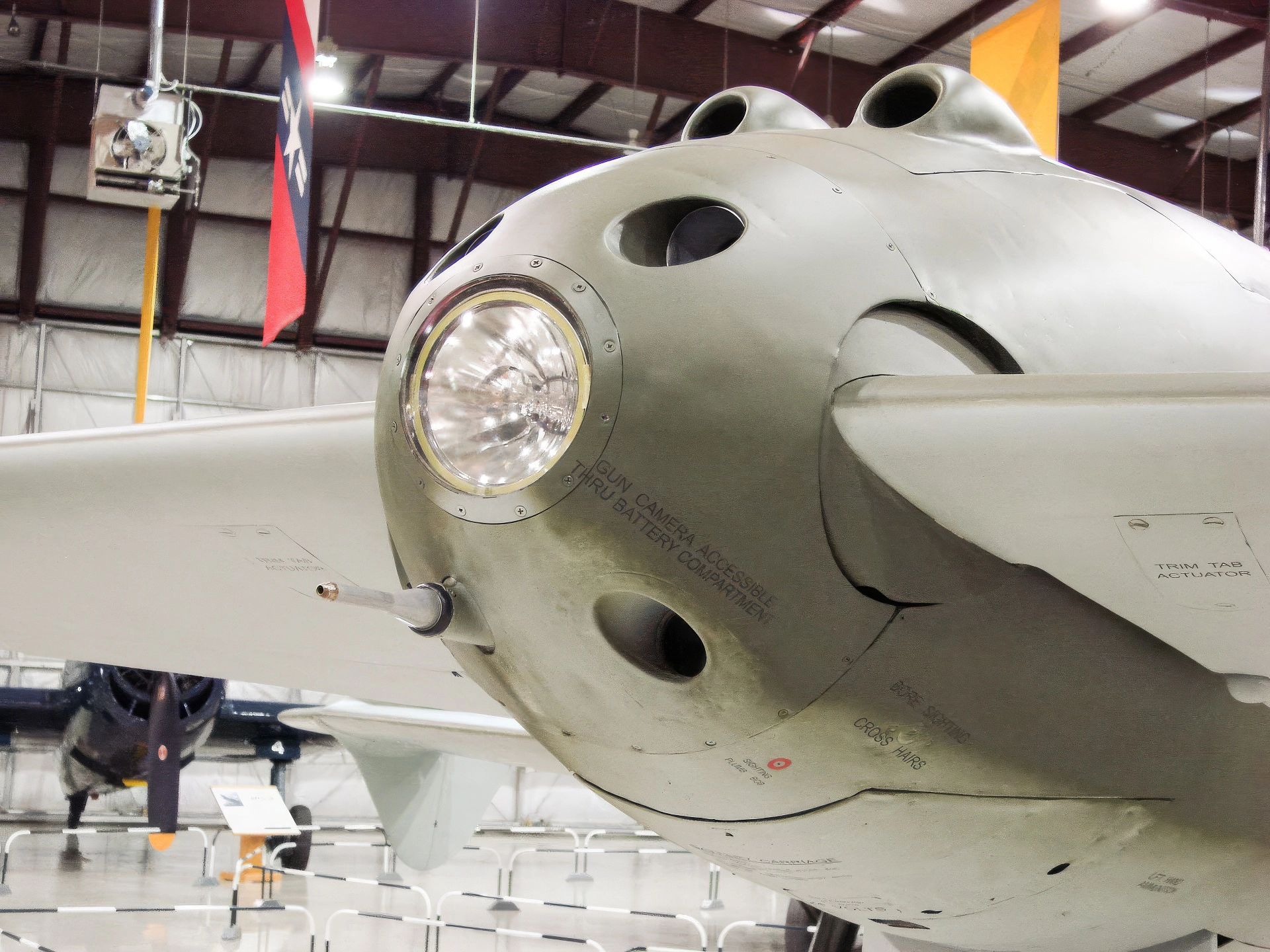
- Design Layout: Canard (small horizontal surface in the nose) and a mid-set wing with twin tail booms supporting the rudders. The main wings were swept back slightly.
- Pilot Safety: Due to the rear-mounted propeller, the pilot was equipped with a system to jettison the propeller assembly before bailing out in an emergency.
Armament (Intended) and Service
- Intended Armament: 2 x 20 mm cannon and 2 x .50 in (12.7 mm) machine guns, all mounted in the nose. (Prototypes often flew with reduced or no armament).
- Service History: The first prototype crashed due to a stall/spin in a test flight. Despite modifications to the second and third prototypes, they were ultimately outclassed by conventional and early jet fighters.
- Legacy: The XP-55’s radical configuration helped advance research into canard aerodynamics, a concept later successfully used in aircraft like the Saab Viggen and Eurofighter Typhoon.
Views : 3529
Sie können auch sehen:
 Travel Air 2000 – Fotos & Videos
 Curtiss-Wright CW-22 – Fotos & Video
 Curtiss-Wright AT-9 – Fotos & Video
 Stinson L-5 Sentinel – Fotos & Video
 Piper L-4 Grasshopper – Fotos & Video
 Lockheed U-2 – Fotos & Video
 Hawker Sea Fury FBII vol2 – Walk Around
 P-51D Mustang vol2 – Walk Around
 B-17G Flying Fortress – WalkAround
 Messerschmitt Bf 109G-2 – Walk Around