PBV 302 ·

Pansarbandvagn 302 ·

PaeseSvezia
digitarePortaerei corazzata
FotografiaThord Wedman
Argomento

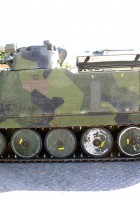
Album di 155 foto di un serbatoio Pansarbandvagn 302 ·

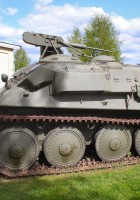
Pansarbandvagn 302 (Pbv 302) è un veicolo corazzato svedese ad alta mobilità sviluppato per soddisfare i requisiti operativi dell'esercito svedese. È stato progettato e prodotto da Hägglund e Söner a Örnsköldsvik (ora Hägglunds Vehicle AB). Il progetto fu commissionato nel 1961 in sostituzione del Pbv 301. La produzione durò dal 1966 al 1971. Il veicolo è stato aggiornato e continua in servizio limitato anche se la serie CV 90 è ora il veicolo da combattimento di fanteria standard in Svezia, utilizzato sia in patria che dalle forze svedesi all'estero.

fonte: Pansarbandvagn 302 su Wikipedia

Continua a leggere

Punti di vista: 4634

PBV 301 ·

Pansarbandvagn 301 ·

PaeseSvezia
digitarePortaerei corazzata
FotografiaThord Wedman
Argomento

Album di 38 foto di un serbatoio Pansarbandvagn 301 ·

Pansarbandvagn 301 (pbv 301), was a Swedish armoured personnel carrier used by the Swedish Army. It was a typical “battle taxi”, armed with a 20 mm Bofors gun from the scrapped J21-fighters and with room for transporting 8 fully armed soldiers. The pbv 301 was an interim solution, built on the chassis from the obsolete Stridsvagn m/41, introduced in 1961 and removed from service in the late 1960s and early 1970s when the replacement pbv 302 came into use. The pbv 301 replaced the open-topped KP-bil armoured car as the armoured troop transport in the Swedish Army.

fonte: Pansarbandvagn 301 su Wikipedia

Continua a leggere

Visualizzazioni : 2936

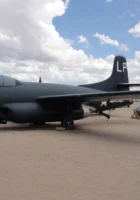
Douglas F4D-1 (F-6A) Skyray

Douglas F4D Skyray

PaeseUsa
digitareCaccia/intercettore supersonico
FotografoVladimir Jakubov
Argomento

Album di 121 foto walk-around di un «Douglas F4D-1 (F-6A) Skyray»

Galleria fotografica di un Douglas F4D-1 (F-6A) Skyray, The Douglas F4D Skyray (later redesignated F-6 Skyray) was an American carrier-based supersonic fighter/interceptor built by the Douglas Aircraft Company. Although it was in service for a relatively short time and never entered combat, it was notable for being the first carrier-launched aircraft to hold the world’s absolute speed record, at 752.943 mph,[1] and was the first United States Navy and United States Marine Corps fighter that could exceed Mach 1 in level flight. It was the last fighter produced by the Douglas Aircraft Company before it merged with McDonnell Aircraft and became McDonnell Douglas. The F5D Skylancer was an advanced development of the F4D Skyray that did not go into service.

fonte: Douglas F4D Skyray su Wikipedia

Continua a leggere

Views : 4225

Northrop F-5E Tiger II
Northrop F-5
PaeseUsa
RuoloCaccia leggero
Primo voloRoma, 30 luglio 1959<
CostruitoOltre 2200

Le Northrop F-5A/B Freedom Fighter e F-5E/F Tiger II fanno parte di una famiglia di caccia leggeri supersonici, inizialmente progettata alla fine degli anni '50 dalla Northrop Corporation. Essendo più piccolo e più semplice dei contemporanei come il McDonnell Douglas F-4 Phantom II, l'F-5 costò meno sia per procurarsi che per operare, rendendolo un popolare aereo da esportazione. L'F-5 iniziò la sua vita come programma di caccia leggeri finanziato privatamente da Northrop negli anni '50. Il team di progettazione ha avvolto un piccolo caccia altamente aerodinamico attorno a due motori General Electric J85 compatti e ad alta spinta, concentrandosi sulle prestazioni e sul basso costo di manutenzione. Sebbene progettato principalmente per il ruolo di superiorità aerea del giorno, l'aereo è anche una piattaforma di attacco al suolo capace. L'F-5A entrò in servizio nei primi anni '60. Durante la Guerra Fredda, oltre 800 furono prodotti fino al 1972 per gli alleati statunitensi. Sebbene l'USAF non avesse riconosciuto la necessità di un caccia leggero, si procurava circa 1.200 aerei da addestramento Northrop T-38 Talon, che erano direttamente basati sull'F-5A.

fonte: Northrop F-5E Tiger II su Wikipedia

Continua a leggere

Punti di vista: 17554

2000 - Panzerhaubitze

2000 - Panzerhaubitze

PaeseGermania
digitareObice semovente
ProdottoDal 1998 ad oggi
GuerreGuerra in Afghanistan, invasione russa dell'Ucraina

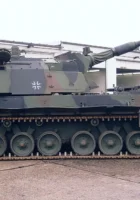
Le 2000 - Panzerhaubitze ("obice corazzato 2000"), abbreviato PzH 2000, è un obice semovente tedesco da 155 mm sviluppato da Krauss-Maffei Wegmann (KMW) e Rheinmetall per l'esercito tedesco. Il PzH 2000 è uno dei più potenti sistemi di artiglieria convenzionali schierati negli anni 2010. È particolarmente degno di nota per un tasso di fuoco molto elevato; in modalità burst può sparare tre colpi in 9 secondi, dieci colpi in 56 secondi e può, a seconda del riscaldamento della canna, sparare continuamente tra 10 e 13 colpi al minuto. [1] Il PzH 2000 ha il supporto automatico per un massimo di 5 round di multiple rounds simultaneous impact (MRSI). Il rifornimento dei proiettili è automatizzato. Due operatori possono caricare 60 proiettili e cariche di propulsione in meno di 12 minuti. PzH 2000 è stato anche selezionato dagli eserciti di Italia, Paesi Bassi, Grecia, Lituania e Croazia, e più ordini sono probabili poiché molte forze NATO sostituiscono i loro obici M109.

fonte: Panzerhaubitze 2000 su Wikipedia

Continua a leggere

Visualizzazioni : 8601

Ba-3

BA-3

PaeseURSS
digitareAuto blindata pesante
FotografiaVladimir Jakubov
Argomento

Album di 102 foto di un serbatoio BA-3

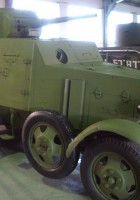
Il BA-3 (in russo Broneavtomobil 3) era un ' auto blindata sviluppata in Unione Sovietica nel 1933, seguita da un modello BA-6 leggermente cambiato nel 1936. Entrambi erano basati principalmente sul BA-I, il più importante sviluppo fu la nuova torretta, come nei carri armati T-26 m 1933 e BT-5, e anche equipaggiati con il cannone principale da 45 mm. Circa 180 vetture BA-3 furono costruite nelle fabbriche di Izhorskij e Vyksunskij, fino alla fine della produzione nel 1935. Il BA-6 seguì con 386 vetture prodotte tra il 1936 e il 1938 nello stabilimento di Izhorskij. La maggior parte della produzione del BA-3 era basata sul telaio Ford-Timken, una modifica del 6×4 del camion statunitense Ford AA 4×2, ma l'ultimo lotto fu costruito sulla versione russa dello stesso telaio - GAZ-AAA, continuò ad essere utilizzato nel BA-6. La più grande limitazione del BA-3 era la mobilità, limitata alle strade o a un terreno molto duro, il risultato di un peso inutilmente grande. L'innovazione che migliorava leggermente la mobilità erano i binari ausiliari ("Overall") che potevano essere montati sulle ruote tandem posteriori, convertendo l'auto in half-track.

fonte: BA-3 on Wikipedia

Continua a leggere

Punti di vista: 4342

Bachem Ba 349 Natter

Bachem Ba 349 Natter

PaeseGermania
digitareIntercettore a razzo
FotografoVladimir Jakubov
Argomento

Album di 65 foto walk-around di un "Bachem Ba 349 Natter"

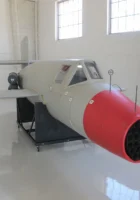
Galleria fotografica di un Bachem Ba 349 Natter, The Bachem Ba 349 Natter (English: Colubrid, grass-snake) was a World War II German point-defence rocket-powered interceptor, which was to be used in a very similar way to a manned surface-to-air missile. After a vertical take-off, which eliminated the need for airfields, most of the flight to the Allied bombers was to be controlled by an autopilot. The primary role of the relatively untrained pilot was to aim the aircraft at its target bomber and fire its armament of rockets. The pilot and the fuselage containing the rocket-motor would then land using separate parachutes, while the nose section was disposable. The only manned vertical take-off flight on 1 March 1945 ended in the death of the test pilot, Lothar Sieber.

fonte: Bachem Ba 349 Natter su Wikipedia

Continua a leggere

Visualizzazioni : 3953

Douglas TF-10B Skyknight

Douglas TF-10B Skyknight

PaeseUsa
digitareCaccia
Primo volo23 marzo 1948
Costruito265

Galleria fotografica di un Douglas TF-10B Skyknight, The Douglas F3D Skyknight (later designated F-10 Skyknight) was a United States twin-engined, mid-wing jet fighter aircraft manufactured by the Douglas Aircraft Company in El Segundo, California. The F3D was designed as a carrier-based all-weather night fighter and saw service with the United States Navy and United States Marine Corps. The mission of the F3D was to search out and destroy enemy aircraft at night.

fonte: Douglas TF-10B Skyknight su Wikipedia

Continua a leggere

Visualizzazioni : 4563

Panzer 61

Panzer 61

PaeseSvizzera
digitareCarro medio
FotografiaGunther Neumahr
Argomento

Album di 46 foto di un serbatoio Panzer 61

The Panzer 61 was a Swiss Cold War era medium tank later reclassified as a second-generation main battle tank. The tank had a weight of 36.5 tons and was powered by a 630 hp diesel engine, which gave it a top road speed of 31 mph (50 km/h). The primary armament of the Panzer 61 was a 105 mm main gun.

fonte: Panzer 61 on Wikipedia

Continua a leggere

Punti di vista: 1652

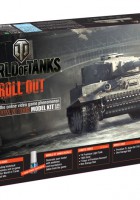
World of Tanks - PZ. KPFW.VI TIGRE - ITALERI 36502

Italeri

Ref 36502
Serie AIl mondo dei carri armati
Scala1/35
Argomento

PZ. KPFW.VI TIGRE

THE BOX CONTAIN: 1 MODEL KIT – 1 LIQUID CEMENT – 1 TANK GUIDE – WORLD oF TANKS DECALS – 3 INVITE CODES – 1 BONUS CODE

The final official German designation for the tank was Panzerkampfwagen VI Tiger Ausf.E, often shortened to just “Tiger I”. The Tiger’s development was started in 1937 by the company, Henschel. Mass production began in 1942 with a total of 1347 vehicles being manufactured over its production run. The initial model used suspension similar to that of the Panther. The hull extended over the tracks to accommodate the wide-ringed turret which could mount the infamous 8,8cm Kw.K 36 L/56. The Tiger first saw combat in the fighting for Leningrad and soon found itself featured in the majority of German armoured engagements. Even though production was discontinued in the summer of 1944, the Tiger I continued to see action until the end of the war. It was the first German heavy tank in WWII and soon proved itself to be extremely formidable against Allied and Soviet units which mostly consisted of Sherman tanks and T-34s at the time.

fonte: Italeri

Continua a leggere

Visualizzazioni: 1526