A-20 Havoc

A-20 Havoc

PaysUSA
TypeAttack aircraft

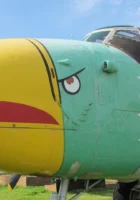
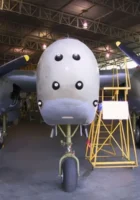
Photo Gallery on an A-20 Havoc, The Douglas A-20 Havoc ("ravage") / DB-7 is a versatile U.S. World War II aircraft that includes both attack aircraft, light bomber and night fighter. He served in many Allied armed forces, mainly in the USSR, Great Britain and the United States. The DB-7 was also used by the Australian, South African, French and Dutch air forces during the war and by Brazil after. The bomber version is known as Boston by the British and Commonwealth Forces, although the Royal Air Force uses the night fighter version under the name Havoc.

Source: A-20 Havoc on Wikipedia

Continue reading

Views : 7338

T-54A

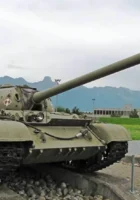
Tank T-54

CountryURSS
TypeMedium tank
In Service1949–present
Built86000–100000+

The T-54 is a Soviet tier 9 medium tank. The first prototype was constructed at the end of 1944. After successful trials in 1945–1947 the T-54 mod. 1947 was adopted for service. 713 vehicles were constructed before production was phased out. In 1949 production of a new variant was launched.

Source: World of Tanks

Continue reading

Views : 10612

Wydawnictwo Militaria Aviation 009 - Heinkel 59

Heinkel He-59

EditeurWydawnictwo Militaria
SérieAviation Military
Période

Seconde guerre mondiale

Réf009
 

Une documentation signée Wydawnictwo Militaria la revue «Heinkel He-59 – Wydawnictwo Militaria 009» .

Le Heinkel He 59 est un biplan allemand conçu en 1930, résultat d’une demande d’un bombardier torpilleur et d’un avion de reconnaissance capable d’opérer avec la même facilité sur train d’atterrissage à roues ou sur flotteurs jumelés. En 1930, Ernst Heinkel commença le développement d’un avion pour la Reichsmarine. Pour camoufler ses véritables intentions militaires, l’avion fut officiellement déclaré avion civil. Le He 59B terrestre prototype fut le premier à voler en septembre 19311, mais ce fut l’hydravion He 59A prototype qui ouvrit la voie à la production du modèle He 59B, duquel 142 ont été fournis dans les trois variantes. Le Heinkel He 59 était un avion agréable à piloter ; les déficiences notées furent une faiblesse des moteurs, le rayon d’action limité, la faible charge transportée et un armement insuffisant. L’avion était construit de matériaux composites. Les ailes étaient faites d’une charpente bipoutre, où le bord d’attaque était recouvert de contreplaqué, le reste de l’aile étant recouvert de tissus. La carlingue (fuselage) était une armature d’acier recouverte de tissus. La section de queue était couverte avec des feuilles de métal léger.

Source: Heinkel He-59 sur Wikipedia>

Continue reading

Views : 1838

B-25J 20NC Strafer

North American B-25 Mitchell

CountryUSA
RoleMedium bomber
First fly19 August 1940
Built9816

The North American B-25 Mitchell is an American twin-engine, medium bomber manufactured by North American Aviation (NAA). The design was named in honor of Major General William “Billy” Mitchell, a pioneer of U.S. military aviation. Used by many Allied air forces, the B-25 served in every theater of World War II and after the war ended many remained in service, operating across four decades. Produced in numerous variants, nearly 10,000 Mitchells rolled from NAA factories.[1] These included a few limited models, such as the United States Marine Corps’ PBJ-1 patrol bomber and the United States Army Air Forces’ F-10 reconnaissance aircraft and AT-24 trainers.

Source: North American B-25 Mitchell on Wikipedia

Continue reading

Views : 10832

FV 4101 Charioteer - Walk Around

FV 4101 Charioteer

PaysUK
TypeTank hunter
Sujet

Album de 139 photos of the "FV 4101 Charioteer"

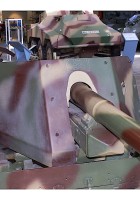
The Charioteer est un chasseur de chars britannique construit dans les années 1950 sur la base du char Cromwell. Au début des années 1950, pour augmenter la puissance de feu des unités du Royal Armoured Corps, certains Cromwells furent équipés d’une nouvelle tourelle abritant le canon Ordnance QF 20 pounder (comme certains chars Centurion). Le résultat fut nommé FV 4101 Charioteer tank destroyer. About 200 Cromwells were converted in this way by Robinson and Kershaw Ltd in Cheshire. In practice, the British used the Charioteer only in their reserve forces (the Territorial Army) and in the 1950s most of them were sold to Austria, Finland and Jordan.

Source: FV4101 Charioteer on Wikipedia

Continue reading

Views: 2753

M20 Scout Car

Armored Utility Car M20

PaysUSA
TypeArmored Utility Car
ModèleM20

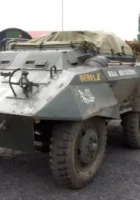
Le M20 Armored Utility Car, aussi connu sous le nom de M20 Scout Car, était un M8 sans tourelle. Elle était remplacée par une superstructure basse et ouverte avec comme armement, une mitrailleuse M2 de 12,7 mm. L’équipage pouvait emmener un Bazooka afin de compenser la perte de son canon de 37 mm. Les premiers M20 furent employés comme Command Vehicle (véhicule de commandement, équipé de nouvelles radios plus performantes) ou véhicule de reconnaissance. Toutefois, la plupart des M20 servirent de véhicule blindé de transport de troupe ou comme camion de ravitaillement blindé. En effet, il était mobile, rapide, suffisamment blindé pour résister aux armes de petits calibres et de projections de shrapnel. Le premier nom du M20 était M10 Armored Utility Car, mais afin d’éviter les confusions avec le chasseur de chars M10 Wolverine, son nom fut changé. Entre 1943 et 1944, 3 680 M20 sortirent des chaînes de production de Ford.

Source: M20 sur Wikipedia

Continue reading

Views : 5341

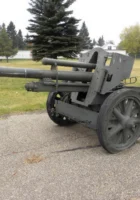
Pak 40 L-46 - Walk Around

Canon Pak 40 L-46

PaysGermany
TypeAnti-tank gun
Sujet

Album de 124 photos of the cannon "Pak 40 L-46"

Photo gallery on a cannon Pak 40 L-46, The cannon Pak 75 mm (or PaK 40) fut de 1942 à 1945 le canon antichar le plus répandu de la Wehrmacht. Le tube est un 75 mm KwK L/24. Environ 23 500 PaK-40 furent produits. 6 000 furent utilisé pour équiper des chars et des canons d’assaut. Ils portaient la dénomination KwK-40 (KampfwagenKanone). Le canon Pak 40 L/46 équipa les troupes dès le début de 1942. Il devint l’arme antichar de base de l’armée allemande. Les premiers mois, la production eut du mal à suivre la demande du front. Par rapport à ses prédécesseurs, l’inconvénient de ce canon était qu’il ne pouvait plus être tracté par les véhicules ordinaires du train : il a fallu lui adjoindre un tracteur d’artillerie légère Hansa-Lloyd-Goliath de 3t (remplacé par la suite par un tracteur Borgward). Il fut ensuite abandonné car sa puissance et sa maniabilité très réduite n’étaient pas très favorables dans les villes (où les allemands se retranchaient souvent) et sa puissance était faible en comparaison aux canons antichars américain de 57 millimètres.

Source: Pak40 on Wikipedia

Continue reading

Views : 6947

Crusader AA

Tank Crusader Mk II

CountryUK
RoleCruiser tank
Produced1940–1943
Built5300

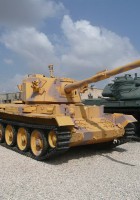
The Tank Cruiser Crusader was one of the primary British cruiser tanks during the early part of the Second World War. Over 5,000 tanks were manufactured and they made important contributions to the British victories during the North African Campaign. The Crusader tank would not see active service beyond Africa, but the chassis of the tank was modified to create anti-aircraft, fire support, observation, communication, bulldozer and recovery vehicle variants. Crusader II (Cruiser Mk VIA) : The Crusader II had increased armour on hull front and turret front. As with the Mk I, the auxiliary turret was often removed.

Source: Tank Crusader Mk II on Wikipedia

Continue reading

Views : 9592