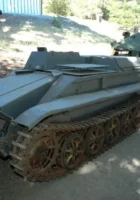
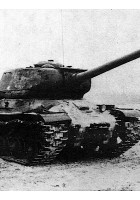
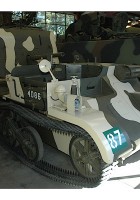
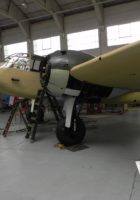
PzKpfw V

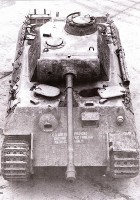
Album of 97 photos of Panzer V tanks

SujetPhotos of Panzer V tanks
PeriodWorld War II
Description

Album de 97 walk-around photos of the Panzer V

The SdKfz 171 Panzer V Panther était un char de combat utilisé par l’armée allemande pendant la Seconde Guerre mondiale, de juillet 1943 lors de la bataille de Koursk, au 8 mai 1945. Conçu pour contrer le char T-34 soviétique et remplacer les Panzerkampfwagen III et les Panzerkampfwagen IV, il servit en définitive à leurs côtés, jusqu’à la fin de la guerre, en trois versions principales : « D », « A », « G ». Une dernière version « F » ou « Panther II » était prévue, avant le remplacement définitif du « Panther » par le char « E-50 ».

Source: Panzer V sur Wikipedia

Continue reading

Views : 9424

Panzer II - Album photos

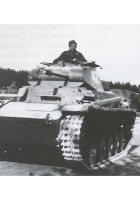
Album of 98 photos of Panzer II tanks

SujetPhotos of Panzer II tanks
PeriodWorld War II
Keywords

gallery panzer II

The Panzerkampfwagen II ( PzKpfw II ) ou Sd. Kfz. 121 était un char d’assaut de fabrication allemande. Comme le PzKpfw I, il fut conçu comme un modèle provisoire, en attendant des chars comme les PzKpfw III ou les PzKpfw IV. Ces deux types de véhicules étaient destinés à fournir des engins d’entraînement pour les équipages de la Panzerwaffe, afin de mettre au point les tactiques de la future Blitzkrieg. Cependant, le retard dans la production de véritables chars de combat obligea les Allemands à les utiliser massivement au début de la Seconde Guerre mondiale et ce n’est qu’à partir de 1941 qu’ils furent progressivement retirés des premières lignes. Le PzKpfw II however, it remained for a long time an important vehicle in the Wehrmacht's arsenal, thanks to reconnaissance derivatives and as a chassis for self-propelled guns such as the Marder II and the Wespe. It had one more crew member than the Panzer I, a radio operator, also responsible for reloading the 20 mm automatic gun.

Source: Panzer II on Wikipedia

Continue reading

Views: 3372

Bataille de Leros - After The Battle 90

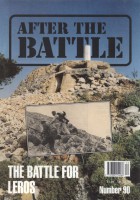
The Battle of Leros

PublisherAfter The Battle
PeriodWorld War II
Series

After The Battle

Réf90

A signed book After The Battle "Battle of Leros - After The Battle 90.

Leros during the Second World War was the battlefield of a terrible offensive in 1943 when the Germans tried to retake the island from the Italians (who had just changed sides), the British and the Greeks. It was heavily bombed for more than a month and a half, from 26 September to 16 November, when it finally fell into enemy hands.

Lakki Bay was home to an important seaplane base built by the Italians during their occupation, and this bay is the deepest natural port in the Mediterranean, hence its strategic importance to German forces in the Mediterranean. The film The Cannons of Navarone was certainly inspired by this battle, and that is why the island of this fiction is called "Keros".

Source: Leros on Wikipedia

Continue reading

Views : 1522

Jagdpanther

Jagdpanther – Sdkfz.173

CountryNazi Germany
RoleTank destroyer
In service1944–1945
Built415

The Jagdpanther (German: “hunting panther”), Sd.Kfz. 173, was a tank destroyer built by Germany during World War II based on the chassis of the Panther tank. It entered service in 1944 during the later stages of the war on the Eastern and Western Fronts. The Jagdpanther combined the 8.8 cm Pak 43 cannon, similar to the main gun of the Tiger II, and the armor and suspension of the Panther chassis. During the last stages of the war, limited German production resulted in small production numbers, shortage of spare parts, and shortened crew training periods of younger operators.

Source: Jagdpanther on Wikipedia

Continue reading

Views : 4839

After the Battle SE - Arnhem

After The Battle

SeriesAfter The Battle
Sujet

The Battle of Arnhem

PeriodWorld War II
RéfSpecial Edition

A signed book After The Battle the magazine "Arnhem – After The Battle SE".

L'opération Market Garden was an Allied military operation of World War II that took place in September 1944. This was an attempt mainly by the British armies to take bridges across the main rivers of the German-occupied Netherlands. Success would have allowed the Allies to bypass the Siegfried Line and gain access to one of Germany's main industrial centers, the Ruhr.

This operation proposed by Montgomery had met with opposition from the American generals, Patton and Bradley, who wanted to continue their offensive to the south. In fact, the real motivation of the British field marshall was more in the realm of the ego than in a real strategic logic. According to the testimonies reported by the Irish-American journalist Cornelius Ryan, the disagreement between the commander-in-chief of the 21st British Canadian Army Group and General Dwight Eisenhower, commander-in-chief of the Allied forces, was reaching new heights at that time and it was not far from the breaking point between these two strong personalities. This was the moment that Montgomery chose to launch his daring plan for an airborne operation, which was intended to unblock a blocked strategic situation by allowing a direct breakthrough in the Ruhr region, the economic heart of the Third Reich.

Source: Market Garden sur Wikipedia

Continue reading

Views: 1243

M4 Sherman

M4 Sherman

PaysUSA
TypeMedium Tank

Photo Gallery on an M4 Sherman, The Medium Tank M4 est le char américain moyen produit en plus grande quantité pendant la Seconde Guerre mondiale. Près de cinquante mille exemplaires (toutes versions confondues) furent produits. Son surnom de « Sherman " was awarded to him by the British, when they received their first copies under the leasing law, continuing their tradition of naming tanks of American origin after the name of a famous Northern Civil War general from that country. The U.S. Army later adopted this nickname, and the Medium Tank M4 was then called " M4 Sherman ». Les Soviétiques surnomment les leurs « Emcha ».

Source: Sherman sur Wikipedia

Continue reading

Views : 15462

B-17F Flying Fortress

B-17F Flying Fortress

CountryUSA
RoleHeavy bomber
First flight28 July 1935
Built12000+

The Boeing B-17 Flying Fortress is a four-engined heavy bomber developed in the 1930s for the United States Army Air Corps (USAAC). Competing against Douglas and Martin for a contract to build 200 bombers, the Boeing entry (prototype Model 299/XB-17) outperformed both competitors and exceeded the air corps’ performance specifications. Although Boeing lost the contract (to the Douglas B-18 Bolo) because the prototype crashed, the air corps ordered 13 more B-17s for further evaluation. From its introduction in 1938, the B-17 Flying Fortress evolved through numerous design advances,[ becoming the third-most produced bomber of all time, behind the four-engined B-24 and the multirole, twin-engined Ju 88.

Source: B-17 Flying Fortress on Wikipedia

Continue reading

Views : 3539

Photos bataille de Wolchow - Volkhov 1942

Battle of Wolchow

SujetPhotos of the Battle of Wolchow
Description

Album de 288 photos of the Battle of Wolchow

The siege of Leningrad refers to the siege of the Russian metropolis now known as St. Petersburg by the Germans during World War II. The German operation was codenamed Operation Nordlicht (Northern Dawn). Despite colossal losses (1,800,000 men, including more than one million civilians), the 872-day siege, which began on September 8, 1941 and ended on January 27, 1944, and the city resisted until its release in 1944, during the longest siege in modern history.

Continue reading

Views : 7538

PzKpfw 38

Photos of PzKpfw 38 tanks

Description

Album of 96 photos of tanks PzKpfw 38

PeriodWorld War II
KeywordsPzKpfw 38(t)

The Panzerkampfwagen 38(t) (ce qui signifiait : « véhicule de combat blindé tchécoslovaque, modèle 1938 ») était le nom donné par les Allemands à un char d’assaut tchécoslovaque fabriqué dans les usines de chars Škoda qu’ils avaient mis au service de leur industrie de guerre durant l’année 1939 avant l’éclatement du confit. Le nom que lui donnait l’armée tchécoslovaque était LT vz. 38. Ce véhicule de combat blindé fut conçu par les Tchécoslovaques à partir de 1935. Il a eu du succès à l’exportation, avec 50 chars exportés vers l’Iran, 24 vers la Suisse et autant vers le Pérou. L’armée tchécoslovaque en commande 150, mais ceux-ci ne sont pas entrés en service avant l’occupation du pays par l’Allemagne en 1939. Les occupants allemands ont ordonné la poursuite de la production entre 1938 et 1942. Au total, lorsque la production cessa en juin 1942, 1411 Panzerkampfwagen 38(t) (modèles A à G) avaient été fabriqués.

Source: Panzerkampfwagen 38(t) sur Wikipedia

Continue reading

Views : 3589