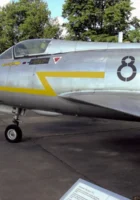
ボールトンポールデファイアントI

ボールトン・ポール・デファイアント

英国
役割2人乗り戦闘機、夜間戦闘機、トレーナー
初飛行1937年8月11日
構築1064

ボールトン・ポール・デファイアント was a British interceptor aircraft that served with the Royal Air Force (RAF) during World War II. The Defiant was designed and built by Boulton Paul Aircraft as a “turret fighter”, without any forward-firing guns, a concept successfully used in the First World War-era Bristol F.2 Fighter and also implemented by the Royal Navy’s Blackburn Roc. In combat, the Defiant was found to be reasonably effective at its intended task of destroying bombers but was vulnerable to the Luftwaffe’s more manoeuvrable, single-seat Messerschmitt Bf 109 fighters. The lack of forward-firing armament proved to be a great weakness in daylight combat and its potential was realised only when it was converted to night fighting. It was supplanted in the night fighter role by the Bristol Beaufighter and de Havilland Mosquito. The Defiant found use in gunnery training, target towing, electronic countermeasures and air-sea rescue. Among RAF pilots it had the nickname “Daffy”.

ソース: ウィキペディアのボールトン ポール デファイアント

続きを読む

視聴回数: 4405

ホーカー ニムロッド MK.II

ホーカー・ニムロッド

英国
役割海軍戦闘機
初飛行1931年10月14日
構築92

ホーカー・ニムロッド was a British carrier-based single-engine, single-seat biplane fighter aircraft built in the early 1930s by Hawker Aircraft. The Nimrod had an overall similarity to the Fury: it was a single-seater biplane with an open cockpit, fixed undercarriage and guns firing through the propeller. Its unswept, constant chord, round-tipped wings had an unequal span and strong stagger, the latter partly to enhance the pilot’s view. It was a single bay biplane braced with outward-leaning N-form interplane struts, with the upper plane held a little above the upper fuselage by cabane struts. The fabric-covered wings had metal spars and spruce ribs and carried balanced ailerons only on the upper wings.

ソース: ウィキペディアのホーカー ニムロッド

続きを読む

ビュー : 2519

フォード M151 マット

M151 1/4トン4×4ユーティリティトラック

米国
役割1/4トントラック/人件輸送、四輪駆動
製品化1959–1982
構築100000+

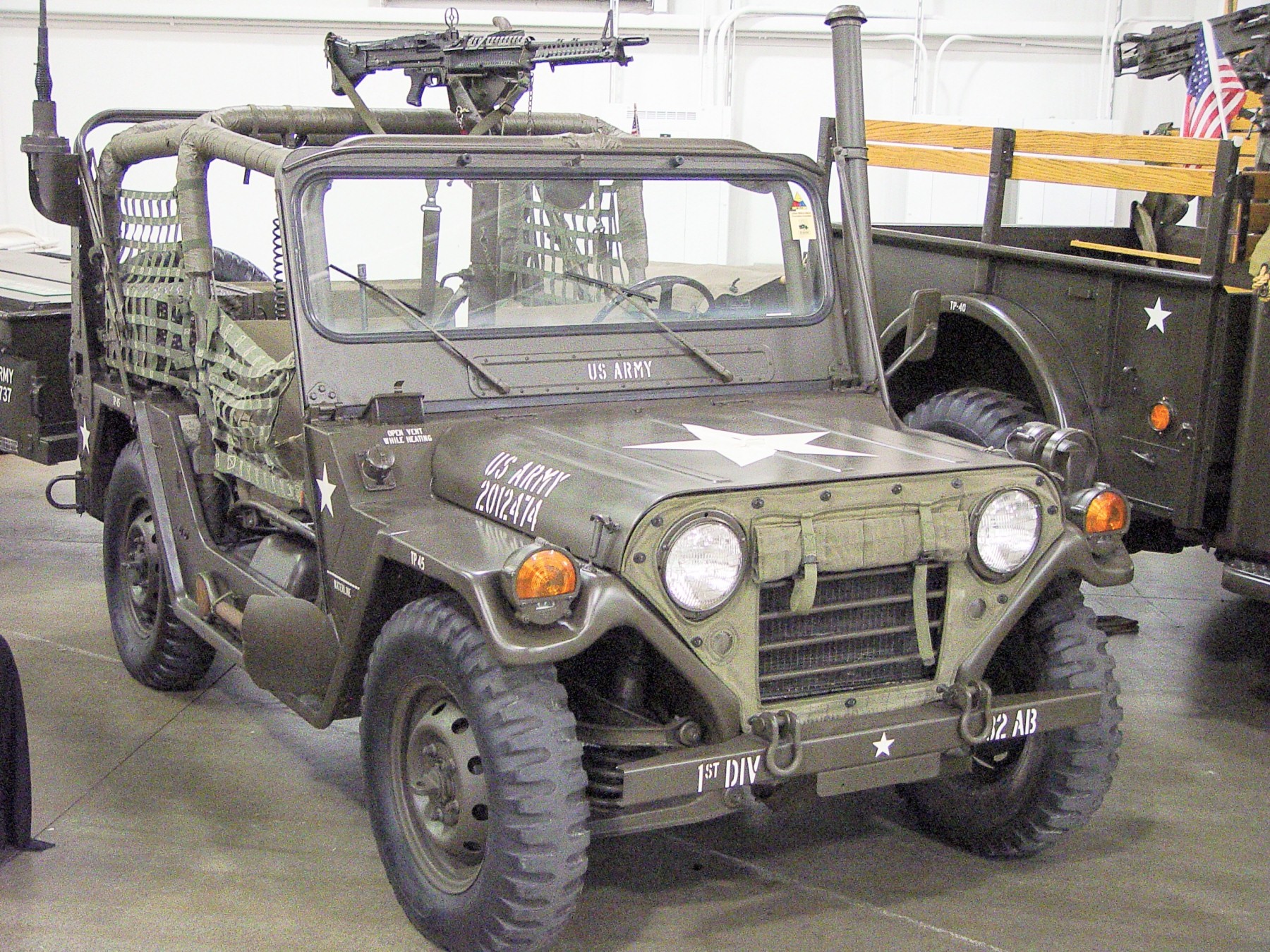
トラック、ユーティリティ、1/4トン、4×4、 M151 ●(M151)は朝鮮戦争M38とM38A1ジープ軽ユーティリティビークルの後継機でした。一般に「ジープ」または「4分の1トン」と呼ばれ、1959年から1982年まで生産され、ベトナム戦争に従軍しました。M151は、以前のジープデザインよりも広いモノコックデザインを持ち、コイルスプリングを備えた独立したサスペンションを組み込みました。その後、フロントラインで使用されるほとんどのユーティリティロールで、より大きなAM General HMMWVに置き換えられました。1999年に米軍に就航したM151A2のユニットの中には、WW2 MB/GPW、M38、M38シリーズを合わせたものよりも長いサービスを実現しました。

ソース: ウィキペディアの M151

続きを読む

Views : 11055

ハインケル He 219

ハインケル He 219

ナチスドイツ
役割ナイトファイター
初飛行1942年11月6日
構築300

ハインケル He 219 ウーフ (「イーグルフクロウ」)は、第二次世界大戦の後期にドイツ空軍に従軍した夜間戦闘機でした。比較的洗練されたデザインであるHe 219は、リヒテンシュタインSN-2高度VHFバンド迎撃レーダーを含む様々な革新を持ち、Ju 88GとBf 110G夜間戦闘機にも使用されました。また、射出座席と三輪車着陸装置を備えた最初の運用ドイツ第二次世界大戦時代の航空機を装備した最初の運用軍用機でした。ウーフが量的に利用可能であった場合、それはイギリス空軍の戦略的夜間爆撃攻撃に大きな影響を与えた可能性があります。しかし、戦争の終わりまでにすべてのモデルのうち294台しか建設されず、これらは限られたサービスしか見なかった。エルンスト・ヴィルヘルム・モドローは、He 219の主要な夜間戦闘機エースでした。モドローは、タイプの34夜の空気の勝利から33でクレジットされました。

ソース: ウィキペディアのハインケル He 219

続きを読む

再生 : 5570

ドーニエ Do.335

ドーニエ Do.335

ナチスドイツ
役割戦闘 爆撃機
初飛行1943年10月26日
構築37

ドーニエ Do 335 プエイル(「アロー」)は、ドーニエ社によって建てられた第二次世界大戦の重戦闘機でした。2人乗りのトレーナーバージョンは、アマイゼンバー(「アンテアター」)とも呼ばれ、Ameisenbärと呼ばれ、2人乗りのトレーナーバージョンは「アンテアター」と呼ばれ、2人乗りのトレーナーバージョンとも呼ばれます。Pfeilの性能は、そのユニークな「プッシュプル」レイアウトと2つのエンジンのインラインアライメントのはるかに低い空力ドラッグのために、他のツインエンジンのデザインよりもはるかに優れていた。それは第二次世界大戦のドイツ最速のピストンエンジン機でした。ドイツ空軍は設計を運用に取り入れるのに必死でしたが、エンジンの納入の遅れは、戦争が終わる前にほんの一握りしか届けられなかったことを意味しました。

ソース: ドーニエ Do.335 ウィキペディア

続きを読む

ビュー:6462

Tupolev Tu-22MO

ツポレフ Tu-22M

ソ連
役割戦略爆撃機/海上攻撃
初飛行1969年8月30日
構築497

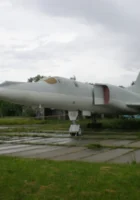
ツポレフ Tu-22M (ロシア語: Туполев Ту-22М;NATO報告名:バックファイア)は、ツポレフ設計局によって開発された超音速、可変掃引翼、長距離戦略および海上攻撃爆撃機です。いくつかの情報源によると、爆撃機は一度にTu-26と命名されたと信じられていた。冷戦中、Tu-22Mはソビエト空軍(VVS)によって戦略爆撃の役割で、ソビエト海軍航空(Aviacija Vojenno-Morskogo Flota、AVMF)によって長距離海上対艦の役割で運用されました。かなりの数がロシア空軍で運用されており、2014年現在100機以上のTu-22Mが使用されている。

ソース: ツポレフ Tu-22M ウィキペディア

続きを読む

再生 : 4540

ダグラス A-4F スカイホーク

ダグラス A-4 スカイホーク

米国
役割攻撃機、戦闘機、侵略機
初飛行1954年6月22日
構築2960

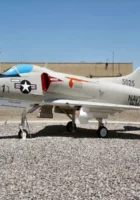
ダグラス A-4 スカイホーク is a single seat subsonic carrier-capable attack aircraft developed for the United States Navy and United States Marine Corps in the early 1950s. The delta winged, single turbojet engined Skyhawk was designed and produced by Douglas Aircraft Company, and later by McDonnell Douglas. It was originally designated A4D under the U.S. Navy’s pre-1962 designation system. The Skyhawk is a relatively lightweight aircraft with a maximum takeoff weight of 24,500 pounds (11,100 kg) and has a top speed of more than 670 miles per hour (1,080 km/h). The aircraft’s five hardpoints support a variety of missiles, bombs and other munitions. It was capable of carrying a bomb load equivalent to that of a World War II-era Boeing B-17 bomber, and could deliver nuclear weapons using a low-altitude bombing system and a “loft” delivery technique. The A-4 was originally powered by the Wright J65 turbojet engine; from the A-4E onwards, the Pratt & Whitney J52 was used. Skyhawks played key roles in the Vietnam War, the Yom Kippur War, and the Falklands War. Sixty years after the aircraft’s first flight in 1954, some of the 2,960 produced (through February 1979) remain in service with several air arms around the world.

ソース: ウィキペディアのダグラス A-4 スカイホーク

続きを読む

ビュー : 18135

ハインケル He 100 D-1

ハインケル He 100

ナチスドイツ
役割戦闘機
初飛行1938年1月22日
構築25

ハインケル He 100 was a German pre-World War II fighter aircraft design from Heinkel. Although it proved to be one of the fastest fighter aircraft in the world at the time of its development, the design was not ordered into series production. Approximately 19 prototypes and pre-production examples were built. None are known to have survived the war. The reason for the He 100 failing to reach production status is mostly unknown. Officially, the Luftwaffe rejected the He 100 to concentrate single-seat fighter development on the Messerschmitt Bf 109. Following the adoption of the Bf 109 and Messerschmitt Bf 110 as the Luftwaffe’s standard fighter types, the Ministry of Aviation (the Reichsluftfahrtministerium or RLM) announced a “rationalization” policy that placed fighter development at Messerschmitt and bomber development at Heinkel.

ソース: ウィキペディアのハインケル He 100

続きを読む

ビュー : 5207

デ・ハビランド ヴァンパイア FB.6

デ・ハビランド・ヴァンパイア

英国
役割戦闘機
初飛行1943年9月20日
構築3268

デ・ハビランド・ヴァンパイア ●デ・ハビランド航空機会社が開発・製造したイギリスのジェット戦闘機です。航空機の作業は、ジェット推進の画期的な革新を利用した戦闘に適した主に実験機として第二次世界大戦中に始まりました。ハルフォードH.1ターボジェットエンジン(後にデハビランドゴブリン)を搭載した単発双発機をすぐに選ぶことにしました。当初は実験機のみとして発注され、1944年5月にイギリス空軍(RAF)の迎撃機として航空機を量産するという決定が最終決定されました。

ソース: デ・ハビランド・ヴァンパイア・オン・ウィキペディア

続きを読む

再生回数 : 5068

Dassault Mystere IVA

ダッソー・ミステア

フランス
役割戦闘 爆撃機
初飛行1951年2月23日
構築171

ダッソー MD.452 ミステア is a 1950s French fighter-bomber. After the success of the Ouragan, Dassault was working on a more advanced machine based on it, which would take to the air in early 1951 as the MD.452 Mystère I. The first prototype Mystère I was essentially an Ouragan with a 30-degree swept wing and modified tail surfaces. Two further prototypes followed, powered by the Rolls-Royce Tay 250 centrifugal-flow turbojet, an improved version of the Rolls-Royce Nene, built under license by Hispano-Suiza, and rated at 28.0 kN (6,300 lbf) thrust.

ソース: グラマンF6Fヘルキャットウィキペディア

続きを読む

再生 : 2872