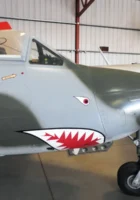
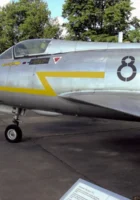
Boulton Paul Defiant I

Boulton Paul Defiant

PaeseRegno unito
RuoloCaccia biposto, caccia notturno, addestratore
Primo voloL'11 agosto 1937
Costruito1064

Le Boulton Paul Defiant was a British interceptor aircraft that served with the Royal Air Force (RAF) during World War II. The Defiant was designed and built by Boulton Paul Aircraft as a “turret fighter”, without any forward-firing guns, a concept successfully used in the First World War-era Bristol F.2 Fighter and also implemented by the Royal Navy’s Blackburn Roc. In combat, the Defiant was found to be reasonably effective at its intended task of destroying bombers but was vulnerable to the Luftwaffe’s more manoeuvrable, single-seat Messerschmitt Bf 109 fighters. The lack of forward-firing armament proved to be a great weakness in daylight combat and its potential was realised only when it was converted to night fighting. It was supplanted in the night fighter role by the Bristol Beaufighter and de Havilland Mosquito. The Defiant found use in gunnery training, target towing, electronic countermeasures and air-sea rescue. Among RAF pilots it had the nickname “Daffy”.

fonte: Boulton Paul Defiant su Wikipedia

Continua a leggere

Views : 4380

Hawker Nimrod MK.II

Hawker Nimrod

PaeseRegno unito
RuoloCaccia navale
Primo volo14 ottobre 1931
Costruito92

Le Hawker Nimrod was a British carrier-based single-engine, single-seat biplane fighter aircraft built in the early 1930s by Hawker Aircraft. The Nimrod had an overall similarity to the Fury: it was a single-seater biplane with an open cockpit, fixed undercarriage and guns firing through the propeller. Its unswept, constant chord, round-tipped wings had an unequal span and strong stagger, the latter partly to enhance the pilot’s view. It was a single bay biplane braced with outward-leaning N-form interplane struts, with the upper plane held a little above the upper fuselage by cabane struts. The fabric-covered wings had metal spars and spruce ribs and carried balanced ailerons only on the upper wings.

fonte: Hawker Nimrod su Wikipedia

Continua a leggere

Punti di vista: 2493

Ford M151 Mutt

M151 1/4-ton 4×4 utilitaria

PaeseUsa
RuoloTrasporto camion/personale da 1/4 tonnellate, trazione integrale
Prodotto1959–1982
CostruitoOltre 100000

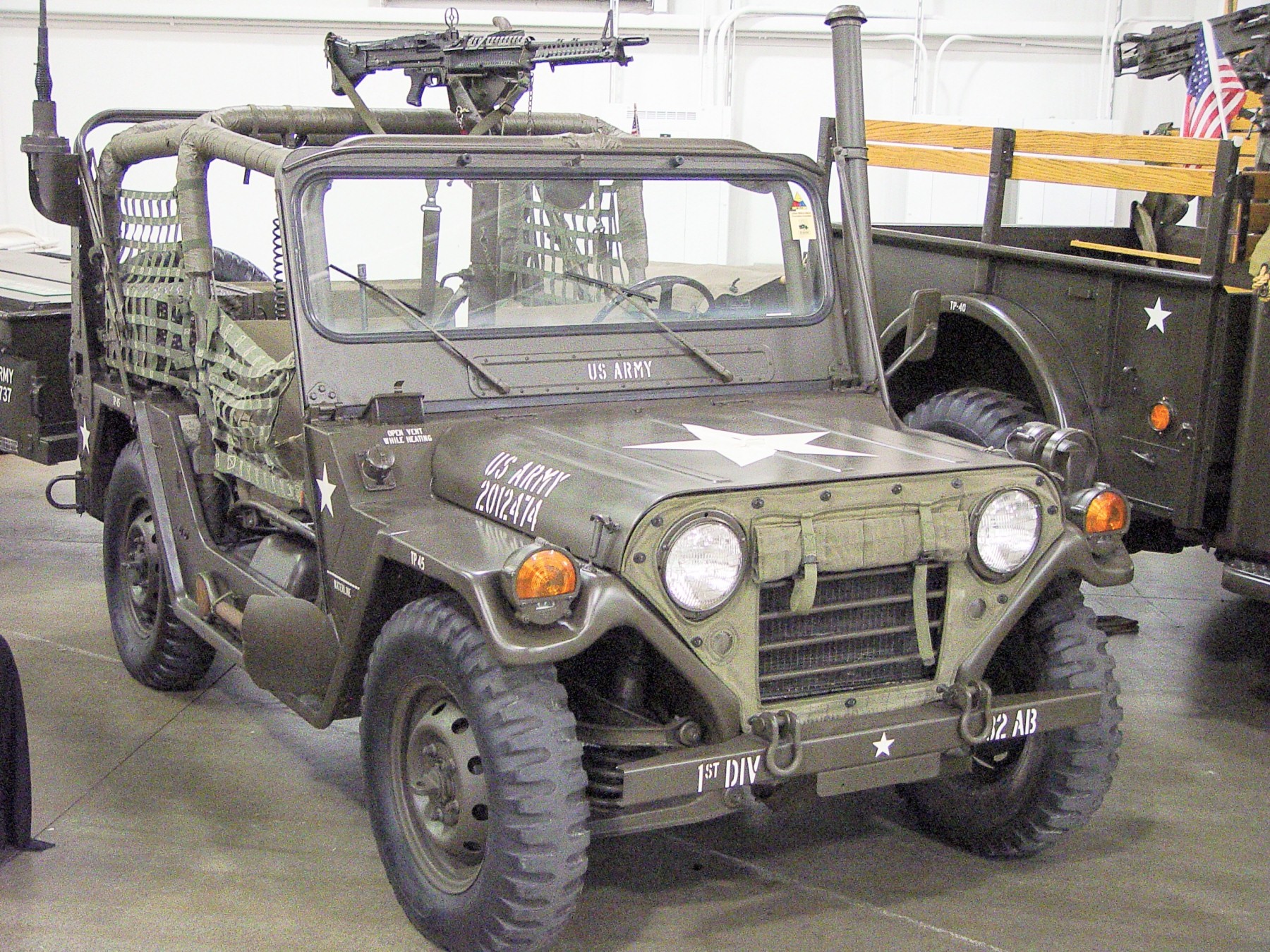
Il camion, Utility, 1/4-Ton, 4×4, M151 (M151) è stato il successore della guerra di Corea M38 e M38A1 jeep Light Utility Vehicles. Comunemente indicato come una "jeep" o "quarter-ton", è stato prodotto dal 1959 al 1982 e ha servito nella guerra del Vietnam. L'M151 aveva un design monoscocchio che lo rendeva più spazioso dei precedenti progetti jeep, e incorporava una sospensione indipendente con molle a bobina. Da allora è stato sostituito dal più grande AM General HMMWV nella maggior parte dei ruoli di utilità nell'uso in prima linea. Con alcune unità M151A2 ancora in servizio militare negli Stati Uniti nel 1999, la serie M151 ottenne un servizio più lungo di quello delle serie WW2 MB/GPW, M38 e M38A1 combinate.

fonte: M151 su Wikipedia

Continua a leggere

Views : 11054

Heinkel He 219

Heinkel He 219

PaeseGermania nazista
RuoloCombattente notturno
Primo voloIl 6 novembre 1942
Costruito300

Le Heinkel He 219 Uhu ("Eagle-Owl") fu un caccia notturno che prestò servizio con la Luftwaffe tedesca nelle ultime fasi della seconda guerra mondiale. Un design relativamente sofisticato, l'He 219 possedeva una varietà di innovazioni, tra cui il radar avanzato VHF-band Intercept Lichtenstein SN-2, utilizzato anche sui caccia notturni Ju 88G e Bf 110G. Fu anche il primo aereo militare operativo ad essere equipaggiato con sedili di espulsione e il primo aereo operativo dell'era tedesca della seconda guerra mondiale con carrello di atterraggio triciclo. Se l'Uhu fosse stato disponibile in quantità, avrebbe potuto avere un effetto significativo sull'offensiva strategica di bombardamento notturno della Royal Air Force; ma solo 294 di tutti i modelli furono costruiti alla fine della guerra e questi videro solo un servizio limitato. Ernst-Wilhelm Modrow fu il principale asso da caccia notturno sull'He 219. Modrow è stato accreditato con 33 da 34 vittorie aeree notturne sul tipo.

fonte: Heinkel He 219 su Wikipedia

Continua a leggere

Visualizzazioni : 5545

Dornier Do.335

Dornier Do.335

PaeseGermania nazista
RuoloCacciabombardardo
Primo voloIl 26 ottobre 1943
Costruito37

Le Dornier Do 335 Pfeil ("Arrow") era un caccia pesante della seconda guerra mondiale costruito dalla compagnia Dornier. La versione da addestramento a due posti era anche chiamata Ameisenbär ("formichiere"). Le prestazioni del Pfeil erano molto migliori di altri progetti bimotore grazie al suo esclusivo layout "push-pull" e alla resistenza aerodinamica molto più bassa dell'allineamento in linea dei due motori. Fu l'aereo a pistoni più veloce della Seconda Guerra Mondiale. La Luftwaffe era disperata di far entrare il progetto in uso operativo, ma i ritardi nelle consegne dei motori significarono che solo una manciata fu consegnata prima della fine della guerra.

fonte: Dornier Do.335 su Wikipedia

Continua a leggere

Visualizzazioni: 6462

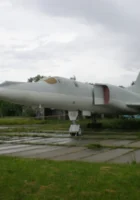
Tupolev Tu-22MO

Tupolev Tu-22M

PaeseUnione Sovietica
RuoloBombardiere strategico/Attacco marittimo
Primo volo30 agosto 1969
Costruito497

Le Tupolev Tu-22M (in russo: Туполев Ту-22М; Nome in codice NATO: Backfire) è un bombardiere supersonico, a spazzata variabile, strategico e marittimo a lungo raggio sviluppato dal Tupolev Design Bureau. Secondo alcune fonti, si credeva che il bombardiere fosse designato Tu-26 in una sola volta. Durante la Guerra Fredda, il Tu-22M fu utilizzato dall'aeronautica sovietica (VVS) in un ruolo di bombardamento strategico e dall'aviazione navale sovietica (Aviacija Vojenno-Morskogo Flota, AVMF) in un ruolo anti-nave marittimo a lungo raggio. [2] Un numero significativo rimane in servizio con l'aeronautica russa e a partire dal 2014 sono in uso più di 100 Tu-22M.

fonte: Tupolev Tu-22M su Wikipedia

Continua a leggere

Views : 4516

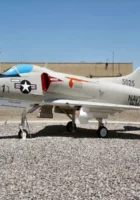
Douglas A-4F Skyhawk

Douglas A-4 Skyhawk

PaeseUsa
RuoloAereo d'attacco, caccia, aereo aggressore
Primo voloIl 22 giugno 1954
Costruito2960

Le Douglas A-4 Skyhawk is a single seat subsonic carrier-capable attack aircraft developed for the United States Navy and United States Marine Corps in the early 1950s. The delta winged, single turbojet engined Skyhawk was designed and produced by Douglas Aircraft Company, and later by McDonnell Douglas. It was originally designated A4D under the U.S. Navy’s pre-1962 designation system. The Skyhawk is a relatively lightweight aircraft with a maximum takeoff weight of 24,500 pounds (11,100 kg) and has a top speed of more than 670 miles per hour (1,080 km/h). The aircraft’s five hardpoints support a variety of missiles, bombs and other munitions. It was capable of carrying a bomb load equivalent to that of a World War II-era Boeing B-17 bomber, and could deliver nuclear weapons using a low-altitude bombing system and a “loft” delivery technique. The A-4 was originally powered by the Wright J65 turbojet engine; from the A-4E onwards, the Pratt & Whitney J52 was used. Skyhawks played key roles in the Vietnam War, the Yom Kippur War, and the Falklands War. Sixty years after the aircraft’s first flight in 1954, some of the 2,960 produced (through February 1979) remain in service with several air arms around the world.

fonte: Douglas A-4 Skyhawk su Wikipedia

Continua a leggere

Punti di vista: 18133

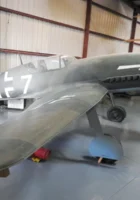
Heinkel He 100 D-1

Heinkel He 100

PaeseGermania nazista
RuoloCombattente
Primo voloIl 22 gennaio 1938
Costruito25

Le Heinkel He 100 was a German pre-World War II fighter aircraft design from Heinkel. Although it proved to be one of the fastest fighter aircraft in the world at the time of its development, the design was not ordered into series production. Approximately 19 prototypes and pre-production examples were built. None are known to have survived the war. The reason for the He 100 failing to reach production status is mostly unknown. Officially, the Luftwaffe rejected the He 100 to concentrate single-seat fighter development on the Messerschmitt Bf 109. Following the adoption of the Bf 109 and Messerschmitt Bf 110 as the Luftwaffe’s standard fighter types, the Ministry of Aviation (the Reichsluftfahrtministerium or RLM) announced a “rationalization” policy that placed fighter development at Messerschmitt and bomber development at Heinkel.

fonte: Heinkel He 100 su Wikipedia

Continua a leggere

Visualizzazioni: 5204

De Havilland Vampiro FB.6

vampiro di De Havilland

PaeseRegno unito
RuoloCaccia
Primo voloIl 20 settembre 1943
Costruito3268

Le vampiro di De Havilland Il è un caccia a reazione britannico sviluppato e prodotto dalla de Havilland Aircraft Company. I lavori sull'aereo iniziarono durante la seconda guerra mondiale come un aereo in gran parte sperimentale adatto al combattimento che sfruttava l'innovativa innovazione della propulsione a getto; fu rapidamente deciso di optare per un aereo monomotore a doppio braccio equipaggiato con il motore turbogetto Halford H.1 (in seguito de Havilland Goblin). Originariamente ordinata solo come aereo sperimentale, la decisione di produrre in massa l'aereo come intercettore per la Royal Air Force (RAF) fu finalizzata nel maggio 1944.

fonte: de Havilland Vampiro su Wikipedia

Continua a leggere

Views : 5066

Dassault Mystere IVA

Dassault Mystere

PaeseFrancia
RuoloCacciabombardardo
Primo voloIl 23 febbraio 1951
Costruito171

Le Dassault MD.452 Mystère is a 1950s French fighter-bomber. After the success of the Ouragan, Dassault was working on a more advanced machine based on it, which would take to the air in early 1951 as the MD.452 Mystère I. The first prototype Mystère I was essentially an Ouragan with a 30-degree swept wing and modified tail surfaces. Two further prototypes followed, powered by the Rolls-Royce Tay 250 centrifugal-flow turbojet, an improved version of the Rolls-Royce Nene, built under license by Hispano-Suiza, and rated at 28.0 kN (6,300 lbf) thrust.

fonte: Grumman F6F Hellcat su Wikipedia

Continua a leggere

Visualizzazioni : 2871