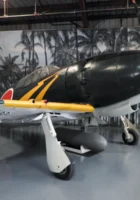
Mitsubishi J2M Raiden

Mitsubishi J2M Raiden

PaeseGiappone
RuoloCaccia
Prodotto1942–1945
Costruito671

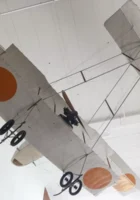
Le Mitsubishi J2M Raiden was a single-engined land-based fighter aircraft used by the Imperial Japanese Navy Air Service in World War II. The Allied reporting name was “Jack”. The J2M was designed by Jiro Horikoshi, creator of the A6M Zero, to meet the 14-Shi (14th year of the Showa reign, or 1939) official specification. It was to be a strictly local-defense interceptor, intended to counter the threat of high-altitude bomber raids, and thus relied on speed, climb performance, and armament at the expense of manoeuvrability. The J2M was a sleek, but stubby craft with its oversized Mitsubishi Kasei engine buried behind a long cowling, cooled by an intake fan and connected to the propeller with an extension shaft.

fonte: Mitsubishi J2M Raiden su Wikipedia

Continua a leggere

Punti di vista: 3286

SdKfz 142-1 StuG III

StuG III Ausf. G

PaeseGermania nazista
RuoloPistola d'assalto
ProdottoDicembre 1942 – Aprile 1945
Costruito~8423
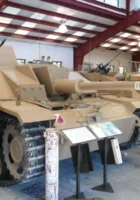
Il finale e di gran lunga il più comune dei Stug Serie. La sovrastruttura superiore è stata ampliata: le scatole saldate su entrambi i lati sono state abbandonate. Questo nuovo design della sovrastruttura ha aumentato la sua altezza a 2160 mm. La parete posteriore del compartimento di combattimento è stata raddrizzata e il ventilatore di ventilazione in cima alla sovrastruttura è stato spostato sul retro del compartimento di combattimento. Dal marzo 1943, il periscopio del conducente fu abbandonato. Nel febbraio 1943, Alkett fu affiancato da MIAG come secondo produttore. Dal maggio 1943, le piastre corazzate distanziate dello scafo laterale (Schürzen) furono montate su modelli G per una maggiore protezione dell'armatura, in particolare contro i fucili anticarro russi, ma furono utili anche contro le munizioni a carica cava. Le piastre laterali erano retro-montate su alcuni Ausf. Modelli F/8, in quanto dovevano essere montati su tutti gli StuG in prima linea e altri carri armati entro giugno 1943 in preparazione alla battaglia di Kursk. I supporti per lo Schürzen si dimostrarono inadeguati, poiché molti furono persi sul campo. Dal marzo 1944 fu introdotto un montaggio migliorato; di conseguenza, le gonne laterali sono viste più spesso con il modello tardivo Ausf G. Dal maggio 1943, piastre spesse 80 mm furono utilizzate per l'armatura frontale invece di due piastre di 50 mm + 30 mm. Tuttavia, esisteva un arretrato di StuG con un'armatura completa di 50 mm. Per questi, una piastra di armatura aggiuntiva di 30 mm doveva ancora essere saldata o imbullonata, fino all'ottobre 1943.
fonte: StuG III Ausf. G su Wikipedia
Continua a leggere

Views : 11708

Biplano Farman HF.20

Farman HF.20

PaeseFrancia
RuoloAerei da ricognizione
PeriodoPrima guerra mondiale

Le Farman HF.20 and its derivatives were a family of reconnaissance aircraft produced in France shortly before and during the First World War. It was a refined version of the Farman MF.11 “Shorthorn” that did away with the type’s distinctive landing skids, and incorporated design features from Henri Farman’s designs. It entered service with the French, Belgian and Serbian armies in 1913 (two aircraft conducted reconnaissance during the Siege of Shkodër in the First Balkan War and one crashed), and with the British RFC and RNAS shortly after the outbreak of war. The type was also licence-built in the UK by Airco and Grahame-White. The HF.20 was seriously underpowered, and a variety of engines were trialled in the hope of correcting this, none with much success. The problem was eventually solved only when an engine of twice the power of the original powerplant was fitted to the HF.27 variant, by which time the aircraft was already obsolete. Nevertheless, the performance of the HF.20 made it adequate for use on secondary fronts.

fonte: Farman HF.20 su Wikipedia

Continua a leggere

Punti di vista : 2106

Ford 5-AT-B Tri-Motor

Ford AT-5 Trimotore

Paese Usa
Ruolo Aerei da trasporto
Introduzione 1926
Costruito 199
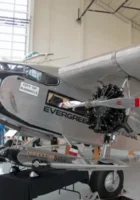
Le Ford Trimotore (chiamato anche "Tri-Motor", e soprannominato "The Tin Goose") è un aereo da trasporto trimotore americano. La produzione iniziò nel 1925 dalle aziende di Henry Ford e terminò il 7 giugno 1933. Sono stati realizzati un totale di 199 trimotori Ford. È stato progettato per il mercato dell'aviazione civile, ma ha anche visto il servizio con unità militari.
fonte: Ford AT-5 Tri-motore su Wikipedia
Continua a leggere

Punti di vista: 3428

SdKfz 135 Marder I

SdKfz 135 Marder I

PaeseGermania nazista
RuoloCacciacarri
In servizio1942–1944
Costruito170

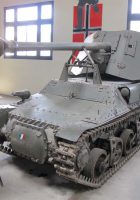
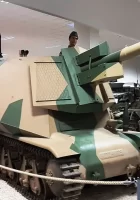
Le Marder I "Martora" (Sd.Kfz. 135) era un cacciacarri tedesco della seconda guerra mondiale, armato con il cannone anticarro da 75 mm. La maggior parte dei Marder Is furono costruiti sulla base del Tracteur Blindé 37L (Lorraine), un trattore d'artiglieria francese / veicolo corazzato per il trasporto di personale di cui i tedeschi avevano acquisito più di trecento dopo la caduta della Francia nel 1940.

fonte: SdKfz 135 Marder I su Wikipedia

Continua a leggere

Views : 6135

Sikorsky JRS-1

Sikorsky JRS-1

PaeseUsa
RuoloIdrovolante di linea
Introduzione1934
Costruito53
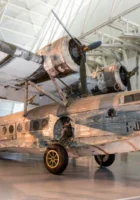
Le Sikorsky S-43 was a twin-engine amphibious aircraft manufactured in United States during the 1930s by the American firm Sikorsky Aircraft. The S-43 first flew in 1935, and was a smaller version of the Sikorsky S-42 “Clipper”. It accommodated between 18 and 25 passengers, with a separate two-crew forward cockpit. The S-43 was known as the “Baby Clipper” in airline service. On April 14, 1936, an S-43 with a 500 kilograms (1,100 lb) payload, piloted by Boris Sergievsky, set an altitude record for amphibious aircraft when it reached an altitude of 27,950 feet above Stamford, Connecticut. Also aboard was designer Igor Sikorsky. In total, approximately 53 S-43s were built, including examples of the twin-tailed S-43B
fonte: Sikorsky JRS-1 su Wikipedia
Continua a leggere

Visualizzazioni : 2224

Marder Hotchkiss

Marder Hotchkiss

PaeseGermania nazista
RuoloCacciacarri
PeriodoSeconda guerra mondiale

Le Marder I “Marten” (Sd.Kfz. 135) was a German World War II tank destroyer, armed with the 75 mm anti-tank gun. Most Marder Is were built on the base of the Tracteur Blindé 37L (Lorraine), a French artillery tractor/armoured personnel carrier of which the Germans had acquired more than three hundred after the Fall of France in 1940. Between July and August 1942, 170 Marder I’s were built on the Lorraine chassis. Later, several other French and Polish tanks were used as the conversion base for the Marder I, including the Hotchkiss H39 e FCM 36. Queste conversioni furono completate anche a Baustokommando Becker, anche se meno di queste furono costruite.

fonte: Marder Hotchkiss su Wikipedia

Continua a leggere

Visualizzazioni : 4674

Fairchild C-119G Boxcar volante

Fairchild C-119 Boxcar volante

PaeseUsa
RuoloAerei da trasporto militare
Prodotto1949–1955
Costruito1183

Le Fairchild C-119 Boxcar volante (Navy and Marine Corps designation R4Q) era un aereo da trasporto militare americano sviluppato dal Fairchild C-82 Packet della seconda guerra mondiale, progettato per trasportare merci, personale, pazienti di rifiuti e attrezzature meccanizzate, e per far cadere merci e truppe con il paracadute. Il primo C-119 fece il suo volo iniziale nel novembre 1947, e quando la produzione cessò nel 1955, erano stati costruiti più di 1.100 C-119. La sua capacità di trasporto merci e l'insolito design a doppio braccio gli valsero il soprannome di "Flying Boxcar".

fonte: Fairchild C-119G Flying Boxca su Wikipedia

Continua a leggere

Views : 5235

L-39ZO Albatross

Aero L-39 Albatros

PaeseCecoslovacchia
RuoloAerei da addestramento militare
Prodotto1971–1996
Costruito2900
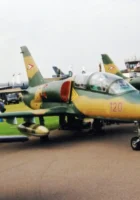
Le Aero L-39 Albatros is a high-performance jet trainer aircraft developed in Czechoslovakia by Aero Vodochody. It was designed during the 1960s as a replacement for the Aero L-29 Delfín as a principal training aircraft. The L-39 Albatros has the distinction of being the first of the second-generation jet trainers to be produced, as well as being the first trainer aircraft to be equipped with a turbofan powerplant. The type was exported to a wide range of countries as a military trainer. The L-39 Albatros later served as the basis for the updated L-59 Super Albatros, as well as the L-139 (prototype L-39 with Garrett TFE731 engine). A further development of the design, designated as the L-159 ALCA, entered production in 1997. To date, more than 2,800 L-39s have served with over 30 air forces around the world. The Albatros is the most widely used jet trainer in the world; in addition to performing basic and advanced pilot training, it has also flown combat missions in a light-attack role. The design never received a NATO reporting name.
fonte: Aero L-39 Albatros su Wikipedia
Continua a leggere

Views : 6303

Campana P-59A Airacomet

Campana P-59A Airacomet

Paese Usa
Ruolo Combattente
Primo volo 1 ottobre 1942
Costruito 66
Le Bell P-59 Airacomet era un aereo da caccia bimotore a reazione, il primo degli Stati Uniti, progettato e costruito dalla Bell Aircraft durante la seconda guerra mondiale. Le United States Army Air Forces non furono impressionate dalle sue prestazioni e annullarono il contratto quando meno della metà degli aerei ordinati erano stati prodotti. Sebbene nessun P-59 sia entrato in combattimento, il caccia ha aperto la strada a un'altra generazione di velivoli statunitensi a turbogetto, ed è stato il primo caccia turbogetto ad avere il suo motore a turbogetto e le gondole di aspirazione dell'aria integrate all'interno della fusoliera principale.
fonte: Bell P-59A Airacomet su Wikipedia
Continua a leggere

Visualizzazioni : 2993