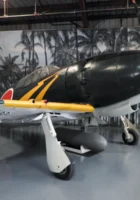
Mitsubishi J2M Raiden

Mitsubishi J2M Raiden

ZeměJaponsko
RoliStíhací letouny
Vyrobené1942–1945
Postaven671

Mitsubishi J2M Raiden was a single-engined land-based fighter aircraft used by the Imperial Japanese Navy Air Service in World War II. The Allied reporting name was “Jack”. The J2M was designed by Jiro Horikoshi, creator of the A6M Zero, to meet the 14-Shi (14th year of the Showa reign, or 1939) official specification. It was to be a strictly local-defense interceptor, intended to counter the threat of high-altitude bomber raids, and thus relied on speed, climb performance, and armament at the expense of manoeuvrability. The J2M was a sleek, but stubby craft with its oversized Mitsubishi Kasei engine buried behind a long cowling, cooled by an intake fan and connected to the propeller with an extension shaft.

Zdroj: Mitsubishi J2M Raiden na Wikipedii

Pokračovat ve čtení

Počet zobrazení: 3286

SdKfz 142-1 StuG III

StuG III Ausf. G

ZeměNacistické Německo
RoliÚtočná zbraň
Vyrobenéprosinec 1942 – duben 1945
Postaven~8423
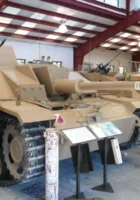
Konečné a zdaleka nejběžnější Stug Série. Horní nástavba byla rozšířena: svařované krabice na obou stranách byly opuštěny. Tato nová konstrukce nástavby zvýšila svou výšku na 2160 mm. Zadní stěna bojového prostoru se narovnala a větrací ventilátor na horní části nástavby byl přemístěn do zadní části bojového prostoru. Od března 1943 byl řidičův periskop opuštěn. V únoru 1943 se k Alkettu připojila společnost MIAG jako druhý výrobce. Od května 1943 byly boční pancéřové pláty (Schürzen) namontovány na modely G pro danou pancéřovou ochranu, zejména proti ruským protitankové pušky, ale byly také užitečné proti střelivu s dutým nábojem. Boční desky byly dodatečně připevněny k nějakému Ausfu. Modely F/8, protože měly být do června 1943 namontovány do všech předních linií StuG a dalších tanků v rámci přípravy na bitvu u Kurska. Montáž pro Schürzen se ukázala jako nedostatečně silná, protože mnoho z nich bylo ztraceno v terénu. Od března 1944 byla zavedena vylepšená montáž; v důsledku toho jsou boční sukně častěji vidět u pozdního modelu Ausf G. Od května 1943 byly pro čelní pancíř použity desky o tloušťce 80 mm namísto dvou desek o tloušťce 50 mm + 30 mm. Existovaly však nevyřízené stuGy s dokončeným pancířem 50 mm. Pro ně musela být až do října 1943 ještě přivařena nebo přišroubována o 30 mm přídavná pancéřová deska.
Zdroj: StuG III Ausf. G na Wikipedii
Pokračovat ve čtení

Views : 11707

Farman HF.20 dvouplošník

Farman HF.20

ZeměFrancie
RoliPrůzkumná letadla
ObdobíPrvní světová válka

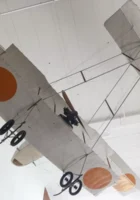
Farman HF.20 and its derivatives were a family of reconnaissance aircraft produced in France shortly before and during the First World War. It was a refined version of the Farman MF.11 “Shorthorn” that did away with the type’s distinctive landing skids, and incorporated design features from Henri Farman’s designs. It entered service with the French, Belgian and Serbian armies in 1913 (two aircraft conducted reconnaissance during the Siege of Shkodër in the First Balkan War and one crashed), and with the British RFC and RNAS shortly after the outbreak of war. The type was also licence-built in the UK by Airco and Grahame-White. The HF.20 was seriously underpowered, and a variety of engines were trialled in the hope of correcting this, none with much success. The problem was eventually solved only when an engine of twice the power of the original powerplant was fitted to the HF.27 variant, by which time the aircraft was already obsolete. Nevertheless, the performance of the HF.20 made it adequate for use on secondary fronts.

Zdroj: Farman HF.20 na Wikipedii

Pokračovat ve čtení

Zobrazení : 2104

Ford 5-AT-B Tri-Motor

Ford AT-5 Třímotorový

Země SPOJENÉ STÁTY
Roli Dopravní letadla
Úvod 1926
Postaven 199
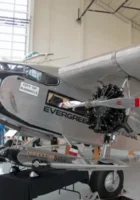
Ford Trimotor (také nazývaný "Tri-Motor" a přezdívaný "Cínová husa") je americký třímotorový dopravní letoun. Výroba byla zahájena v roce 1925 společnostmi Henryho Forda a ukončena 7. června 1933. Celkem bylo vyrobeno 199 Ford Trimotors. Byl navržen pro trh civilního letectví, ale také byl obsluhován vojenskými jednotkami.
Zdroj: Ford AT-5 Tri-motor na Wikipedii
Pokračovat ve čtení

Zobrazení: 3428

SdKfz 135 Marder I

SdKfz 135 Marder I

ZeměNacistické Německo
RoliStíhač tanků
V provozu1942–1944
Postaven170

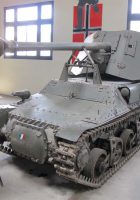
Marder I. "Kuna" (Sd.Kfz. 135) byl německý stíhač tanků z druhé světové války vyzbrojený 75mm protitankovým dělem. Většina marderů byla postavena na základně Tracteur Blindé 37L (Lorraine), francouzského dělostřeleckého traktoru / obrněného osobního nosiče, jehož více než tři sta získali Němci po pádu Francie v roce 1940.

Zdroj: SdKfz 135 Marder I na Wikipedii

Pokračovat ve čtení

Zobrazení : 6109

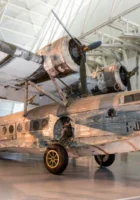
Sikorsky JRS-1

Sikorsky JRS-1

ZeměSPOJENÉ STÁTY
RoliDopravní letadlo létajících lodí
Úvod1934
Postaven53
Sikorsky S-43 was a twin-engine amphibious aircraft manufactured in United States during the 1930s by the American firm Sikorsky Aircraft. The S-43 first flew in 1935, and was a smaller version of the Sikorsky S-42 “Clipper”. It accommodated between 18 and 25 passengers, with a separate two-crew forward cockpit. The S-43 was known as the “Baby Clipper” in airline service. On April 14, 1936, an S-43 with a 500 kilograms (1,100 lb) payload, piloted by Boris Sergievsky, set an altitude record for amphibious aircraft when it reached an altitude of 27,950 feet above Stamford, Connecticut. Also aboard was designer Igor Sikorsky. In total, approximately 53 S-43s were built, including examples of the twin-tailed S-43B
Zdroj: Sikorsky JRS-1 na Wikipedii
Pokračovat ve čtení

Zobrazení : 2223

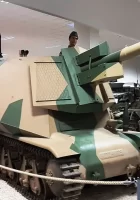
Marder Hotchkiss

Marder Hotchkiss

ZeměNacistické Německo
RoliStíhač tanků
Období2. světová válka

Marder I. “Marten” (Sd.Kfz. 135) was a German World War II tank destroyer, armed with the 75 mm anti-tank gun. Most Marder Is were built on the base of the Tracteur Blindé 37L (Lorraine), a French artillery tractor/armoured personnel carrier of which the Germans had acquired more than three hundred after the Fall of France in 1940. Between July and August 1942, 170 Marder I’s were built on the Lorraine chassis. Later, several other French and Polish tanks were used as the conversion base for the Marder I, including the Hotchkiss H39 a FCM 36. Tyto přestavby byly také dokončeny v Baustokommando Becker, i když méně z nich bylo postaveno.

Zdroj: Marder Hotchkiss na Wikipedii

Pokračovat ve čtení

Počet zobrazení: 4650

Fairchild C-119G Flying Boxcar

Fairchild C-119 Flying Boxcar

ZeměSPOJENÉ STÁTY
RoliVojenská dopravní letadla
Vyrobené1949–1955
Postaven1183

Fairchild C-119 Flying Boxcar (Navy and Marine Corps designation R4Q) was an American military transport aircraft developed from the World War II-era Fairchild C-82 Packet, designed to carry cargo, personnel, litter patients, and mechanized equipment, and to drop cargo and troops by parachute. The first C-119 made its initial flight in November 1947, and by the time production ceased in 1955, more than 1,100 C-119s had been built. Its cargo-hauling ability and unusual twin-boom design earned it the nickname “Flying Boxcar”.

Zdroj: Fairchild C-119G Flying Boxca on Wikipedia

Pokračovat ve čtení

Počet zobrazení : 5211

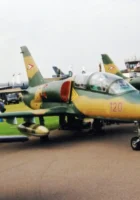
L-39ZO Albatross

Aero L-39 Albatros

ZeměČeskoslovensku
RoliVojenské trenažérové letouny
Vyrobené1971–1996
Postaven2900
Aero L-39 Albatros is a high-performance jet trainer aircraft developed in Czechoslovakia by Aero Vodochody. It was designed during the 1960s as a replacement for the Aero L-29 Delfín as a principal training aircraft. The L-39 Albatros has the distinction of being the first of the second-generation jet trainers to be produced, as well as being the first trainer aircraft to be equipped with a turbofan powerplant. The type was exported to a wide range of countries as a military trainer. The L-39 Albatros later served as the basis for the updated L-59 Super Albatros, as well as the L-139 (prototype L-39 with Garrett TFE731 engine). A further development of the design, designated as the L-159 ALCA, entered production in 1997. To date, more than 2,800 L-39s have served with over 30 air forces around the world. The Albatros is the most widely used jet trainer in the world; in addition to performing basic and advanced pilot training, it has also flown combat missions in a light-attack role. The design never received a NATO reporting name.
Zdroj: Aero L-39 Albatros na Wikipedii
Pokračovat ve čtení

Views : 6302

Bell P-59A Airacomet

Bell P-59A Airacomet

Země SPOJENÉ STÁTY
Roli Bojovník
První let 1. října 1942
Postaven 66
Bell P-59 Airacomet byl dvoumotorový stíhací letoun, první ze Spojených států, navržený a postavený společností Bell Aircraft během druhé světové války. Letectvo armády Spojených států nebylo ohromeno jeho výkonem a zrušilo smlouvu, když byla vyrobena méně než polovina objednaných letadel. Ačkoliv do boje nevstoupil žádný P-59, stíhačka vydláždila cestu pro další konstrukční generaci amerických proudových letadel a byla prvním proudovým stíhacím letounem, který měl svůj proudový motor a vstupní gondoly integrované do hlavního trupu.
Zdroj: Bell P-59A Airacomet na Wikipedii
Pokračovat ve čtení

Počet zobrazení: 2991