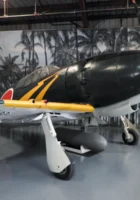
Mitsubishi J2M Raiden

Mitsubishi J2M Raiden

PaísJapón
PapelAviones de combate
Producido1942–1945
Construido671

el Mitsubishi J2M Raiden was a single-engined land-based fighter aircraft used by the Imperial Japanese Navy Air Service in World War II. The Allied reporting name was “Jack”. The J2M was designed by Jiro Horikoshi, creator of the A6M Zero, to meet the 14-Shi (14th year of the Showa reign, or 1939) official specification. It was to be a strictly local-defense interceptor, intended to counter the threat of high-altitude bomber raids, and thus relied on speed, climb performance, and armament at the expense of manoeuvrability. The J2M was a sleek, but stubby craft with its oversized Mitsubishi Kasei engine buried behind a long cowling, cooled by an intake fan and connected to the propeller with an extension shaft.

Fuente: Mitsubishi J2M Raiden en Wikipedia

Continuar leyendo

Views : 3286

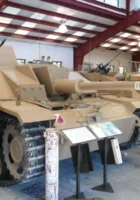
SdKfz 142-1 StuG III

StuG III Ausf. G

PaísAlemania nazi
PapelArma de asalto
ProducidoDiciembre de 1942 – Abril de 1945
Construido~8423
La final y, con diferencia, la más común de la Stug serie. Se amplió la superestructura superior: las cajas soldadas a ambos lados fueron abandonadas. Este nuevo diseño de superestructura aumentó su altura a 2160 mm. La pared trasera del compartimiento de combate se enderezó, y el ventilador de ventilación en la parte superior de la superestructura fue reubicado en la parte posterior del compartimiento de combate. Desde marzo de 1943, el periscopio del conductor fue abandonado. En febrero de 1943, Alkett se unió a MIAG como segundo fabricante. A partir de mayo de 1943, las placas de blindaje espaciadas del casco lateral (Schürzen) fueron instaladas en modelos G para una protección de blindaje adicional, particularmente contra rifles antitanque rusos, pero también fueron útiles contra municiones de carga hueca. Las placas laterales estaban retro-ajustadas a algunos Ausf. Modelos F/8, ya que iban a ser instalados en todos los StuGs de primera línea y otros tanques para junio de 1943 en preparación para la batalla de Kursk. Los montajes para el Schürzen resultaron insuficientemente fuertes, ya que muchos se perdieron en el campo. A partir de marzo de 1944, se introdujo un montaje mejorado; como resultado, las faldas laterales se ven más a menudo con la fallecida modelo Ausf G. Desde mayo de 1943, se utilizaron placas de 80 mm de espesor para blindaje frontal en lugar de dos placas de 50 mm + 30 mm. Sin embargo, existía un atraso de StuGs con blindaje completo de 50 mm. Para ellos, una placa de blindaje adicional de 30 mm todavía tenía que ser soldada o atornillada, hasta octubre de 1943.
Fuente: StuG III Ausf. G en Wikipedia
Continuar leyendo

Views : 11708

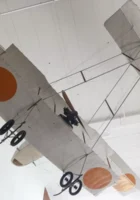
Biplano Farman HF.20

Farman HF.20

PaísFrancia
PapelAviones de reconocimiento
PeríodoPrimera Guerra Mundial

el Farman HF.20 and its derivatives were a family of reconnaissance aircraft produced in France shortly before and during the First World War. It was a refined version of the Farman MF.11 “Shorthorn” that did away with the type’s distinctive landing skids, and incorporated design features from Henri Farman’s designs. It entered service with the French, Belgian and Serbian armies in 1913 (two aircraft conducted reconnaissance during the Siege of Shkodër in the First Balkan War and one crashed), and with the British RFC and RNAS shortly after the outbreak of war. The type was also licence-built in the UK by Airco and Grahame-White. The HF.20 was seriously underpowered, and a variety of engines were trialled in the hope of correcting this, none with much success. The problem was eventually solved only when an engine of twice the power of the original powerplant was fitted to the HF.27 variant, by which time the aircraft was already obsolete. Nevertheless, the performance of the HF.20 made it adequate for use on secondary fronts.

Fuente: Farman HF.20 en Wikipedia

Continuar leyendo

Vistas : 2107

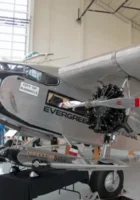
Ford 5-AT-B Tri-Motor

Ford AT-5 Trimotor

País E.e.u.u
Papel Aviones de transporte
Introducción 1926
Construido 199
el Ford Trimotor (también llamado "Tri-Motor", y apodado "The Tin Goose") es un avión de transporte trimotor estadounidense. La producción comenzó en 1925 por las compañías de Henry Ford y terminó el 7 de junio de 1933. Se hicieron un total de 199 Ford Trimotores. Fue diseñado para el mercado de la aviación civil, pero también vio servicio con unidades militares.
Fuente: Ford AT-5 Tri-motor en Wikipedia
Continuar leyendo

Vistas : 3428

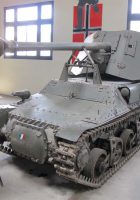
SdKfz 135 Marder I

SdKfz 135 Marder I

PaísAlemania nazi
PapelDestructor de tanques
En servicio1942–1944
Construido170

el Marder I "Marten" (Sd.Kfz. 135) era un cazatanques alemán de la Segunda Guerra Mundial, armado con el cañón antitanque de 75 mm. La mayoría de marder is fueron construidos en la base del Tracteur Blindé 37L (Lorraine), un tractor de artillería francés / transporte de personal blindado del que los alemanes habían adquirido más de trescientos después de la caída de Francia en 1940.

Fuente: SdKfz 135 Marder I en Wikipedia

Continuar leyendo

Vistas : 6135

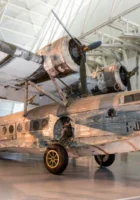
Sikorsky JRS-1

Sikorsky JRS-1

PaísE.e.u.u
PapelHidroavión de pasajeros
Introducción1934
Construido53
el Sikorsky S-43 was a twin-engine amphibious aircraft manufactured in United States during the 1930s by the American firm Sikorsky Aircraft. The S-43 first flew in 1935, and was a smaller version of the Sikorsky S-42 “Clipper”. It accommodated between 18 and 25 passengers, with a separate two-crew forward cockpit. The S-43 was known as the “Baby Clipper” in airline service. On April 14, 1936, an S-43 with a 500 kilograms (1,100 lb) payload, piloted by Boris Sergievsky, set an altitude record for amphibious aircraft when it reached an altitude of 27,950 feet above Stamford, Connecticut. Also aboard was designer Igor Sikorsky. In total, approximately 53 S-43s were built, including examples of the twin-tailed S-43B
Fuente: Sikorsky JRS-1 en Wikipedia
Continuar leyendo

Vistas : 2224

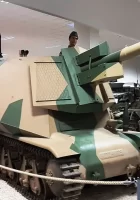
Marder Hotchkiss

Marder Hotchkiss

PaísAlemania nazi
PapelDestructor de tanques
PeríodoSegunda Guerra Mundial

el Marder I “Marten” (Sd.Kfz. 135) was a German World War II tank destroyer, armed with the 75 mm anti-tank gun. Most Marder Is were built on the base of the Tracteur Blindé 37L (Lorraine), a French artillery tractor/armoured personnel carrier of which the Germans had acquired more than three hundred after the Fall of France in 1940. Between July and August 1942, 170 Marder I’s were built on the Lorraine chassis. Later, several other French and Polish tanks were used as the conversion base for the Marder I, including the Hotchkiss H39 y FCM 36. Estas conversiones también se completaron en Baustokommando Becker, aunque se construyeron menos de ellas.

Fuente: Marder Hotchkiss en Wikipedia

Continuar leyendo

Vistas : 4674

Fairchild C-119G Flying Boxcar

Fairchild C-119 Flying Boxcar

PaísE.e.u.u
PapelAviones de transporte militar
Producido1949–1955
Construido1183

el Fairchild C-119 Flying Boxcar (designación R4Q de la Armada y el Cuerpo de Marines) fue un avión de transporte militar estadounidense desarrollado a partir del Fairchild C-82 Packet de la Segunda Guerra Mundial, diseñado para transportar carga, personal, pacientes de basura y equipo mecanizado, y para lanzar carga y tropas en paracaídas. El primer C-119 hizo su vuelo inicial en noviembre de 1947, y para cuando la producción cesó en 1955, se habían construido más de 1.100 C-119. Su capacidad de transporte de carga y su inusual diseño de doble pluma le valieron el apodo de "Flying Boxcar".

Fuente: Fairchild C-119G Flying Boxca en Wikipedia

Continuar leyendo

Vistas : 5235

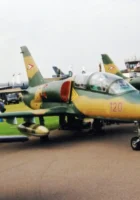
L-39ZO Albatross

Aero L-39 Albatros

PaísChecoslovaquia
PapelAviones de entrenamiento militar
Producido1971–1996
Construido2900
el Aero L-39 Albatros is a high-performance jet trainer aircraft developed in Czechoslovakia by Aero Vodochody. It was designed during the 1960s as a replacement for the Aero L-29 Delfín as a principal training aircraft. The L-39 Albatros has the distinction of being the first of the second-generation jet trainers to be produced, as well as being the first trainer aircraft to be equipped with a turbofan powerplant. The type was exported to a wide range of countries as a military trainer. The L-39 Albatros later served as the basis for the updated L-59 Super Albatros, as well as the L-139 (prototype L-39 with Garrett TFE731 engine). A further development of the design, designated as the L-159 ALCA, entered production in 1997. To date, more than 2,800 L-39s have served with over 30 air forces around the world. The Albatros is the most widely used jet trainer in the world; in addition to performing basic and advanced pilot training, it has also flown combat missions in a light-attack role. The design never received a NATO reporting name.
Fuente: Aero L-39 Albatros en Wikipedia
Continuar leyendo

Vistas : 6303

Bell P-59A Airacomet

Bell P-59A Airacomet

País E.e.u.u
Papel Combatiente
Primer vuelo 1 de octubre de 1942
Construido 66
el Bell P-59 Airacomet fue un avión de combate bimotor, el primero de los Estados Unidos, diseñado y construido por Bell Aircraft durante la Segunda Guerra Mundial. Las Fuerzas Aéreas del Ejército de los Estados Unidos no quedaron impresionadas por su desempeño y cancelaron el contrato cuando se había producido menos de la mitad de los aviones ordenados. Aunque ningún P-59 entró en combate, el caza allanó el camino para otra generación de diseño de aviones propulsados por turborreactores estadounidenses, y fue el primer caza turborreactor en tener su motor turborreactor y góndolas de entrada de aire integradas dentro del fuselaje principal.
Fuente: Bell P-59A Airacomet en Wikipedia
Continuar leyendo

Vistas : 2993