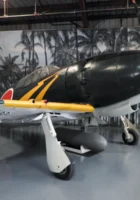
Mitsubishi J2M Raiden

Mitsubishi J2M Raiden

OrszágJapán
SzerepetVadászrepülőgép
Termelt1942–1945
Beépített671

A Mitsubishi J2M Raiden was a single-engined land-based fighter aircraft used by the Imperial Japanese Navy Air Service in World War II. The Allied reporting name was “Jack”. The J2M was designed by Jiro Horikoshi, creator of the A6M Zero, to meet the 14-Shi (14th year of the Showa reign, or 1939) official specification. It was to be a strictly local-defense interceptor, intended to counter the threat of high-altitude bomber raids, and thus relied on speed, climb performance, and armament at the expense of manoeuvrability. The J2M was a sleek, but stubby craft with its oversized Mitsubishi Kasei engine buried behind a long cowling, cooled by an intake fan and connected to the propeller with an extension shaft.

Forrás: Mitsubishi J2M Raiden on Wikipedia

Olvasd tovább

Views : 3312

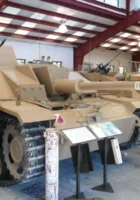
SdKfz 142-1 StuG III

StuG III Ausf. G

OrszágNáci Németország
SzerepetTámadópisztoly
TermeltDecember 1942 – April 1945
Beépített~8423
The final and by far the most common of the Stug sorozat. A felső felépítményt kiszélesítették: mindkét oldalon hegesztett dobozokat hagytak el. Ez az új felépítmény 2160 mm-re növelte magasságát. A harci rekesz hátsó falát kiegyenesítették, és a felépítmény tetején lévő szellőzőventilátort áthelyezték a harci rekesz hátuljára. 1943 márciusától elhagyták a vezető periszkópját. 1943 februárjában az Alketthez csatlakozott a MIAG, mint második gyártó. 1943 májusától a G modellekre oldalhajótesttel elhelyezett páncéllemezeket (Schürzen) szereltek fel a nagyobb páncélvédelem érdekében, különösen az orosz páncéltörő puskák ellen, de hasznosak voltak üreges töltetű lőszerek ellen is. Az oldallemezeket utólag szerelték fel néhány Ausf-re. F/8 modellek, mivel 1943 júniusáig minden frontvonalbeli StuG-ra és más harckocsira fel kellett szerelni őket a kurszki csatára való felkészülés során. A Schürzen felszerelése nem bizonyult elég erősnek, mivel sokan elvesztek a terepen. 1944 márciusától továbbfejlesztett rögzítést vezettek be; ennek eredményeként az oldalsó szoknyák gyakrabban láthatók a késői Ausf G modellnél. 1943 májusától 80 mm vastag lemezeket használtak a frontpáncélzathoz a két 50 mm + 30 mm-es lemez helyett. Azonban a befejezett 50 mm-es páncélzattal rendelkező StuG-k hátraléka fennállt. Ezek esetében 1943 októberéig még egy 30 mm-es kiegészítő páncéllemezt kellett hegeszteni vagy csavarozni.
Forrás: StuG III Ausf. G on Wikipedia
Olvasd tovább

Views : 11716

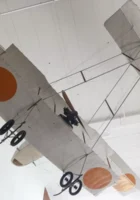
Farman HF.20 kétfedelű repülőgép

Farman HF.20

OrszágFranciaország
SzerepetFelderítő repülőgépek
IdőszakElső világháború

A Farman HF.20 and its derivatives were a family of reconnaissance aircraft produced in France shortly before and during the First World War. It was a refined version of the Farman MF.11 “Shorthorn” that did away with the type’s distinctive landing skids, and incorporated design features from Henri Farman’s designs. It entered service with the French, Belgian and Serbian armies in 1913 (two aircraft conducted reconnaissance during the Siege of Shkodër in the First Balkan War and one crashed), and with the British RFC and RNAS shortly after the outbreak of war. The type was also licence-built in the UK by Airco and Grahame-White. The HF.20 was seriously underpowered, and a variety of engines were trialled in the hope of correcting this, none with much success. The problem was eventually solved only when an engine of twice the power of the original powerplant was fitted to the HF.27 variant, by which time the aircraft was already obsolete. Nevertheless, the performance of the HF.20 made it adequate for use on secondary fronts.

Forrás: Farman HF.20 a Wikipédián

Olvasd tovább

Views : 2133

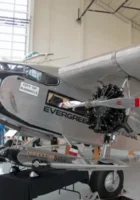
Ford 5-AT-B Tri-Motor

Ford AT-5 Hárommotoros

Ország Usa
Szerepet Szállító repülőgépek
Bevezetés 1926
Beépített 199
A Ford Trimotor (also called the “Tri-Motor”, and nicknamed “The Tin Goose”) is an American three-engined transport aircraft. Production started in 1925 by the companies of Henry Ford and ended on June 7, 1933. A total of 199 Ford Trimotors were made. It was designed for the civil aviation market, but also saw service with military units.
Forrás: Ford AT-5 Hárommotoros a Wikipédián
Olvasd tovább

Nézetek : 3430

SdKfz 135 Márt. I

SdKfz 135 Márt. I

OrszágNáci Németország
SzerepetTartályromboló
Szolgálatban1942–1944
Beépített170

A I. Márder "Marten" (Sd.Kfz. 135) egy német második világháborús tankromboló volt, 75 mm-es páncéltörő löveggel felfegyverkezve. A Legtöbb Marder Is épült az alapja a Tracteur Blindé 37L (Lorraine), egy francia tüzérségi traktor / páncélozott személyszállító, amely a németek szerzett több mint háromszáz után a bukása Franciaország 1940-ben.

Forrás: SdKfz 135 Márt. I a Wikipédián

Olvasd tovább

Views : 6136

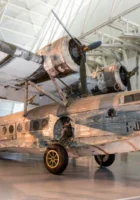
Sikorsky JRS-1

Sikorsky JRS-1

OrszágUsa
SzerepetRepülőcsónak utasszállító repülőgép
Bevezetés1934
Beépített53
A Sikorsky SZ–43 was a twin-engine amphibious aircraft manufactured in United States during the 1930s by the American firm Sikorsky Aircraft. The S-43 first flew in 1935, and was a smaller version of the Sikorsky S-42 “Clipper”. It accommodated between 18 and 25 passengers, with a separate two-crew forward cockpit. The S-43 was known as the “Baby Clipper” in airline service. On April 14, 1936, an S-43 with a 500 kilograms (1,100 lb) payload, piloted by Boris Sergievsky, set an altitude record for amphibious aircraft when it reached an altitude of 27,950 feet above Stamford, Connecticut. Also aboard was designer Igor Sikorsky. In total, approximately 53 S-43s were built, including examples of the twin-tailed S-43B
Forrás: Sikorsky JRS-1 on Wikipedia
Olvasd tovább

Megtekintették : 2226

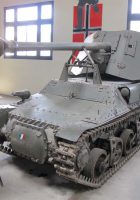
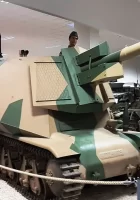
Marder Hotchkiss

Marder Hotchkiss

OrszágNáci Németország
SzerepetTartályromboló
IdőszakA második világháború

A I. Márder “Marten” (Sd.Kfz. 135) was a German World War II tank destroyer, armed with the 75 mm anti-tank gun. Most Marder Is were built on the base of the Tracteur Blindé 37L (Lorraine), a French artillery tractor/armoured personnel carrier of which the Germans had acquired more than three hundred after the Fall of France in 1940. Between July and August 1942, 170 Marder I’s were built on the Lorraine chassis. Later, several other French and Polish tanks were used as the conversion base for the Marder I, including the Hotchkiss H39 és FCM 36. Ezek az átalakítások a Baustokommando Beckernél is befejeződtek, bár ezek közül kevesebb épült.

Forrás: Marder Hotchkiss a Wikipédián

Olvasd tovább

Megtekintések: 4676

Fairchild C-119G Flying Boxcar

Fairchild C-119 repülő dobozkocsi

OrszágUsa
SzerepetKatonai szállító repülőgépek
Termelt1949–1955
Beépített1183

A Fairchild C-119 repülő dobozkocsi (Navy and Marine Corps designation R4Q) was an American military transport aircraft developed from the World War II-era Fairchild C-82 Packet, designed to carry cargo, personnel, litter patients, and mechanized equipment, and to drop cargo and troops by parachute. The first C-119 made its initial flight in November 1947, and by the time production ceased in 1955, more than 1,100 C-119s had been built. Its cargo-hauling ability and unusual twin-boom design earned it the nickname “Flying Boxcar”.

Forrás: Fairchild C-119G Flying Boxca on Wikipedia

Olvasd tovább

Views : 5238

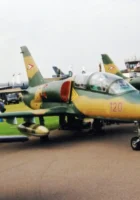
L-39ZO Albatross

Aero L-39 Albatrosz

OrszágCsehszlovákia
SzerepetKatonai tréner repülőgép
Termelt1971–1996
Beépített2900
A Aero L-39 Albatrosz is a high-performance jet trainer aircraft developed in Czechoslovakia by Aero Vodochody. It was designed during the 1960s as a replacement for the Aero L-29 Delfín as a principal training aircraft. The L-39 Albatros has the distinction of being the first of the second-generation jet trainers to be produced, as well as being the first trainer aircraft to be equipped with a turbofan powerplant. The type was exported to a wide range of countries as a military trainer. The L-39 Albatros later served as the basis for the updated L-59 Super Albatros, as well as the L-139 (prototype L-39 with Garrett TFE731 engine). A further development of the design, designated as the L-159 ALCA, entered production in 1997. To date, more than 2,800 L-39s have served with over 30 air forces around the world. The Albatros is the most widely used jet trainer in the world; in addition to performing basic and advanced pilot training, it has also flown combat missions in a light-attack role. The design never received a NATO reporting name.
Forrás: Aero L-39 Albatros leírása a Wikipédiában
Olvasd tovább

Views : 6309

Harang P-59A Airacomet

Harang P-59A Airacomet

Ország Usa
Szerepet Harcos
Első repülés 1 October 1942
Beépített 66
A Bell P-59 Airacomet was a twin jet-engined fighter aircraft, the first of the United States, designed and built by Bell Aircraft during World War II. The United States Army Air Forces were not impressed by its performance and cancelled the contract when fewer than half of the aircraft ordered had been produced. Although no P-59s entered combat, the fighter paved the way for another design generation of U.S. turbojet-powered aircraft, and was the first turbojet fighter to have its turbojet engine and air inlet nacelles integrated within the main fuselage.
Forrás: Bell P-59A Airacomet on Wikipedia
Olvasd tovább

Megtekintették : 3017