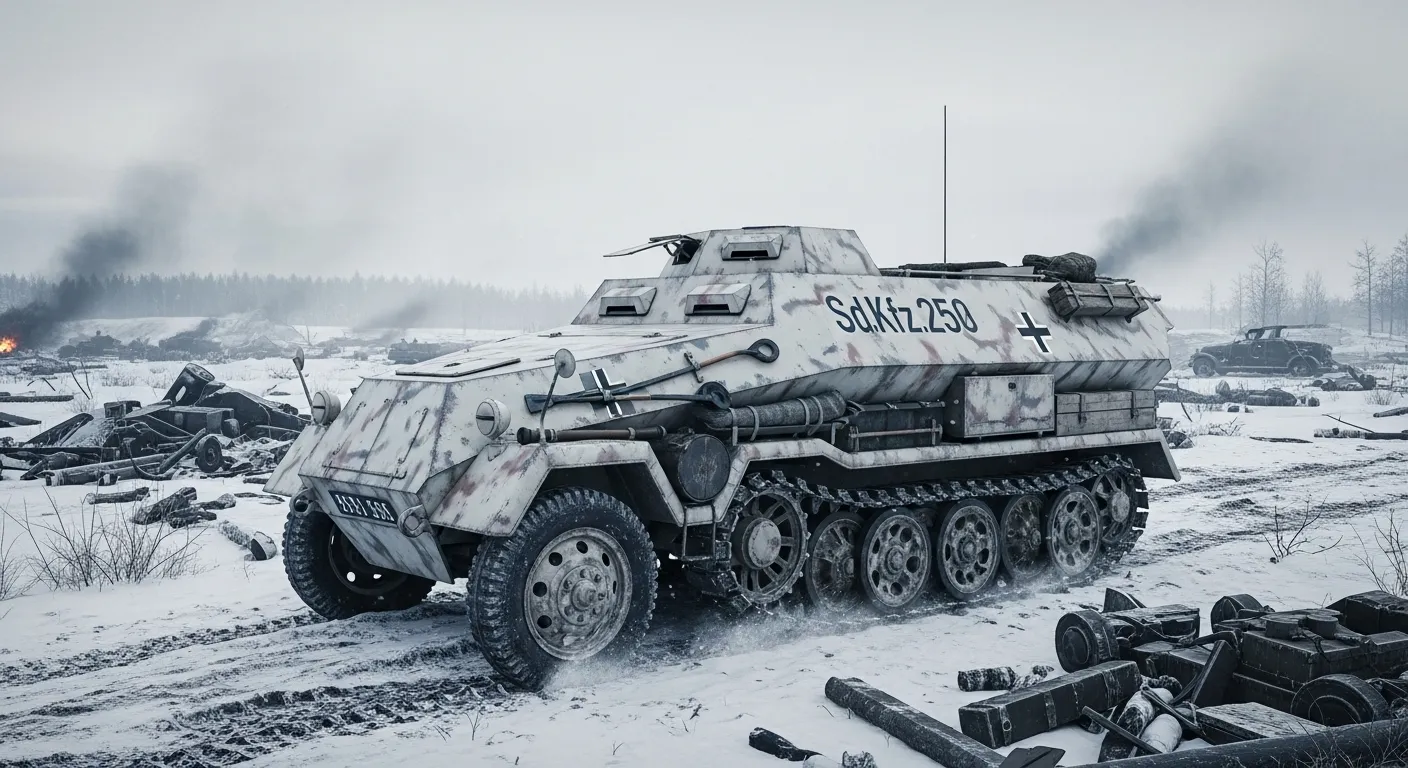
Sd.Kfz. 250 | |
|---|---|
| Country | Germany |
| Type | Half-track armoured personnel carrier |
| In Service | 1941–1945 |
| Built | 6600+ |
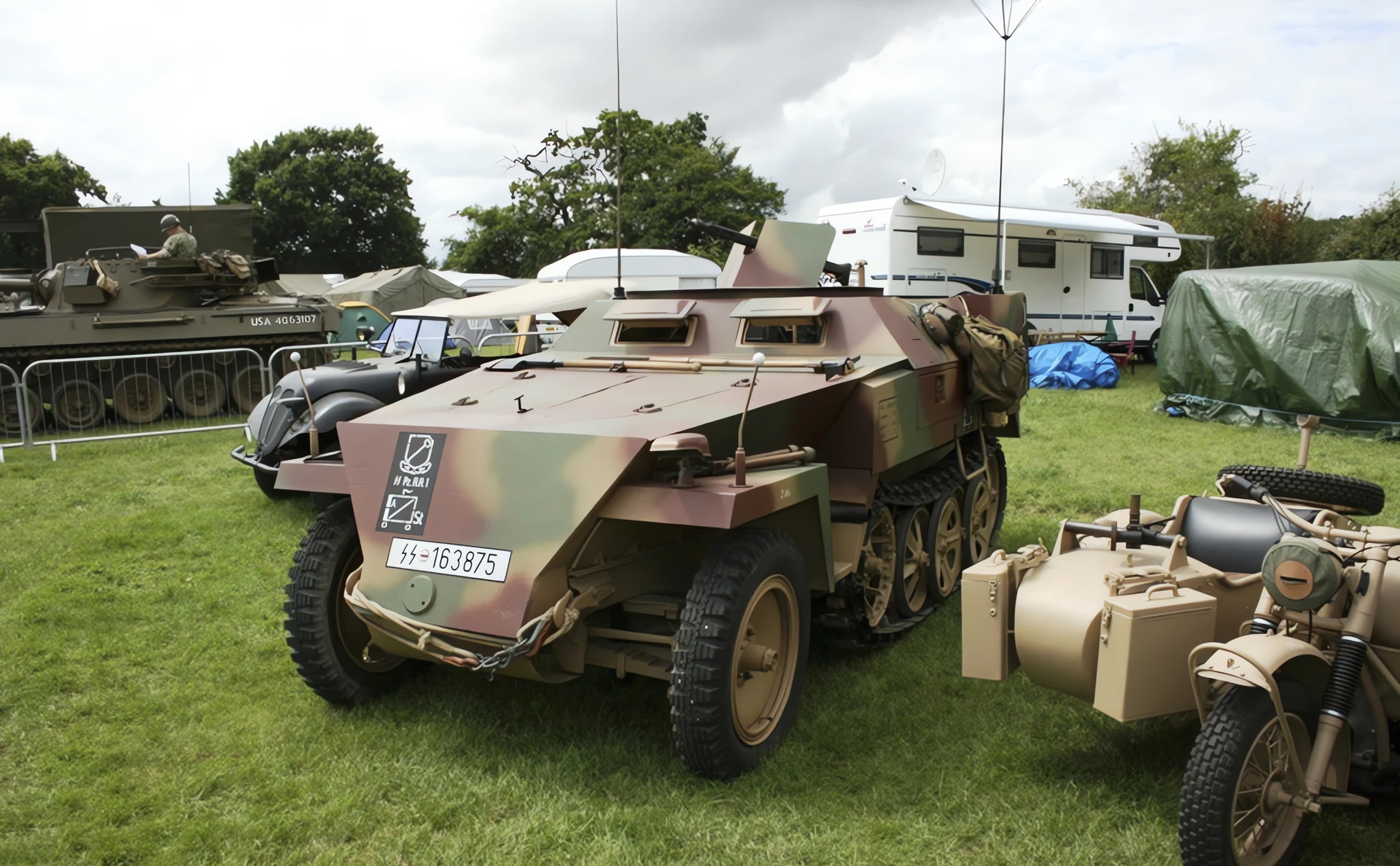
The Sd.Kfz. 250 (German: Sonderkraftfahrzeug 250; ‘special motor vehicle’) was a light armoured half-track, very similar in appearance to the larger Hanomag-designed Sd.Kfz. 251, and built by the DEMAG firm, for use by Nazi Germany in World War II. Most variants were open-topped and had a single access door in the rear. The Sd. Kfz 250 was adopted in 1939 to supplement the standard half-track. Production delays meant that the first vehicle did not appear until mid-1941.
Source: Sd.Kfz. 250 on Wikipedia
| Sd.Kfz. 250 – Walk Around | |
|---|---|
| Photographer | Unknow |
| Localisation | Unknow |
| Photos | 40 |
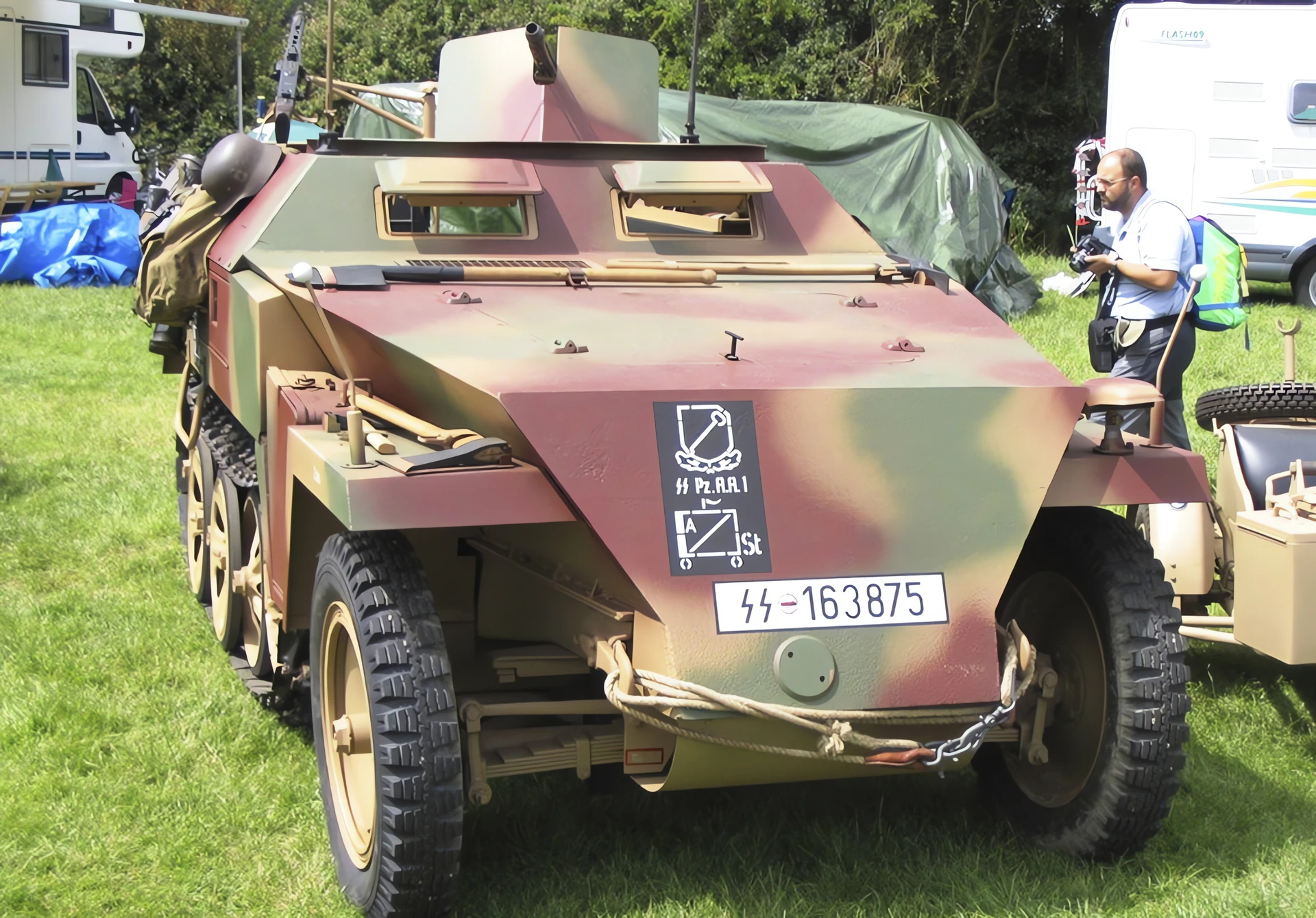
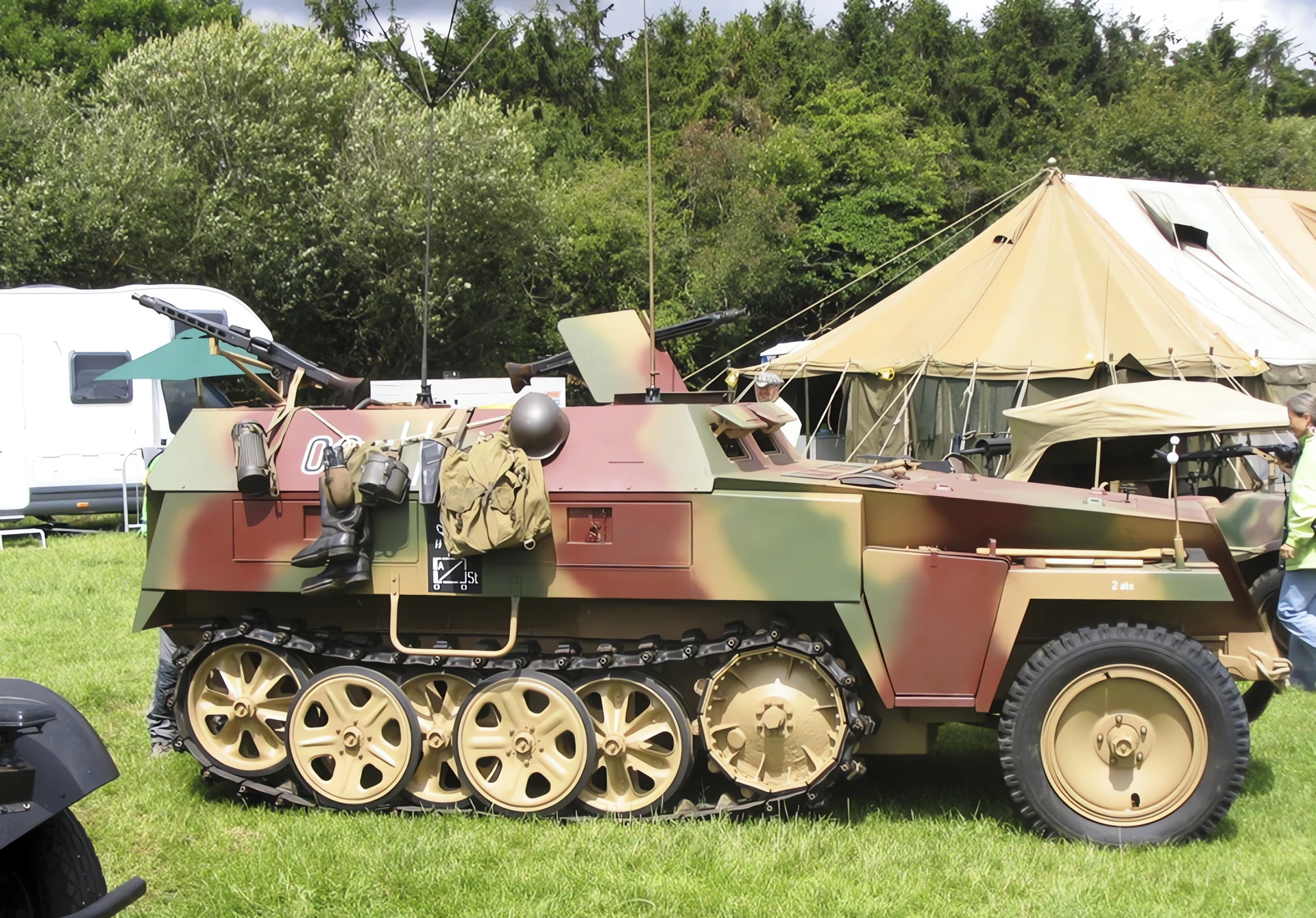
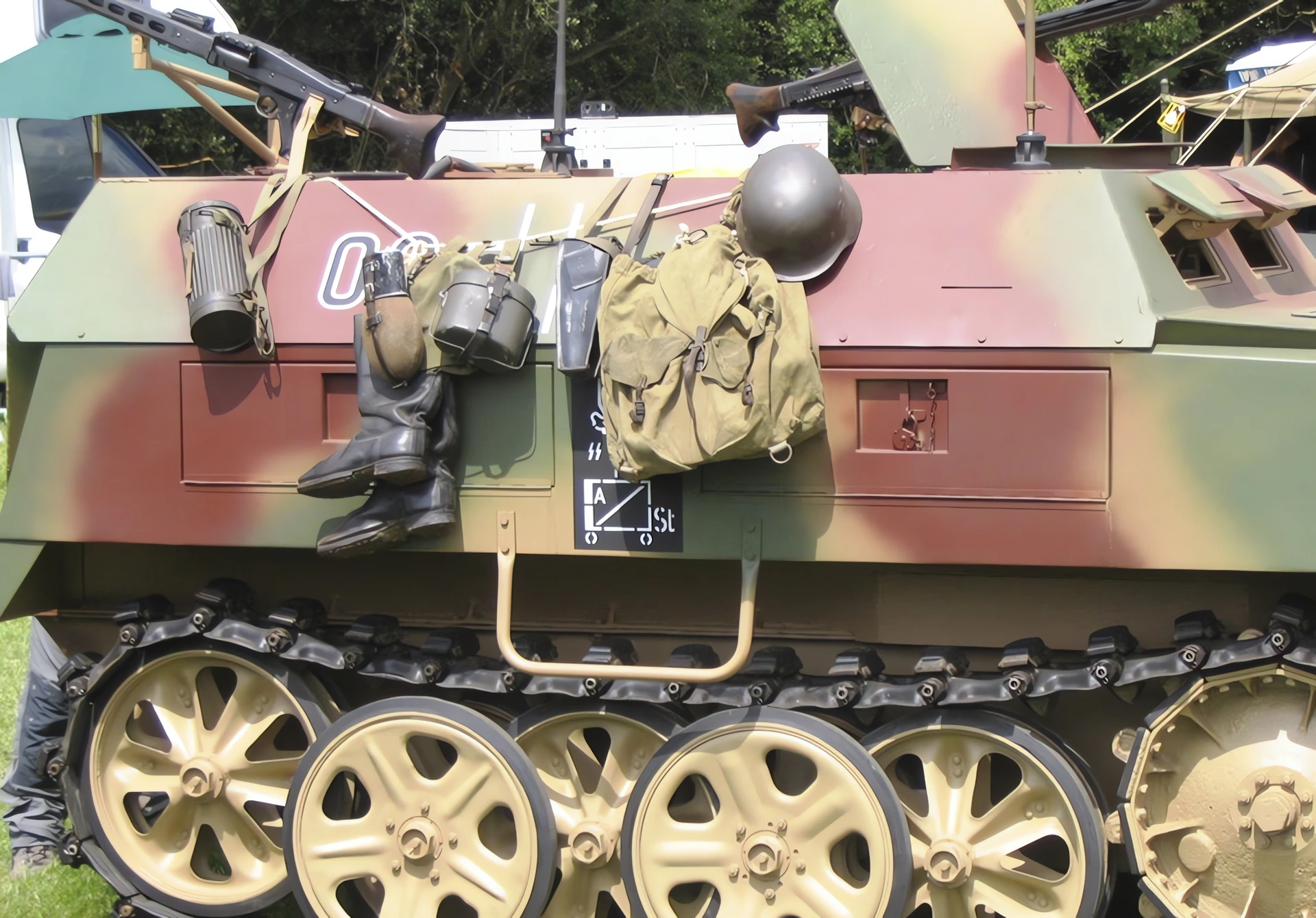
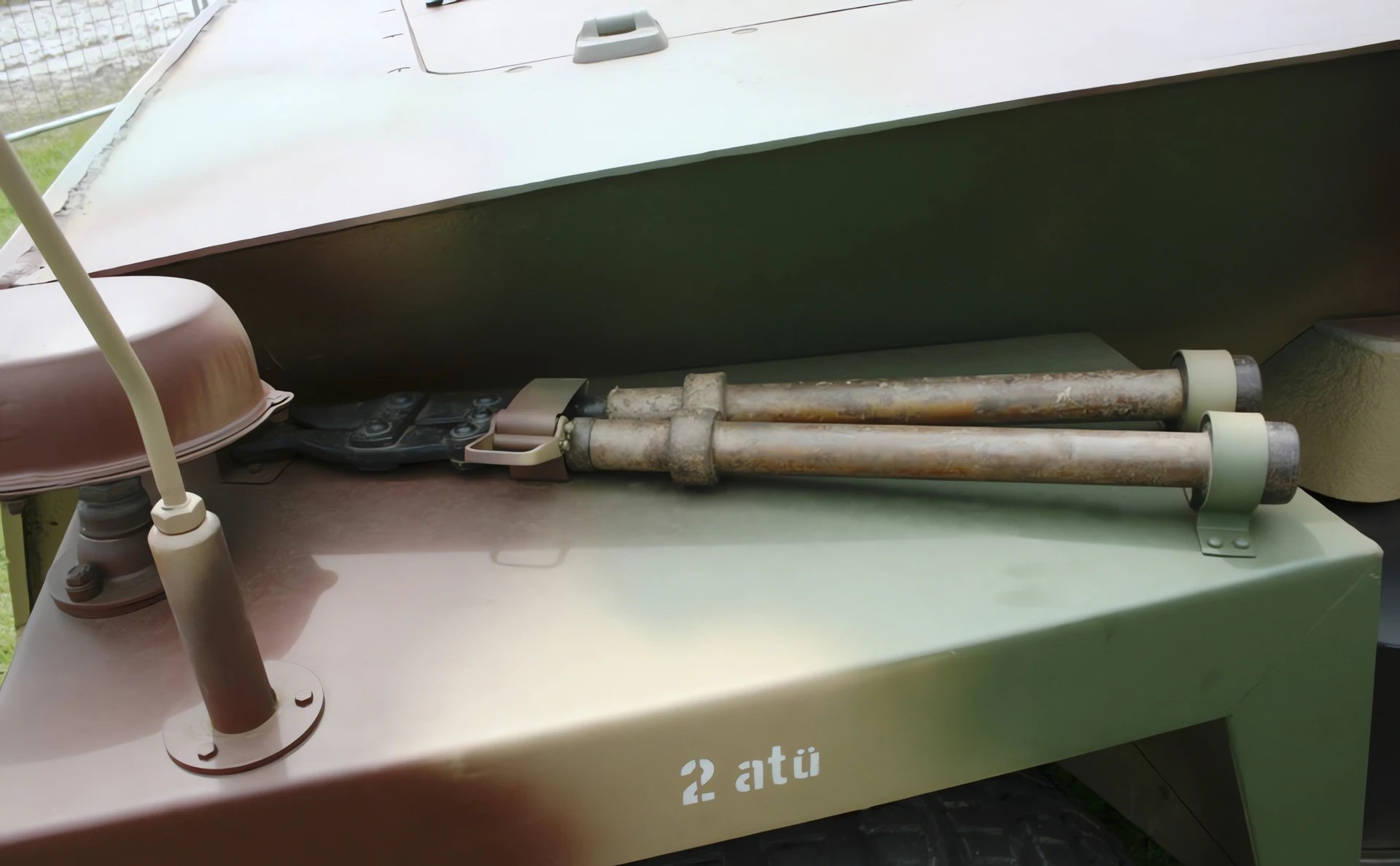
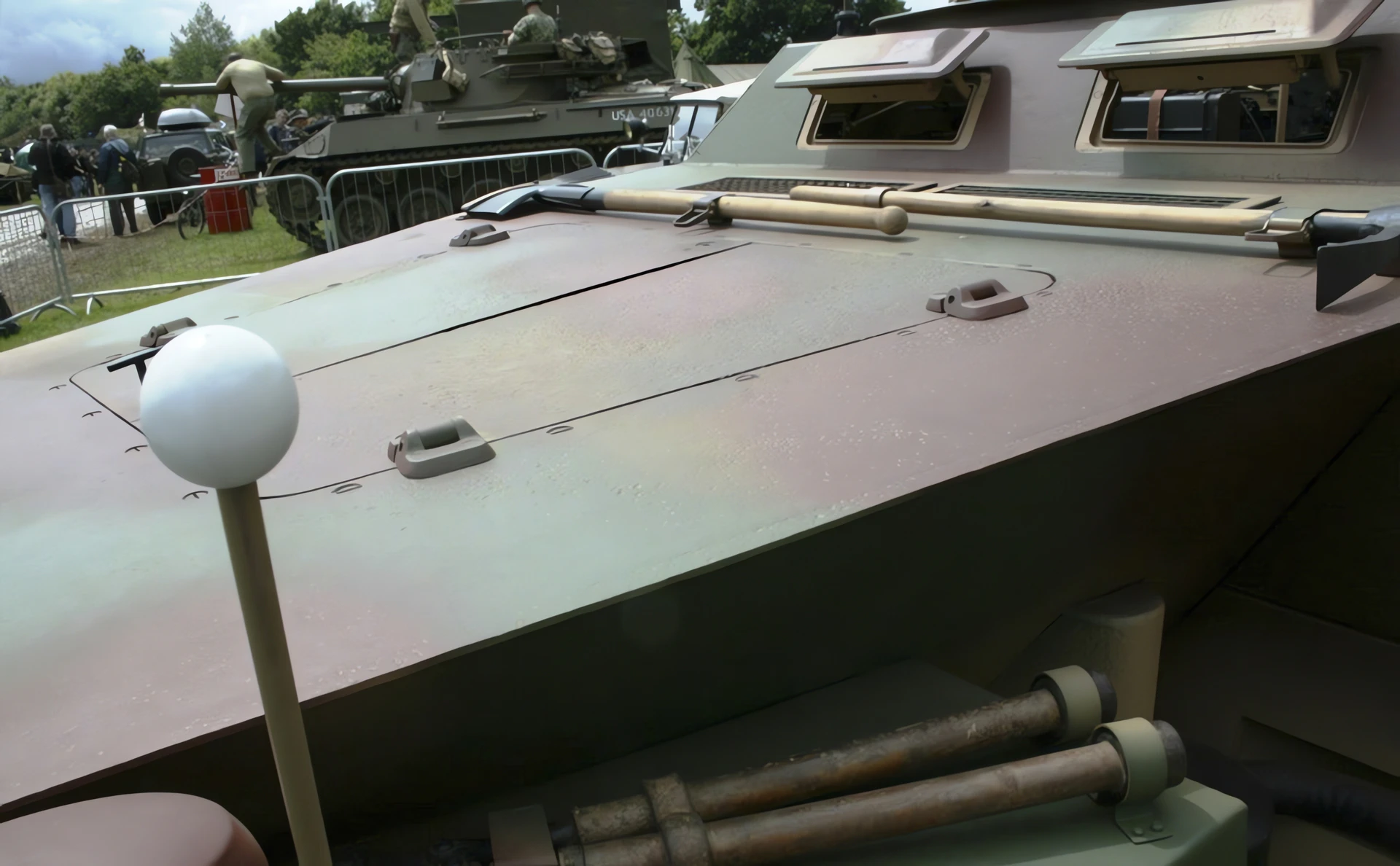


See also:


Compact Mobility: The “Alt” and “Neu”
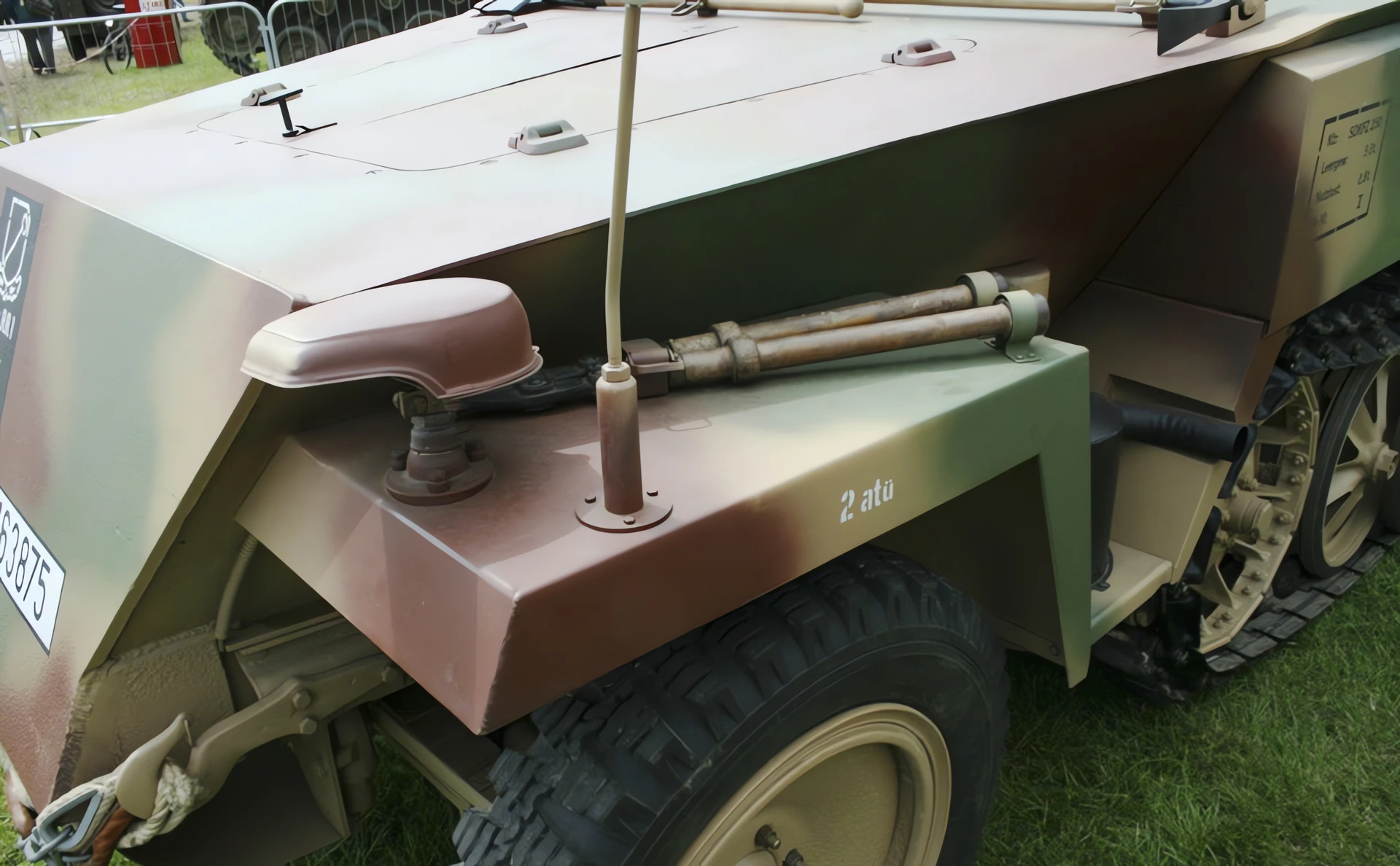
The Sd.Kfz. 250 was a light armored half-track designed to provide infantry support and reconnaissance for Panzer divisions. While it looked similar to the larger Sd.Kfz. 251 (Hanomag), it was significantly smaller, carrying only a half-squad of four men. Its most recognizable feature was the complex hull geometry. Original models (Alte Ausführung) had a multifaceted hull with 19 distinct armor plates, while later models (Neue Ausführung) were simplified to 9 plates to speed up mass production.
| Attribute | Standard Specification (Sd.Kfz. 250/1) |
|---|---|
| Role | Light Armored Personnel Carrier / Reconnaissance |
| Crew | 2 (Driver, Co-driver) + 4 Troops |
| Main Armament | 1 or 2 × 7.92 mm MG 34 or MG 42 machine guns |
| Armor | 5.5 mm to 14.5 mm (Sloped) |
| Powerplant | Maybach HL 42 TRKM 6-cylinder petrol (100 hp) |
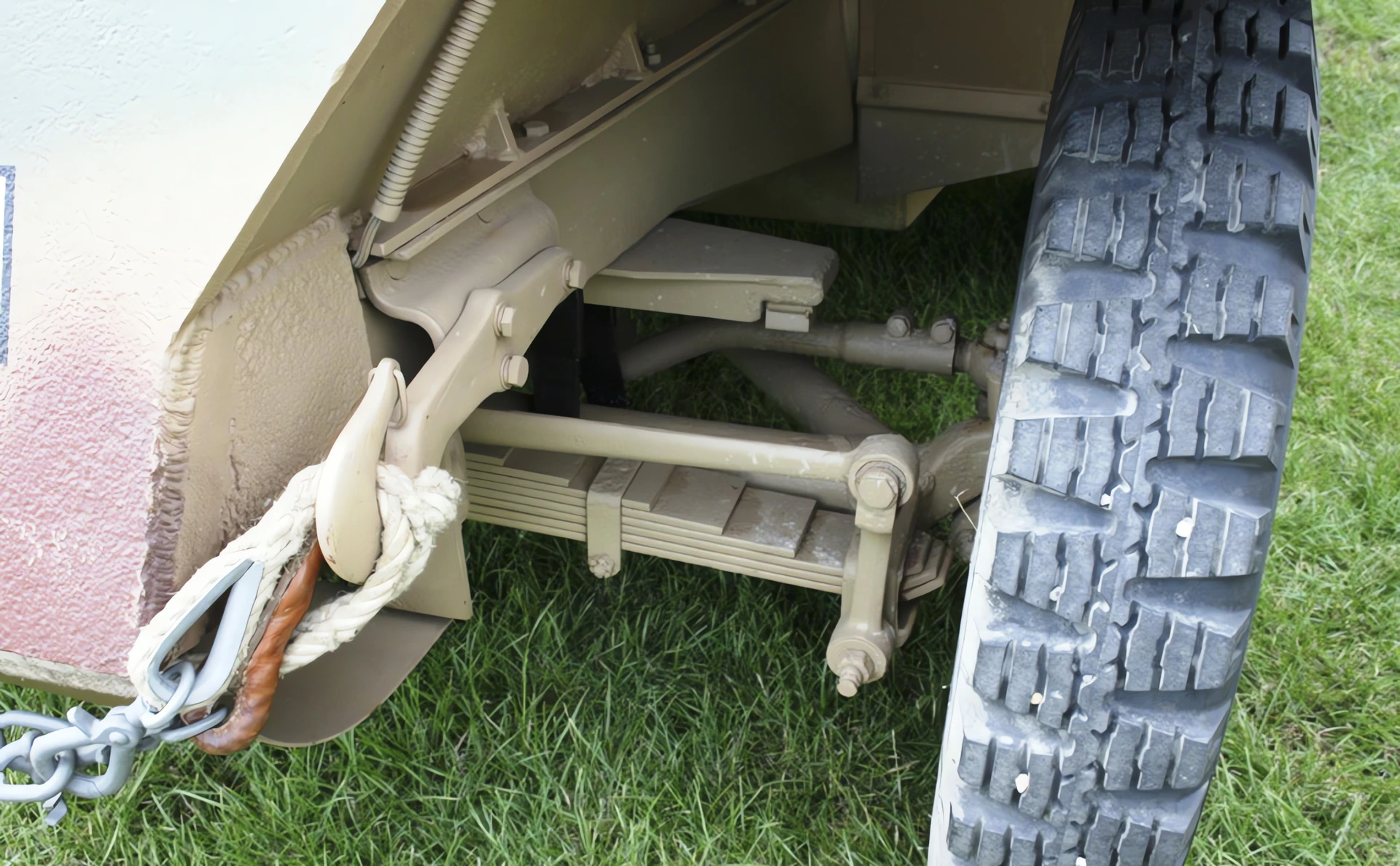
| Suspension | Overlapping road wheels (Schachtellaufwerk) |
| Max Road Speed | 60 km/h (37 mph) |
| Operational Range | 300 km (Road) / 175 km (Cross-country) |
Engineering and Variants
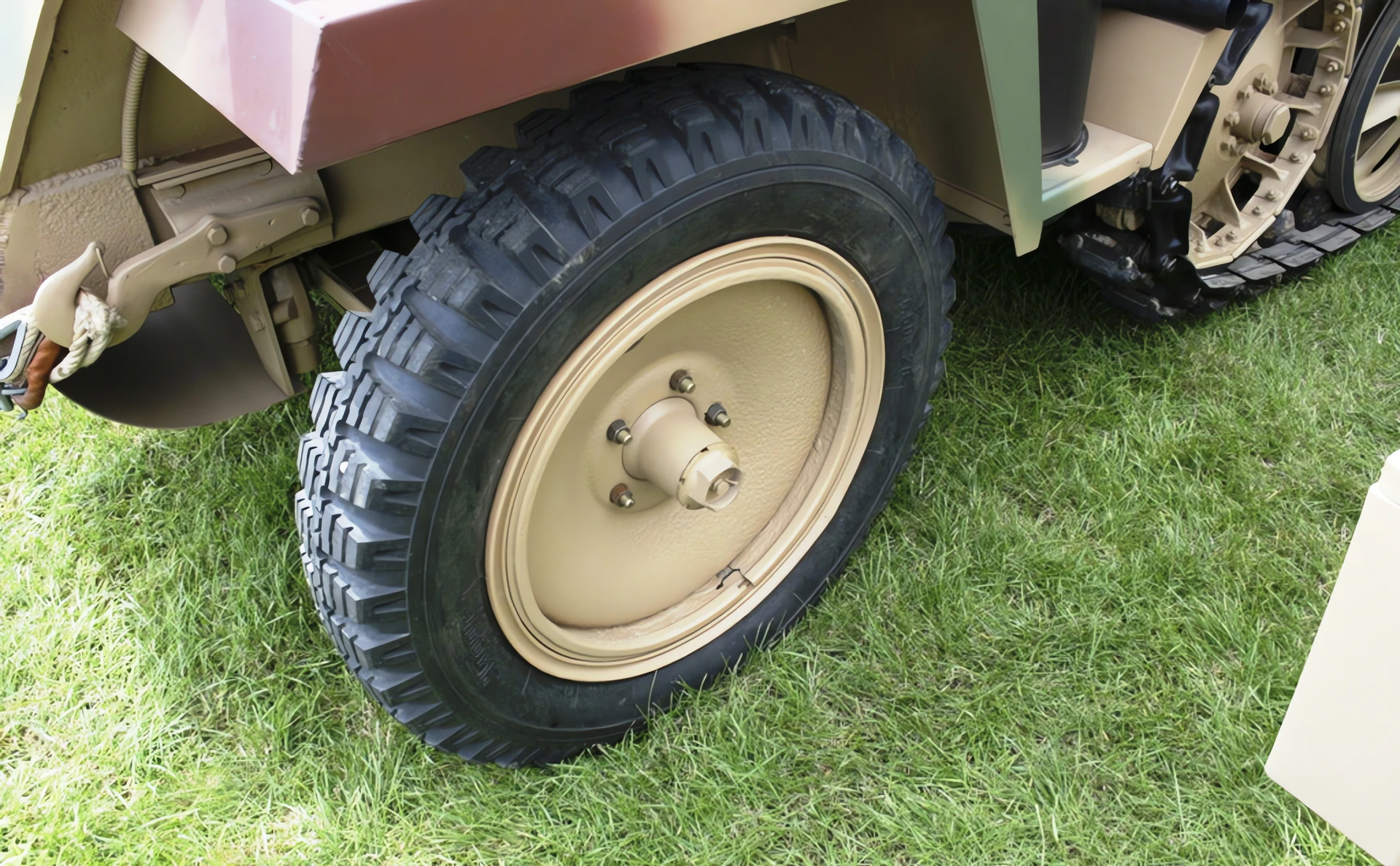
- The Half-Track Advantage: The combination of front wheels for steering and tracks for traction allowed the 250 to traverse the muddy “Rasputitsa” of the Eastern Front far more effectively than standard 4×4 or 6×4 trucks.
- Sd.Kfz. 250/3 (Greif): A dedicated command and radio vehicle. This variant gained fame as General Erwin Rommel’s personal mobile command post during the North African campaign.
- Sd.Kfz. 250/9 (Neu): A reconnaissance version equipped with a 2 cm KwK 38 autocannon mounted in a low-profile hexagonal turret, often used alongside the Sd.Kfz. 234 series armored cars.
- Sd.Kfz. 250/11: A tank-hunter variant armed with the 2.8 cm sPzB 41 heavy anti-tank rifle, designed for high-velocity engagement of light and medium armored targets.
Operational History
- Reconnaissance Battalions: The Sd.Kfz. 250 was the primary vehicle for Aufklärungsabteilungen (Reconnaissance Detachments), tasked with probing enemy lines and maintaining contact between units.
- Panzergrenadiers: While too small to transport an entire squad, it was used by specialized Panzergrenadier units to move light machine gun teams and headquarters elements into the heat of battle.
- Battlefield Versatility: Because of its small footprint and reliability, it was converted into everything from ammunition carriers to telephone line layers (Sd.Kfz. 250/2) and cable-laying vehicles.
Views : 3864