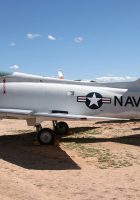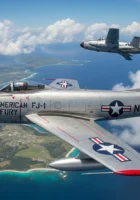
North American FJ-1 Fury sky

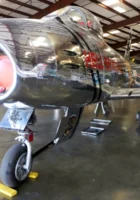
North American FJ-1 Fury

PaysUsa
RôleChasseur
Premier vol11 septembre 1946
Construit31

Lla Fury FJ-1 nord-américain est le premier avion à réaction opérationnel en service dans la marine des États-Unis, et a été développé par North American Aviation sous le nom de NA-135. Le FJ-1 était un jet de transition précoce au succès limité qui transportait des surfaces de queue, des ailes et une verrière similaires dérivées du P-51D Mustang à moteur à pistons. L’évolution de la conception pour incorporer des ailes balayées deviendrait la base du prototype terrestre XP-86 – lui-même conçu à l’origine avec une forme de plan à aile droite très similaire à la cellule du FJ-1 – de l’United States Air Force’S’est énormément influent F-86 Sabre, qui a lui-même formé la base de la Marine’s basé sur un transporteur Nord-Américain FJ-2/-3 Fury.

Source: North American FJ-1 Fury sur Wikipedia

Lire l’article

Vues : 2962

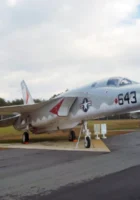
Fureur nord-américaine de FJ-4

North American FJ-4 Fury Spécifications

Fabricant Aviation nord-américaine
Rôle Chasseur-bombardier basé sur le porte-avions
Premier vol 3 octobre 1954
Introduction 1955
Retraite 1965 (US Navy), 1972 (Venezuela)
Utilisateurs principaux Marine des États-Unis, Force aérienne vénézuélienne
Nombre construit 374
Coût unitaire 780 000 $ US (FJ-4B)
moteur Un turboréacteur Pratt & Whitney J48-P-8A, 7 250 lbf (32,3 kN) de poussée
Maximum speed 1 094 km/h (680 mi/h)
Range 1 900 km (1 200 mi)
Service ceiling 44 000 pi (13 400 m)
Armement
  • 4× canons M3 de 20 mm (0,79 po)
  • Jusqu’à 2 270 kg (5 000 lb) de bombes, roquettes ou missiles

Lla Fureur nord-américaine de FJ-4 était un chasseur-bombardier à voilure balayée pour la Marine et le Corps des Marines des États-Unis. Le développement final d’une lignée qui comprenait la Force aérienne’s F-86 Sabre, le FJ-4 a partagé sa disposition générale et le moteur avec le FJ-3 plus tôt, mais en vedette un design d’aile entièrement nouveau et a été un design très différent dans son incarnation finale.

Source: North American FJ-4 Fury sur Wikipedia

Lire l’article

Vues : 3251

Vought OS2U-3 Martin-pêcheur

Vought OS2U Kingfisher

PaysUsa
RôleHydravion d’observation
Premier vol1938
Construit1519

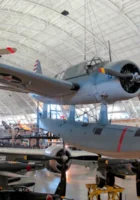
Lla Vought OS2U Martin-pêcheur was an American catapult-launched observation floatplane. It was a compact mid-wing monoplane, with a large central float and small stabilizing floats. Performance was modest, because of its light engine. The OS2U could also operate on fixed, wheeled, taildragger landing gear. The OS2U was the main shipboard observation aircraft used by the United States Navy during World War II, and 1,519 of the aircraft were built. It served on battleships and cruisers of the US Navy, with the United States Marine Corps in Marine Scouting Squadron Three (VMS-3), with the United States Coast Guard at coastal air stations, at sea with the Fleet Air Arm of the Royal Navy, and with the Soviet Navy. The Royal Australian Air Force also operated a few Kingfishers from shore bases.

Source: Vought OS2U Kingfisher sur Wikipedia

Lire l’article

Views : 7717

Packard LePere LUSAC-11

Packard-Le Père LUSAC-11

PaysUsa
RôleChasseur
Premier vol15 mai 1918
Construit30

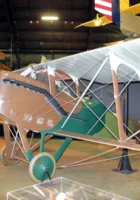
Lla LUSAC-11 (Lepère United States Army Combat) était un avion de chasse biplace américain. C’était une conception Français, commandée et construite aux États-Unis pendant la Première Guerre mondiale et commandée en grand nombre par l’United States Army Air Corps, mais ceux-ci ont été annulés à la fin de la guerre, et seulement 30 ont été construits. Le type a été utilisé à des fins expérimentales, établissant plusieurs records d’altitude au cours des années 1920.

Source: Packard-Le Père LUSAC-11 sur Wikipédia

Lire l’article

Vues : 1721

Loening OA-1A

Loening OL

PaysUsa
RôleAvion d’observation amphibie
Premier vol1923
Construit165

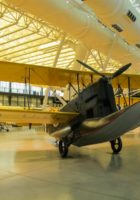
Lla Loening OL, également connu sous le nom d’amphibien de Loening, était un biplan amphibie biplace américain construit par Loening pour l’United States Army Air Corps et l’United States Navy.

Source: Loening OL sur Wikipédia

Lire l’article

Vues : 2542

Canadair F-86E mk.6 Sabre

Canadair Sabre

PaysCanada
RôleCombattant
Premier vol9 août 1950
Construit1815

Lla Canadair Sabre était un avion de chasse à réaction construit par Canadair sous licence de North American Aviation. Variante du North American F-86 Sabre, il a été produit jusqu’en 1958 et utilisé principalement par l’Aviation royale canadienne (ARC) jusqu’à son remplacement par le Canadair CF-104 en 1962. Plusieurs autres forces aériennes ont également exploité l’avion.

Source: Canadair Sabre sur Wikipédia

Lire l’article

Vues : 3783

Lockheed F-94 Starfire sky

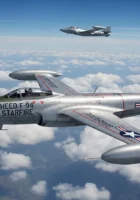
Lockheed F-94 Starfire

PaysUsa
RôleIntercepteur tous temps
Premier volLe 16 avril 1949
Construit855

Lla Lockheed F-94 Starfire was a first-generation jet aircraft of the United States Air Force. It was developed from the twin-seat Lockheed T-33 Shooting Star in the late 1940s as an all-weather, day/night interceptor. The aircraft reached operational service in May 1950 with Air Defense Command, replacing the piston-engined North American F-82 Twin Mustang in the all-weather interceptor role. The F-94 was the first operational USAF fighter equipped with an afterburner and was the first jet-powered all-weather fighter to enter combat during the Korean War in January 1953. It had a relatively brief operational life, being replaced in the mid-1950s by the Northrop F-89 Scorpion and North American F-86D Sabre. The last aircraft left active-duty service in 1958 and Air National Guard service in 1959.

Source: Lockheed F-94 Starfire sur Wikipedia

Lire l’article

Vues : 3327

Bell UH-1 Iroquois sky

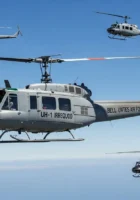
Bell UH-1 Iroquois

PaysUsa
RôleHélicoptère utilitaire
Premier volLe 20 octobre 1956
ConstruitPlus de 16000

Lla Bell UH-1 Iroquois (surnommé « Huey ») est un hélicoptère militaire utilitaire propulsé par un seul moteur turboforme, avec des rotors principaux et de queue à deux pales. Premier membre de la prolifique famille Huey, il a été développé par Bell Helicopter pour rencontrer une armée américaine’s 1952 requirement for a medical evacuation and utility helicopter, and first flew in 1956. The UH-1 was the first turbine-powered helicopter to enter production in 1960 for the United States military, and more than 16,000 have been built since. The Iroquois was originally designated HU-1, hence the Huey nickname, which has remained in common use, despite the official redesignation to UH-1 in 1962. The UH-1 first saw service in combat operations during the Vietnam War, with around 7,000 helicopters deployed. The Bell 204 and 205 are Iroquois versions developed for the civil market.

Source: Bell UH-1 Iroquois sur Wikipedia

Lire l’article

Vues : 5868

Yakovlev Yak-1B

Yakovlev Yak-1

PaysUnion soviétique
RôleCombattant
Premier volLe 13 janvier 1940
Construit8700

Lla Yakovlev Yak-1 (Russian: Яковлев Як-1) was a World War II Soviet fighter aircraft. Production began in early 1940. It was a single-seat monoplane with a composite structure and wooden wings. The Yak-1 was manoeuvrable, fast and well armed, and it was easy to maintain and reliable. It formed an excellent basis for subsequent developments from the Yakovlev bureau. It was the founder of a family of aircraft, with some 37,000 being built. As a reward, designer Alexander Yakovlev was awarded the Order of Lenin (Russian: Орден Ленина, Orden Lenina) – the highest decoration bestowed by the Soviet Union – a 100,000 ruble prize, plus a Zis[6] motor car.

Source: Yakovlev Yak-1 sur Wikipedia

Lire l’article

Vues : 7639

Justicier RA-5C nord-américain

North American A-5 Vigilante

PaysUsa
RôleBombardier d’attaque nucléaire – avion de reconnaissance
Premier volLe 31 août 1958
Construit156

Lla Justicier nord-américain A-5 est un bombardier supersonique américain conçu et construit par North American Aviation pour la Marine des États-Unis. Son service dans le rôle de frappe nucléaire pour remplacer le Douglas A-3 Skywarrior était très court; cependant, en tant que RA-5C, il a vu un service étendu pendant la guerre du Vietnam dans le rôle de reconnaissance de frappe tactique. Avant l’unification de la séquence de désignation de la Marine avec la séquence de la Force aérienne en 1962, elle a été désignée justicier A3J.

Source: Justicier nord-américain A-5 sur Wikipedia

Lire l’article

Views : 5734