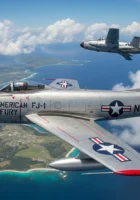
North American FJ-1 Fury sky

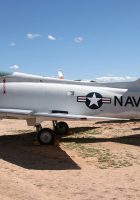
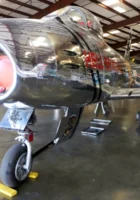
North American FJ-1 Fury

PaeseUsa
RuoloCaccia
Primo volo11 settembre 1946
Costruito31

Le Furia FJ-1 nordamericana è il primo aereo a reazione operativo in servizio nella Marina degli Stati Uniti, ed è stato sviluppato dalla North American Aviation come NA-135. L'FJ-1 era un primo jet di transizione di scarso successo che trasportava superfici di coda, ali e baldacchino simili derivati dal P-51D Mustang con motore a pistoni. L'evoluzione del progetto per incorporare le ali spazzate sarebbe diventata la base per il prototipo XP-86 terrestre – a sua volta originariamente progettato con una planimetria ad ala dritta molto simile alla cellula FJ-1 – dell'enormemente influente F-86 Sabre della United States Air Force, che a sua volta costituì la base per la portaerei nordamericana FJ-2/-3 Fury della Marina.

fonte: North American FJ-1 Fury su Wikipedia

Continua a leggere

Visualizzazioni : 2962

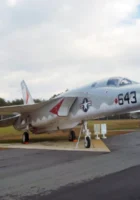
FJ-4 Fury nordamericano

North American FJ-4 Fury Specifiche

Produttore Aviazione nordamericana
Ruolo Cacciabombardardo imbarcato su portaerei
Primo volo 3 ottobre 1954
Introduzione 1955
Pensionati 1965 (US Navy), 1972 (Venezuela)
Utenti principali Marina degli Stati Uniti, Aeronautica militare venezuelana
Numero costruito 374
Costo unitario US$ 780.000 (FJ-4B)
Motore Un turbogetto Pratt & Whitney J48-P-8A, 7.250 lbf (32,3 kN) di spinta
Velocità massima 680 mph (1.094 km/h)
Gamma 1.200 mi (1.900 km)
Soffitto di servizio 44.000 piedi (13.400 m)
Armamento
  • 4× cannoni M3 da 20 mm (0,79 in)
  • Fino a 5.000 libbre (2.270 kg) di bombe, razzi o missili

Le FJ-4 Fury nordamericano era un cacciabombardiere ad ala spazzata per la Marina degli Stati Uniti e il Corpo dei Marines. Lo sviluppo finale in un lignaggio che includeva l'F-86 Sabre dell'Air Force, l'FJ-4 condivideva il suo layout generale e il suo motore con il precedente FJ-3, ma presentava un design dell'ala completamente nuovo ed era un design molto diverso nella sua incarnazione finale.

fonte: North American FJ-4 Fury su Wikipedia

Continua a leggere

Punti di vista: 3251

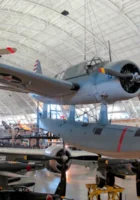
Vought OS2U-3 Martin pescatore

Vought OS2U Kingfisher

PaeseUsa
RuoloIdrovolante di osservazione
Primo volo1938
Costruito1519

Le Martin pescatore Vought OS2U was an American catapult-launched observation floatplane. It was a compact mid-wing monoplane, with a large central float and small stabilizing floats. Performance was modest, because of its light engine. The OS2U could also operate on fixed, wheeled, taildragger landing gear. The OS2U was the main shipboard observation aircraft used by the United States Navy during World War II, and 1,519 of the aircraft were built. It served on battleships and cruisers of the US Navy, with the United States Marine Corps in Marine Scouting Squadron Three (VMS-3), with the United States Coast Guard at coastal air stations, at sea with the Fleet Air Arm of the Royal Navy, and with the Soviet Navy. The Royal Australian Air Force also operated a few Kingfishers from shore bases.

fonte: Vought OS2U Kingfisher su Wikipedia

Continua a leggere

Views : 7717

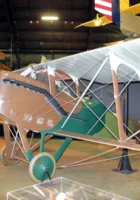
Packard LePere LUSAC-11

Packard-Le Père LUSAC-11

PaeseUsa
RuoloCaccia
Primo volo15 maggio 1918
Costruito30

Le LUSAC-11 · (Lepère United States Army Combat) era un aereo da caccia biposto americano. Era un progetto francese, commissionato e costruito negli Stati Uniti durante la prima guerra mondiale e ordinato in gran numero dall'United States Army Air Corps, ma questi furono cancellati alla fine della guerra e solo 30 furono costruiti. Il tipo è stato utilizzato per scopi sperimentali, stabilendo diversi record di altitudine durante il 1920.

fonte: Packard-Le Père LUSAC-11 su Wikipedia

Continua a leggere

Visualizzazioni : 1722

Canadair F-86E mk.6 Sciabola

Canadair Sabre

PaeseCanada
RuoloCombattente
Primo voloIl 9 agosto 1950
Costruito1815

Le Canadair Sabre Il era un caccia a reazione costruito dalla Canadair su licenza della North American Aviation. Una variante dell'F-86 Sabre nordamericano, fu prodotto fino al 1958 e utilizzato principalmente dalla Royal Canadian Air Force (RCAF) fino a quando non fu sostituito con il Canadair CF-104 nel 1962. Diverse altre forze aeree operarono anche l'aereo.

fonte: Canadair Sabre su Wikipedia

Continua a leggere

Punti di vista: 3784

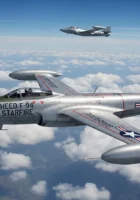
Lockheed F-94 Starfire sky

Lockheed F-94 Starfire

PaeseUsa
RuoloIntercettore per tutte le condizioni atmosferiche
Primo voloIl 16 aprile 1949
Costruito855

Le Lockheed F-94 Starfire was a first-generation jet aircraft of the United States Air Force. It was developed from the twin-seat Lockheed T-33 Shooting Star in the late 1940s as an all-weather, day/night interceptor. The aircraft reached operational service in May 1950 with Air Defense Command, replacing the piston-engined North American F-82 Twin Mustang in the all-weather interceptor role. The F-94 was the first operational USAF fighter equipped with an afterburner and was the first jet-powered all-weather fighter to enter combat during the Korean War in January 1953. It had a relatively brief operational life, being replaced in the mid-1950s by the Northrop F-89 Scorpion and North American F-86D Sabre. The last aircraft left active-duty service in 1958 and Air National Guard service in 1959.

fonte: Lockheed F-94 Starfire su Wikipedia

Continua a leggere

Visualizzazioni: 3328

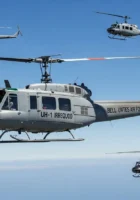
Bell UH-1 Iroquois sky

Bell UH-1 Iroquois

PaeseUsa
RuoloElicottero utility
Primo volo20 ottobre 1956
Costruito16000+

Le Campana UH-1 Irochese (nicknamed “Huey”) is a utility military helicopter powered by a single turboshaft engine, with two-blade main and tail rotors. The first member of the prolific Huey family, it was developed by Bell Helicopter to meet a United States Army’s 1952 requirement for a medical evacuation and utility helicopter, and first flew in 1956. The UH-1 was the first turbine-powered helicopter to enter production in 1960 for the United States military, and more than 16,000 have been built since. The Iroquois was originally designated HU-1, hence the Huey nickname, which has remained in common use, despite the official redesignation to UH-1 in 1962. The UH-1 first saw service in combat operations during the Vietnam War, with around 7,000 helicopters deployed. The Bell 204 and 205 are Iroquois versions developed for the civil market.

fonte: Bell UH-1 Iroquois su Wikipedia

Continua a leggere

Views : 5868

Jakovlev Yak-1B

Yakovlev Yak-1

PaeseUnione Sovietica
RuoloCombattente
Primo voloIl 13 gennaio 1940
Costruito8700

Le Jakovlev Yak-1 (Russian: Яковлев Як-1) was a World War II Soviet fighter aircraft. Production began in early 1940. It was a single-seat monoplane with a composite structure and wooden wings. The Yak-1 was manoeuvrable, fast and well armed, and it was easy to maintain and reliable. It formed an excellent basis for subsequent developments from the Yakovlev bureau. It was the founder of a family of aircraft, with some 37,000 being built. As a reward, designer Alexander Yakovlev was awarded the Order of Lenin (Russian: Орден Ленина, Orden Lenina) – the highest decoration bestowed by the Soviet Union – a 100,000 ruble prize, plus a Zis[6] motor car.

fonte: Yakovlev Yak-1 su Wikipedia

Continua a leggere

Views : 7639

Vigilante nordamericano RA-5C

North American A-5 Vigilante

PaeseUsa
RuoloBombardiere nucleare - aereo da ricognizione
Primo voloIl 31 agosto 1958
Costruito156

Le Vigilante nordamericano A-5 È un bombardiere supersonico statunitense progettato e costruito dalla North American Aviation per la United States Navy. Il suo servizio nel ruolo di attacco nucleare per sostituire il Douglas A-3 Skywarrior fu molto breve; tuttavia, come RA-5C, vide un ampio servizio durante la guerra del Vietnam nel ruolo di ricognizione tattica d'attacco. Prima dell'unificazione della sequenza di designazione della Marina con la sequenza dell'Air Force nel 1962, fu designato A3J Vigilante.

fonte: Vigilante A-5 nordamericano su Wikipedia

Continua a leggere

Views : 5734