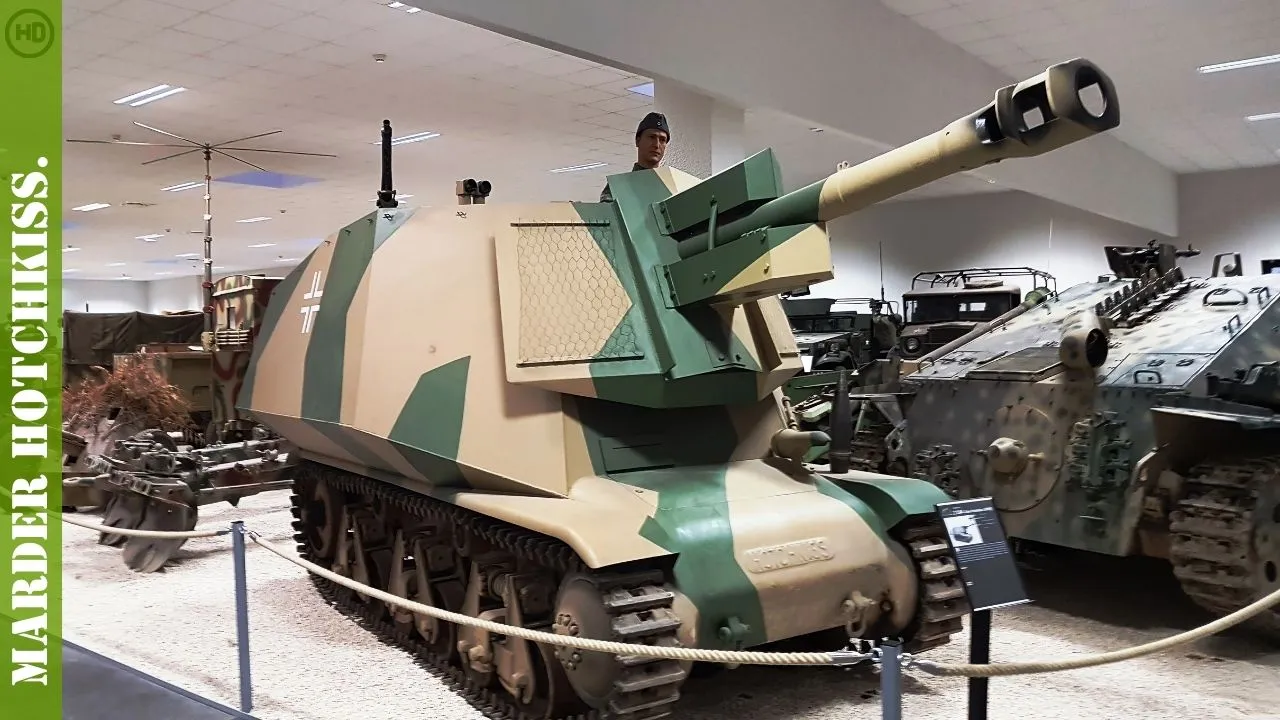
Marder Hotchkiss | |
|---|---|
| Pays | Allemagne nazie |
| Rôle | Chasseur de chars |
| Période | Seconde Guerre mondiale |
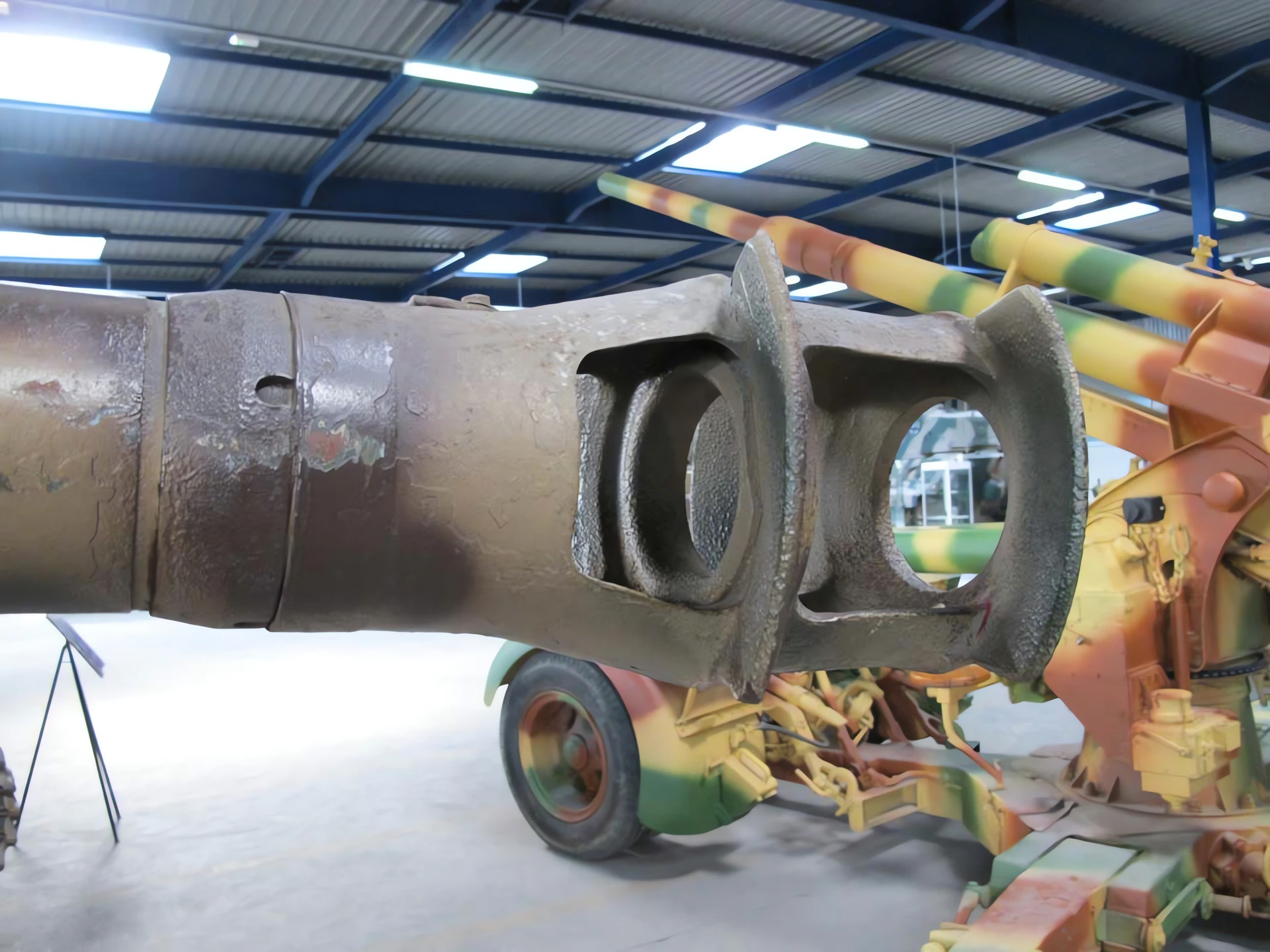
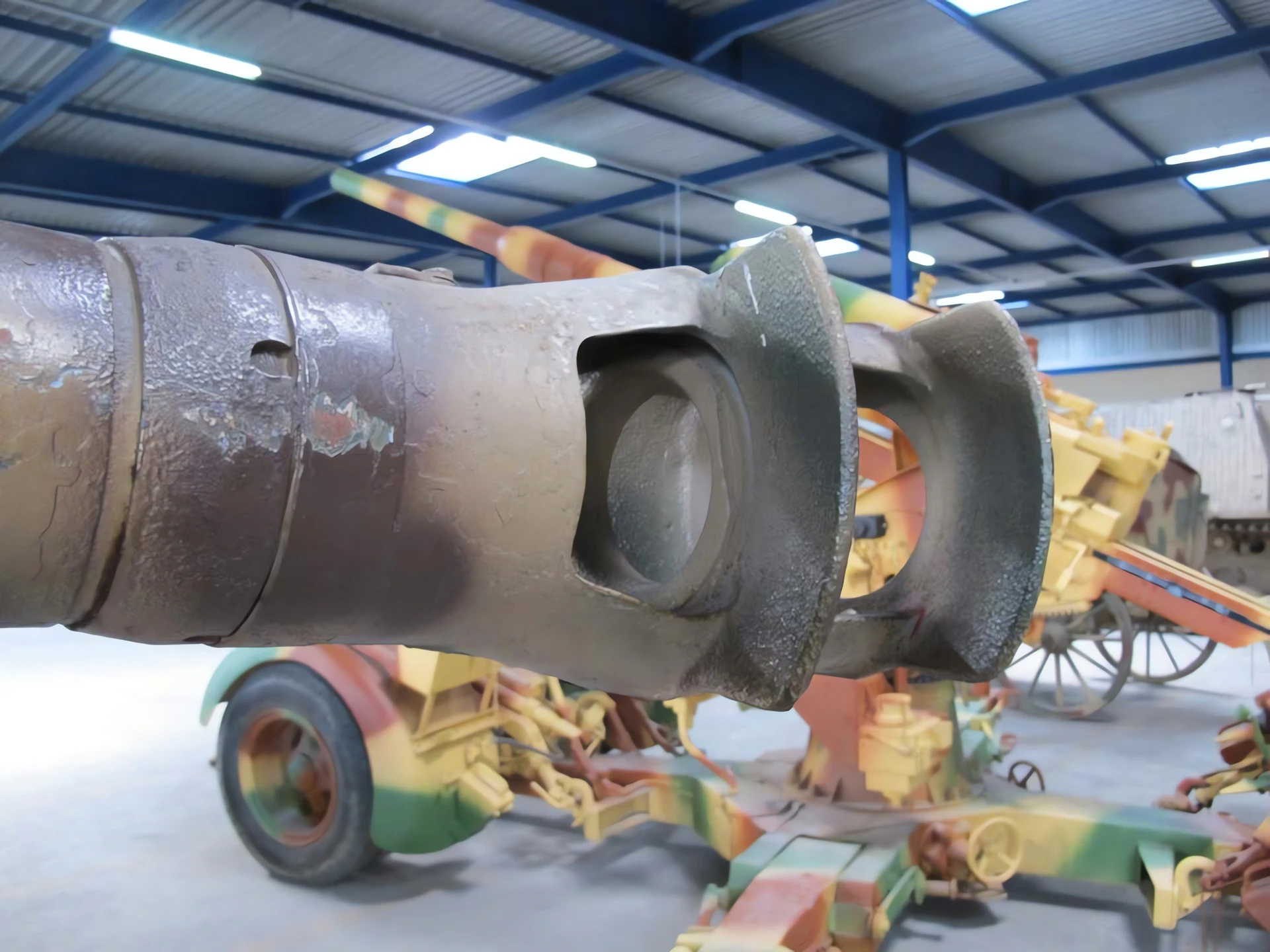
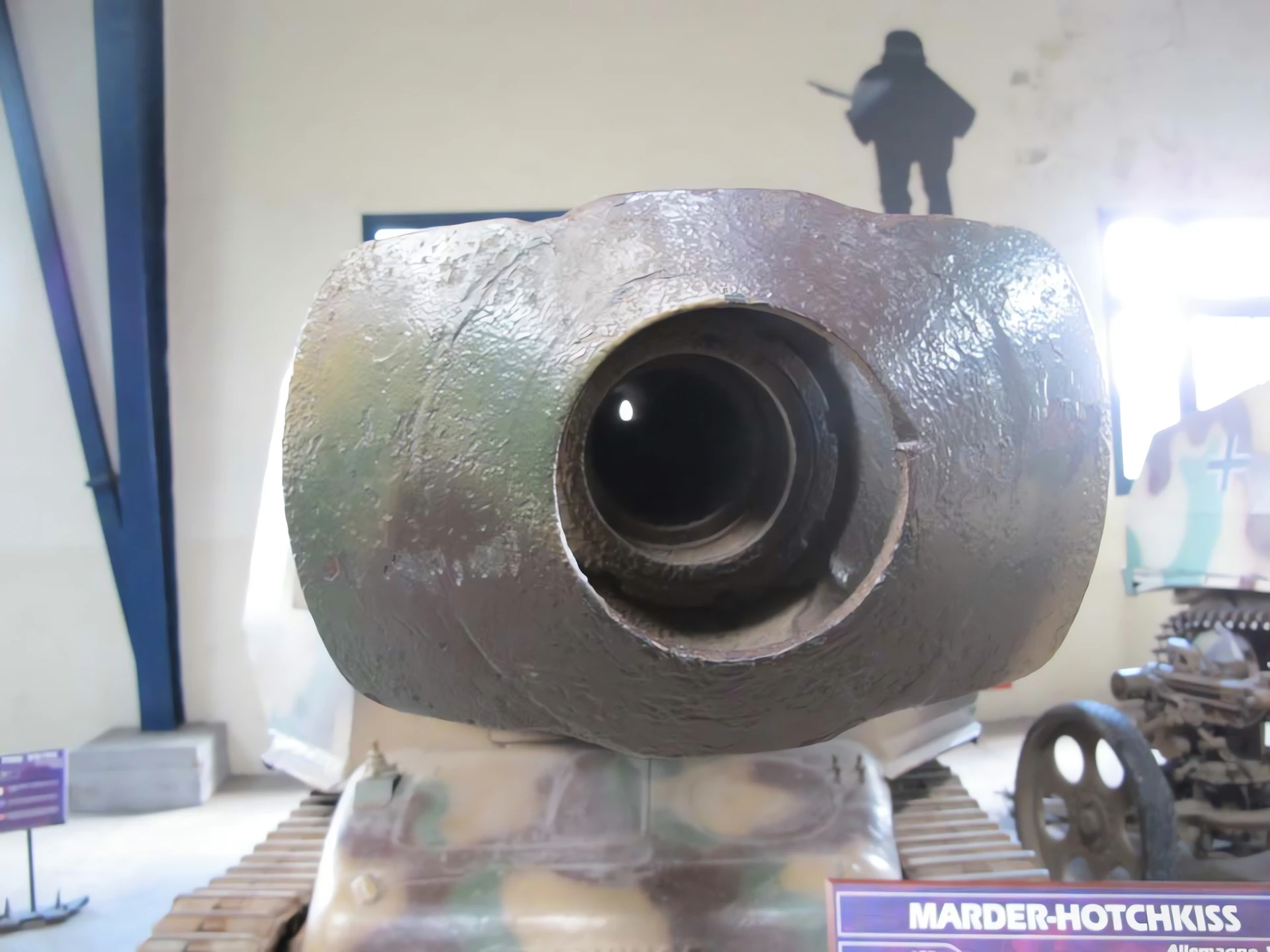
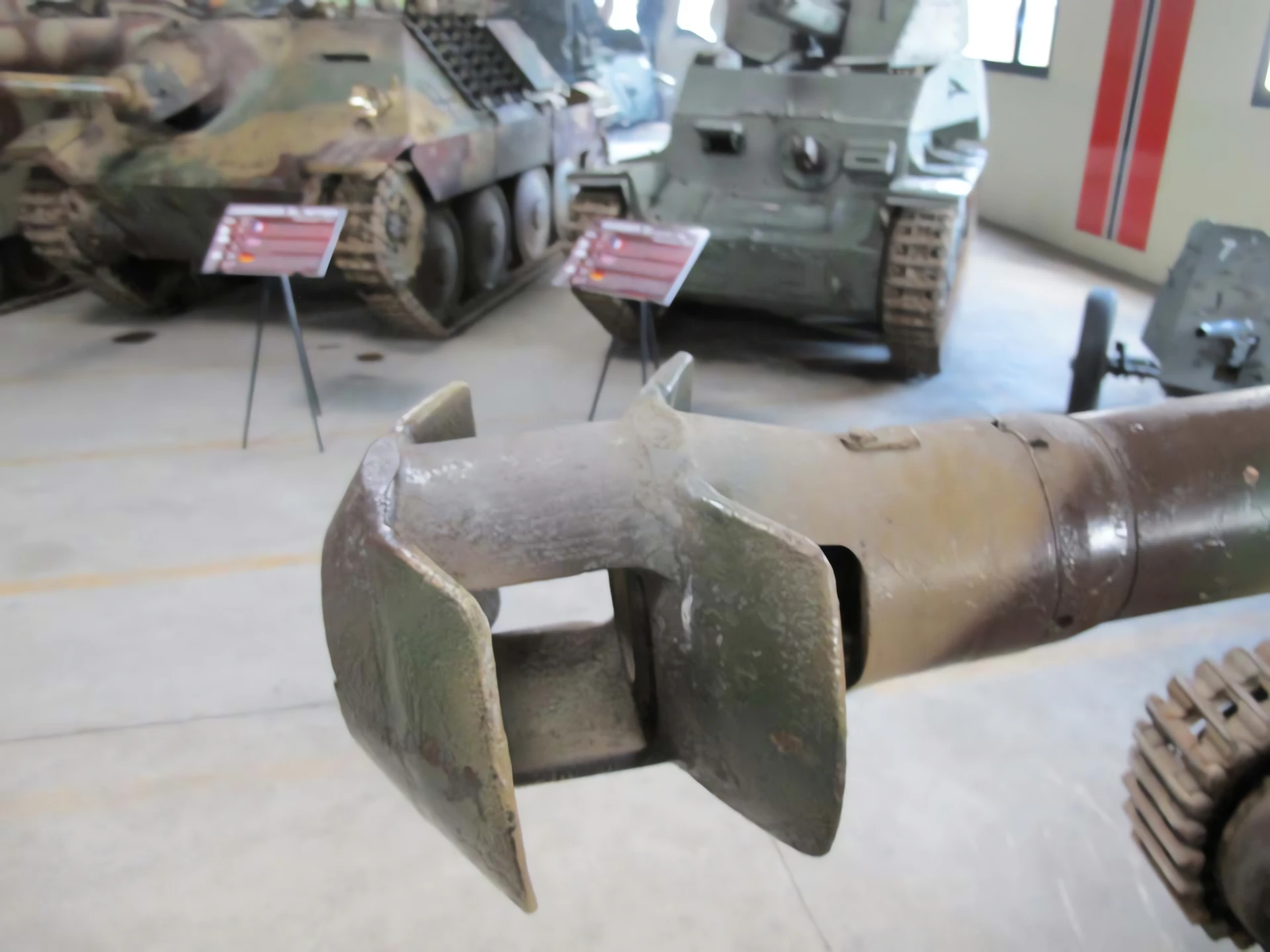
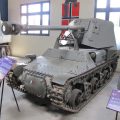
Lla Marder I « martre » (Sd.Kfz. 135) was a German World War II tank destroyer, armed with the 75 mm anti-tank gun. Most Marder Is were built on the base of the Tracteur Blindé 37L (Lorraine), a French artillery tractor/armoured personnel carrier of which the Germans had acquired more than three hundred after the Fall of France in 1940. Between July and August 1942, 170 Marder I’ont été construits sur le châssis Lorraine. Plus tard, plusieurs autres chars Français et polonais ont été utilisés comme base de conversion pour le Marder I, y compris le Hotchkiss H39 et FCM 36. Ces conversions ont également été achevées à Baustokommando Becker, bien que moins d’entre elles aient été construites.
Source: Marder Hotchkiss sur Wikipédia
| Geschutzpanzer 39H(f) 7.5cm PaK 40 Hotchkiss | |
|---|---|
| Photographe | Vladimir Yakubov |
| Localisation | Musee des Blindes, Saumur |
| Photos | 90 |
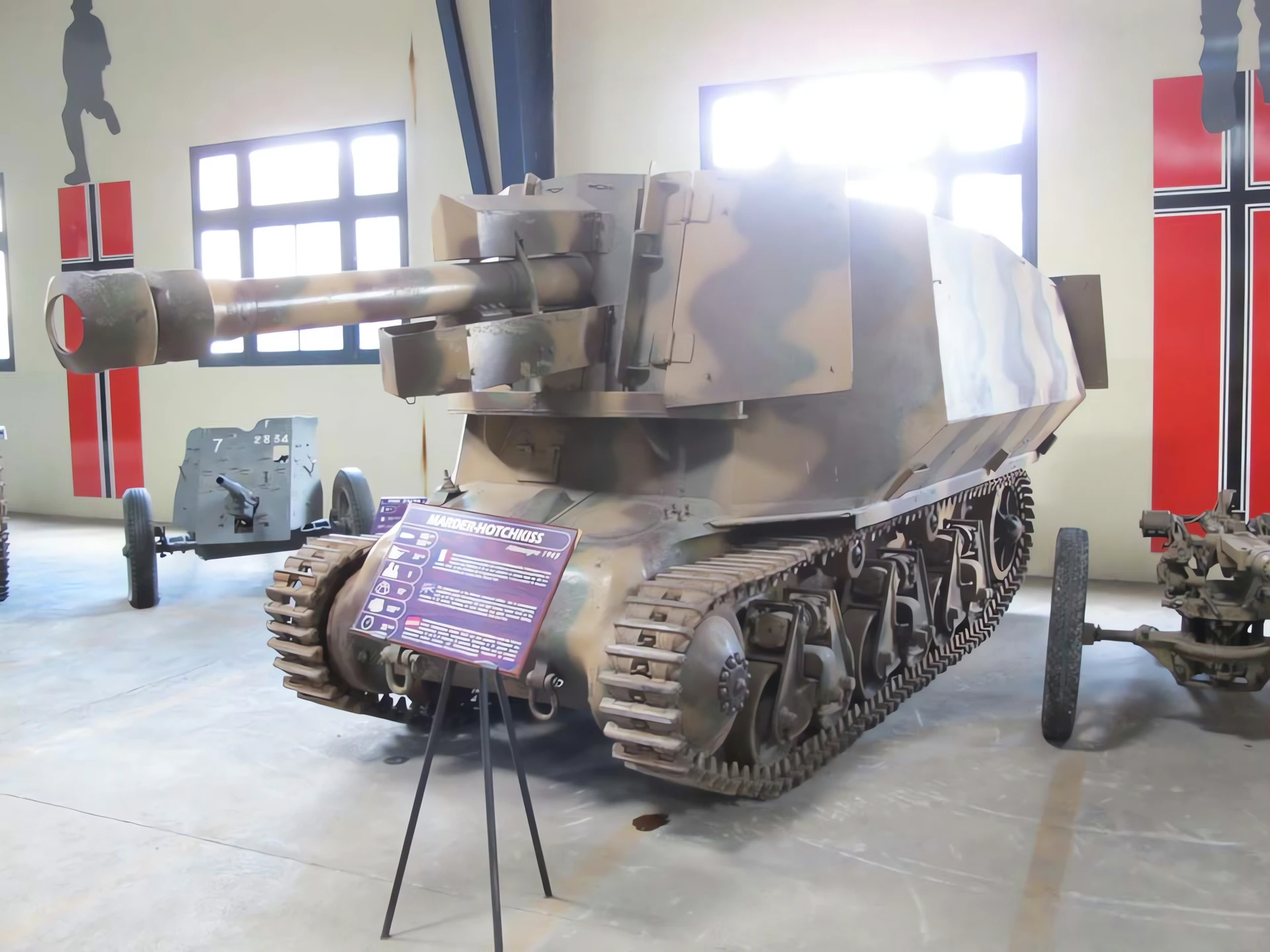
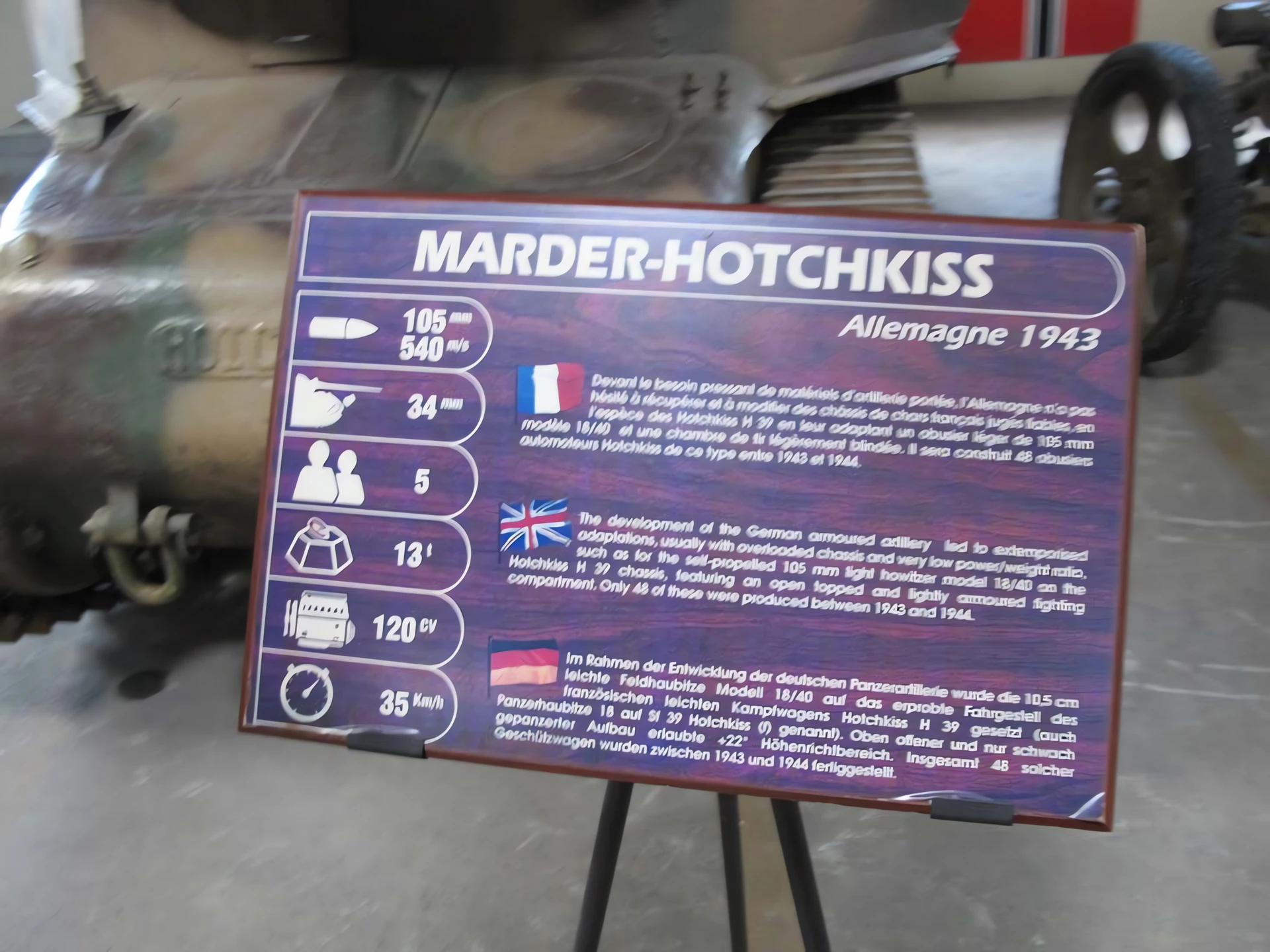
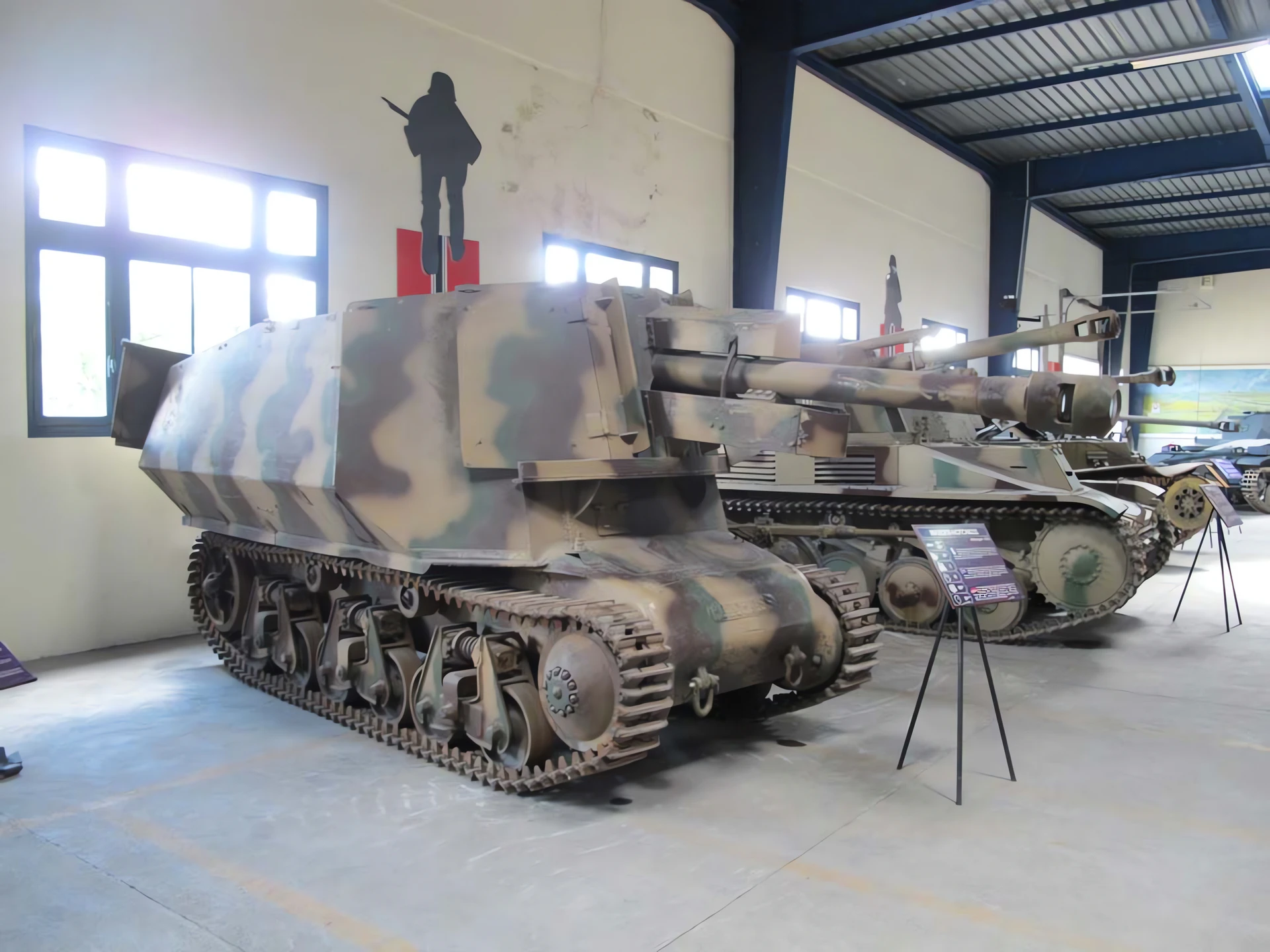

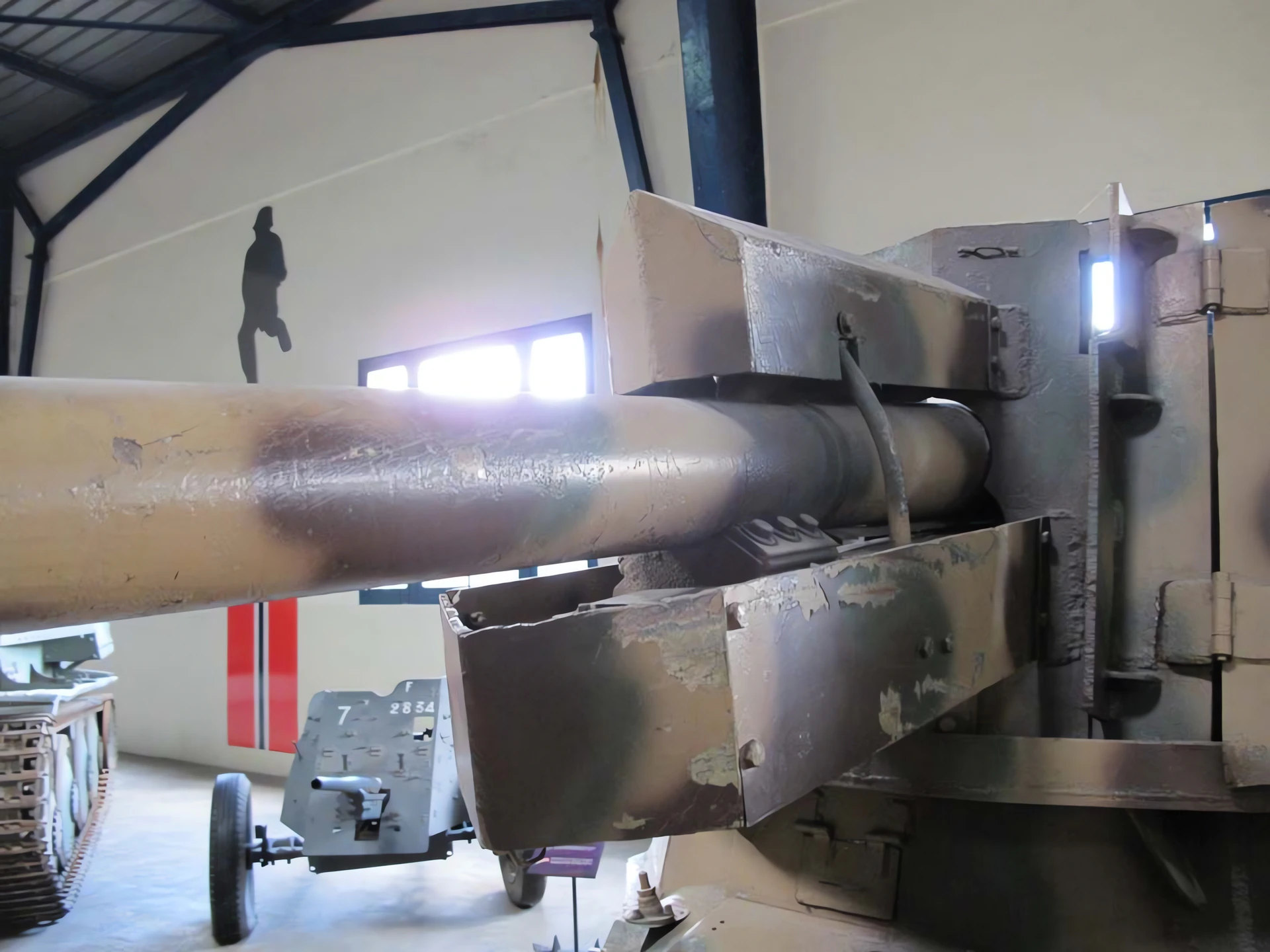

| 10.5cm LEFH18(Sf) auf Geschutzwagen 39H | |
|---|---|
| Photographes | Inconnu |
| Localisation | Inconnu |
| Photos | 149 |
Voir aussi :


Lla Marder I was a German tank destroyer that used the chassis of captured French vehicles, including the Hotchkiss H35 light tank. The Hotchkiss version of the Marder I was armed with a 75 mm Pak 40 anti-tank gun, which was mounted on a thin-skinned, open-top superstructure. The gun had a limited traverse of 30 degrees and a muzzle brake to reduce recoil. The Marder I was designed to counter the Soviet T-34 and KV-1 tanks, which had superior armor and firepower to the German tanks at the time. The Marder I was produced in 1942 and saw service on the Eastern and Western fronts until 1944.
Only 24 Marder I vehicles were converted from Hotchkiss tanks, as the process was complicated and time-consuming. The Marder I was vulnerable to enemy fire and artillery due to its low armor protection and exposed crew compartment. However, it was a cheap and simple way to increase the anti-tank capability of the German army until more advanced tank destroyers were available.
Vues : 4273
Vous pouvez voir aussi :
 SdKfz 135 Marder I – Photos & Vidéo
 Chasseur de chars M36 – Photos & Vidéos
 B1 Centauro – Photos & Vidéos
 Projet ELC – Photos & Vidéos
 M18 Hellcat – Photos & Vidéos
 Valentine Archer – Photos & Vidéos
 SdKfz 135 Marder I – Photos & Vidéo
 Pvkv m/43 – Photos & Vidéo
 Type 1 Ho-Ni – Photos & Vidéo
 Sturmgeschutz 40 - WalkAround