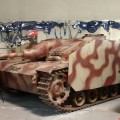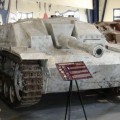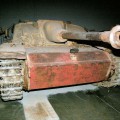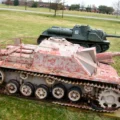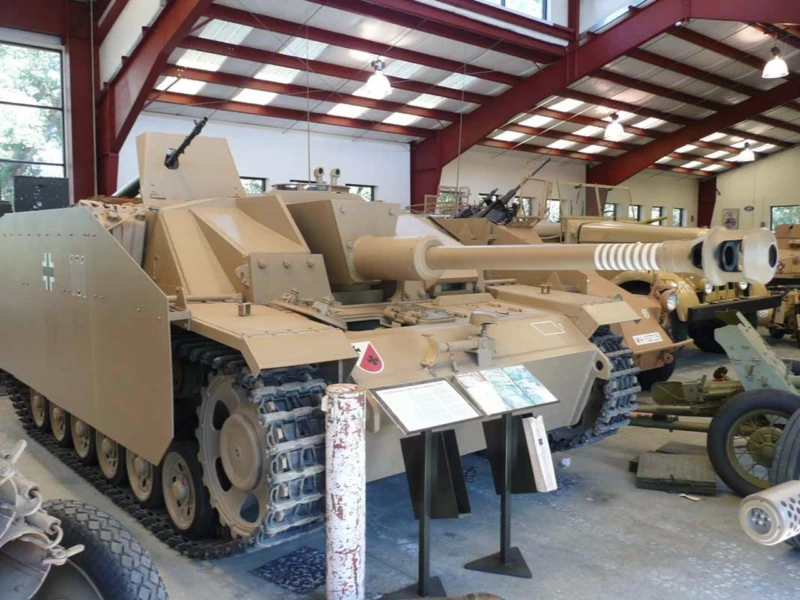
StuG III Ausf. G | |
|---|---|
| País | Alemania nazi |
| Papel | Arma de asalto |
| Producido | Diciembre de 1942 – Abril de 1945 |
| Construido | ~8423 |
La final y, con diferencia, la más común de la Stug serie. Se amplió la superestructura superior: las cajas soldadas a ambos lados fueron abandonadas. Este nuevo diseño de superestructura aumentó su altura a 2160 mm. La pared trasera del compartimiento de combate se enderezó, y el ventilador de ventilación en la parte superior de la superestructura fue reubicado en la parte posterior del compartimiento de combate. Desde marzo de 1943, el periscopio del conductor fue abandonado. En febrero de 1943, Alkett se unió a MIAG como segundo fabricante. A partir de mayo de 1943, las placas de blindaje espaciadas del casco lateral (Schürzen) fueron instaladas en modelos G para una protección de blindaje adicional, particularmente contra rifles antitanque rusos, pero también fueron útiles contra municiones de carga hueca. Las placas laterales estaban retro-ajustadas a algunos Ausf. Modelos F/8, ya que iban a ser instalados en todos los StuGs de primera línea y otros tanques para junio de 1943 en preparación para la batalla de Kursk. Los montajes para el Schürzen resultaron insuficientemente fuertes, ya que muchos se perdieron en el campo. A partir de marzo de 1944, se introdujo un montaje mejorado; como resultado, las faldas laterales se ven más a menudo con la fallecida modelo Ausf G. Desde mayo de 1943, se utilizaron placas de 80 mm de espesor para blindaje frontal en lugar de dos placas de 50 mm + 30 mm. Sin embargo, existía un atraso de StuGs con blindaje completo de 50 mm. Para ellos, una placa de blindaje adicional de 30 mm todavía tenía que ser soldada o atornillada, hasta octubre de 1943.
Fuente: StuG III Ausf. G en Wikipedia
| SdKfz 142/1 Sturmgeschutz (StuG) III Caminar | |
|---|---|
| Fotógrafo | Vladimir Yakubov |
| Localización | Colección Jacques Littlefield |
| Fotos | 34 |
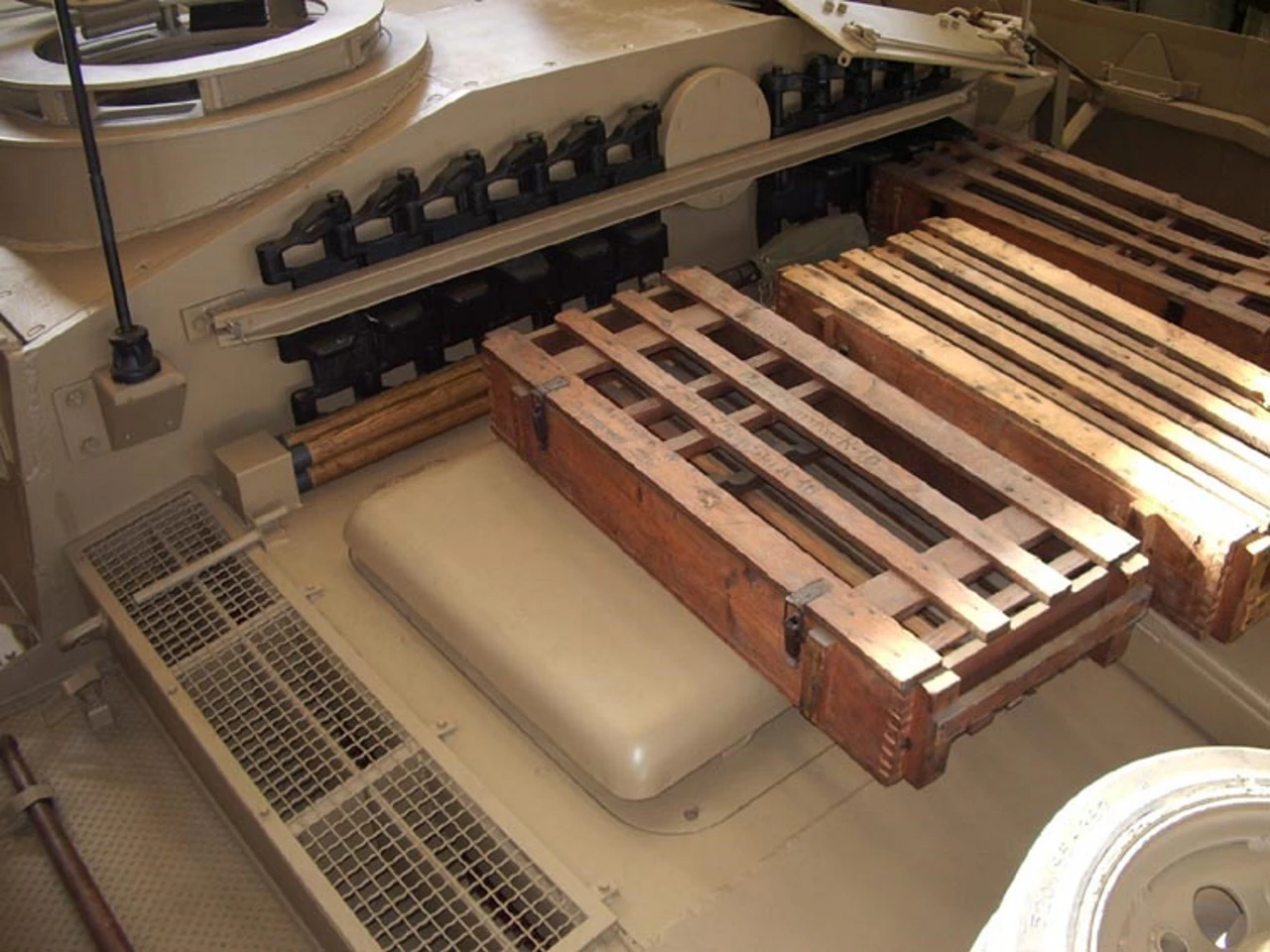
SdKfz 142-1 StuG III 02

SdKfz 142-1 StuG III 01

SdKfz 142-1 StuG III 04
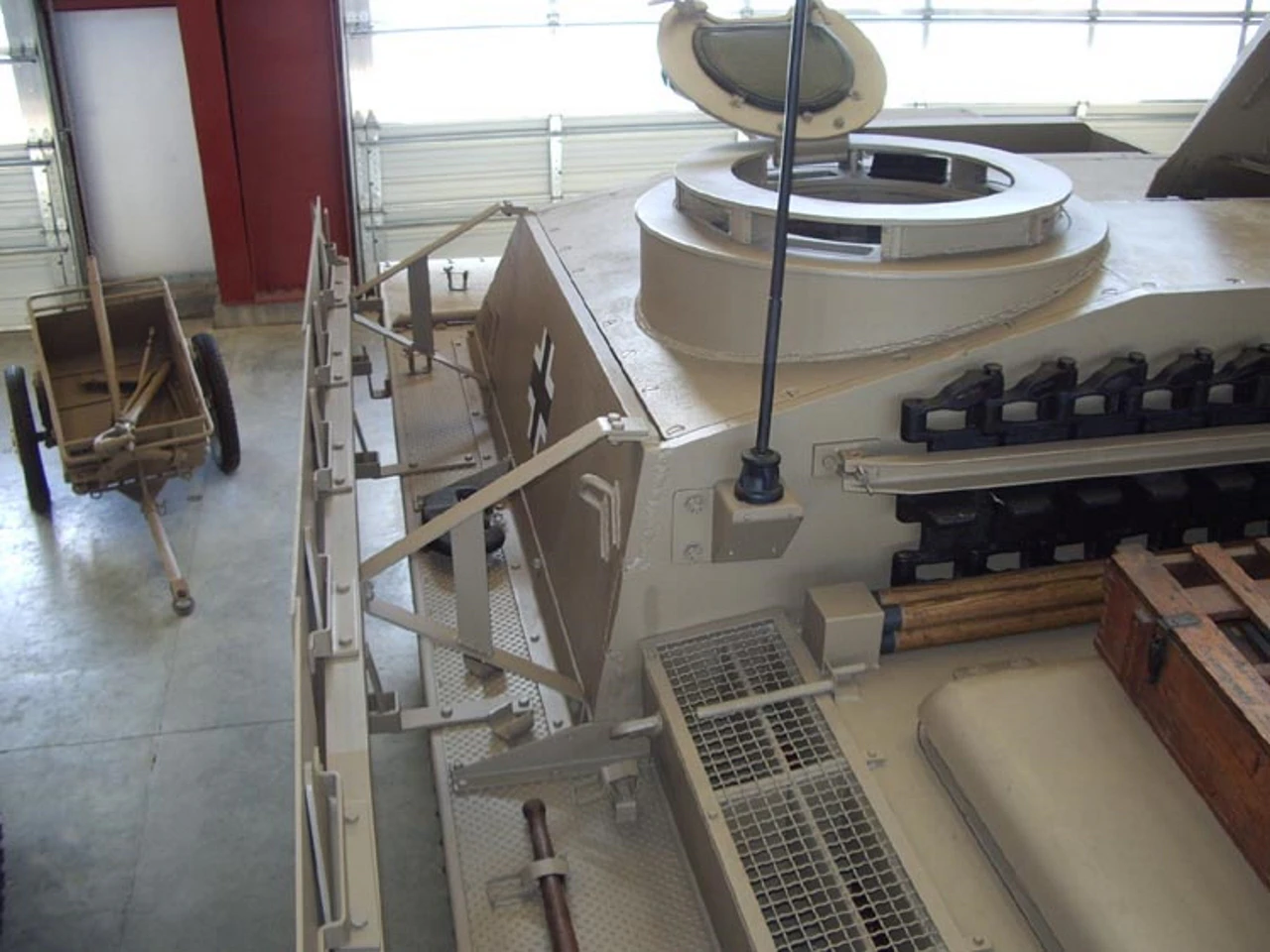
SdKfz 142-1 StuG III 03
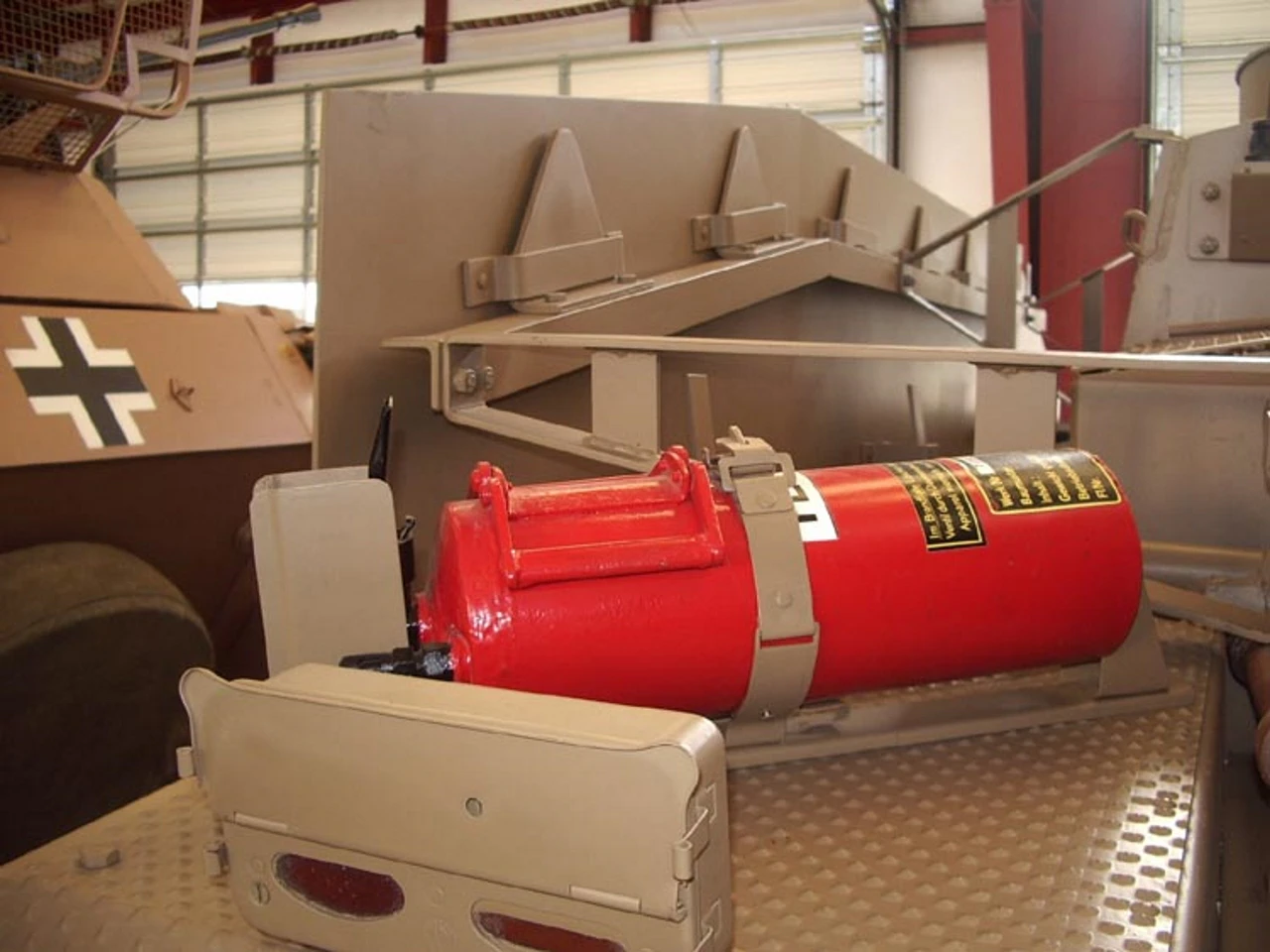
SdKfz 142-1 StuG III 05

SdKfz 142-1 StuG III 06

SdKfz 142-1 StuG III 08
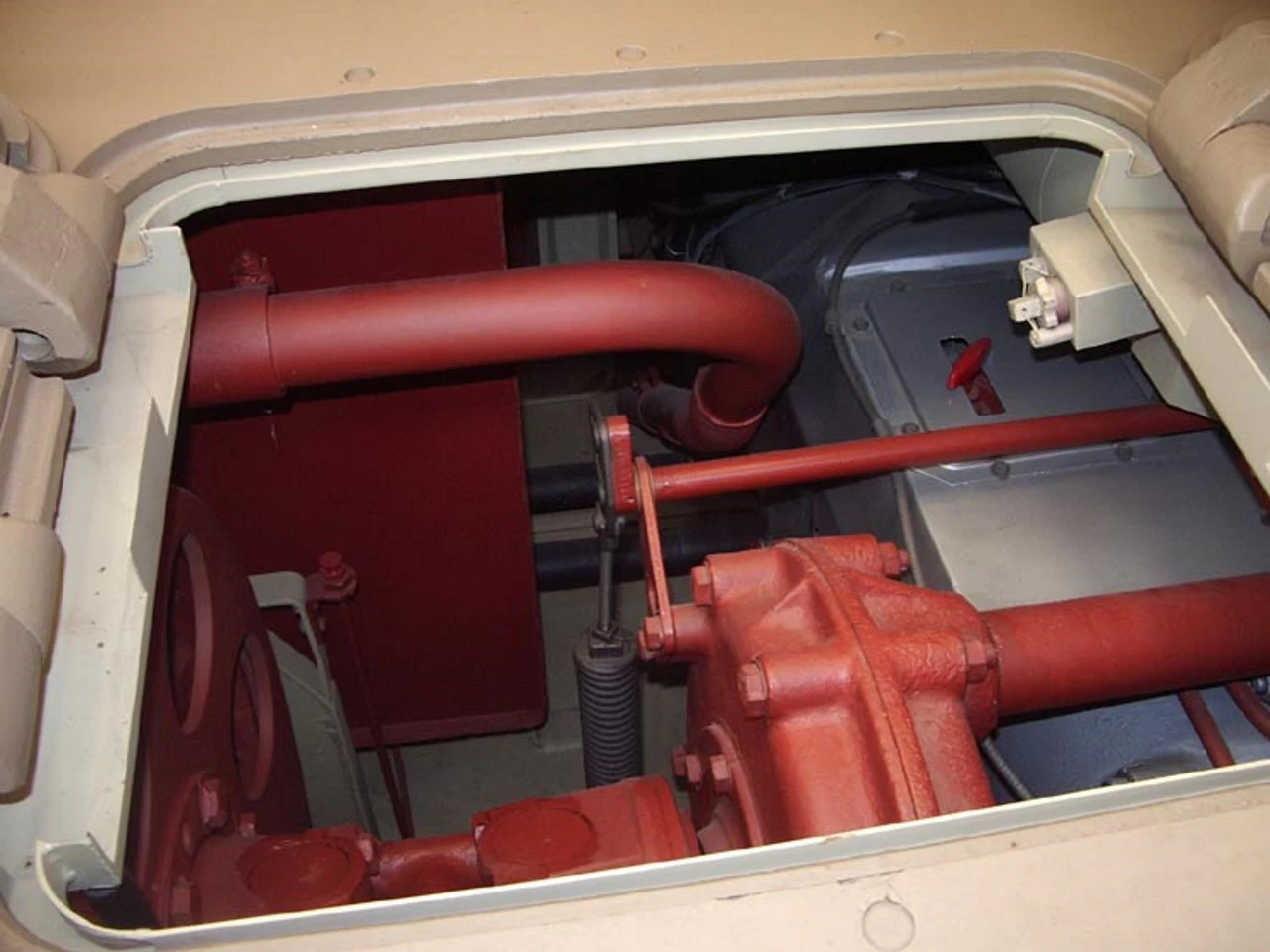
SdKfz 142-1 StuG III 07

SdKfz 142-1 StuG III 09
Espera, Buscando StuG III Ausf. G fotos para usted...

| SdKfz 142/1 Sturmgeschutz (Stug) III Ausf G Caminar | |
|---|---|
| Fotógrafo | Vladimir Yakubov |
| Localización | Museo de armadura Latrun |
| Fotos | 107 |
| Sturmgeschutz III Ausf. B Walk Around | |
|---|---|
| Fotógrafo | Unknow |
| Localización | Unknow |
| Fotos | 16 |
Ver también:


The Deadliest Silhouette on the Eastern Front
el StuG III Ausf. G was the final and most prolific version of the Sturmgeschütz series. Built on the reliable chassis of the Panzer III, it abandoned the rotating turret in favor of a fixed, low-profile casemate. Originally designed as infantry support artillery, the Ausf. G was up-gunned with a high-velocity 75mm cannon, transforming it into a formidable tank destroyer. Its low height made it easy to camouflage and difficult to hit, making it the preferred weapon for German “Tank Aces” like Michael Wittmann before they transitioned to heavier armor.
| Attribute | Technical Specification (StuG III Ausf. G) |
|---|---|
| Papel | Assault Gun / Tank Destroyer |
| Equipo | 4 (Commander, Gunner, Loader, Driver) |
| Production Years | 1942 – 1945 (Approx. 8,400 built) |
| Armamento principal | 7.5 cm KwK 40 L/48 |
| Armamento secundario | 1 or 2 × 7.92 mm MG34 machine guns |
| Armor (Front) | 80 mm (3.1 in) |
| Motor | Maybach HL 120 TRM V-12 (300 hp) |
| Top Speed | 40 km/h (25 mph) on roads |
Design Evolution: The “G” Refinements
- The Saukopf (Sow’s Head) Mantlet: Later Ausf. G models featured a cast gun mantlet with rounded edges. This was designed to deflect incoming shells more effectively than the earlier bolted, boxy designs.
- Schürzen (Side Skirts): To defend against Soviet anti-tank rifles and HEAT rounds, the StuG III G was often fitted with thin metal plates along the sides. These “skirts” would prematurely detonate or destabilize incoming projectiles before they hit the main hull.
- Commander’s Cupola: The Ausf. G introduced a proper cupola with periscopes for the commander, significantly improving situational awareness—a major weakness of earlier turretless designs.
- Zimmerit Coating: Many Ausf. Gs were covered in a ridged, paste-like ceramic coating. This was intended to prevent magnetic anti-tank mines from sticking to the steel hull.
The “Wait-and-Strike” Specialist
- Economic Efficiency: The StuG III was significantly cheaper and faster to build than the Panzer IV or Tiger tanks. Because it lacked a complex turret mechanism, it was also easier to maintain in the field.
- Ambush Master: Its low height allowed the StuG to hide in tall grass or shallow depressions that would expose a normal tank. Soviet tankers often didn’t realize they were being engaged by a StuG until it was too late to return fire.
- Sturmhaubitze 42 (StuH 42): A variant of the Ausf. G was armed with a 10.5 cm howitzer instead of the anti-tank gun. This version returned to the vehicle’s roots, providing devastating high-explosive support for infantry.
- Post-War Service: The StuG III was so effective that it continued to serve long after 1945. The Finnish Army used them until the 1960s, and Syria even deployed them against Israel in the 1967 Six-Day War.
Vistas : 11347