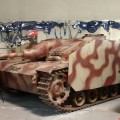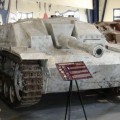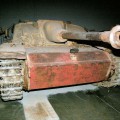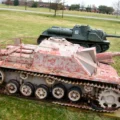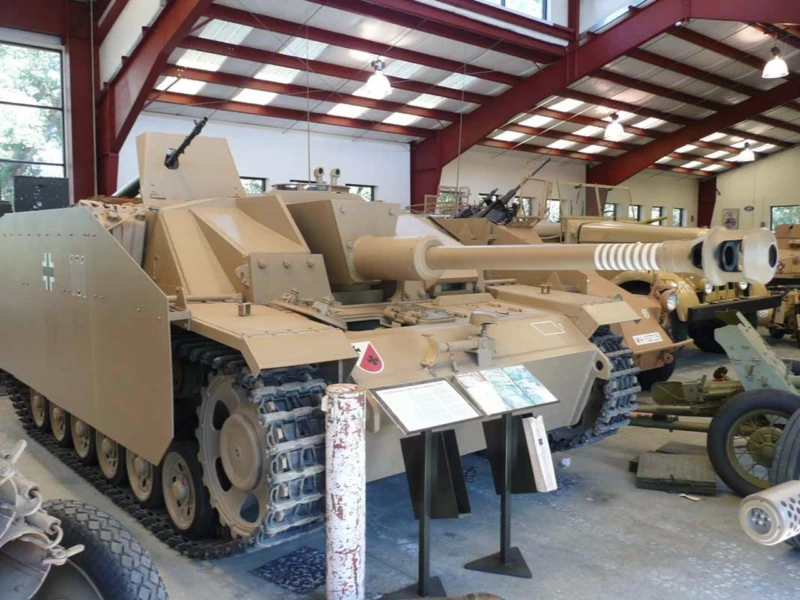
СтюГ III Осф. G | |
|---|---|
| Страна | Нацистка Германия |
| Роля | Пистолет за нападение |
| Произведени | Декември 1942 г. – април 1945 г. |
| Построен | ~8423 |
Крайният и несравно най-често срещаният от СтюГ поредица. Горната надстройка беше засилена: заварени кутии от двете страни бяха изоставени. Този нов дизайн на надстройката увеличи височината си до 2160 мм. Задната стена на бойното отделение се изправи, а вентилаторът за вентилация на върха на надстройката беше преместен в задната част на бойното отделение. От март 1943 г. перископът на водача е изоставен. През февруари 1943 г. Към Алкет се присъединява MIAG като втори производител. От май 1943 г. страничните корпусни пространствени бронебойни плочи (Schürzen) са монтирани на модели g за допълнителна броня защита, особено срещу руски противотанкова пушки, но са полезни и срещу кухи зарядни боеприпаси. Страничните плочи са били ретро-монтирани на някои Ausf. F/8 модели, тъй като те трябваше да бъдат монтирани на всички фронт линия StuGs и други танкове до юни 1943 г. в подготовка за битката при Курск. Монтажите за Шюрцен се оказаха неадекватно силни, тъй като мнозина бяха загубени в полето. От март 1944 г. е въведен подобрен монтаж; в резултат на това страничните поли се виждат по-често с късния модел Ausf G. От май 1943 г. са използвани 80 мм дебели плочи за челни брони вместо две плочи от 50 мм + 30 мм. Съществуваше обаче изоставане на StuGs със завършени 50 мм броня. За тези, 30 мм допълнителна броня плоча все още трябваше да бъдат заварени или болтирани на, до октомври 1943.
Източник: СтюГ III Осф. G в Уикипедия
| SdKfz 142/1 Щурмгешуц (СтюГ) III Разходка Около | |
|---|---|
| Фотограф | Владимир Якубов |
| Локализация | Колекция Жак Литълфийлд |
| Снимки | 34 |
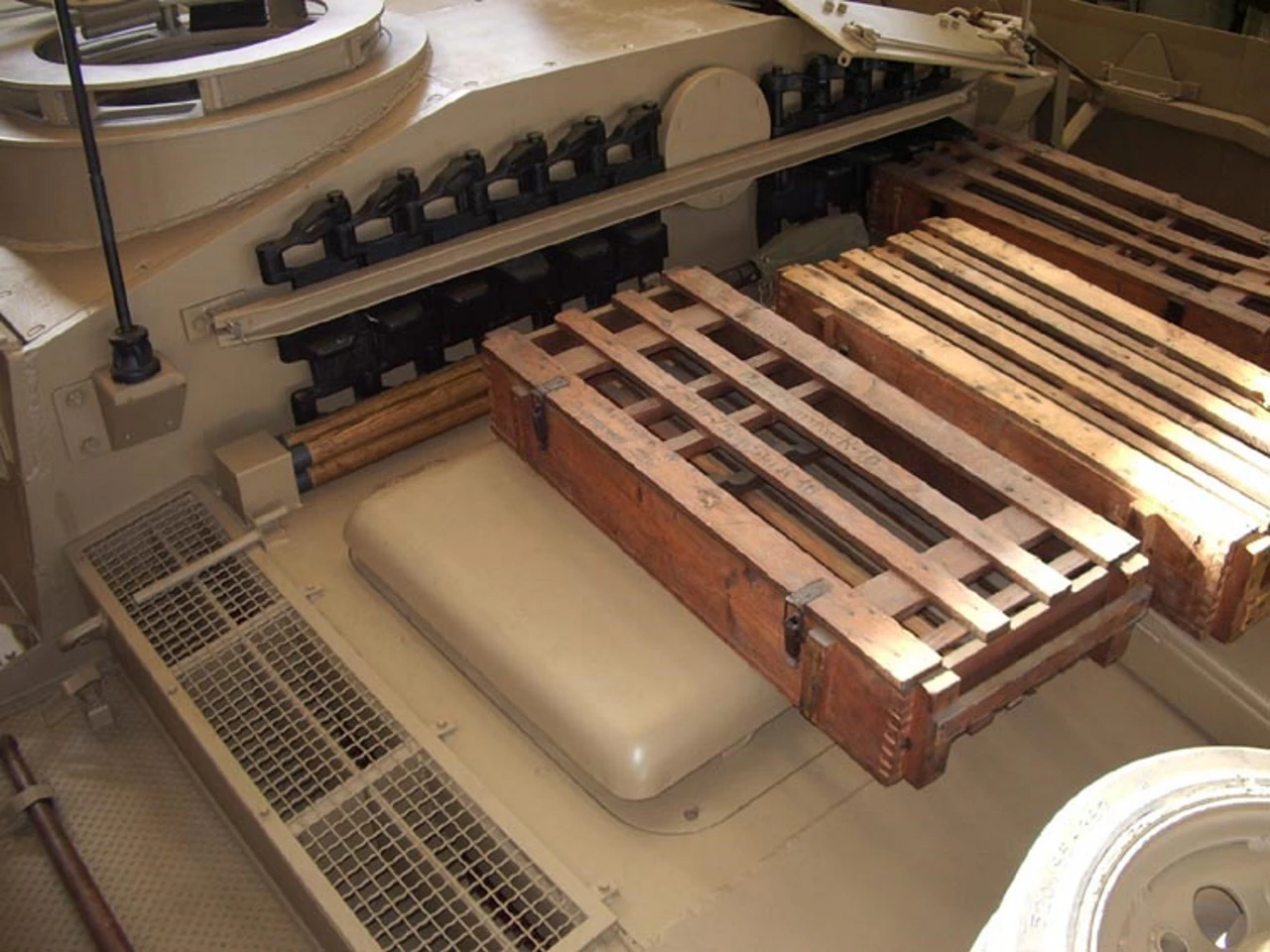
SdKfz 142-1 StuG III 02

SdKfz 142-1 StuG III 01

SdKfz 142-1 StuG III 04
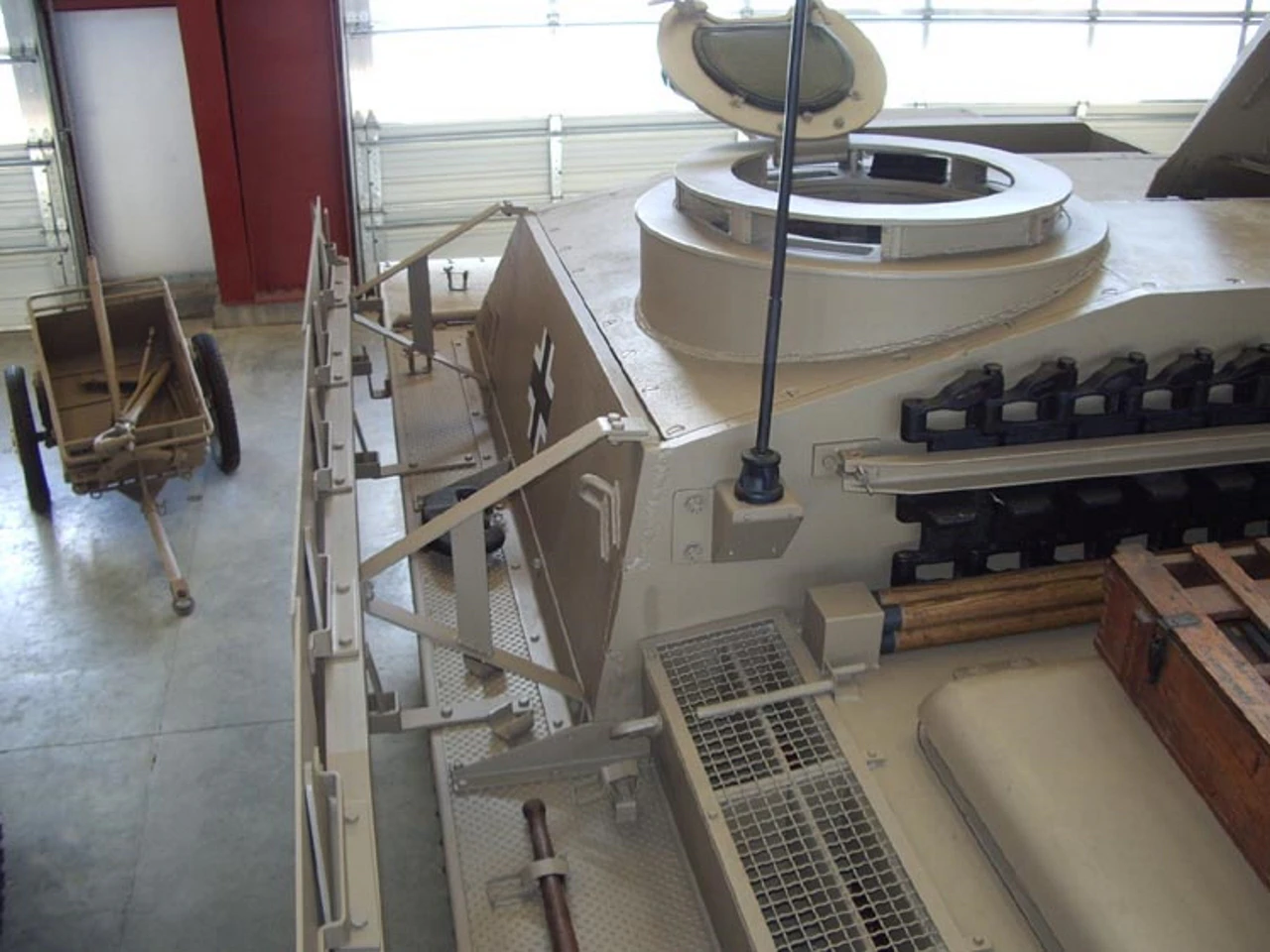
SdKfz 142-1 StuG III 03
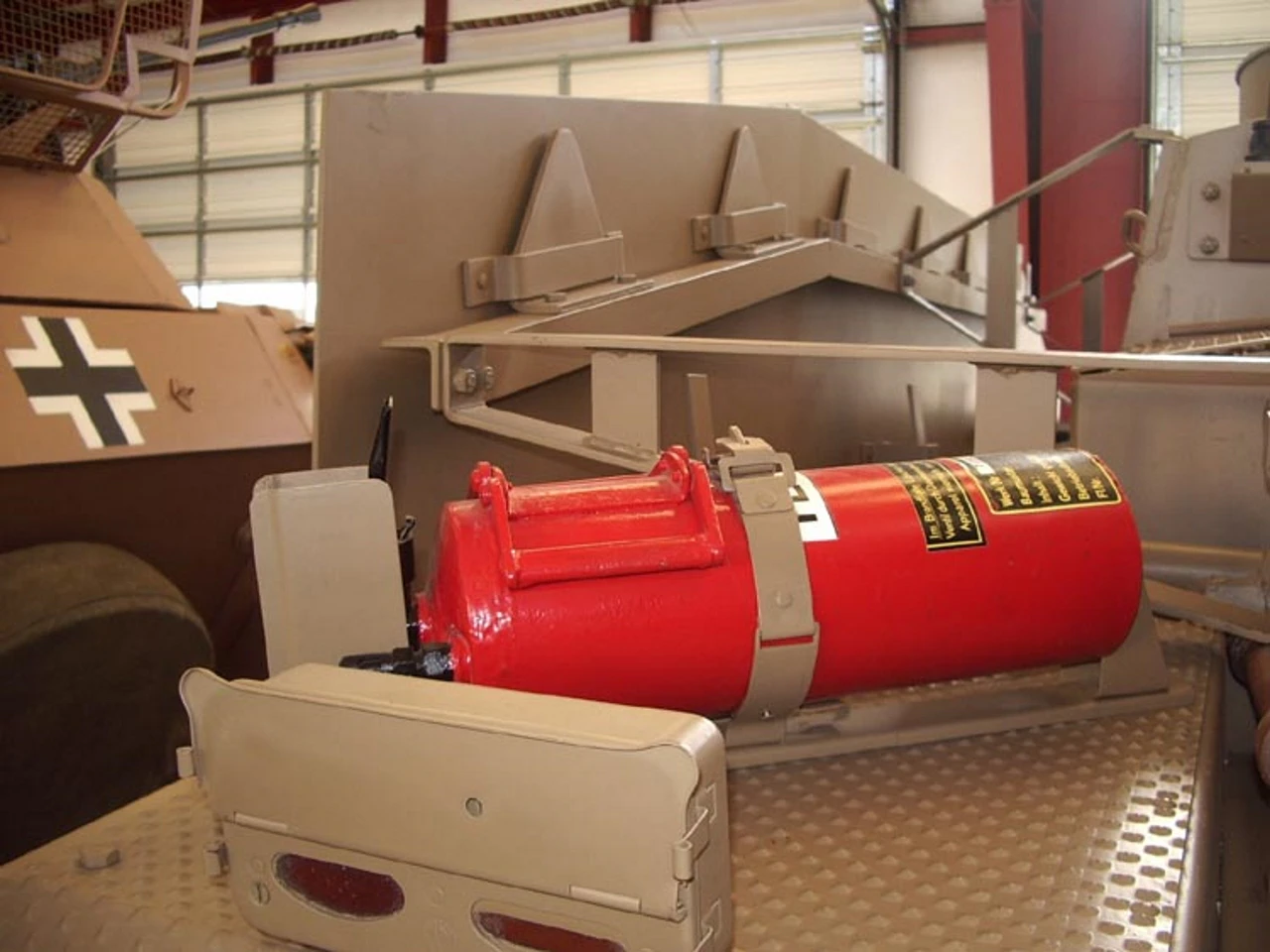
SdKfz 142-1 StuG III 05

SdKfz 142-1 StuG III 06

SdKfz 142-1 StuG III 08
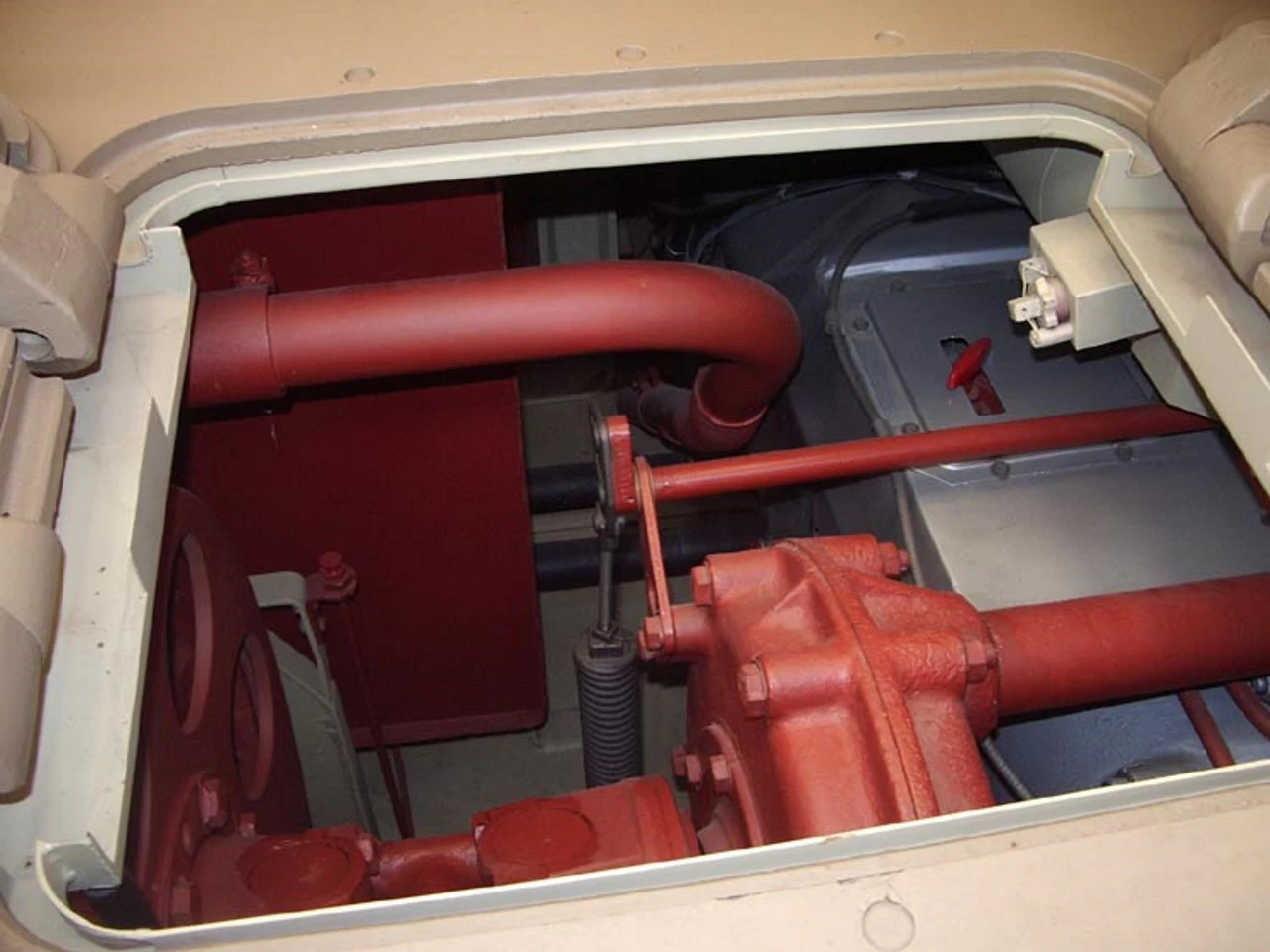
SdKfz 142-1 StuG III 07

SdKfz 142-1 StuG III 09
Изчакайте, търсене StuG III Ausf. G снимки за вас...

| SdKfz 142/1 Щурмгешуц (StuG) III Ausf G Разходка Около | |
|---|---|
| Фотограф | Владимир Якубов |
| Локализация | Музей на броните Latrun |
| Снимки | 107 |
| Sturmgeschutz III Ausf. B Walk Around | |
|---|---|
| Фотограф | Unknow |
| Локализация | Не знам |
| Снимки | 16 |
Вижте също:


The Deadliest Silhouette on the Eastern Front
1. СтюГ III Осф. G was the final and most prolific version of the Sturmgeschütz series. Built on the reliable chassis of the Panzer III, it abandoned the rotating turret in favor of a fixed, low-profile casemate. Originally designed as infantry support artillery, the Ausf. G was up-gunned with a high-velocity 75mm cannon, transforming it into a formidable tank destroyer. Its low height made it easy to camouflage and difficult to hit, making it the preferred weapon for German “Tank Aces” like Michael Wittmann before they transitioned to heavier armor.
| Attribute | Technical Specification (StuG III Ausf. G) |
|---|---|
| Роля | Assault Gun / Tank Destroyer |
| Екипажа | 4 (Commander, Gunner, Loader, Driver) |
| Production Years | 1942 – 1945 (Approx. 8,400 built) |
| Main Armament | 7.5 cm KwK 40 L/48 |
| Secondary Armament | 1 or 2 × 7.92 mm MG34 machine guns |
| Armor (Front) | 80 mm (3.1 in) |
| двигател | Maybach HL 120 TRM V-12 (300 hp) |
| Top Speed | 40 km/h (25 mph) on roads |
Design Evolution: The “G” Refinements
- The Saukopf (Sow’s Head) Mantlet: Later Ausf. G models featured a cast gun mantlet with rounded edges. This was designed to deflect incoming shells more effectively than the earlier bolted, boxy designs.
- Schürzen (Side Skirts): To defend against Soviet anti-tank rifles and HEAT rounds, the StuG III G was often fitted with thin metal plates along the sides. These “skirts” would prematurely detonate or destabilize incoming projectiles before they hit the main hull.
- Commander’s Cupola: The Ausf. G introduced a proper cupola with periscopes for the commander, significantly improving situational awareness—a major weakness of earlier turretless designs.
- Zimmerit Coating: Many Ausf. Gs were covered in a ridged, paste-like ceramic coating. This was intended to prevent magnetic anti-tank mines from sticking to the steel hull.
The “Wait-and-Strike” Specialist
- Economic Efficiency: The StuG III was significantly cheaper and faster to build than the Panzer IV or Tiger tanks. Because it lacked a complex turret mechanism, it was also easier to maintain in the field.
- Ambush Master: Its low height allowed the StuG to hide in tall grass or shallow depressions that would expose a normal tank. Soviet tankers often didn’t realize they were being engaged by a StuG until it was too late to return fire.
- Sturmhaubitze 42 (StuH 42): A variant of the Ausf. G was armed with a 10.5 cm howitzer instead of the anti-tank gun. This version returned to the vehicle’s roots, providing devastating high-explosive support for infantry.
- Post-War Service: The StuG III was so effective that it continued to serve long after 1945. The Finnish Army used them until the 1960s, and Syria even deployed them against Israel in the 1967 Six-Day War.
Views : 11337