
Republic XF-84H Thunderscreech | |
|---|---|
| Pays | Usa |
| Rôle | Chasseur expérimental |
| Premier vol | Le 22 juillet 1955 |
| Construit | 2 |
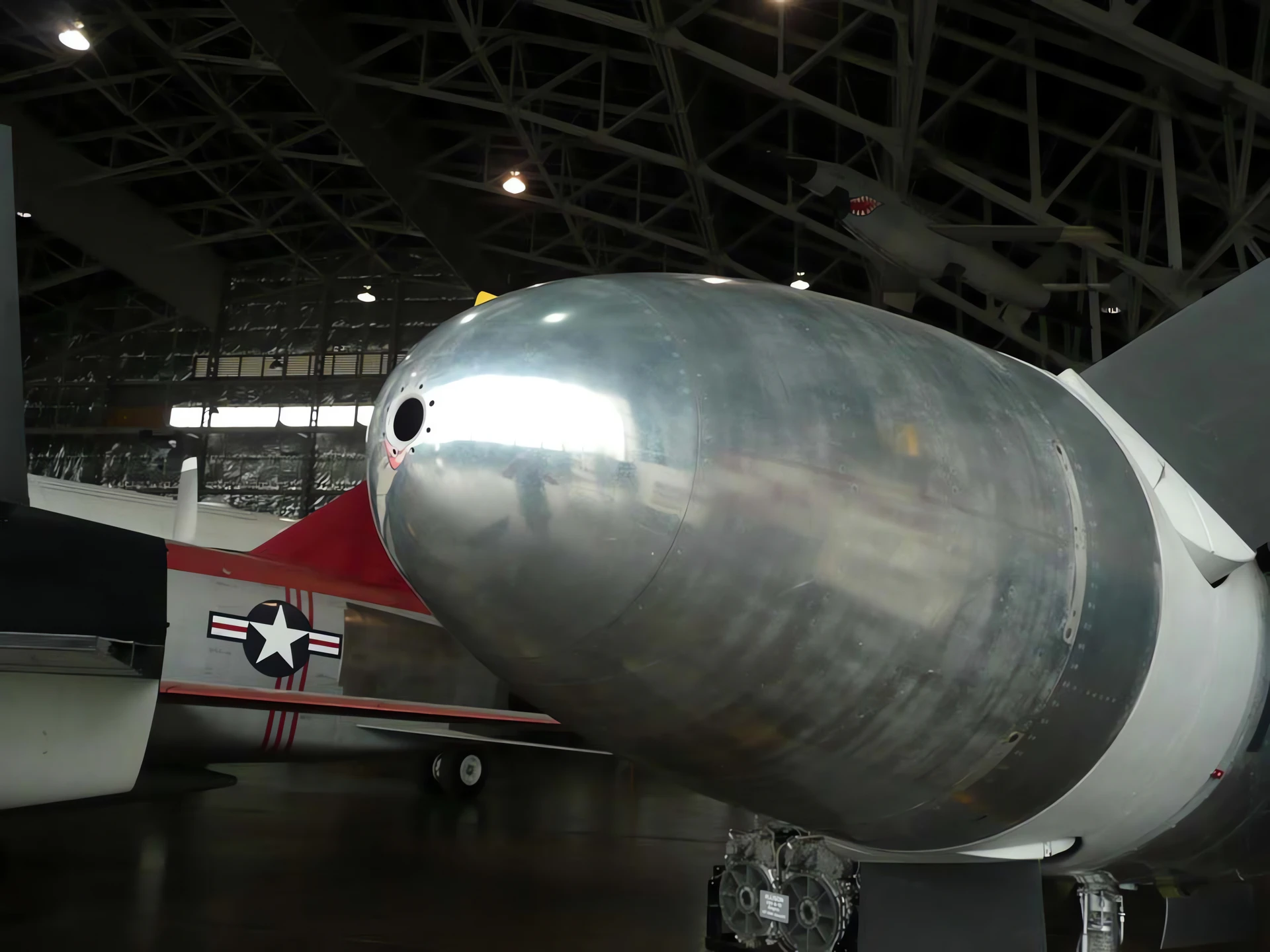
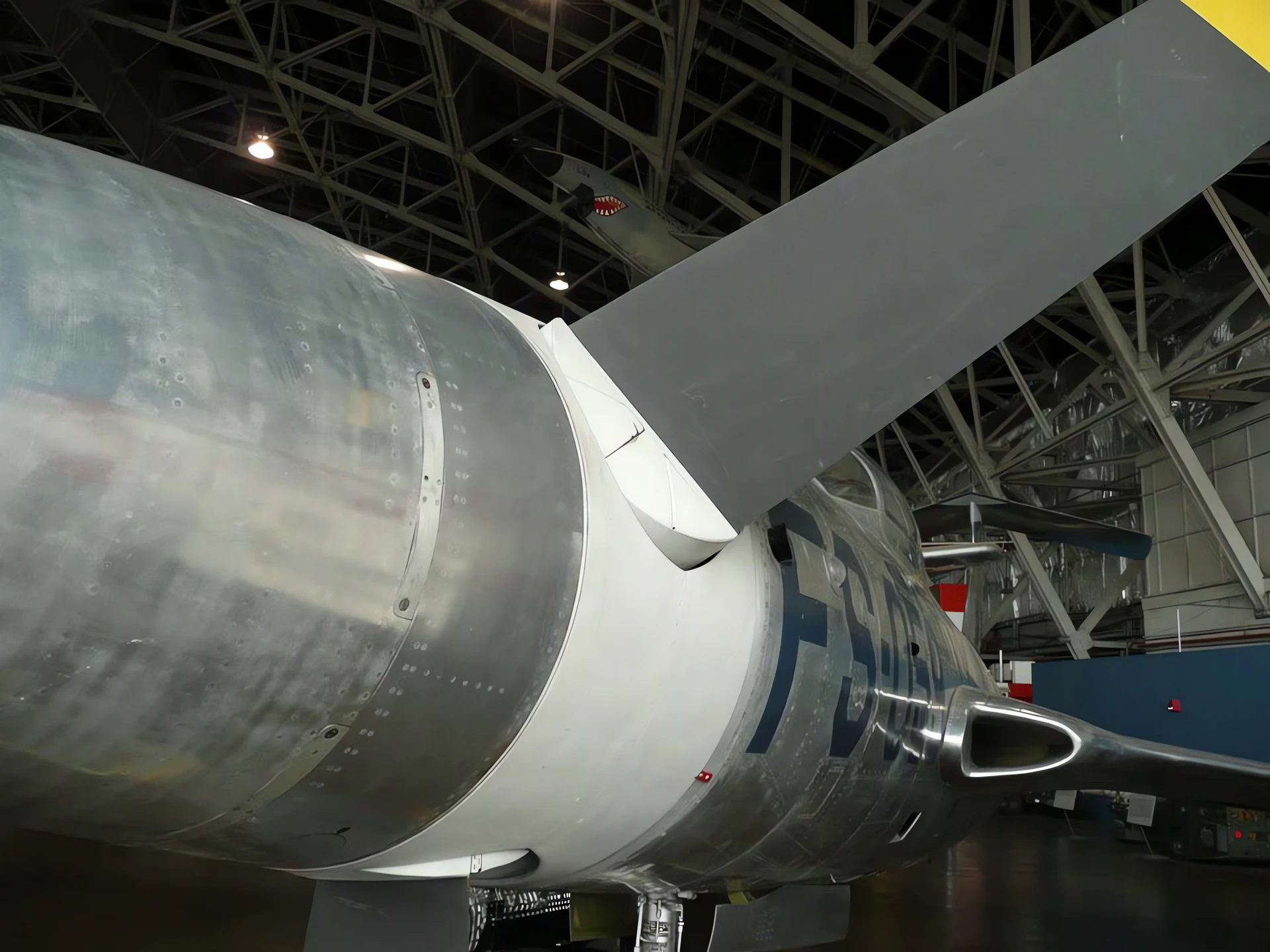
Lla République XF-84H « Thunderscreech (Thunderscreech) » était un avion à turbopropulseurs expérimental dérivé du F-84F Thunderstreak. Propulsé par un moteur à turbine qui a été atteté à une hélice supersonique, le XF-84H avait le potentiel d’établir le record officieux de vitesse aérienne pour les aéronefs à hélices, mais n’a pas été en mesure de surmonter les lacunes aérodynamiques de dentition, ce qui a donné lieu au programme.’s annulation
| République XF-84H Thunderscreech Walk Around | |
|---|---|
| Photographes | Vladimir Yakubov |
| Localisation | Le Musée National de l’USAF |
| Photos | 93 |





Voir aussi :


General Characteristics and Role
The Republic XF-84H Thunderscreech was an experimental high-speed propeller-driven aircraft developed for the U.S. Air Force in the mid-1950s. Its primary role was to test the concept of a propeller-driven aircraft capable of supersonic speed (exceeding Mach 1). It was a radical modification of the F-84F Thunderstreak fuselage, replacing the turbojet engine with a powerful turboprop engine driving a supersonic propeller. The aircraft is infamous for being one of the loudest ever built, earning it the nickname « Thunderscreech (Thunderscreech) » and causing physical discomfort to ground crews due to the tips of its massive propeller blades consistently exceeding the speed of sound. Only two prototypes were ever built.
| Property | Typical Value (XF-84H) |
|---|---|
| Rôle | Experimental Supersonic Turboprop Fighter |
| National Origin | États-Unis |
| Fabricant | Republic Aviation Company |
| First Flight | Le 22 juillet 1955 |
| Crew | 1 (Pilot) |
| Length | 15.68 m (51 ft 5 in) |
| Envergure | 10.21 m (33 ft 6 in) |
| Maximum Takeoff Weight | 13,600 kg (30,000 lb) |
Powerplant and Sonic Features
- Engine: 1 x Allison XT40-A-1 turboprop engine.
- Power Output: Approx. 5,850 hp (4,360 kW).
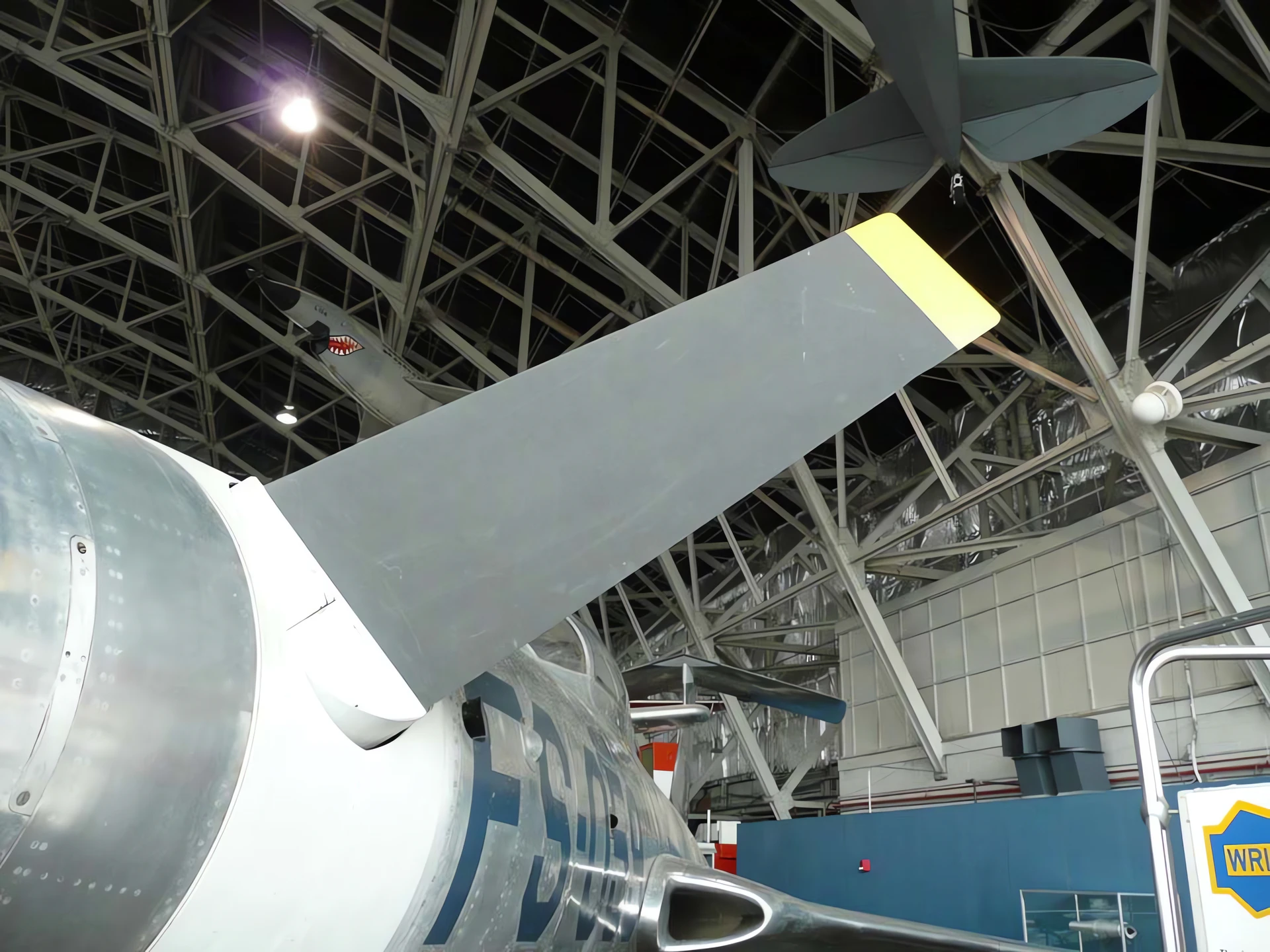
- Propeller: A massive 12-foot (3.66 m) diameter Aeroproducts constant-speed propeller with three large blades.
- Sonic Boom: The tips of the propeller blades consistently moved at speeds up to Mach 1.18 even at rest, generating a continuous, high-intensity sonic shockwave that was audible 25 miles (40 km) away.
- Maximum Achieved Speed: The aircraft never officially exceeded Mach 1, though it was designed for speeds up to Mach 1.05. The fastest measured speed was around 837 km/h (520 mph).
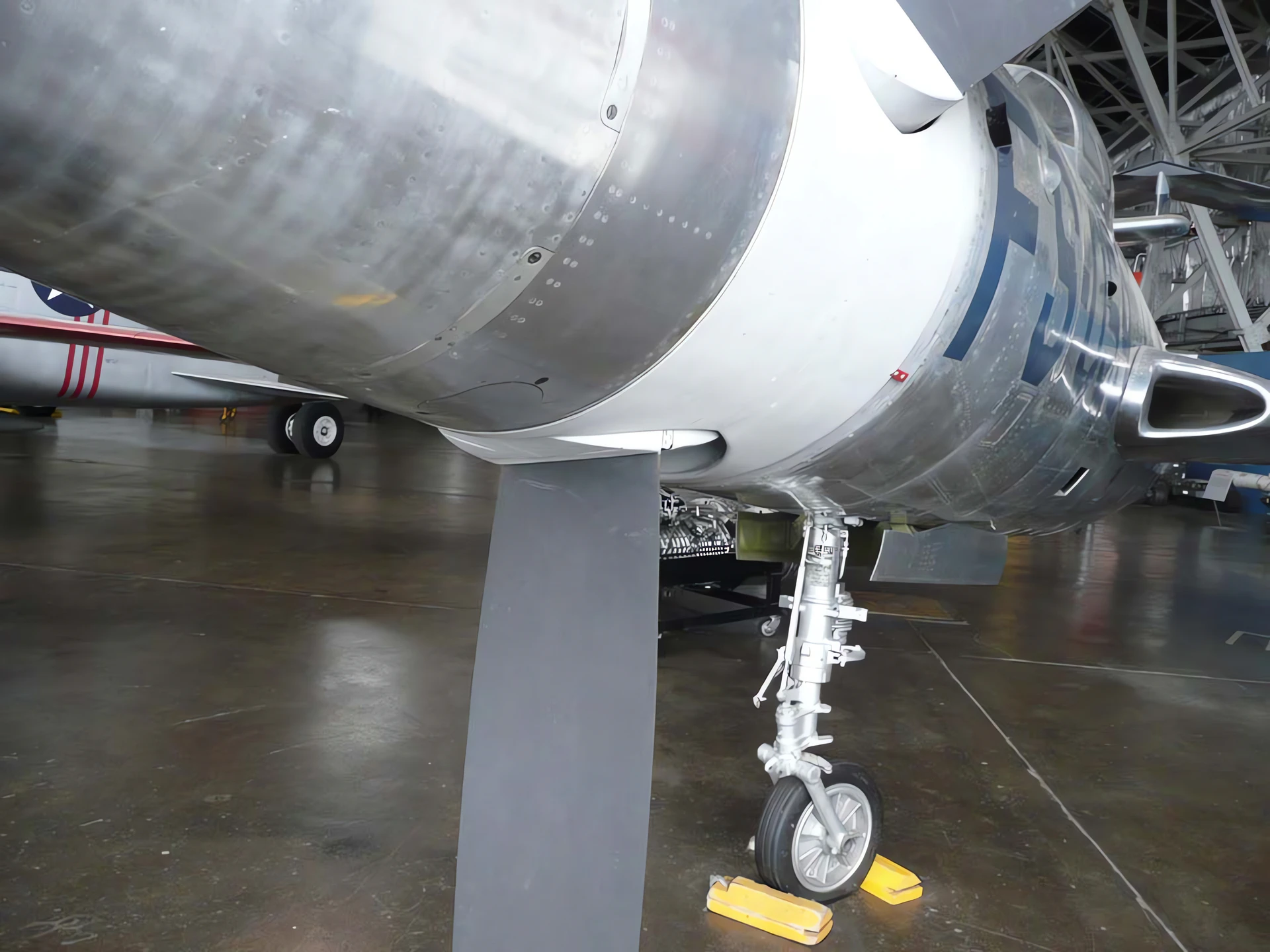
- Design Challenge: The high torque from the powerful turboprop required a vertical stabilizer extension beneath the tail to counter the rotational forces, similar to what was later used on the C-130 turboprop.
Program Outcome and Legacy
- Pilot Reports: Pilots reported severe engine vibration, handling difficulties, and poor landing characteristics. The massive torque required complex rudder and aileron trimming.
- Flight History: The two prototypes completed only a total of 12 flights, none of which lasted longer than 20 minutes, due to recurring engine and mechanical issues.
- Cancellation: The program was abruptly canceled in 1956, largely due to its technical impracticality, the intense noise and vibration issues, and the successful development of conventional jet fighters.
- Legacy: The XF-84H holds the distinction of being the fastest propeller-driven aircraft in history (though not truly supersonic), serving as a unique dead-end in aviation history.
- Preservation: The sole surviving aircraft, one of the two prototypes (serial number 51-17060), is currently displayed at the National Museum of the United States Air Force in Dayton, Ohio.
Vues : 1730
Vous pouvez voir aussi :
 Republic XF-91 – Photos & Vidéos
 Republic RC-3 Seabee – Photos & Vidéos
 Piper L-4 Grasshopper – Photos & Vidéo
 Lockheed U-2 – Photos et vidéo
 Republic F-105 Thunderchief – Photos et vidéo
 Republic F-84 Thunderjet – Photos & Vidéo
 P-51D Mustang vol2 – Walk Around
 B-17G Flying Fortress – WalkAround
 Messerschmitt Bf 109G-2 – Walk Around
 General Motors FM-2 Wildcat – WalkAround