
Republic XF-84H Thunderscreech | |
|---|---|
| Country | USA |
| Role | Experimental fighter |
| First flight | 22 July 1955 |
| Built | 2 |
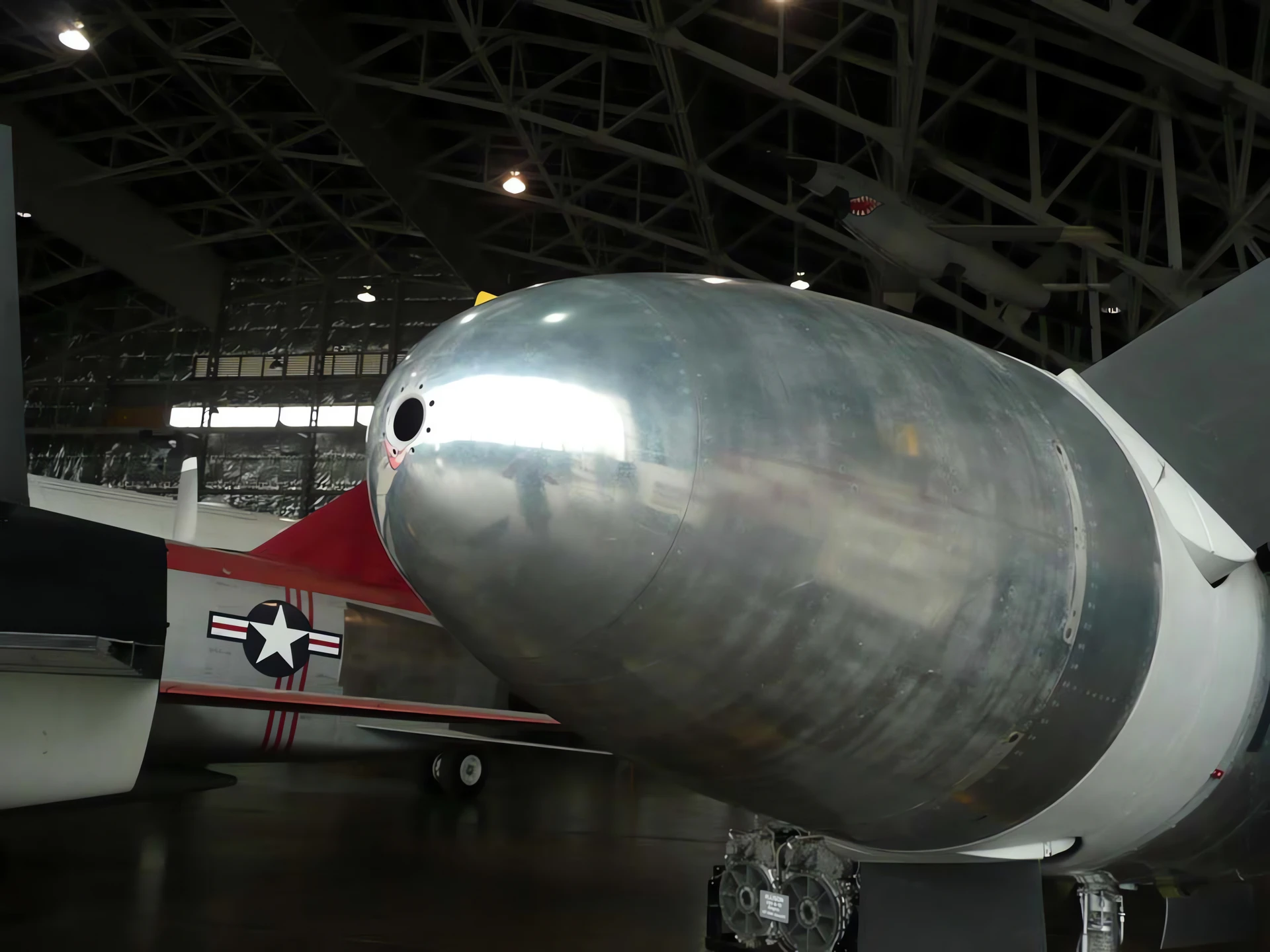
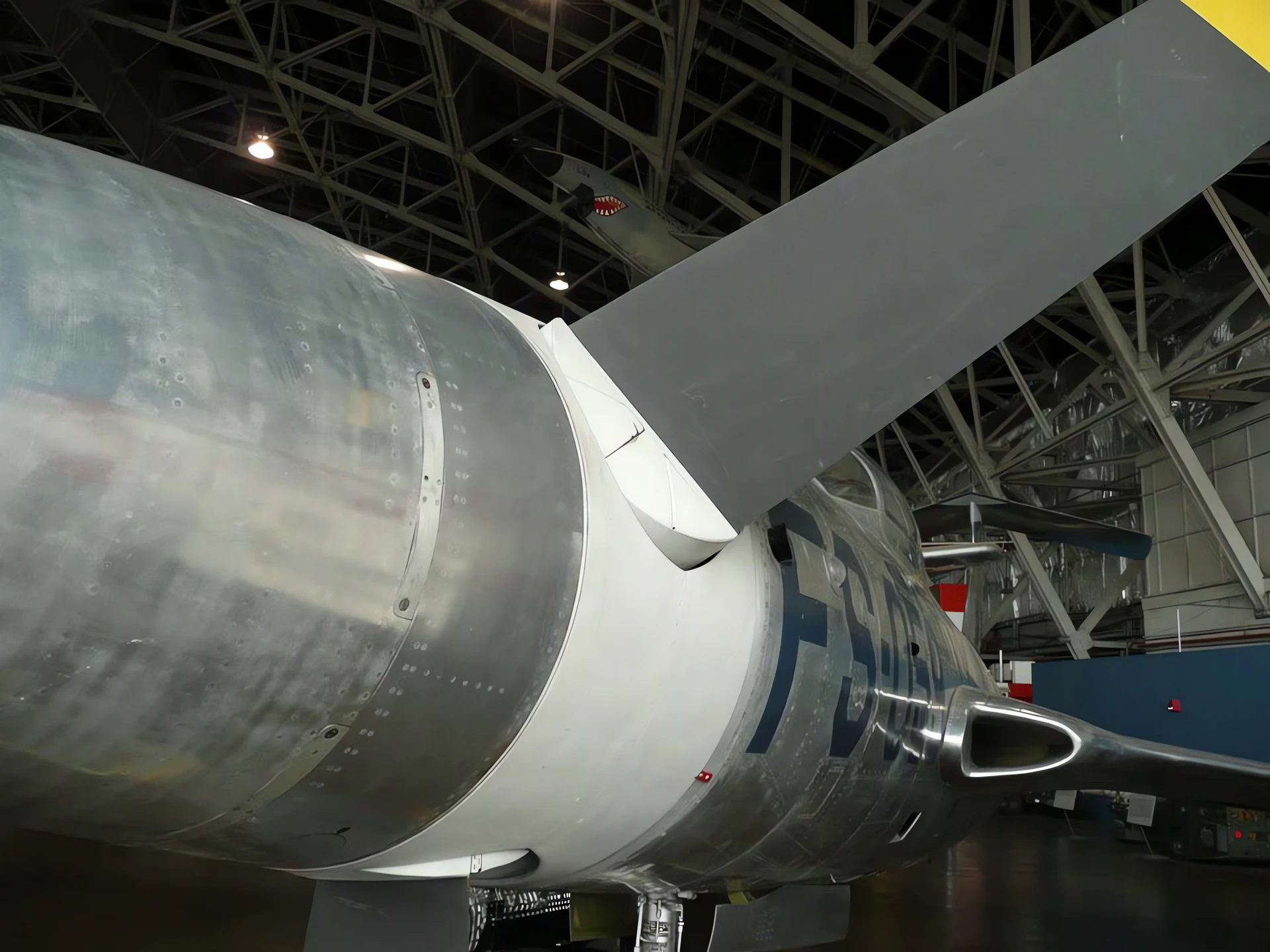
The Republic XF-84H “Thunderscreech” was an experimental turboprop aircraft derived from the F-84F Thunderstreak. Powered by a turbine engine that was mated to a supersonic propeller, the XF-84H had the potential of setting the unofficial air speed record for propeller-driven aircraft, but was unable to overcome teething aerodynamic deficiencies, resulting in the program’s cancellation
| Republic XF-84H Thunderscreech Walk Around | |
|---|---|
| Photographers | Vladimir Yakubov |
| Localisation | The National Museum of the USAF |
| Photos | 93 |





See also:


General Characteristics and Role
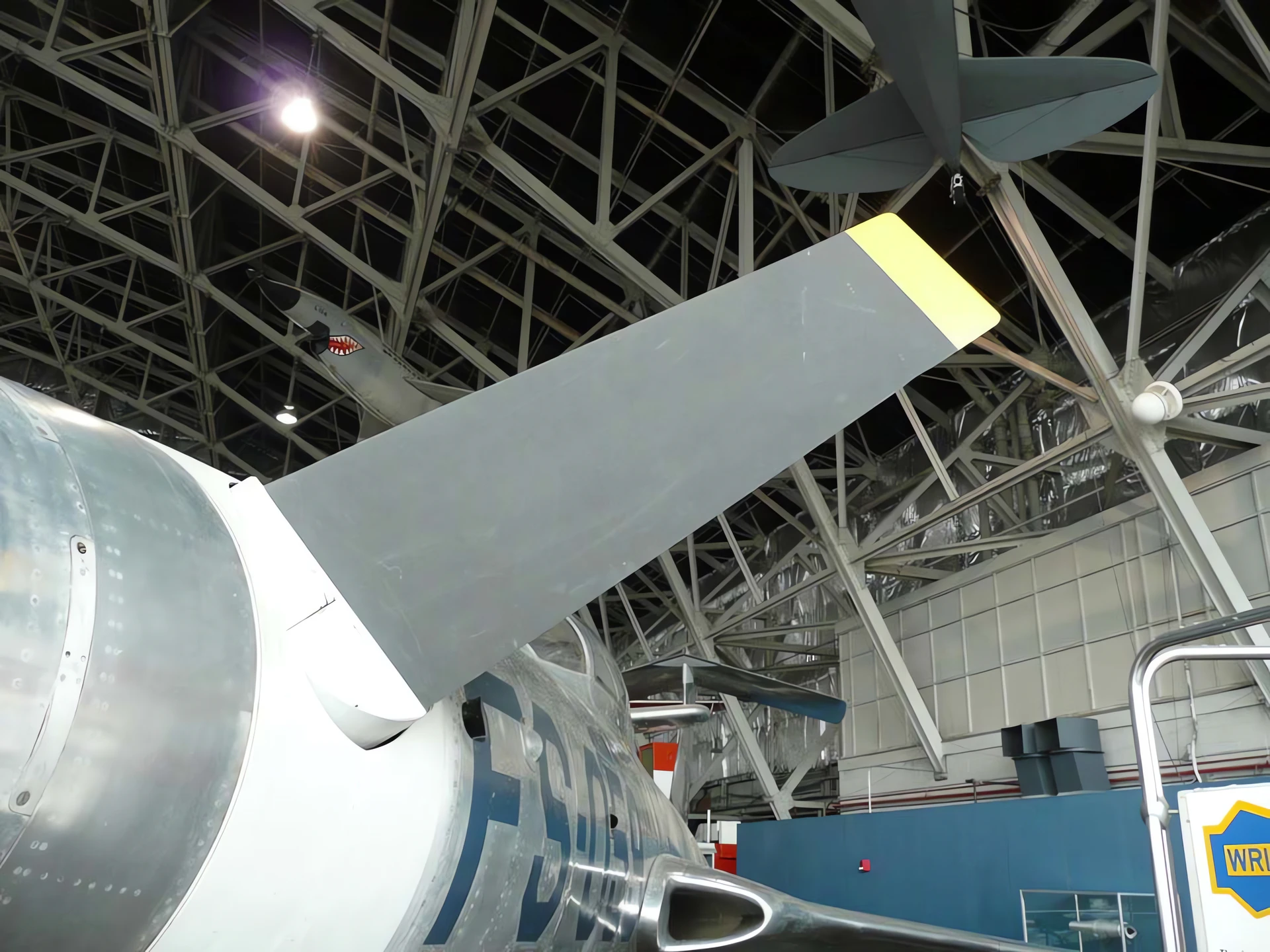
The Republic XF-84H Thunderscreech was an experimental high-speed propeller-driven aircraft developed for the U.S. Air Force in the mid-1950s. Its primary role was to test the concept of a propeller-driven aircraft capable of supersonic speed (exceeding Mach 1). It was a radical modification of the F-84F Thunderstreak fuselage, replacing the turbojet engine with a powerful turboprop engine driving a supersonic propeller. The aircraft is infamous for being one of the loudest ever built, earning it the nickname “Thunderscreech” and causing physical discomfort to ground crews due to the tips of its massive propeller blades consistently exceeding the speed of sound. Only two prototypes were ever built.
| Property | Typical Value (XF-84H) |
|---|---|
| Role | Experimental Supersonic Turboprop Fighter |
| National Origin | United States |
| Manufacturer | Republic Aviation Company |
| First Flight | 22 July 1955 |
| Crew | 1 (Pilot) |
| Length | 15.68 m (51 ft 5 in) |
| Wingspan | 10.21 m (33 ft 6 in) |
| Maximum Takeoff Weight | 13,600 kg (30,000 lb) |
Powerplant and Sonic Features
- Engine: 1 x Allison XT40-A-1 turboprop engine.
- Power Output: Approx. 5,850 hp (4,360 kW).
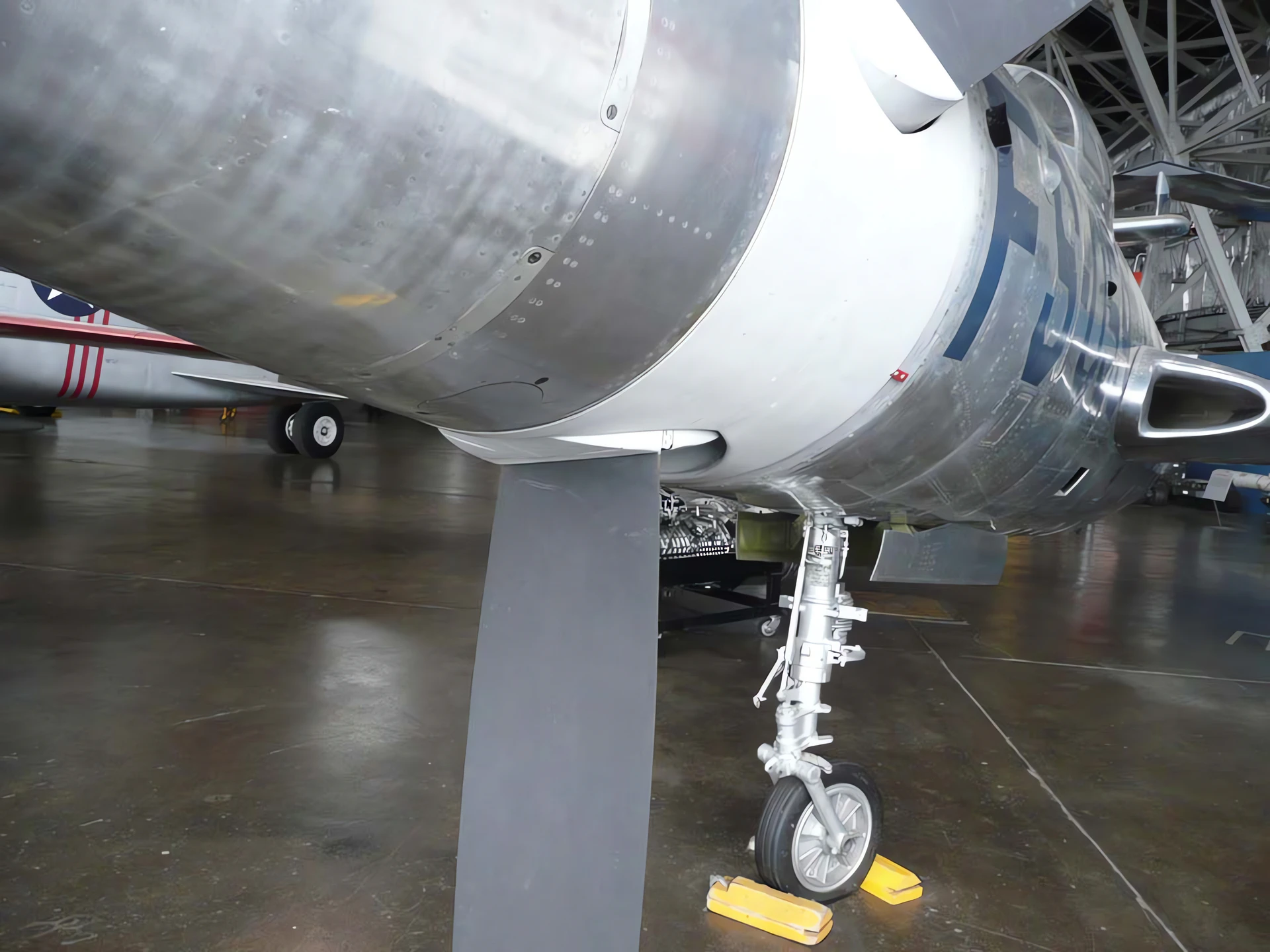
- Propeller: A massive 12-foot (3.66 m) diameter Aeroproducts constant-speed propeller with three large blades.
- Sonic Boom: The tips of the propeller blades consistently moved at speeds up to Mach 1.18 even at rest, generating a continuous, high-intensity sonic shockwave that was audible 25 miles (40 km) away.
- Maximum Achieved Speed: The aircraft never officially exceeded Mach 1, though it was designed for speeds up to Mach 1.05. The fastest measured speed was around 837 km/h (520 mph).
- Design Challenge: The high torque from the powerful turboprop required a vertical stabilizer extension beneath the tail to counter the rotational forces, similar to what was later used on the C-130 turboprop.
Program Outcome and Legacy
- Pilot Reports: Pilots reported severe engine vibration, handling difficulties, and poor landing characteristics. The massive torque required complex rudder and aileron trimming.
- Flight History: The two prototypes completed only a total of 12 flights, none of which lasted longer than 20 minutes, due to recurring engine and mechanical issues.
- Cancellation: The program was abruptly canceled in 1956, largely due to its technical impracticality, the intense noise and vibration issues, and the successful development of conventional jet fighters.
- Legacy: The XF-84H holds the distinction of being the fastest propeller-driven aircraft in history (though not truly supersonic), serving as a unique dead-end in aviation history.
- Preservation: The sole surviving aircraft, one of the two prototypes (serial number 51-17060), is currently displayed at the National Museum of the United States Air Force in Dayton, Ohio.
Views : 1579
You can see also :
 Republic XF-91 – Photos & Videos
 Republic RC-3 Seabee – Photos & Videos
 Piper L-4 Grasshopper – Photos & Video
 Lockheed U-2 – Photos & Video
 Republic F-105 Thunderchief – Photos & Video
 Republic F-84 Thunderjet – Photos & Video
 P-51D Mustang vol2 – Walk Around
 B-17G Flying Fortress – WalkAround
 Messerschmitt Bf 109G-2 – Walk Around
 General Motors FM-2 Wildcat – WalkAround