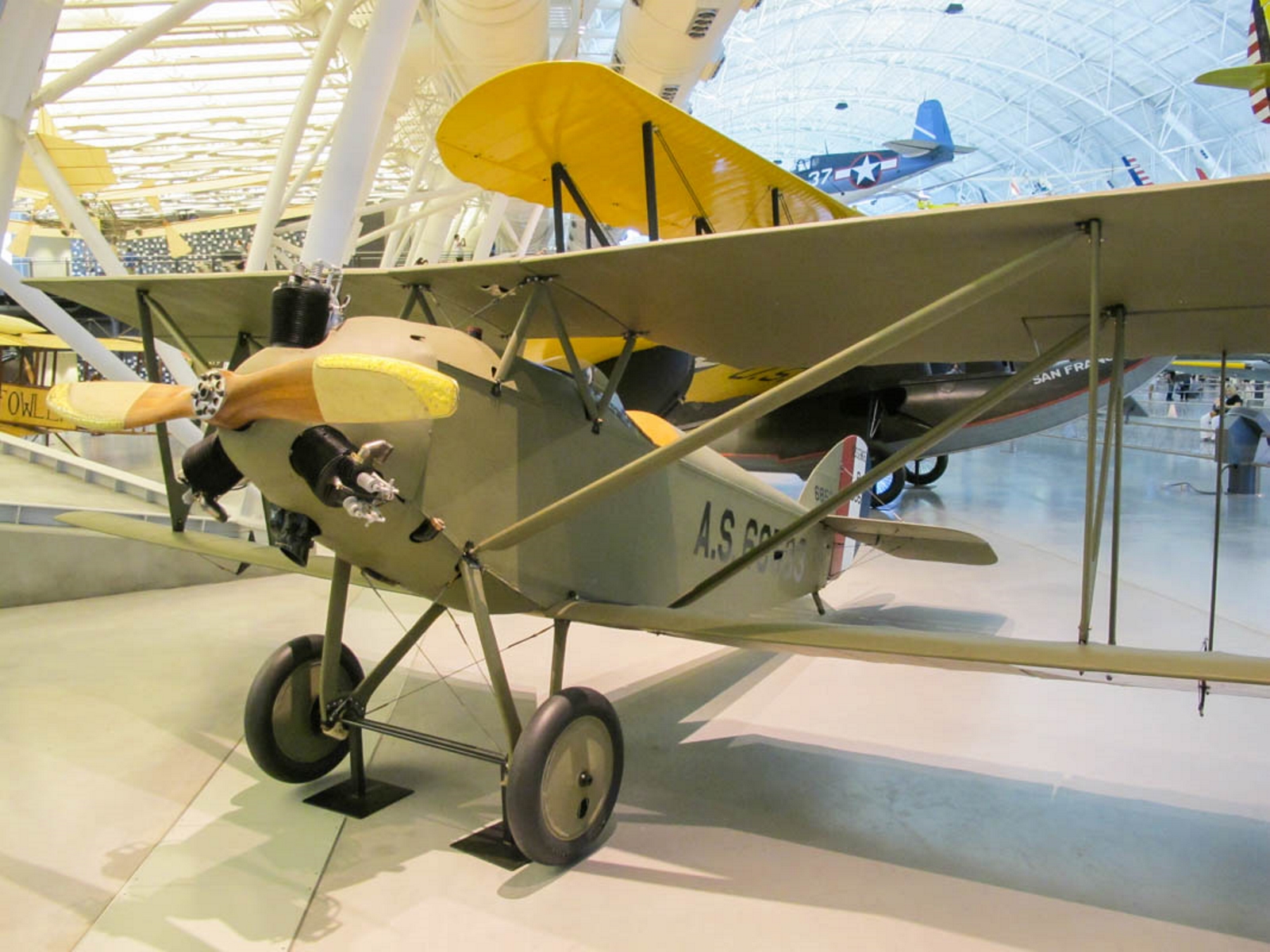
Verville-Sperry M-1 Messenger |
|
|---|---|
| Land | Usa |
| Rolle | Single-Sitzer-Kommunikations-Doppeldecker |
| Erstflug | 1921 |
| Gebaut | 42 |
das Sperry Messenger War ein einsitziges Doppeldeckerflugzeug der Us-Amerikanischen Division des United States Army Air Service (USAAS) in New York. Das Flugzeug wurde später von der USAAS als M-1 und MAT bezeichnet. Sperry produzierte zwischen 1920 und 1926 etwa 50 Messenger und die zivile Zweisitzer-Version, die Sport plane. Das Flugzeug war das erste Flugzeug, das während des Fluges Kontakt zwischen einem Flugzeug und einem Luftschiff aufstellte.
Quelle: Verville-Sperry M-1 Messenger auf Wikipedia
| Verville-Sperry M-1 Messenger Walk Around | |
|---|---|
| Fotograf | Wladimir Nikolajewitsch Jakubow |
| Lokalisierung | National Air & Space Museum |
| Fotos | 51 |

Siehe auch:


das Verville-Sperry M-1 Messenger was a small and simple biplane that was designed for communication and experimentation purposes by the United States Army Air Service in the early 1920s. It was powered by a 60 hp Lawrance L-4 radial engine and had a top speed of 96.7 mph. The aircraft was built by the Sperry Aircraft Company, founded by Lawrence Sperry, who was also known for his inventions of the autopilot and the aerial torpedo.
das M-1 Messenger was used for various tests and demonstrations, such as hooking on to an airship in flight, landing on the steps of the Capitol building, and flying across the English Channel. The aircraft was also modified into a two-seat civilian version called the Sperry Sport Plane. The M-1 Messenger was one of the first examples of a light and versatile aircraft that could be used for multiple roles and missions.
Ansichten : 1988
Sie können auch sehen:
 Aero A.32 – Fotos & Videos
 Polikarpov I-15 – Fotos & Videos
 Beechcraft Model 17 Staggerwing – Fotos & Videos
 SPAD S.XIII – Fotos & Videos
 Beechcraft Model 17 – Fotos & Videos
 Loening OL – Fotos & Video
 Curtiss JN-4D Jenny – Fotos und Videos
 Grumman F3F – Fotos & Video
 IMAM Ro 37bis – Fotos & Video
 Royal Aircraft Factory BE2A – Fotos & Video