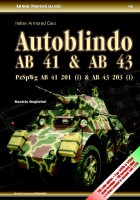
Italian Armored Cars Autoblindo AB 41 & AB 43 - Armor Photogallery 008

Armor PhotoGallery

PublisherModel Centrum Publishing
Title

Italian Armored Cars Autoblindo AB 41 - AB 43

Réf08
Description

Review on the machine guns "Autoblindo AB 41 - AB 43"

A signed book Armor PhotoGallery "Italian Armored Cars Autoblindo AB 41 - AB 43 - Armor Photogallery 008" magazine.

In 1940, the Italian Army received a new model of Machine Gun: theAutoblinda Modelo 40. This model was improved in 1941 and 1943 giving rise to AB41 (550 vehicles produced) and AB43. They experienced the Desert War, the Eastern Front and the Balkans.

Source: Autoblindo AB 41 - AB 43 on Wikipedia

Continue reading

Views: 2558

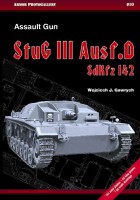
Assault Gun SdKfz 142 StuG III Ausf. D - Armor Photogallery 010

Model Centrum Publishing

SeriesArmor PhotoGallery
TitleAssault Gun SdKfz.142 StuG III Ausf.D
Réf10
Description

Review of the assault gun "Assault Gun SdKfz.142 StuG III Ausf.D"

A signed book Armor PhotoGallery magazine "Assault Gun SdKfz 142 StuG III Ausf. D - Photogallery Armor 010.

Le canon d’assaut Sturmgeschütz III (StuG III) fut le véhicule blindé de combat produit au plus grand nombre d’exemplaires par l’Allemagne au cours de la Seconde Guerre mondiale. Il était construit sur le châssis du char Panzer III. Conçu au départ comme un canon léger blindé destiné à soutenir l’infanterie, le StuG fut continuellement modifié et fut largement employé comme chasseur de chars. La série des Sturmgeschütz est reconnue pour son excellent rapport prix/qualité. À la fin de la guerre, plus de 10 500 avaient été construits.

Source: Wikipedia

Continue reading

Views : 1749

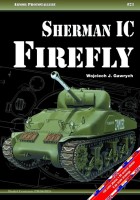
Armor Photogallery 21 - Sherman Firefly

Model Centrum Publishing

SeriesArmor PhotoGallery
TitleSherman IC Firefly Tank
Réf21
Description

Review of the "Sherman IC Firefly" tank

A signed book Armor PhotoGallery "Char Sherman IC Firefly - Armor Photogallery 021" magazine.

The Medium Tank M4 est le char américain moyen produit en plus grande quantité pendant la Seconde Guerre mondiale. Près de cinquante mille exemplaires (toutes versions confondues) furent produits. Son surnom de « Sherman », lui est attribué par les Britanniques, quand ils reçoivent leurs premiers exemplaires dans le cadre de la loi de prêt-bail, continuant leur tradition de nommer les chars d’origine américaine d’après le nom d’un général nordiste de la guerre de Sécession célèbre de ce pays. L’US Army adopte par la suite ce surnom, et le Medium Tank M4 est dès lors appelé « M4 Sherman ». Les Soviétiques surnomment les leurs « Emcha ».

Source: Wikipedia

Continue reading

Views : 2098

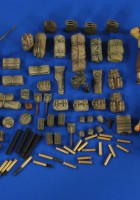
M3 15mm Gun Carriage Ammo - Stowage - Crew - Verlinden 2687

Verlinden

Réf2687
TypeAccessoires
Echelle1/35
DescriptionAccessories and crew for the M3 15mm Gun Carriage.

A Kit from the Verlinden brand accessories: "M3 15mm Gun Carriage Ammo - Stowage - Crew - Verlinden 2687".

The armoured armoured vehicle , Halftrack in English, was the first U.S. Army troop transport vehicle to be operationally employed. It was built and used extensively during the Second World War and continued its career well beyond the Middle East, notably where it was used in many versions in Israel or Lebanon (ALS). Some versions are still used today like the Tsefa. Its anti-aircraft version, the M 16, ended its operational career in the mid-1980s. Seventy variants representing 41,000 vehicles came out of Diamond T, White and Autocar factories.

Source: Wikipedia

Continue reading

Views: 1089

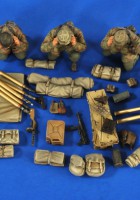
RSO Pak 75mm Stowage-Ammo-Crew - Verlinden 2679

Verlinden

Réf2679
TypeAccessoires
Echelle1/35
Description

Accessories and crew for the "RSO Pak75mm Dragon"

A Kit from the Verlinden brand accessories: "RSO Pak 75mm Stowage-Ammo-Crew - Verlinden 2679".

The lack of mobile artillery in the German army resulted in a 7.5cm PaK 40/1 anti-tank gun being integrated into each RSO. The result was a light-weight vehicle, mobile therefore, but very vulnerable to anti-tank weapons because it did not have armour or defence weaponry. The combination of the RSO and the PaK 40 was unfortunately applied late, only around 1944/45.

Source: Wikipedia

Continue reading

Views : 1469

Tracks for Neubaufahrzeug - Friulmodel ATL-119

Friulmodel

RéfATL-119
TypeTracks
Echelle1/35
Description

Caterpillars for tanks Neubaufahrzeug

An improvement set of the brand Friulmodel les chenilles: "Tracks for Neubaufahrzeug - Friulmodel ATL-119".

The german prototype series Neubaufahrzeug was a first attempt to create a heavy tank for the Wehrmacht. Multi-turrets, heavy and slow, these tanks did not fit with the tactics of the Blitzkrieg and were not put into production. The prototypes, made of soft steel, were used for propaganda purposes, although three took part in the Norwegian campaign in 1940, mainly for the purpose of intimidation.

Source: Neubaufahrzeug on Wikipedia

Continue reading

Views : 1366

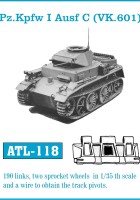
Tracks for Panzer I Ausf C - Friulmodel ATL-118

Friulmodel

RéfATL-118
TypeTracks
Echelle1/35
Description

Caterpillars for Panzer I Ausf.C (VK.601)

An improvement set of the brand Friulmodel les chenilles: "Tracks for Panzer I Ausf C - Friulmodel ATL-118".

The Panzer I is a German light tank, designed in the 1930s and used during the Spanish War and the beginning of World War II. It was the first panzer to be made when Germany, following the Treaty of Versailles, had forbidden to study or build armoured vehicles, so that the first designation applied to it to blur the tracks, was well innocuous, Landwirtschaftlicher Schlepper, or agricultural tractor, but later it received a more official Panzerkampfwagen I (armored combat vehicle). It is also known as Sonderkraftfahrzeug 101 (short for SdKfz 101) literally special motor vehicle.

Source: Wikipedia

Continue reading

Views: 1584

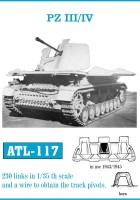
Tracks for PZ III / IV in use 1943-45 - Friulmodel ATL-117

Friulmodel

RéfATL-117
TypeChenilles
Echelle1/35
Description

Des chenilles pour les panzers III et IV (période 1943-45)

Un kit 2011 de la marque Friulmodel les chenilles : “Tracks for PZ III / IV in use 1943-45 – Friulmodel ATL-117”.

Panzer est un vocable allemand signifiant “blindé”. Si le mot peut s’appliquer aujourd’hui à tous les engins cuirassés allemands, des origines jusqu’à nos jours, l’usage fait qu’il désigne essentiellement les blindés chenillés à tourelle allemands de la Seconde Guerre mondiale (panzerkampfwagen, véhicule blindé de combat, en abrégé PzKfw), lesquels eurent une conception et un emploi tactique particuliers. Le terme générique est moins utilisé pour les MBT (main battle tank) allemands de l’après-guerre (Leopard 1 et 2), similaires aux autres systèmes d’armes occidentaux. L’historiographie française utilise le pluriel “panzers”. Certains ouvrages français utilisent ce mot comme abréviation de grandes unités blindées, “2ème panzer” signifiant 2ème division blindée ou 2.Panzerdivision.

Les panzers, surtout ceux de la deuxième moitié de la guerre, étaient très redoutés, moins nombreux mais souvent plus dangereux que ceux de leurs adversaires. Les chars lourds Tigre et Tigre II étaient ainsi les véhicules les plus lourdement blindés de leur époque. Le panzer IV fut le blindé allemand le plus utilisé durant la Seconde Guerre mondiale. Il a opéré sur tous les fronts : Pologne, France, Balkans, Grèce, front de l’Est, Afrique du Nord, Italie, etc.

Source: Wikipedia
Continue reading

Views : 1325

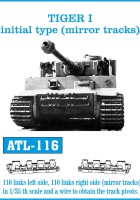
Tracks for TIGER I initial type - Friulmodel ATL-116

Friulmodel

RéfATL-116
TypeTracks
Echelle1/35
Description

Caterpillars for Tiger I

A 2011 kit from the Friulmodel brand caterpillars: "Tracks for TIGER I initial type - Friulmodel ATL-116".

The Tiger I (Tigre), diminutif de Panzerkampfwagen VI Tiger Ausführung E – Sonderkraftfahrzeug 181, char d’assaut lourd allemand en service de 1942 à 1945, est l’un des chars les plus connus de la Seconde Guerre mondiale, bien qu’il n’ait été que peu produit par rapport au T-34 soviétique ou au Sherman américain. Ce sont ses dimensions, ses lignes très carrées, sa résistance au combat, sa puissance ainsi que les équipages expérimentés l’ayant mené au feu qui ont marqué les esprits, notamment du fait de la propagande allemande. Son développement a commencé en 1937 et, quand il apparaît pour la première fois sur le front, le 29 août 1942, près de Léningrad, le Tigre I est le char techniquement le plus avancé, le mieux protégé et le plus puissant aligné par l’Axe, affichant une mobilité limitée mais exceptionnelle pour un engin qui fait plus de deux fois le poids de ses prédécesseurs et de la majorité de ses adversaires chenillés. Mais le char lourd, outre de sa production faible, a pâti tout au long de sa carrière de sa mécanique très fragile réduisant considérablement sa disponibilité au feu, et qui, avec sa faible autonomie et son poids excessif, compliquait sa mise en œuvre opérationnelle.

Source: Wikipedia

Continue reading

Views: 1685

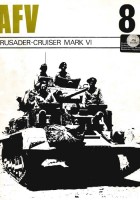
AFV Weapons Profile 08 - Crusader tank

Profile Publications

SeriesAFV Weapons
TitleCrusader Tank
Réf08
Description

The "Crusader" tank

The Crusader is a British tank of the Second World War. It was the most built Cruiser tank (5,300 units). Widely used in 1942 in Libya and Egypt, it could not match the German Panzer IV except from a short distance, where its cannon was also effective.

Source: Wikipedia

Continue reading

Views : 1264