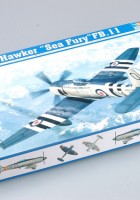
Hawker “Sea Fury” FB.11 - Trumpeter 01631

Trumpeter

Ref 01561
TypeModel kit
Scale1/72
Topic

Hawker “Sea Fury” FB.11

A kit form the brand Trumpeter the kit: «Hawker “Sea Fury” FB.11 – Trumpeter 01631».

The first Sea Fury prototype, powered by a Bristol Centaurus XII, had first flown on 21 February 1945, but the first fully-navalized version with folding wings did not fly until 12 October 1947. The Boulton Paul contract was cancelled in early 1945, and of the 100 Sea Furies that remained on order, the first 50 were completed under the designation Sea Fury Mk X.

In May 1948, the first Sea Furies became operational with No. 802 Squadron, in the form of the Sea Fury FB.Mk 11, of which 615 were built. At least 66 of these were delivered to Australia and Canada. Early in the Korean war, Sea Furies operated very successfully in the ground attack role from the decks of Royal Navy aircraft carriers. The RN also received 60 two-seat T.Mk 20 trainers in the early 1950s. Sea Furies were exported to several other countries, including the Netherlands, Pakistan, Egypt, Burma, Cuba and Iraq. Weight: Empty 9,240 lbs., Max Takeoff 12,500 lbs. Wing Span: 38ft. 4.75in. Length: 34ft. 8in. Height: 15ft. 10.5in. Maximum Speed: 435 mph Ceiling: 34,300 ft. Range: 680 miles Armament:Four 20-mm cannon in wings Underwing racks for eight 60-pound rockets or two bombs.

Source: Hawker “Sea Fury” FB.11 by Trumpeter

Continue reading

Views : 1053

Russian KV-1 Mod1939 - Trumpeter 01561

Trumpeter

Ref01561
TypeModel kit
Scale1/35
Topic

Russian KV-1 Mod1939

A kit from the brand Trumpeter the kit: «Russian KV-1 Mod1939 – Trumpeter 01561». The KV type tank that research to manufacture wins in the competition of the heavy type tank from the factory of Kirov in 1939, ising named after KV-1. First material in KV-1 types L-11s 76.2 mm of artillery; July of 1940, the heavy type in the series of KV tank production be transfered by the factory of Kirov the 100 factory production, henceforth the KV-1 that produce all changed to pack better types F-32s in function 76.2 mm of artillery.
Source: Russian KV-1 Mod1939 by Trumpeter
Continue reading

Views : 1416

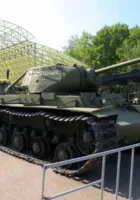
KV-1S

KV-1S

CountrySoviet Union
RoleHeavy tank
In Service1939–45
Built5219 (Kv)

The Kliment Voroshilov (KV) tanks were a series of Soviet heavy tanks named after the Soviet defence commissar and politician Kliment Voroshilov and used by the Red Army during World War II. KV-1S: In response to criticisms, the lighter KV-1S was developed, with thinner armour and a smaller, lower turret in order to reclaim some speed. Importantly, the KV-1S had a commander’s cupola with all-around vision blocks. It also had a sophisticated planetary transmission that significantly increased the reliability, and allowed use of more efficient regenerative geared steering, unlike the solely clutch and brake steering systems used by the Panzer III, IV and T-34. Its reduced weight allowed it to achieve a top speed of 43.3 km/h.

Source: KV-1S on Wikipedia

Continue reading

Views : 5194

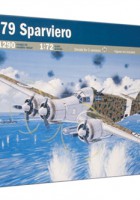
Italeri 1290 SM-79 SPARVIERO

Italeri

Réf 1290
TypeMaquette
Echelle1/72
Sujet

SM-79 SPARROWHAWK

A mock-up of the home Italeri the "SM-79 SPARVIERO – ITALERI 1290" kits.

Cet élégant trois moteurs a été développé par la Force aérienne italienne dans les années 30 pour assurer les liaisons postales avec les colonies en Afrique. Il a été adapté au début de la Seconde Guerre mondiale comme un bombardier-torpilleur. Dans cette variante il a été largement utilisé pendant le conflit dans la région méditerranéenne où, grâce aux compétences des équipages il a remporté de nombreux succès contre les navires alliés, malgré les limites de sa formule et le manque d’armement défensif, et le manque de protection de l’équipage. .

Source: SM-79 SPARVIERO by Italeri

Continue reading

Views: 1222

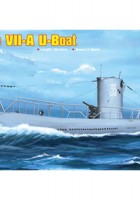
DKM Navy Type VII-A U-Boat - HOBBY BOSS 83503

Hobby Boss

Topic

DKM Navy Type VII-A U-Boat

Scale1/350
Ref

83503

Une maquette de la marque HobbyBoss le kit : «DKM Navy Type VII-A U-Boat – HOBBY BOSS 83503».

These boats, designed in 1933-1934, were the first of a new generation of German attack U-boats known, as Type VII, they were popular with their crews and very agile on the surface. They also had a much more powerful striking power than the smaller Type II’s. They had 5 torpedo tubes (4 at the bow) and would carry 11 torpedoes onboard or 22 TMA (=33 TMB) mines. They also had the effective 88mm fast-firing deck gun with about 160 rounds of ammunition. Type VIIB was an improvement on this design with substantially increased range. All but two (U-29 and U-30, both scuttled in Kupfermühlen Bay on May 4, 1945) Type VIIA U-boats were sunk during World War Two.

Source: Type VII-A U-Boat sur Hobby Boss

Continue reading

Views : 1177

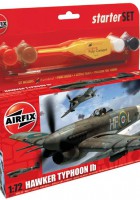
Hawker Typhoon Starter Set - Airfix A50079

Airfix

RefA50079
TypeMaquette
Scale1/72
Topic

Hawker Typhoon Starter Set

A kit from the brand Airfix the kit : Hawker Typhoon Starter Set – Airfix A50079.

The Typhoon was a British single-seat fighter bomber that entered into service in 1941 and was an intended replacement for the Hawker Hurricane in the ‘interceptor role’.

Source: Hawker Typhoon sur Airfix

Continue reading

Views : 1252

Supermarine Spitfire MKIXc - Airfix A02065

Airfix

RefA02065
TypeMaquette
Scale1/72
Topic

Supermarine Spitfire MKIXc

A kit from the brand Airfix the model : Supermarine Spitfire MKIXc – Airfix A02065.

In 1941 the Luftwaffe introduced the Fw190 providing a formidable foe to the RAF’s fighters. The Mk IX was a significant improvement on the Mk V. It had a top speed of 409 mph at 28,000 feet, an increase of 40 miles per hour. Its service ceiling rose from 36,200 feet to 43,000 feet.

Source: Supermarine Spitfire MKIXcl sur Airfix

Continue reading

Views : 1257

Supermarine Spitfire - DVD

Topics Entertainment

LangueAnglais
SujetSupermarine Spitfire
FormatColor, DVD, NTSC
PériodeSeconde guerre mondiale
ASINB004QPHBDO

Synopsis : Studio: Topics Entertainment Release Date: 05/31/2011 Run time: 60 minutes. Great WW-II History about the Spitfire. If you are a history buff about World War Two espically about air power this is a must have.

Continue reading

Views : 749

Spitfire LF Mk.IXE - Walk Around

Spitfire Mk.IX

CountryUK
RoleFighter / Photo-reconnaissance
First flightSeptember 1941
Built8996

The British Supermarine Spitfire was facing several challenges by mid-1942. The debut of the formidable Focke-Wulf Fw 190 in late 1941 had caused problems for RAF fighter squadrons flying the latest Spitfire Mk Vb. Rolls-Royce engineers were already working on a new version of the Merlin incorporating a two-stage supercharger; the combination of the improved Merlin and the Spitfire Mk VC airframe in a “stop-gap” design allowed the RAF to combat the Fw 190 on equal terms. In a second stream of development Supermarine was working on an improved, reinforced, Spitfire airframe which incorporated several new features and was designed for the Merlin 60 and 70 series engines. This new airframe later formed the basis for the Rolls-Royce Griffon powered Spitfires.

Mk IX (type 361): BS456 UZ-Z of 306(Polish) Toruński Squadron, RAF Northolt, November 1942. A Spitfire IX converted from a Mk VC airframe. A teardrop shaped blister for a Coffman cartridge starter can be seen just behind the propeller. This aircraft carries a 30-gallon “slipper” drop tank under the fuselage. In the early months of 1942, with the clear superiority of the Focke Wulf Fw 190 over the Spitfire VB, there was much pressure to get Spitfires into production using the new two-stage supercharged Merlin 61 engine. In September 1941 the Spitfire Mk III prototype N3297 had been converted by Rolls-Royce at their Hucknall plant to take a Merlin 60, which had been specifically designed for use in the Wellington Mk VI high altitude bomber.

Source: Spitfire on Wikipedia

Continue reading

Views : 11311

Squadron Signal 1071 Savoia Marchetti S.79

Squadron Signal

SérieAircraft In Action
Sujet

Savoia Marchetti S.79

Réf71

Une documentation signée Squadron Signal le livre «Savoia Marchetti S.79 – Squadron Signal 71» .

The Savoia-Marchetti SM.79 Sparviero (Italian for “Sparrowhawk”) was a three-engined Italian medium bomber with a wood and metal structure. Originally designed as a fast passenger aircraft, this low-wing monoplane, in the years 1937–39, set 26 world records that qualified it for some time as the fastest medium bomber in the world.

It first saw action during the Spanish Civil War and flew on all fronts in which Italy was involved during World War II. It became famous and achieved many successes as a torpedo bomber in the Mediterranean theater. The SM.79 was an outstanding aircraft and was certainly the best known Italian aeroplane of World War II. It was easily recognizable due to its distinctive fuselage dorsal “hump”, and was well liked by its crews who nicknamed it Gobbo Maledetto (“damned hunchback”). It was the most widely produced Italian bomber of World War II, with some 1,300 built, remaining in Italian service until 1952.

Source: SM-79 sur Wikipedia

Continue reading

Views : 1960