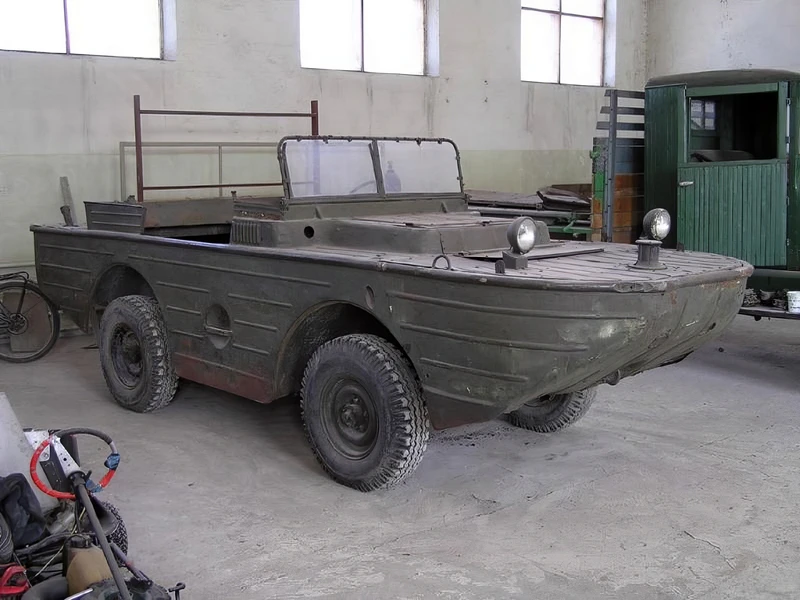
GAZ 46 | |
|---|---|
| Країні | Радянський Союз |
| Роль | 4×4 джип-амфібія |
| Виробництва | 1954-1958 |
| Побудований | Незнай |
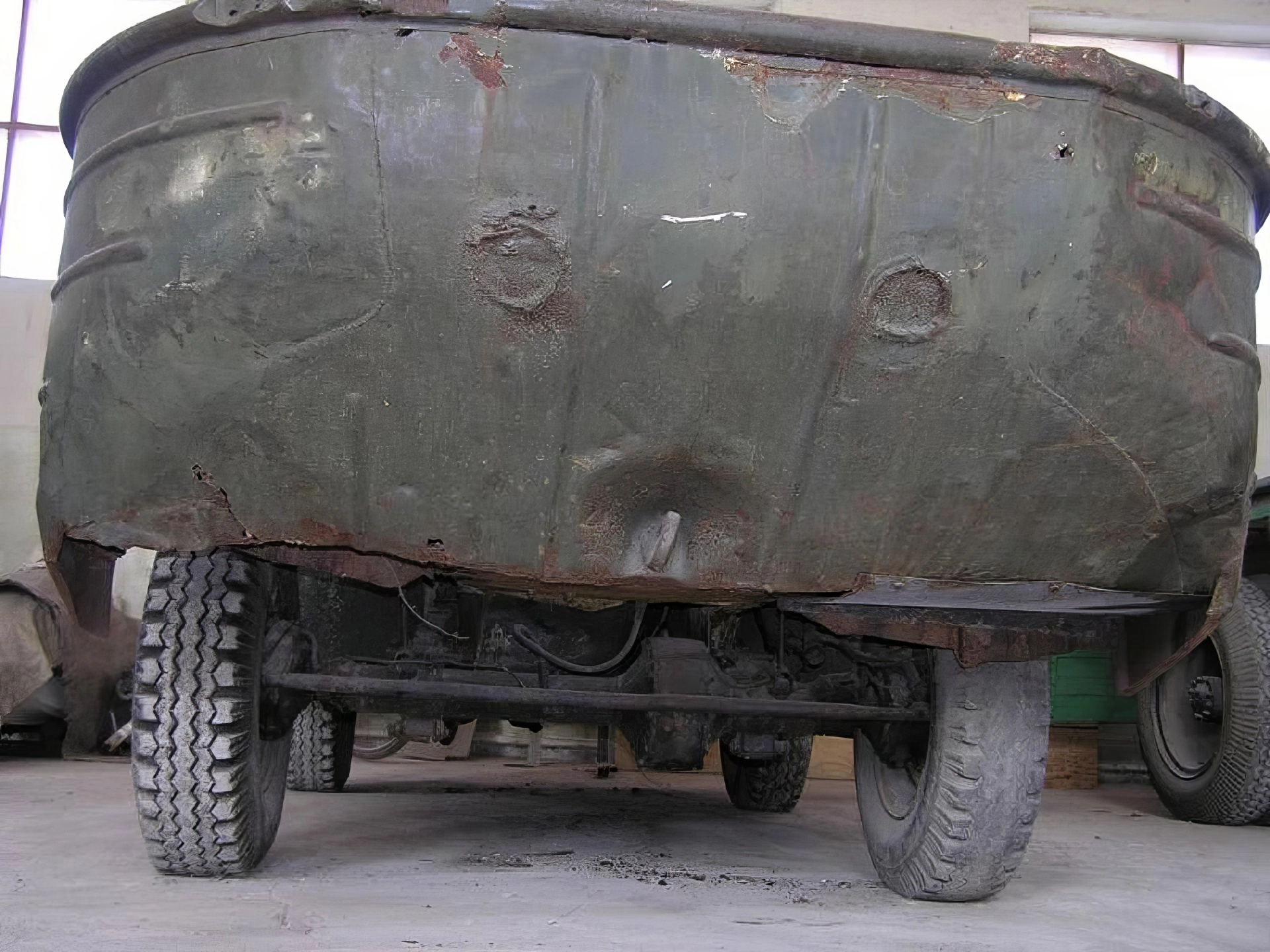
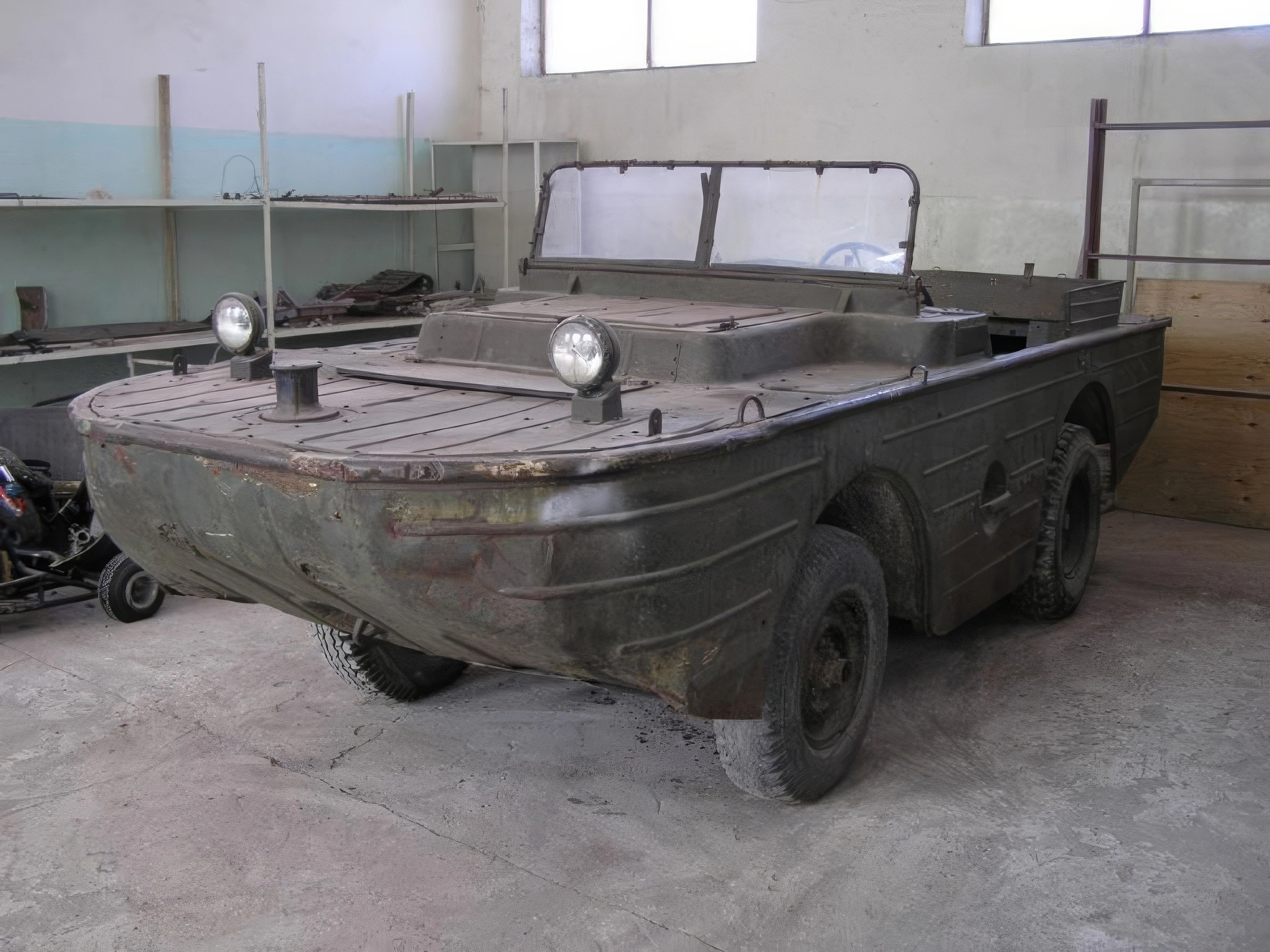
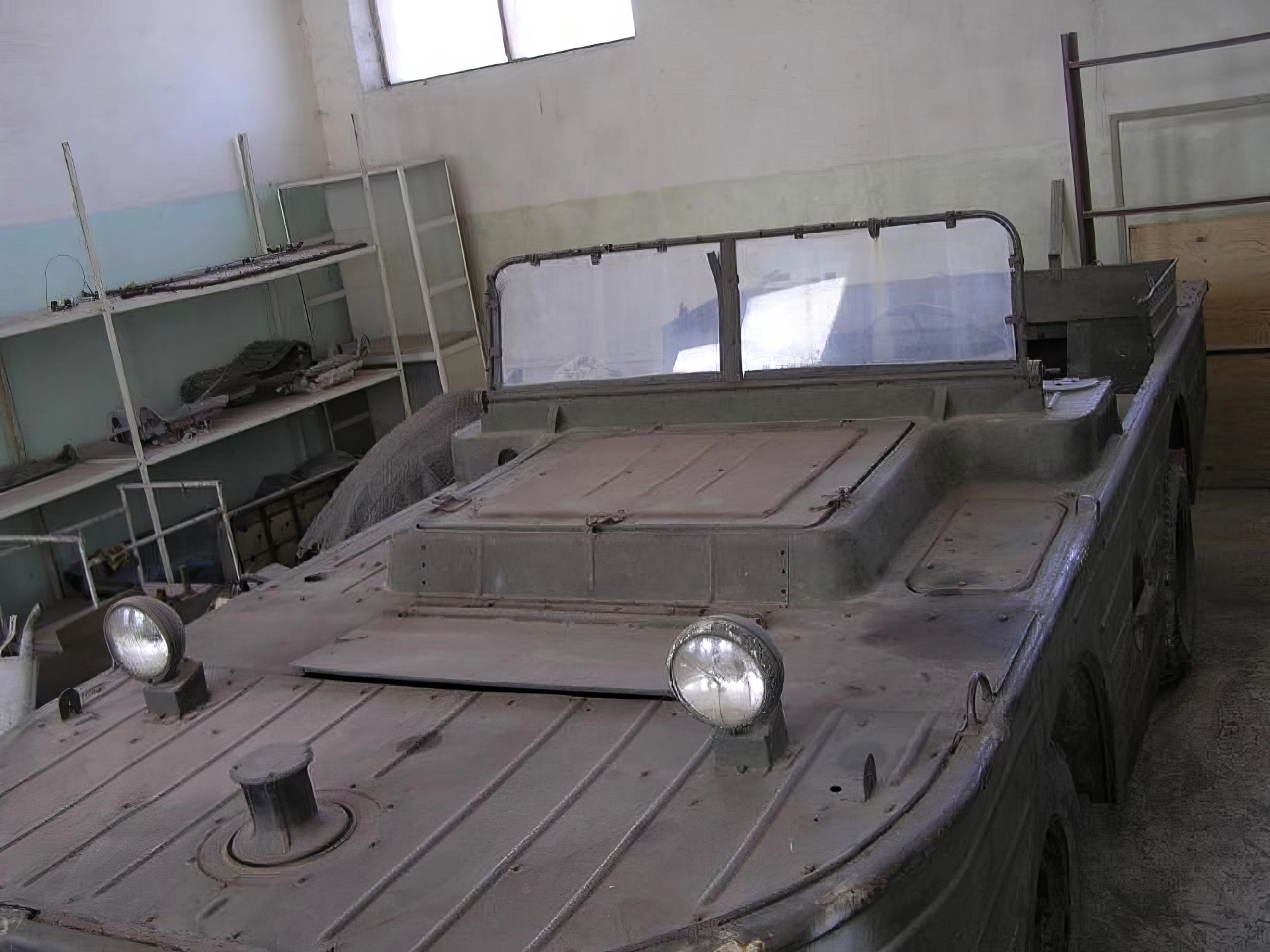
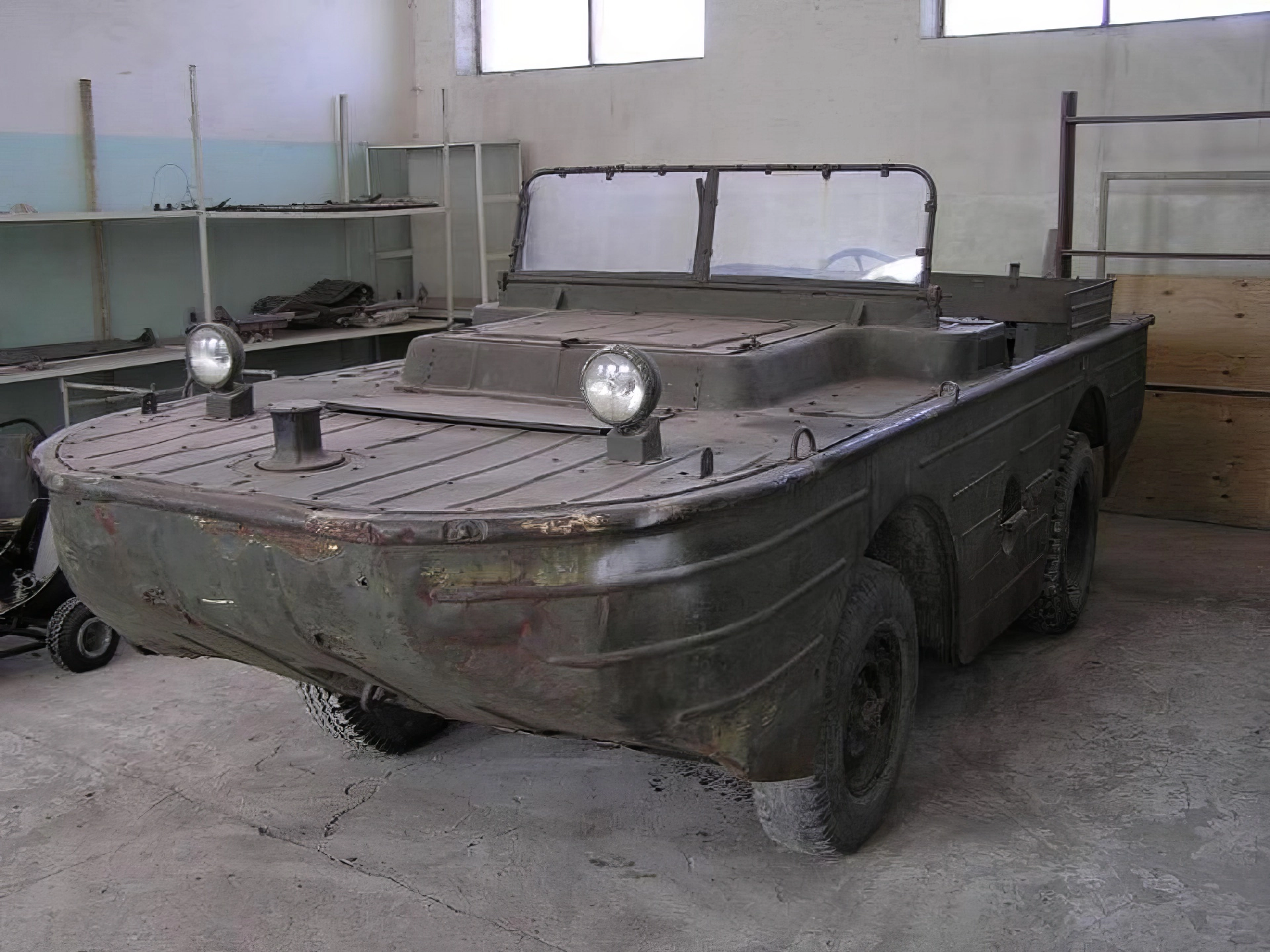
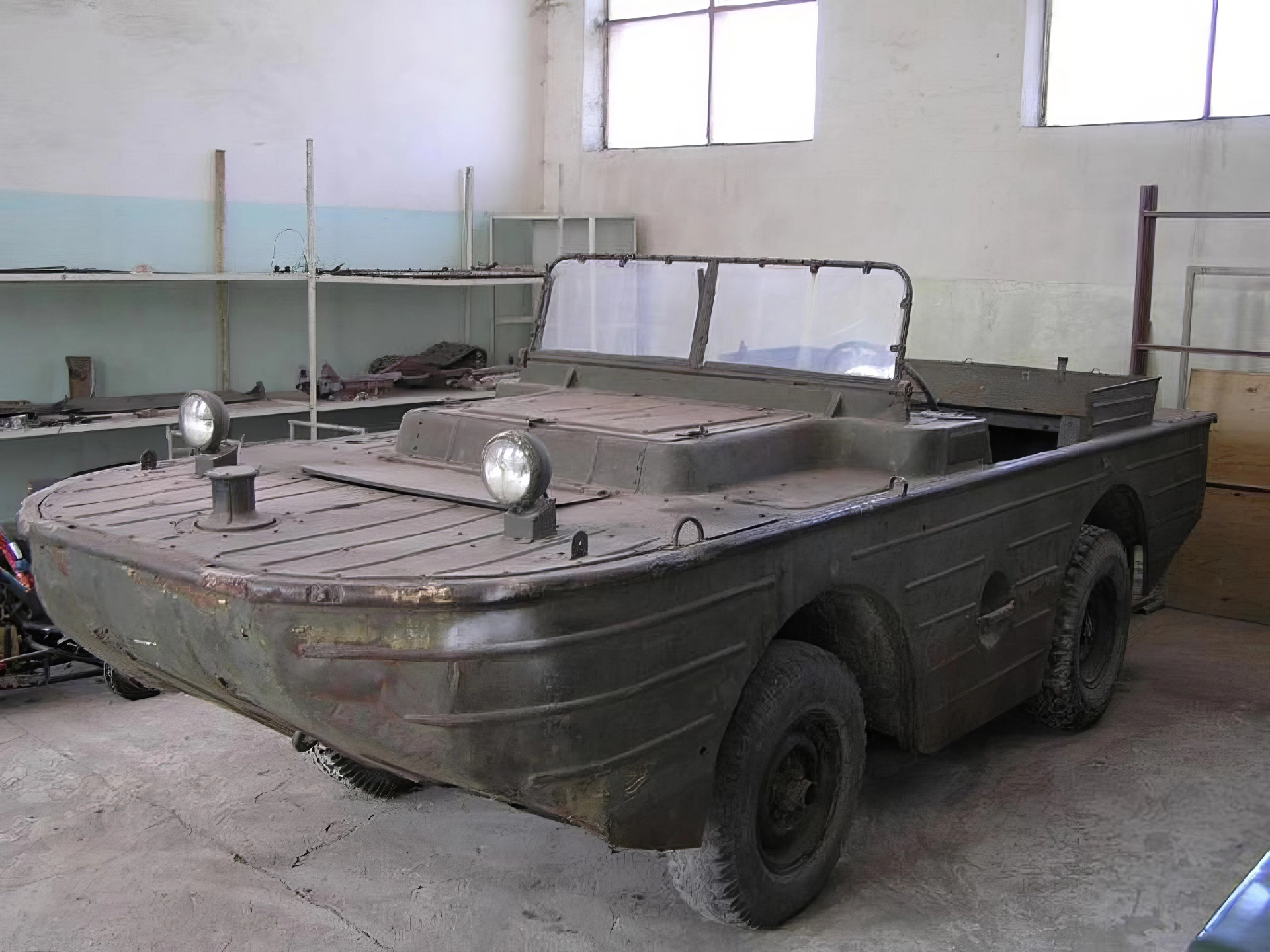
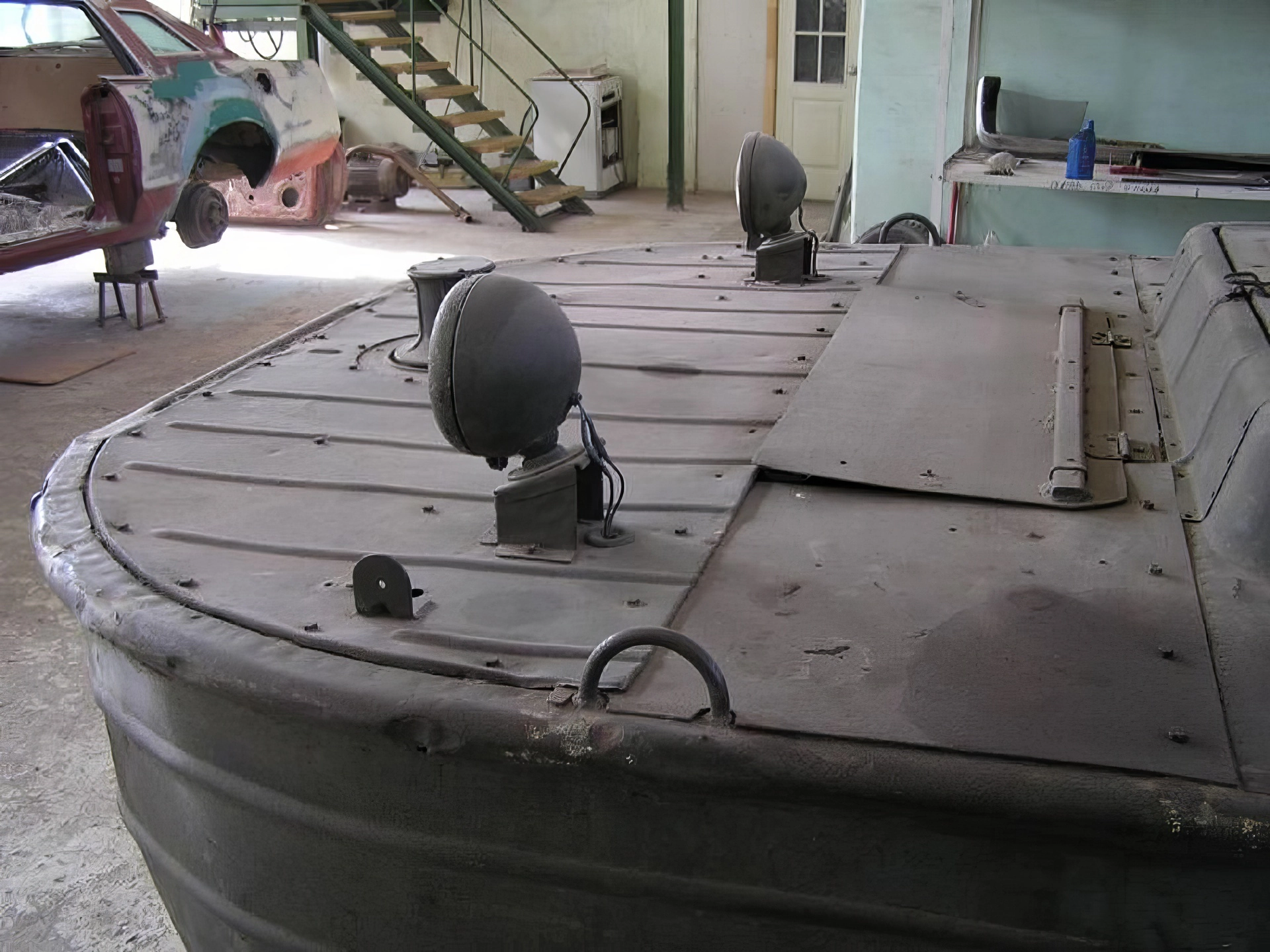
У 201 ГАЗ-46, армійське позначення MAV (російський, російський, малий плавучий автомобіль), - це легка повнопривідна військова машина російського призначення, яка була введена на службу в 1950-х роках і з тих пір використовується багатьма союзними силами Східного блоку. Під час Другої світової війни Канада, Великобританія і США пересилали в Росію велику кількість військових матеріалів. Серед них були джипи, вантажівки і автомобілі-амфібії, такі як 6×6 DUKW і 4×4 Ford GPA. Останні використовувалися для того, щоб допомогти чоловікам і спорядженням пройти через багато річок Східної Європи і боротися з німцями. Побачивши переваги таких транспортних засобів, після війни Росія вирішила розробити два аналогічних транспортних засоби, використовуючи вітчизняні автомобільні деталі, BAV, еквівалент DUKW, і MAV, еквівалент Ford GPA.
Джерело: ГАЗ 46 у Вікіпедії
| MAV (Gaz-46) Walk Around | |
|---|---|
| Photographer | Igor Suhin |
| Localisation | Unknow |
| Photos | 27 |

Читайте також:


General Characteristics and Role
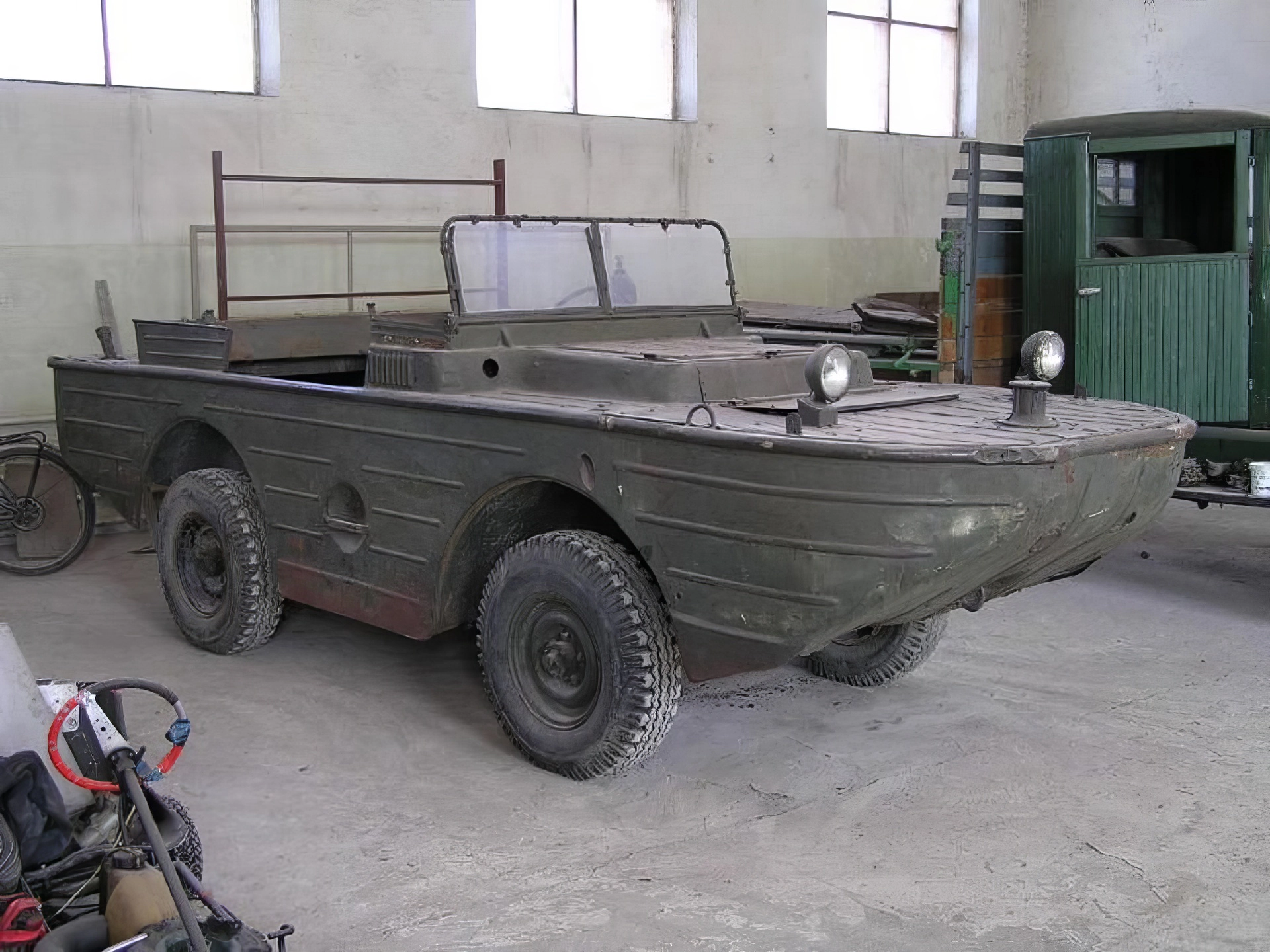
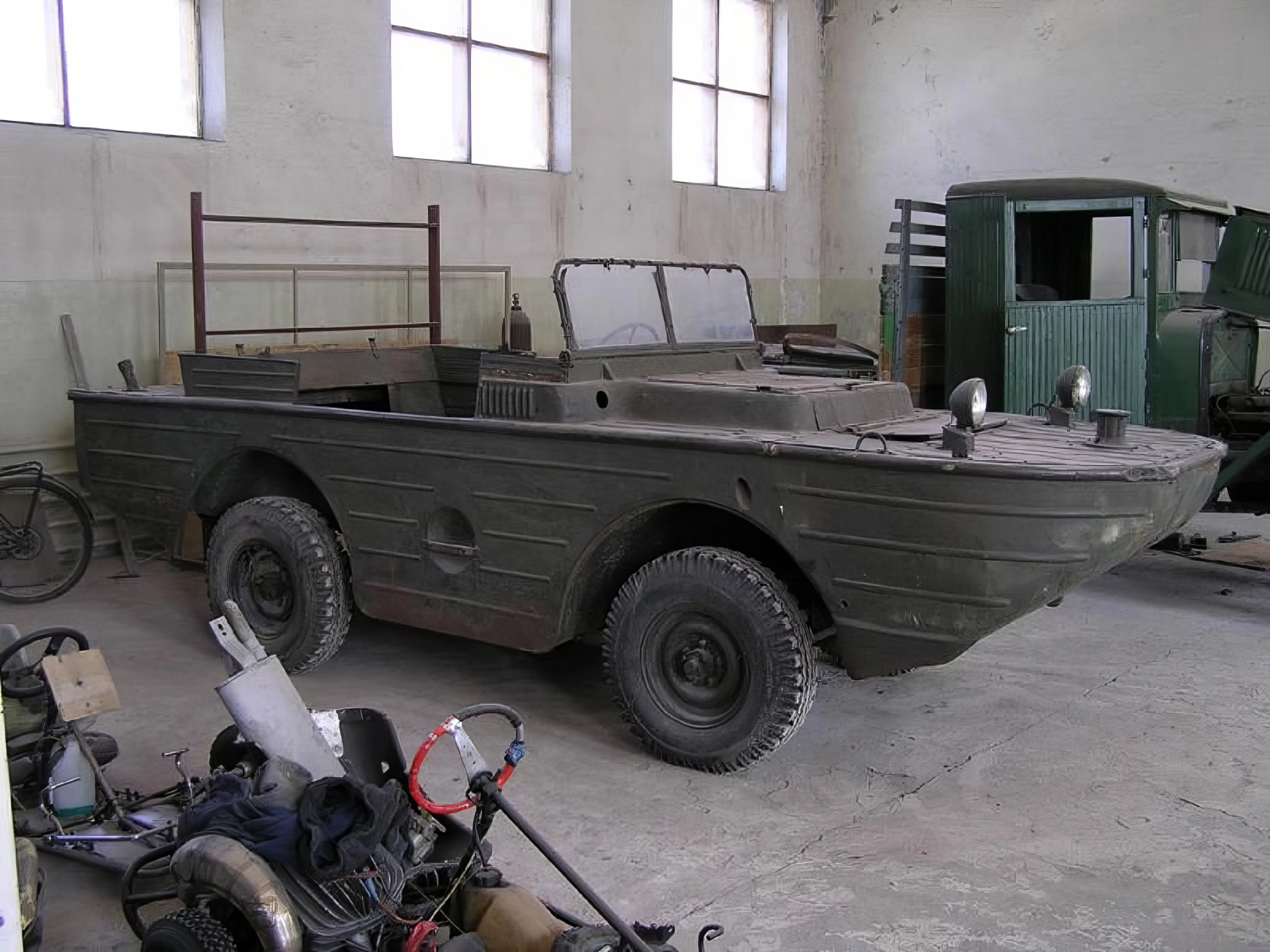
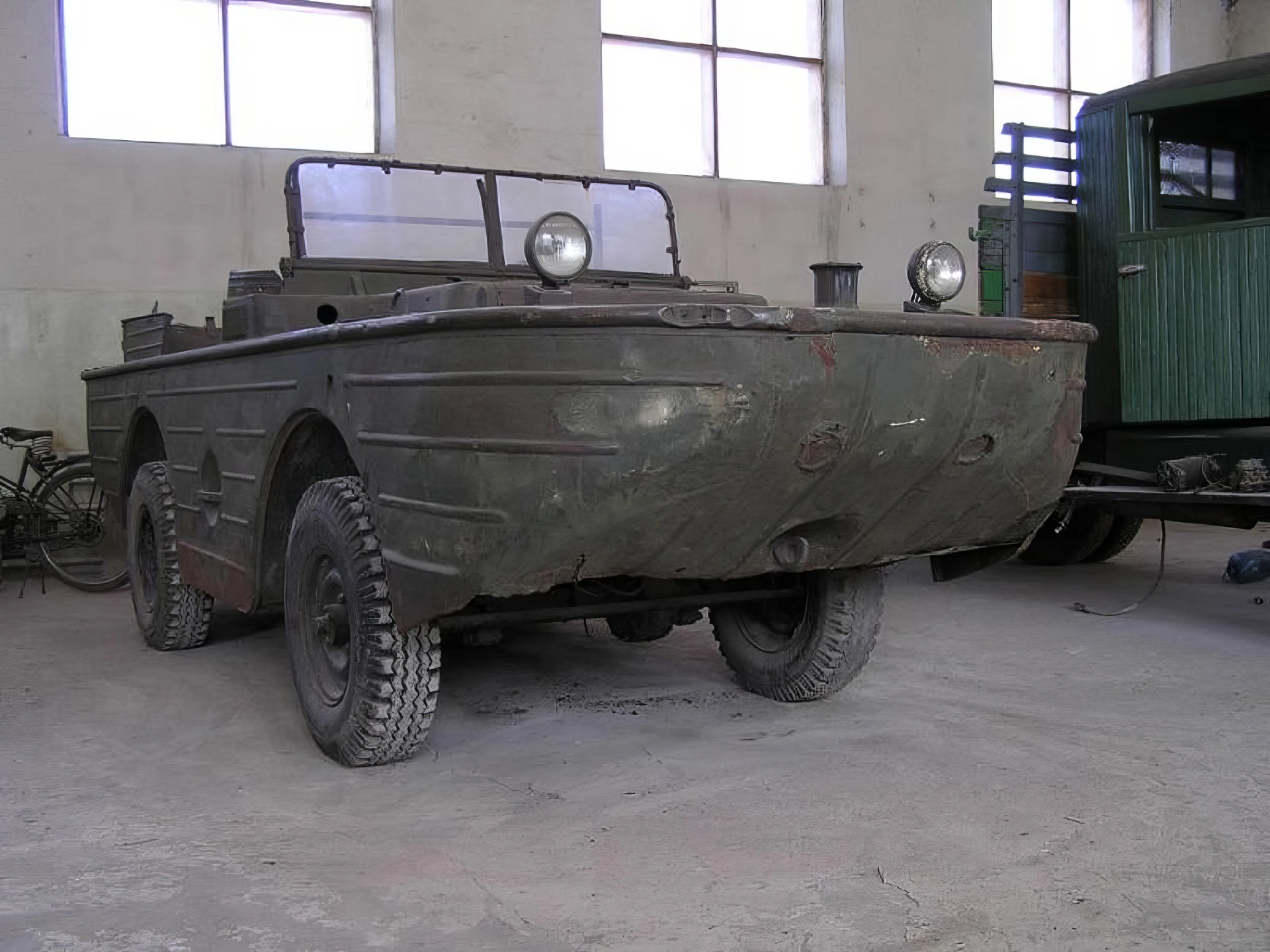
The GAZ-46 MAV (Maly Avtomobil Vodorodny, or “Small Water Vehicle”) was a Soviet light amphibious military vehicle developed shortly after World War II. It was essentially a direct, slightly scaled-down copy of the American Ford GPA ‘Seep’ amphibious jeep, which had been supplied to the Soviet Union under the Lend-Lease program during the war. The GAZ-46 was designed to provide troop and equipment transport across water obstacles for reconnaissance, liaison, and light patrol duties. It featured a boat-like hull and a conventional four-wheel-drive system on land, complemented by a propeller for water propulsion. It served primarily with the Soviet Army and Warsaw Pact nations.
| Property | Typical Value (GAZ-46 MAV) |
|---|---|
| Роль | Light Amphibious Reconnaissance/Transport |
| National Origin | Soviet Union (USSR) |
| Виробник | Gorky Automobile Plant (GAZ) |
| Service Entry | 1953 |
| команда | 1 (Driver) |
| Capacity | 4 or 5 personnel, or 500 kg (1,102 lb) of cargo |
| Configuration | 4×4, All-wheel drive (Land) |
| Довжина | 5.07 m (16 ft 8 in) |
| Ширина | 1.70 m (5 ft 7 in) |
| зріст | 1.70 m (5 ft 7 in) (Windshield up) |
| Combat Weight | 2,360 kg (5,200 lb) |
Powerplant and Mobility
- Engine: 1 x GAZ-M20 four-cylinder petrol engine (used in the GAZ-M20 Pobeda car).
- Power Output: 52 hp (39 kW).
- Maximum Speed (Road): 90 km/h (56 mph).
- Maximum Speed (Water): 10 km/h (6.2 mph; 5.4 kn).
- Propulsion (Water): Single propeller, driven by a power take-off from the transmission.
- Land Transmission: Manual, 4 forward gears, 1 reverse gear, 2-speed transfer case.
Design and Legacy
- Design Basis: Directly based on the Ford GPA (Seep), but modified to utilize standard Soviet GAZ-M20 Pobeda car components for easier logistics and repair.
- Wartime Influence: The need for an indigenous amphibious vehicle arose from the success and utility of the American amphibious jeeps used during the war.
- Construction: Featured a boat-like, welded steel hull for watertight integrity and a conventional automotive chassis within the hull.
- Successor: The GAZ-46 was eventually replaced by more advanced amphibious vehicles and specialized armored personnel carriers in the Soviet military.
Переглядів : 2261