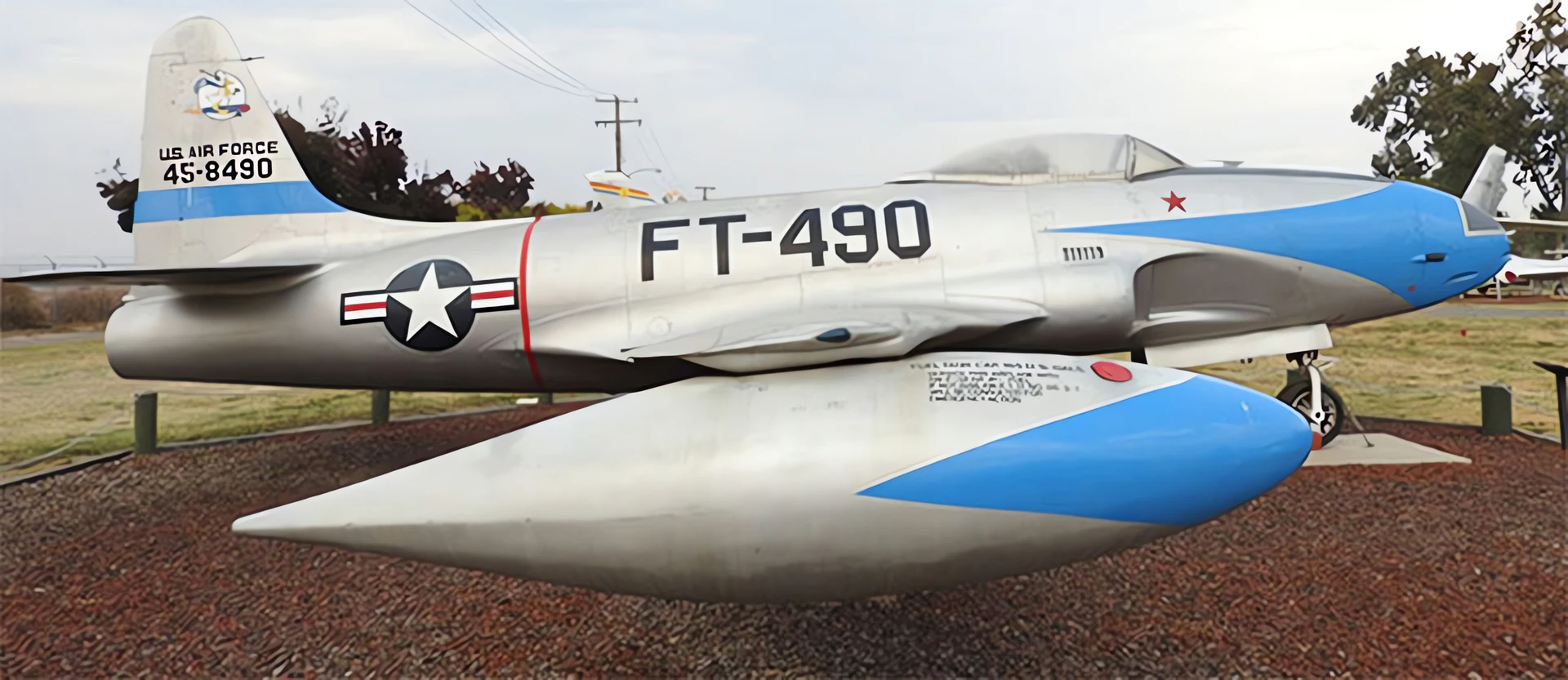
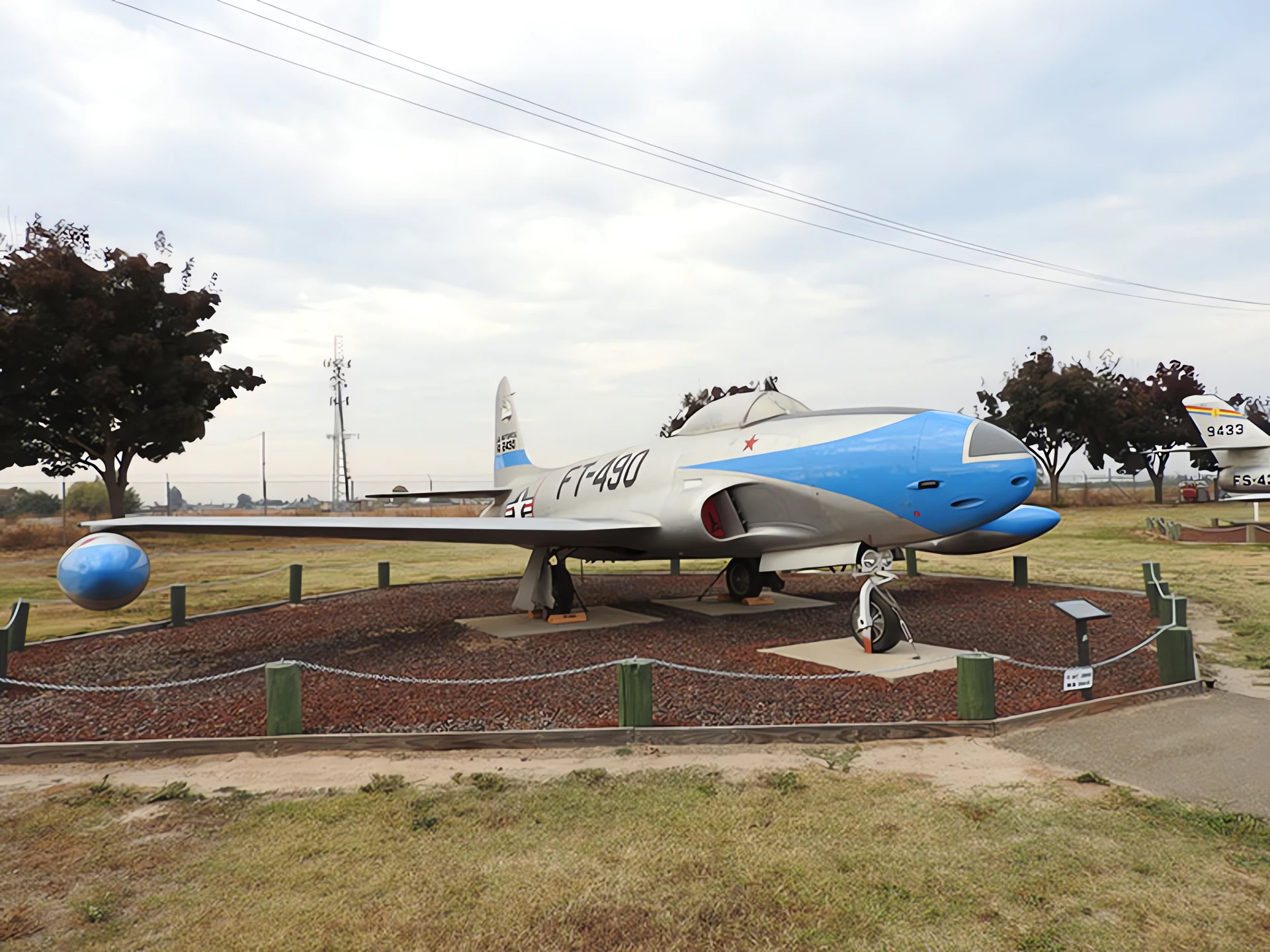
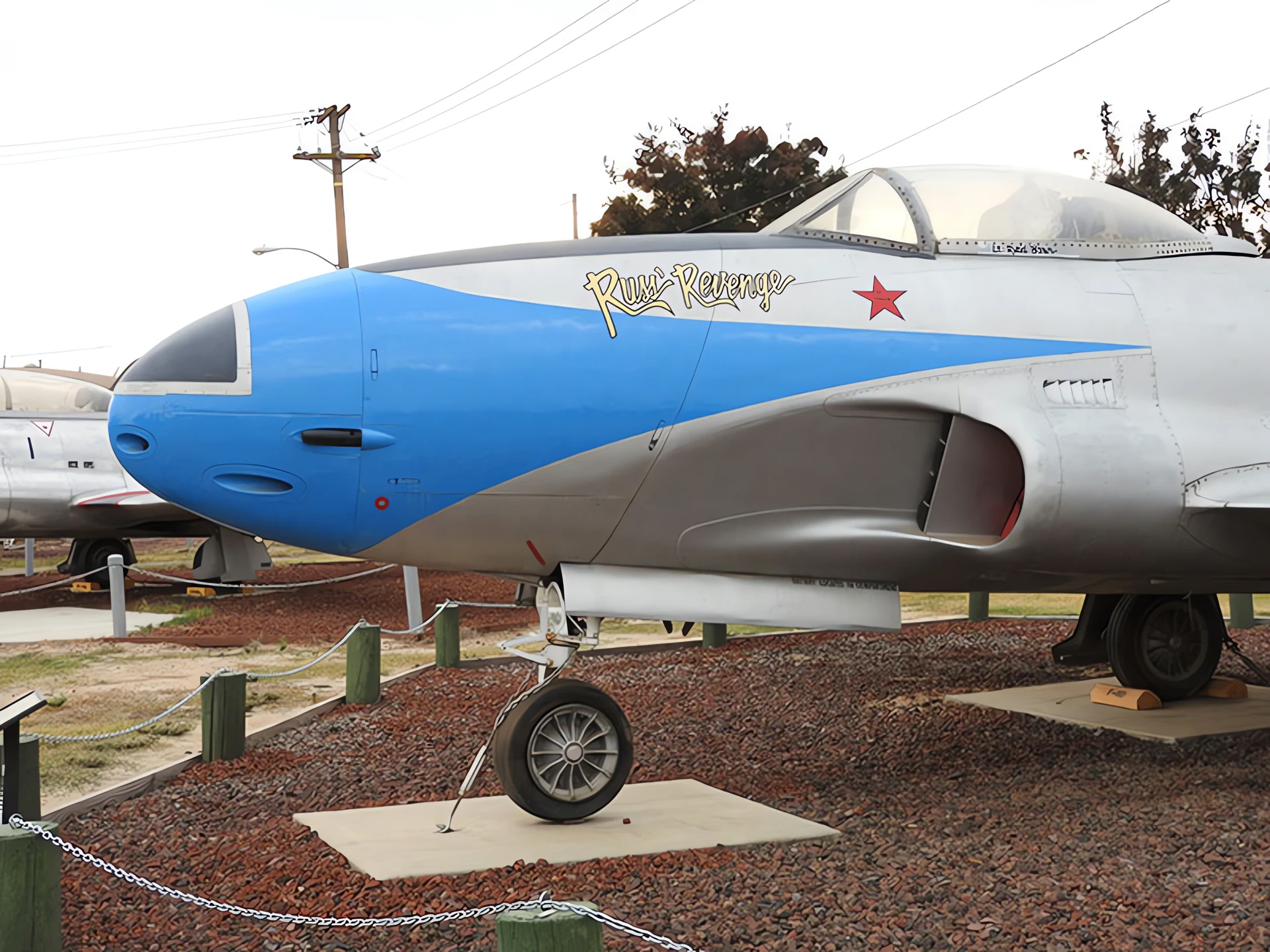
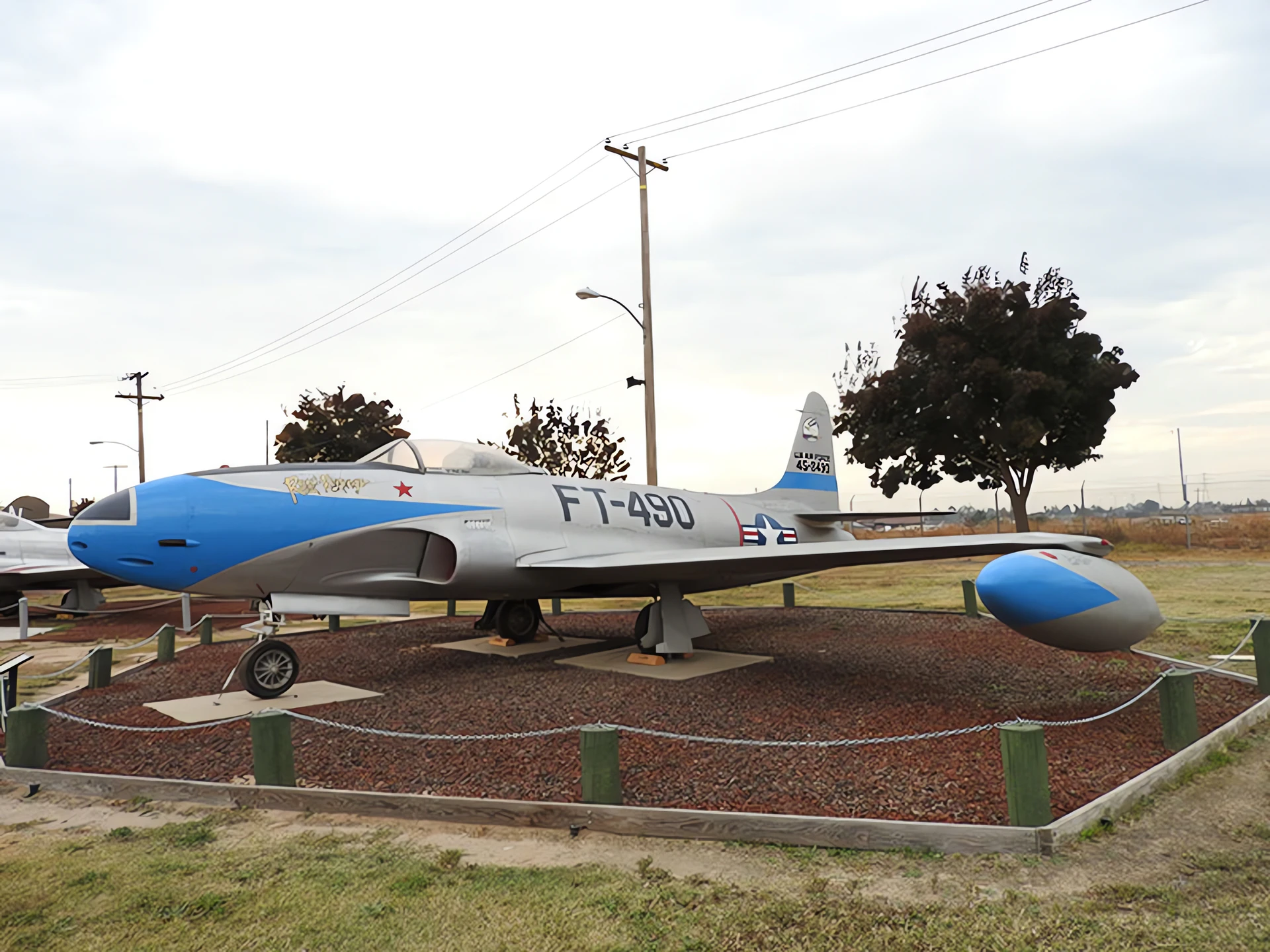
Tthe Lockheed P-80 Shooting Star był pierwszym myśliwcem odrzutowym używanym operacyjnie przez United States Army Air Forces (USAAF). Zaprojektowany i zbudowany przez Lockheed w 1943 roku i dostarczony zaledwie 143 dni od rozpoczęcia procesu projektowania, modele produkcyjne latały, a dwa modele przedprodukcyjne widziały bardzo ograniczoną służbę we Włoszech tuż przed końcem II wojny światowej. Zaprojektowany z prostymi skrzydłami, typ brał udział w intensywnych walkach w Korei z Siłami Powietrznymi Stanów Zjednoczonych (USAF) jako F-80.
Czekaj, wyszukiwanie Lockheed P-80 Shooting Star dla ciebie...
Lockheed F-80C Walk Around
Fotograf
Wright Patterson
Lokalizacja
Niewiedzy
Zdjęcia
18
Lockheed P-80 Shooting Star Walk Around
Fotograf
Dennis Sparks
Lokalizacja
Niewiedzy
Zdjęcia
24
Zobacz też:
The Dawn of the Jet Age
Tthe Lockheed P-80 Shooting Star(re-designatedF-80in 1948) was the first jet fighter used operationally by the United States Army Air Forces. Designed by Clarence “Kelly” Johnson and his Skunk Works team in just 143 days, it was a response to the German Me 262. While it arrived too late to see combat in WWII, it became the cornerstone of the early Cold War USAF and participated in the first-ever jet-versus-jet dogfight during the Korean War.
Centrifugal-Flow Turbojet:The P-80 utilized the Allison J33, based on the British Whittle design. Unlike modern axial-flow engines, the J33 used a large impeller to compress air, which gave the F-80 its characteristic “fat” mid-section.
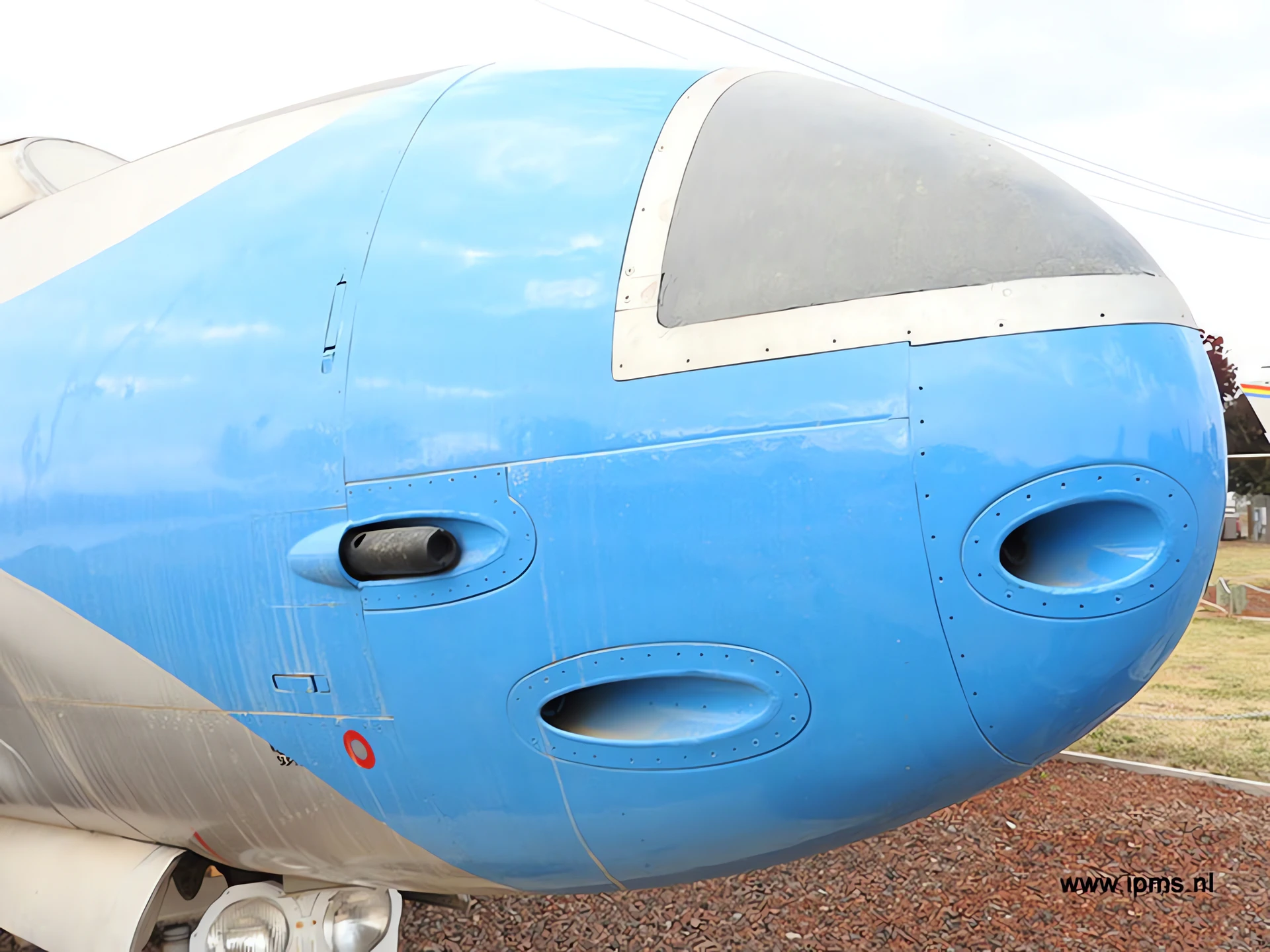
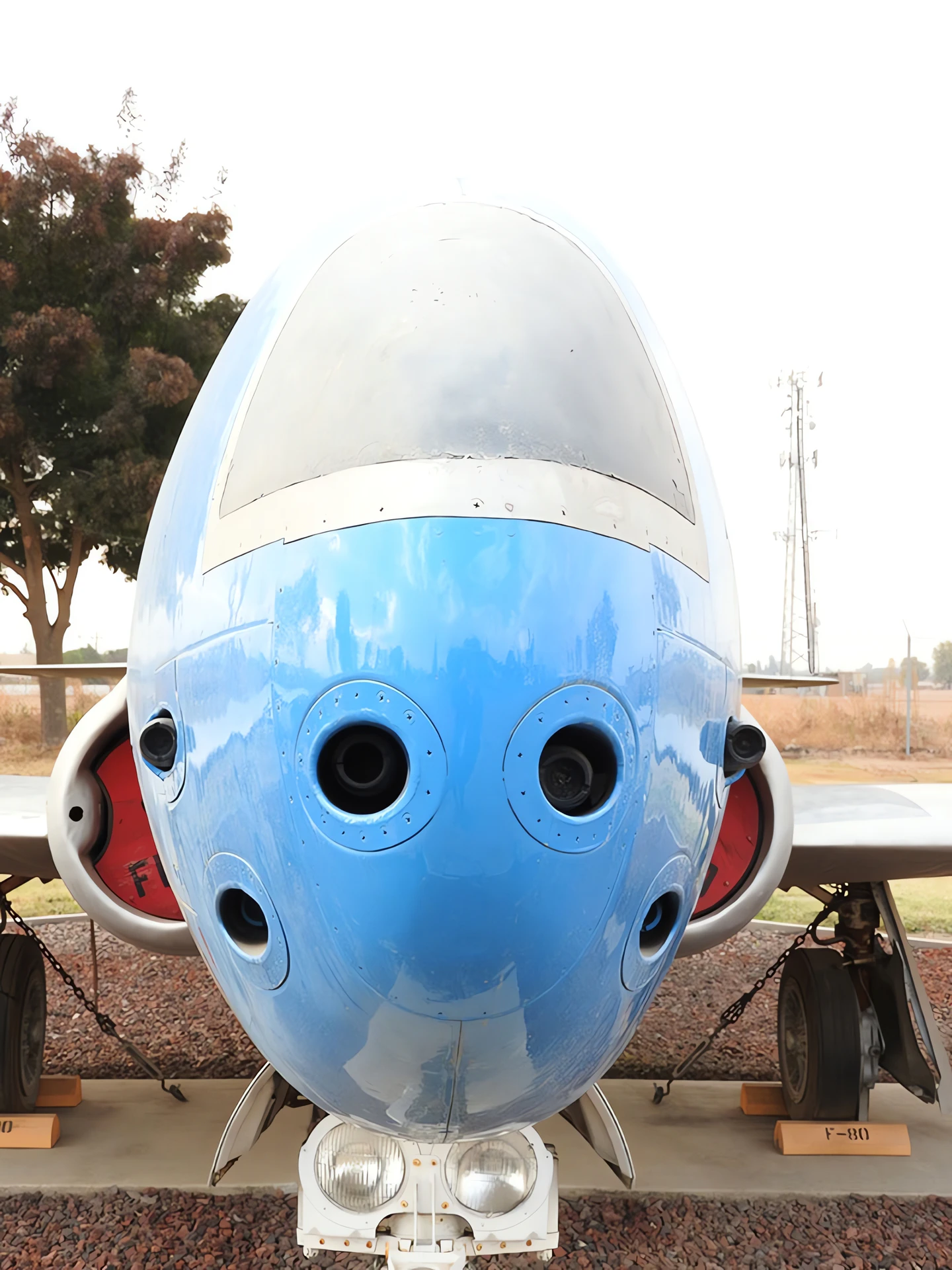
Nose-Concentrated Armament:By placing the six machine guns in the nose rather than the wings, the F-80 eliminated “convergence” issues, allowing for a concentrated stream of fire at any range.
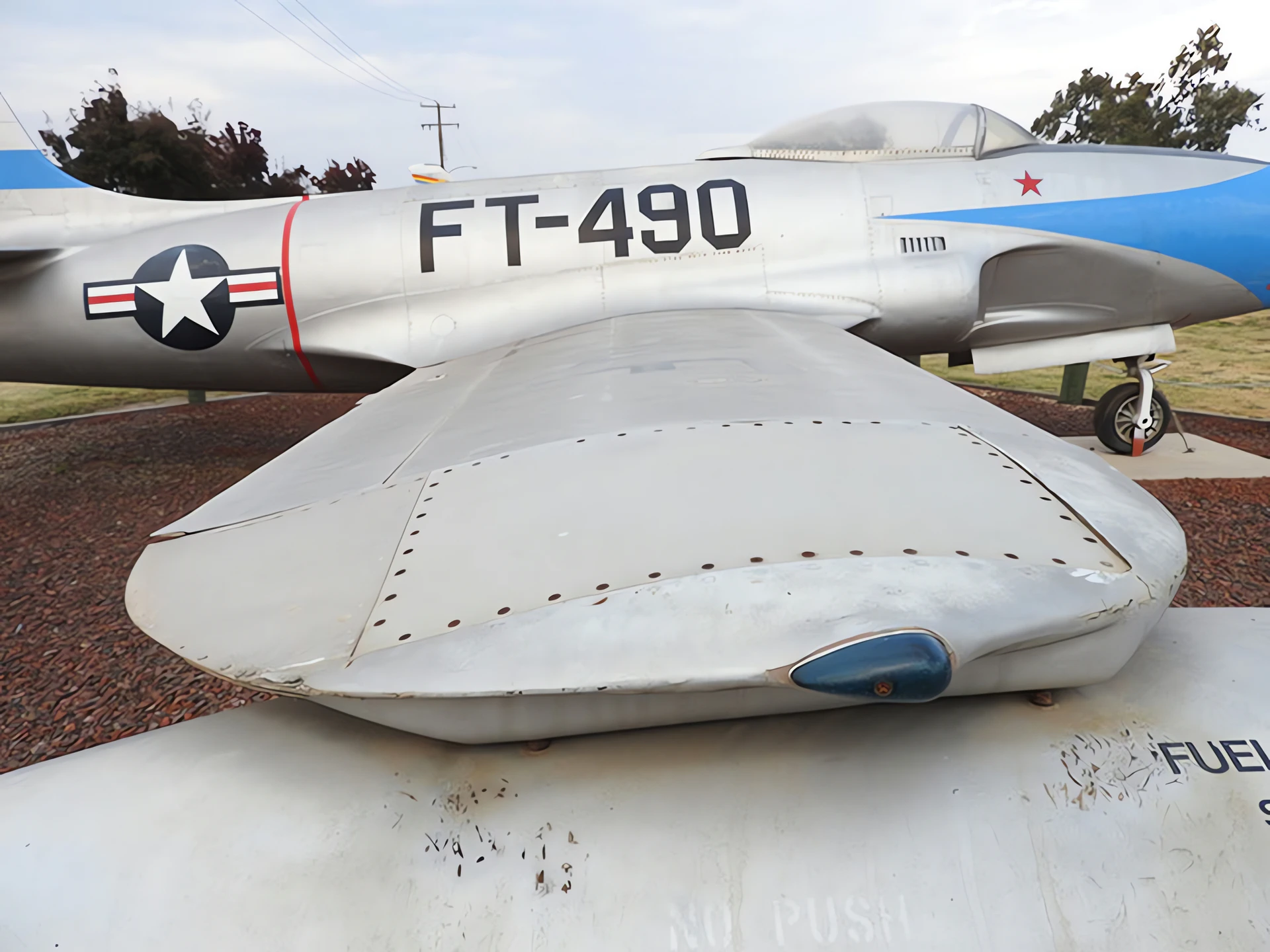
The “Misery” Fuel Tanks:Early jets had poor range. The F-80 was iconic for its large, teardrop-shaped wingtip fuel tanks. These not only extended range but were found to improve the wing’s aerodynamic efficiency at high speeds.
Skunk Works Beginning:The P-80 was the project that essentially birthed Lockheed’s “Skunk Works” division, establishing the culture of rapid prototyping and extreme secrecy.
The Korean War & Transition
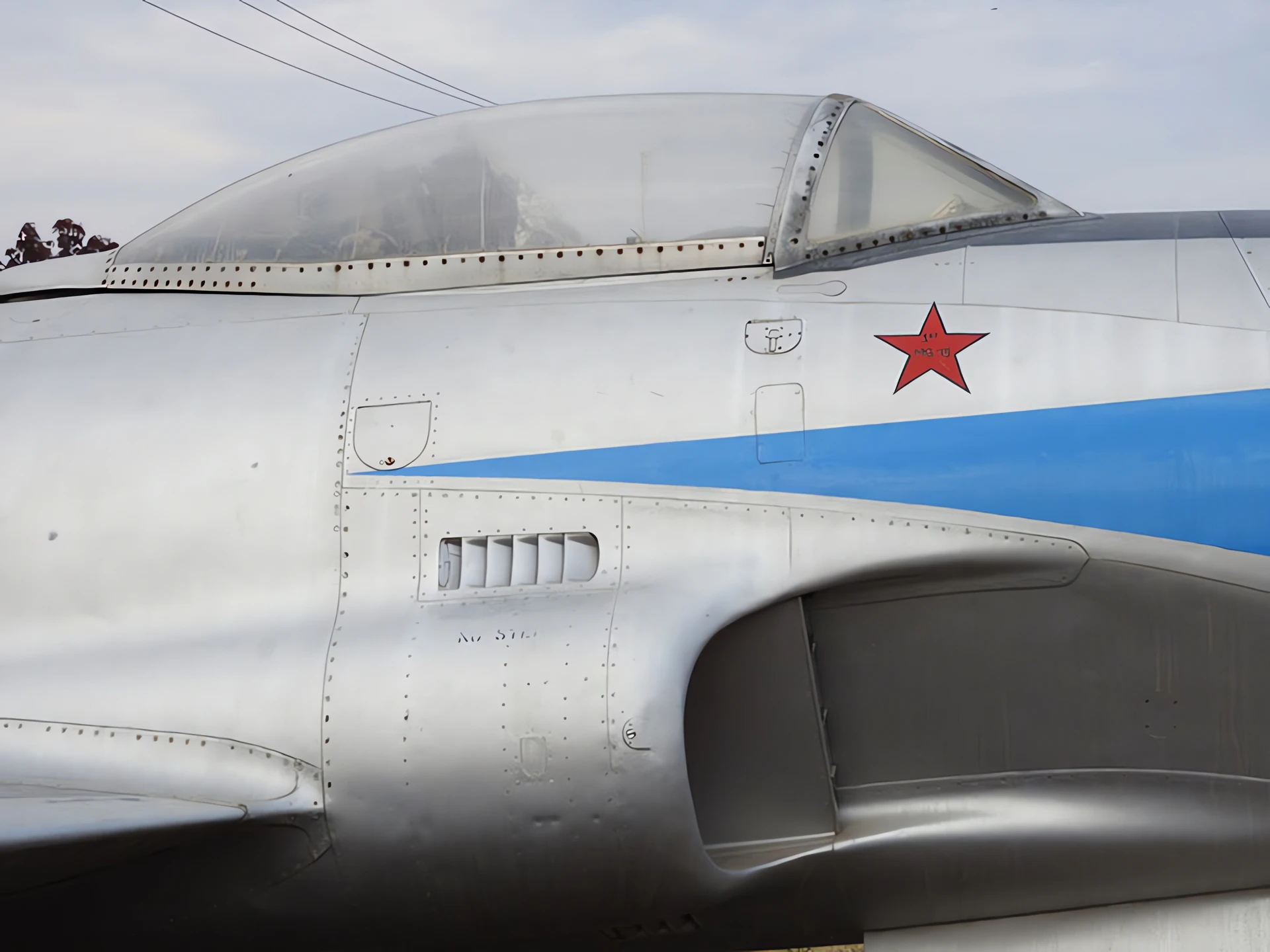
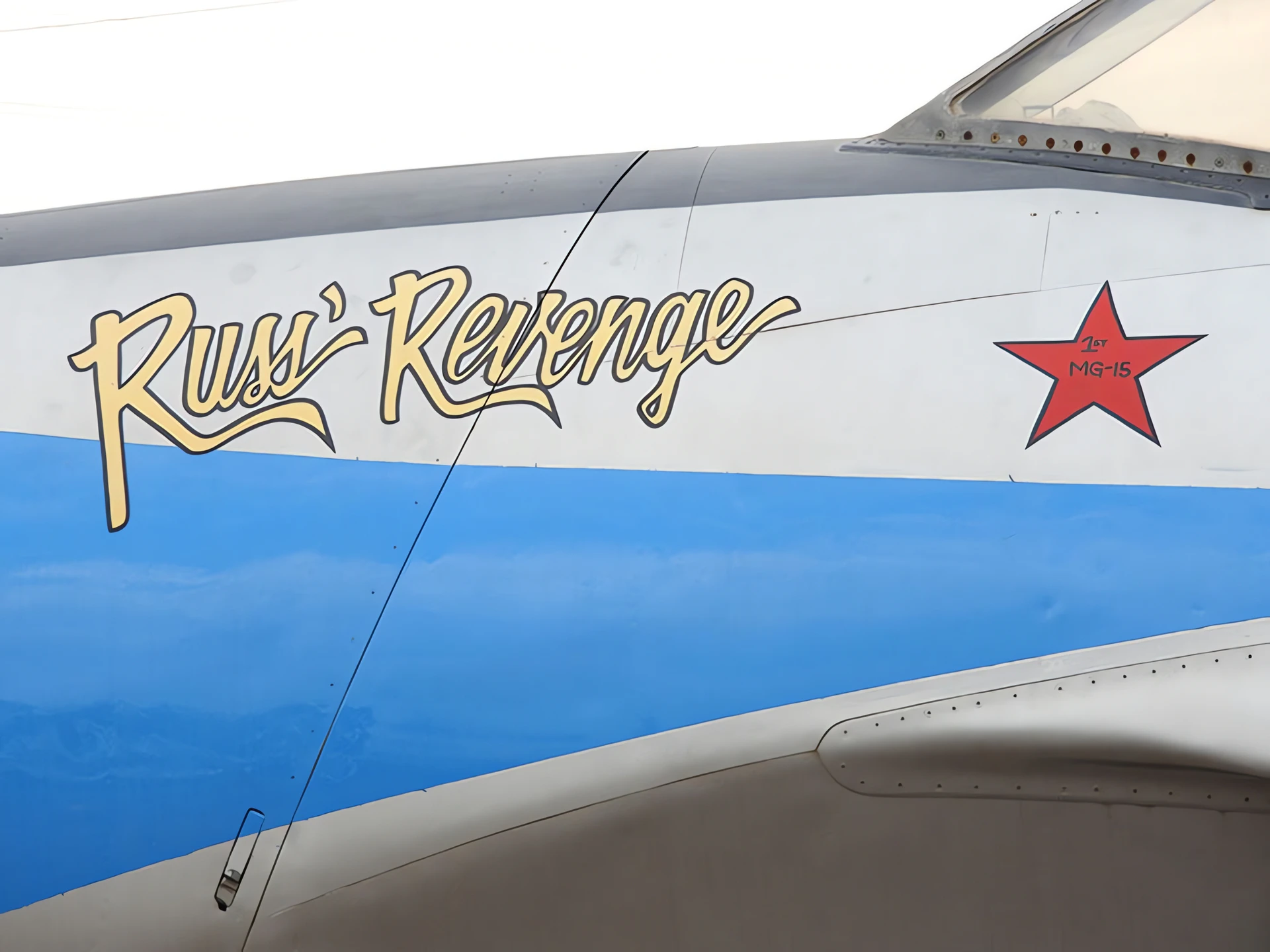
The First Jet Dogfight:On November 8, 1950, Lieutenant Russell J. Brown, flying an F-80C, was credited with shooting down a Soviet-built MiG-15—the first victory in jet-versus-jet history.
Straight vs. Swept Wings:The Korean War quickly proved that the straight-winged F-80 was outmatched in speed by the swept-wing MiG-15. The F-80 was soon shifted to the ground-attack role, where it excelled due to its stability as a gun platform.
Training Legacy:The F-80 airframe was lengthened to create theT-33 “T-Bird”, which became the most successful jet trainer in history, used by over 40 countries for over half a century.



 Grumman AF Guardian – Zdjęcia i filmy
 Lockheed Electra 12 – Zdjęcia i filmy
 Lockheed F-117 Nighthawk – Zdjęcia i filmy
 Lockheed MC-130 – zdjęcia i filmy
 Lockheed YO-3 – Zdjęcia & Wideo
 Lockheed C-141 Starlifter – Zdjęcia & Wideo
 Lockheed C-121 Constellation – Zdjęcia & Wideo
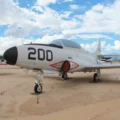 Lockheed T-1A – Zdjęcia & Wideo
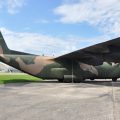 Lockheed AC-130A Spectre – Zdjęcia & Wideo
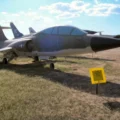 F-104 Starfighter – Zdjęcia & Wideo