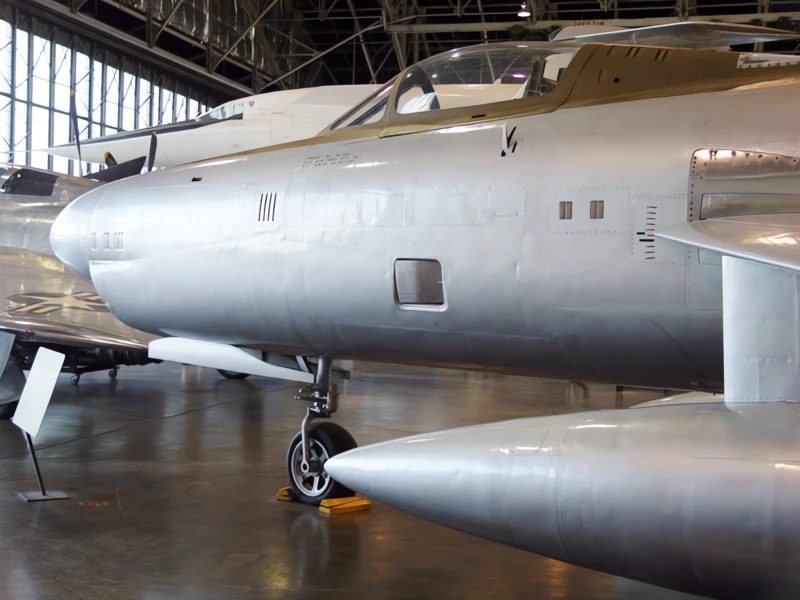
Republic XF-91 | |
|---|---|
| 国 | 米国 |
| 役割 | 試作迎撃機 |
| 初飛行 | 1949年5月9日 |
| 構築 | 2 |
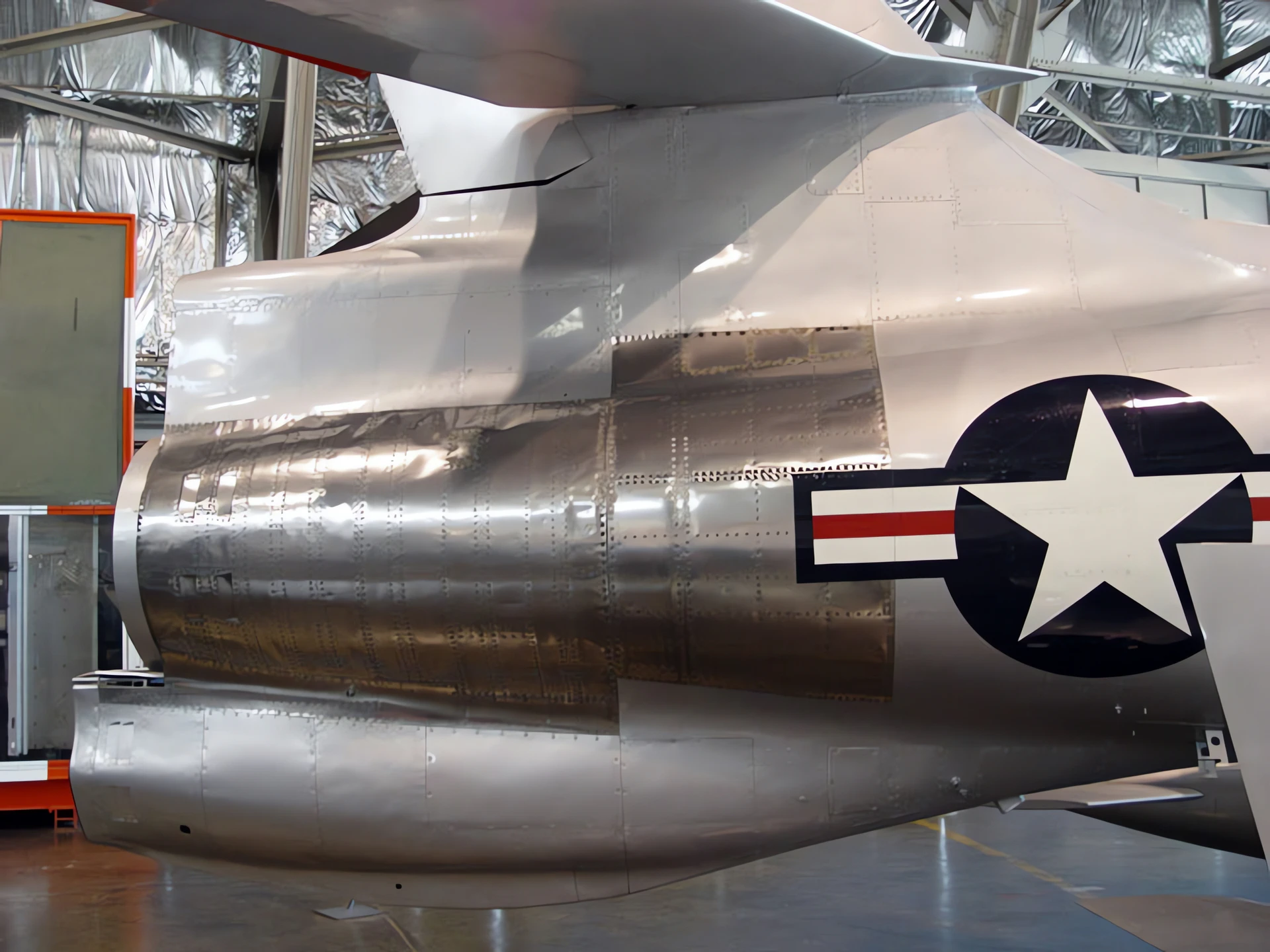
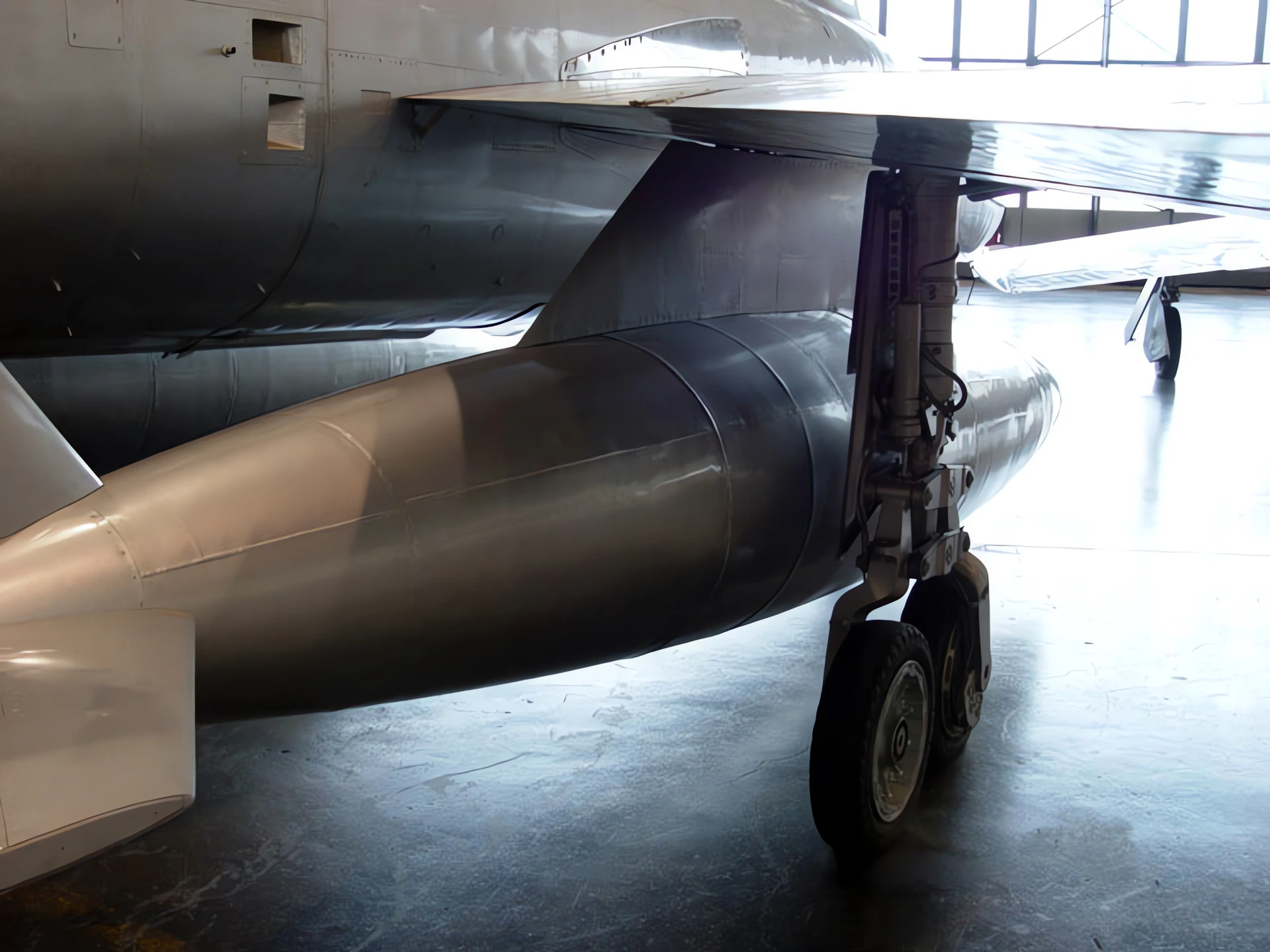
ザ リパブリック XF-91 サンダーセプター (当初はXP-91と命名されていた)は、リパブリック・アビエーションが開発した混合推進型迎撃機である。航空機はほとんどの飛行にジェットエンジンを使用し、上昇と迎撃の間に推力を追加するために4つの小さなロケットエンジンのクラスターを使用します。この設計は、現代のジェットエンジンの性能が急速に向上したため、完成までにほとんど時代遅れになり、2つのプロトタイプのみが製造されました。そのうちの1機は、水平飛行でマッハ1を超えた最初のアメリカの戦闘機でした。
ソース: ウィキペディア上の共和国XF-91
| リパブリック XF-91 | |
|---|---|
| カメラマン | ジョン・ヘック,ウラジーミル・ヤクボフ |
| ローカライズ | ワシントンDC国立航空宇宙博物館 |
| 写真 | 99 |
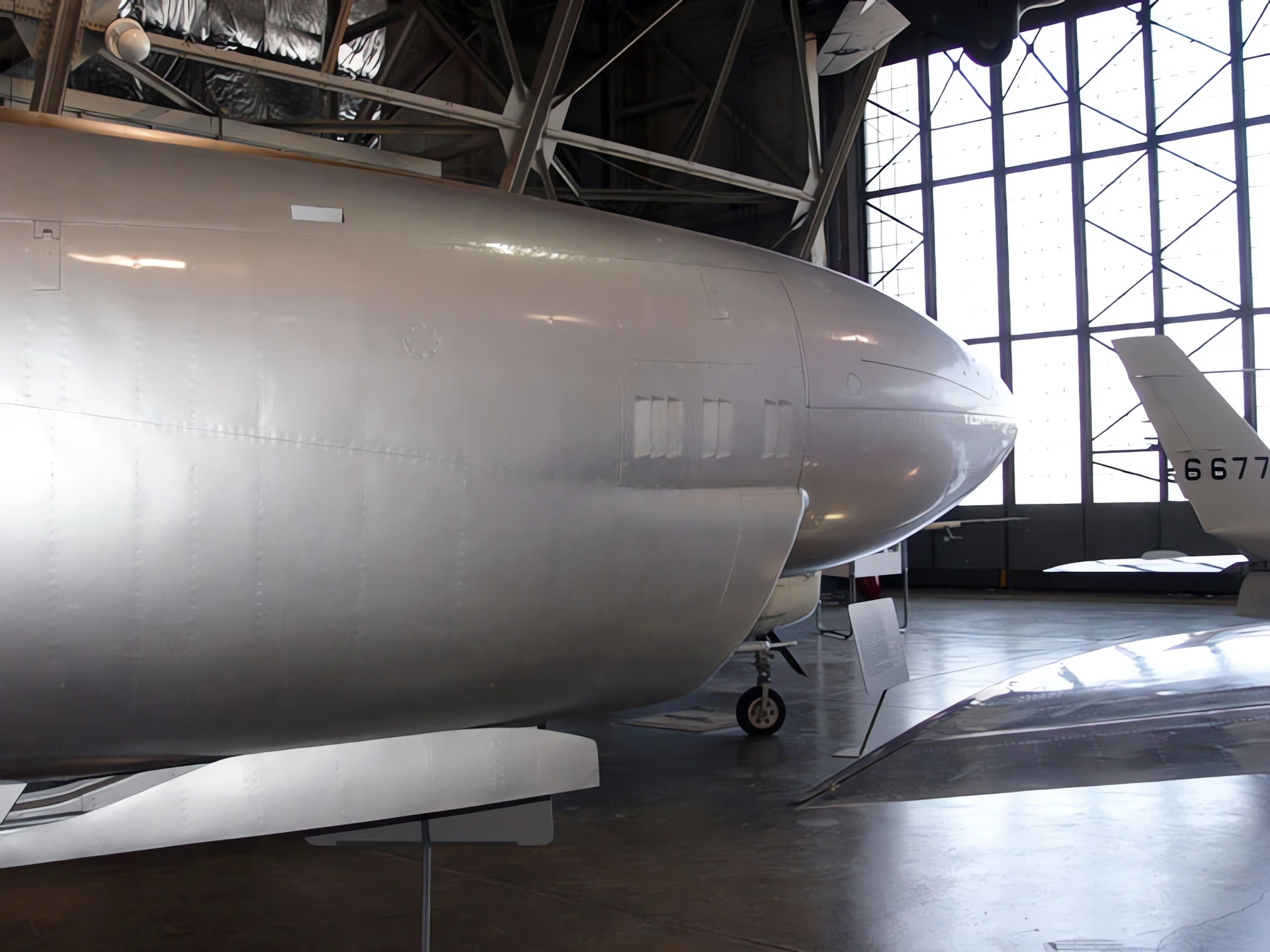

関連項目:


General Characteristics and Role
The Republic XF-91 Thunderceptor was an experimental prototype interceptor aircraft developed for the U.S. Air Force (USAF) in the late 1940s. Its primary role was to explore the concept of a high-performance, short-range interceptor that could rapidly climb to high altitudes and intercept enemy bombers. To achieve this, the aircraft was equipped with a revolutionary mixed-propulsion system combining a turbojet engine for cruise and four rocket engines for bursts of acceleration during combat or climb. The XF-91 is perhaps best known for its uniquely designed inverse tapered wings, a feature intended to mitigate Mach tuck and improve low-speed handling.
| Property | Typical Value (XF-91) |
|---|---|
| 役割 | Experimental Mixed-Power Interceptor |
| National Origin | 米国 |
| メーカー | Republic Aviation Company |
| First Flight | 1949年5月9日 |
| 乗組員 | 1 (Pilot) |
| 長さ | 13.23 m (43 ft 5 in) |
| 翼 | 9.51 m (31 ft 2 in) |
| Gross Weight | 8,870 kg (19,550 lb) |
Propulsion and Aerodynamics
- Primary Engine: 1 x General Electric J47-GE-3 turbojet engine (in the rear fuselage).
- Turbojet Thrust: 23.35 kN (5,200 lbf) (dry).
- Auxiliary Power: 4 x Reaction Motors XLR11 liquid-fueled rocket engines (mounted in the tail above and below the jet exhaust).
- Rocket Thrust: Approx. 26.7 kN (6,000 lbf) total for short bursts.
- Maximum Speed: Mach 1.71 (achieved in a later powered flight). It was the first U.S. fighter to exceed Mach 1 in level flight using a mixed-propulsion system.
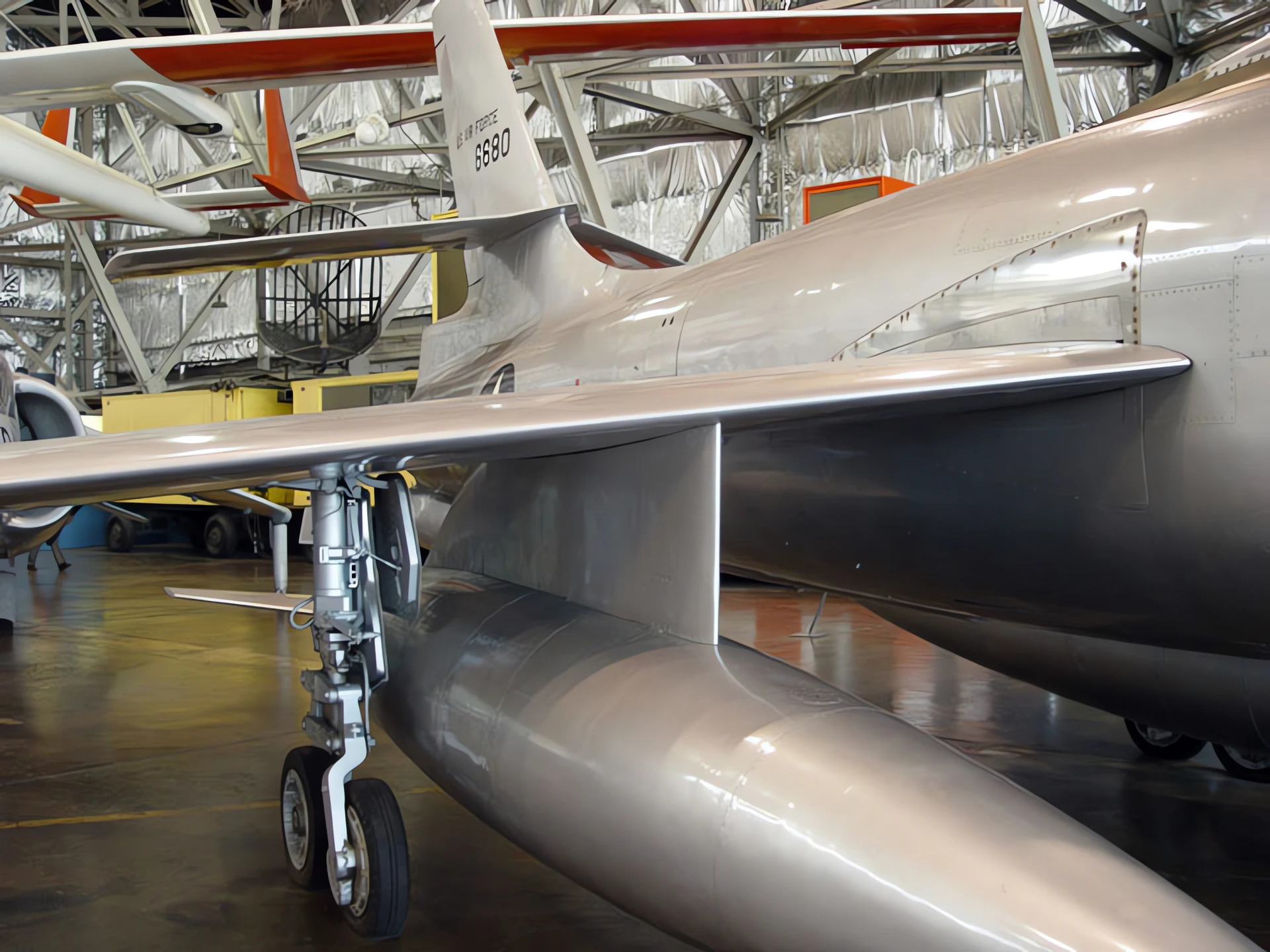
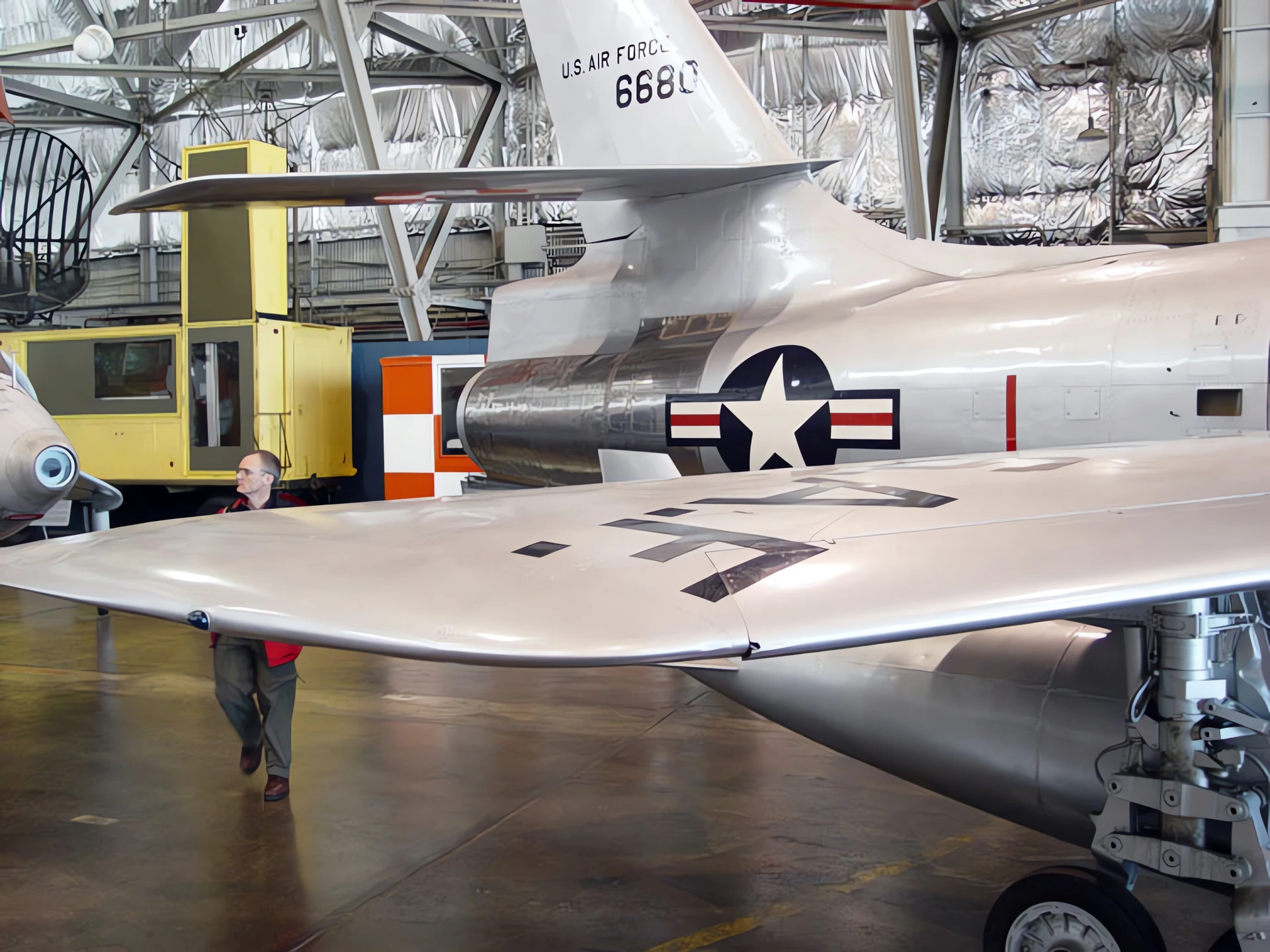
- Inverse Taper Wing: The wing chord was wider at the tip than at the root (the inverse of conventional taper). This arrangement maintained high lift at the tips, helping to prevent tip stall and improve control at high angles of attack.
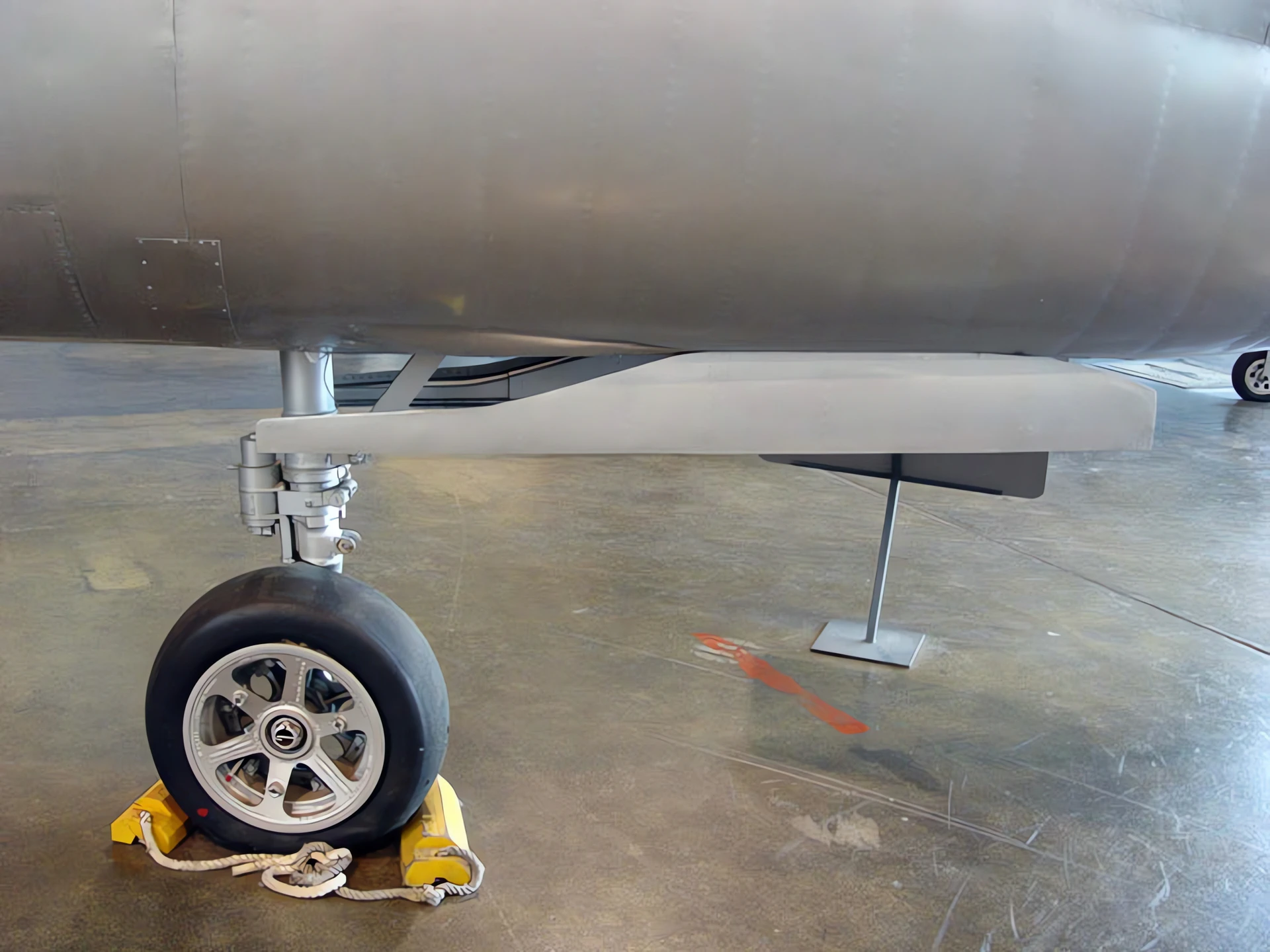
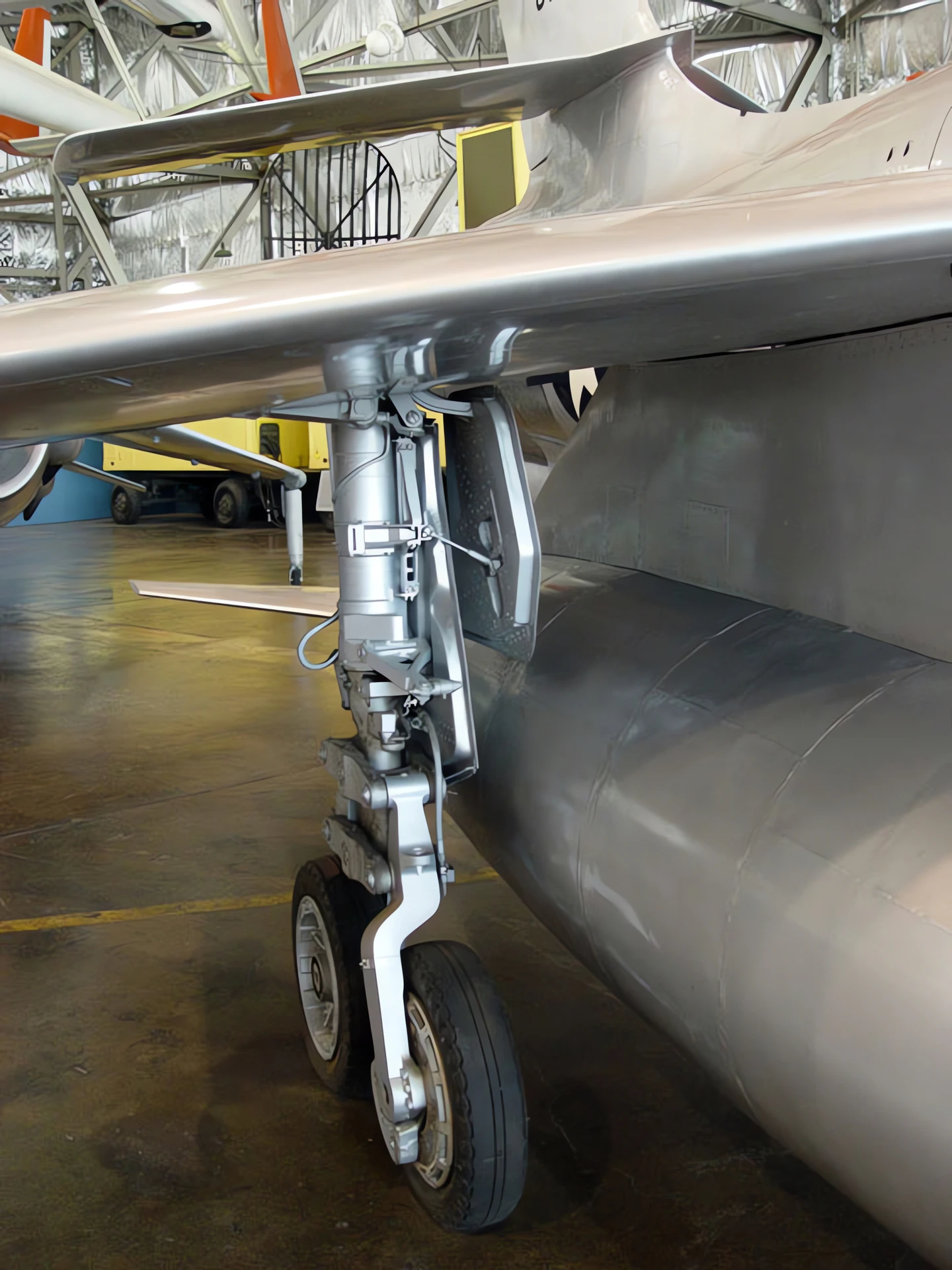
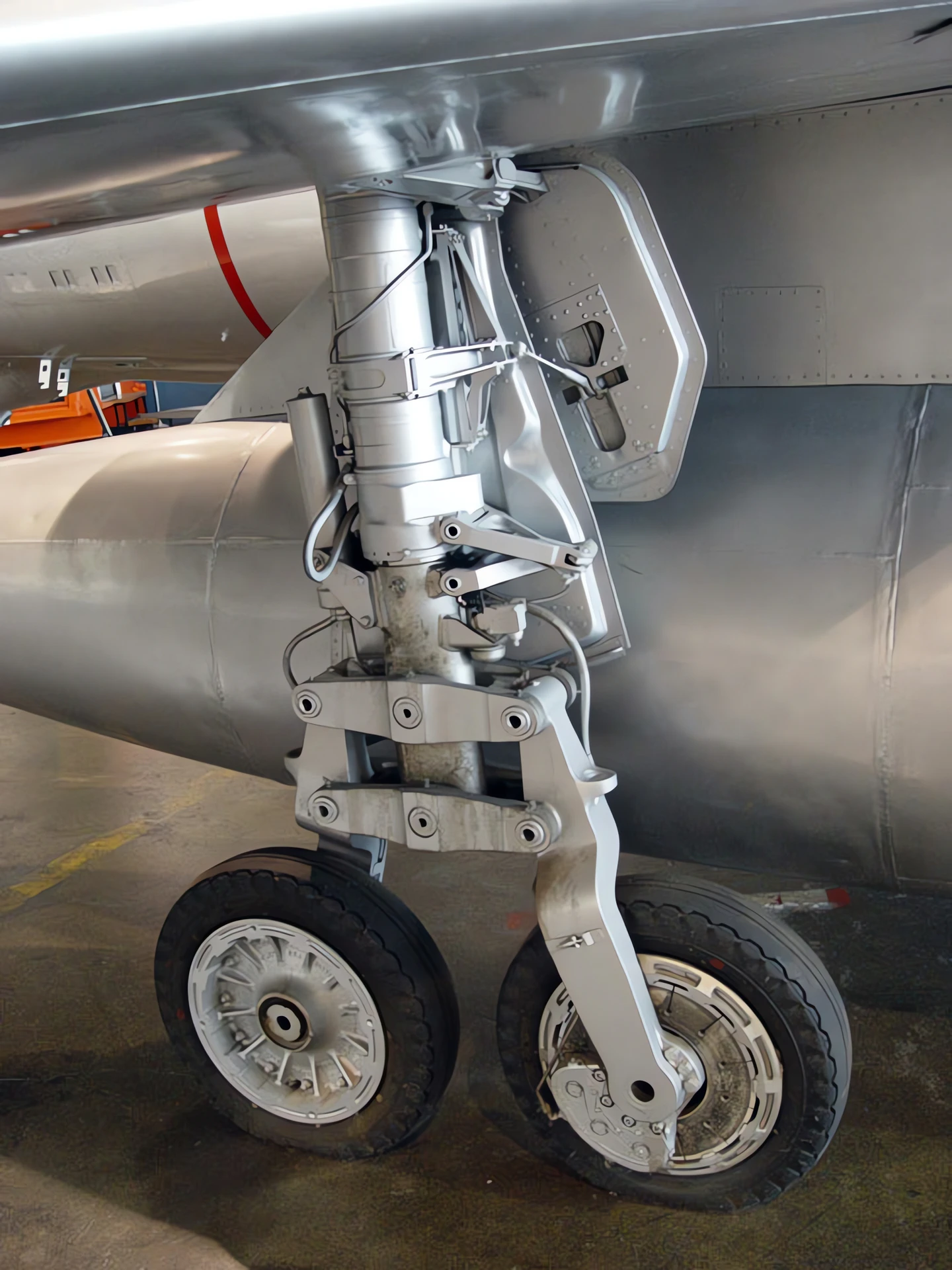
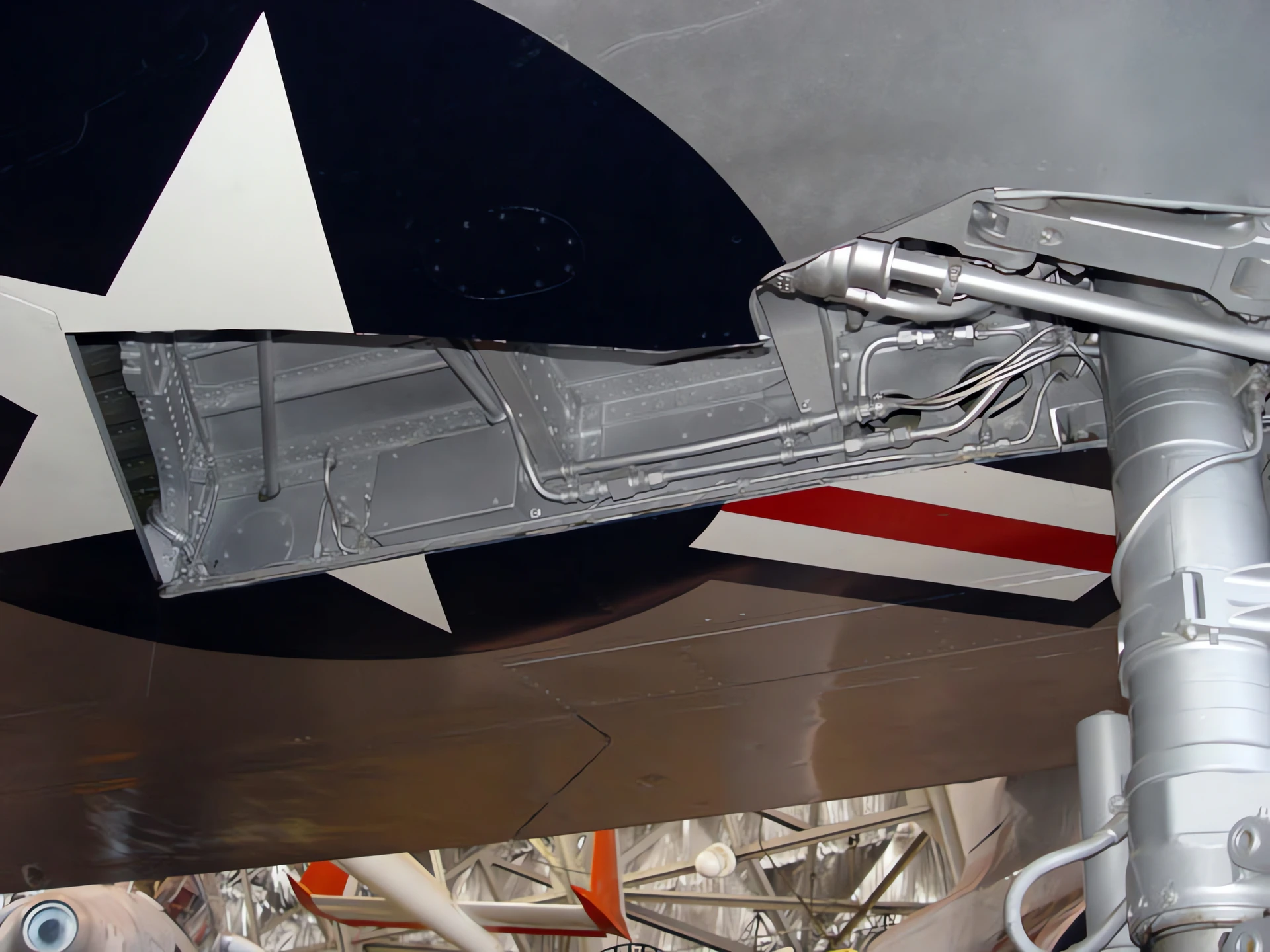
- Landing Gear: Featured a unique bicycle-style main landing gear with two main wheels side-by-side at the center of the fuselage, supported by small outrigger wheels under the wingtips.
Program Outcome and Legacy
- Technical Success: The XF-91 proved the feasibility of using rocket augmentation for performance bursts and demonstrated the viability of the inverse taper wing concept for high-speed flight control.
- Cancellation: Despite its technical achievements, the program was canceled in 1952. The development of more powerful, conventional turbojet engines (which eliminated the need for complex, short-duration rocket power) and the rise of the superior all-jet F-104 Starfighter made the mixed-power interceptor obsolete.
- Legacy: The inverse taper wing design, while not adopted, was an important piece of research. The aircraft’s testing provided vital data on high-Mach flight and supersonic stability.
- Preservation: The sole remaining prototype is preserved and displayed at the National Museum of the United States Air Force at Wright-Patterson AFB in Dayton, Ohio.
再生 : 2202
また、次の項目もご覧ください。
 Republic XF-84H Thunderscreech – 写真&動画
 Republic RC-3 Seabee – 写真&動画
 McDonnell Douglas F/A-18 Hornnet – Photos & Video
 Republic F-105 Thunderchief – Photos & Video
 Republic F-84 Thunderjet – Photos & Video
 ホーカーハリケーン - 歩き回る
 ベル P-39N アイラコブラ – ウォークアラウンド
 統合されたB-24Mリベレーター - ウォークアラウンド
 P-47Dサンダーボルト – ウォークアラウンド
 A-20 ハボック - ウォークアラウンド