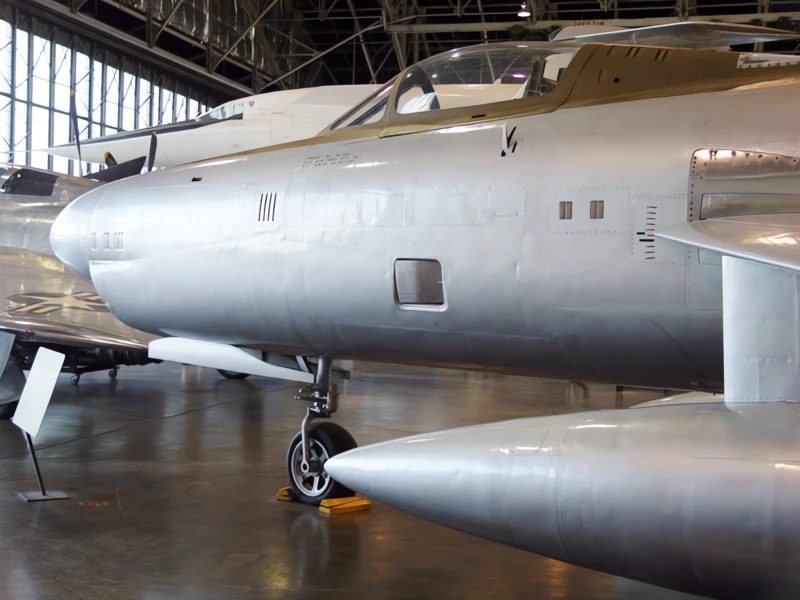
Republic XF-91 | |
|---|---|
| País | Eua |
| Papel | Protótipo de aeronave interceptadora |
| Primeiro voo | 9 de maio de 1949 |
| Construído | 2 |
O República XF-91 Trovão (originalmente designado XP-91) é um protótipo de aeronave interceptadora de propulsão mista, desenvolvido pela Republic Aviation. A aeronave usaria um motor a jato para a maioria dos voos, e um conjunto de quatro pequenos motores de foguete para empuxo adicional durante a subida e interceptação. O projeto era em grande parte obsoleto no momento em que foi concluído devido ao rápido aumento do desempenho dos motores a jato contemporâneos, e apenas dois protótipos foram construídos. Um deles foi o primeiro caça americano a exceder Mach 1 em voo nivelado.
Fonte: República XF-91 na Wikipédia
| República XF-91 | |
|---|---|
| Fotógrafos | John Heck |
| Localização | Museu Nacional do Ar e do Espaço, Washington DC |
| Fotos | 99 |
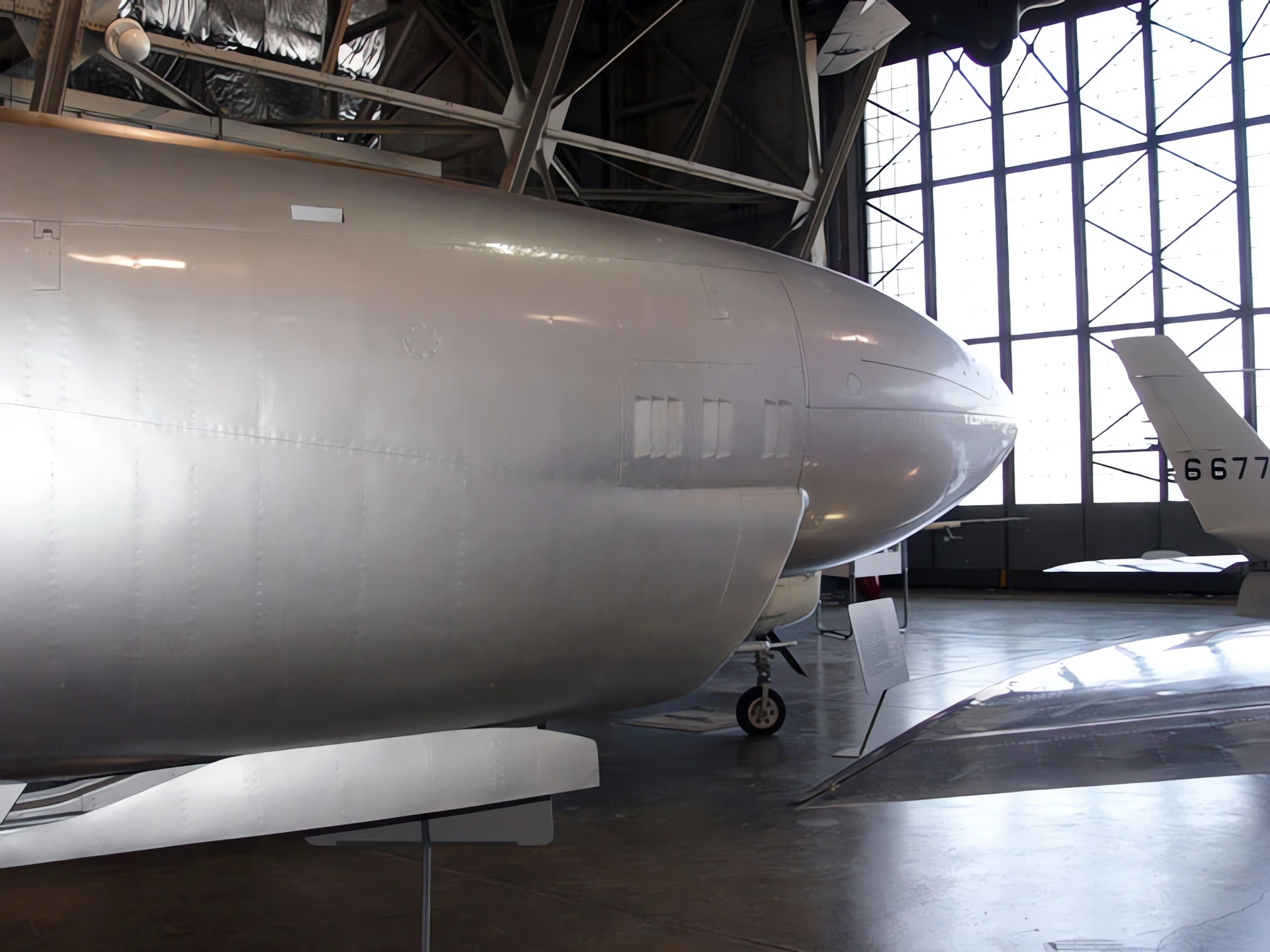
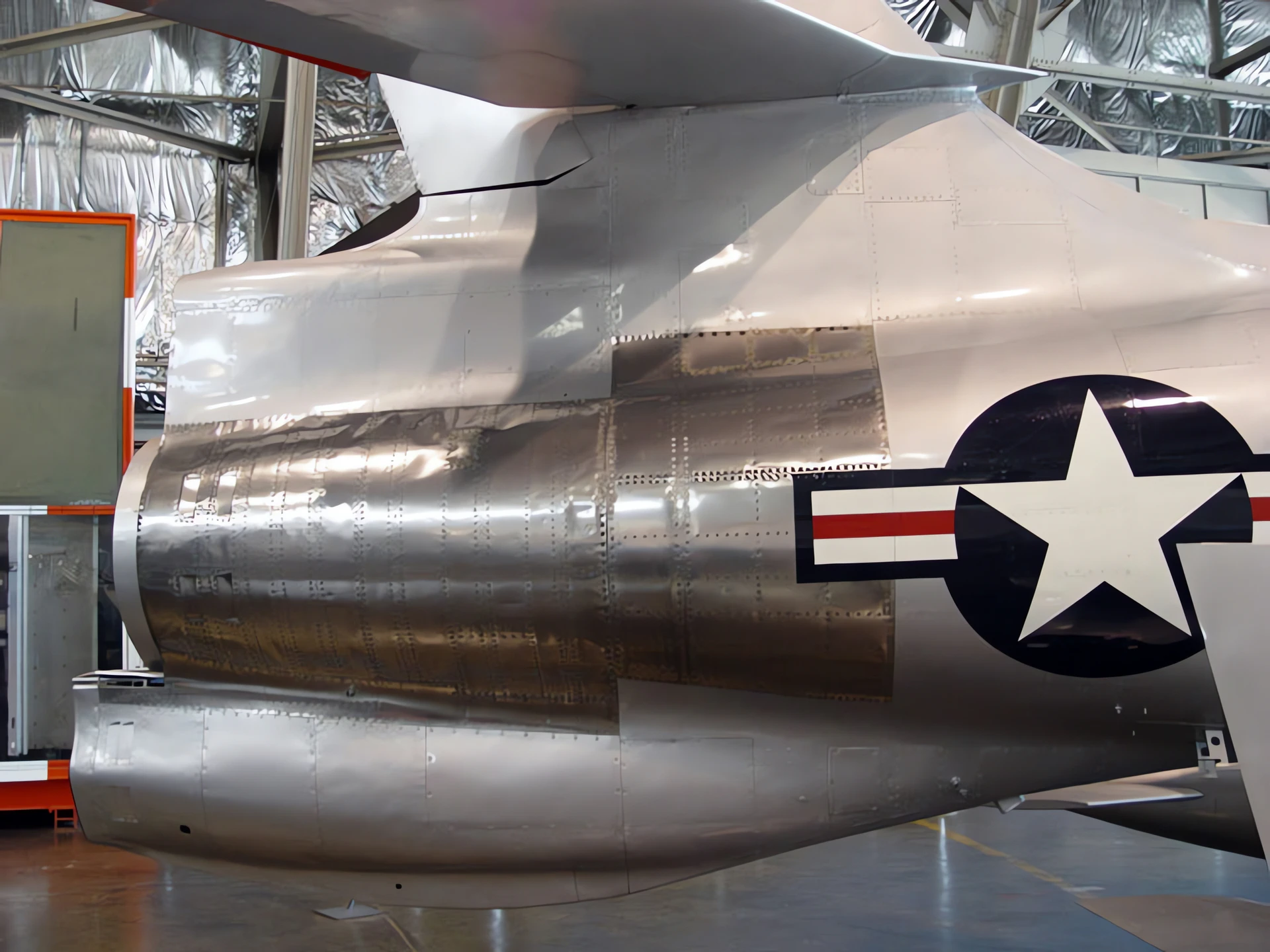
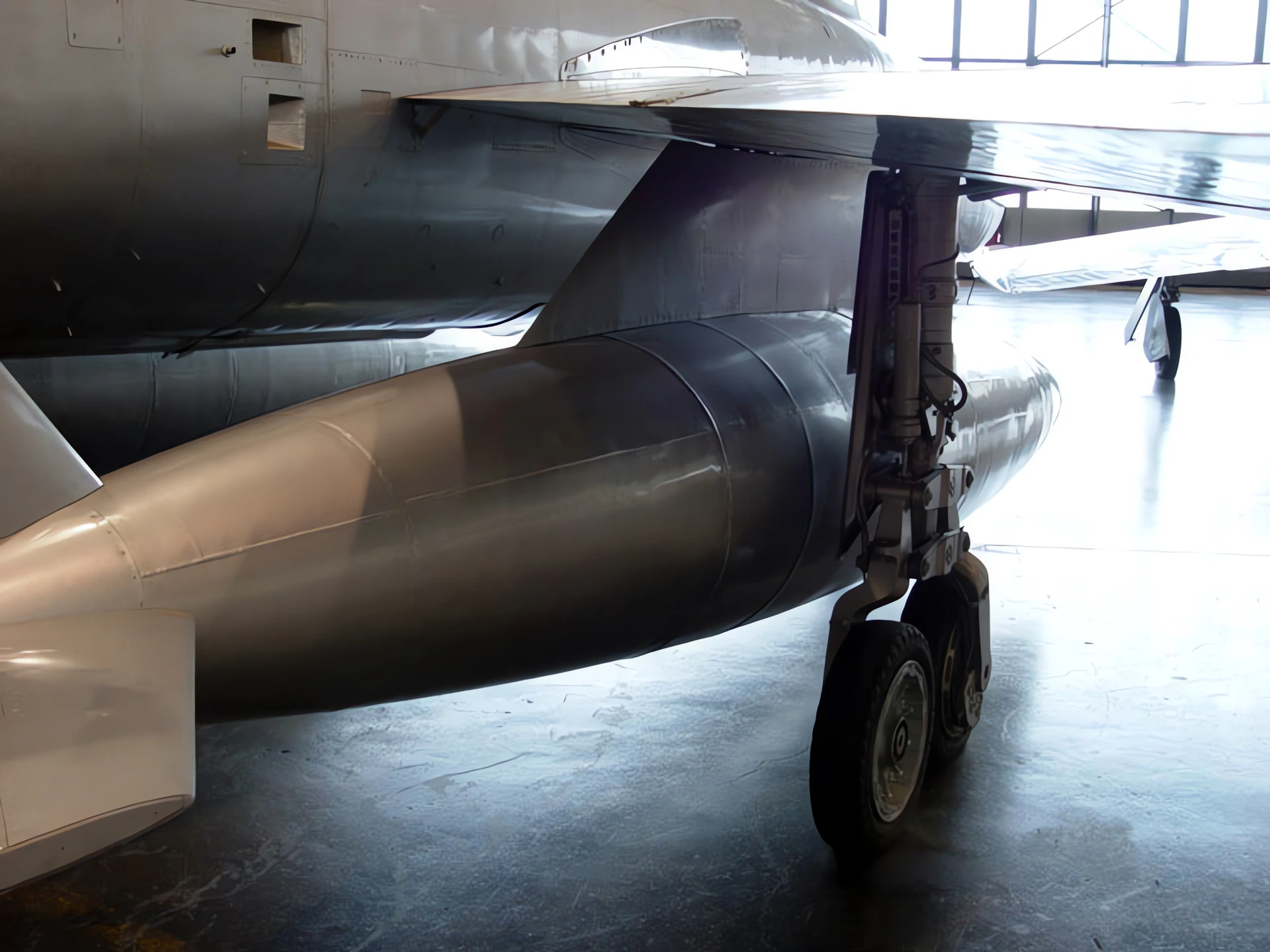

Veja também:


General Characteristics and Role
The Republic XF-91 Thunderceptor was an experimental prototype interceptor aircraft developed for the U.S. Air Force (USAF) in the late 1940s. Its primary role was to explore the concept of a high-performance, short-range interceptor that could rapidly climb to high altitudes and intercept enemy bombers. To achieve this, the aircraft was equipped with a revolutionary mixed-propulsion system combining a turbojet engine for cruise and four rocket engines for bursts of acceleration during combat or climb. The XF-91 is perhaps best known for its uniquely designed inverse tapered wings, a feature intended to mitigate Mach tuck and improve low-speed handling.
| Property | Typical Value (XF-91) |
|---|---|
| Papel | Experimental Mixed-Power Interceptor |
| National Origin | Estados Unidos |
| Fabricante | Republic Aviation Company |
| First Flight | 9 de maio de 1949 |
| tripulação | 1 (Pilot) |
| comprimento | 13.23 m (43 ft 5 in) |
| Envergadura | 9.51 m (31 ft 2 in) |
| Gross Weight | 8,870 kg (19,550 lb) |
Propulsion and Aerodynamics
- Primary Engine: 1 x General Electric J47-GE-3 turbojet engine (in the rear fuselage).
- Turbojet Thrust: 23.35 kN (5,200 lbf) (dry).
- Auxiliary Power: 4 x Reaction Motors XLR11 liquid-fueled rocket engines (mounted in the tail above and below the jet exhaust).
- Rocket Thrust: Approx. 26.7 kN (6,000 lbf) total for short bursts.
- Maximum Speed: Mach 1.71 (achieved in a later powered flight). It was the first U.S. fighter to exceed Mach 1 in level flight using a mixed-propulsion system.
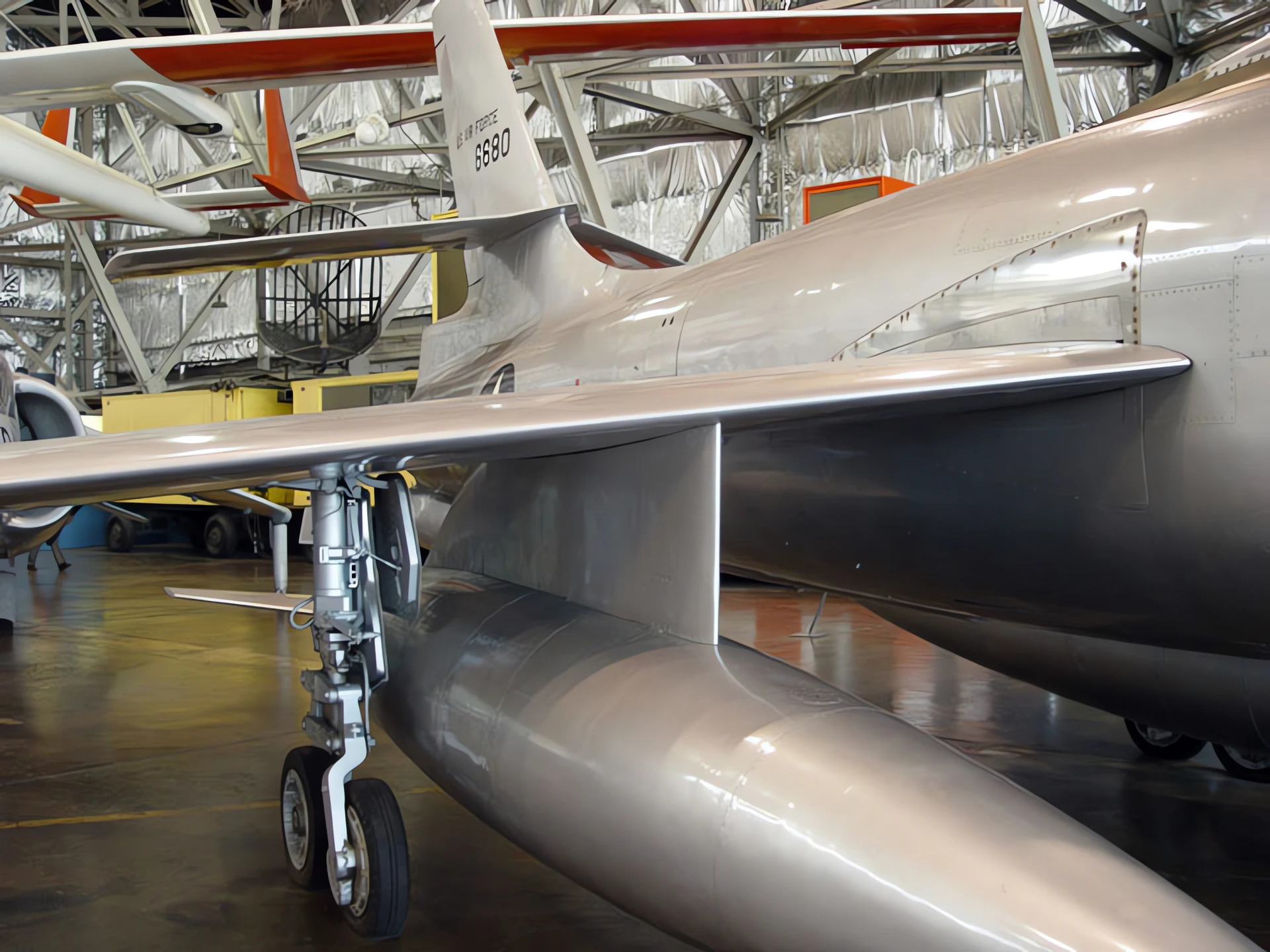
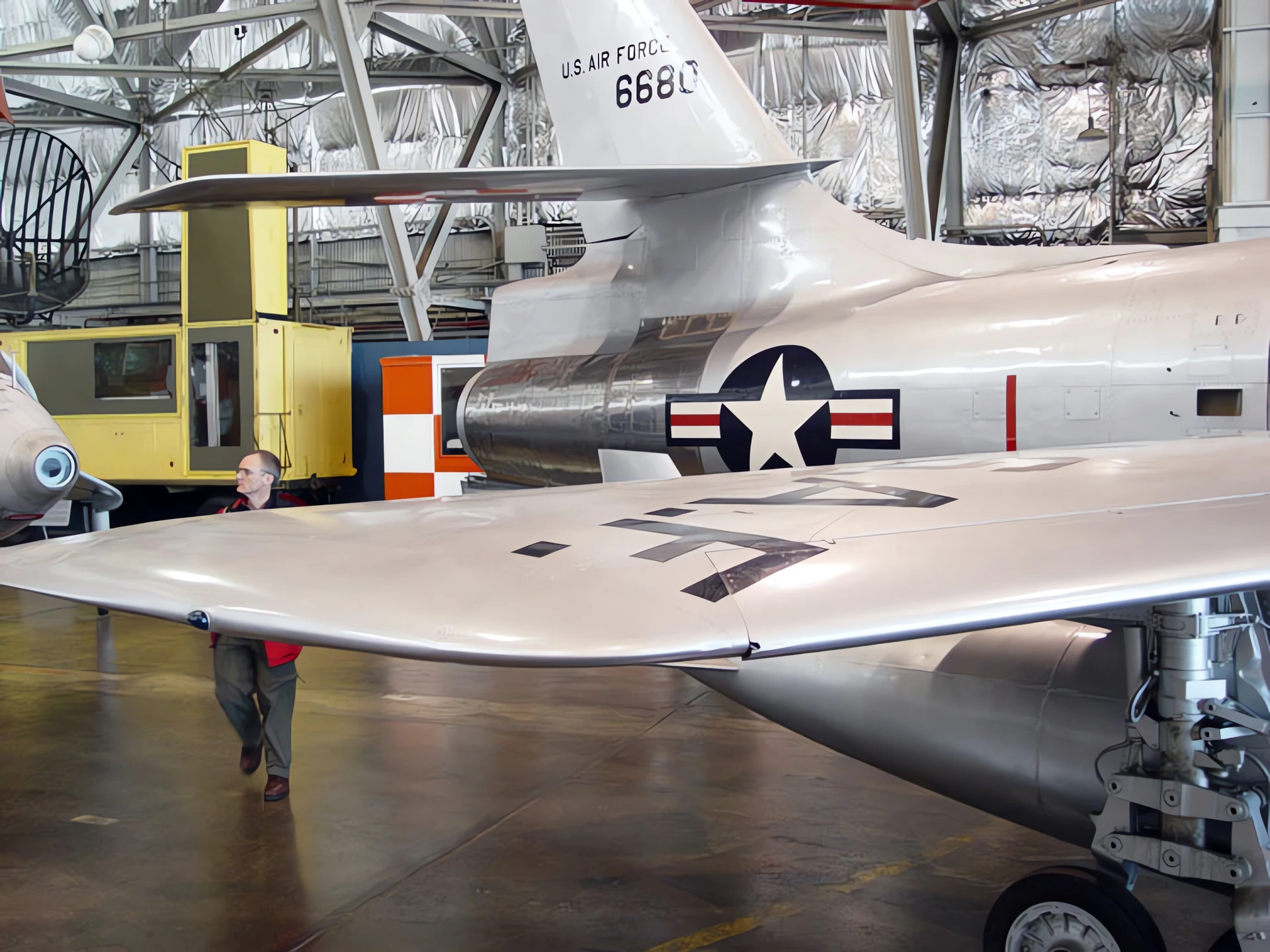
- Inverse Taper Wing: The wing chord was wider at the tip than at the root (the inverse of conventional taper). This arrangement maintained high lift at the tips, helping to prevent tip stall and improve control at high angles of attack.
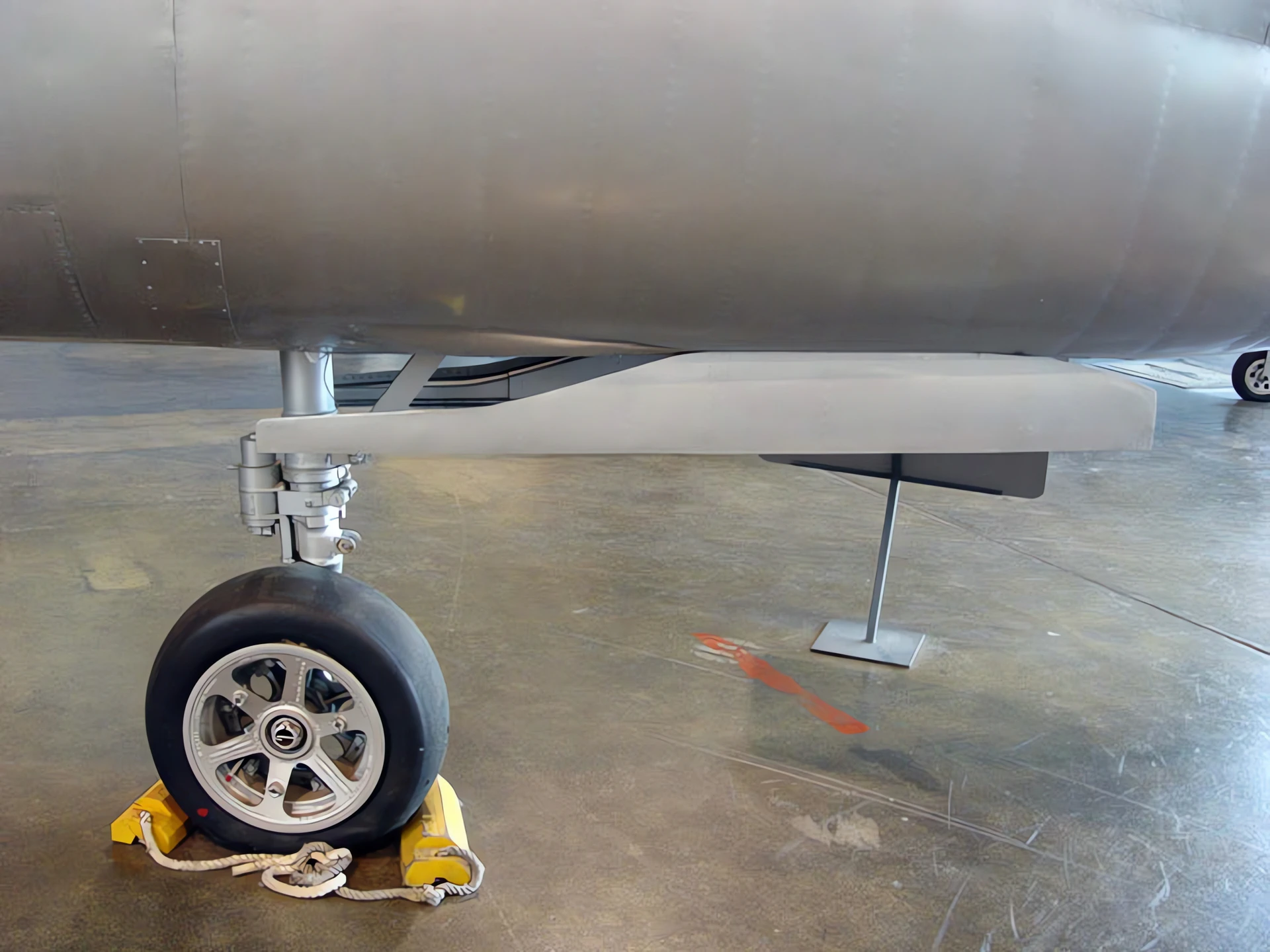
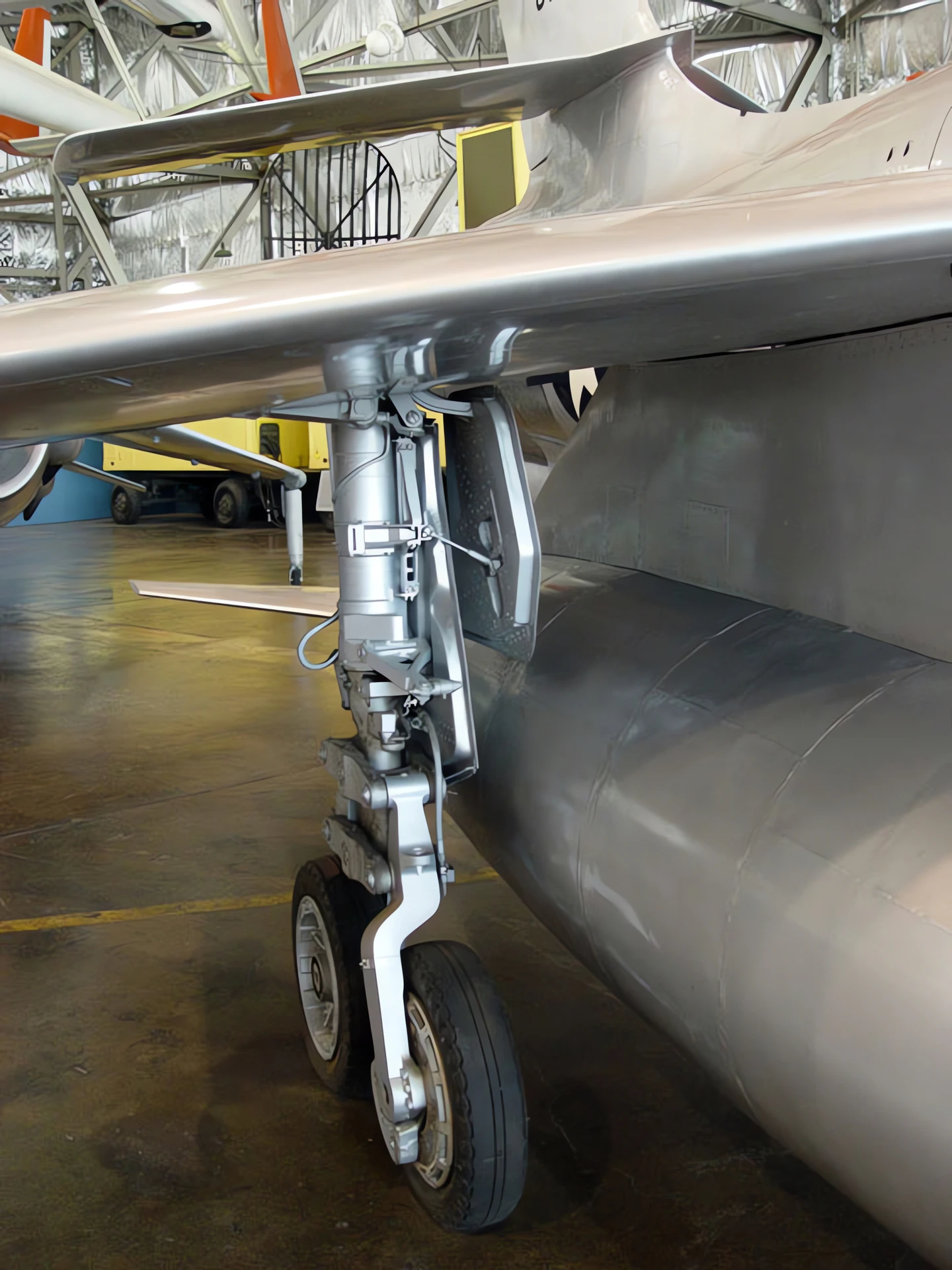
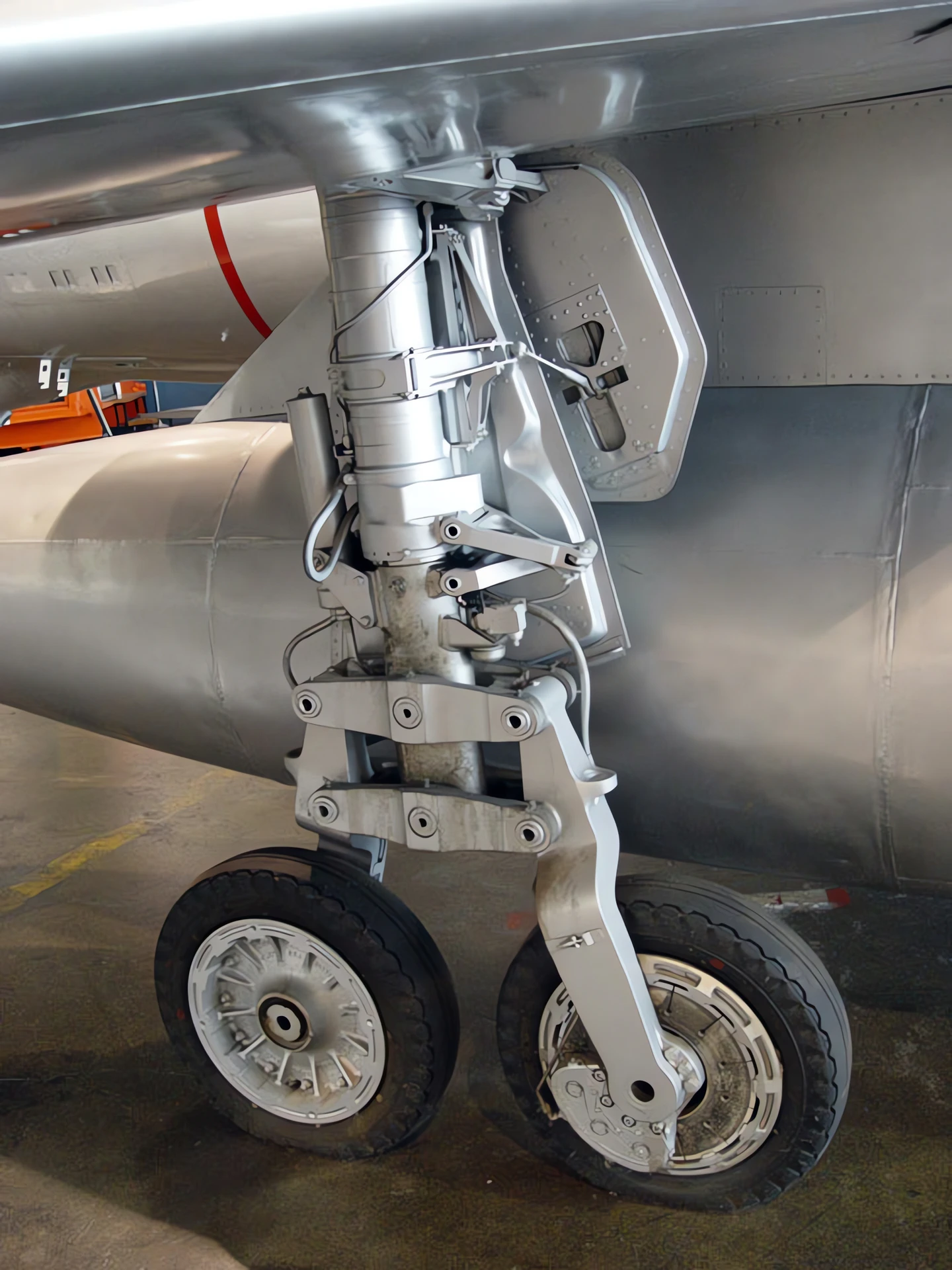
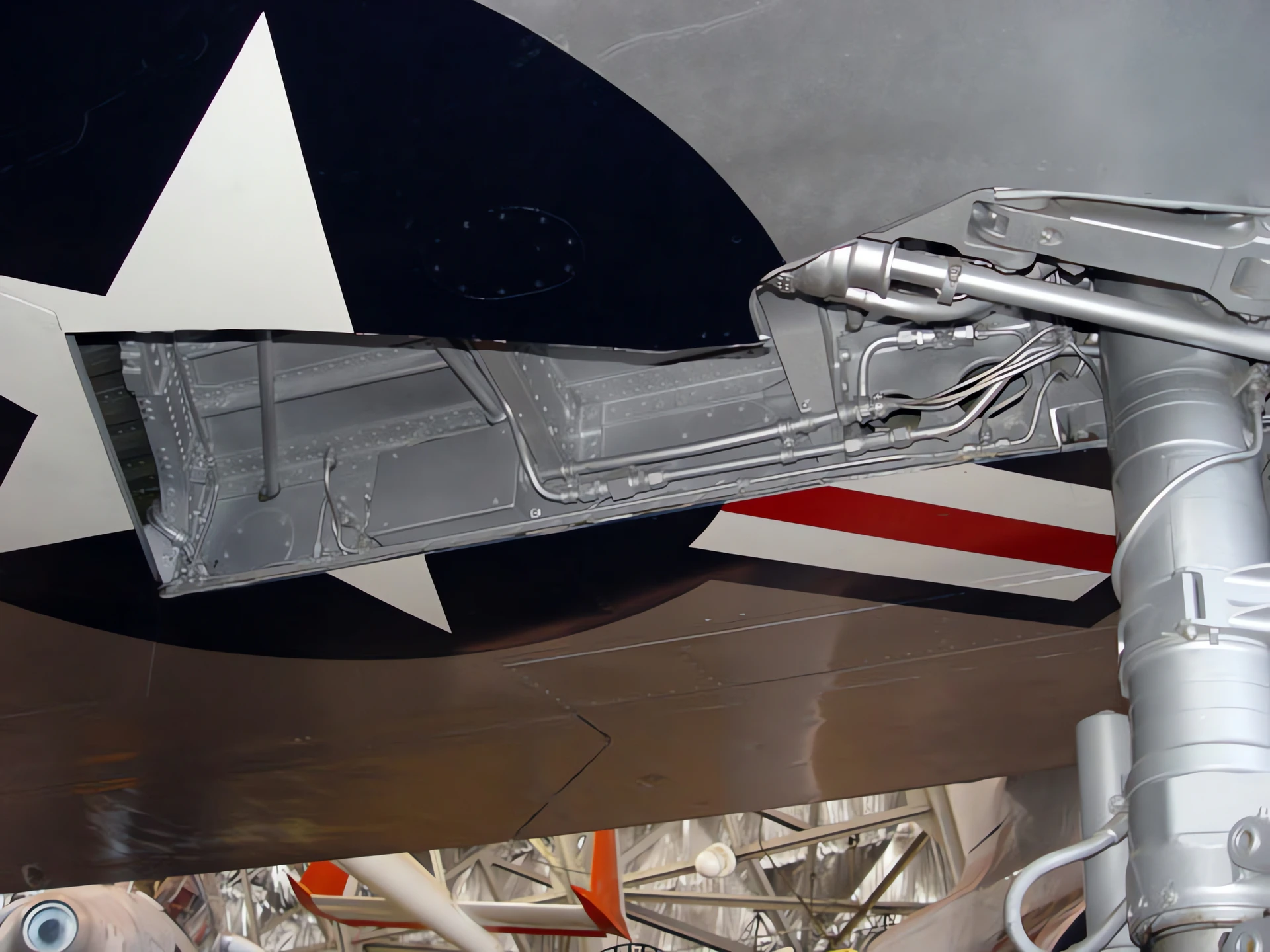
- Landing Gear: Featured a unique bicycle-style main landing gear with two main wheels side-by-side at the center of the fuselage, supported by small outrigger wheels under the wingtips.
Program Outcome and Legacy
- Technical Success: The XF-91 proved the feasibility of using rocket augmentation for performance bursts and demonstrated the viability of the inverse taper wing concept for high-speed flight control.
- Cancellation: Despite its technical achievements, the program was canceled in 1952. The development of more powerful, conventional turbojet engines (which eliminated the need for complex, short-duration rocket power) and the rise of the superior all-jet F-104 Starfighter made the mixed-power interceptor obsolete.
- Legacy: The inverse taper wing design, while not adopted, was an important piece of research. The aircraft’s testing provided vital data on high-Mach flight and supersonic stability.
- Preservation: The sole remaining prototype is preserved and displayed at the National Museum of the United States Air Force at Wright-Patterson AFB in Dayton, Ohio.
Visualizações : 2151
Você pode ver também:
 Republic XF-84H Thunderscreech – Fotos e Vídeos
 Republic RC-3 Seabee – Fotos e Vídeos
 McDonnell Douglas F/A-18 Hornet – Fotos & Vídeo
 Republic F-105 Thunderchief – Fotos e Vídeo
 Republic F-84 Thunderjet – Fotos e Vídeo
 Hawker Hurricane - Ande por aí
 Bell P-39N Airacobra – WalkAround
 Libertador B-24M consolidado – WalkAround
 P-47D Thunderbolt - WalkAround
 A-20 Havoc - WalkAround