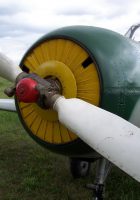
Yak-52

Yak-52

PaísUnión Soviética
TipoAviones entrenador
FotógrafoAleksandr Boriskin
Descripción

Álbum de 24 fotos walk-around de un «Yak-52»

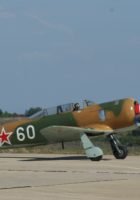
Galería de fotos de un Yak-52, The Yakovlev Yak-52 (Russian: Яковлев Як-52) is a Soviet primary trainer aircraft which first flew in 1976. It is still being produced in Romania by Aerostar, as Iak-52, which gained manufacturing rights under agreement within the now defunct COMECON socialist trade organisation. The Yak-52 was designed originally as an aerobatic trainer for students in the Soviet DOSAAF training organisation, which trained both civilian sport pilots and military pilots.

Fuente: Yak-52 en Wiki

Continuar leyendo

Vistas : 2076

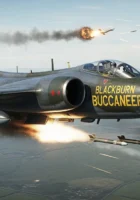
Blackburn Buccaneer

Blackburn Buccaneer

PaísUk
PapelAviones de ataque
Primer vuelo30 de abril de 1958
Construido211

Galería de fotos de un Blackburn Buccaneer in Imperial War Museum Duxford, The Blackburn Buccaneer was a Royal Navy (RN) carrier-borne attack aircraft designed in the 1950s. Designed and initially produced by Blackburn Aircraft at Brough, it was later officially known as the Hawker Siddeley Buccaneer when Blackburn became a part of the Hawker Siddeley group, but this name was rarely used.

Fuente: Blackburn Buccaneer en Wiki

Continuar leyendo

Vistas : 4375

Yakovlev Yak-11 Alce

Yak-11

PaísUnión Soviética
TipoAviones entrenador
Primer vuelo10 de noviembre de 1945
Construido4566

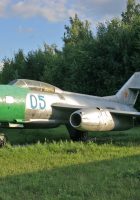
Galería de fotos de un Yak-11, The Yakovlev Yak-11 (Russian: Яковлев Як-11; NATO reporting name: “Moose”) is a trainer aircraft used by the Soviet Air Force and other Soviet-influenced air forces from 1947 until 1962.

Fuente: Yak-11 en Wiki

Continuar leyendo

Vistas : 2239

Linterna Yak-25

Linterna Yak-25

PaísUnión Soviética
TipoAviones interceptores
FotógrafoAleksandr Melihov
Descripción

Álbum de 12 fotos walk-around de una «linterna Yak-25»

Galería de fotos de un Linterna Yak-25, The Yakovlev Yak-25 (NATO designation Flashlight-A/Mandrake) was a swept wing, turbojet-powered interceptor aircraft and reconnaissance aircraft built by Yakovlev and used by the Soviet Union.

Fuente: Linterna Yak-25 en Wiki

Continuar leyendo

Vistas : 2220

Pluma Yak-15

Yak-15

PaísUnión Soviética
TipoCaza turborreactores
FotógrafoDmitri Sribnyi
Descripción

Álbum de 79 fotos walk-around de un «Yak-15»

Galería de fotos de un Yak-15, The Yakovlev Yak-15 (Russian: Яковлев Як-15; NATO reporting name: Feather, USAF/DOD designation Type 2) was a first-generation Soviet turbojet fighter developed by the Yakovlev design bureau (OKB) immediately after World War II. It used a reverse-engineered German Junkers Jumo 004 engine. Along with the Swedish Saab 21R, it was one of only two jets to be successfully converted from a piston-powered aircraft and enter production. 280 aircraft were built in 1947. Although nominally a fighter, it was mainly used to qualify piston-engine-experienced pilots to fly jets.

Fuente: Yak-15 en Wiki

Continuar leyendo

Views : 4776

US 155mm Largo Tom

US 155mm Largo Tom

PaísE.e.u.u
TipoArma de campo

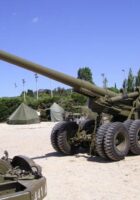
Galería de fotos de un Tom de 155 mm de largo, The 155 mm Long Tom was a 155 millimeter caliber field gun developed and used by the United States mililtary. It was produced in M1 and M2 variants (later known as the M59). Developed to replace the Canon de 155mm GPF, the gun was deployed as a heavy field weapon during World War II and the Korean War, and also classed as secondary armament for seacoast defense. The gun could fire a 45.36 kg (100 lb) shell to a maximum range of 22 km (13.7 mi), with an estimated accuracy life of 1,500 rounds.

Fuente: US 155mm Long Tom en Wiki

Continuar leyendo

Vistas : 3444

Oso Tupolev Tu-95MS

Oso Tupolev Tu-95MS

PaísUnión Soviética
PapelBombardero estratégico
Primer vuelo12 de noviembre de 1952
ConstruidoMás de 500

Galería de fotos de un Oso Tupolev Tu-95MS, The Tupolev Tu-95 (Russian: Туполев Ту-95; NATO reporting name: “Bear”) is a large, four-engine turboprop-powered strategic bomber and missile platform. First flown in 1952, the Tu-95 entered service with the Soviet Union in 1956 and is expected to serve the Russian Air Force until at least 2040.[1] A development of the bomber for maritime patrol is designated Tu-142, while a passenger airliner derivative was called Tu-114.

Fuente: Tupolev Tu-95MS Oso en Wiki

Continuar leyendo

Views : 5527

Esgrimista Sukhoi Su-24М

Esgrimista Sukhoi Su-24М

PaísUnión Soviética
TipoAviones de ataque
FotógrafoAndrey Visjagin
Descripción

Álbum de 80 fotos walk-around de un «Sukhoi Su-24М Fencer»

Galería de fotos de un Esgrimista Sukhoi Su-24М, The Sukhoi Su-24 (NATO reporting name: Fencer) is a supersonic, all-weather attack aircraft developed in the Soviet Union. The aircraft has a variable-sweep wing, twin-engines and a side-by-side seating arrangement for its two crew. It was the first of the USSR’s aircraft to carry an integrated digital navigation/attack system.[1] It remains in service with the Russian Air Force, Ukrainian Air Force, and various air forces to which it was exported.

Fuente: Sukhoi Su-24М Fencer en Wiki

Continuar leyendo

Vistas : 6612

Sukhoi Su-35 Flanqueador

Sujoi Su-35

PaísUnión Soviética
TipoCaza multirrolo
FotógrafoSerguéi Zhabin
Descripción

Álbum de 86 fotos walk-around de un «Sukhoi Su-35»

Galería de fotos de un Sujoi Su-35, The Sukhoi Su-35 (Russian: Сухой Су-35; NATO reporting name: Flanker-E) is a designation for two separate, heavily upgraded derivatives of the Su-27 ‘Flanker’ jet plane. They are single-seat, twin-engine, supermaneuverable multirole fighters, designed by Sukhoi and built by Komsomolsk-on-Amur Aircraft Production Association (KnAAPO).

Fuente: Sukhoi Su-35 en Wiki

Continuar leyendo

Views : 6440

Polikarpov I-17

Polikarpov I-17

PaísUnión Soviética
TipoPrototipo de caza monoplaza
Primer vuelo1 de septiembre de 1934
Construido3

el Polikarpov I-17 was a Soviet single-seat fighter prototype designed and built by a team headed by Polikarpov at the Central Design Bureau (TsKB). The I-17 was a lightweight single-seat low-wing cantilever monoplane. Developed under the design bureau designation TsKB-15 it first flew on 1 September 1934 powered by a 567 kW (760 hp) Hispano-Suiza 12 Ybrs engine. The second prototype designated the TsKB-19 had a revised inward retracting wide-track main landing gear and a Soviet M-100 engine. This second prototype was displayed at the 1936 Salon de l’Aeronautique in Paris. The third prototype designated the TsKB-33 had reduced armament to save weight and a revised engine cooling system, but the further development was abandoned in 1936.

Fuente: Polikarpov I-17 en Wiki

Continuar leyendo

Vistas : 2568