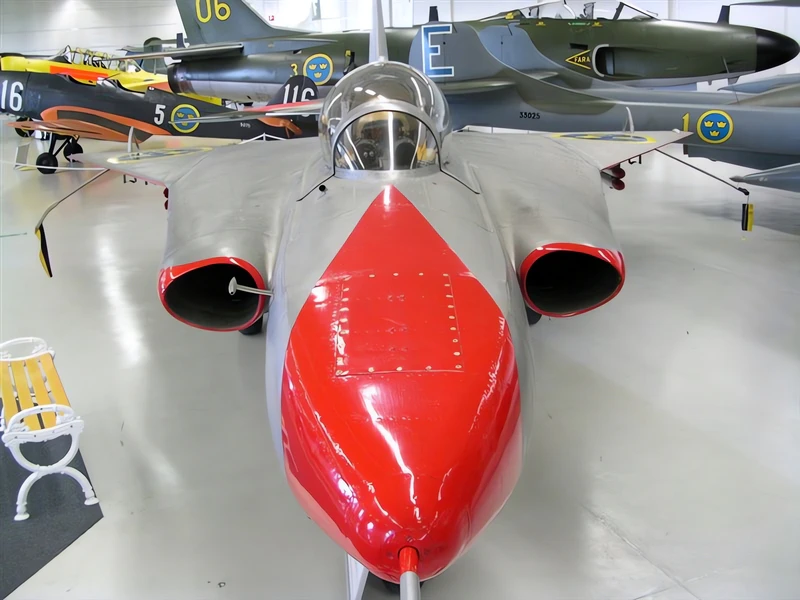
Saab 210 | |
|---|---|
| Land | Schweden |
| Rolle | Versuchsflugzeug |
| Erstflug | 21. Januar 1952 |
| Gebaut | 1 |
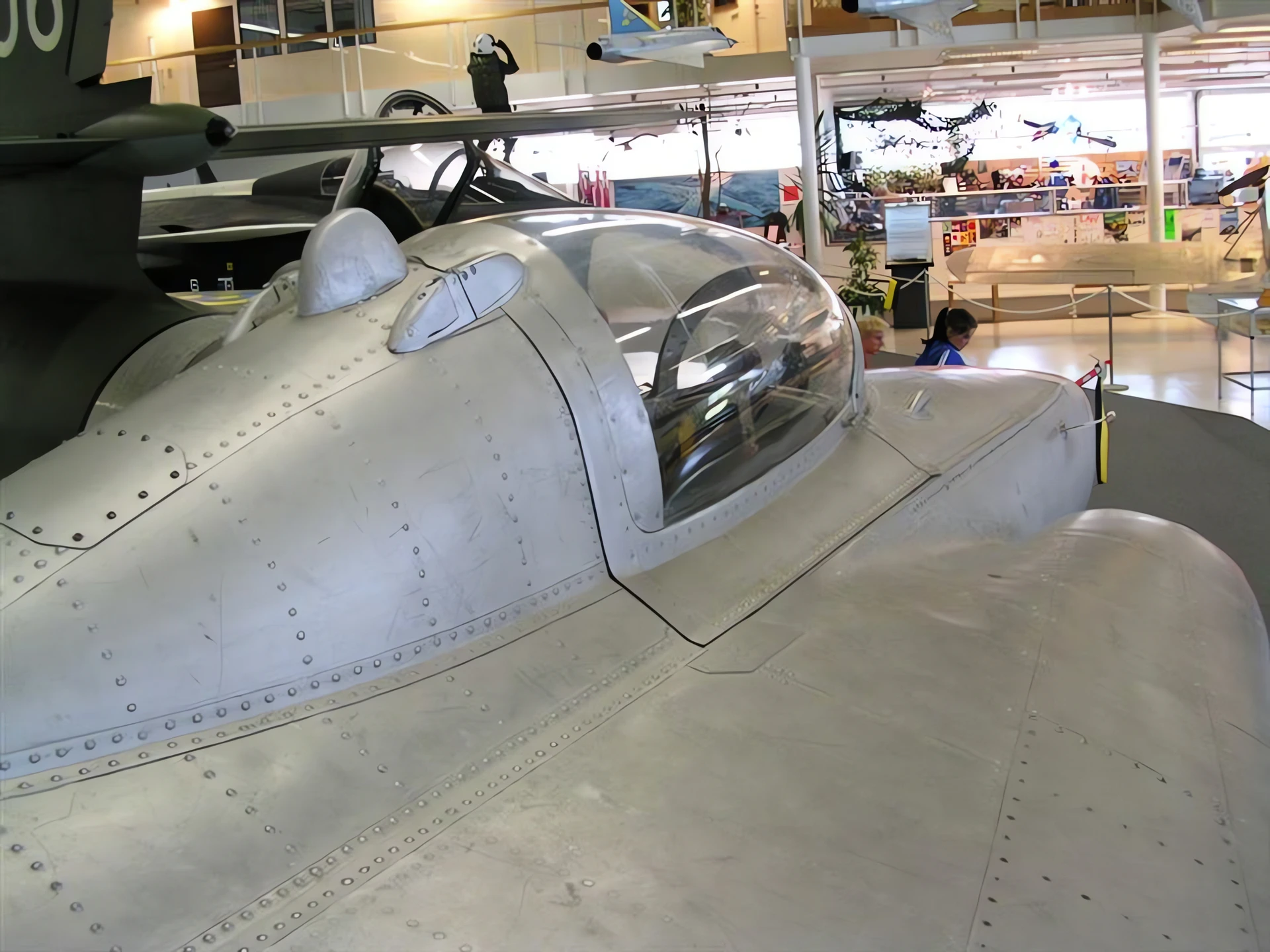
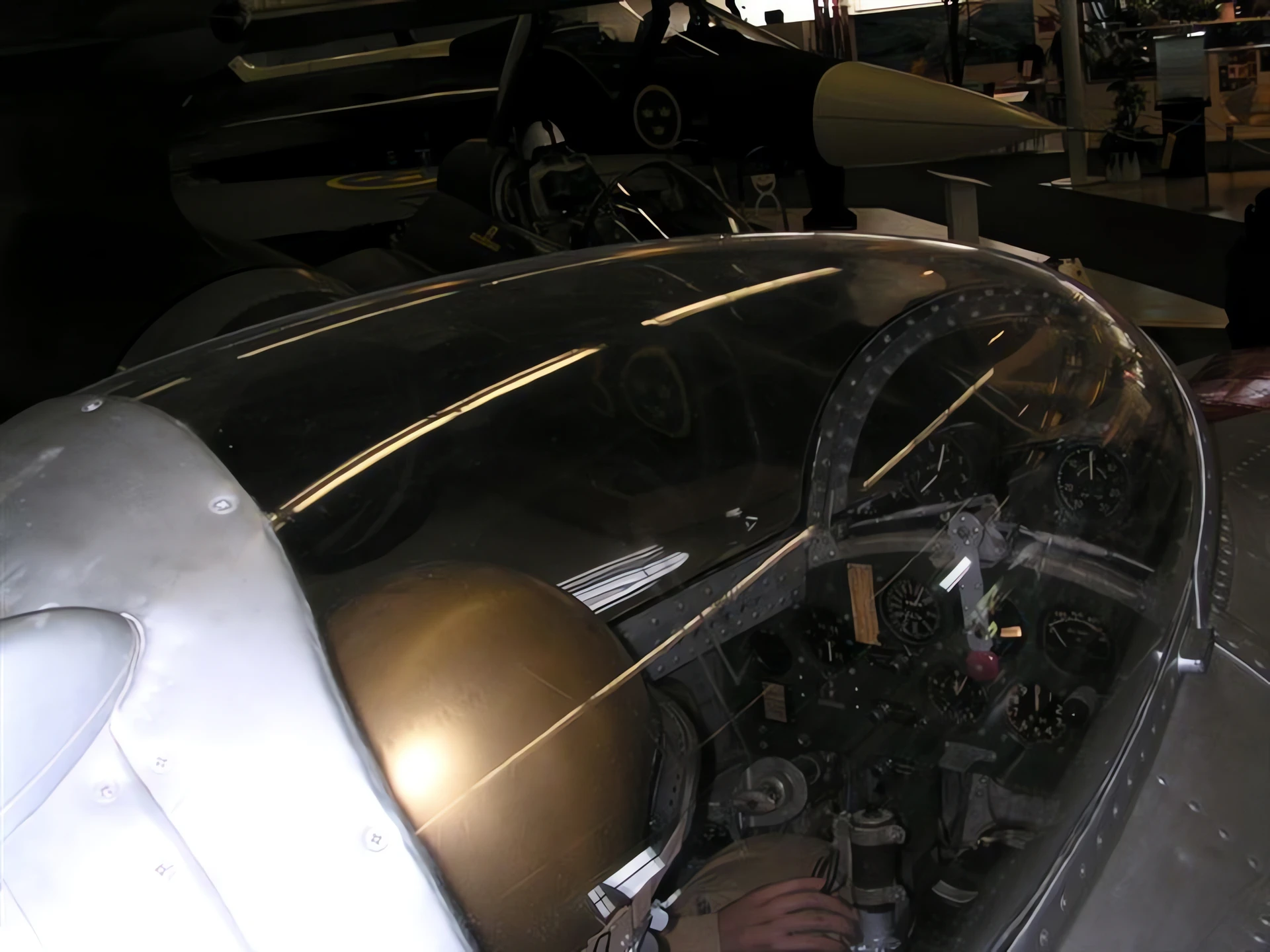
das Saab 210 Draken (der Drache oder der Drachen) ist ein verkleinerter Prüfstand für das Doppeldelta-Konzept bei der Entwicklung des J 35-Kämpfers. Obwohl nie offiziell etwas anderes als Draken von Saab genannt, wurde es bald durch seinen inoffiziellen Spitznamen Lilldraken (der kleine Drache oder der kleine Drachen) nach dem ersten Flug des Prototyps der Saab 35 bekannt. Der erste Flug fand am 21. Januar 1952 statt.
Quelle: Saab 210 auf Wikipedia
| SAAB 210 Lilldraken Walk Around | |
|---|---|
| Photographer | Unknow |
| Localisation | Unknow |
| Photos | 29 |
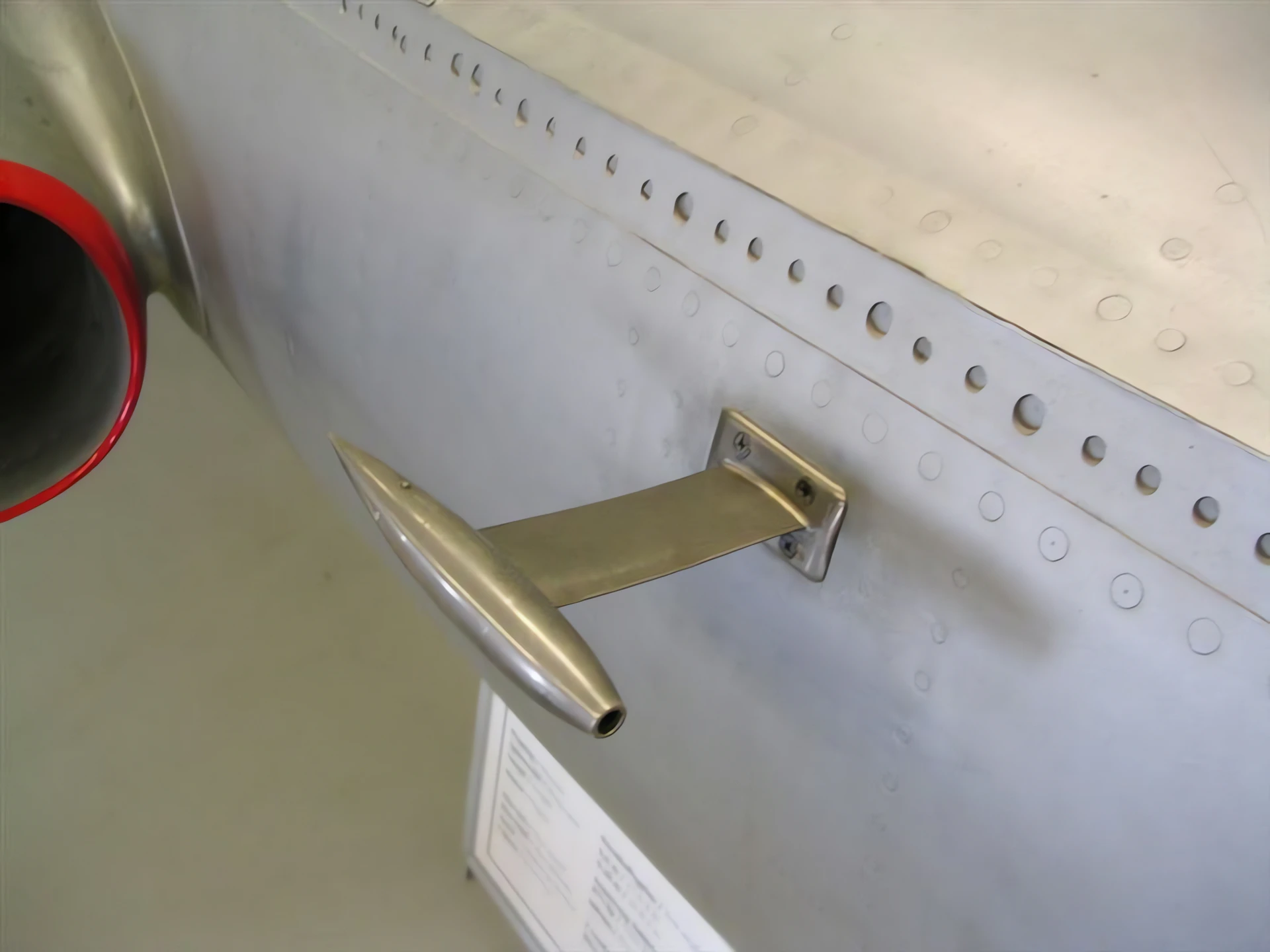
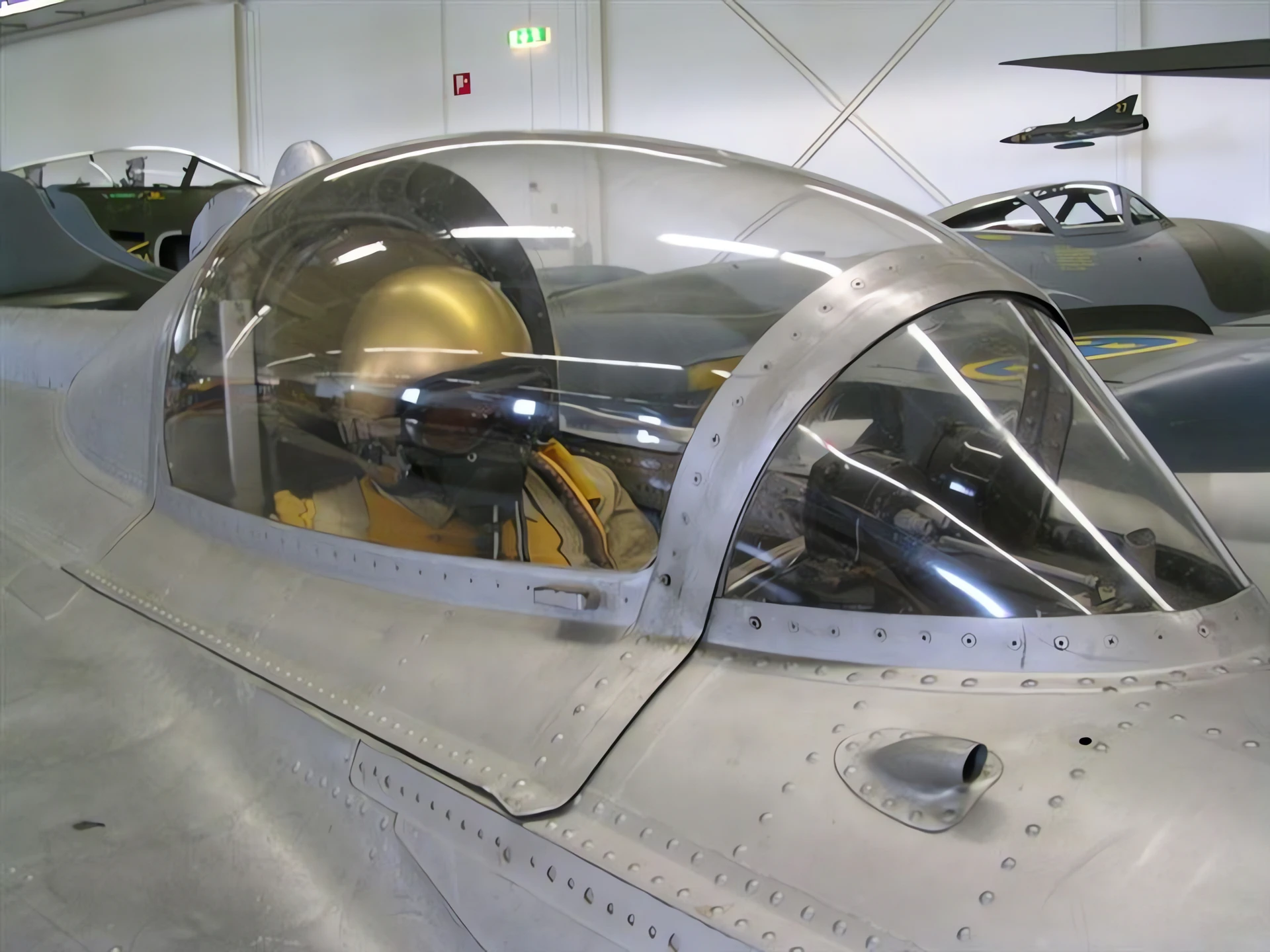
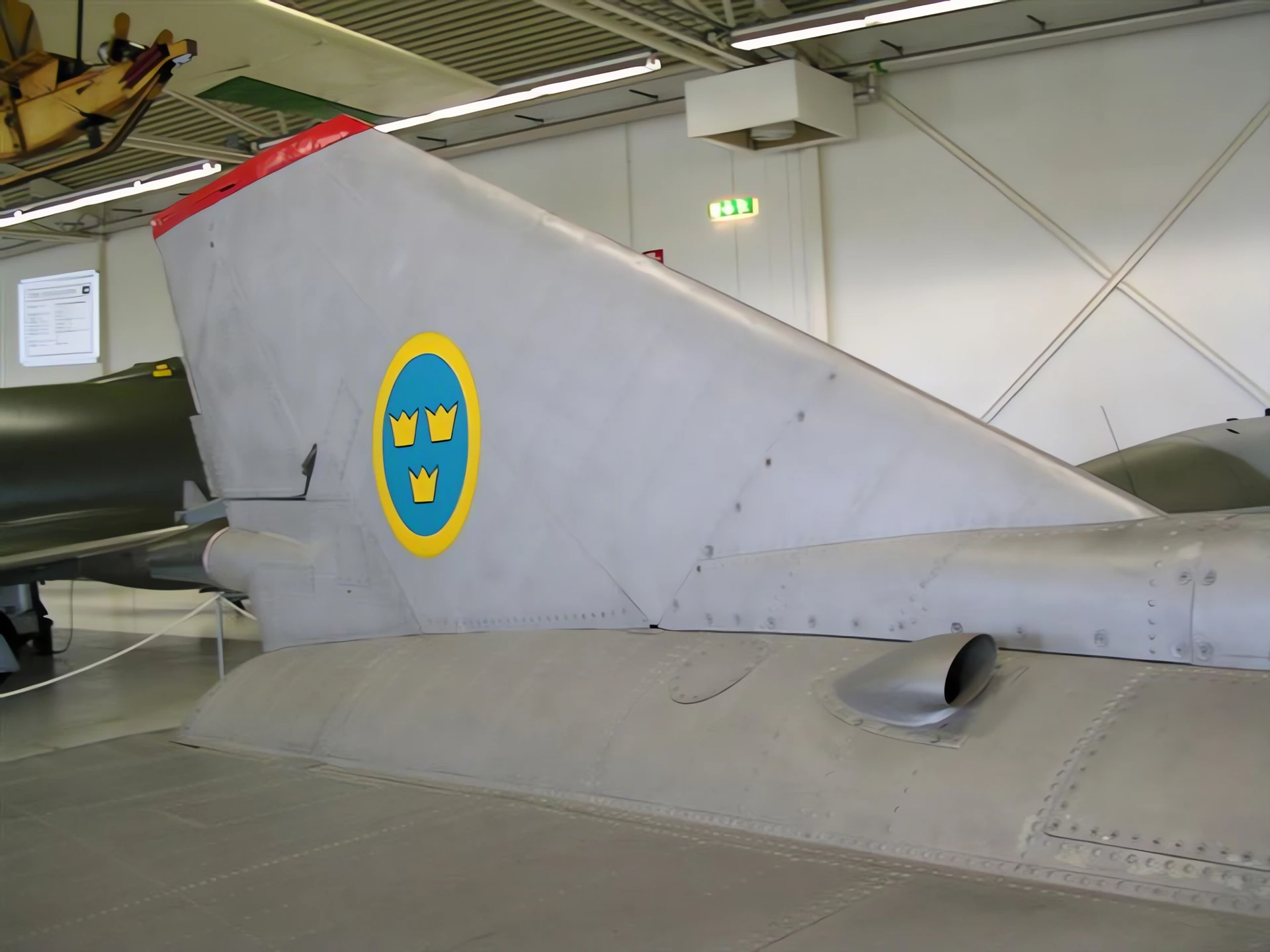
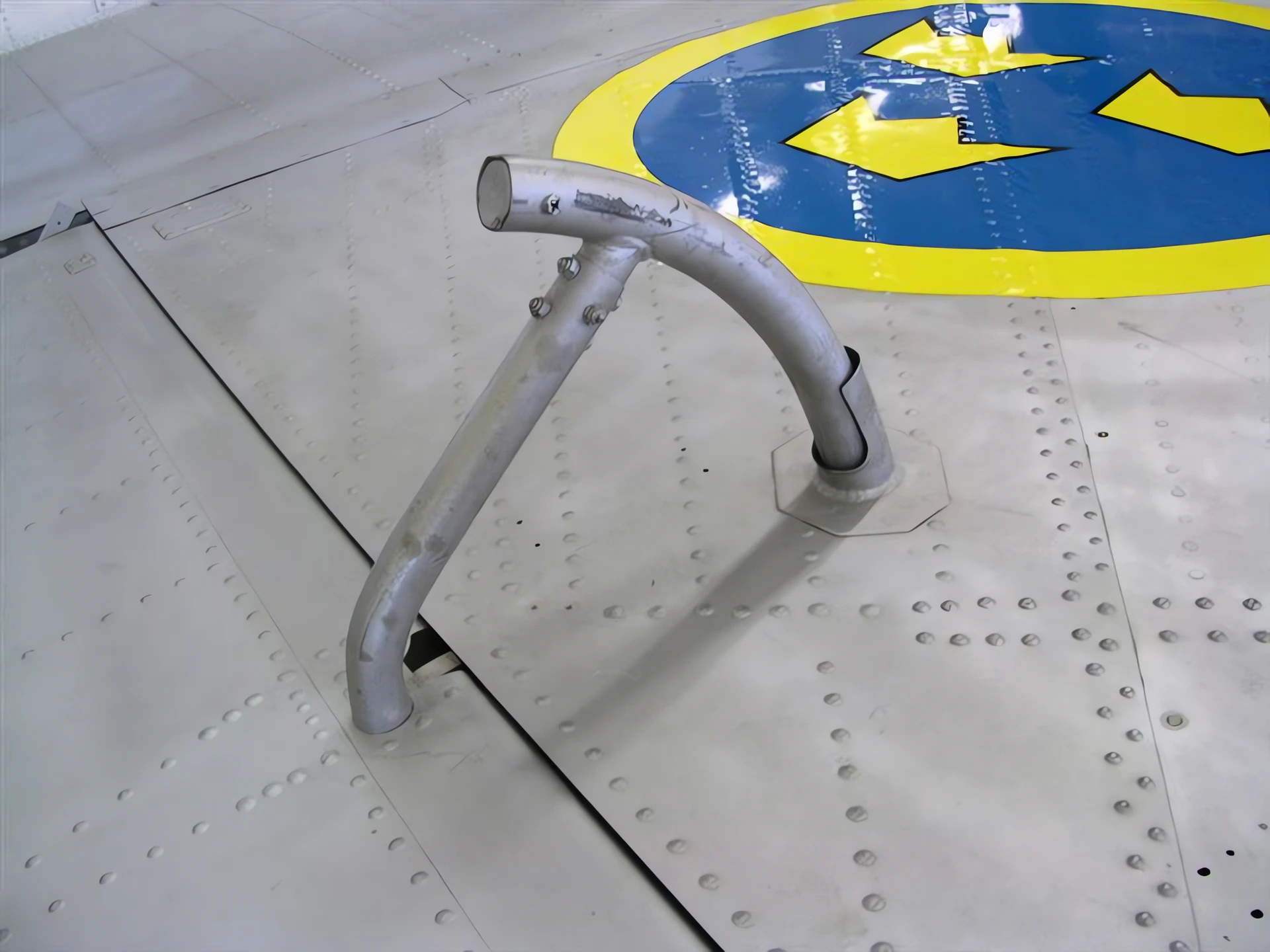

Siehe auch:


General Characteristics and Role
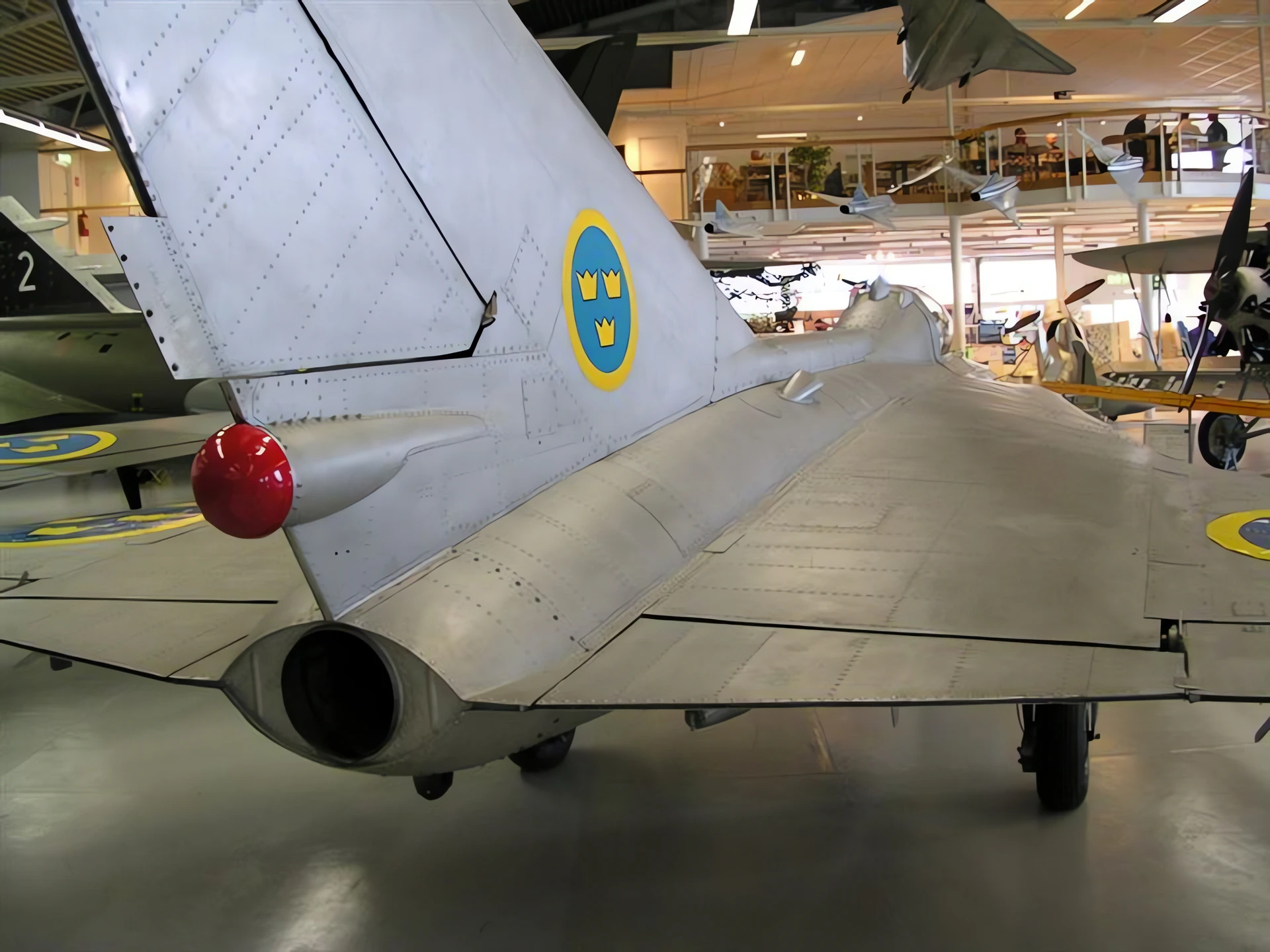
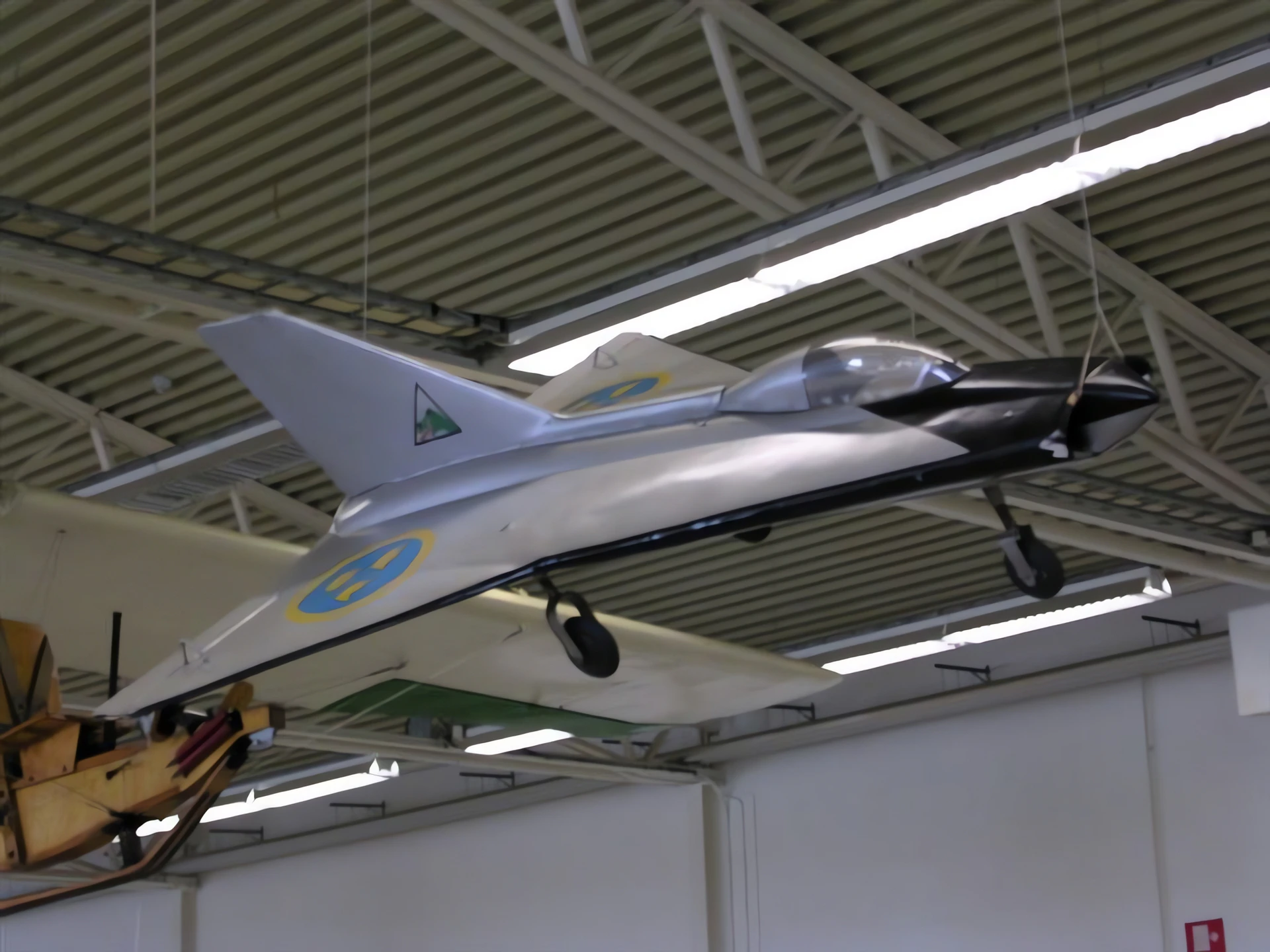
The SAAB 210 Lilldraken (“Little Dragon”) was a revolutionary Swedish experimental aircraft designed and built by Saab in the early 1950s. It was created purely as a one-third scale research platform to test the novel and complex double delta wing configuration proposed for the supersonic Saab 35 Draken fighter. The Lilldraken was a critical step in the Draken’s development, as the double delta design—characterized by a small, highly-swept inner delta wing and a larger, less-swept outer delta—was entirely new and its aerodynamic properties needed real-world validation, especially at low speeds. Its unique profile and small size made it one of the most distinctive and important experimental aircraft of its era.
| Property | Typical Value (SAAB 210) |
|---|---|
| Rolle | Experimental/Aerodynamic Testbed |
| National Origin | Schweden |
| Hersteller | Saab AB |
| First Flight | 21. Januar 1952 |
| Crew | 1 (Pilot) |
| Konfiguration | Low-wing monoplane, double delta wing, tricycle landing gear |
| Länge | 6.1 m (20 ft 0 in) |
| Flügelspannweite | 4.79 m (15 ft 8 in) |
| Max Speed | Approx. 340 km/h (211 mph) |
Design Innovations and Performance
- Engine: 1 x Armstrong Siddeley Adder turbojet engine (non-afterburning).
- Thrust: Approx. 475 kgf (1,047 lbf).
- Key Innovation: The primary purpose was to test the double delta wing, which was necessary to give the subsequent Draken fighter both high-speed performance (via the inner delta) and low-speed stability (via the outer delta).
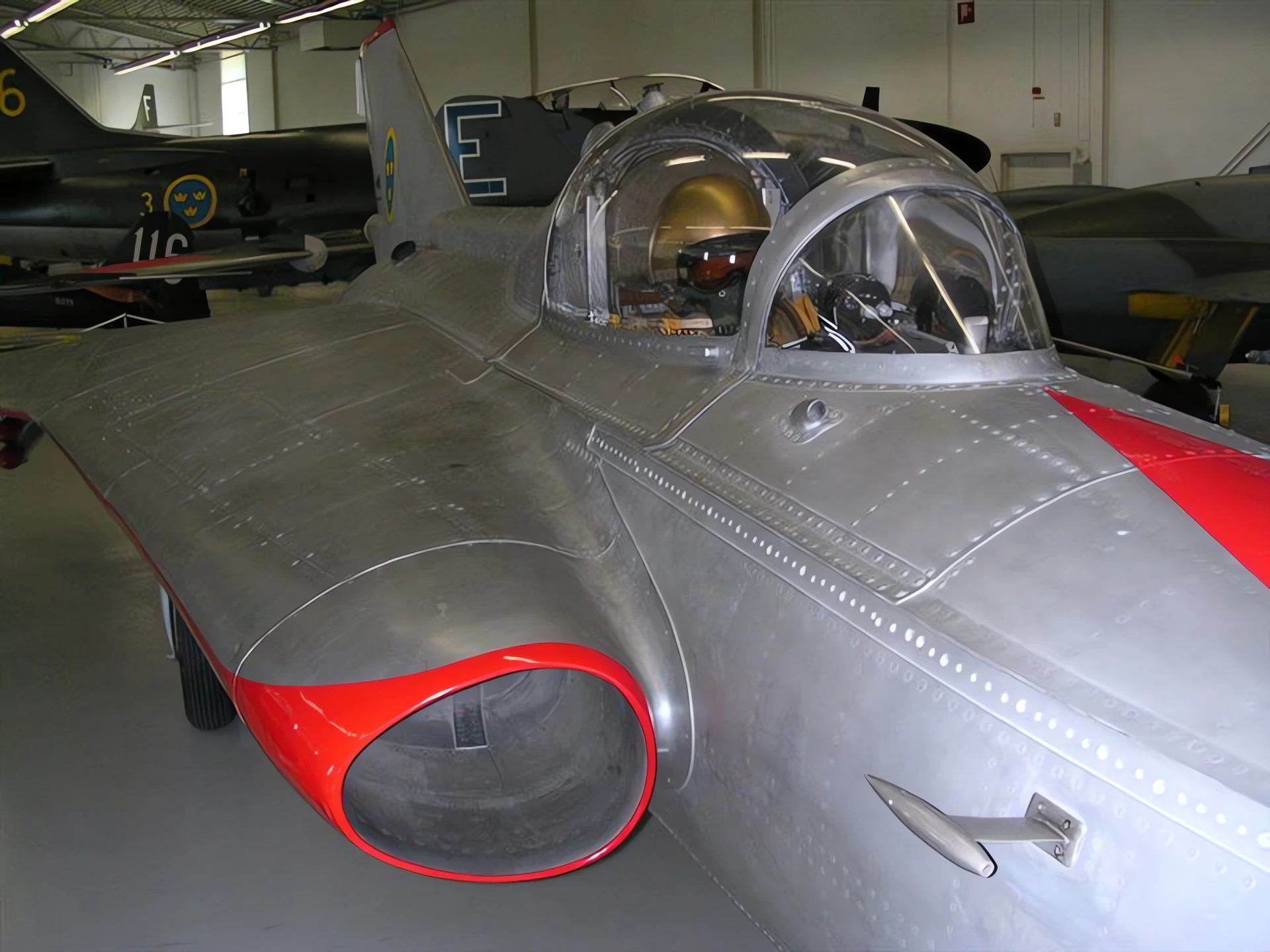
- Air Intakes: The Lilldraken featured large lateral air intakes on either side of the cockpit, which were also representative of the intended design for the larger Draken.
- Test Program: The aircraft successfully performed numerous flights, validating the stability, control, and general handling characteristics of the radical double delta configuration before the full-scale fighter was finalized.
Legacy and Final Status
- Successor: The knowledge gained from the Lilldraken program was directly applied to the full-scale development and successful deployment of the Mach 2-capable Saab 35 Draken fighter.
- Operational Status: Only one example of the SAAB 210 was ever built.
- Preservation: The single prototype is now preserved and displayed at the Flygvapenmuseum (Swedish Air Force Museum) in Linköping, Sweden.
Ansichten : 1346
Sie können auch sehen:
 SAAB 340 AEW – Fotos & Videos
 Saab 37 Viggen – Fotos & Videos
 SAAB B17 – Fotos & Videos
 Saab 21R – Fotos & Video
 Saab JAS 39 Gripen – Fotos & Video
 Saab J-29F Tunnan – Fotos & Video
 Konsolidierter B-24M Liberator – WalkAround
 P-47D Thunderbolt – WalkAround
 A-20 Havoc – WalkAround
 TBM-3E Avenger – Spaziergang