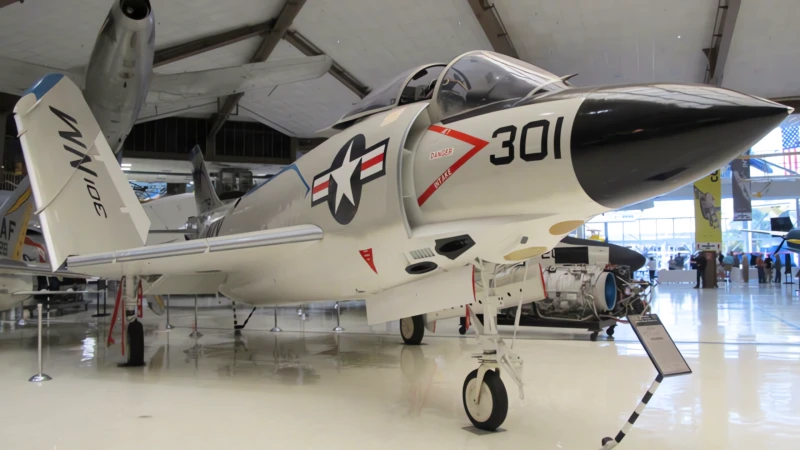
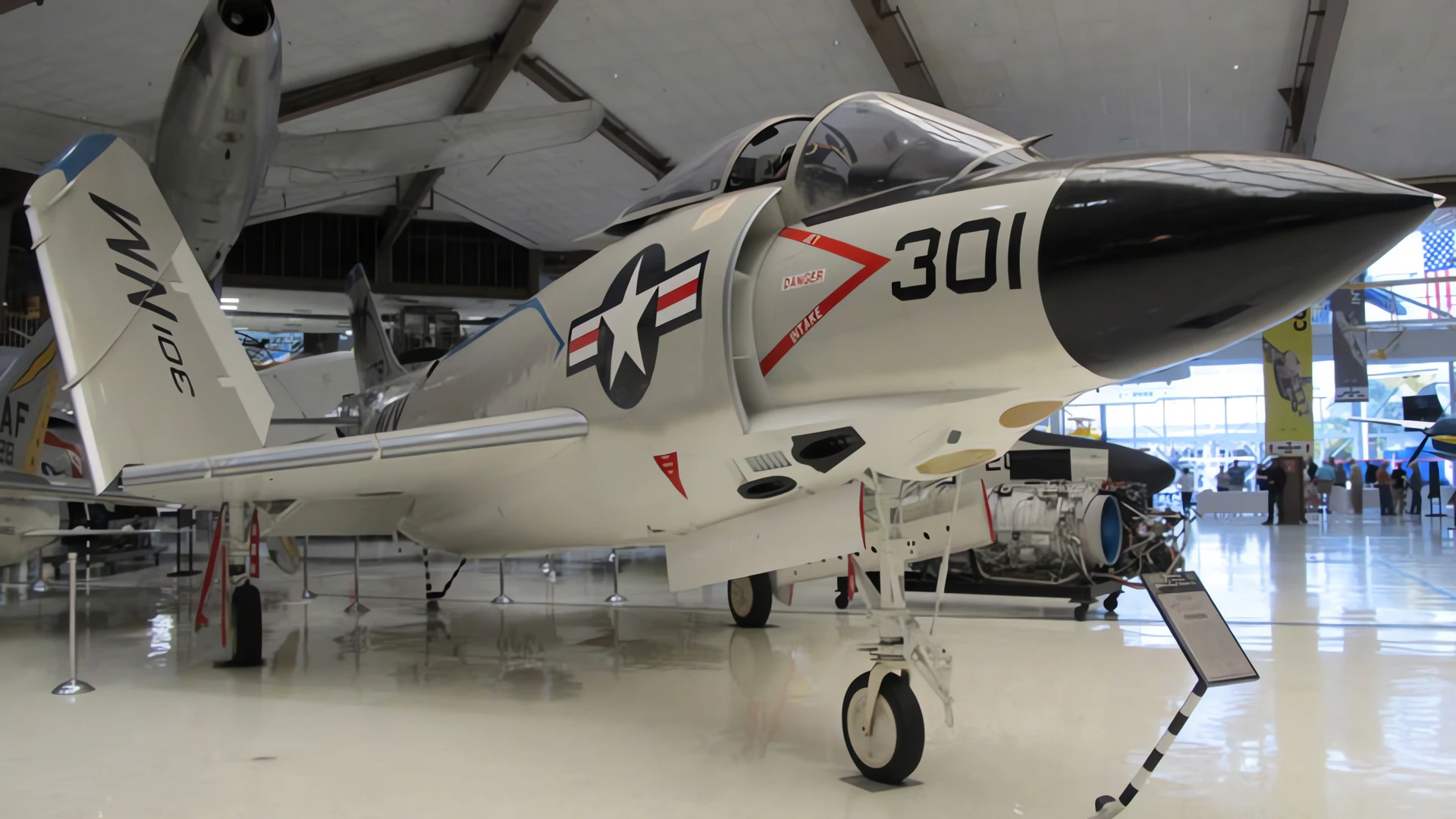
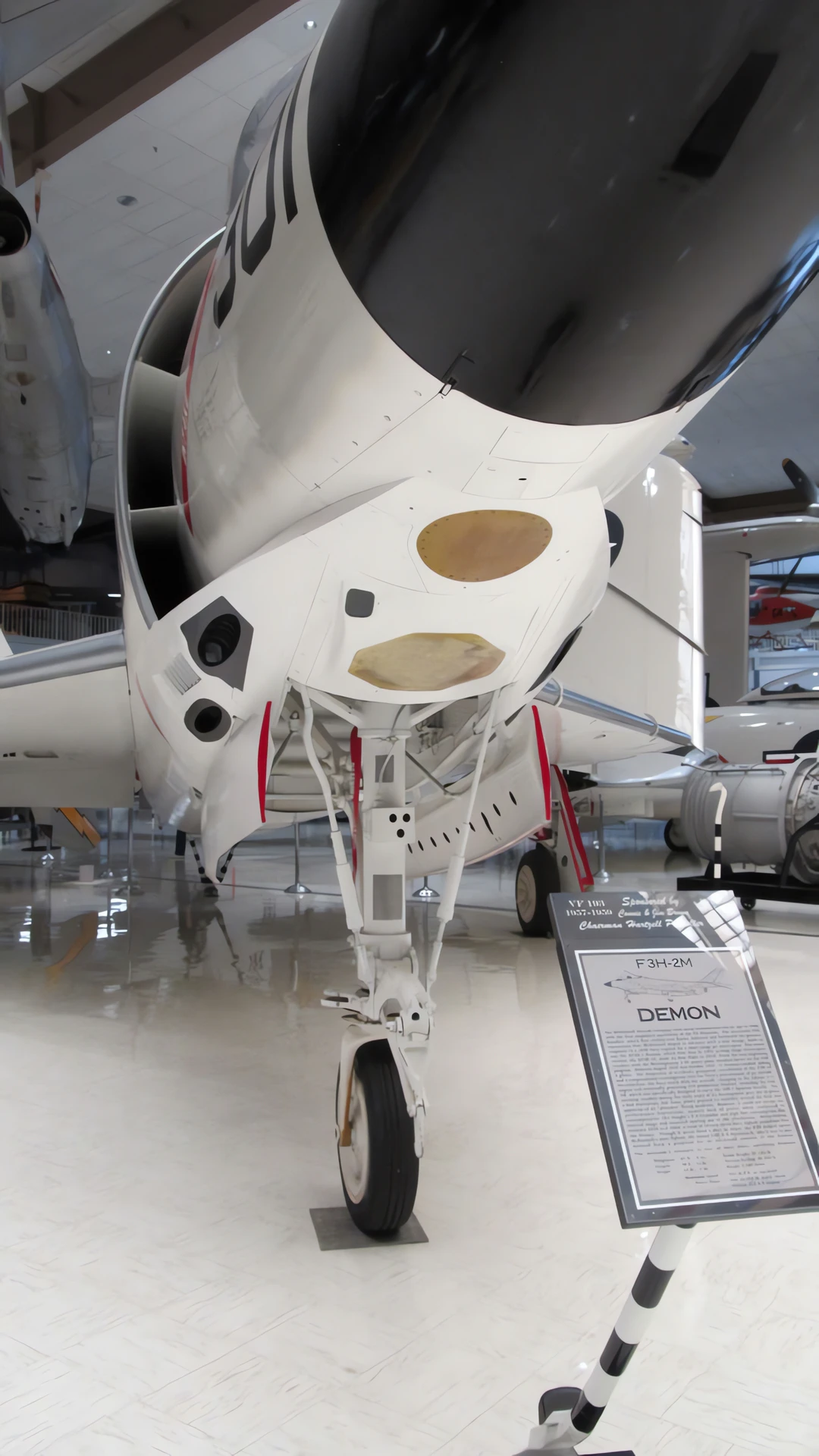
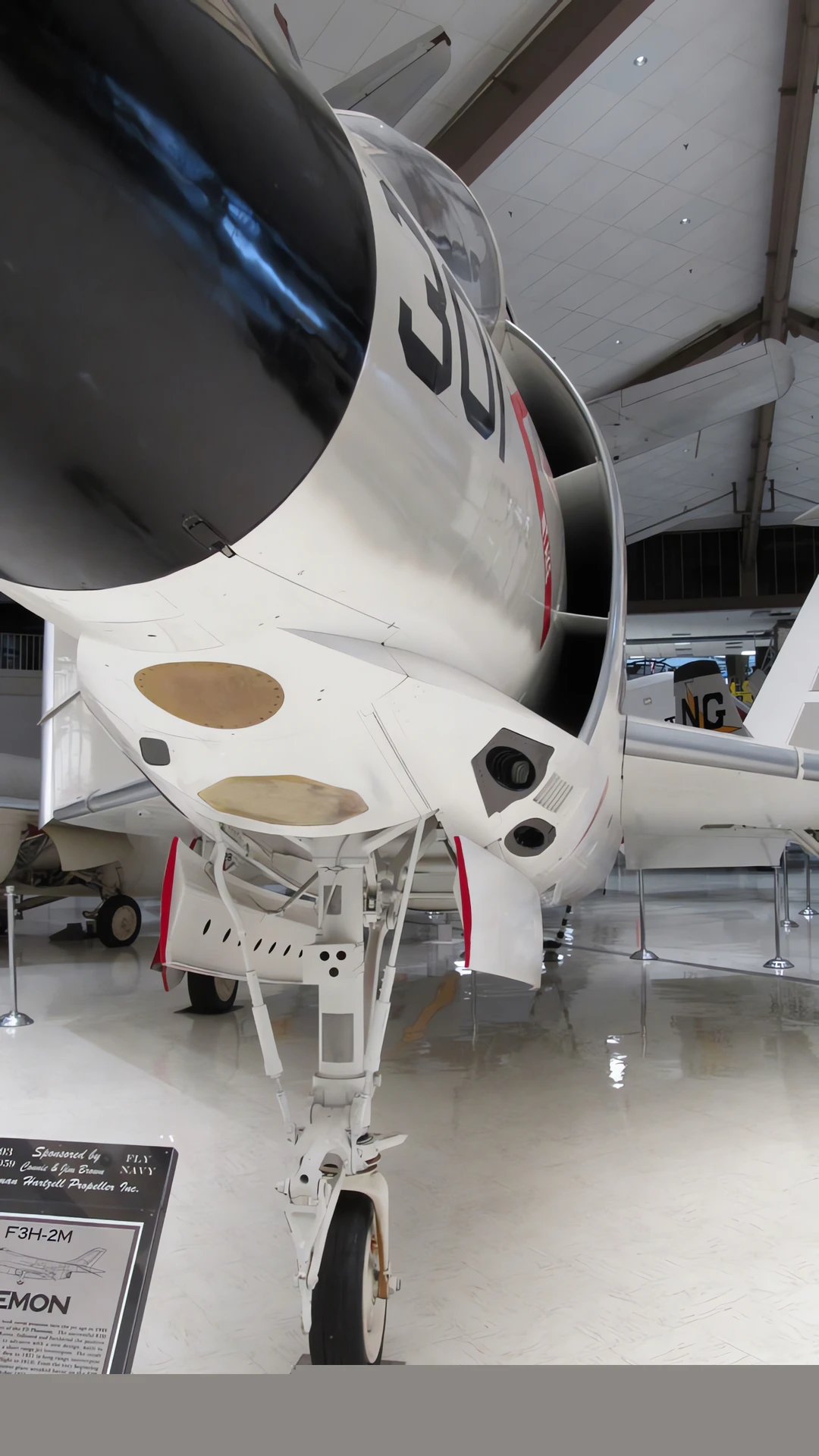
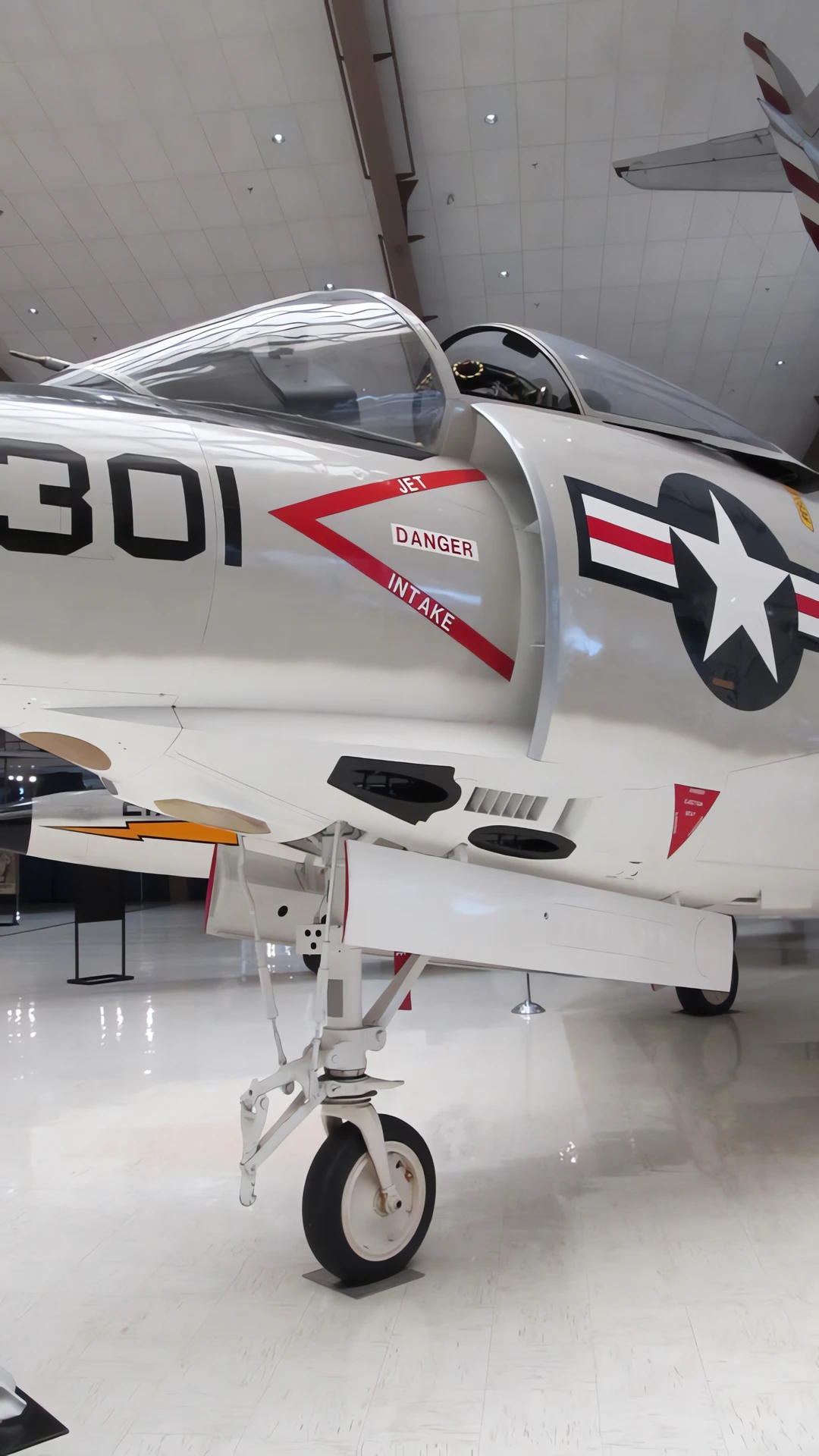
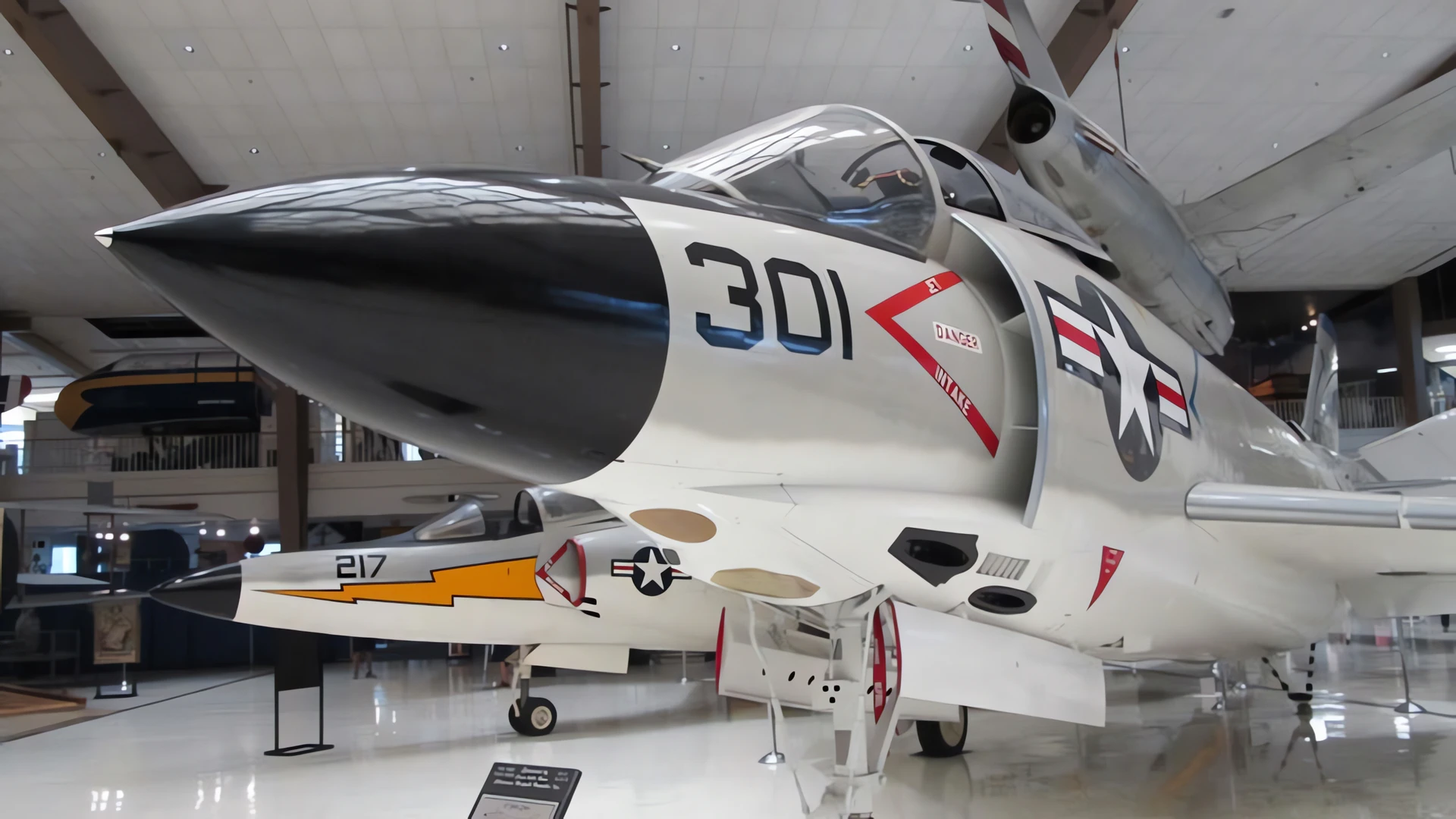
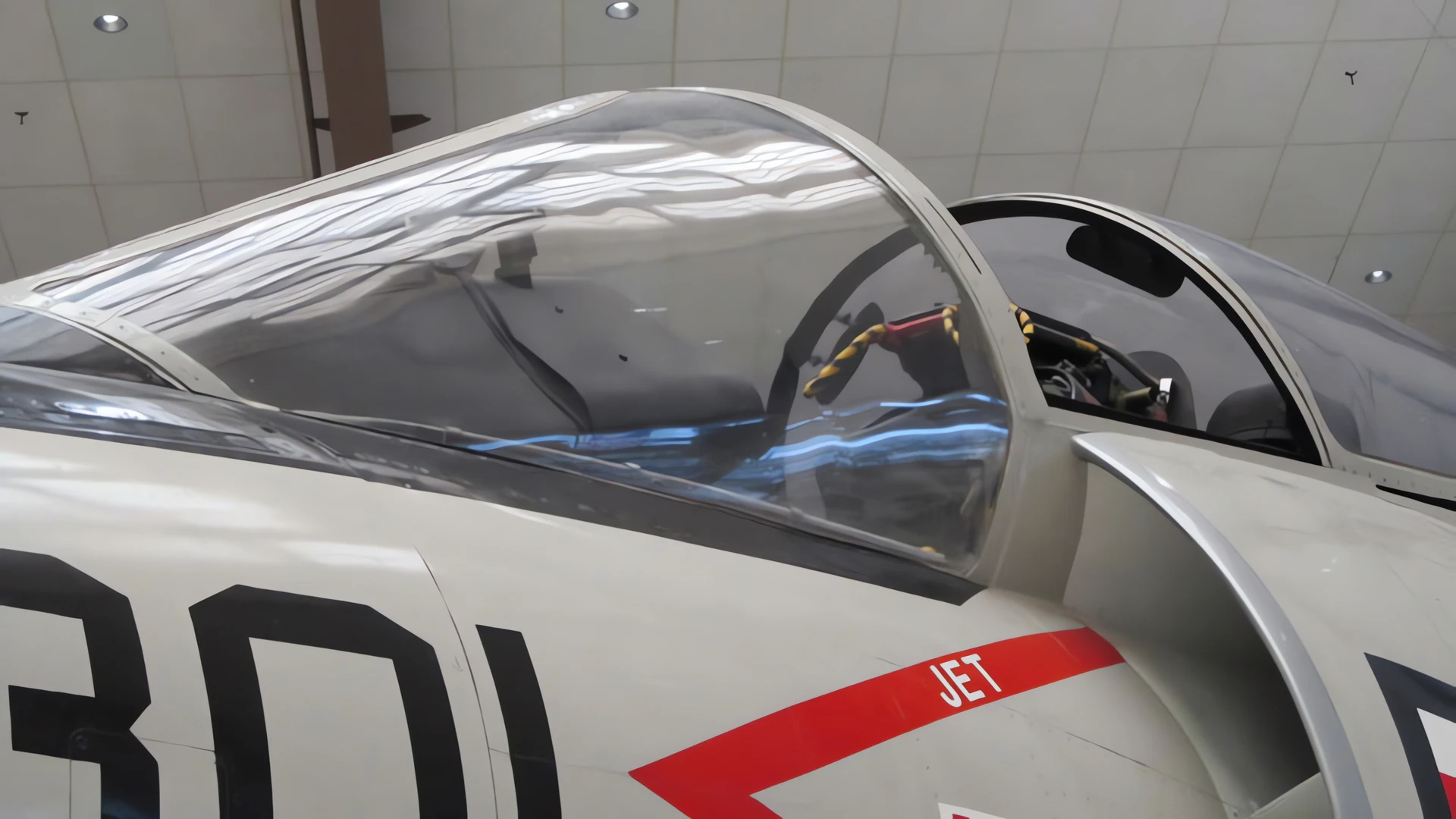
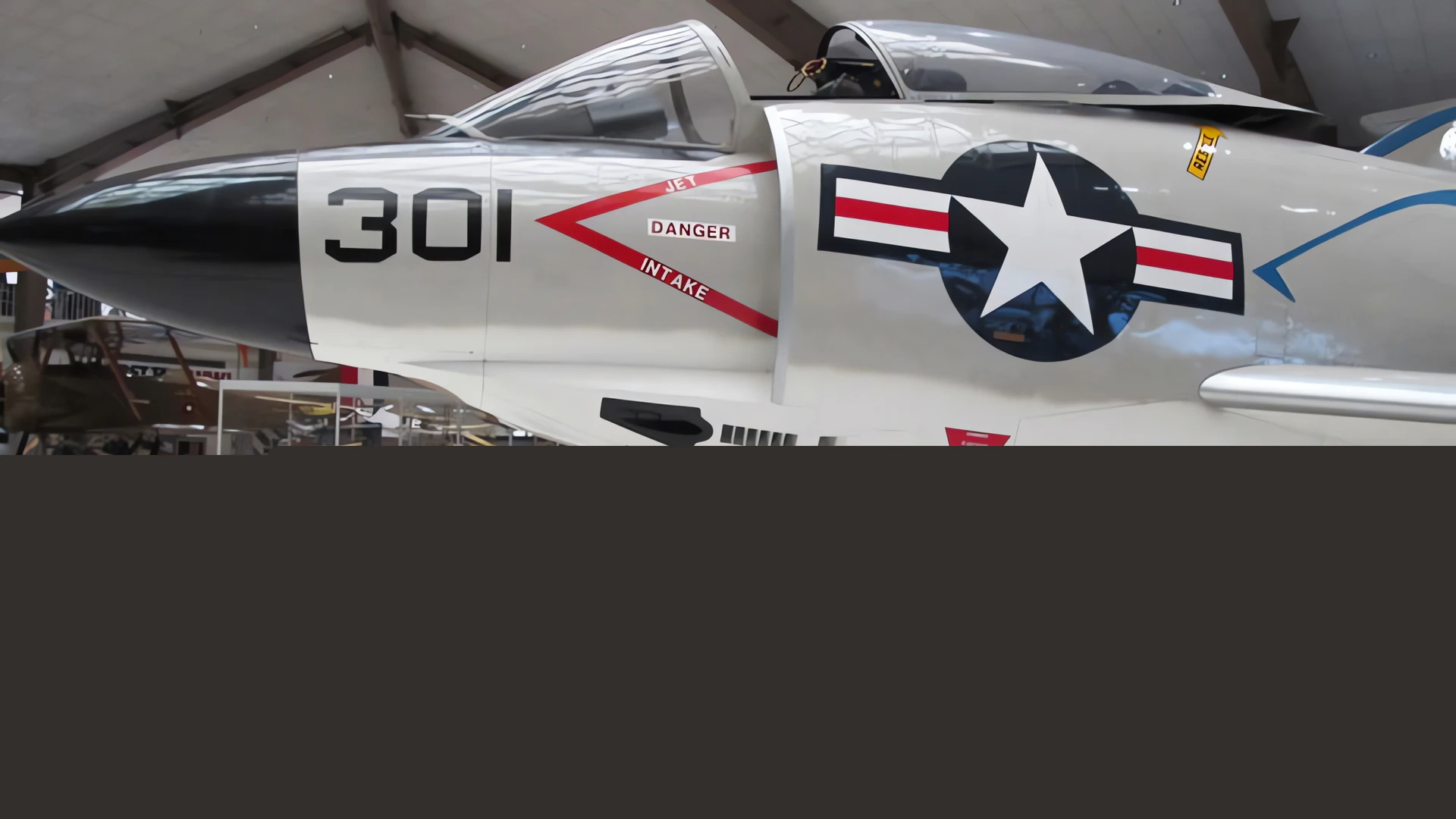
Den McDonnell F3H Demon var et subsonisk fejet vinge United States Navy hangarskibsbaseret jetjagerfly. Efterfølgeren til F2H Banshee, Demon blev redesignet med J71-motoren efter alvorlige problemer med Westinghouse J40-motoren, der var en del af det oprindelige design, men i sidste ende opgivet. Selvom den manglede tilstrækkelig kraft til supersonisk ydeevne, supplerede den dagslys dogfighters som Vought F8U Crusader og Grumman F11F Tiger som en all-weather, missilbevæbnet interceptor indtil 1964.
Den McDonnell F3H Dæmonwas a transitionary swept-wing carrier-based jet fighter that served as the predecessor to the legendary F-4 Phantom II. While the early models were plagued by a disastrously underpowered Westinghouse engine, theF3H-2Mvariant (later designated F-3C) fixed many of these issues with the Allison J71. The “M” stood forMissil, as this specific version was optimized to carry the first radar-guided air-to-air missiles, changing naval aerial combat from dogfighting to “beyond visual range” interceptions.
Attribute
Technical Specification (F3H-2M)
Rolle
All-Weather Carrier-based Interceptor
Besætning
1 (Pilot)
First Flight
August 7, 1951 (XF3H-1)
Kraftværk
1 × Allison J71-A-2E afterburning turbojet
Thrust
14,000 lbf (62.3 kN) with afterburner
Maximum Speed
716 mph (1,152 km/h) / Mach 0.95
Primary Armament
4 × AIM-7 Sparrow radar-guided missiles
Secondary Armament
4 × 20mm Colt Mk 12 cannons
Engineering the Missile Age
The Sparrow Missile Platform:The F3H-2M was the first operational fighter integrated with theAIM-7 Sparrow. This required a sophisticated radar system capable of “illuminating” the target for the missile’s seeker head to follow.
Large Wing Area:To maintain maneuverability at high altitudes and safe landing speeds on carriers, the Demon featured a very large wing area (over 500 sq ft). This gave it excellent “lift,” but the resulting drag limited it to subsonic speeds in level flight.
High-Cockpit Visibility:The pilot sat quite high in the fuselage with a “greenhouse” canopy that provided excellent visibility for carrier approaches—a design trait McDonnell would carry over into the Phantom.
The “Beaver Tail”:The rear fuselage tapered into a flat, wide fairing known as a “beaver tail,” which housed the arrestor hook and helped manage the aerodynamics of the afterburning exhaust.
A Difficult Birth and a Lasting Legacy
The Engine Crisis:The early F3H-1 used the Westinghouse J40 engine, which was so unreliable and underpowered that several aircraft were lost in accidents, and the Navy eventually grounded the entire fleet until the Allison J71 could be fitted.
All-Weather Capability:Despite its early troubles, the Demon was a true all-weather fighter. Its radar and automated fire control systems allowed it to operate effectively in the dark and through heavy cloud cover, a necessity for protecting the fleet.
Blueprint for the Phantom:You can see the “family resemblance” between the Demon and the laterF-4 Phantom II. McDonnell used the lessons learned from the Demon’s radar integration and airframe layout to build the world-beating F-4.
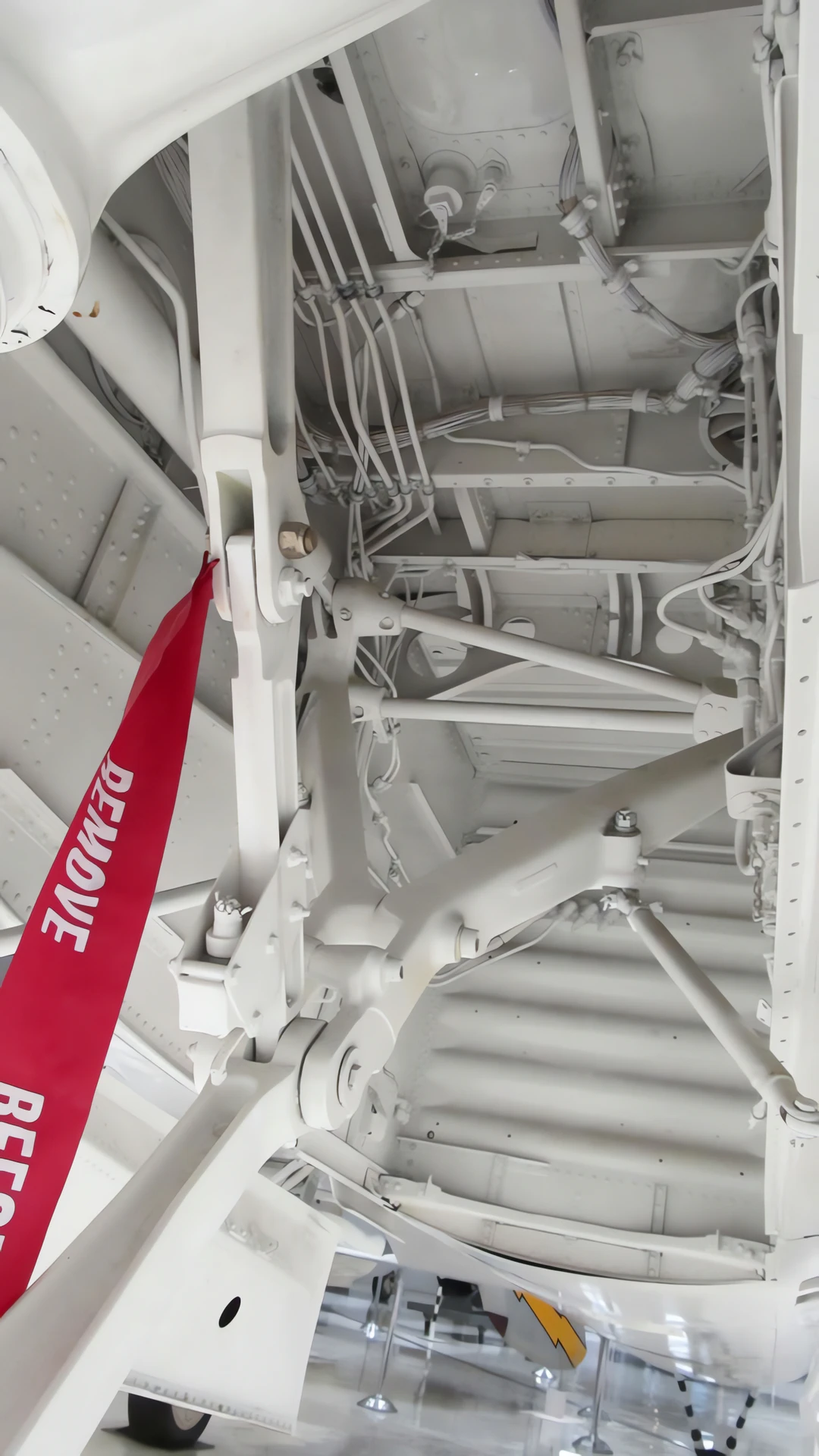
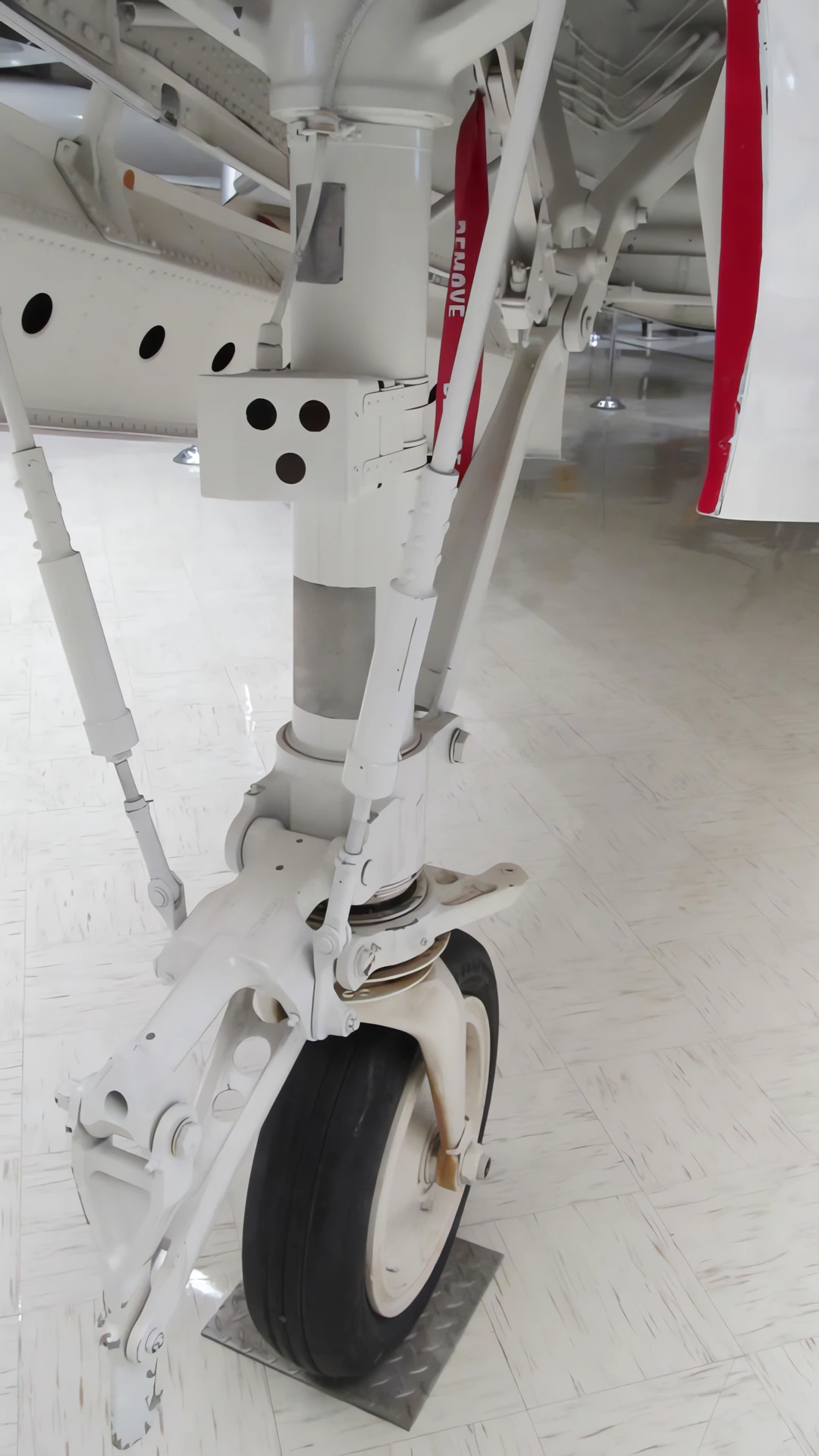
Preservation:Several Demons are preserved in the United States, most notably at theNational Museum of Naval Aviationin Pensacola, Florida, and theIntrepid Sea, Air & Space Museumin New York.


 Miles Magister – Billeder og videoer
 McDonnell XF-85 Goblin – Billeder & Videoer
 McDonnell Douglas F/A-18 Hornet – Billeder & Video
 McDonnell F2H Banshee – Billeder & Video
 McDonnell Douglas KC-10 Extender – Billeder & Video
 McDonnell FH Phantom – Billeder & Video
 McDonnell Douglas T-45 Goshawk – Billeder & Video
 McDonnell F-101B Voodoo – Billeder & Video
 Lisunov Li-2 – WalkAround
 P-38L Marge – WalkAround