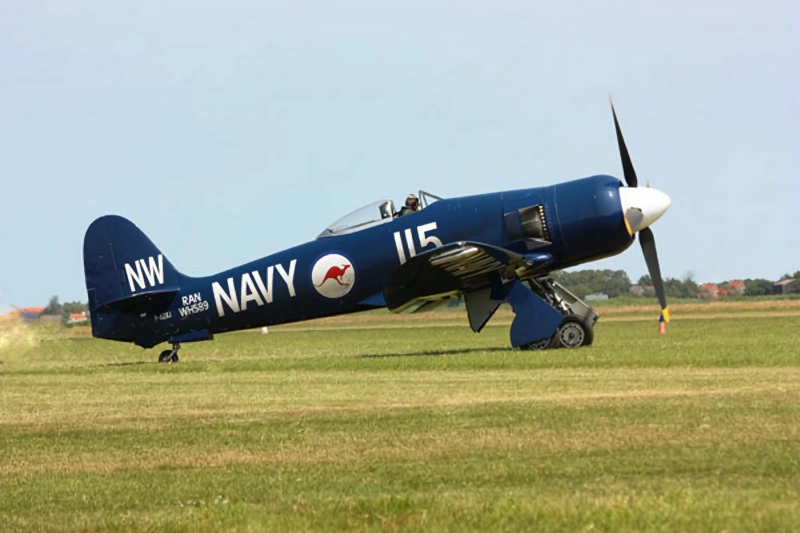
Hawker more Fury | |
|---|---|
| Krajiny | Uk |
| Obdobie | 2. svetová vojna |
| Typ | Chasseur |
Fotogaléria o bojovníkovi Hawker Sea Fury FBII, The Morská zúrivosť Bol to britský bojovník vyvinutý pre kráľovské námorníctvo staviteľom Hawker-Siddeley počas druhej svetovej vojny. Bolo to posledné vrtuľové lietadlo Kráľovského námorníctva, jedno z najrýchlejších jednomotorových piestových lietadiel, aké bolo kedy postavené, a posledné vrtuľové stíhačky, ktoré zostrelili prúdové lietadlo.
Komisia Hawker Fury Prebral kontrolu nad Hawker Tempest, ako aj Hawker Typhoon. Vyvinutý v roku 1942 inžinierom Sidneym Cammom, aby reagoval na tender vydaný RAF (Royal Air Force), ktorý nahradil zastaraný Tempest II. Základom konceptu bolo navrhnúť Tempest tým, že sa stane ľahším s použitím jeho polo-eliptického krídla umiestneného v strede trupu, ktorý bol sám o sebe identický s tempestom. Rozdiely medzi oboma lietadlami boli monokokový režim a zvýšený kokpit, ktorý poskytol pilotovi lepšiu viditeľnosť.
Zdrojový: Hawker Sea Fury na Wikipédii
| Hawker Sea Fury FBII | |
|---|---|
| Fotograf | Unknow |
| Lokalizácia | Neznáme |
| Fotografie | 26 |
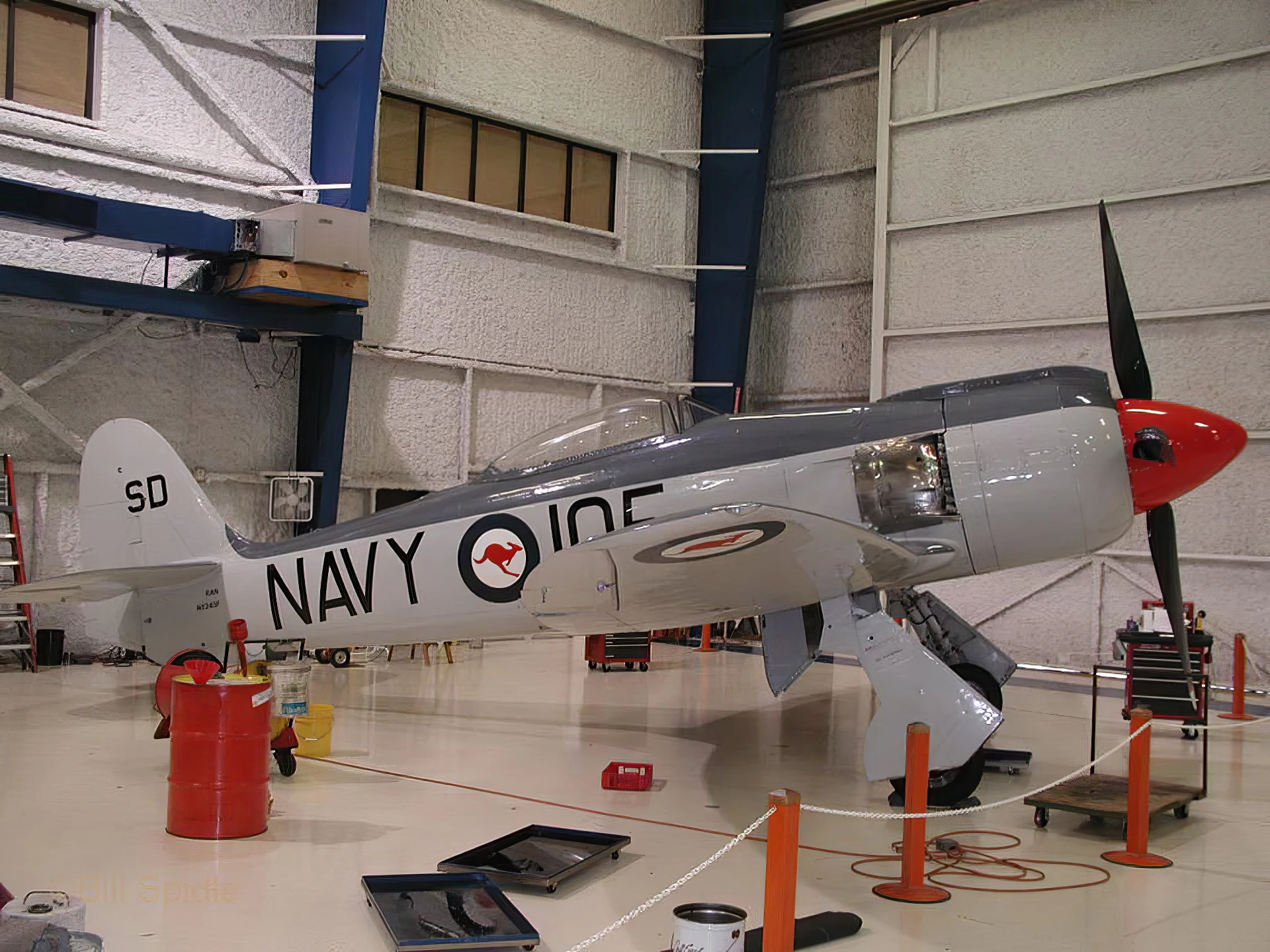
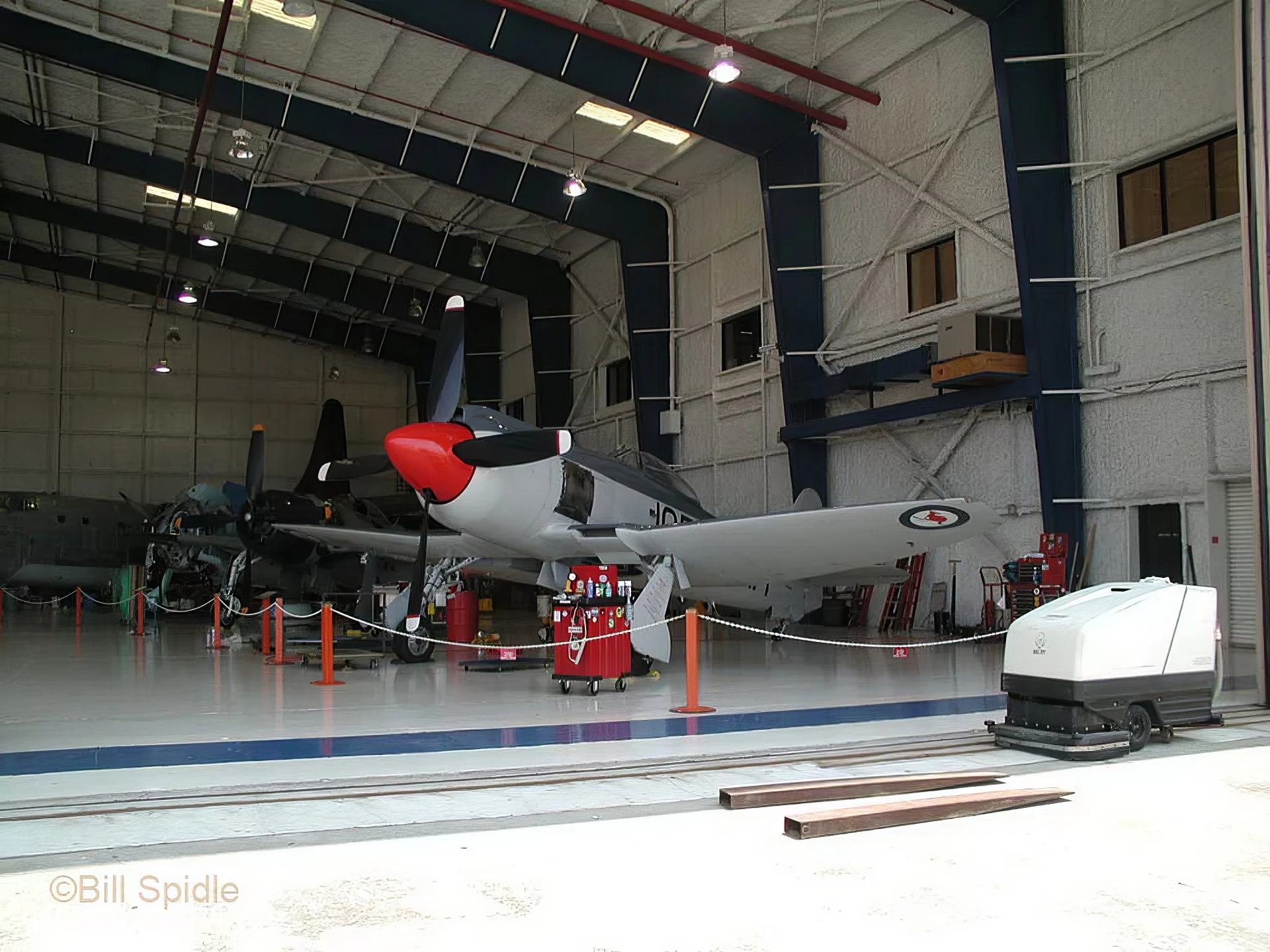
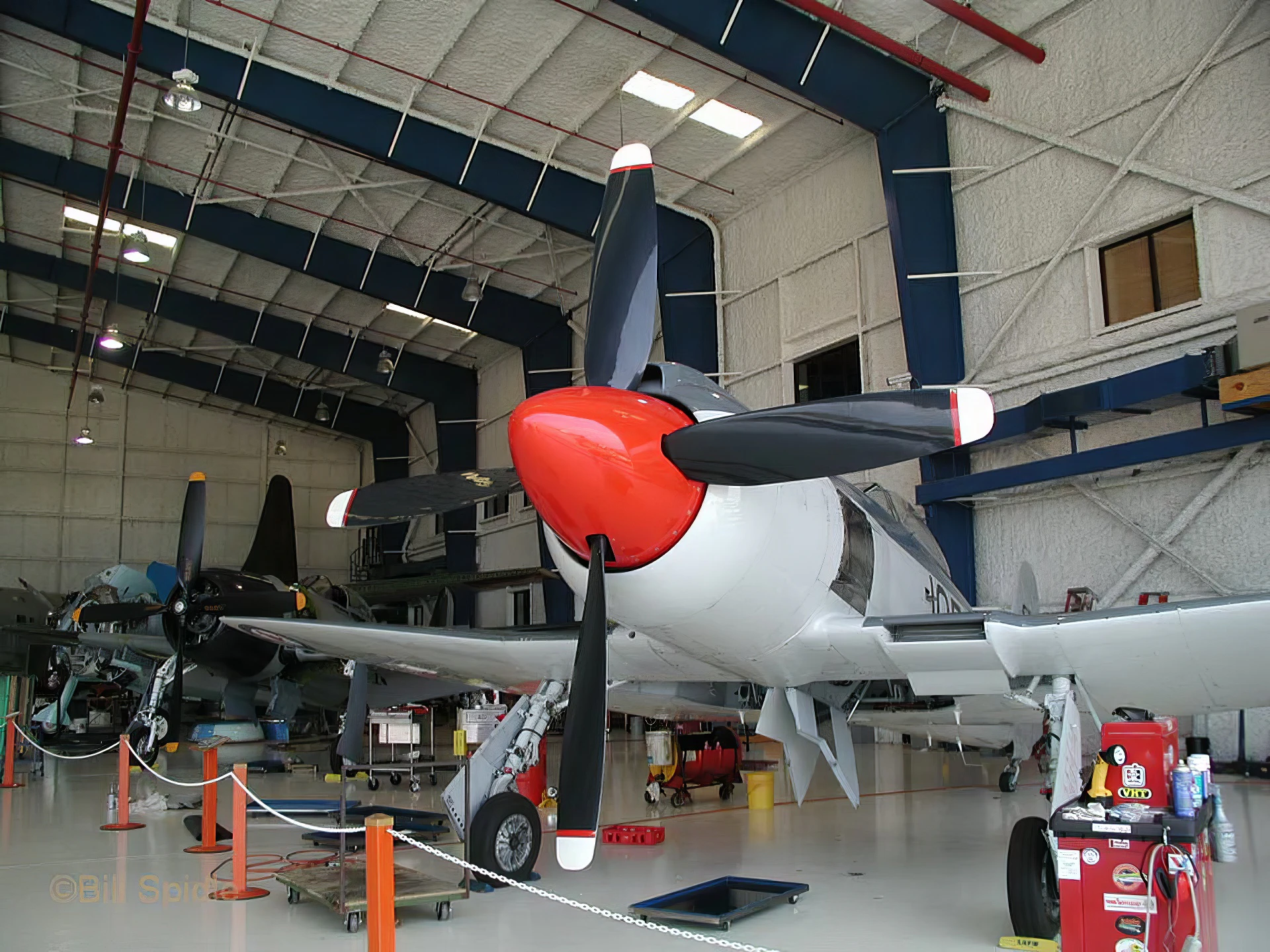
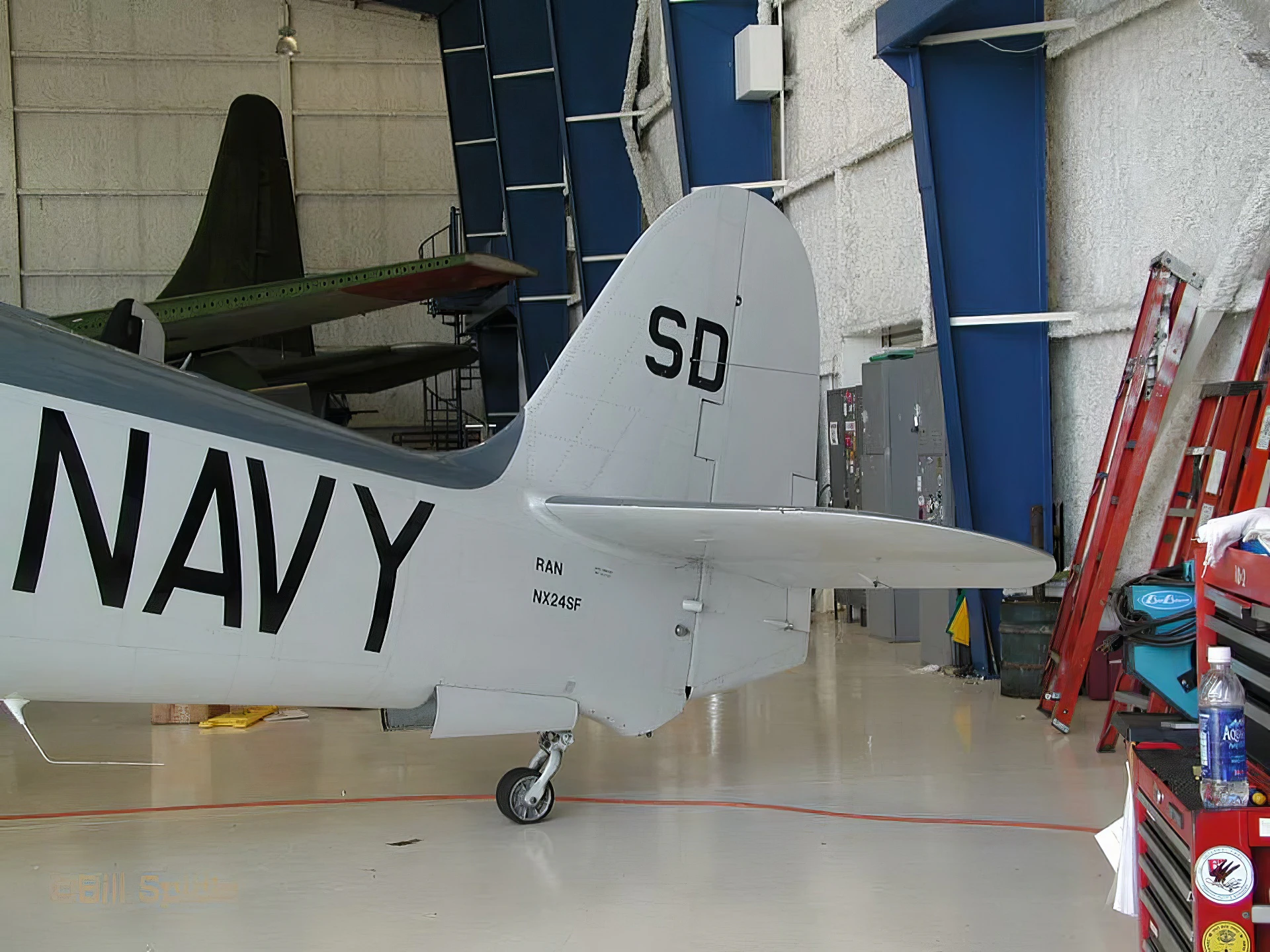
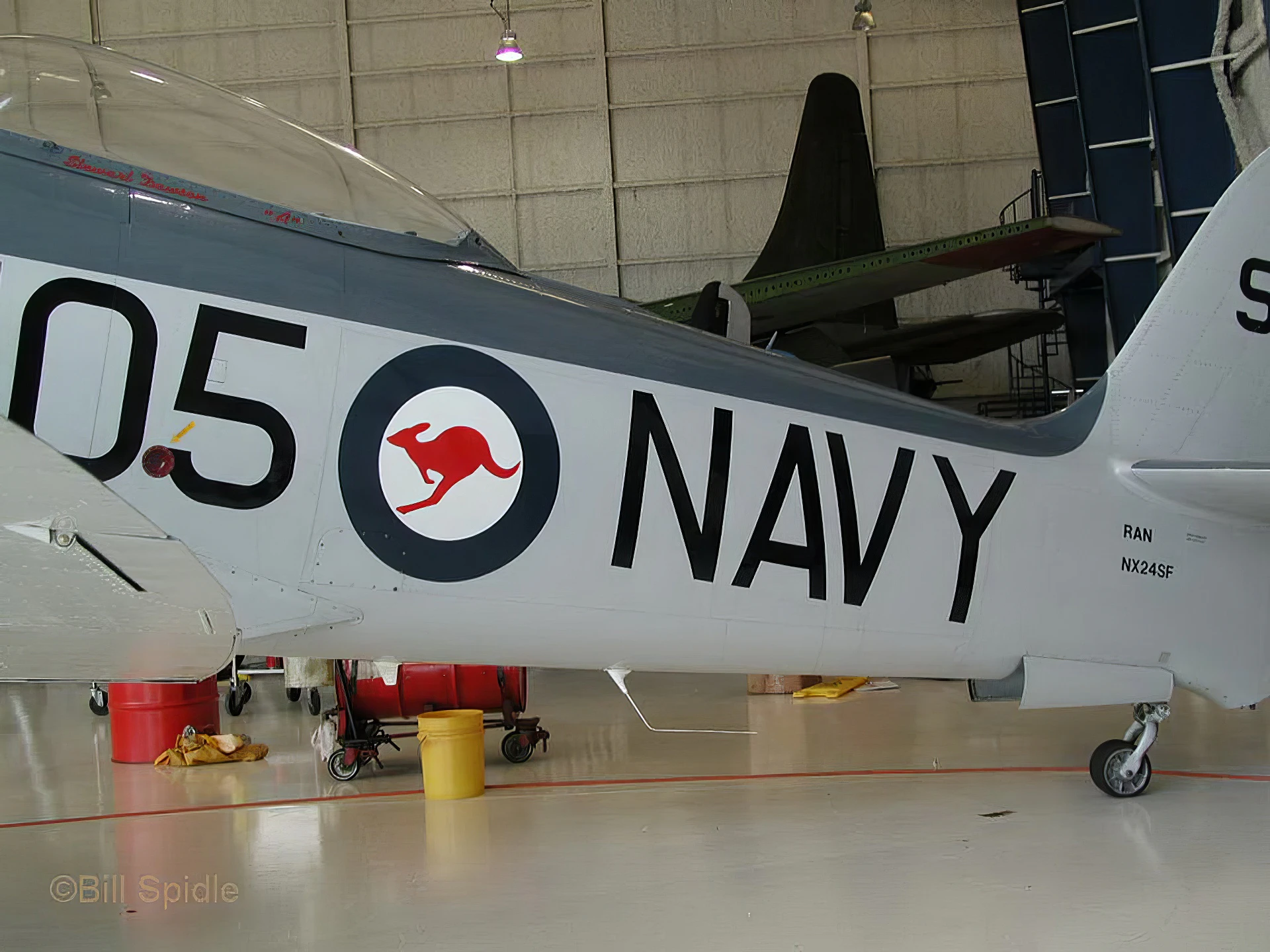
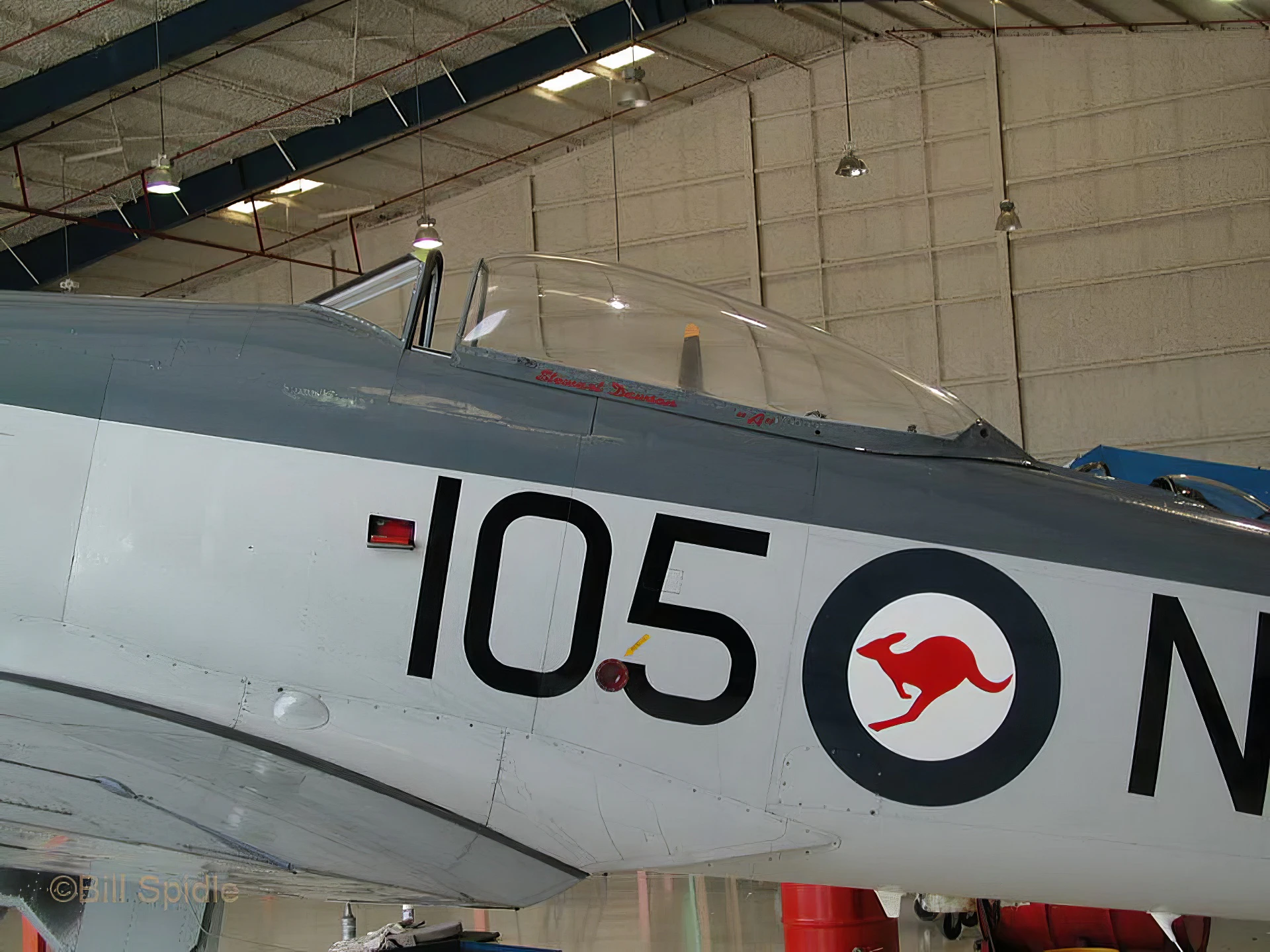
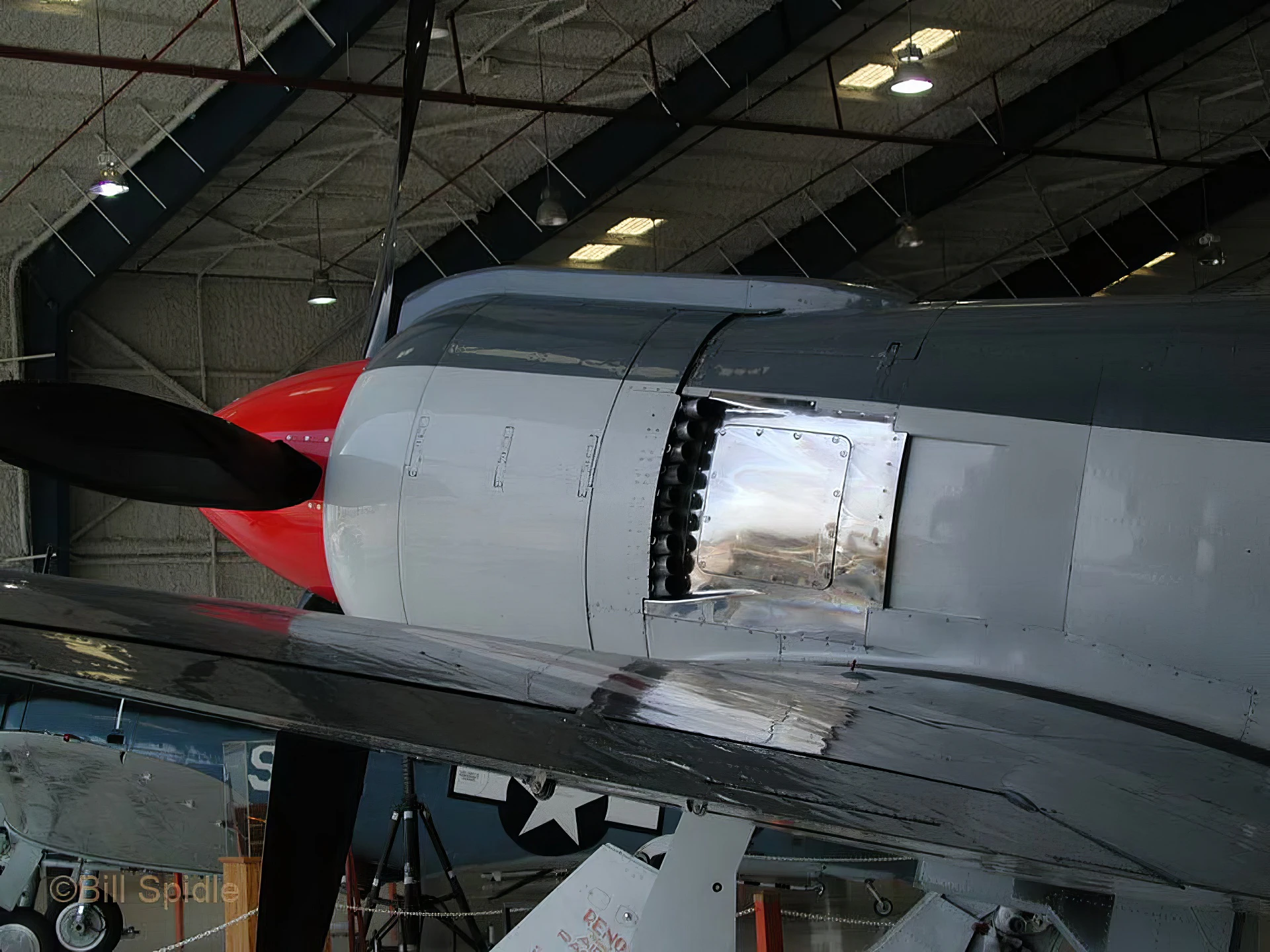
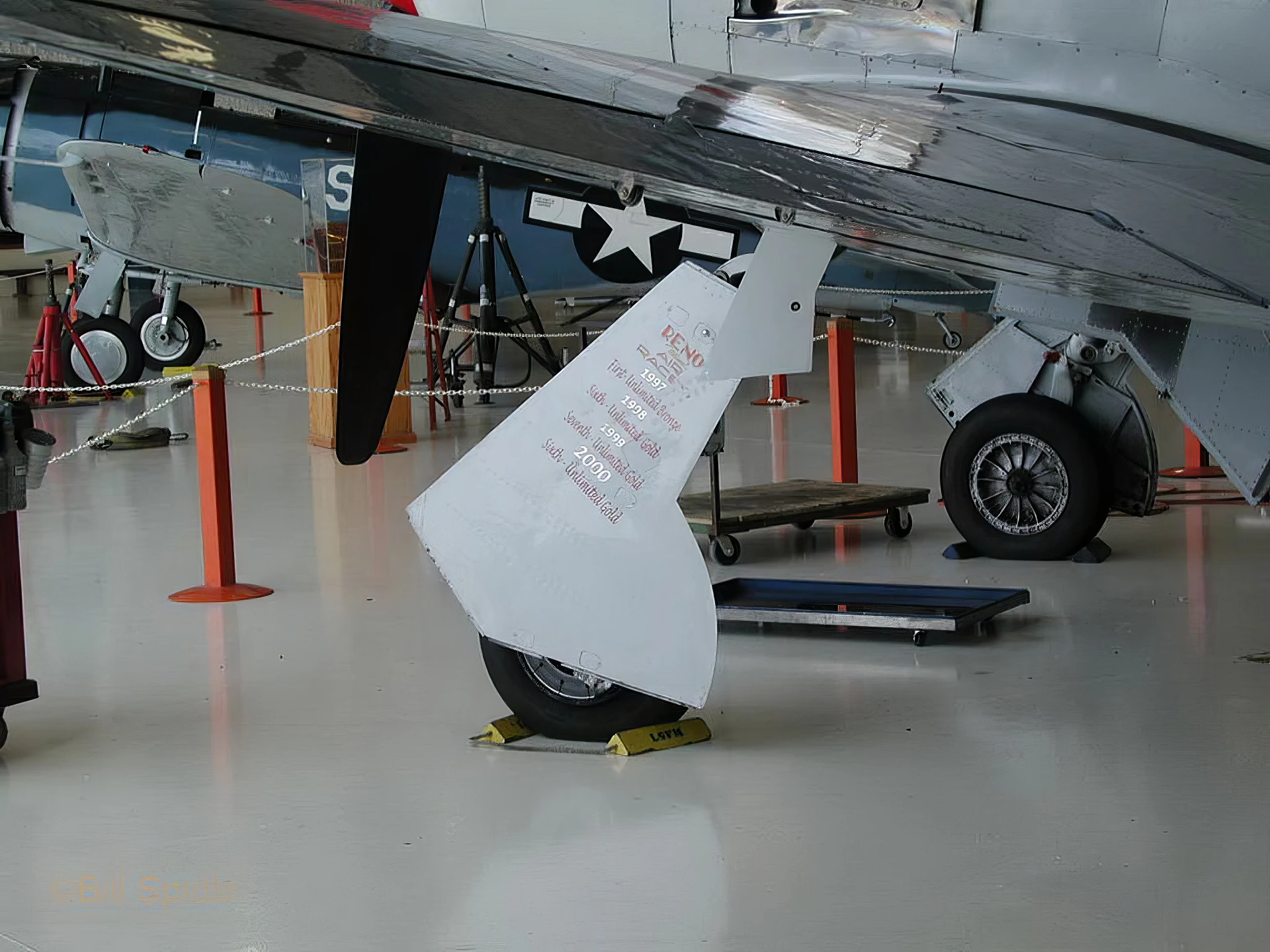
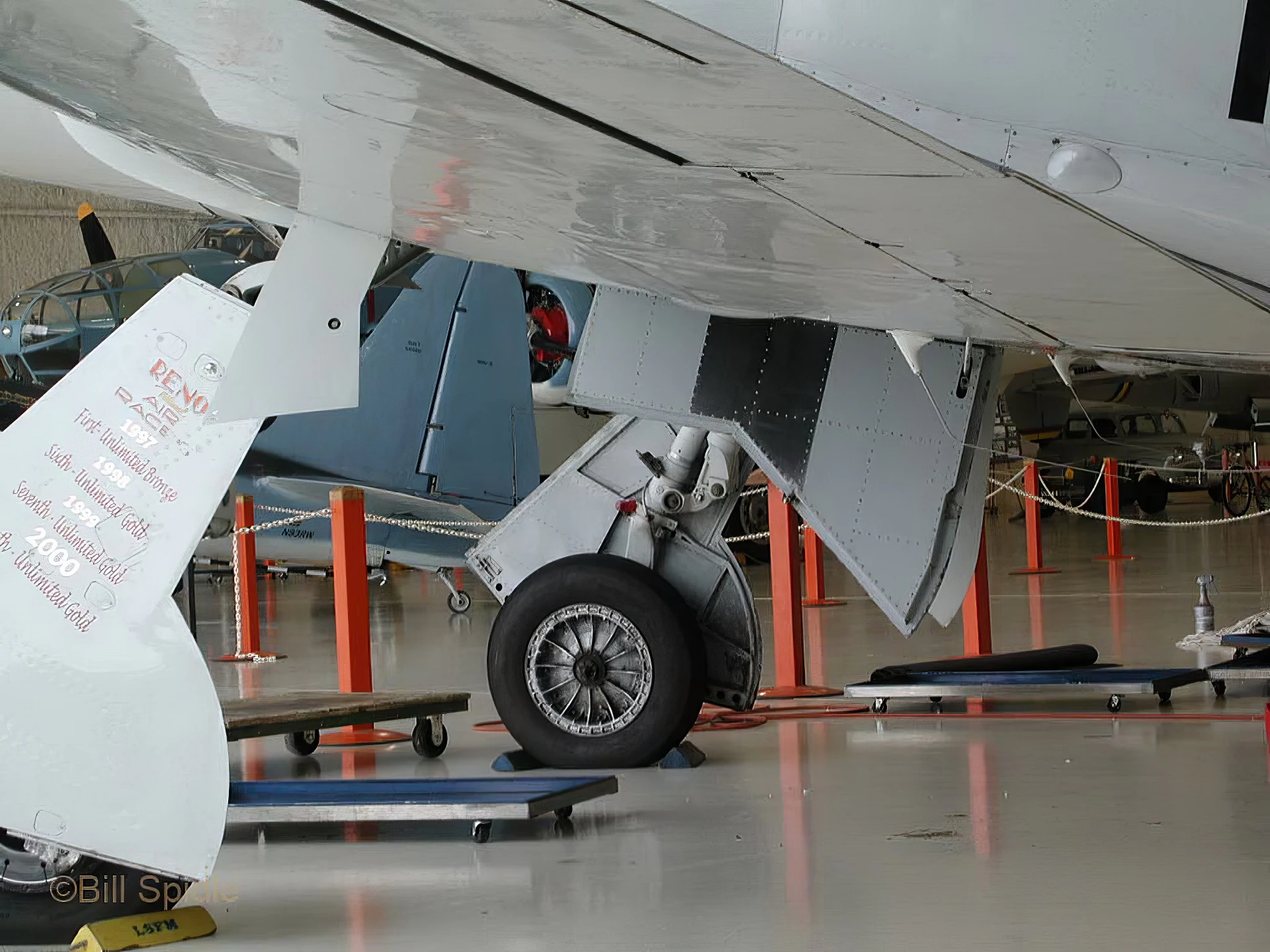

| Hawker Seafury FB.11 Walk Around | |
|---|---|
| Fotograf | Unknow |
| Lokalizácia | Neznáme |
| Fotografie | 26 |
Pozri tiež:


| Hawker Sea Fury Mk.11 Walk Around | |
|---|---|
| Fotograf | Unknow |
| Lokalizácia | Neznáme |
| Fotografie | 13 |
Pinnacle of Piston Power
The Hawker Sea Fury was a British carrier-borne fighter-bomber that emerged from a wartime requirement for a lighter, high-performance successor to the successful Hawker Tempest. Designed by the renowned Sydney Camm, it represented the ultimate development of the single-seat, piston-engined fighter to enter military service.
Although it arrived too late to see service in the Second World War, the Sea Fury went on to be the last propeller-driven fighter used by the Royal Navy’s Fleet Air Arm and was one of the fastest piston-engined aircraft ever produced.
Key Features and Engineering
- Motor: Powered by the massive Bristol Centaurus 18-cylinder, twin-row radial engine, delivering immense power (over 2,400 hp) to a five-bladed propeller.
- Aerodynamics: It featured a sleek, all-metal monocoque fuselage and a semi-elliptical wing profile, contributing to its superb speed and high-altitude performance.
- Navalization: Designed specifically for aircraft carrier operations, the wings were equipped with a hydraulic folding mechanism to conserve deck space, and the tail featured a sturdy arrestor hook.
- Cockpit: The pilot enjoyed excellent visibility thanks to the signature bubble canopy.
Armament and Variants (FB.11)
The most widely produced version was the Sea Fury FB.11 (Fighter-Bomber Mark 11), emphasizing its dual-role capability.
| Category | Detail |
|---|---|
| Internal Guns | Four 20 mm Hispano Mk V cannons (two in each wing) |
| Ground Attack Ordnance | Rockets (up to 12 or 16 depending on configuration) |
| Bomb Load | Bombs (up to 2,000 lbs, including 500 lb or 1,000 lb bombs) |
| Other Stores | External fuel drop tanks for extended range |
Operational Highlights
The Sea Fury’s combat life was brief but distinguished, seeing action with several international operators, notably in the Korean War:
- Korean War Service: It served extensively in a ground-attack role from Royal Navy carriers, proving to be robust and capable of absorbing significant battle damage.
- Jet Kill: In a legendary incident in 1952, a Sea Fury of the Fleet Air Arm, piloted by Lieutenant Peter Carmichael, successfully shot down a faster, jet-powered Soviet-built MiG-15—one of the few confirmed kills of a jet by a propeller-driven aircraft.
- Post-Military Life: After being retired from front-line service in the mid-1950s by nations adopting jet technology, many Sea Furies found a new life as highly modified and successful competitors in the Unlimited class of the Reno Air Races in the United States.
Zobrazenia : 4226
Môžete tiež vidieť:
 Stout Bushmaster 2000 – fotografie a videá
 Zábradlie Beechcraft RC-12 – fotografie a videá
 Cessna 310 – fotografie a videá
 Curtiss P-36 Hawk – fotografie a videá
 Tweet Cessna T-37 - fotografie a videá
 Boeing KC-97 Stratofreighter – fotografie a videá
 Curtiss P-40 Warhawk – WalkAround
 Messerschmitt Me 163B – WalkAround
 McDonnell Douglas F-4 Phantom II – WalkAround
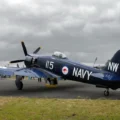 Hawker Sea Fury – Chodiť