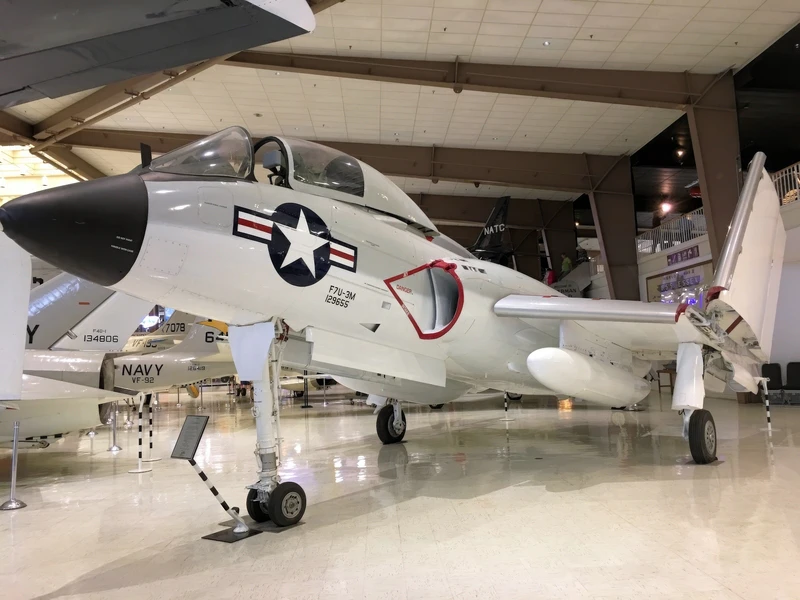
Vought F7U Cutlass | |
|---|---|
| Страны | США |
| Роль | Военно-морской многоцелевой истребитель |
| Первый полет | 29 сентября 1948 года |
| Построен | 320 |
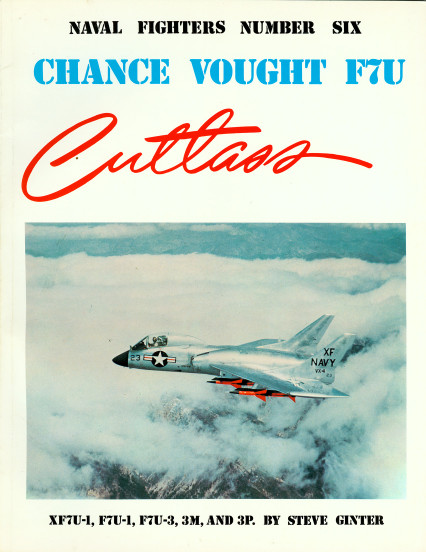
Teh Vought F7U Cutlass — реактивный истребитель и истребитель-бомбардировщик ВМС США начала холодной войны. Это был бесхвостый самолет, основанный на аэродинамических данных и планах немецкой компании Arado в конце Второй мировой войны, хотя конструкторы Vought отрицали какую-либо связь с немецкими исследованиями в то время. F7U был последним самолетом, разработанным Рексом Beisel, который был ответственным за первый истребитель когда-либо разработанных специально для ВМС США, Curtiss TS-1 1922 года.
Источник: Vought F7U Cutlass в Википедии
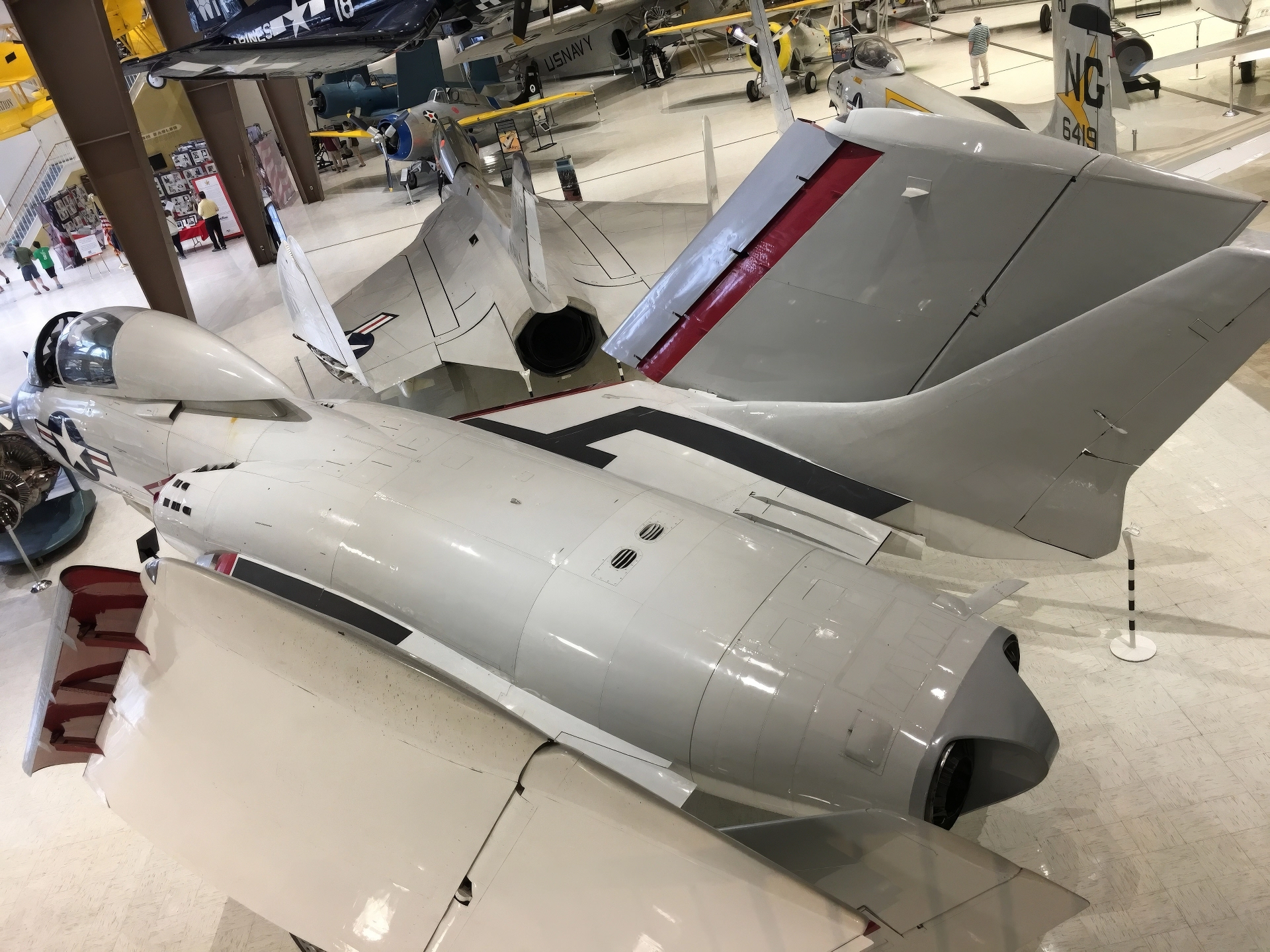
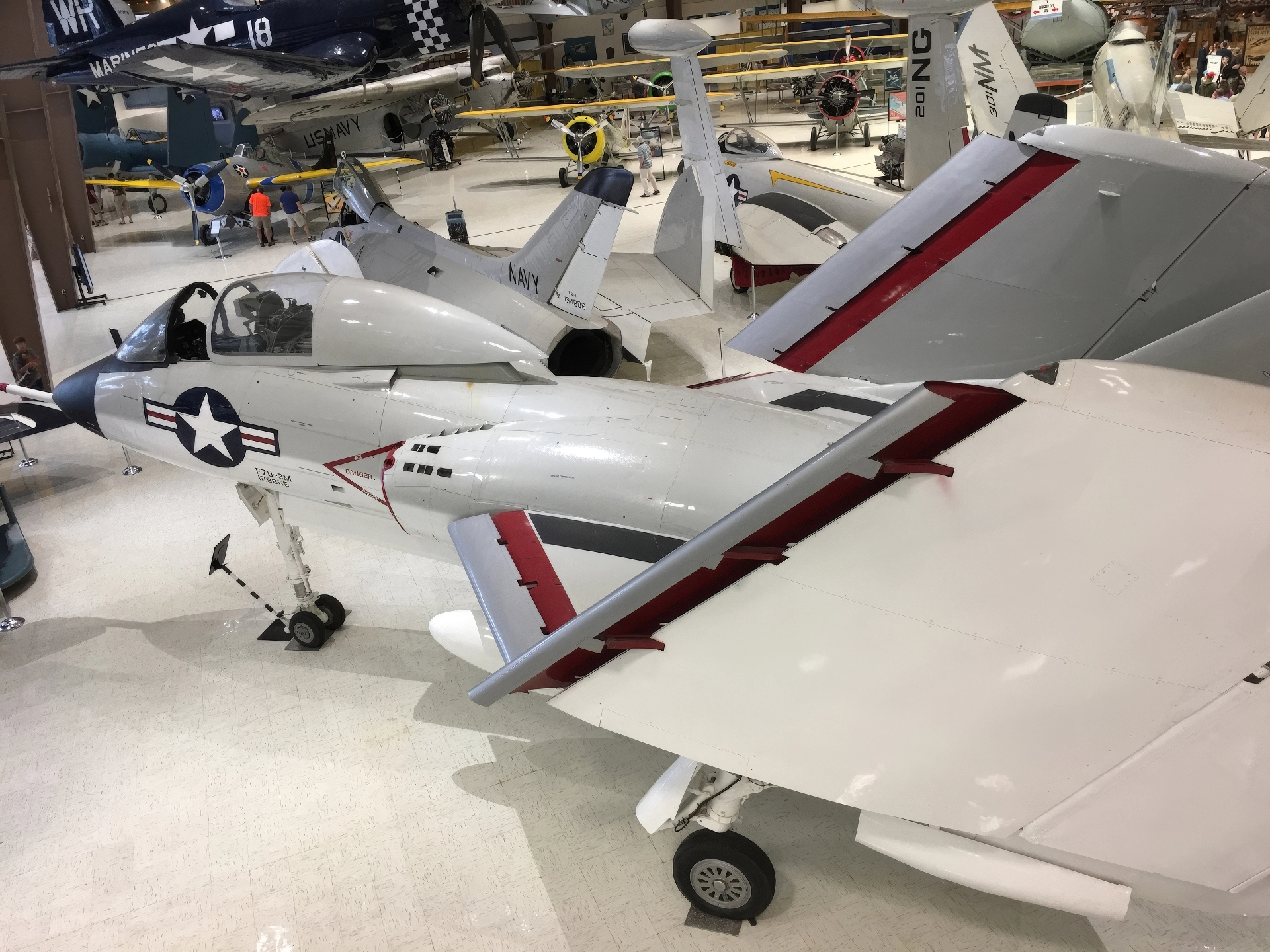
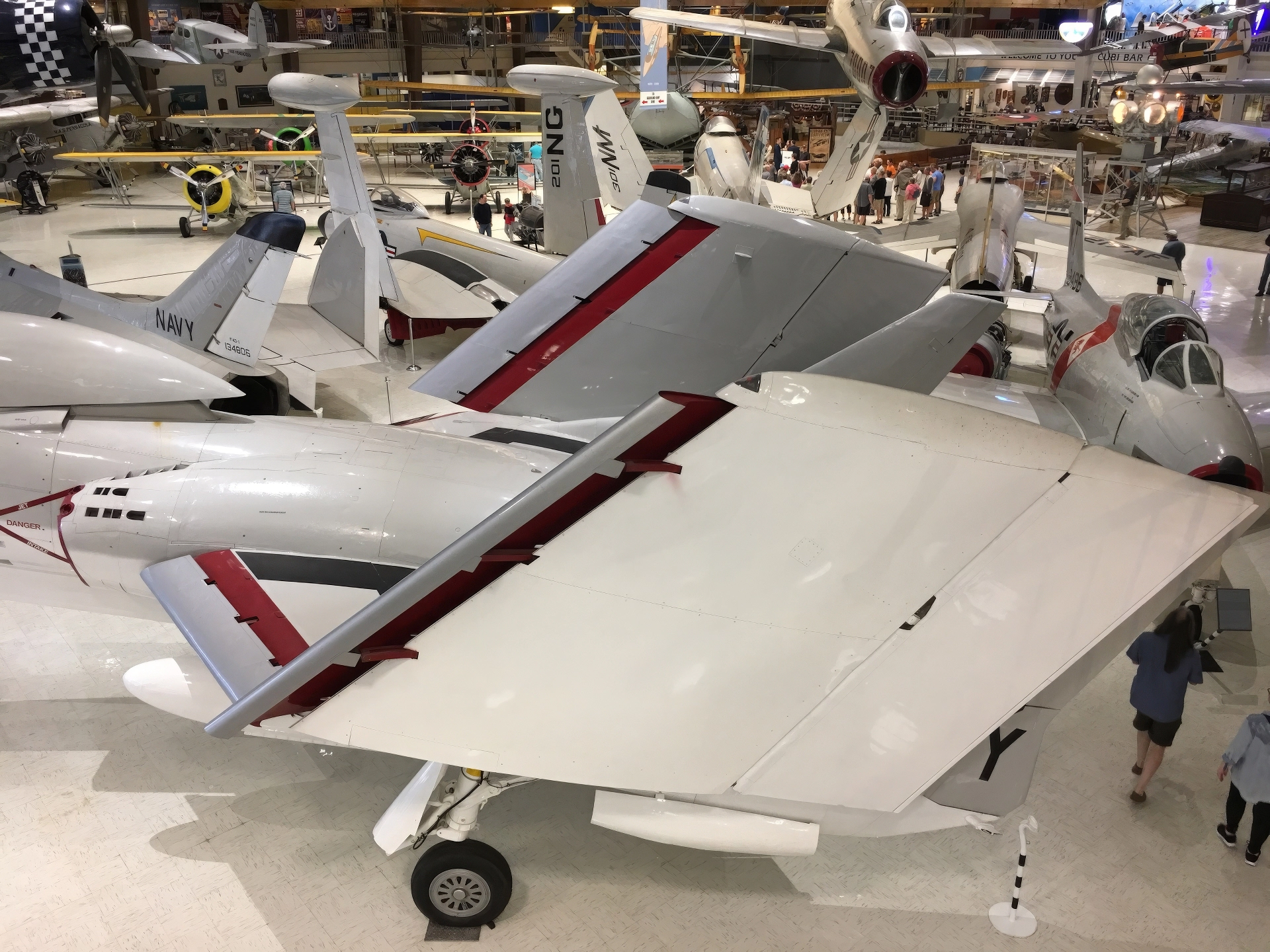
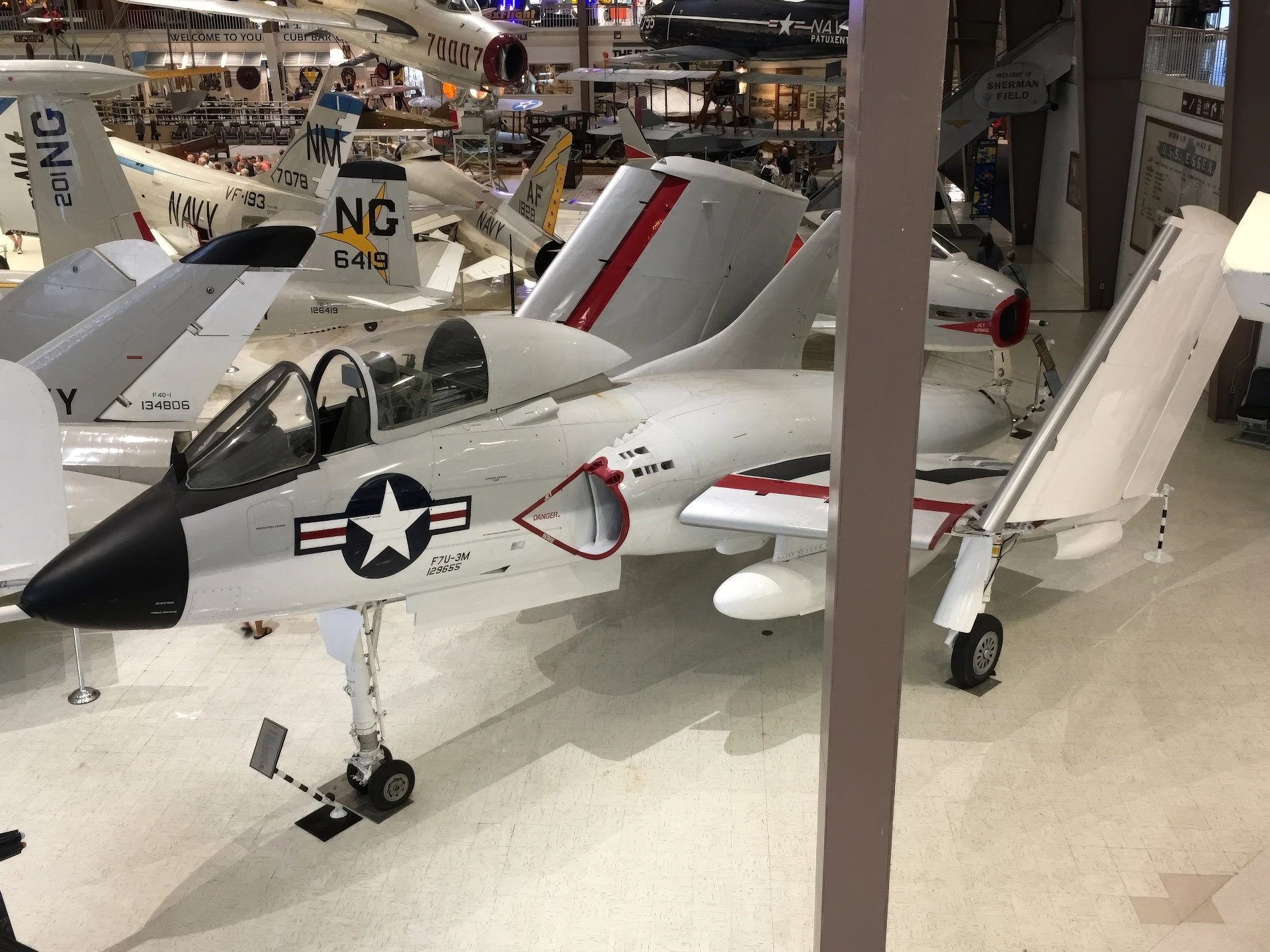
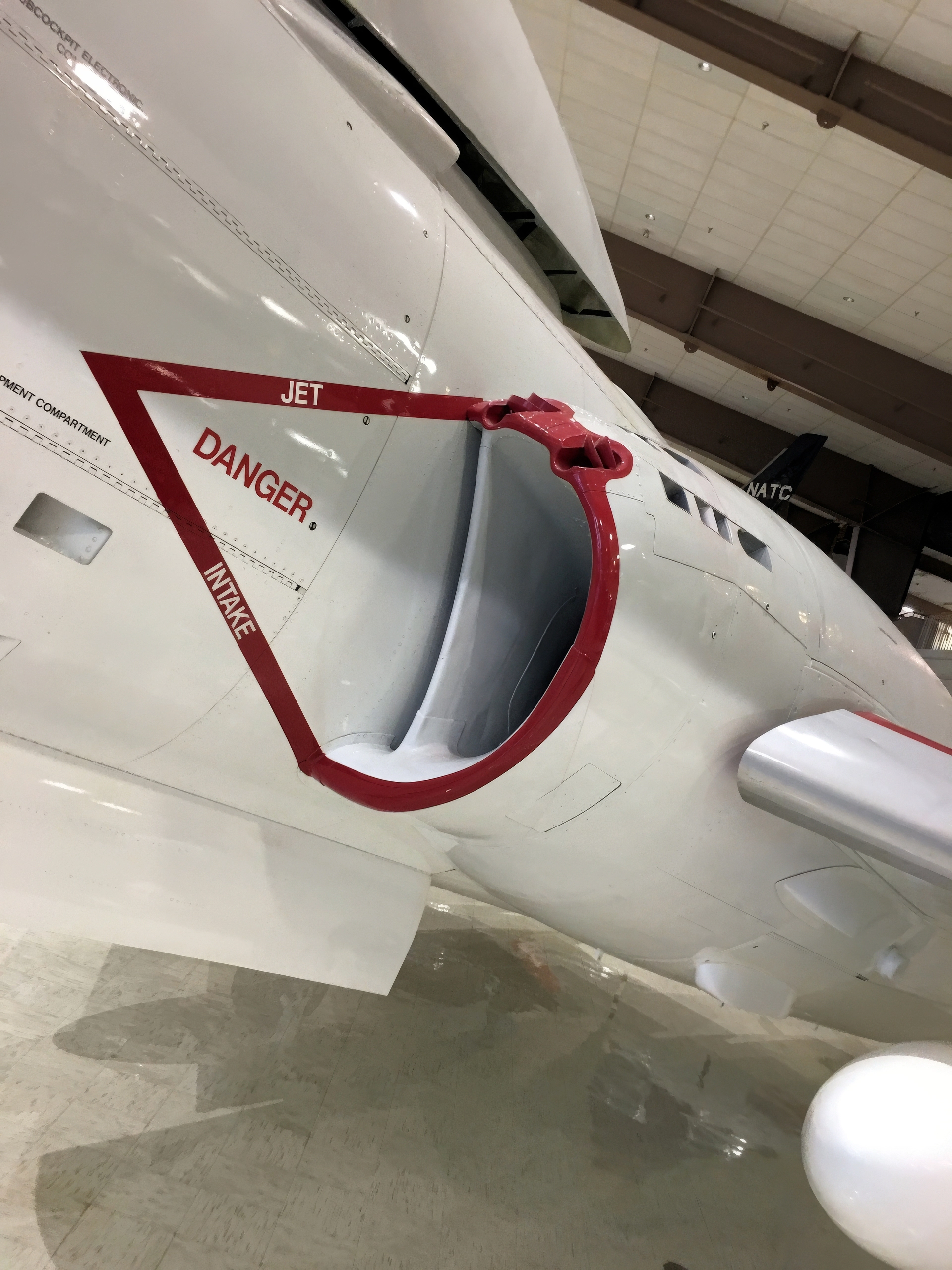
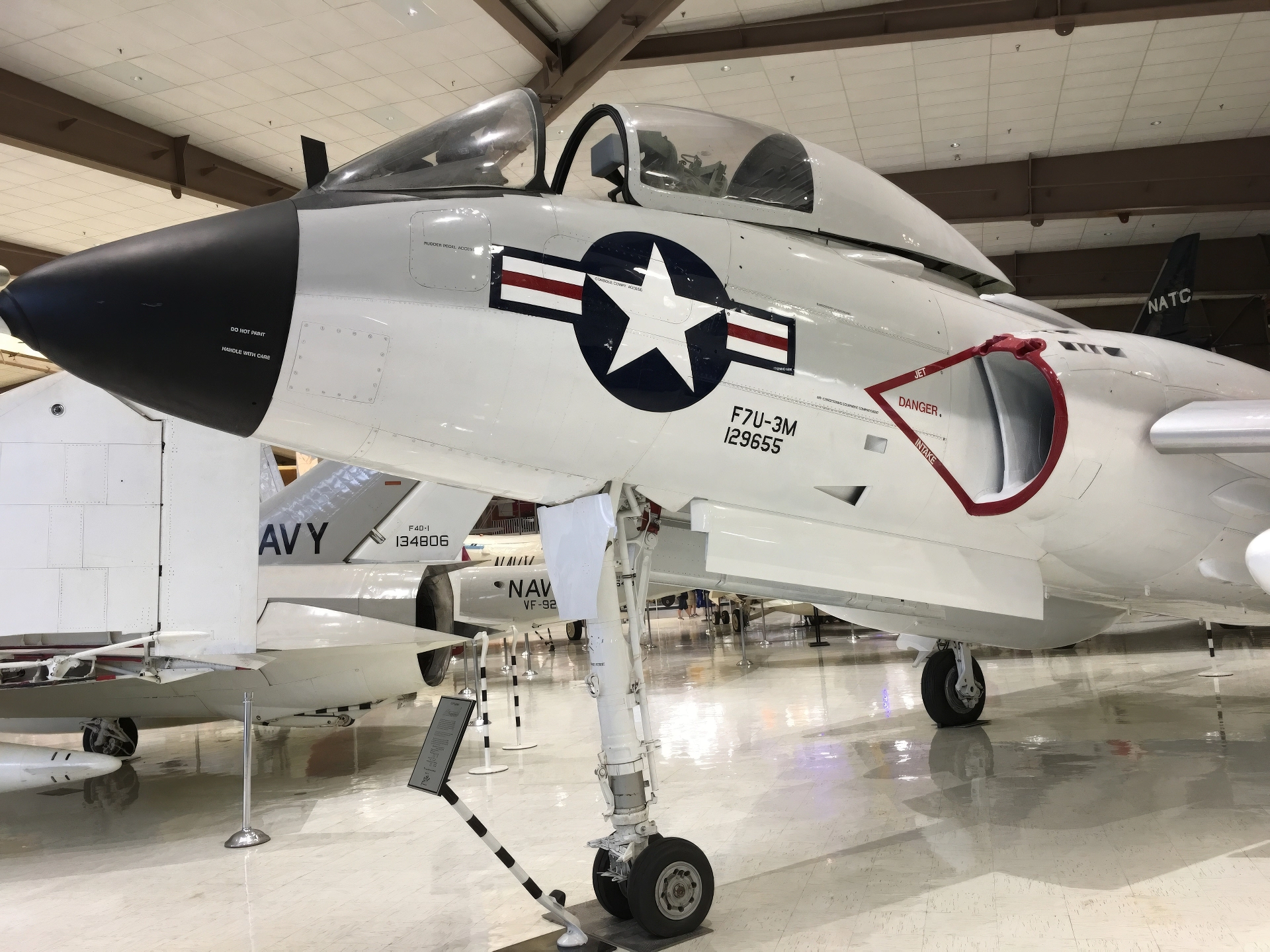
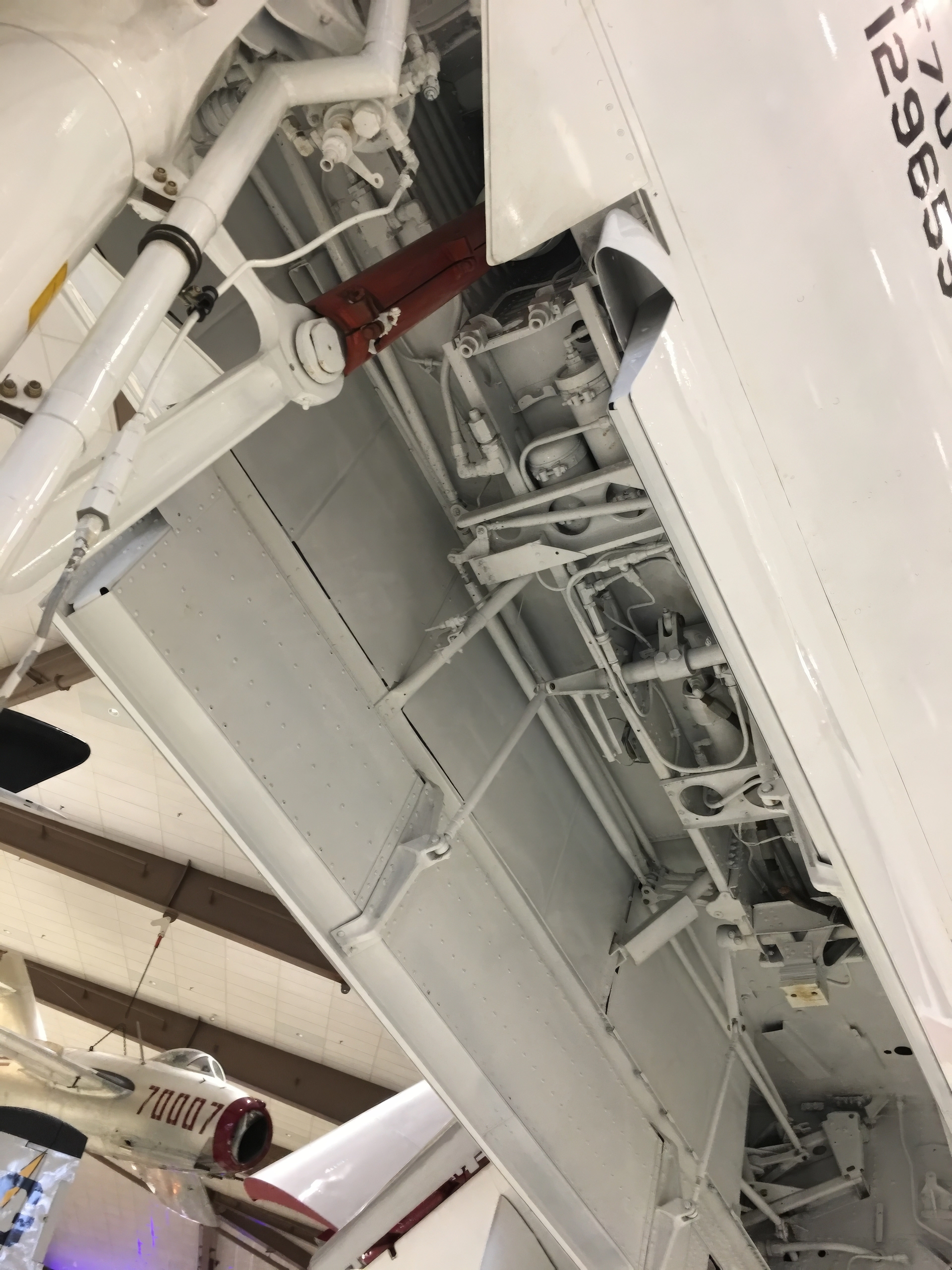
| F7U-3M Cutlass Walk Around | |
|---|---|
| Фотограф | Fotios Rouch |
| Локализации | Неизвестная |
| Фотографии | 27 |



Читайте также:


General Characteristics and Design
The Vought F7U Cutlass was a unique and radical US Navy carrier-based jet fighter of the early Cold War era. Its design was heavily influenced by German aerodynamic data obtained at the end of World War II. The Cutlass was the first American tailless production fighter and one of the first Navy jets to feature swept wings and afterburners. Its unusual configuration, featuring low aspect ratio swept wings and twin vertical fins, eliminated the traditional horizontal tailplane. Pitch and roll control were combined into surfaces called elevons (or ailevators) on the wing trailing edges. Despite its innovative design, the aircraft earned unflattering nicknames like the “Gutless Cutlass” and “Ensign Eliminator” due to being underpowered and having a high accident rate.
| Property | Typical Value (F7U-3) |
|---|---|
| Роль | Carrier-Based Fighter and Fighter-Bomber |
| National Origin | США |
| Производителя | Chance Vought Aircraft Inc. |
| First Flight | 29 September 1948 (Prototype) |
| Экипажа | 1 (Pilot) |
| Длина | 13.50 m (44 ft 3 in) |
| Размах крыла | 12.10 m (39 ft 8 in) |
| Высота | 4.45 m (14 ft 7 in) |
| Empty Weight | Approx. 8,267 kg (18,226 lb) |
| Gross Weight | Approx. 14,365 kg (31,670 lb) |
Powerplant and Performance
- Engines: Two Westinghouse J46-WE-8A turbojet engines with afterburners.
- Thrust (Each): 20.5 kN (4,600 lbf) dry / 27.1 kN (6,100 lbf) with afterburner.
- Maximum Speed: Approx. 1,095 km/h (680 mph) (Mach 0.9–0.95, near supersonic capability).
- Initial Rate-of-Climb: Approx. 14,240 ft/min.
- Range: Approx. 1,061 km (659 mi) (combat range).
- Service Ceiling: 12,192 m (40,000 ft).
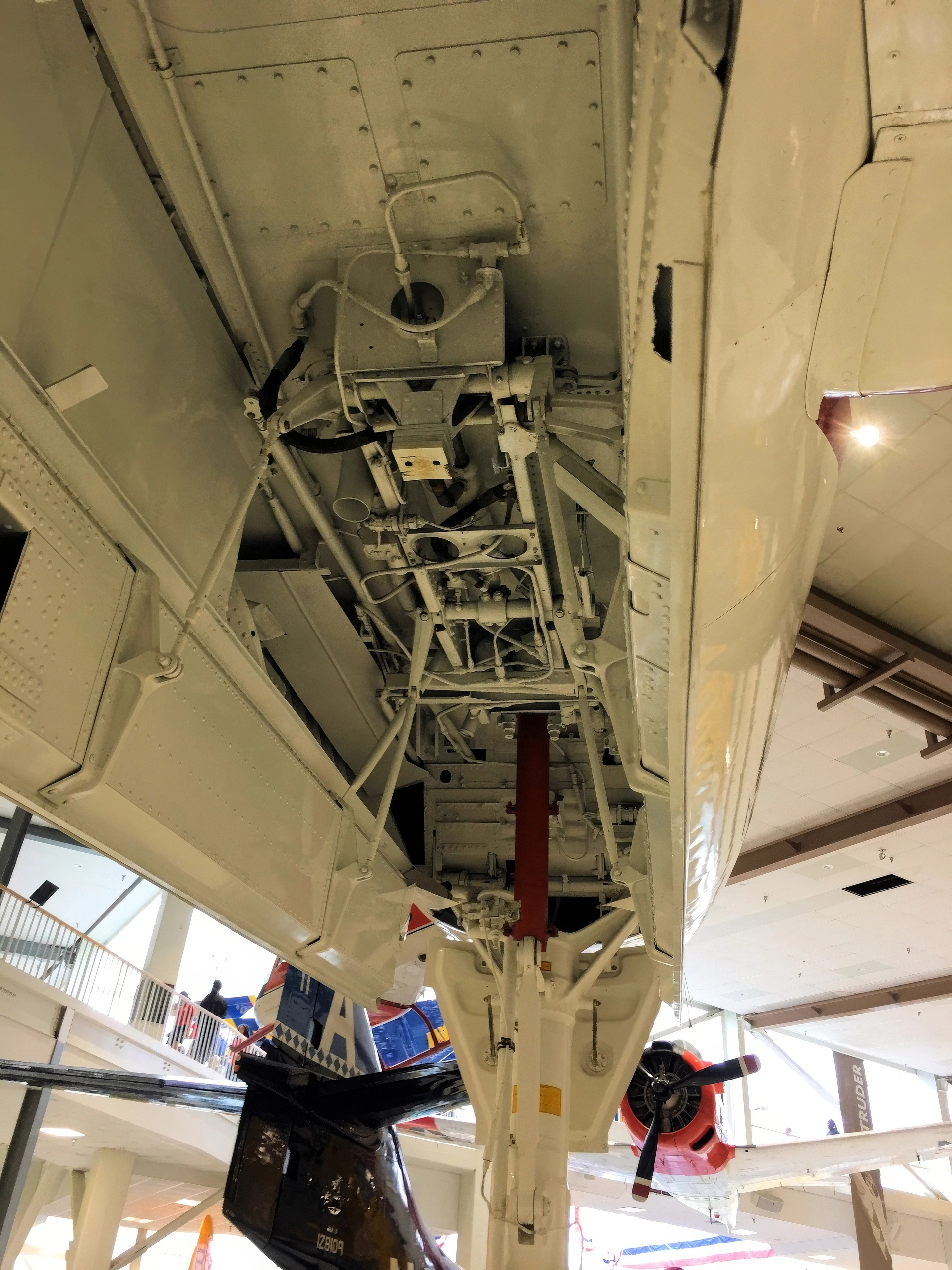
- Carrier Feature: Long nose landing gear strut required for a high angle of attack during catapult launches. The nose gear also had a unique pre-spinning device to bring tires up to speed before landing.
Armament and Variants
- Internal Armament: 4 x 20 mm M3 cannon (located above the inlet ducts), 180 rounds per gun.
- External Hardpoints: 4 underwing hardpoints with a total capacity of up to 2,500 kg (5,500 lb).
- Ordnance Capability:
- Bombs: Up to 2,000 lb of bombs or 32 x 2.75-inch unguided rockets.
- Missiles (F7U-3M variant): Fitted to carry four AIM-7 Sparrow I radar-guided air-to-air missiles.
- Major Variants:
- F7U-1: Pre-production, underpowered version.
- F7U-3: Main production version with larger airframe and J46 engines.
- F7U-3M: Missile-capable version, carrying Sparrow I missiles.
- F7U-3P: Photo-reconnaissance version with an extended nose and cameras (guns deleted).
Просмотры : 2868
Вы также можете увидеть:
 Stinson L-5 Sentinel – Фото и Видео
 Piper L-4 Grasshopper – Фото и Видео
 Lockheed U-2 – Фото и Видео
 Vought SB2U Vindicator – Фото и Видео
 Vought F4U Corsair – Фото и Видео
 Хоукер море ярости FBII vol2 - Прогулка вокруг
 P-51D Мустанг vol2 - Прогулка вокруг
 B-17G Летающая крепость - WalkAround
 Мессершмитт Bf 109G-2 - Прогулка вокруг
 Дженерал Моторс FM-2 Wildcat - WalkAround